The conversation · Lesson 7 of 10
Simple Scripts for Pay Conversations You Can Practise
Learn a handful of short, polite sentences for pay talks, and rehearse them so the words are ready when you feel nervous.
 Video coming soon
When you feel nervous, it helps to have the words ready. This lesson gives you a handful of short, polite sentences for pay conversations, and a way to practise them.
A simple shape
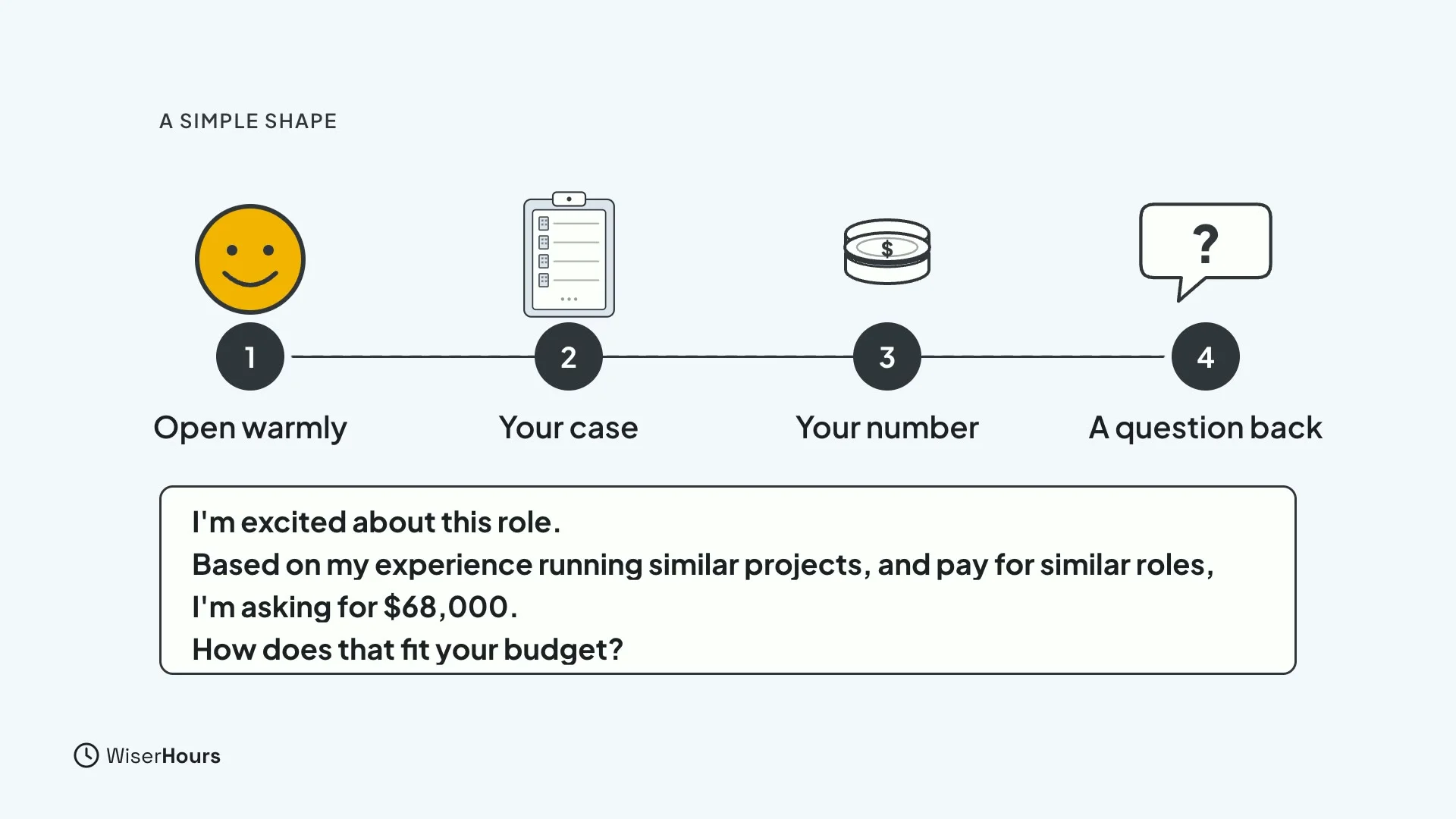
Most pay conversations follow a simple shape. Open warmly. Give your case in one or two facts. Then say your number. Then ask a question that hands the talk back.
For example: “I’m excited about this role. Based on my experience running similar projects, and pay for similar roles, I’m asking for $68,000. How does that fit your budget?”
 (opens the full-size picture)
Questions are tools
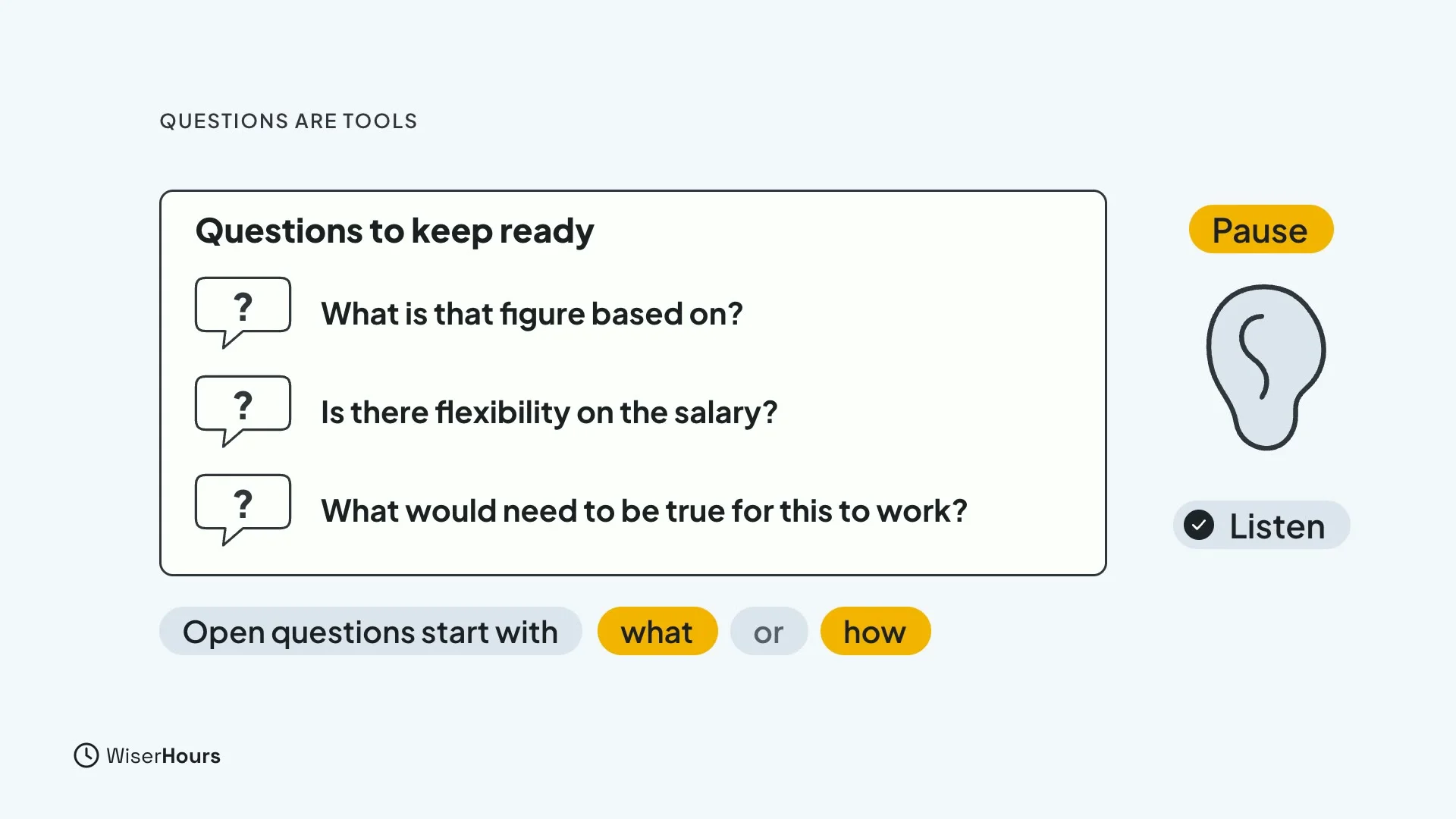
Questions are your best tools. Keep a few ready:
- What is that figure based on?
- Is there flexibility on the salary?
- What would need to be true for this to work?
Open questions that start with what or how get people talking. Then pause, and listen.
 (opens the full-size picture)
Slow down
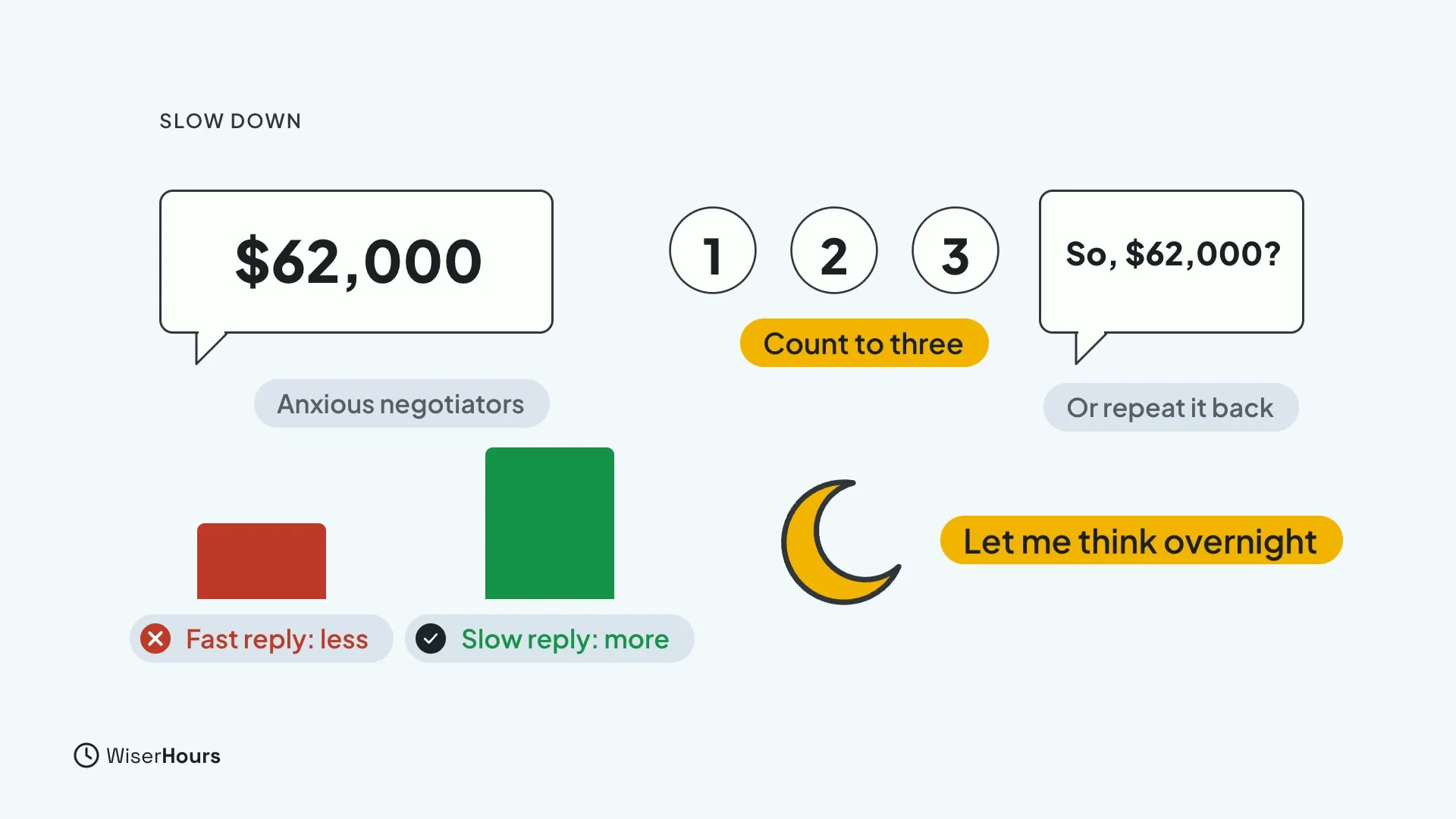
Silence is fine. When they name a number, count to three before you answer, or repeat it back: “So, $62,000.”
In experiments, anxious negotiators replied faster and settled for less, so slowing down helps. You can always say: “I’d like to think about that overnight.”
 (opens the full-size picture)
Anxious? Slow down first
In the experiments, anxious negotiators replied faster and settled for less. A pause, a repeated number or a night to think it over slows you down.
When they say final offer
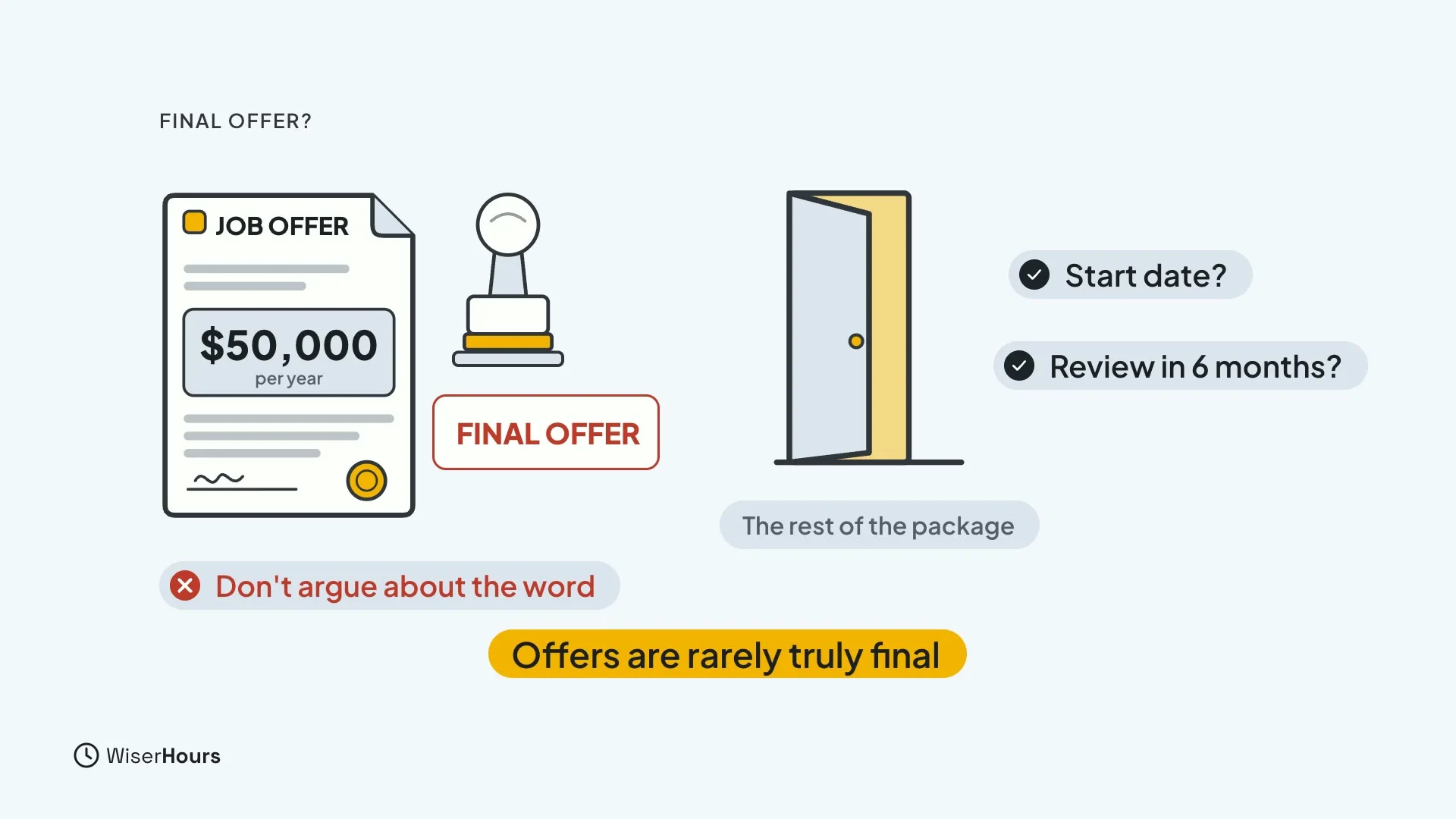
If they say it is their final offer, do not argue about the word. Ask about the rest of the package: “Setting the salary aside, could we look at the start date, or a review in six months?” Offers are rarely truly final.
 (opens the full-size picture)
One more thing
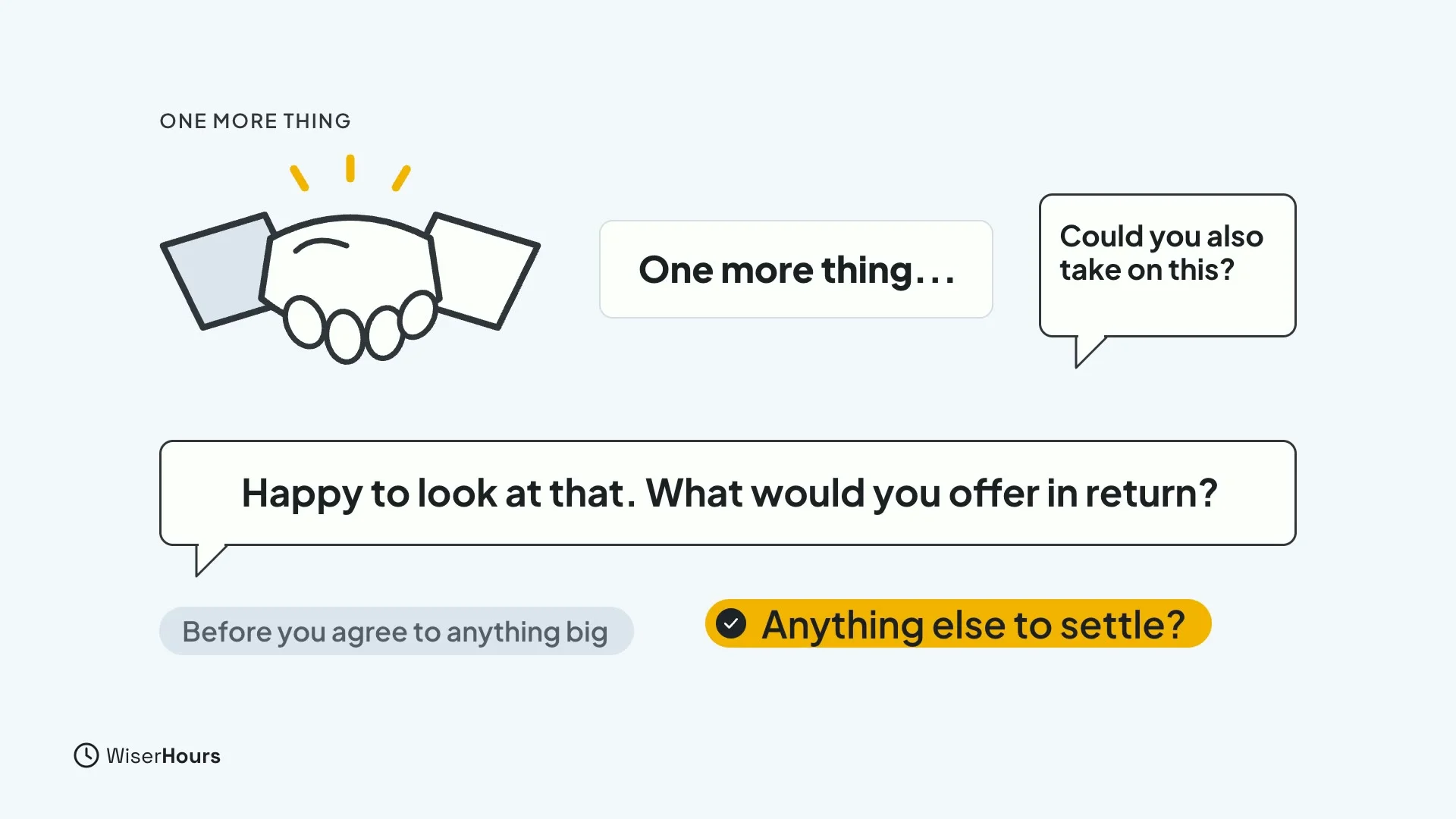
Watch for small extras at the very end, like: “One more thing, could you also take on this?” Answer with: “Happy to look at that. What would you offer in return?”
And before you agree to anything big, ask: “Is there anything else we need to settle?”
 (opens the full-size picture)
Rehearse
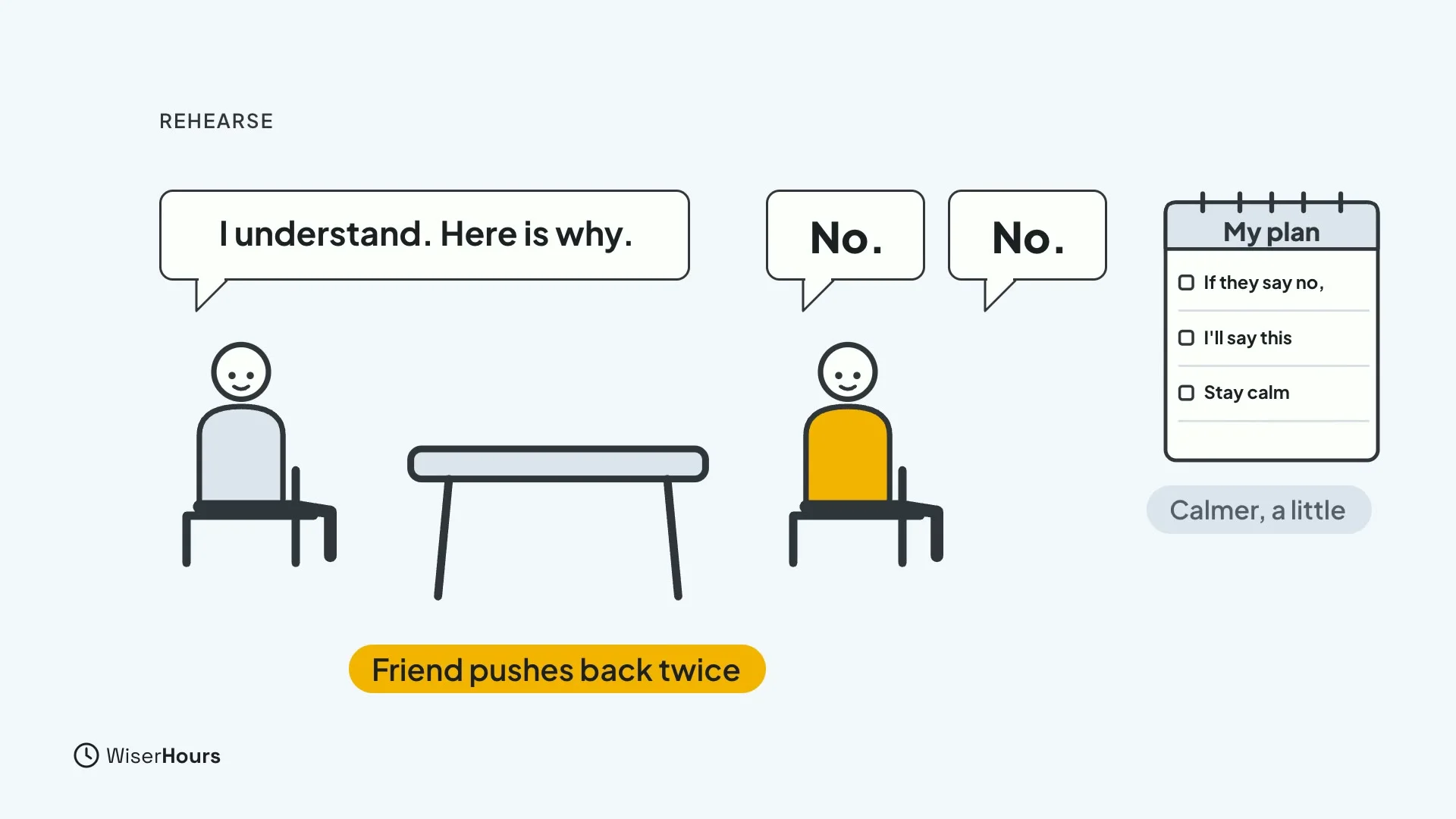
Write your opening line, and one reply to push-back. Then rehearse with a friend who pushes back twice.
In studies, simple plans like “if they say no, I’ll say this” helped people stay calmer, though the effect was small.
 (opens the full-size picture)
YOUR TURN
Read more
- Hardball Tactics: How to Recognize and Respond to Them: what to say to final offers and last-minute extras.
- Negotiation Anxiety: How to Stay Calm When the Stakes Feel High: slowing down and planning ahead.
- How to Respond to a Lowball Offer Without Losing the Deal: wording for a low number.
- How to Negotiate: A Research-Backed Guide for Everyday Life: the core habits behind these scripts.
Read the full lesson script
In this lesson, you'll get a handful of short, polite sentences for pay conversations, and practise them, so the words are ready when you feel nervous.
Most pay conversations follow a simple shape. Open warmly. Give your case in one or two facts. Then your number. Then a question that hands it back. For example: I'm excited about this role. Based on my experience running similar projects, and pay for similar roles, I'm asking for sixty-eight thousand. How does that fit your budget?
Questions are your best tools. What is that figure based on? Is there flexibility on the salary? What would need to be true for this to work? Open questions that start with what or how get people talking. Then pause, and listen.
Silence is fine. When they name a number, count to three before you answer, or repeat it back: so, sixty-two thousand. In experiments, anxious negotiators replied faster and settled for less, so slowing down helps. You can always say: I'd like to think about that overnight.
If they say it's their final offer, don't argue about the word. Ask about the rest of the package: setting the salary aside, could we look at the start date, or a review in six months? Offers are rarely truly final.
Watch for small extras at the very end, like: one more thing, could you also take on this? Answer with: happy to look at that, what would you offer in return? And before you agree to anything big, ask: is there anything else we need to settle?
Write your opening line, and one reply to push-back. Then rehearse with a friend who pushes back twice. In studies, simple plans like, if they say no, I'll say this, helped people stay calmer, though the effect was small.
So remember: open warmly, give your case, your number, and a question. Pause before you answer any number. And trade, don't just give. Before the next lesson, write your opening line and one reply to push-back, and rehearse them with a friend. Next, you'll learn how to ask for a raise in your current job.
MAKE IT A SMALL WIN
Finished this lesson?
Mark it complete to save your progress on this device.