A new job · Lesson 4 of 10
How to Answer 'What Are Your Salary Expectations?'
Learn to ask for the pay range first, give a researched range with a reason, and handle questions about your current pay.
 Video coming soon
Money often comes up while you are still applying, and one question makes many people freeze: “What are your salary expectations?” This lesson gives you calm, simple ways to answer it, and to handle questions about what you earn now.
Who knows more
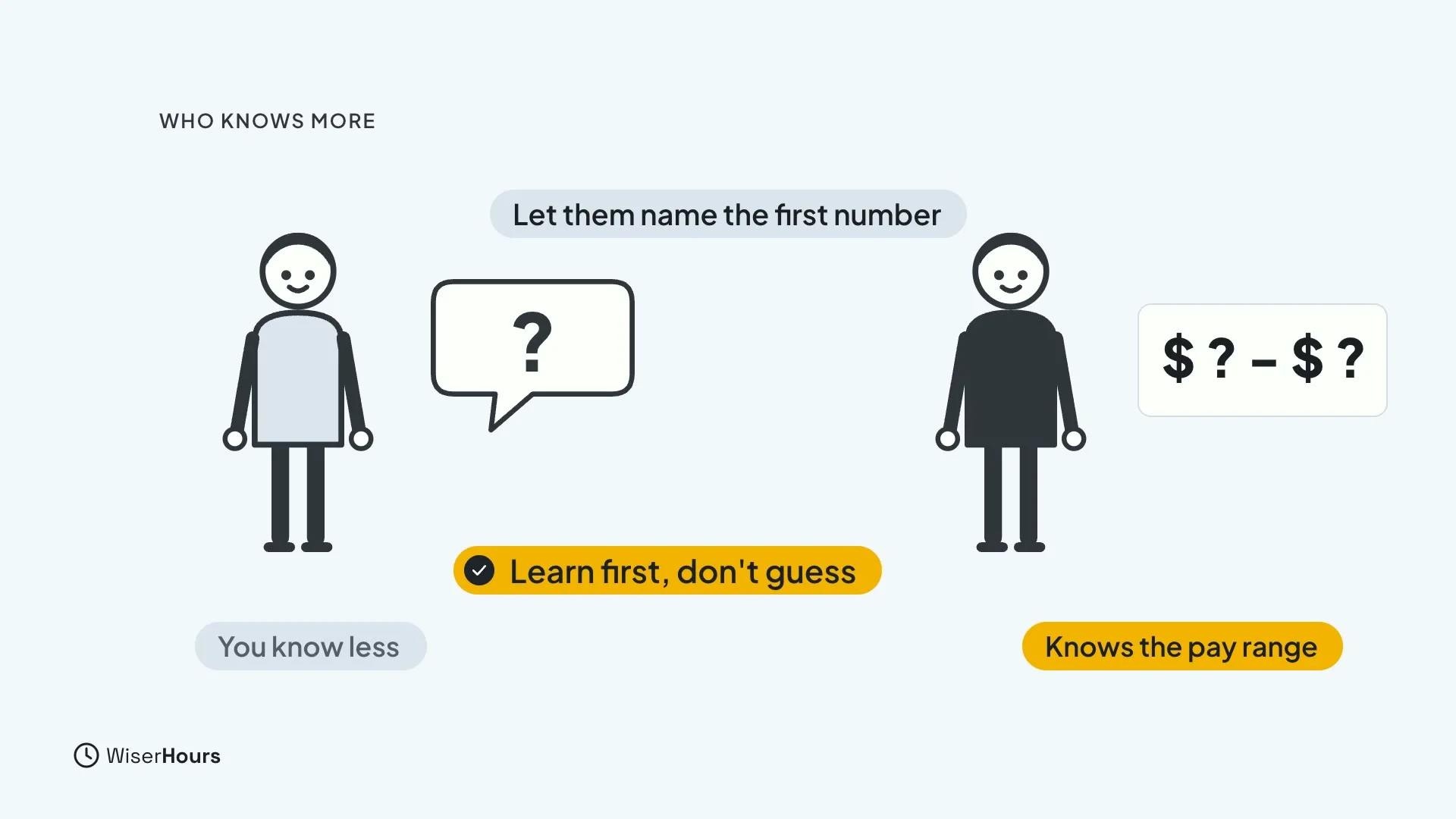
In most hiring, the employer knows the pay range much better than you do. Research on first offers suggests that the side with less information often does better by letting the other side name the first number. So your first move is to learn, not to guess.
 (opens the full-size picture)
Ask for their range
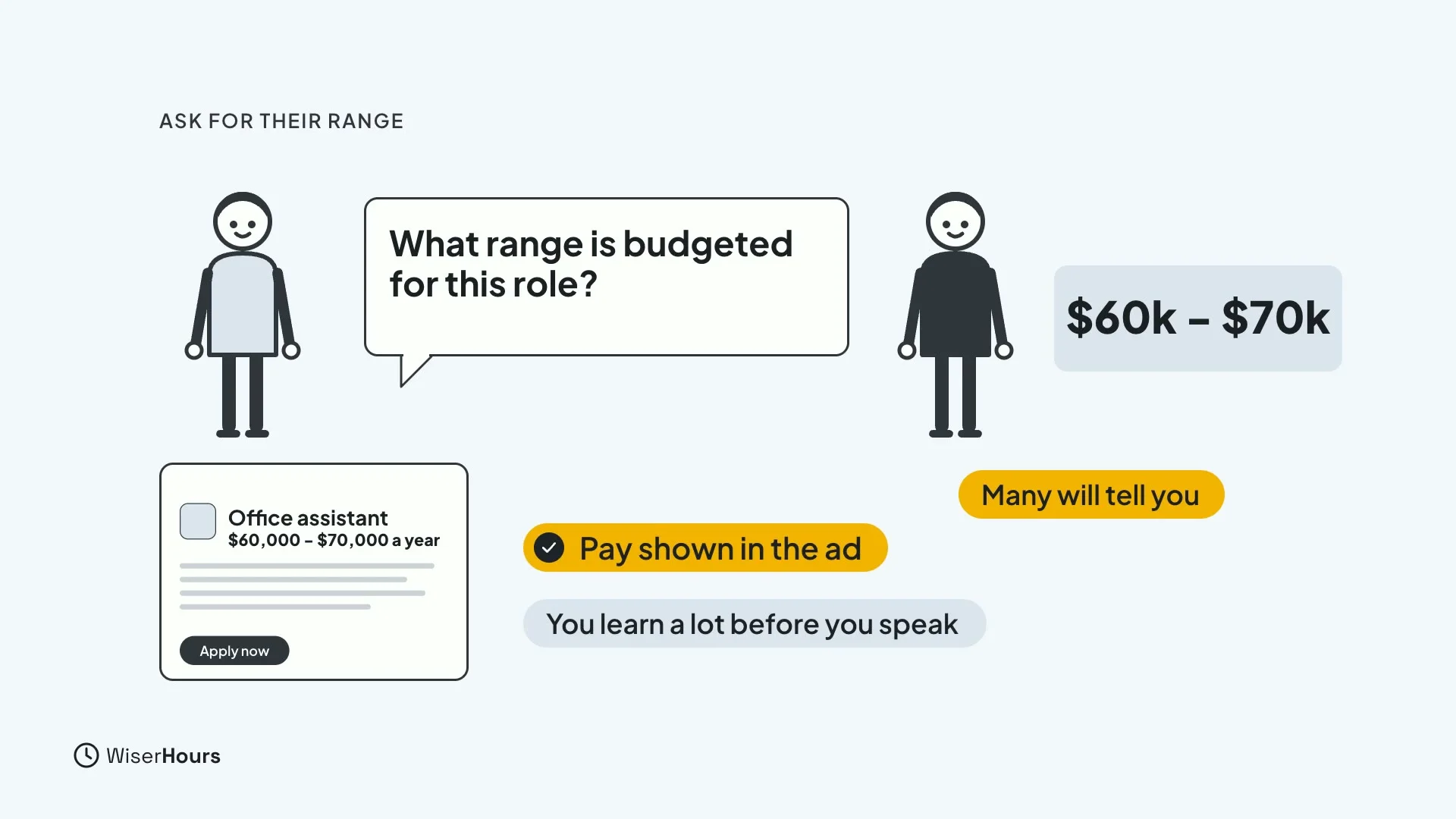
When money comes up, try asking first: “What range is budgeted for this role?” Many employers will tell you. And if the job ad already shows a range, you have learned a lot before you say a word.
 (opens the full-size picture)
Give a range with a reason
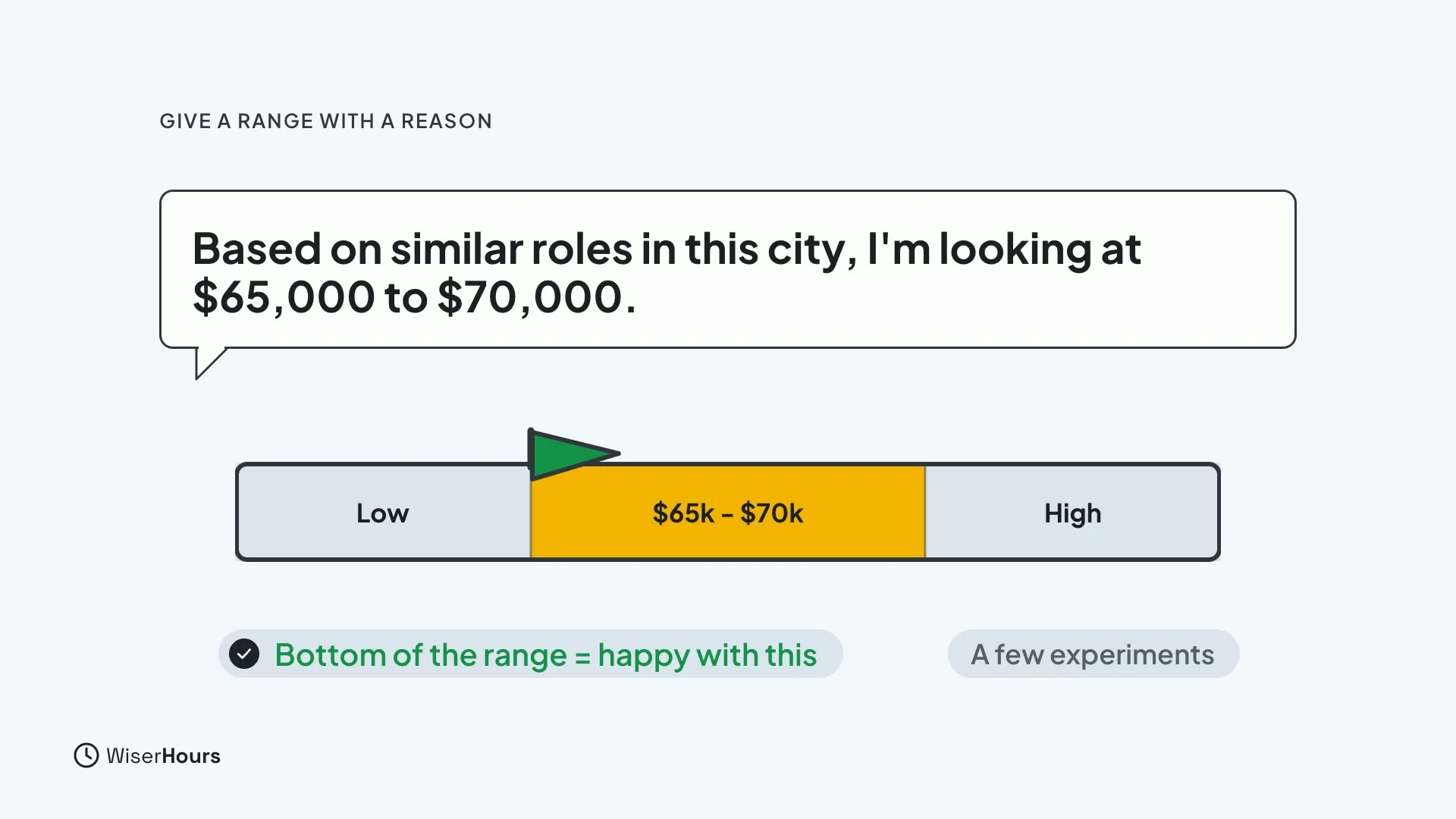
If they still want your number, give a researched range instead of one figure, with a short reason. For example: “Based on similar roles in this city, I’m looking at $65,000 to $70,000.” Make sure the bottom of your range is a number you would be happy with.
In a few experiments, some ranges led to better terms without harming the relationship, though how wide and how bold the range was mattered. Treat this as a sensible habit, not a guarantee.
 (opens the full-size picture)
Your current pay
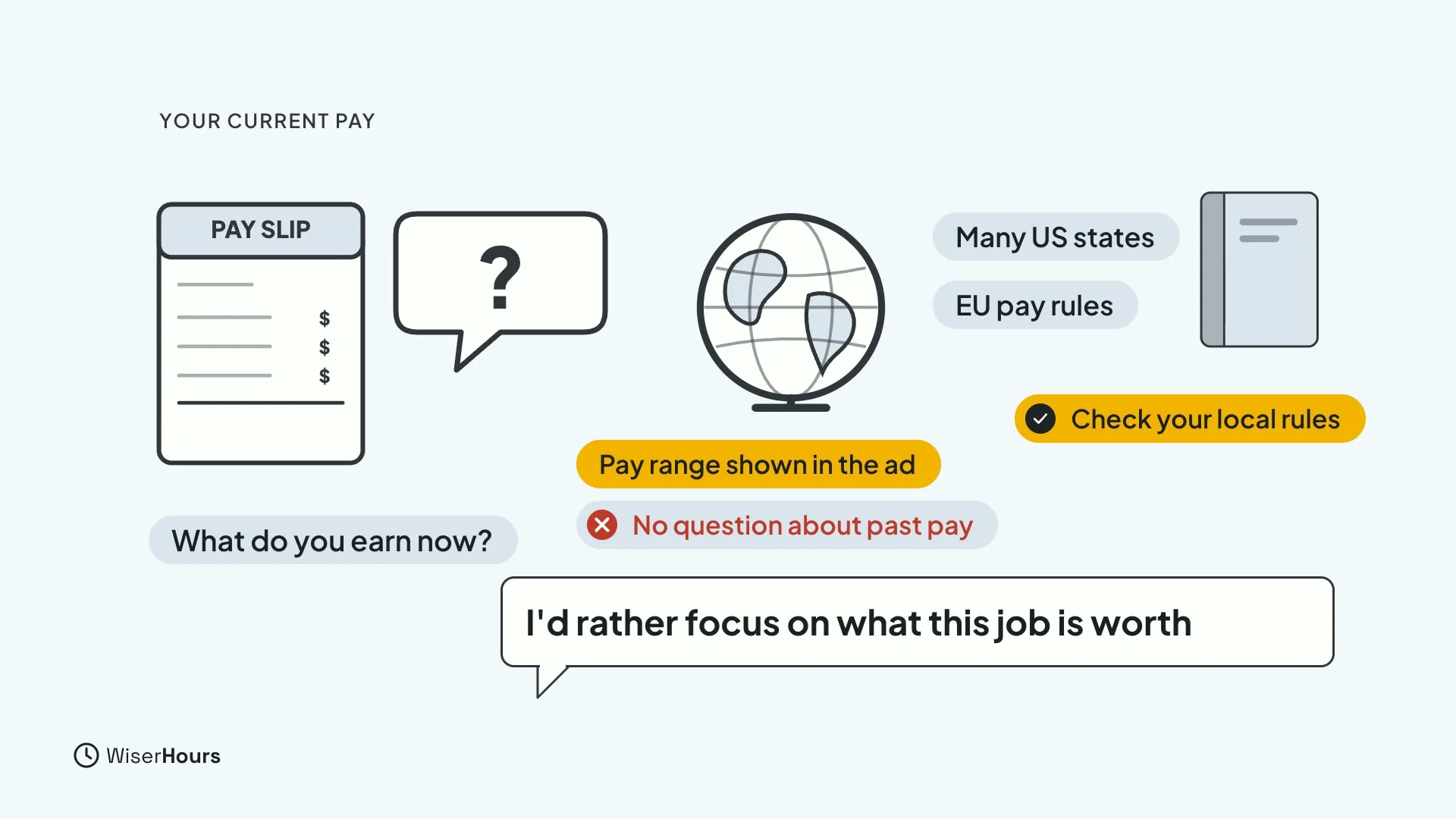
You may also be asked what you earn now. In a growing number of places, employers must show the pay range for a job and may not ask about your past pay. This includes many US states, and new European Union pay rules that countries are now bringing into law. Rules differ and change quickly, so check your local rules.
Where you are not protected, you can steer back to the role: “I’d rather focus on what this job is worth.” This page is general information, not legal advice.
 (opens the full-size picture)
Check your local rules
Pay-range and past-pay rules change often and vary a lot between countries and regions. Look up your own place before you rely on any of this.
Early is fine
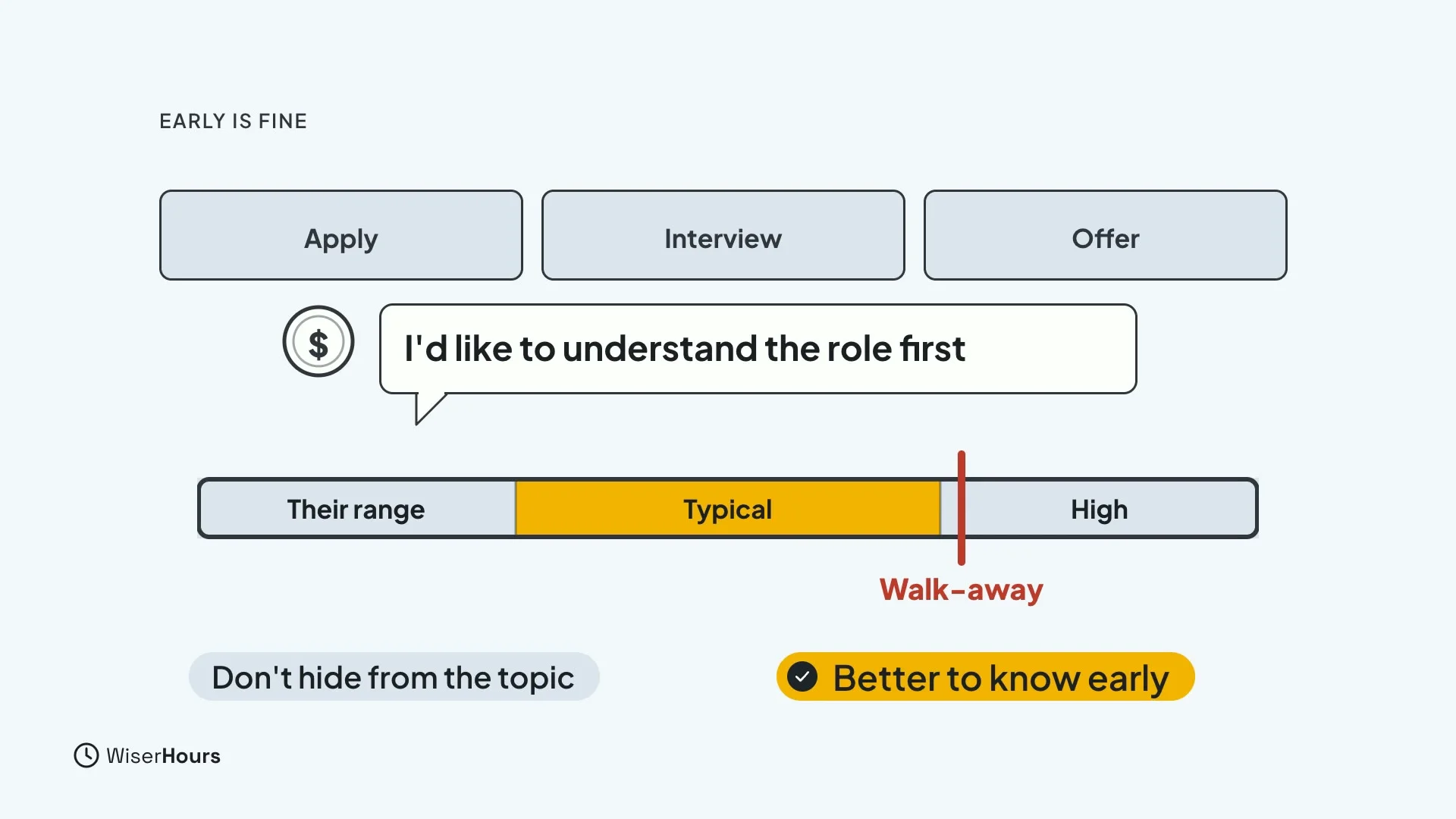
Money often comes up early, before anyone knows how good you are. You can say you would like to understand the role first, and talk numbers once both sides are keen. But do not hide from the topic. If their range is far below your walk-away point, it is better to find out early.
 (opens the full-size picture)
Practise your answer
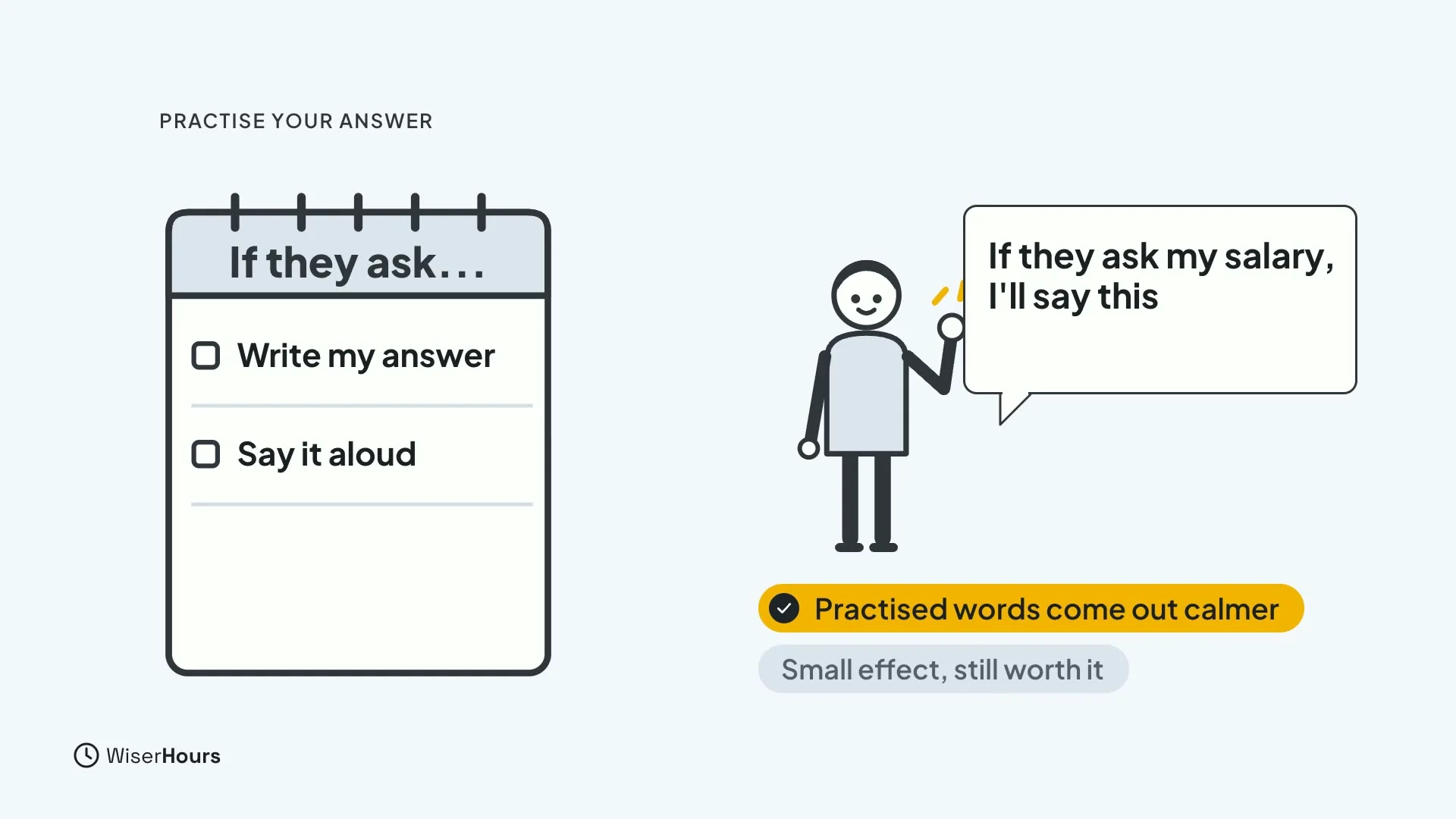
Write your answer to the salary question before the interview, and say it out loud a few times. Practised words come out calmer. In studies, simple if-then plans, like “If they ask my salary, I’ll say this,” helped people stay calmer, though the effect was small. It is still worth the two minutes.
 (opens the full-size picture)
YOUR TURN
Read more
- Should You Make the First Offer? What the Research Says: why the side with less information may wait.
- How to Ask for a Raise: A Step-by-Step Guide: giving a figure you can explain.
Read the full lesson script
In this lesson, you'll learn what to say when money comes up while you're applying for a job, including the question many people dread: what are your salary expectations?
In most hiring, the employer knows the pay range much better than you do. Research on first offers suggests that the side with less information often does better by letting the other side name the first number. So your first move is to learn, not to guess.
When money comes up, try asking first: what range is budgeted for this role? Many employers will tell you. And if the job ad already shows a range, you've learned a lot before you say a word.
If they still want your number, give a researched range instead of one figure, with a short reason. For example: based on similar roles in this city, I'm looking at sixty-five to seventy thousand. Make sure the bottom of your range is a number you'd be happy with. In a few experiments, some ranges led to better terms without harming the relationship, though how wide and how bold the range was mattered.
You may also be asked what you earn now. In a growing number of places, employers must show the pay range for a job, and may not ask about your past pay. This includes many US states, and new European Union pay rules that countries are now bringing into law. Rules differ and change quickly, so check your local rules. Where you're not protected, you can steer back to the role: I'd rather focus on what this job is worth.
Money often comes up early, before anyone knows how good you are. You can say you'd like to understand the role first, and talk numbers once both sides are keen. But don't hide from the topic. If their range is far below your walk-away point, it's better to find out early.
Write your answer to the salary question before the interview, and say it out loud a few times. Practised words come out calmer. In studies, simple if-then plans, like if they ask my salary, I'll say this, helped people stay calmer, though the effect was small.
So remember: the employer usually knows more, so ask for their range first. If you give a number, give a researched range with a reason. And check your local rules about past pay. Before the next lesson, write your answer to the question, what are your salary expectations, and say it out loud. Next, you'll learn how to respond to a job offer.
MAKE IT A SMALL WIN
Finished this lesson?
Mark it complete to save your progress on this device.