A new job · Lesson 5 of 10
How to Respond to a Low Job Offer Calmly
Reply to a low job offer with thanks, a polite no to their figure, and your own number with a reason, without meeting in the middle.
 Video coming soon
When a job offer arrives, especially a low one, the first reply matters. This lesson shows how to answer calmly, keep the talk friendly, and bring the conversation back to your own number.
Take a pause
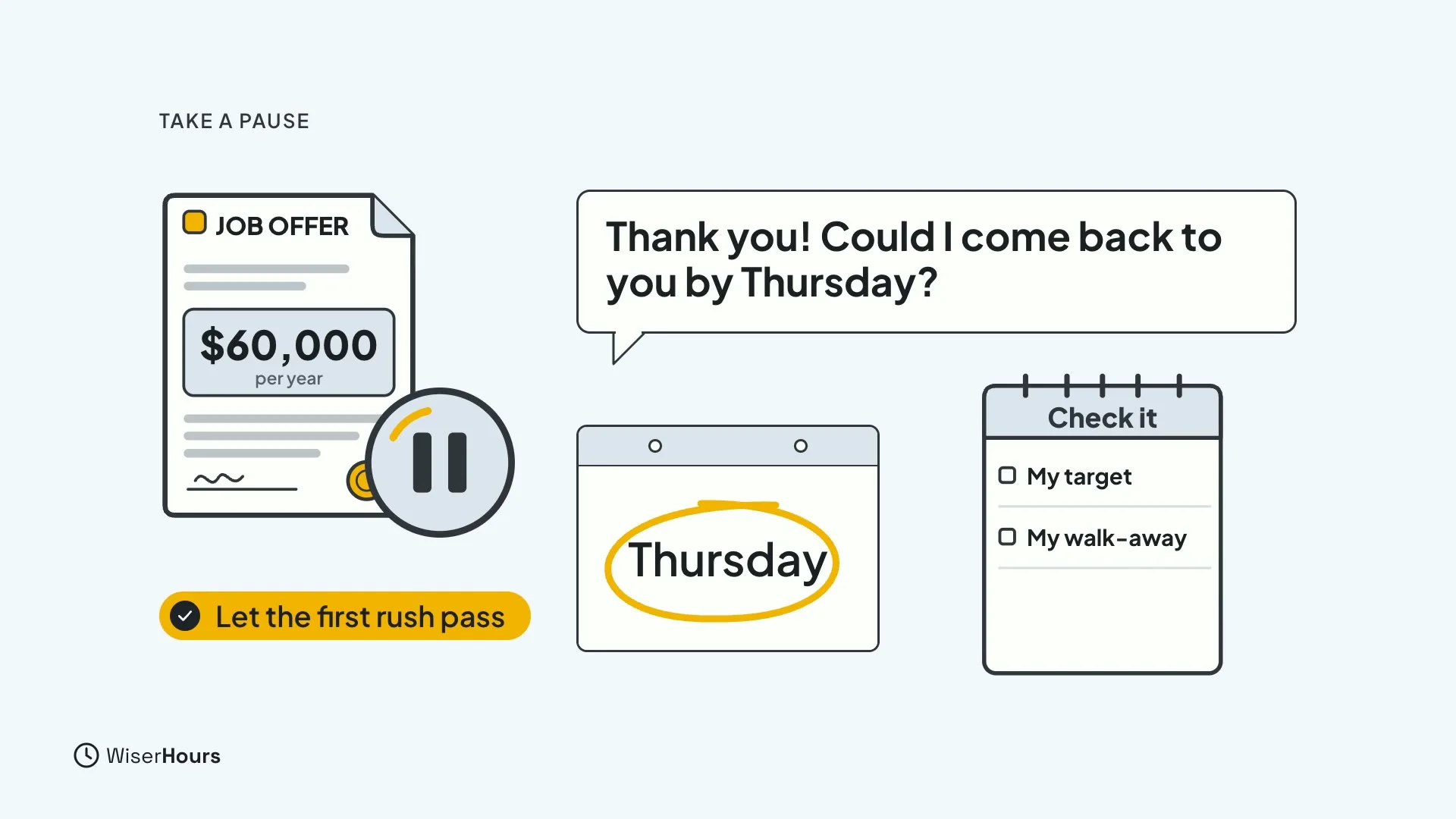
Do not answer on the spot. Thank them, say you are pleased, and ask for a little time, for example: “Could I come back to you by Thursday?”
That time lets you check the offer against your target and your walk-away point, the two numbers you set earlier in this course. It also lets the first rush of feeling pass, so you reply with a clear head.
 (opens the full-size picture)
A low number is a start
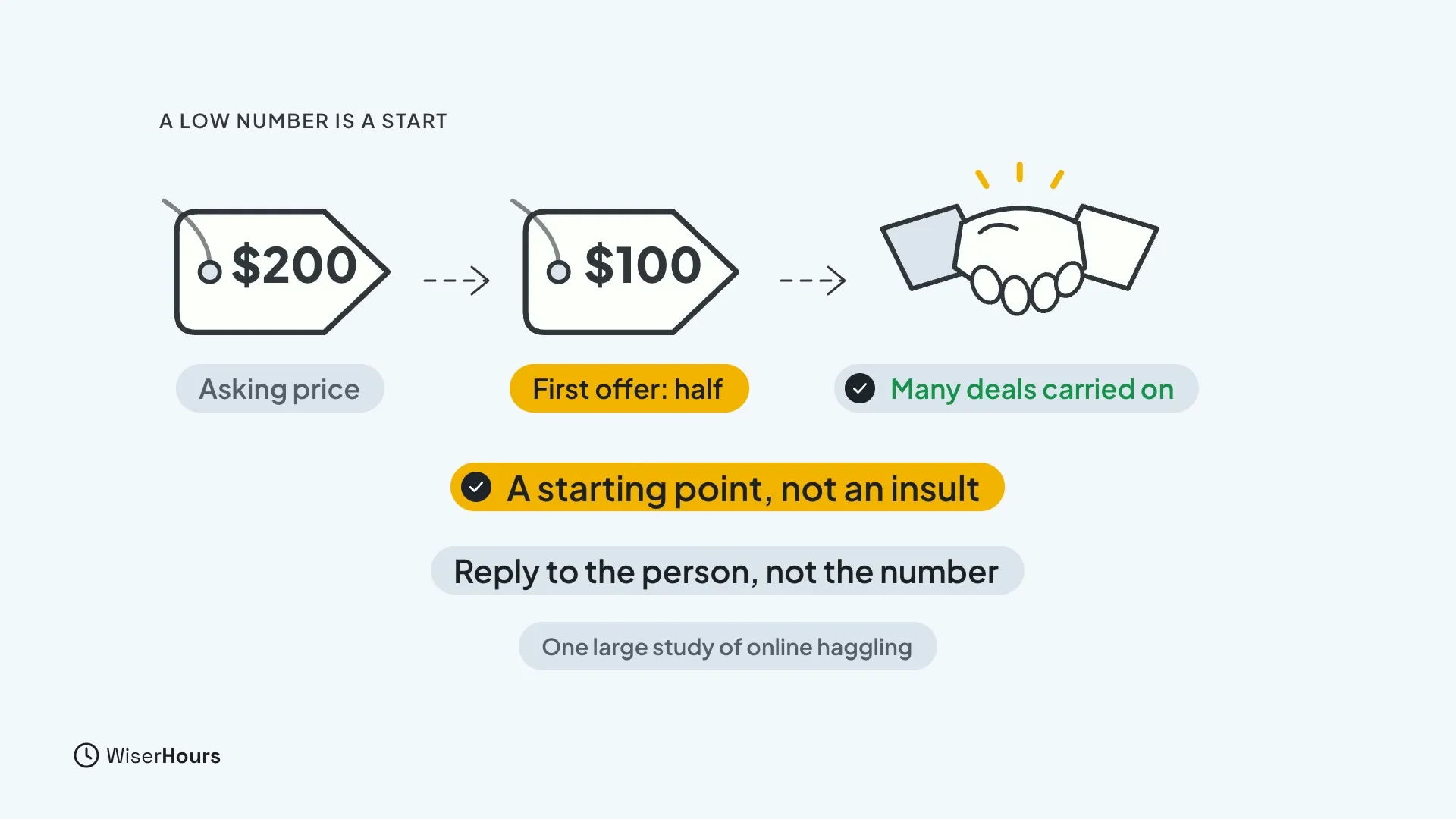
If the number is low, do not panic. In a large study of online haggling, the most common first offer was half the asking price, and many of those deals carried on. A low first number is often a starting point, not an insult.
So reply to the person, not to the number. Stay friendly and keep talking.
 (opens the full-size picture)
Do not split the difference
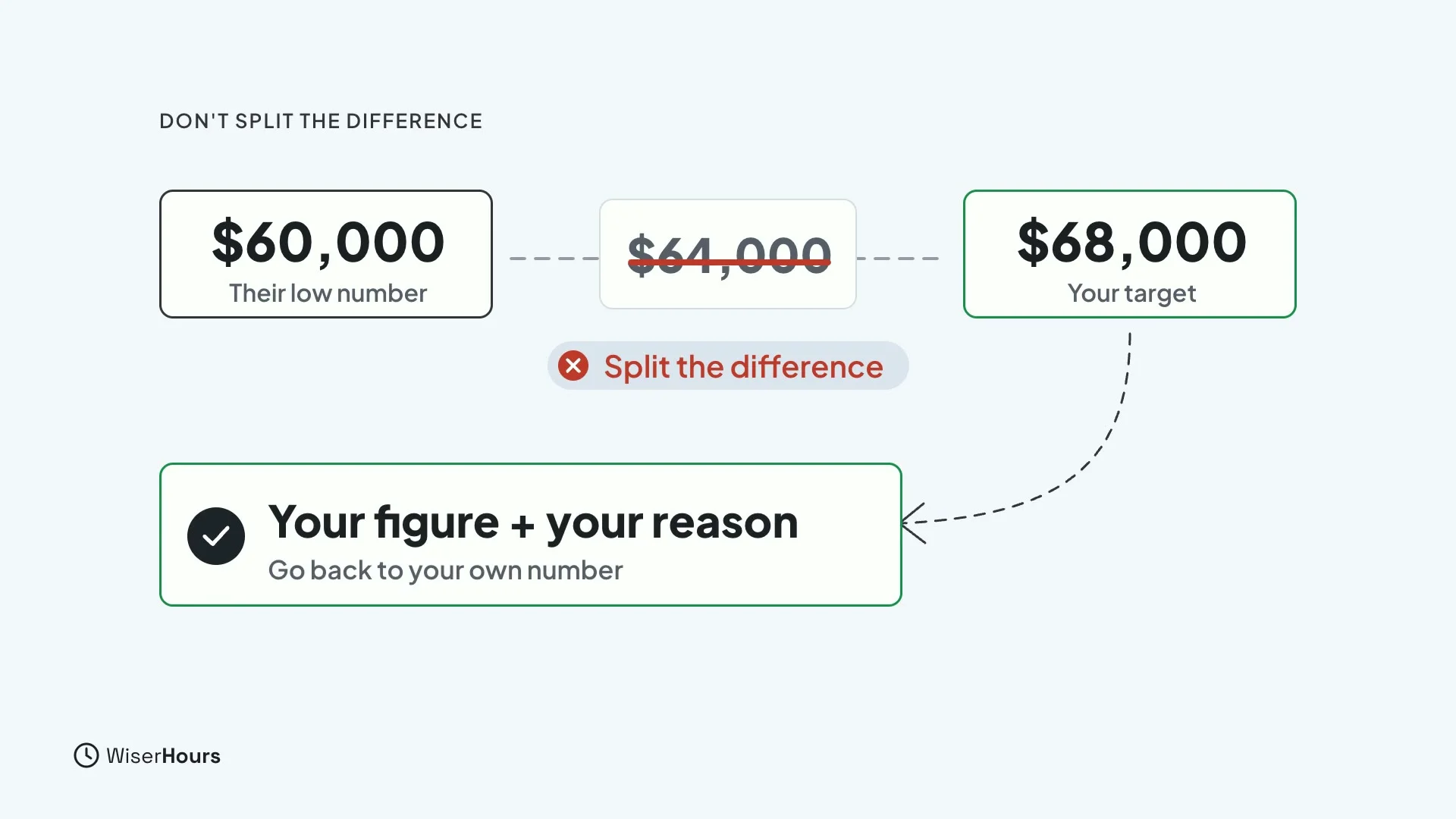
One trap is meeting in the middle. Say their number is $60,000 and your target is $68,000. If you answer with $64,000, you have accepted their low number as one end of a fair range, and the middle is now measured from it.
Instead, go back to your own figure and your reason.
 (opens the full-size picture)
A three-sentence reply
A good reply fits in three sentences:
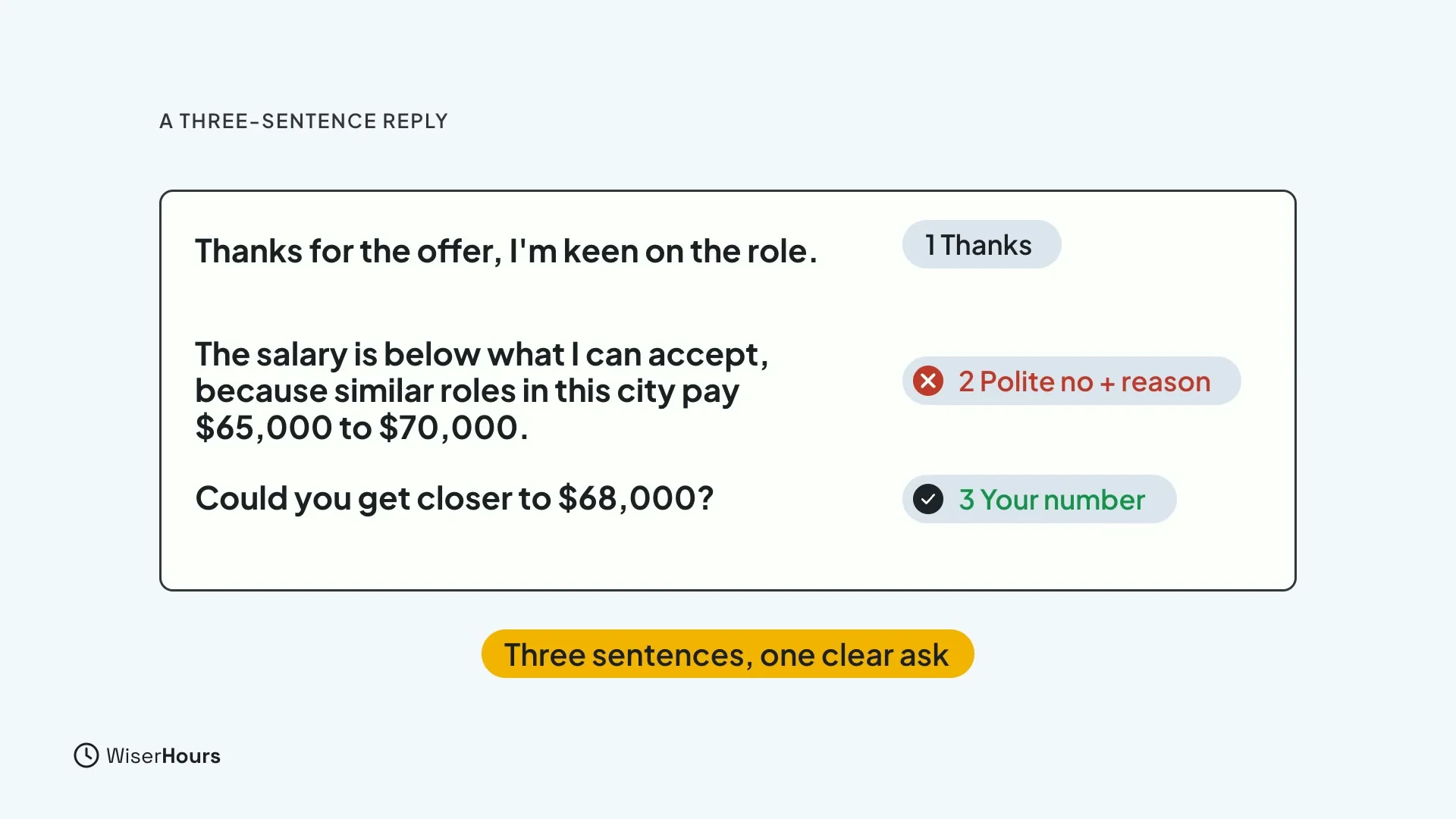
- Thanks for the offer, I’m keen on the role.
- The salary is below what I can accept, because similar roles in this city pay $65,000 to $70,000.
- Could you get closer to $68,000?
That is thanks, a polite no to their figure, and your number with a reason they can check. Use a reason that is easy to verify, such as what similar roles pay where you live.
 (opens the full-size picture)
Ask what it is based on
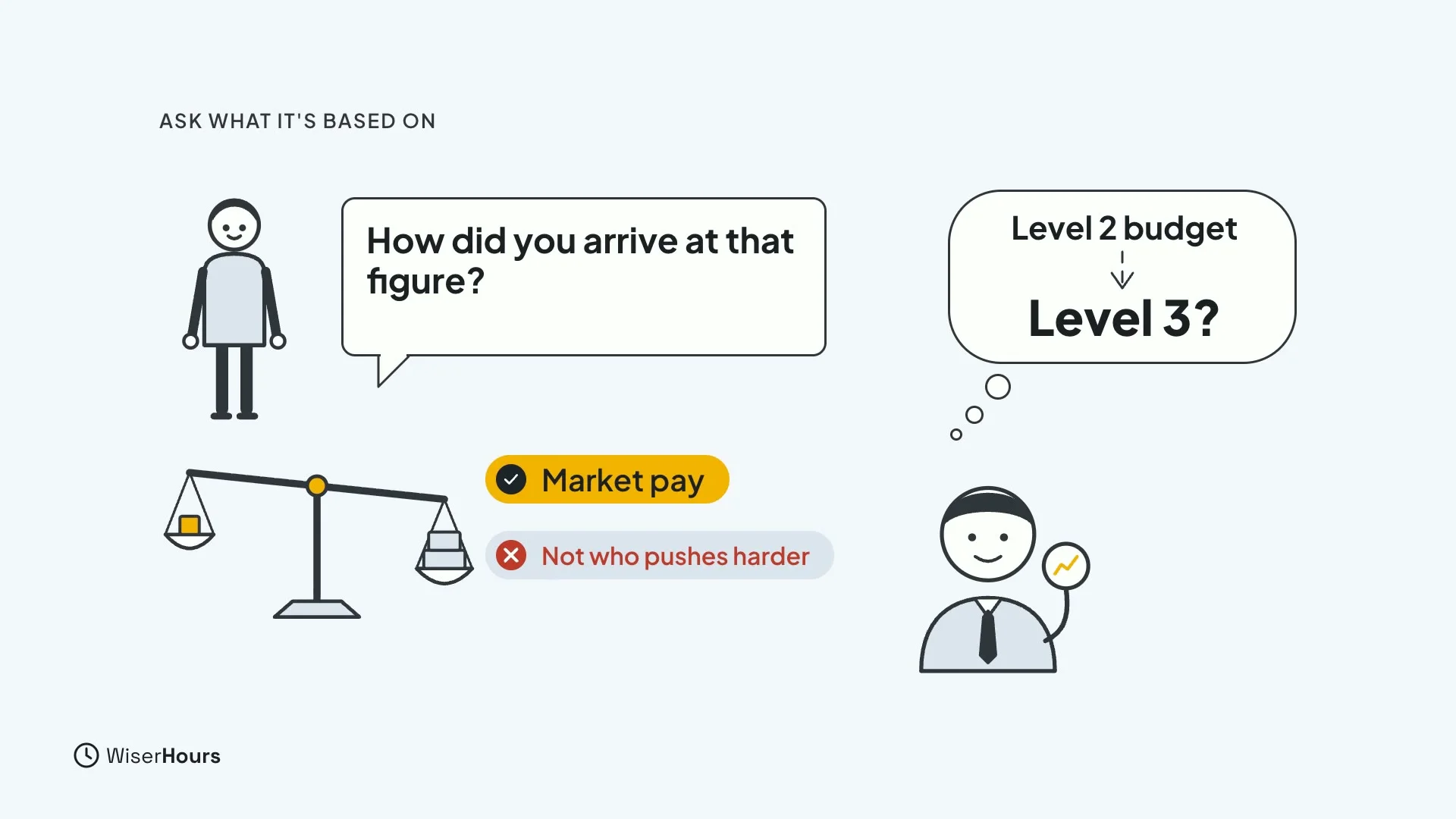
You can also ask: “How did you arrive at that figure?” Their answer tells you what they value, and sometimes shows room to move, like a different level or title. For example, a role budgeted at one level may be open to the next.
Steer the talk towards fair standards, such as market pay, rather than towards who pushes harder.
 (opens the full-size picture)
By email, and know your limit
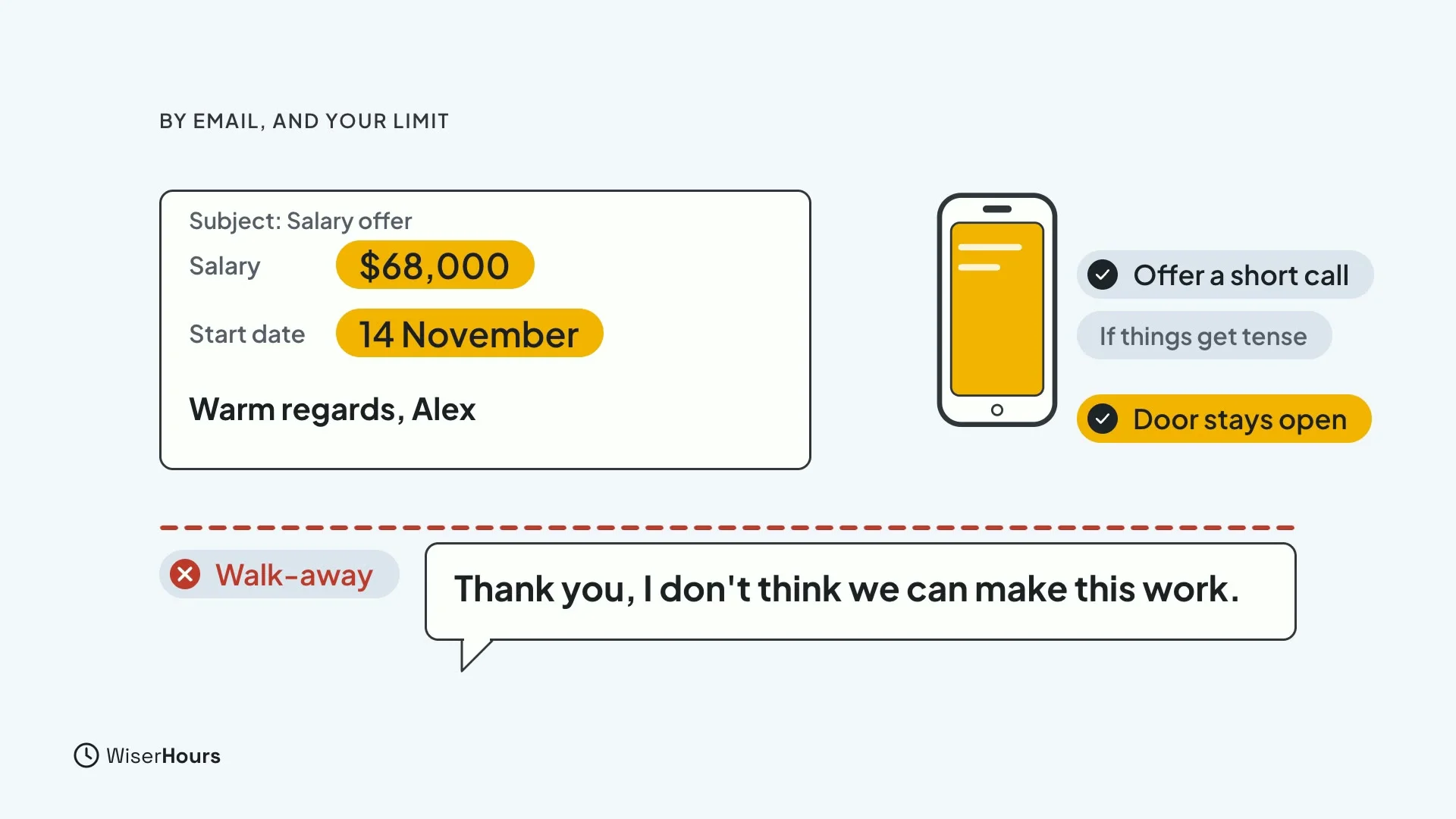
Replying by email is fine, and it gives you time to think. Write figures and dates clearly, keep the tone warm, and offer a short call if things get tense.
Also know your limit. If they will not reach your walk-away point, thank them and decline politely. If anything changes, they know where to find you.
 (opens the full-size picture)
YOUR TURN
Read more
- How to Respond to a Lowball Offer Without Losing the Deal: the five moves behind this lesson.
- Should You Make the First Offer? What the Research Says: why the first number carries weight.
- Negotiation Anxiety: How to Stay Calm When the Stakes Feel High: steady yourself before you reply.
- Negotiating by Email: What to Write and What to Avoid: wording for a written reply.
Read the full lesson script
In this lesson, you'll learn how to reply when a job offer arrives, especially when the number is lower than you hoped.
First, don't answer on the spot. Thank them, say you're pleased, and ask for a little time: could I come back to you by Thursday? Taking time lets you check the offer against your target and walk-away point, and lets the first rush of feeling pass.
If the number is low, don't panic. In a large study of online haggling, the most common first offer was half the asking price, and many of those deals carried on. A low first number is often a starting point, not an insult. Reply to the person, not to the number.
One trap is meeting in the middle. If you split the difference between their low number and your target, you've accepted their number as one end of a fair range. Instead, go back to your own figure and your reason.
A good reply fits in three sentences. Thanks for the offer, I'm keen on the role. The salary is below what I can accept, because similar roles in this city pay sixty-five to seventy thousand. Could you get closer to sixty-eight? That's thanks, a polite no to their figure, and your number with a reason they can check.
You can also ask: how did you arrive at that figure? Their answer tells you what they value, and sometimes shows room to move, like a different level or title. Steer the talk towards fair standards, such as market pay, rather than who pushes harder.
Replying by email is fine, and it gives you time to think. Write figures and dates clearly, keep the tone warm, and offer a short call if things get tense. And know your limit. If they won't reach your walk-away point, thank them and decline politely. If anything changes, they know where to find you.
So remember: pause before you reply. Don't split the difference with a low number. And reply with thanks, a polite no to their figure, and your number with a reason. Before the next lesson, draft your three-sentence reply to an offer that's lower than your target. Next, you'll negotiate the whole package.
MAKE IT A SMALL WIN
Finished this lesson?
Mark it complete to save your progress on this device.