Build the fund · Lesson 5 of 10
How Big Should Your Emergency Fund Be? Size It in Months
Learn what an emergency fund is, why three to six months is only a guide, and how to price yours from your statements.
 Video coming soon
An emergency fundemergency fund: Money kept in an account you can reach quickly, to cover unexpected costs or a drop in income without borrowing. How much to hold depends on your circumstances, and official guidance differs by country.Full entry in the glossary is the cash that stands between a bad surprise and a debt. This lesson helps you decide how big yours should be, in months of your own costs rather than a fixed amount. It is general information, not financial advice.
What it is
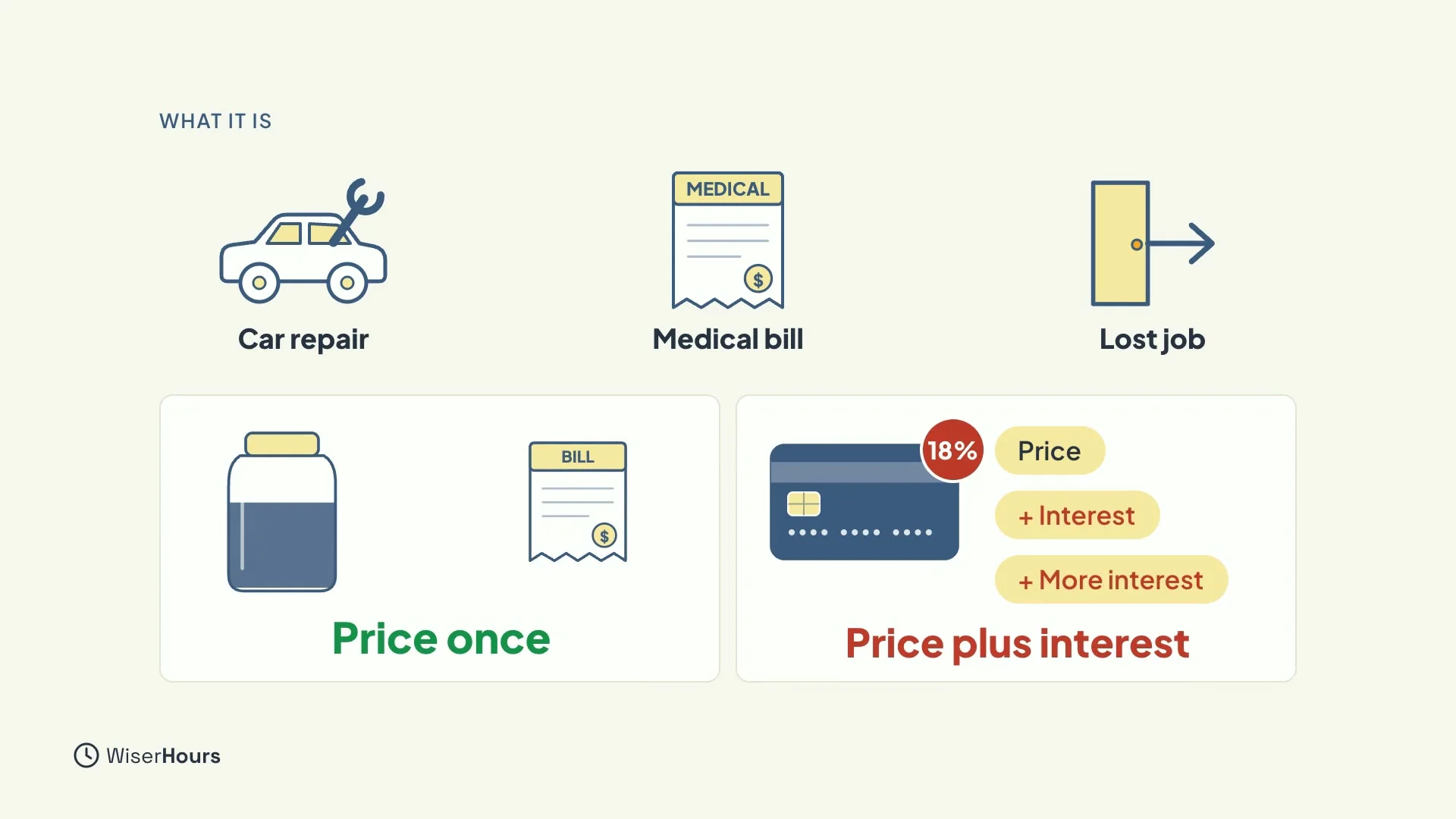
An emergency fund is cash set aside for unplanned costs or a loss of income, like a car repair, a medical bill or a lost job. Paid from savings, a shock costs its price once. Put on a card, it costs its price plus interest.
 (opens the full-size picture)
The famous rule
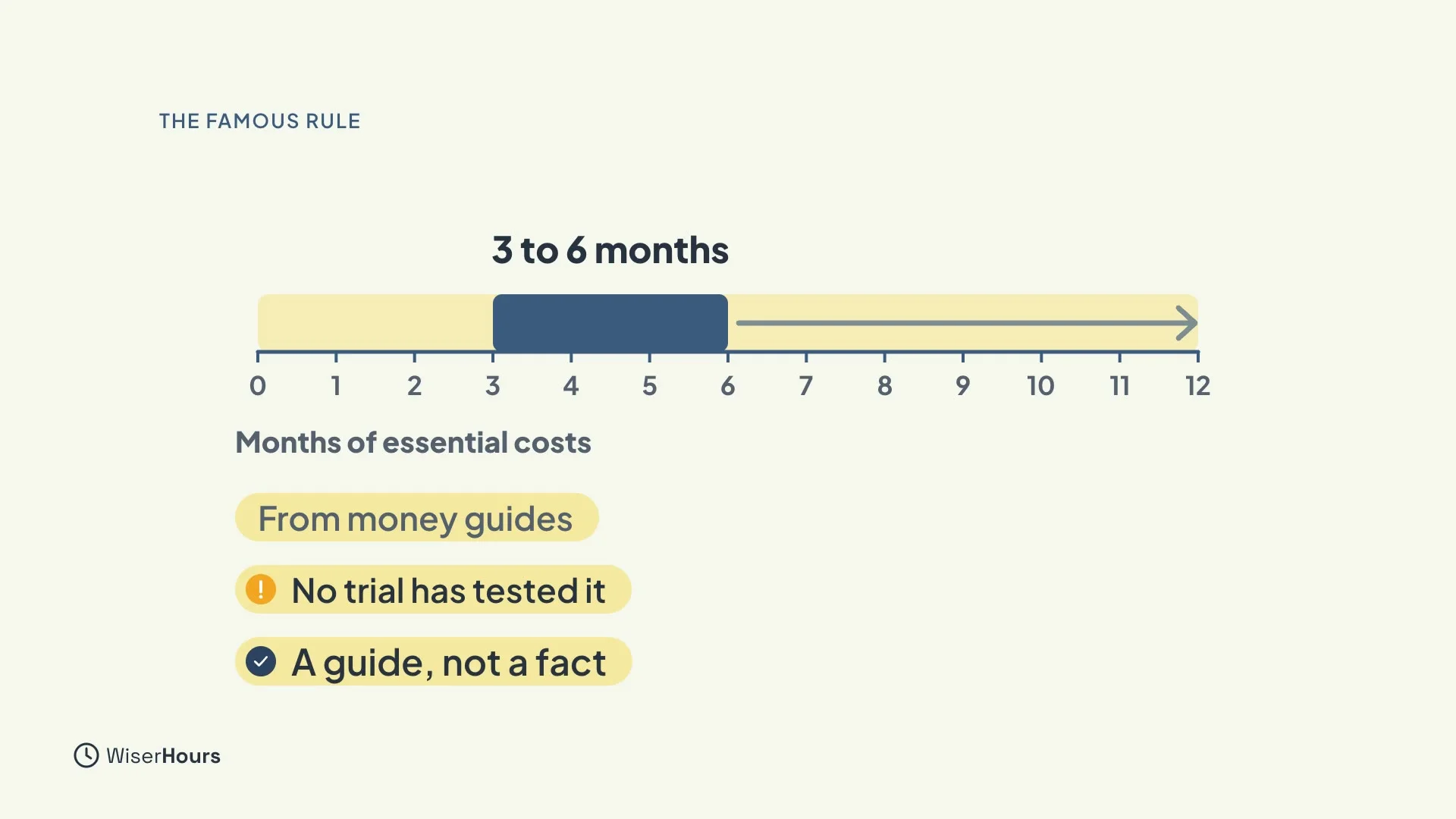
You may have heard the rule: three to six months of essential costs. It comes from money guides, and we found no trial that tested it. So treat it as a guide, not a fact.
Different sources use it differently. A UK government-backed money guide calls three to six months of essential outgoings a good rule of thumb, and the UK regulator suggests at least three months of living expenses before anyone invests. Essentials, all living costs and income can be very different sums, so decide which one you are counting before you compare yourself with any rule.
 (opens the full-size picture)
Two layers
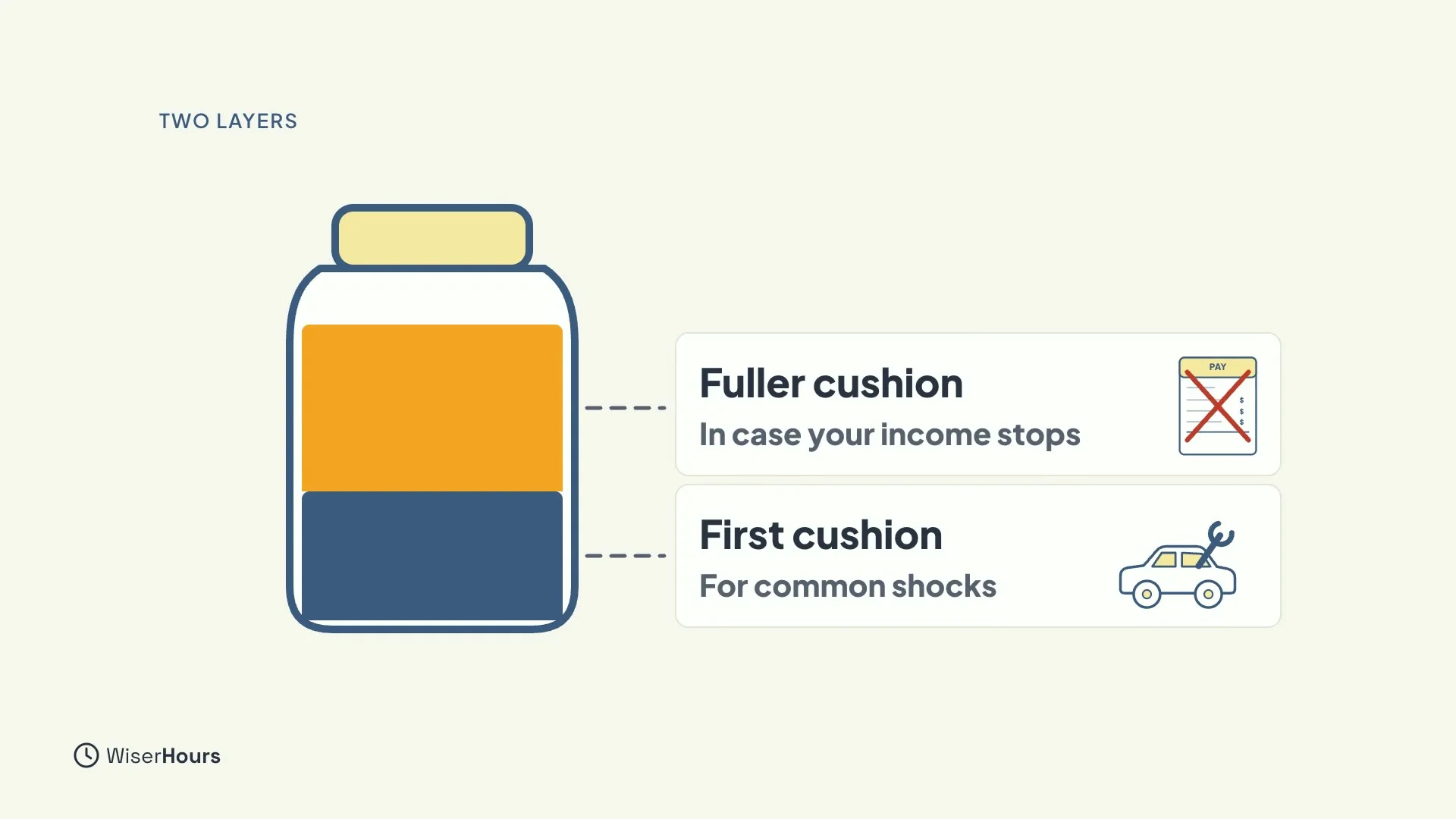
A more useful way is to think in two layers. First, a smaller cushion for common shocks, like a repair. Then a fuller one in case your income stops. Starting with the first layer means a partly built fund is already doing its job: a fund at half its target has still turned some future card balances into bills paid in cash.
 (opens the full-size picture)
How full?
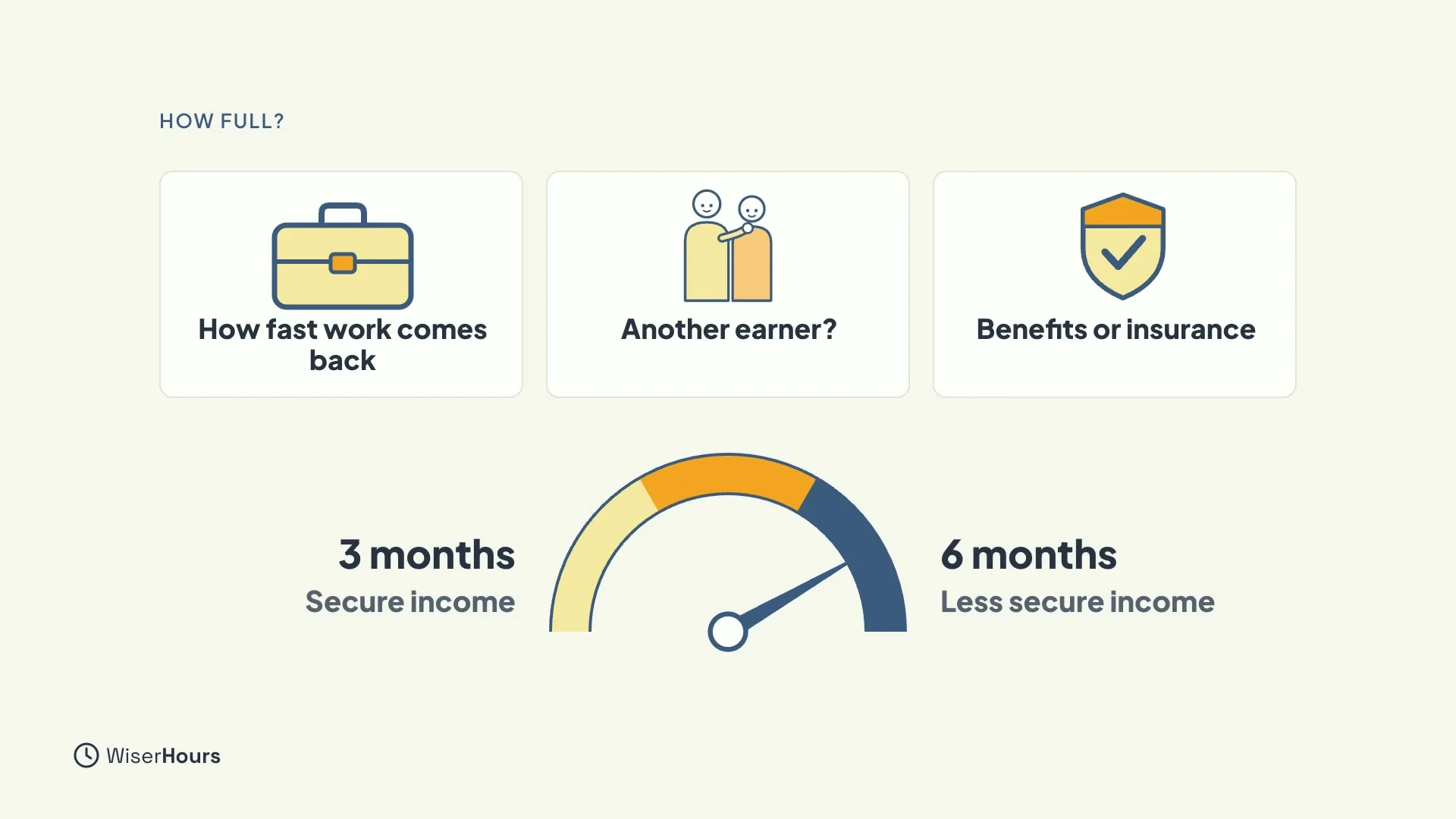
Ask how many months your essential bills could be paid if your main income stopped. That depends on how fast work in your field comes back, whether anyone else in your home earns, and what benefits or insurance would pay. As a reading of those factors, nearer three months fits a secure income and nearer six months fits a less secure one. That is our reading, not a tested rule. Benefits and insurance differ by country, so check what applies where you live.
 (opens the full-size picture)
Price it
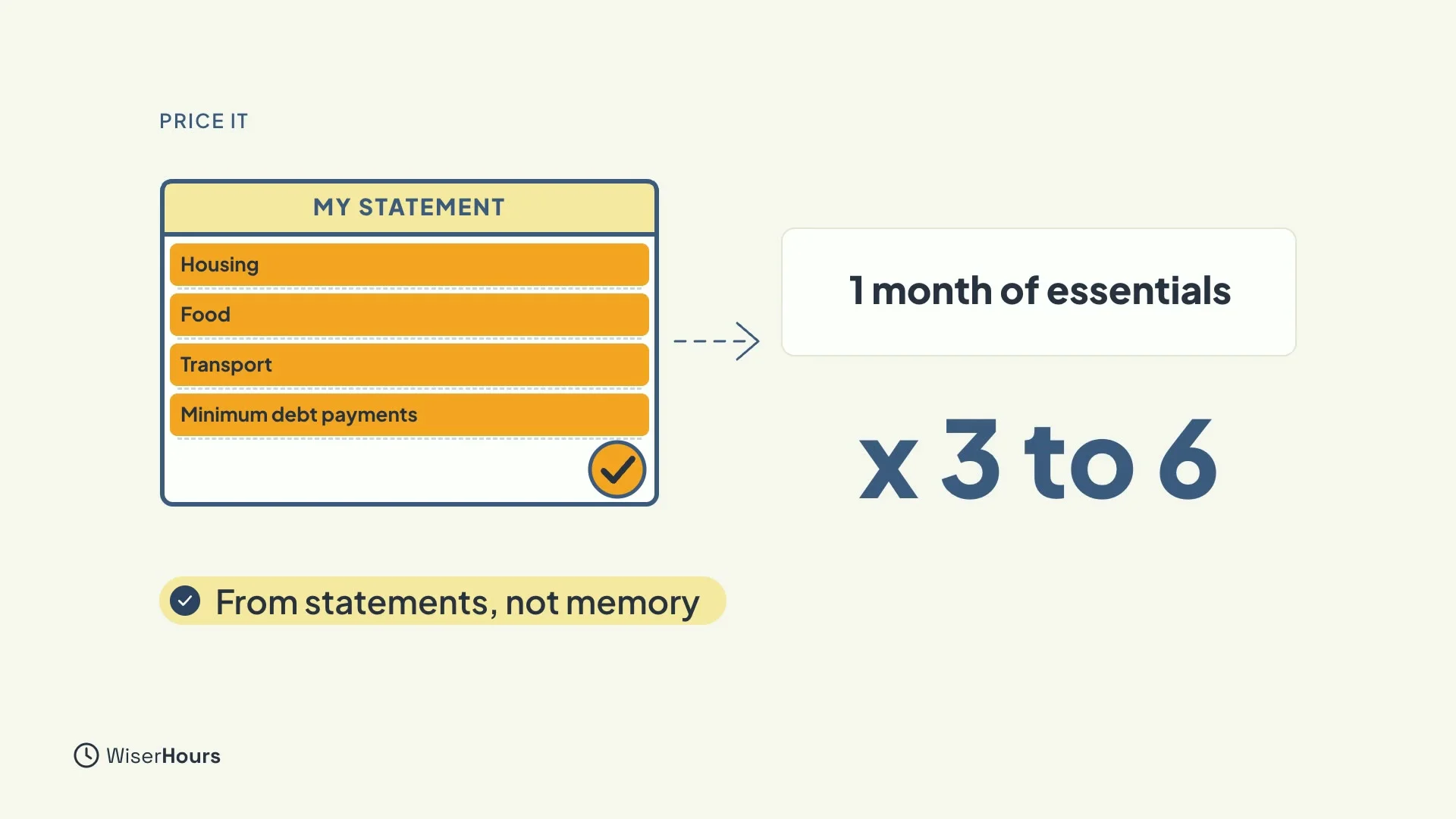
To price it, add up what you would still pay if your income stopped: housing, food, transport and minimum debt payments. Take the numbers from your statements, not from memory. Then multiply that one month by the months you chose.
 (opens the full-size picture)
YOUR TURN
Read more
- Emergency Fund Basics: What It’s For, How Big, and Where to Keep It: the full guide to size, safety and the rule’s limits.
- How to Make a Budget: A Step-by-Step Guide for Beginners: taking your costs from statements.
Read the full lesson script
In this lesson, you'll learn what an emergency fund is, and how big yours should be.
An emergency fund is cash set aside for unplanned costs or a loss of income, like a car repair, a medical bill, or a lost job. Paid from savings, a shock costs its price once. Put on a card, it costs its price plus interest.
You may have heard the rule: three to six months of essential costs. It comes from money guides, and no trial has tested it. So treat it as a guide, not a fact.
A more useful way is to think in two layers. First, a smaller cushion for common shocks, like a repair. Then a fuller one in case your income stops.
How full? Ask how many months your essential bills could be paid if your main income stopped. That depends on how fast work in your field comes back, whether anyone else in your home earns, and what benefits or insurance would pay. Nearer three months with secure income, nearer six without.
To price it, add up what you'd still pay if your income stopped: housing, food, transport and minimum debt payments. Take the numbers from your statements, not from memory. Then multiply by the months you chose.
So remember: it covers shocks and lost income, three to six months is a guide, and price it from your statements. Before the next lesson, add up one month of your essential costs. Next, you'll set your first target.
MAKE IT A SMALL WIN
Finished this lesson?
Mark it complete to save your progress on this device.