Use it well · Lesson 8 of 10
What Counts as an Emergency? Write Your List Now
Decide in calm times what your emergency fund is for, and use the calendar test to tell real emergencies from costs you can plan.
 Video coming soon
An emergency fund only works if you know what it is for. If every want can become an emergency, the money is gone before a real one arrives. This lesson helps you write your own rules now, while things are calm.
Write the list in calm times
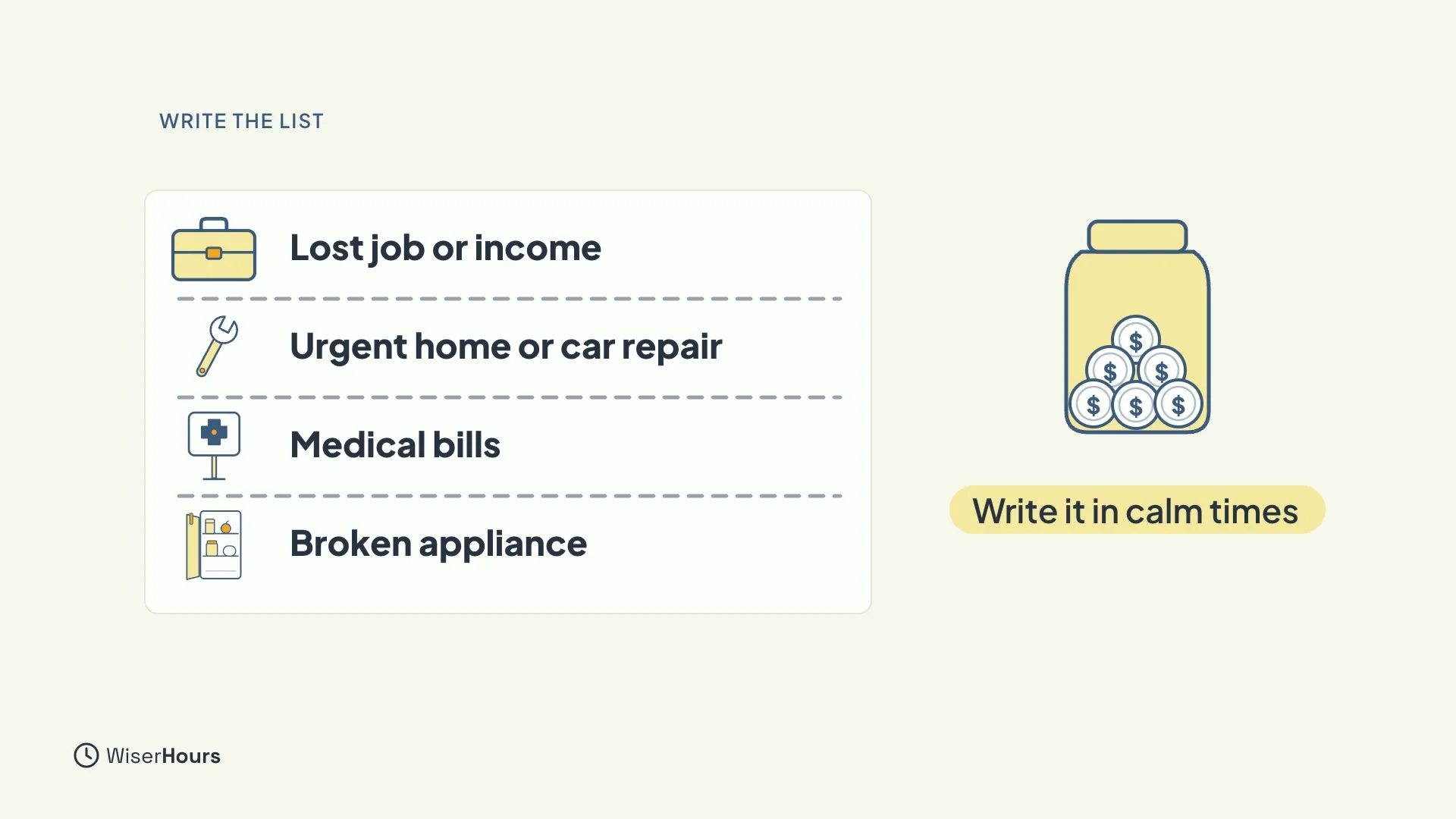
Common emergencies are losing your job or income, urgent home or car repairs, medical bills and a broken appliance. Write your own list, in your own words. Rules set in calm times make it easier to skip a sale, and easier to spend without guilt when something truly breaks.
 (opens the full-size picture)
The calendar test
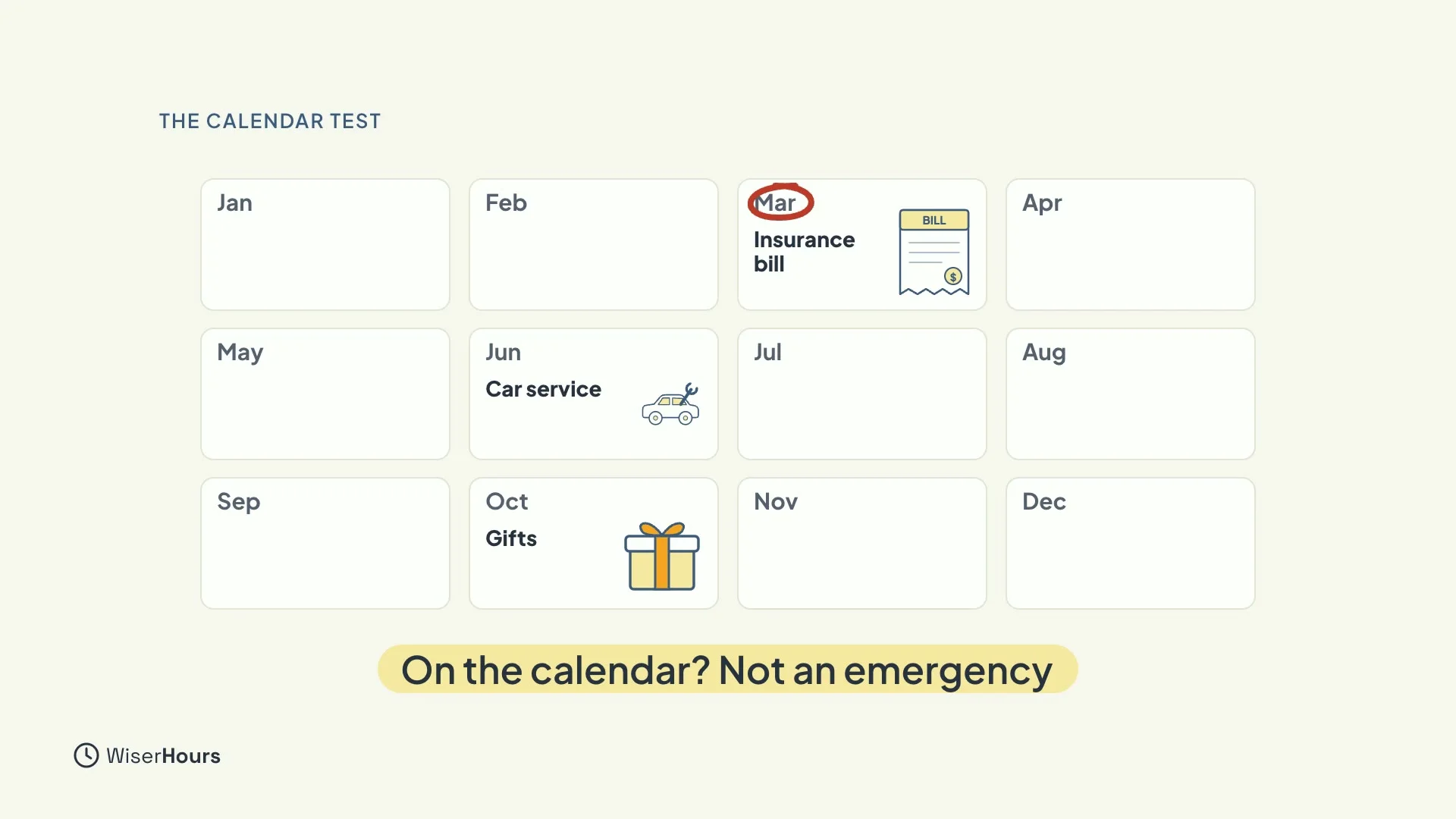
Costs you know are coming do not count. A yearly insurance bill, a car service or a birthday belongs in your budget, not your emergency fund. Here is a simple test: if you could write it on this year’s calendar, it is not an emergency. Give it its own savings pot instead, which you will learn to do in the last lesson.
Mixing the two causes trouble. An insurance bill paid from the emergency fund leaves less for the burst pipe that follows in spring.
 (opens the full-size picture)
The cases in between
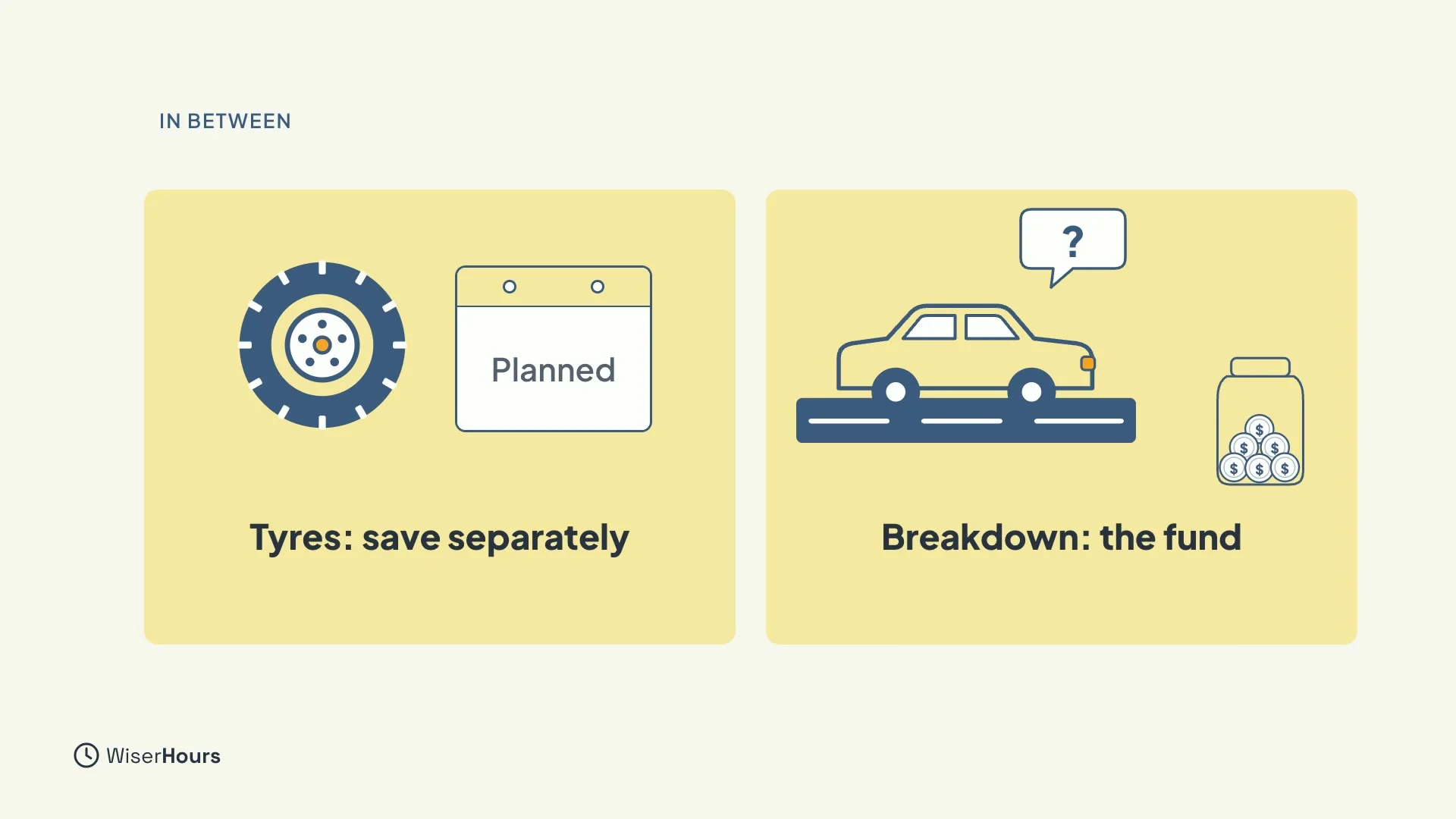
Some cases are in between. A car will certainly need tyres, but a breakdown is a surprise. So save for the tyres separately, and let the emergency fund cover the breakdown. Whenever you are unsure, ask the calendar question: could I have written this down at the start of the year?
 (opens the full-size picture)
Sales and wants
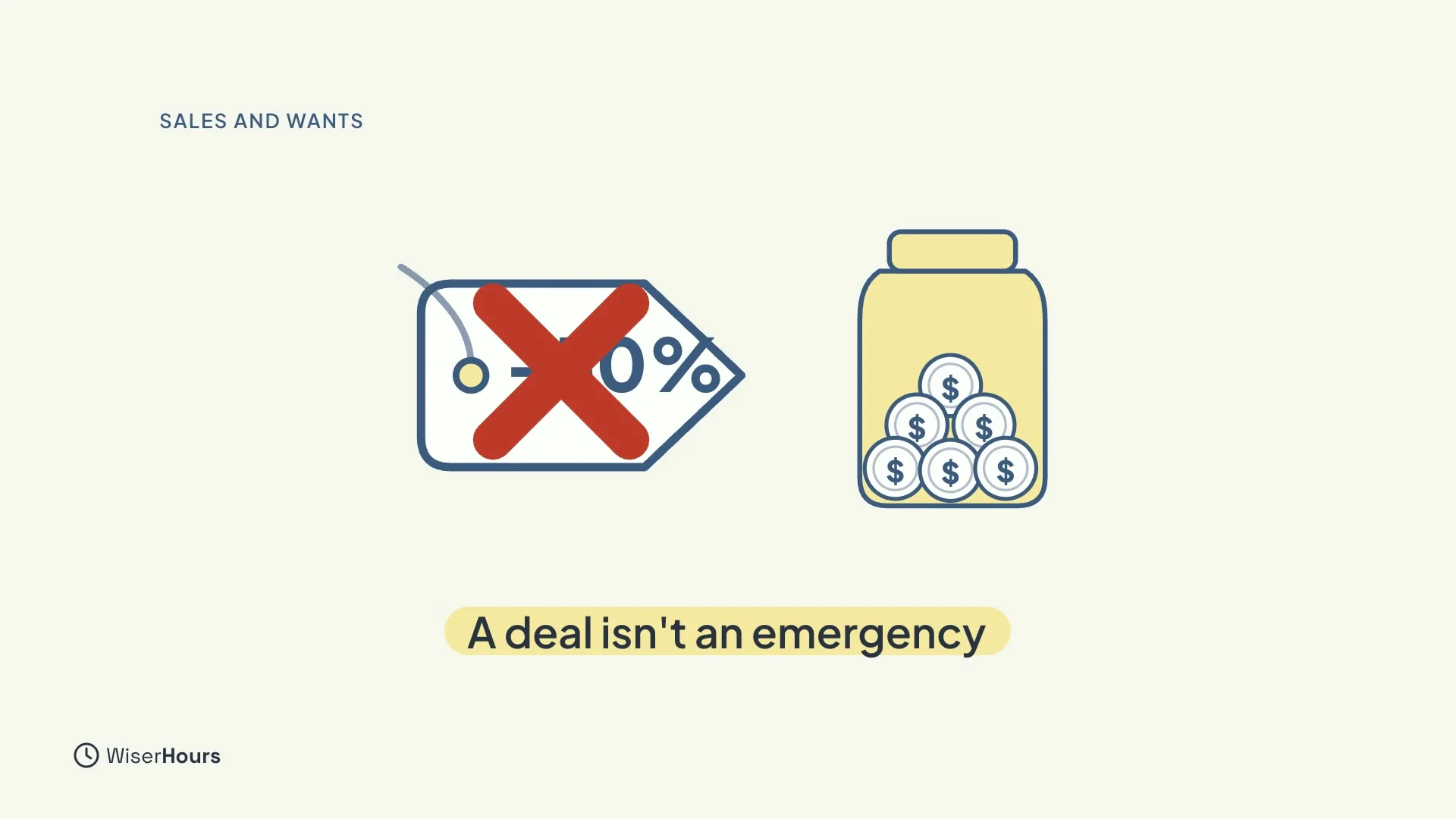
Sales and wants are not emergencies either, however good the deal looks. A discount is a reason to ask whether you want the item, not a reason to open the fund. If you are tempted often, a pause before buying can help.
 (opens the full-size picture)
A card is not an emergency fund
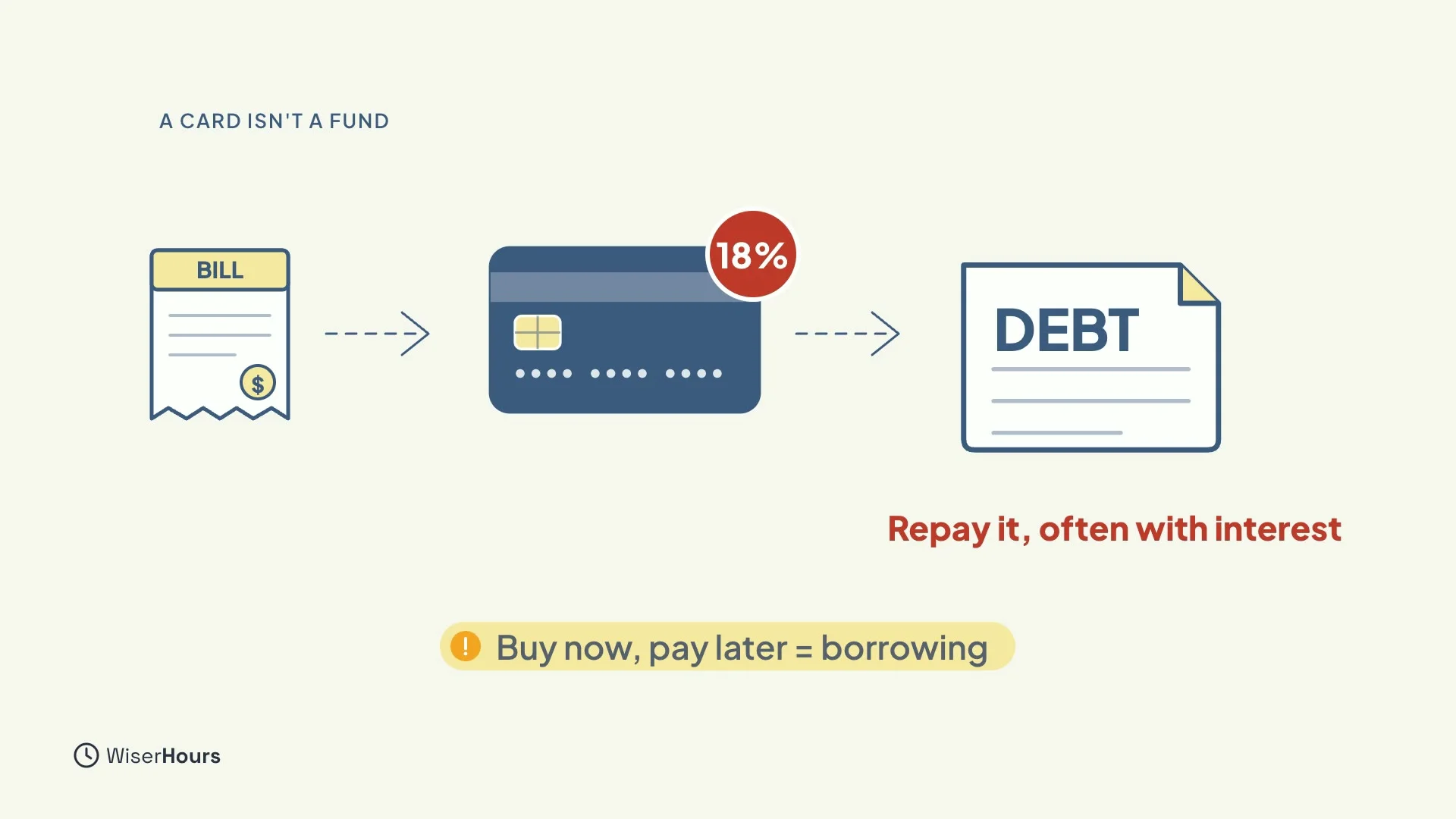
A credit card can cover a bill. But it turns the shock into debt that has to be repaid, often with interest. That is why a fund of your own matters. Buy now, pay later is borrowing too, so treat it the same way.
 (opens the full-size picture)
A real emergency can be more than money
If you or someone near you is in danger, call your local emergency number first. Money questions can wait.
YOUR TURN
Read more
- Emergency Fund Basics: the events a fund covers and why a card is not a substitute.
- Sinking Funds Explained: the calendar test and how to save for costs you can see coming.
- How to Stop Impulse Buying: a pause rule for urges and sales.
- Buy Now, Pay Later Explained: why it is borrowing, not a rescue.
Read the full lesson script
In this lesson, you'll decide what counts as an emergency, before one happens.
Write your list in calm times. Common ones are losing your job or income, urgent home or car repairs, medical bills, or a broken appliance. Rules set in calm times make it easier to skip a sale, and to spend without guilt when the boiler fails.
Known costs don't count. A yearly insurance bill, a car service, or birthdays belong in your budget. Here's a simple test: if you could write it on this year's calendar, it isn't an emergency.
Some cases are in between. A car will certainly need tyres, but a breakdown is a surprise. Save for the tyres separately, and let the fund cover the breakdown.
Sales and wants aren't emergencies either, however good the deal looks.
And a credit card isn't an emergency fund. It can cover a bill, but it turns the shock into debt that has to be repaid, often with interest. Buy now, pay later is borrowing too.
So remember: write the list in calm times, if it's on the calendar it isn't an emergency, and a card is a loan, not a fund. Before the next lesson, write your own list of what counts. Next, you'll learn to use the fund, and refill it.
MAKE IT A SMALL WIN
Finished this lesson?
Mark it complete to save your progress on this device.