Build the fund · Lesson 6 of 10
Your First Emergency Fund Target: Start With One Month
Set a first, smaller saving target of about one month of take-home pay, so your emergency fund starts helping long before it is full.
 Video coming soon
A full emergency fund can feel far away, so many people never start. This lesson gives you a smaller first target: about one month of take-home pay. It starts helping long before your fund is full, and it is a clear stop on the way to a bigger cushion.
Small cushions go with fewer missed bills
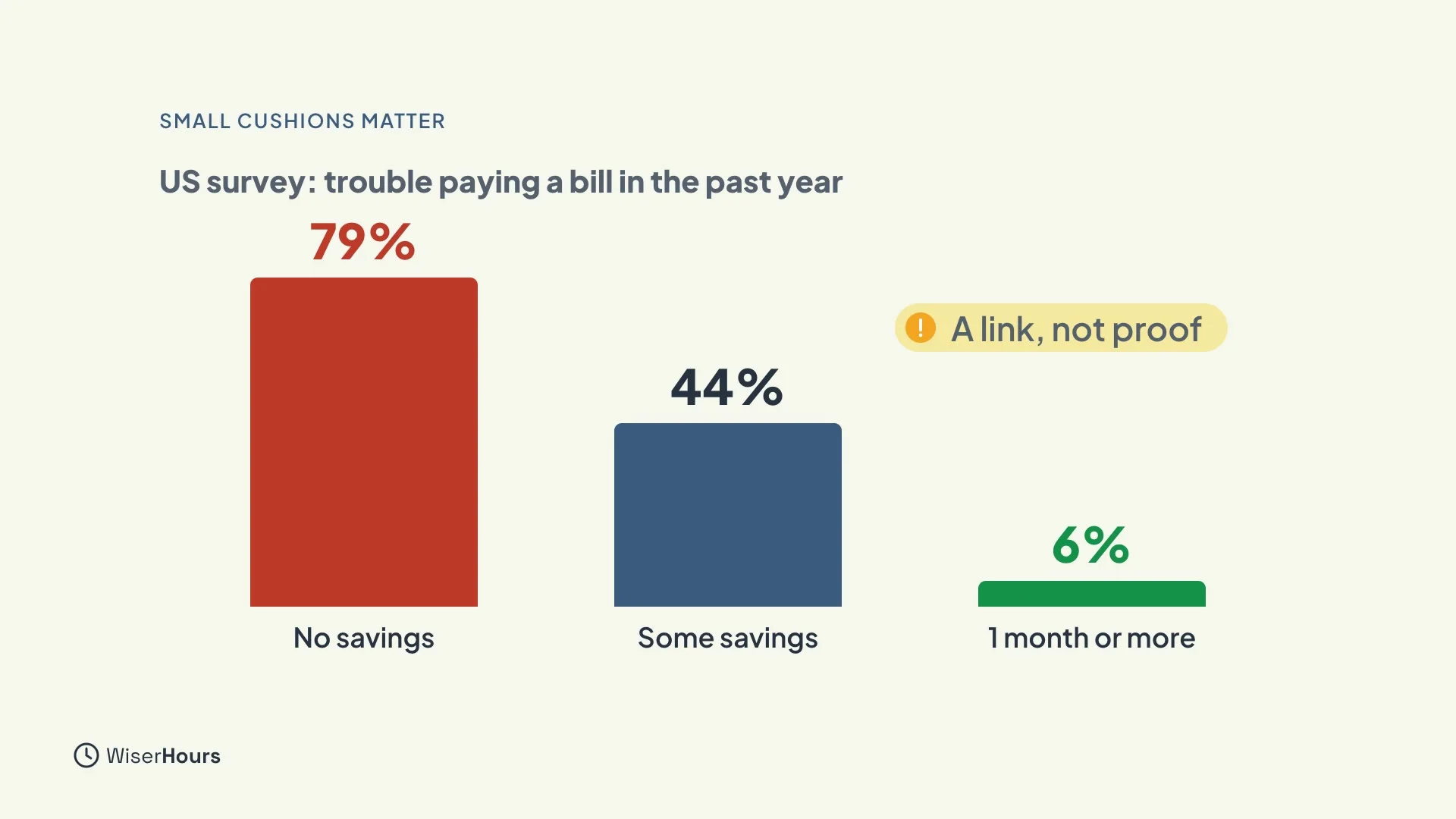
In one US survey, people were sorted by how much emergency saving they had. Of those with no savings, 79 percent had trouble paying a bill at least once in the past year. Among those with some savings, it was 44 percent. Among those with at least a month of income set aside, it was 6 percent.
 (opens the full-size picture)
Read this carefully. It is a link, not proof. The survey compares people at one moment, so income, debts and luck could explain part of the gap. It does not show that savings caused the difference. Still, it fits a simple idea: even a modest cushion gives you some room.
Aim first for one month of take-home pay
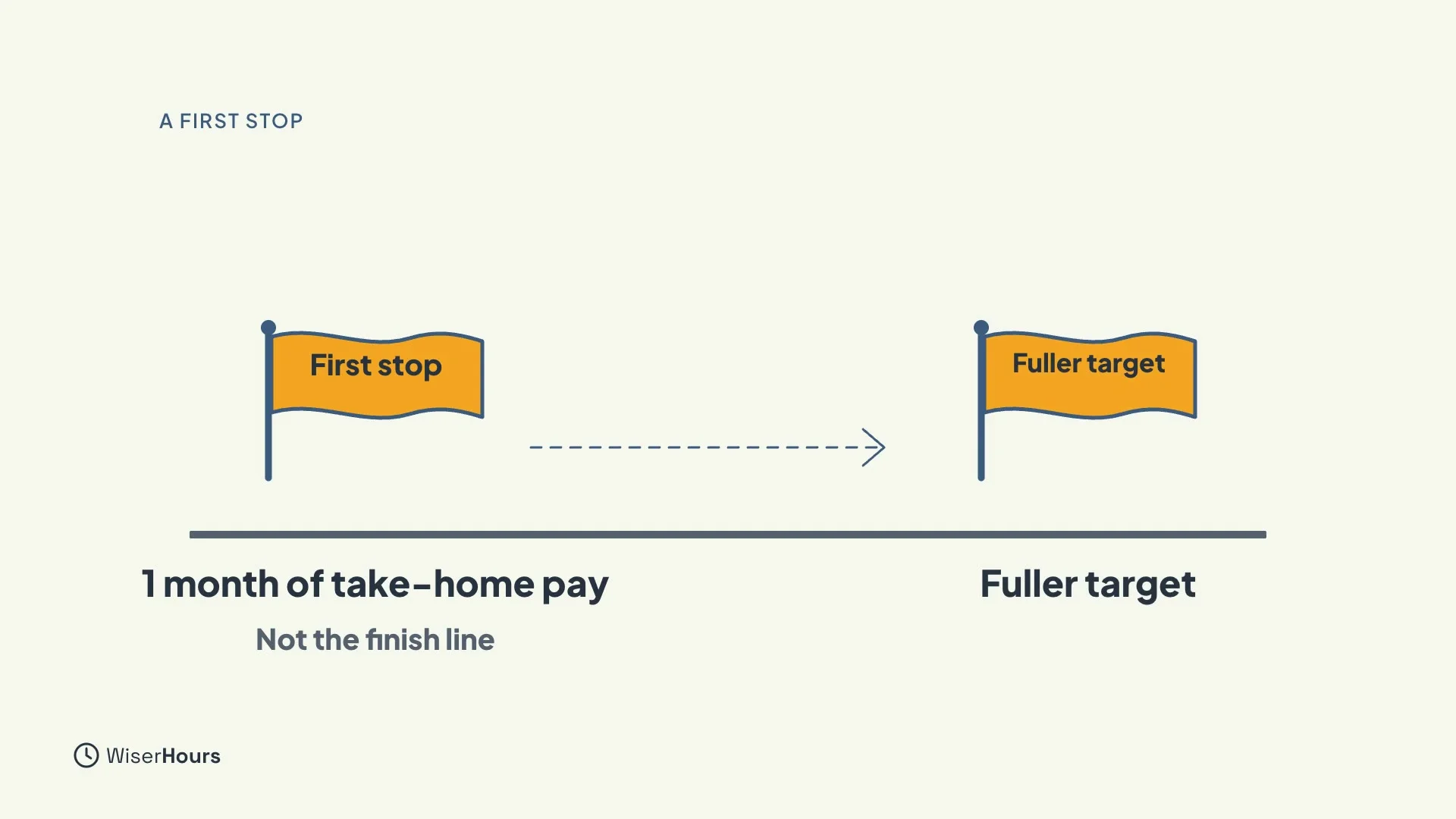
Take-home pay is what lands in your account after tax and other deductions. Your first target is about one month of it, or less if that is out of reach right now. This is a first stop, not the finish line. Once you reach it, you keep going toward a fuller target, which you can size in months of your essential costs.
 (opens the full-size picture)
Why a month
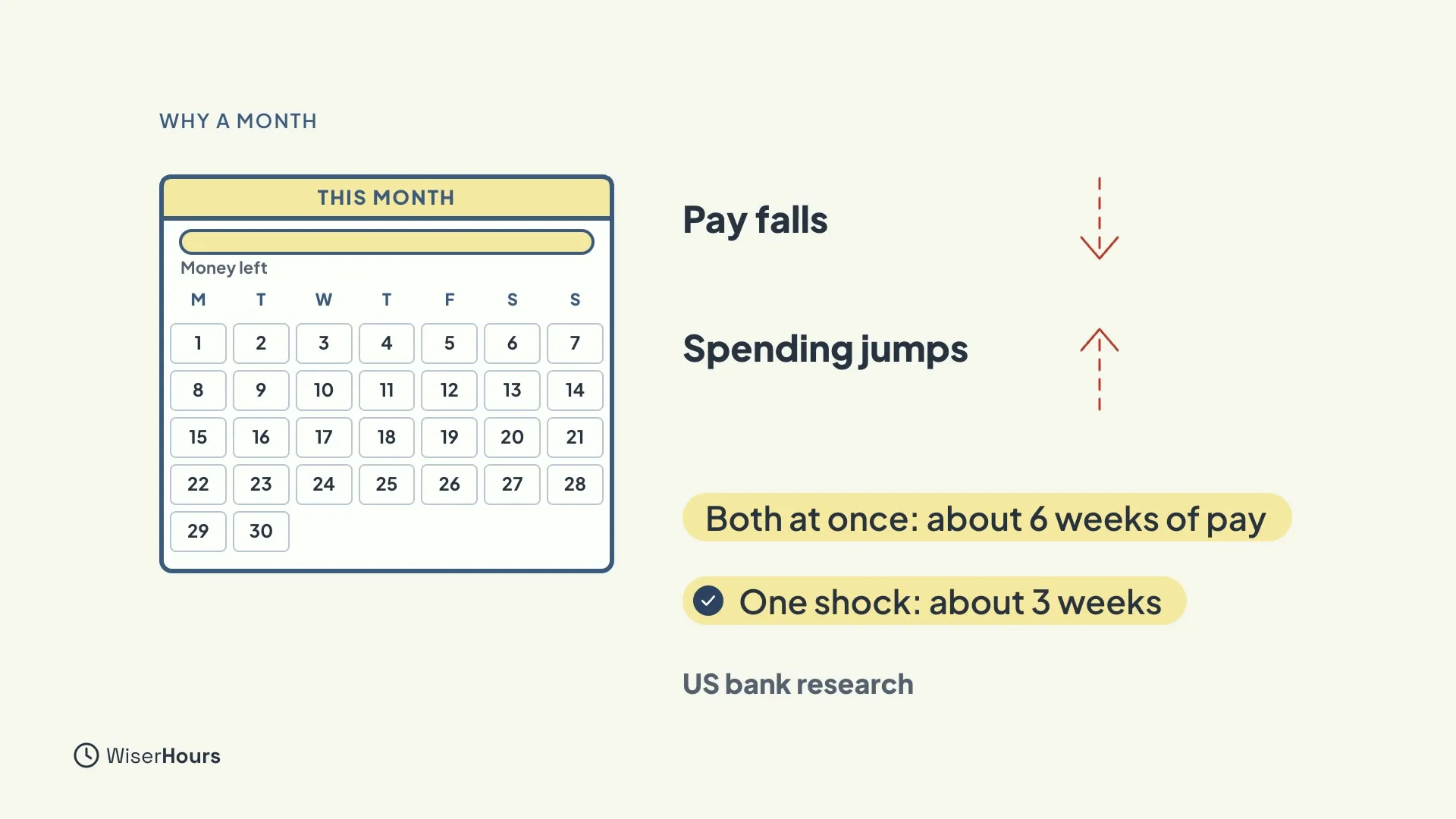
US bank-account research gives a sense of scale. It found that families needed about six weeks of take-home pay to get through a rare month when their pay fell and their spending jumped at the same time. For just one of those shocks, about three weeks was enough.
 (opens the full-size picture)
Company research
This research was published by a bank about its own customers’ accounts, without peer review. Treat it as a guide to how bad months can look, not as a promise about your own.
Half still helps
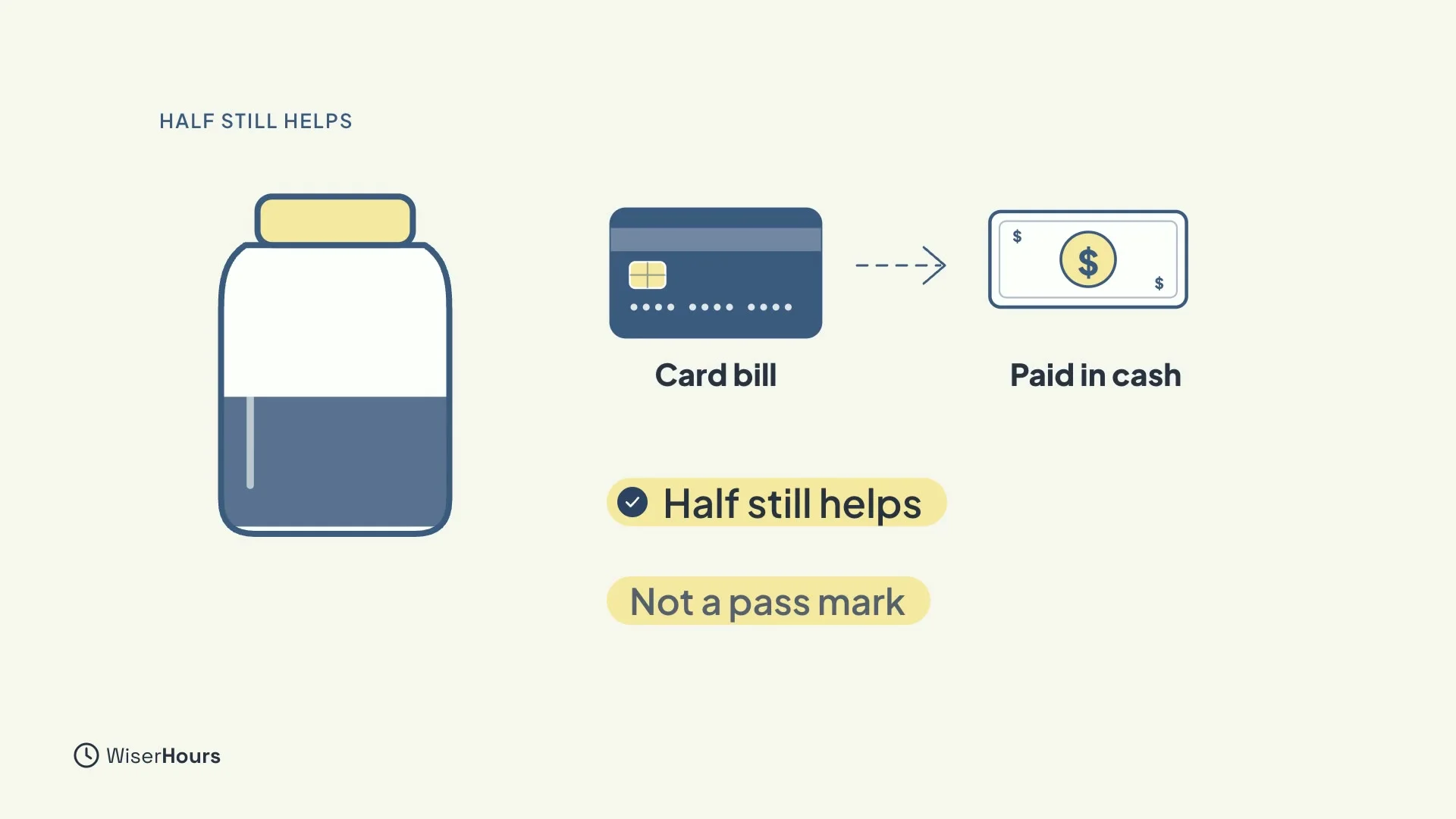
Do not wait until you can save a lot. A fund at half its target still turns some future card bills into bills paid in cash. That means you pay the price once, without interest on top. Neither number, the one month or the fuller target, is a pass mark.
 (opens the full-size picture)
The steps from empty
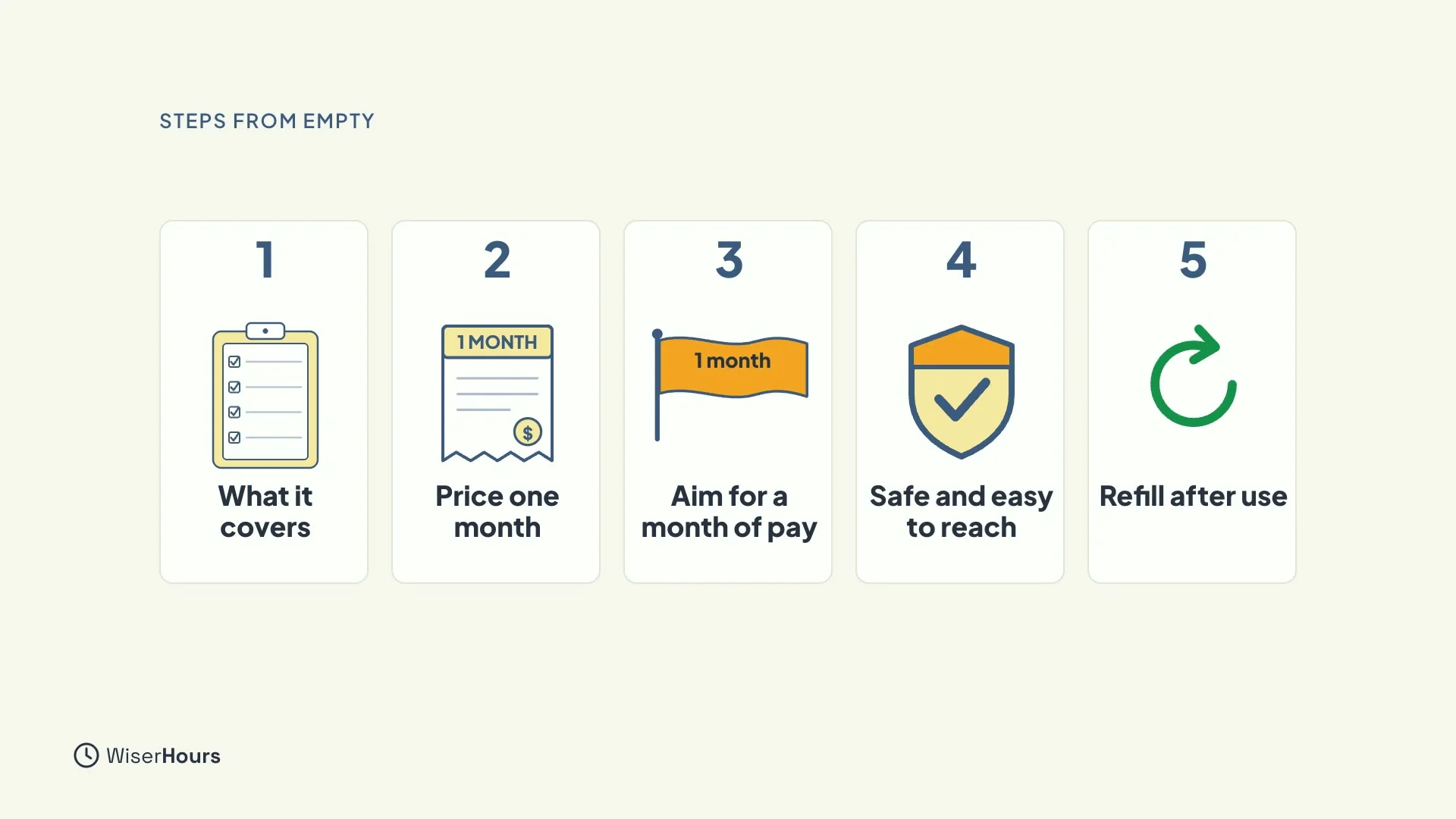
Setting up a fund takes five steps. First, decide which events your fund covers. Second, price one month of essential costs, using your statements and not your memory. Third, aim first for a month of take-home pay. Fourth, keep it safe and easy to reach. Fifth, refill it after you use it. The next lessons cover steps four and five, and the one before this covered sizing.
 (opens the full-size picture)
This page gives general information, not financial advice. Your own target depends on your income and your life.
YOUR TURN
Read more
- Emergency Fund Basics: the research behind the first target, the fuller target and the five steps.
- How to Budget With Irregular Income: how to build a buffer when your pay changes from month to month.
Read the full lesson script
In this lesson, you'll set a first, smaller target, so your emergency fund starts helping long before it's full.
Small cushions matter. In one US survey, seventy-nine percent of people with no savings had trouble paying a bill in the past year. Among people with at least a month of income saved, it was six percent. That's a link, not proof.
So aim first for about one month of take-home pay. It's a first stop, not the finish line. Then keep going toward your fuller target.
Why a month? In US bank-account research, families needed about six weeks of take-home pay to get through a rare month when pay fell and spending jumped at the same time. For just one of those shocks, about three weeks was enough.
Don't wait until you can save a lot. A fund at half its target still turns some future card bills into bills paid in cash. Neither number is a pass mark.
Here are the steps from empty: decide which events your fund covers, price one month of essentials, aim first for a month of take-home pay, keep it safe and easy to reach, and refill it after you use it.
So remember: a small cushion helps, aim first for a month, and half is still helping. Before the next lesson, set your first target: about one month of take-home pay. Next, you'll learn where to keep your emergency fund.
MAKE IT A SMALL WIN
Finished this lesson?
Mark it complete to save your progress on this device.