Build the habit · Lesson 3 of 10
Find Money to Save in What You Already Spend
Use your statements to find savings in bills, groceries and impulse buys, one change at a time, and move what you free.
 Video coming soon
You do not need a big budget overhaul to start saving. In this lesson you look for money in what you already spend, make one small change at a time, and send what you free to savings. It is general information, not financial advice.
Start from statements
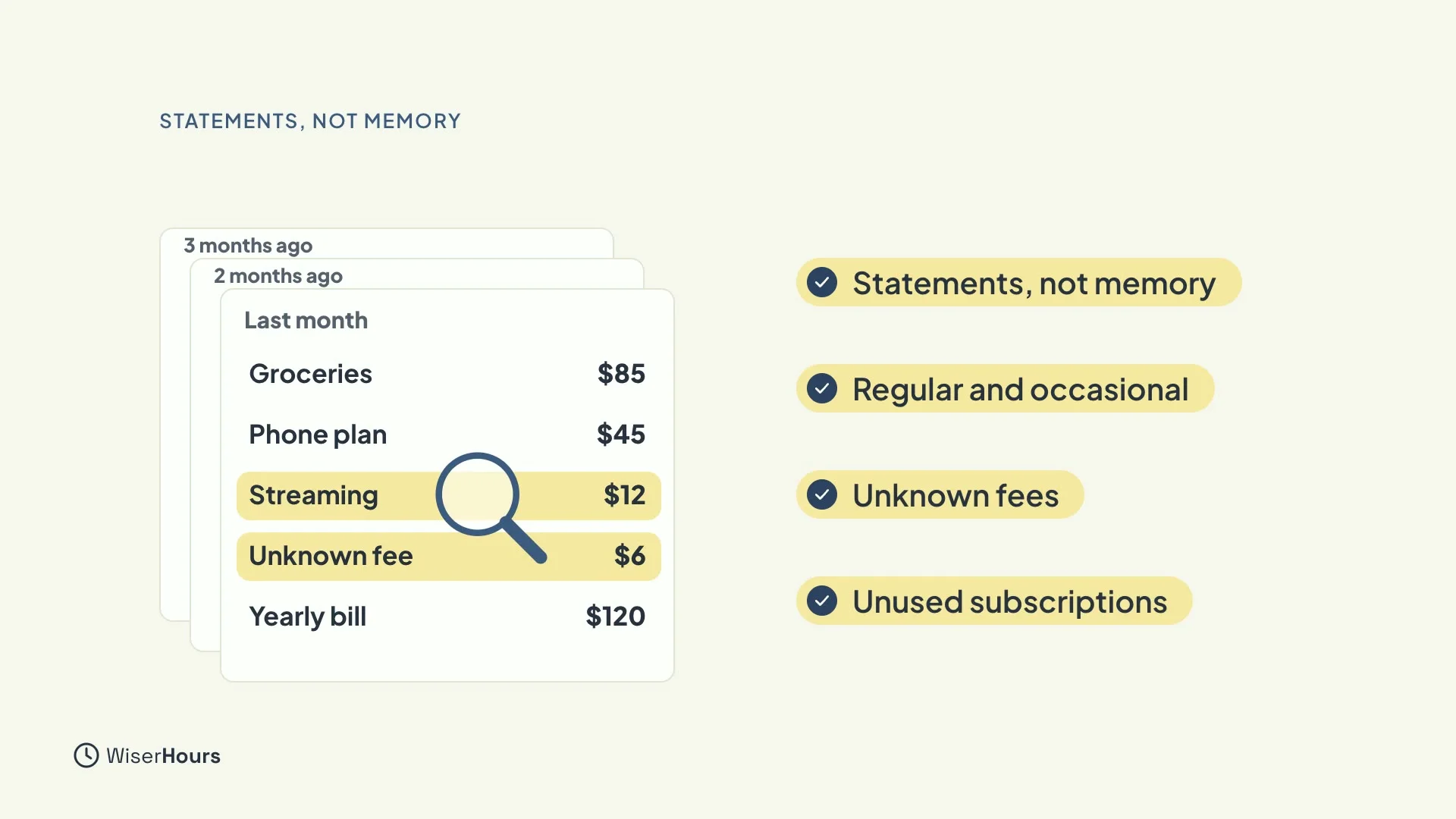
Look back over your statements for the last few months, so you see both regular and occasional costs. Group them into categories, and look for fees you do not recognize and subscriptions you no longer use.
 (opens the full-size picture)
One quick win
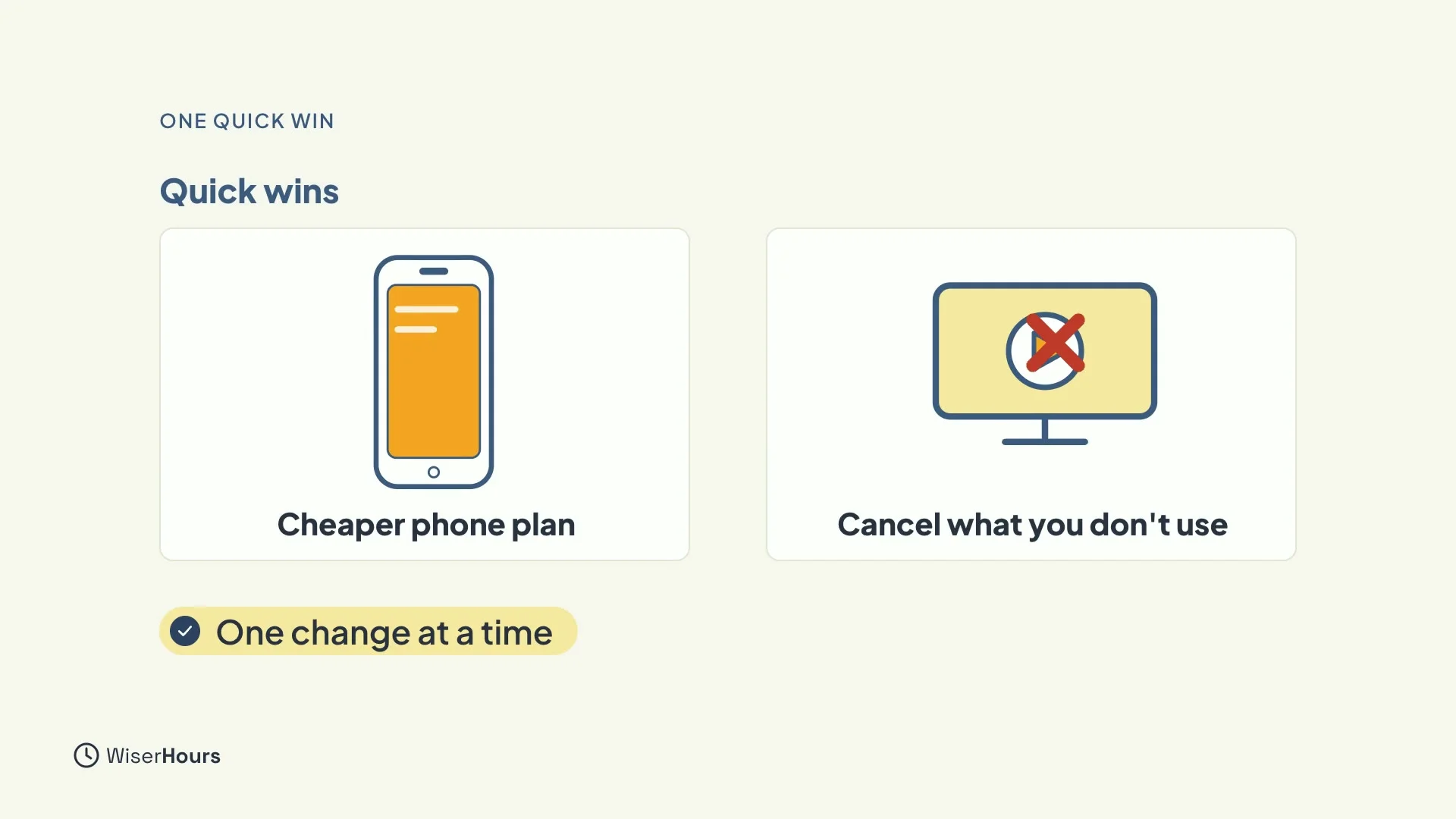
Then make one change at a time, starting with quick wins. Two good ones are switching to a cheaper phone plan and cancelling a subscription you do not use. One change at a time is easier to keep up than ten at once.
 (opens the full-size picture)
Look at bills
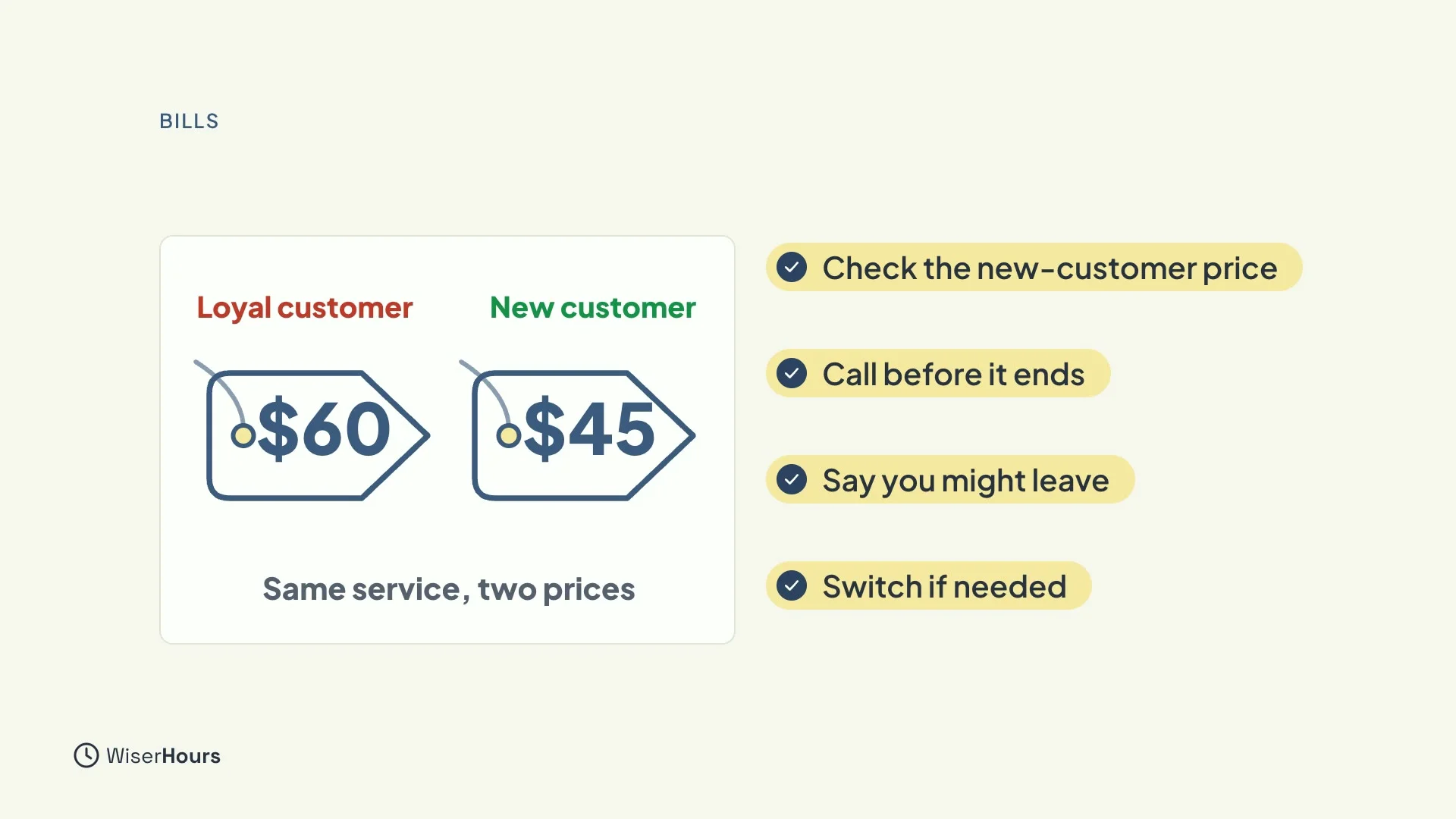
Bills are a good place to start, because long-standing customers often pay more than new ones for the same service. Find out what a new customer would pay today, call before your contract ends, and say you are thinking of leaving. If they will not match it, switch. Nobody has tested this exact routine, so it prepares you for the call without promising a lower price. If you are struggling to pay a bill, tell the provider. Rules on contracts and cancelling differ by country, so check your own national consumer regulator.
 (opens the full-size picture)
Look at groceries
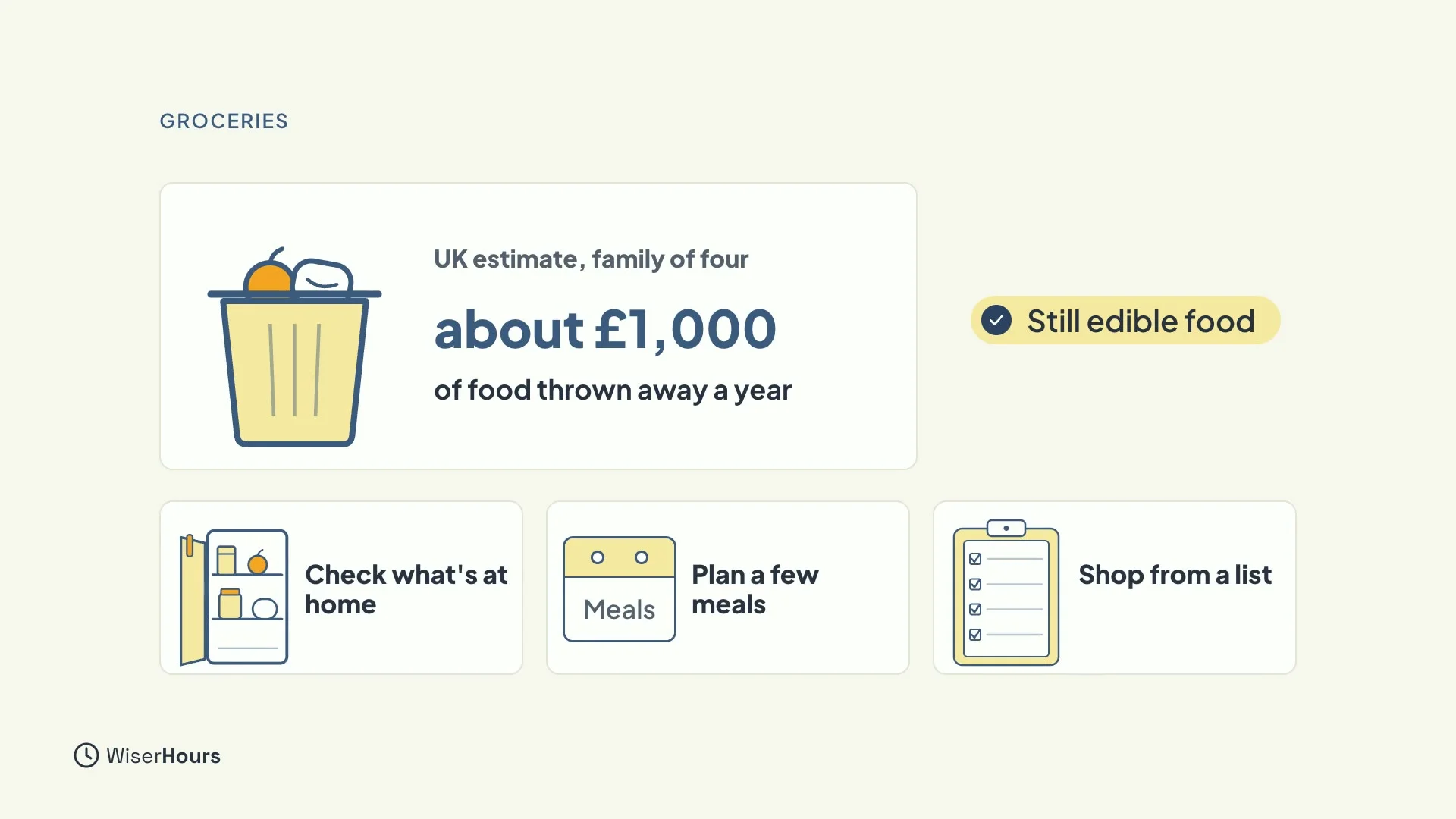
Groceries are another place to look, and the best start is what gets thrown away. In one UK estimate, an average household of four threw away about 1,000 pounds’ worth of food that could have been eaten in a year. Check what is at home, plan a few meals, and shop from a list. There is no single right grocery figure, so your own number is a better guide than any average. If food will not stretch, a food bank or your local social services can be a first call.
 (opens the full-size picture)
Look at impulse buys
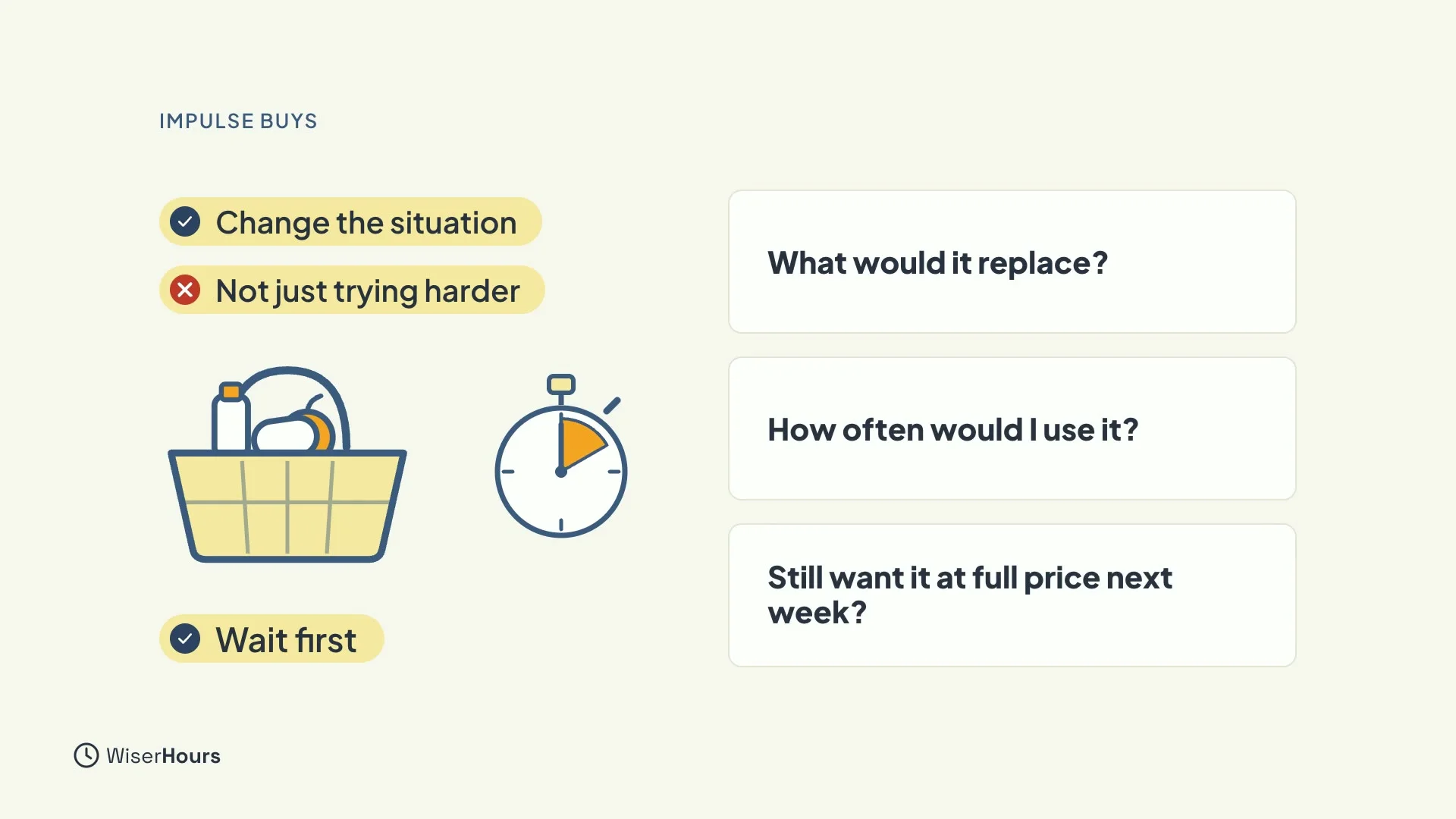
Most impulse-buying tactics work by changing the situation, not by trying harder. Before you buy, wait, and ask three questions: what would this replace, how often would I use it, and would I still want it at full price next week?
 (opens the full-size picture)
A pause with a job
Giving the wait a job, the three questions, is better supported than a plain wait. No study has found the best length of pause, so pick one that fits the price: overnight for most things, longer for big purchases.
Move it right away
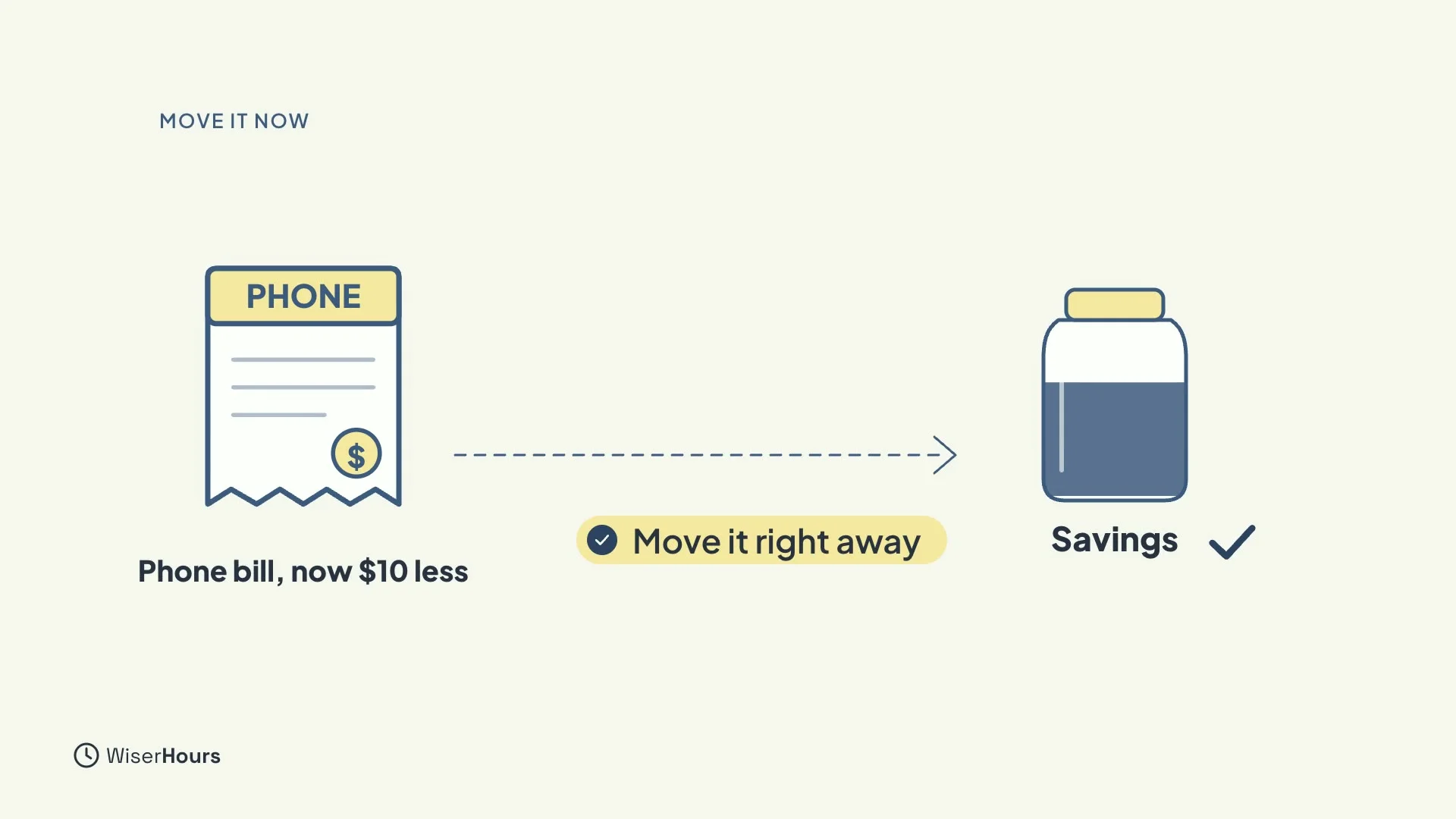
Here is the key step. When a change frees money, move that amount to savings right away, so the saving counts. A cheaper phone plan only helps if the difference goes somewhere other than your everyday spending.
 (opens the full-size picture)
YOUR TURN
Read more
- How to Track Your Spending Without Losing Your Mind: how to read your statements and make one change at a time.
- Negotiating Subscriptions and Cancellations: Getting Retention Offers: the steps for asking, comparing and switching.
- How to Save Money on Groceries Without Clipping Coupons All Day: the bin first, then planning and lists.
- How to Stop Impulse Buying: Strategies That Hold Up in Studies: tactics that change the situation.
Read the full lesson script
In this lesson, you'll find money to save in what you already spend, without a big budget overhaul.
Start from your statements, not your memory. Look back over the last few months, so you see both regular and occasional costs. Group them, and look for fees you don't recognize and subscriptions you no longer use.
Then make one change at a time, starting with quick wins, like a cheaper phone plan, or cancelling a subscription you don't use.
Bills are a good place to start. Long-standing customers often pay more than new ones for the same service. So find out what a new customer pays today, call before your contract ends, and say you're thinking of leaving. If they won't match it, switch.
Groceries are another. Start with what gets thrown away. In one UK estimate, an average family of four threw away about a thousand pounds' worth of food that could have been eaten in a year. Check what's at home, plan a few meals, and shop from a list.
And impulse buys. Most tactics work by changing the situation, not by trying harder. Before you buy, wait, and ask: what would this replace, how often would I use it, and would I still want it at full price next week?
Here's the key step: when a change frees money, move that amount to savings right away, so the saving counts.
So remember: statements, not memory; one quick win at a time; and move what you free. Before the next lesson, pick one quick win, and move what it frees to savings. Next, you'll learn to automate your saving.
MAKE IT A SMALL WIN
Finished this lesson?
Mark it complete to save your progress on this device.