Build the habit · Lesson 2 of 10
Pay Yourself First: Save on Payday, Not With Leftovers
Put savings at the top of your plan and move it on payday, with an if-then plan and a small first amount.
 Video coming soon
Most people spend first and save whatever is left, if anything. In this lesson you flip the order, so saving happens at the start of the month, not with the leftovers at the end. It is general information, not financial advice.
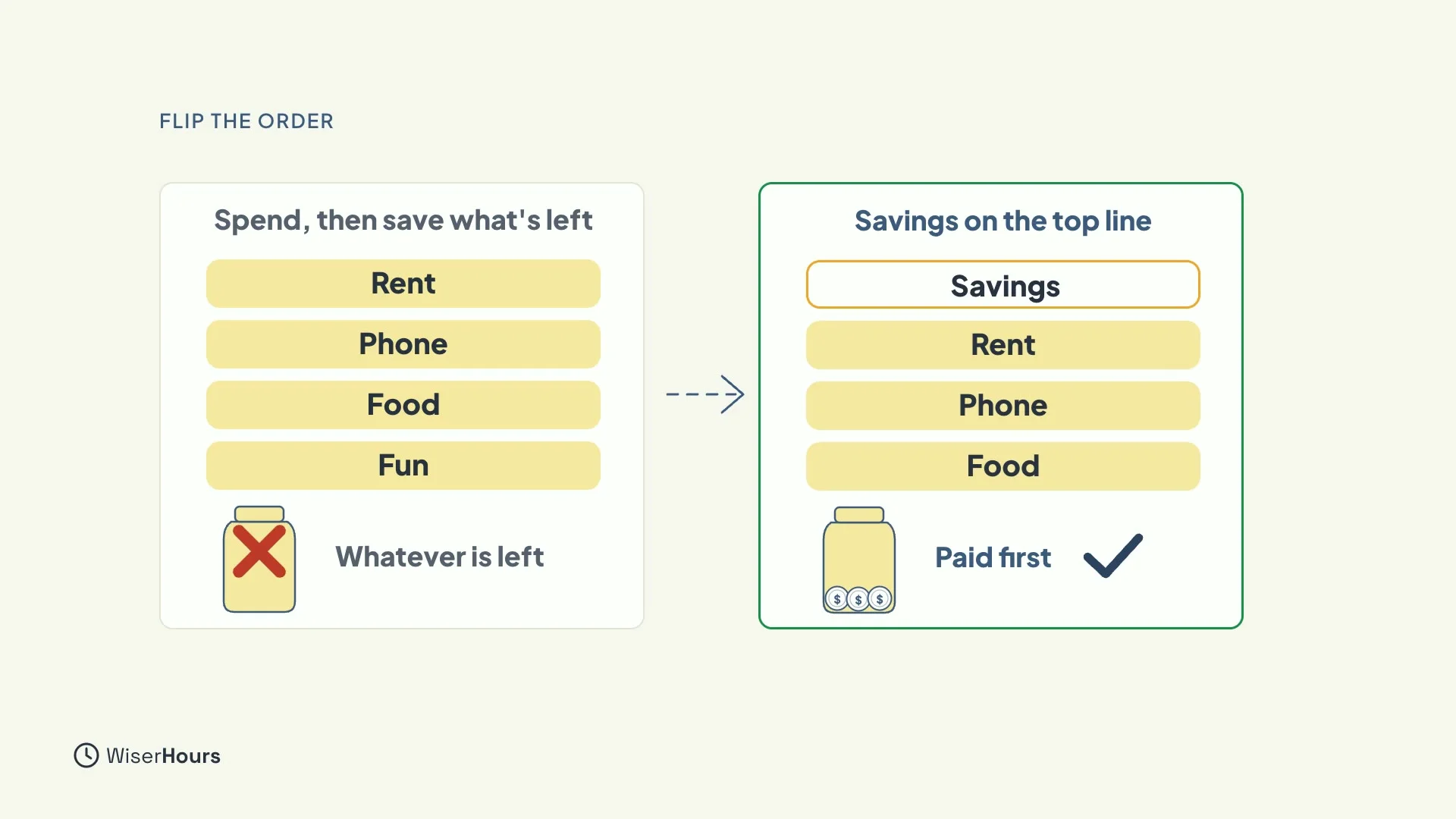
Flip the order
Spending first and saving what is left gives saving the weakest place in your plan. So write savings as a line at the top of your plan, next to rent, and not at the bottom as a hope.
 (opens the full-size picture)
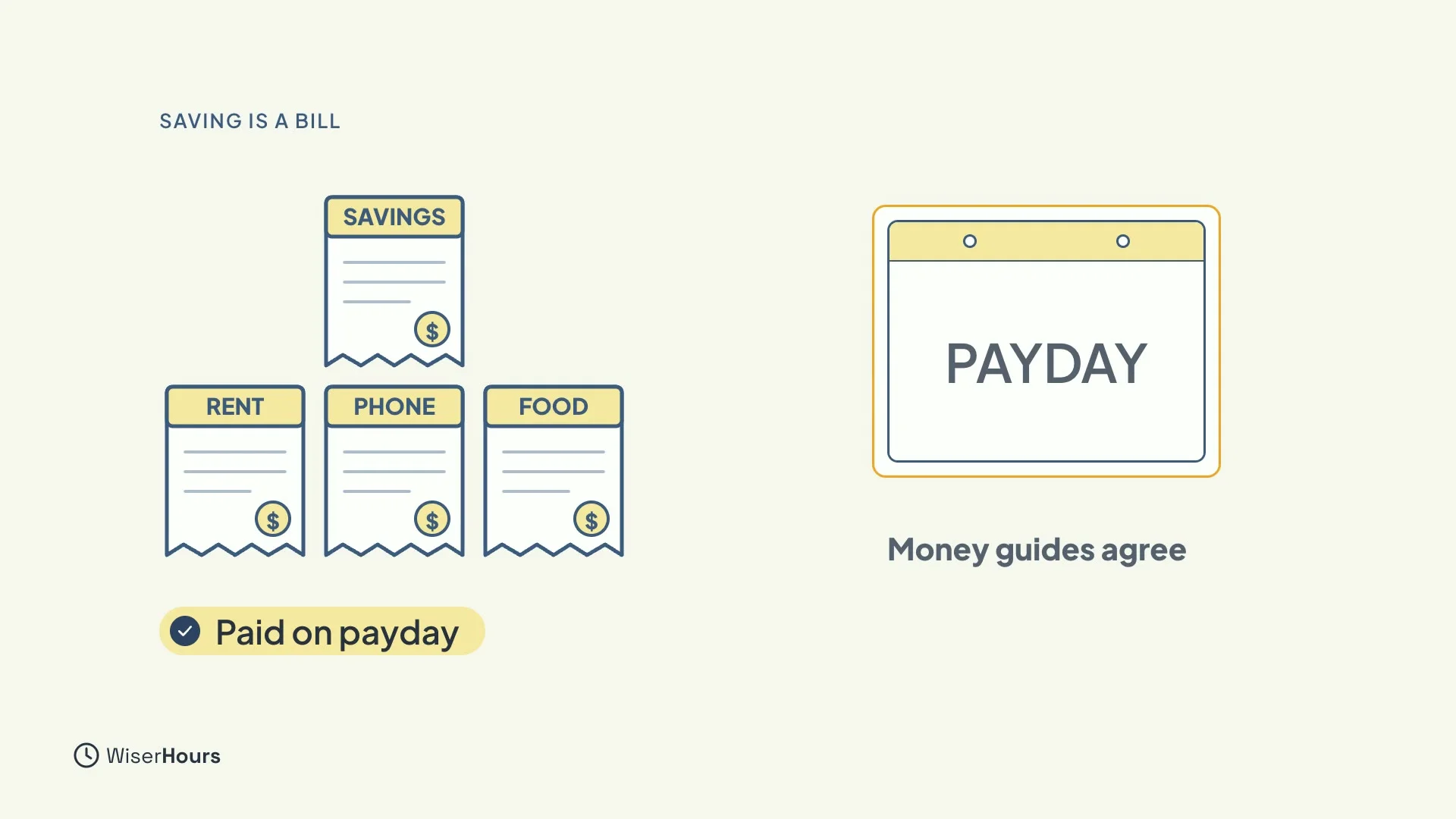
Saving is a bill
Treat saving like a bill that is paid on payday. Money guides in several countries suggest the same thing: make savings one of your regular expenses, and move it on the day your pay arrives.
 (opens the full-size picture)
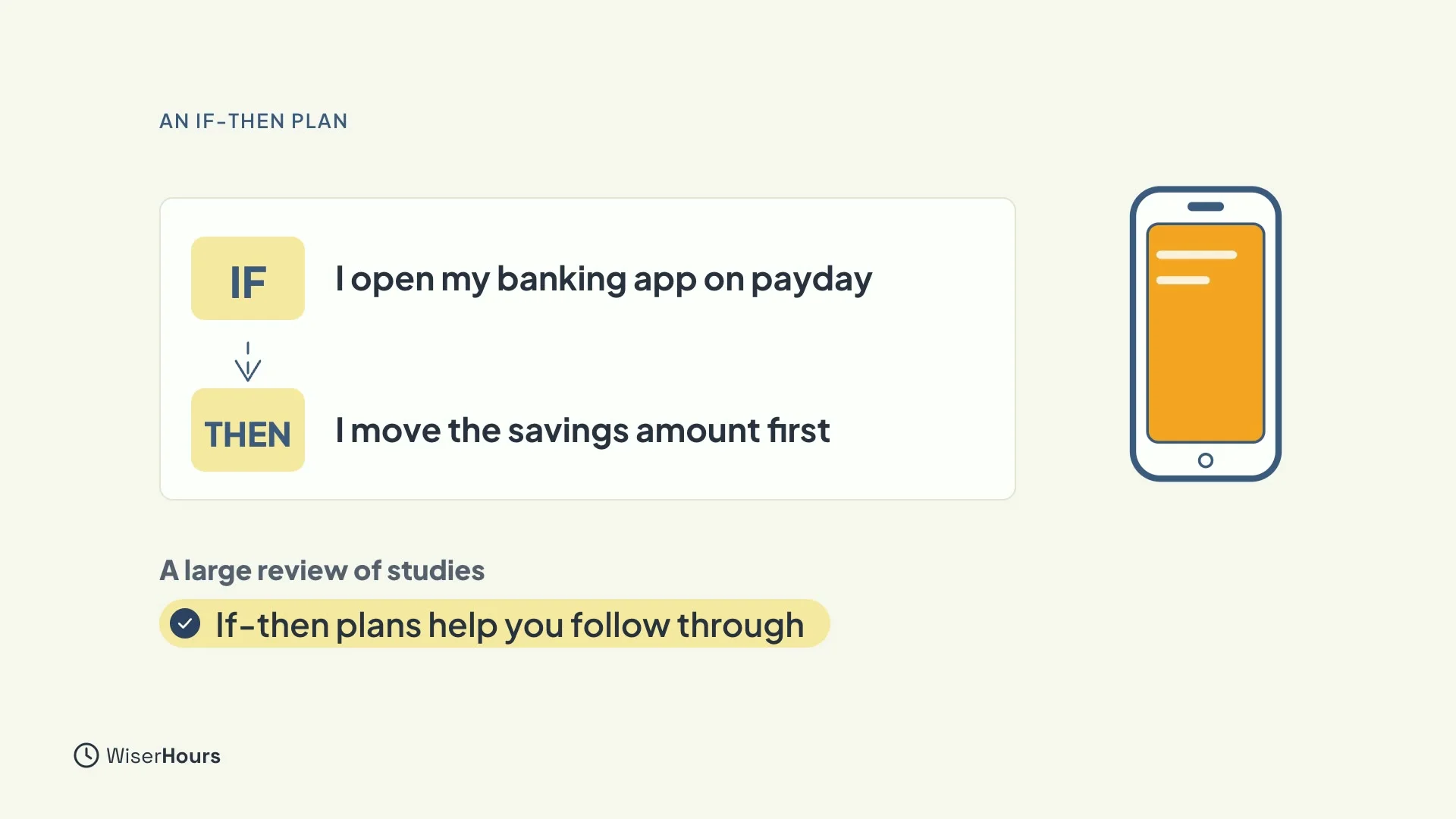
Make an if-then plan
Make it a plan with an if and a then: if I open my banking app on payday, then I move the savings amount first. A plan like thisimplementation intention: A plan in if-then form that ties a specific action to a specific situation, such as 'if it is nine o'clock, then I open the report.' It hands the decision about when and where to act to the situation itself.Full entry in the glossary decides the moment and the action in advance. In a large review of studies, plans written in this if-then form helped people follow through.
 (opens the full-size picture)
YOUR TURN
Start small
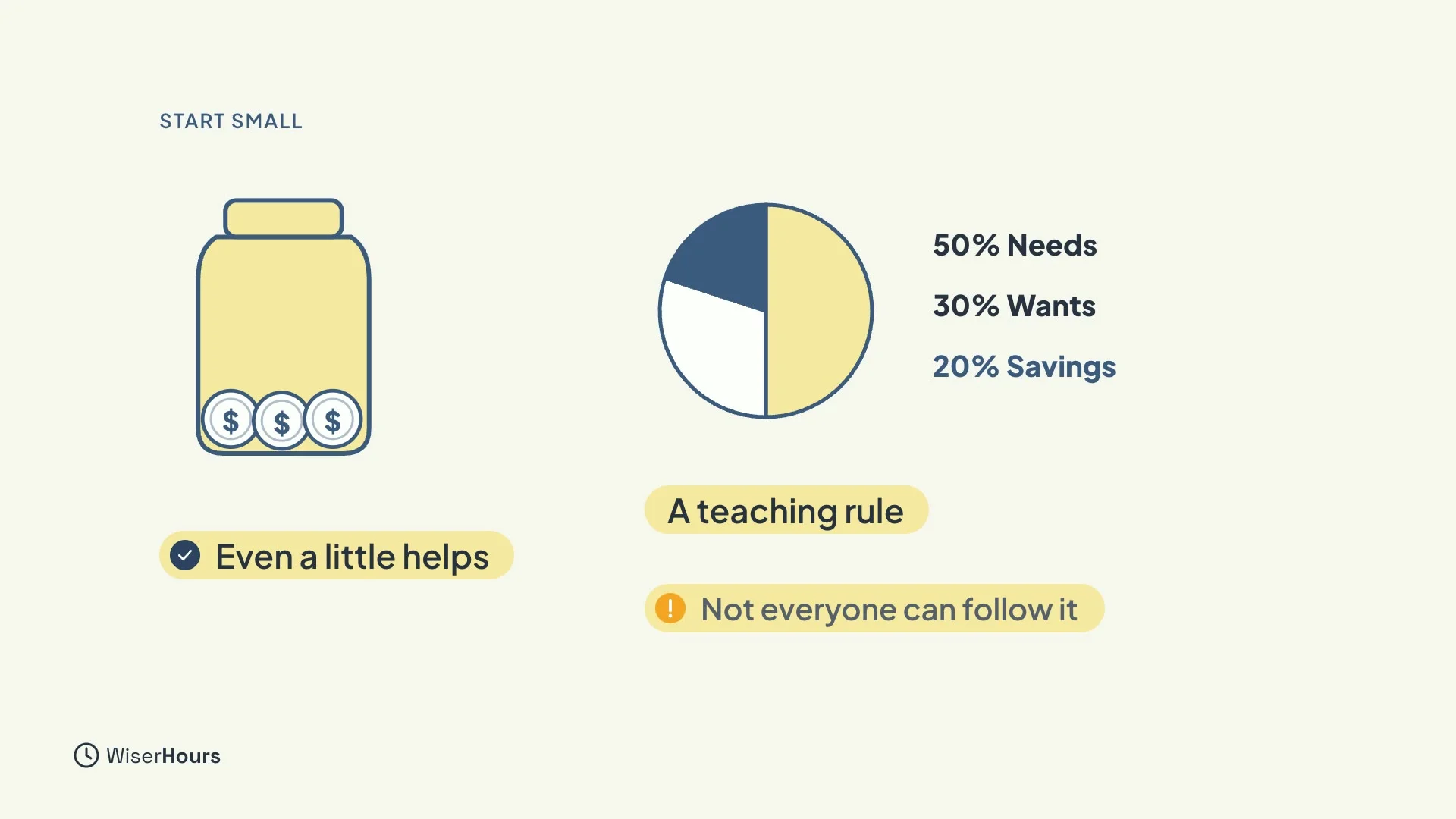
How much? Start small. Even a small amount can give some security. One teaching rule suggests saving 20 percent of take-home pay, as part of a 50 percent needs, 30 percent wants and 20 percent savings split. It comes with a warning: not everyone can follow it, so treat it as a rule for teaching, not a target you must hit.
 (opens the full-size picture)
If your pay is uneven
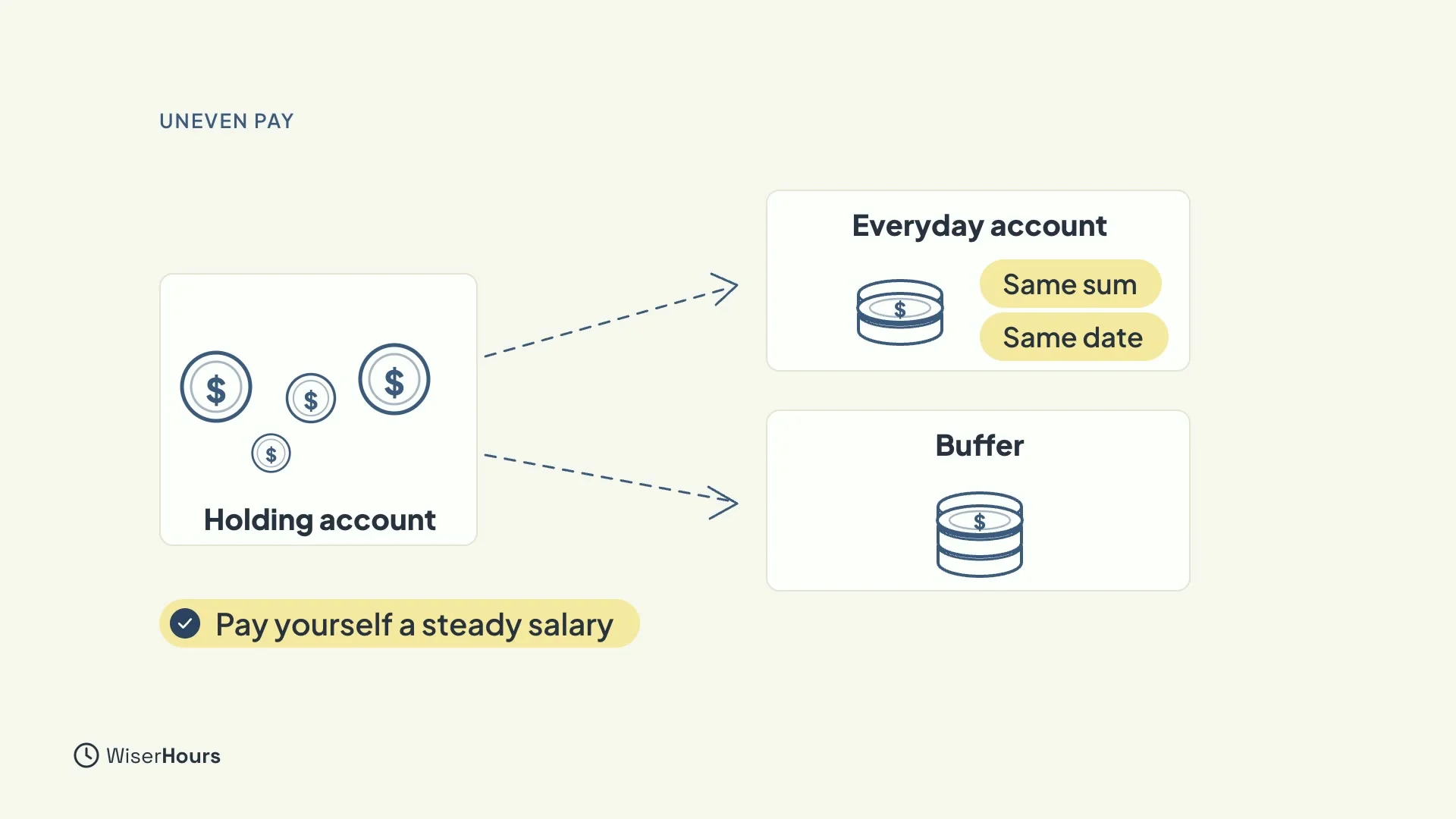
If your pay changes from month to month, pay yourself a steady salary. Let every payment land in one holding account first. Then move a fixed sum to your everyday account on the same date each month, and keep the rest as a buffer.
 (opens the full-size picture)
An honest note
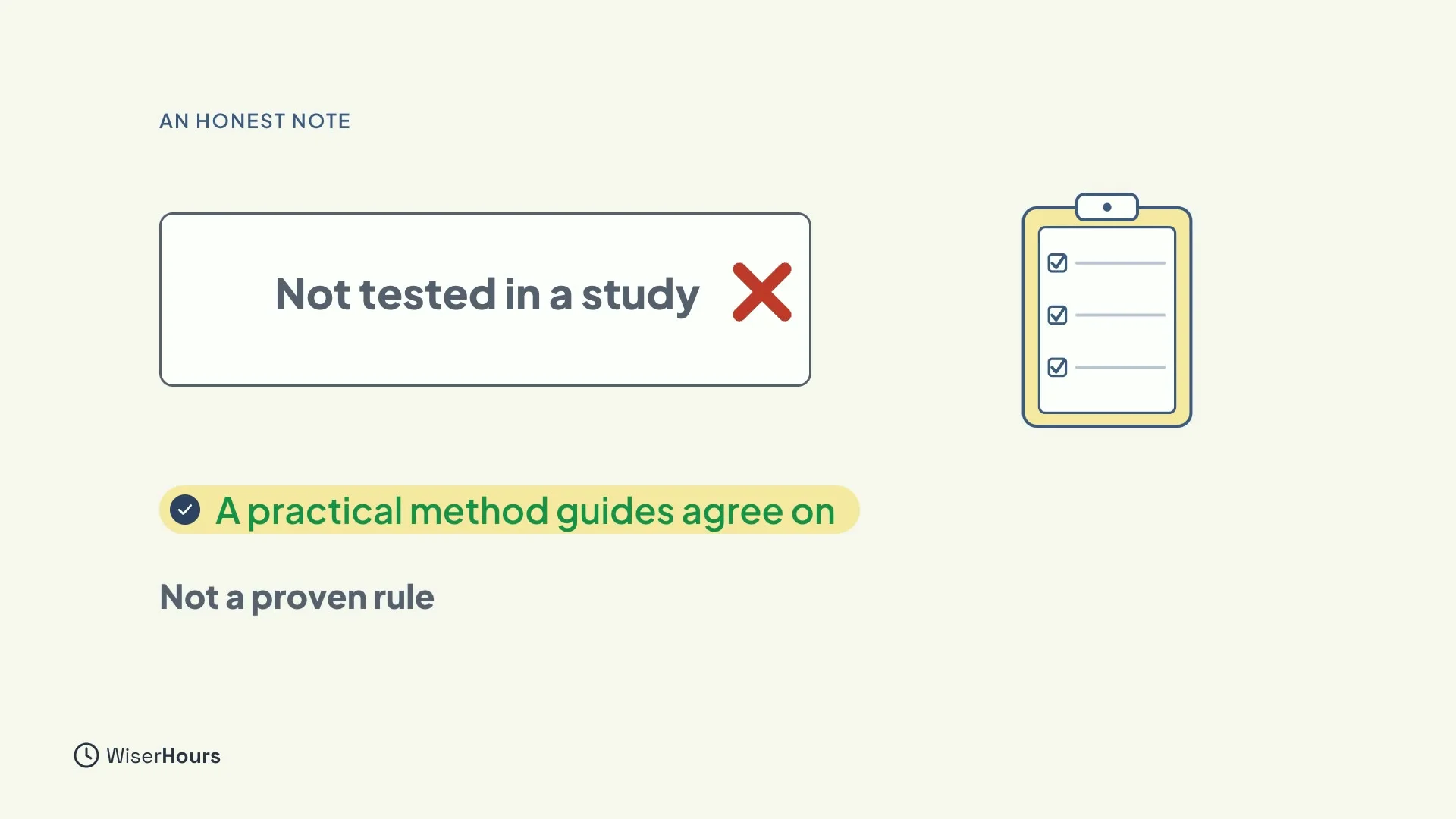
No study has tested paying yourself first against saving what is left. It is a practical method that money guides agree on, not a proven rule. Automatic transfers, which you will meet in lesson four, are the same: practical, not tested.
 (opens the full-size picture)
Read more
- How to Make a Budget: A Step-by-Step Guide for Beginners: treating savings as a bill paid on payday, and the 50/30/20 teaching rule.
- Zero-Based Budgeting for Beginners: How to Plan Where Every Dollar Goes: savings as a line at the top of the plan.
- Delayed Gratification: How to Get Better at Waiting for What You Want: the if-then plan and how it helps you follow through.
- How to Budget With Irregular Income: A Guide for Freelancers and Gig Workers: the steady salary and buffer method.
Read the full lesson script
In this lesson, you'll learn to pay yourself first: to save at the start of the month, not with whatever's left at the end.
Most people spend first and save whatever is left, if anything. So flip the order. Write savings as a line at the top of your plan, next to rent, not at the bottom as a hope.
Treat saving like a bill that's paid on payday. Money guides in several countries suggest the same thing: make savings one of your regular expenses, and move it on the day your pay arrives.
Make it an if-then plan: if I open my banking app on payday, then I move the savings amount first. In a large review of studies, plans written in this if-then form helped people follow through.
How much? Start small. Even a small amount gives some security. One teaching rule suggests saving twenty percent of take-home pay, but it comes with a warning: not everyone can follow it.
If your pay changes from month to month, pay yourself a steady salary. Let every payment land in one account first, move a fixed sum to your everyday account on the same date each month, and keep the rest as a buffer.
One honest note: no study has tested paying yourself first against saving what's left. It's a practical method that money guides agree on, not a proven rule.
So remember: savings goes at the top, payday is saving day, and start small. Before the next lesson, write your payday if-then plan with a small amount. Next, you'll find money to save in what you already spend.
MAKE IT A SMALL WIN
Finished this lesson?
Mark it complete to save your progress on this device.