Your plan · Lesson 10 of 10
Saving for Known Costs: Sinking Funds and Your Plan
Save ahead for bills you can see coming with sinking funds, then pull the course together in your own saving plan.
 Video coming soon
Your emergency fund is for surprises. But many costs are not surprises: they are on the calendar, and they still hurt when they land in one month. This last lesson shows how to save for them, then pulls the whole course into one saving plan.
Sinking funds
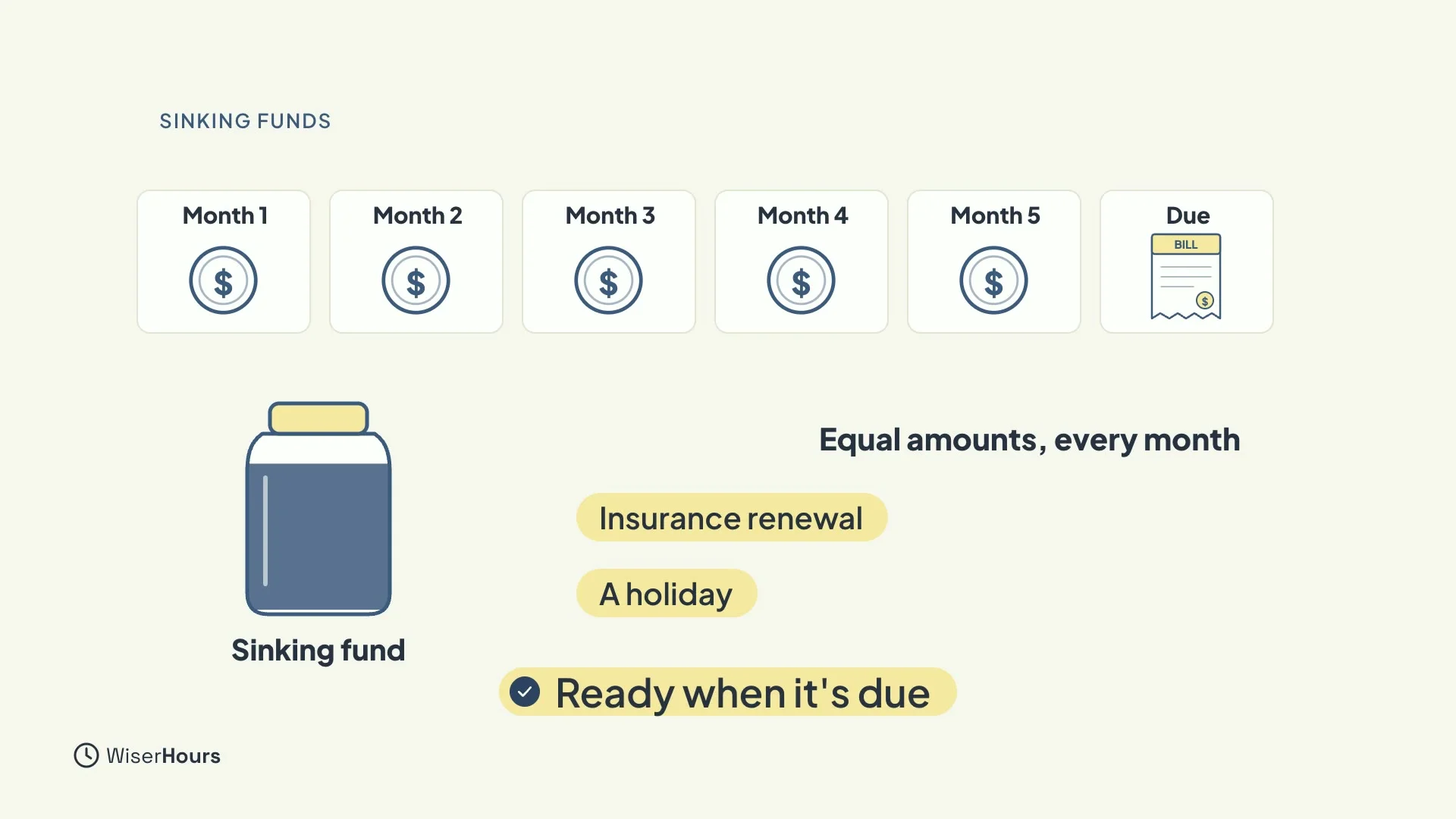
A sinking fund is money you set aside in equal amounts for a cost you know is coming, like an insurance renewal or a holiday. The full amount is ready when the bill is due.
 (opens the full-size picture)
The maths
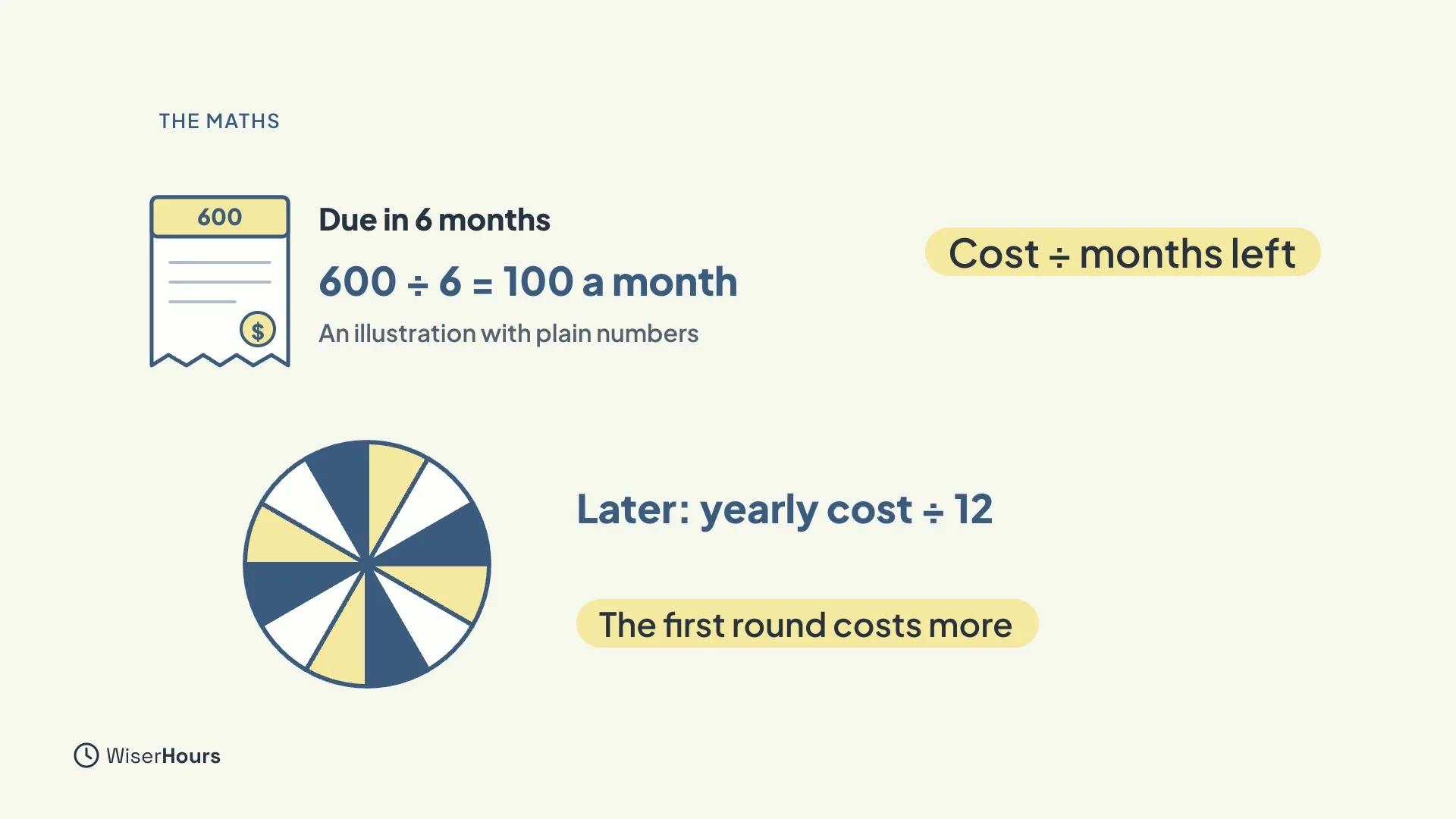
The maths is simple. Divide the cost by the months until it is due. For example, a bill of 600 due in six months needs 100 a month. These plain numbers are only an illustration, and they work in any currency.
Bills due soon cost more at first, because there are fewer months to fill. After the first round, the amount settles at the yearly cost divided by twelve. If you cannot cover them all, fund the nearest bills first.
 (opens the full-size picture)
What to save for
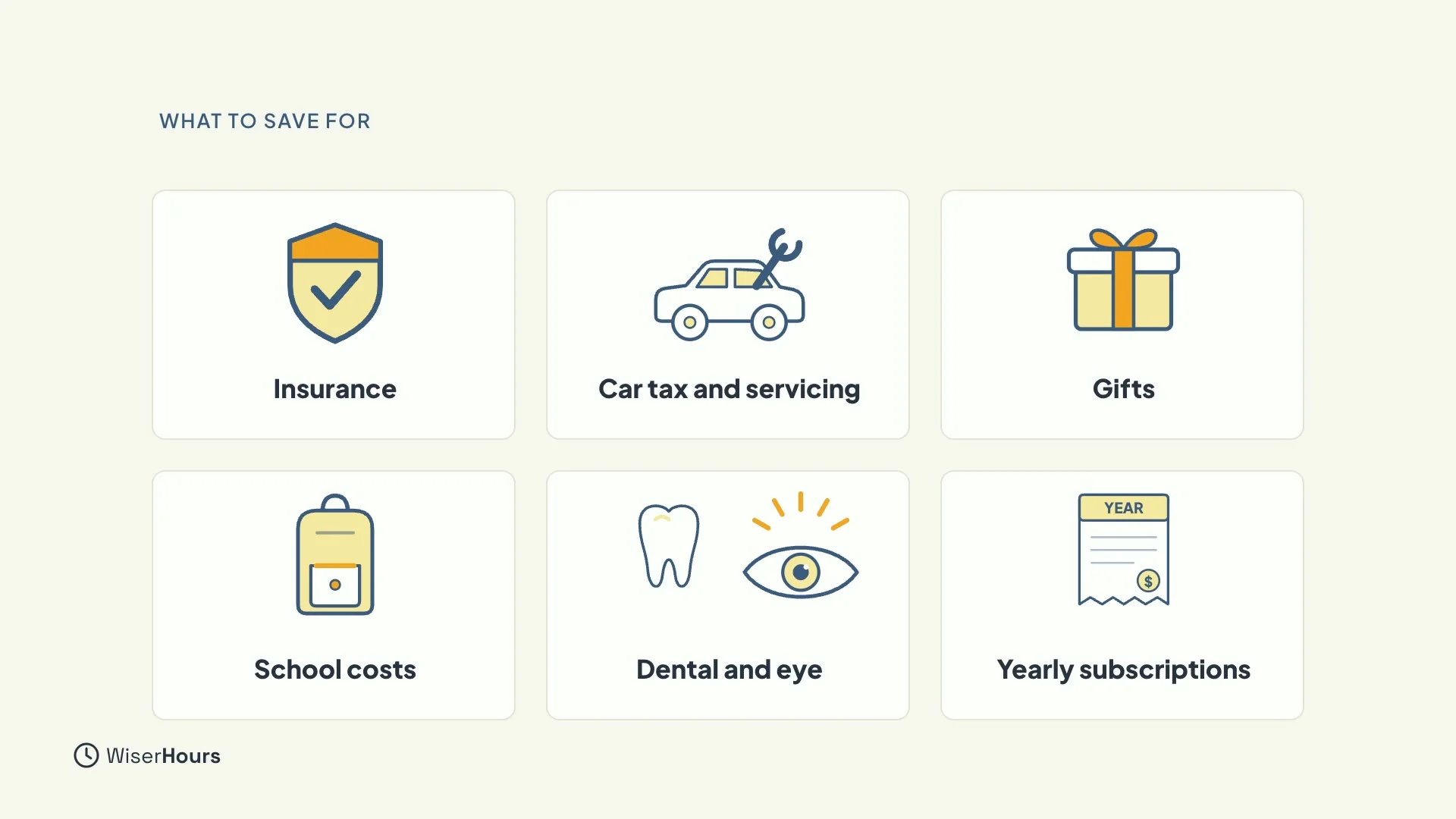
Start with the costs that caught you short last year. Common ones are insurance, car tax and servicing, gifts, school costs, dental and eye costs, and yearly subscriptions. Look through a year of statements for payments that did not repeat every month, and note the month each one fell due.
 (opens the full-size picture)
Give each one a name
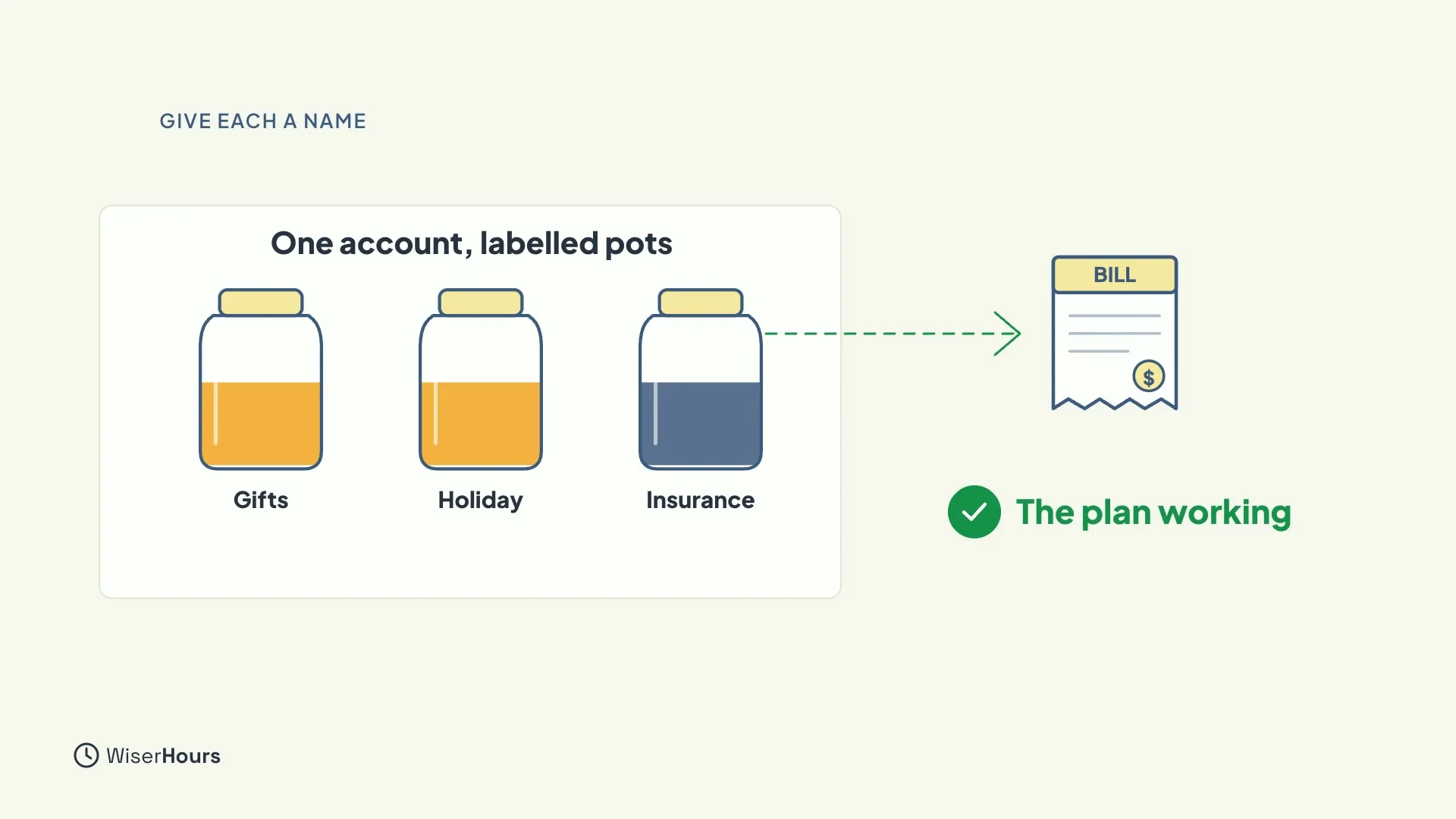
Give each cost a name. Separate accounts, or labelled pots inside one account, keep the money for its job. A label should make money harder to spend on the wrong thing, not on the right one. Paying the bill from the pot built for it is the plan working. Pots at the same bank usually share one limit of deposit protection, so keep that in mind. Choose as many pots as you can keep track of, which for most people means a handful.
 (opens the full-size picture)
Longer goals
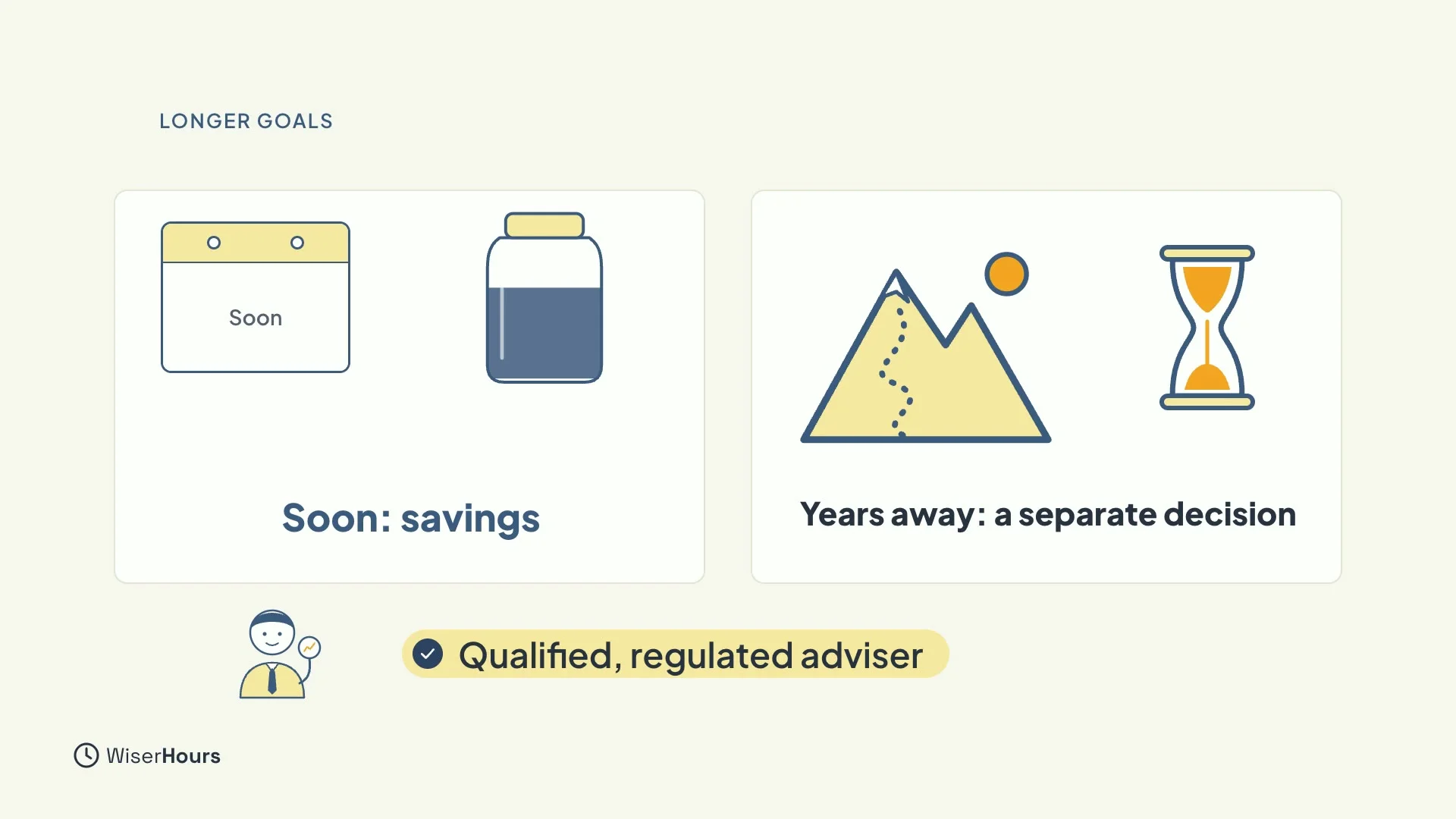
Money you will need soon belongs in savings. Goals many years away, including investing, are a separate decision, best weighed with a qualified, regulated adviser. This course does not cover them.
 (opens the full-size picture)
Your plan
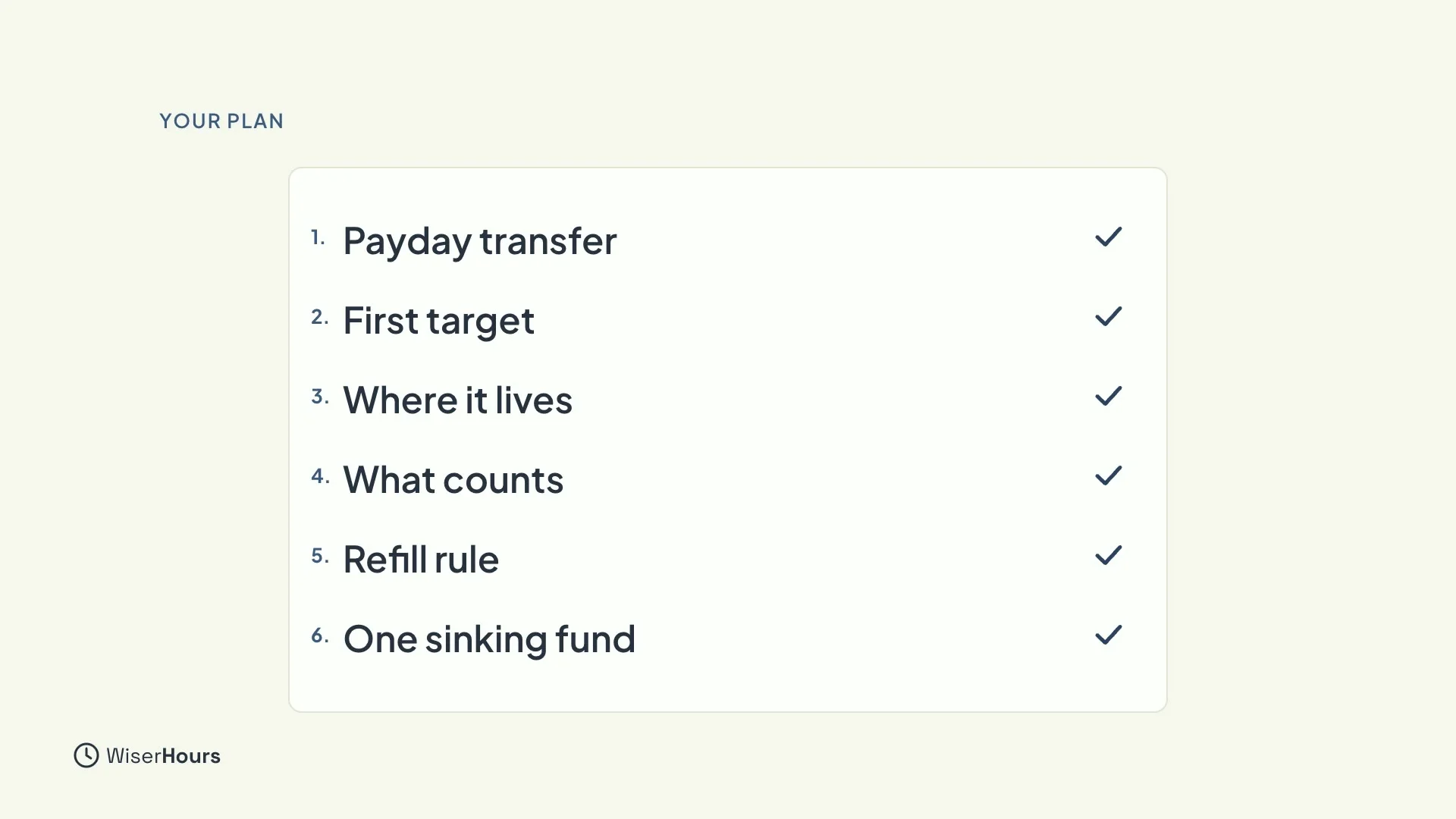
Now make your plan. It has six parts: your payday transfer, your first target, where the fund lives, your list of emergencies, your refill rule, and one sinking fund to start. Each one comes from a lesson in this course.
 (opens the full-size picture)
This course gives general information, not financial advice.
My saving plan
YOUR TURN
Thank you for taking this course, and good luck with your saving.
Read more
- Sinking Funds Explained: the four steps, a worked table and how to handle shortfalls.
- How to Make a Budget: where yearly costs fit into a monthly plan.
- Investing for Beginners: why money you need soon belongs in savings.
- Emergency Fund Basics: the full guide behind this course.
Read the full lesson script
In this last lesson, you'll learn to save for costs you can see coming, and make your own saving plan.
A sinking fund is money you set aside in equal amounts for a cost you know is coming, like an insurance renewal or a holiday, so the full amount is ready when the bill is due.
The maths is simple. Divide the cost by the months until it's due. A bill due in six months gets a sixth of its cost each month. Bills due soon cost more at first, then it settles at the yearly cost divided by twelve.
Start with the costs that caught you short last year: insurance, car tax and servicing, gifts, school costs, dental and eye costs, or yearly subscriptions.
Give each one a name. Separate accounts, or labelled pots inside one account, keep the money for its job. Paying the bill from the pot built for it is the plan working.
Money you'll need soon belongs in savings. Goals many years away are a separate decision, best weighed with a qualified, regulated adviser.
Now make your plan. Your payday transfer. Your first target. Where the fund lives. Your list of emergencies. Your refill rule. And one sinking fund to start.
So remember: pay yourself first, build a first month, and give known costs their own pot. Before you go, fill in your saving plan. Thank you for taking this course, and good luck with your saving.
MAKE IT A SMALL WIN
Finished this lesson?
Mark it complete to save your progress on this device.