Build the fund · Lesson 7 of 10
Where to Keep Your Emergency Fund: Safe and Reachable
Learn the three needs of an emergency fund home: reachable, covered by deposit protection and kept apart from everyday spending.
 Video coming soon
Where you keep your emergency fund matters almost as much as how big it is. This lesson shows three simple needs, the places to avoid and why a low interest rate is part of the deal.
Three needs
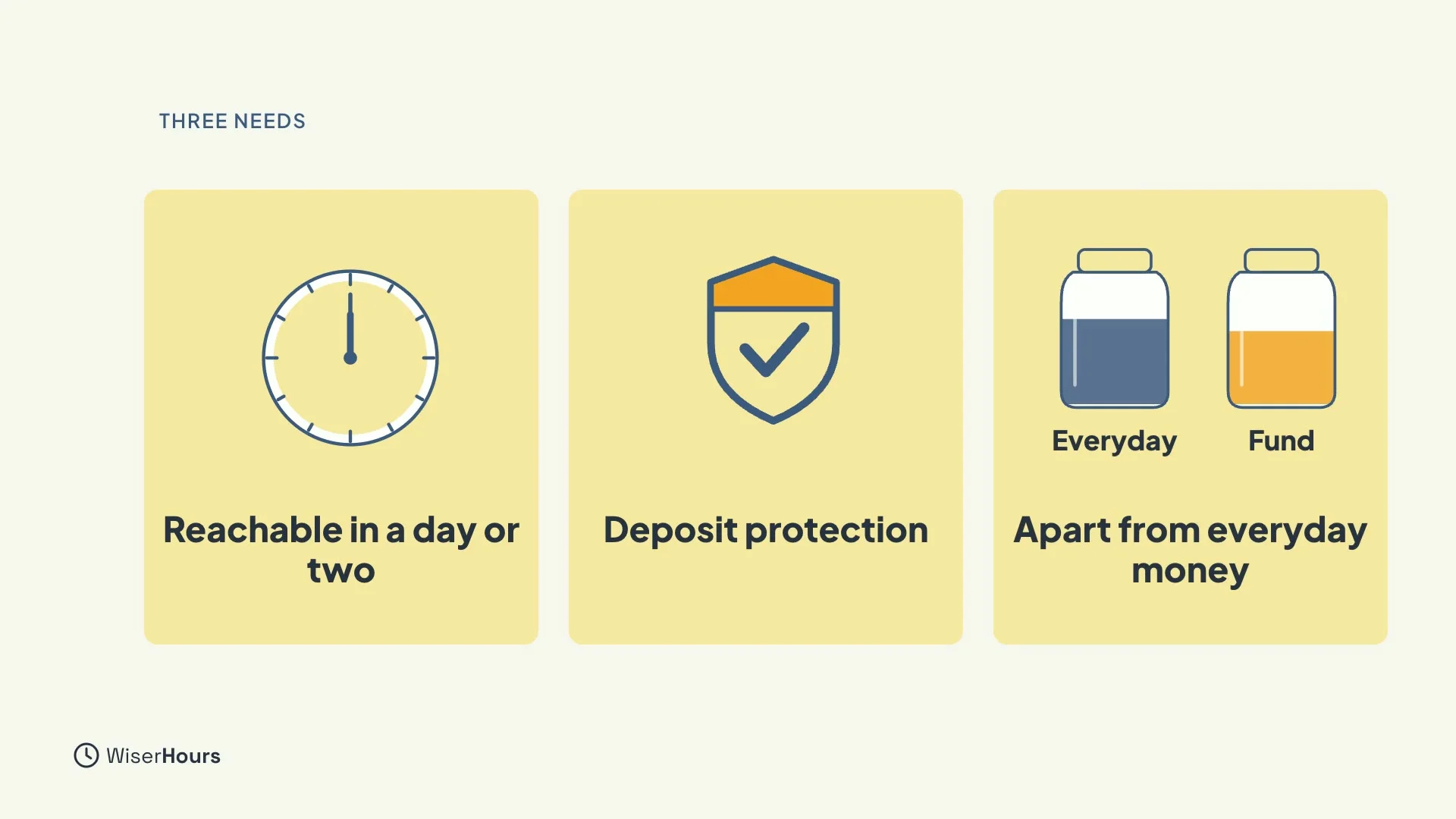
Your fund belongs in cash you can reach within a day or two, in an account covered by a government deposit protection scheme, and apart from your everyday spending. Keeping it apart also lets you see at a glance whether it is full.
 (opens the full-size picture)
What deposit protection means
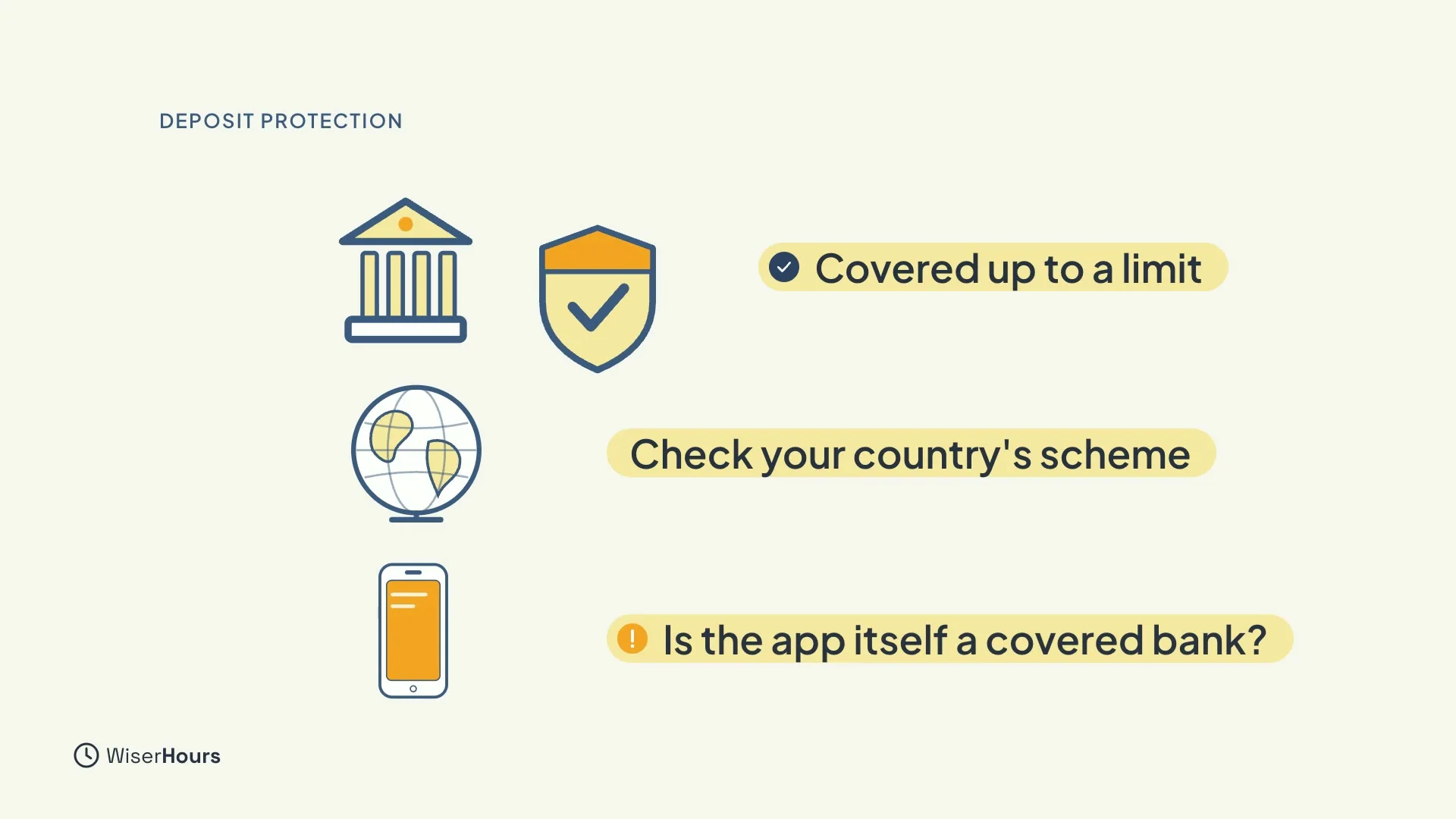
Deposit protection means that if a bank fails, your savings are covered up to a limit. Each country runs its own scheme with its own limit, so check your own country’s scheme and what it covers. This lesson does not list limits, because they differ and change.
Be careful with apps that hold money. An app is not always a bank. Check that the app itself is a covered bank, not just a partner of one, because a partner’s cover may not protect you if the app company fails. If you hold more than one account at the same bank, ask whether they share a single limit.
 (opens the full-size picture)
Where not to keep it
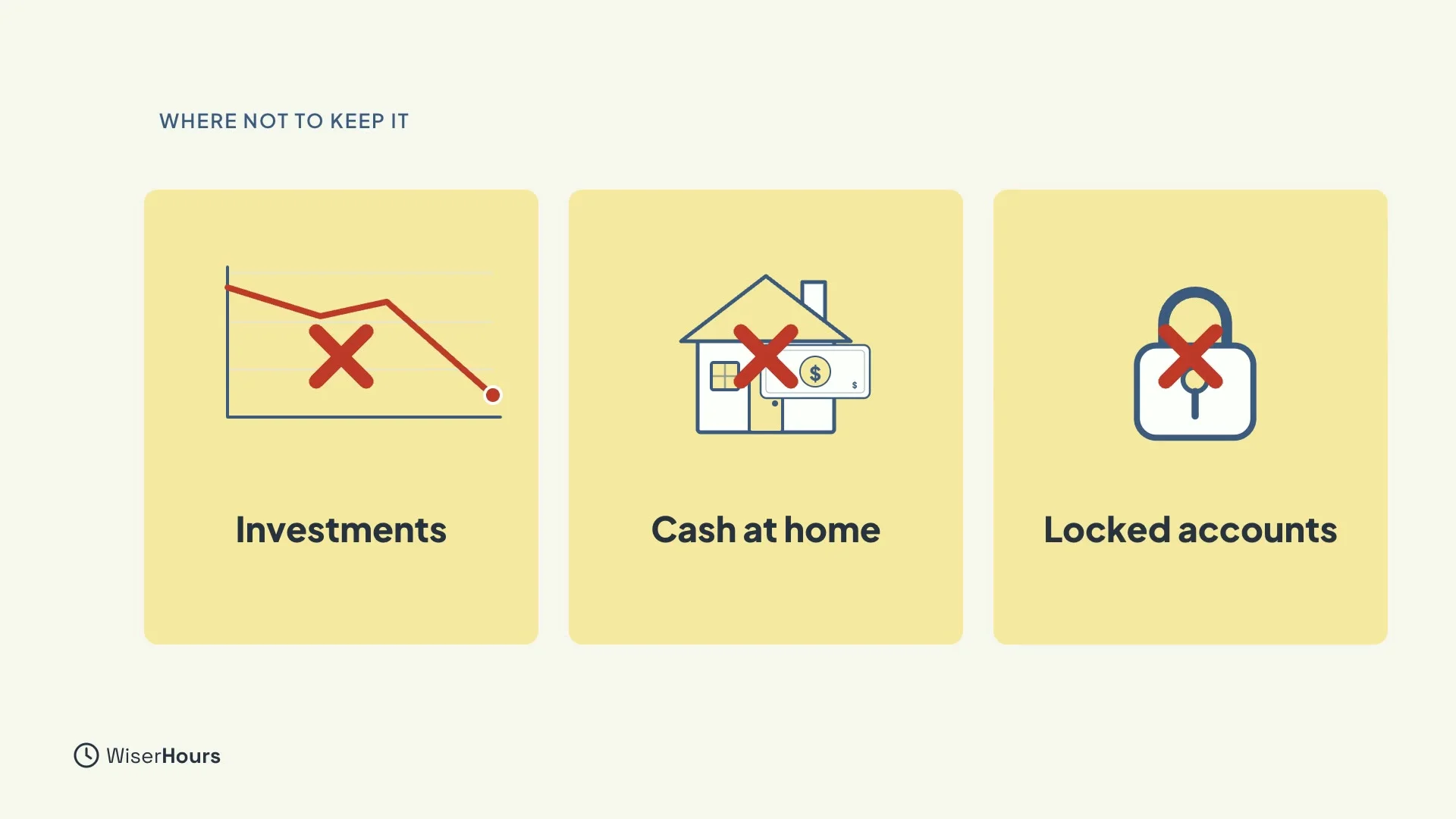
Three places do not suit an emergency fund.
- Investments. They can fall just when you need the money. Money you will need soon belongs in savings, not investments.
- Cash at home. It can be lost or stolen, it has no deposit protection and it earns no interest.
- Accounts you cannot get at quickly. A lock has a cost when the bill arrives next week. Locks suit goals you have chosen to commit to more than they suit emergencies.
 (opens the full-size picture)
The price of safety
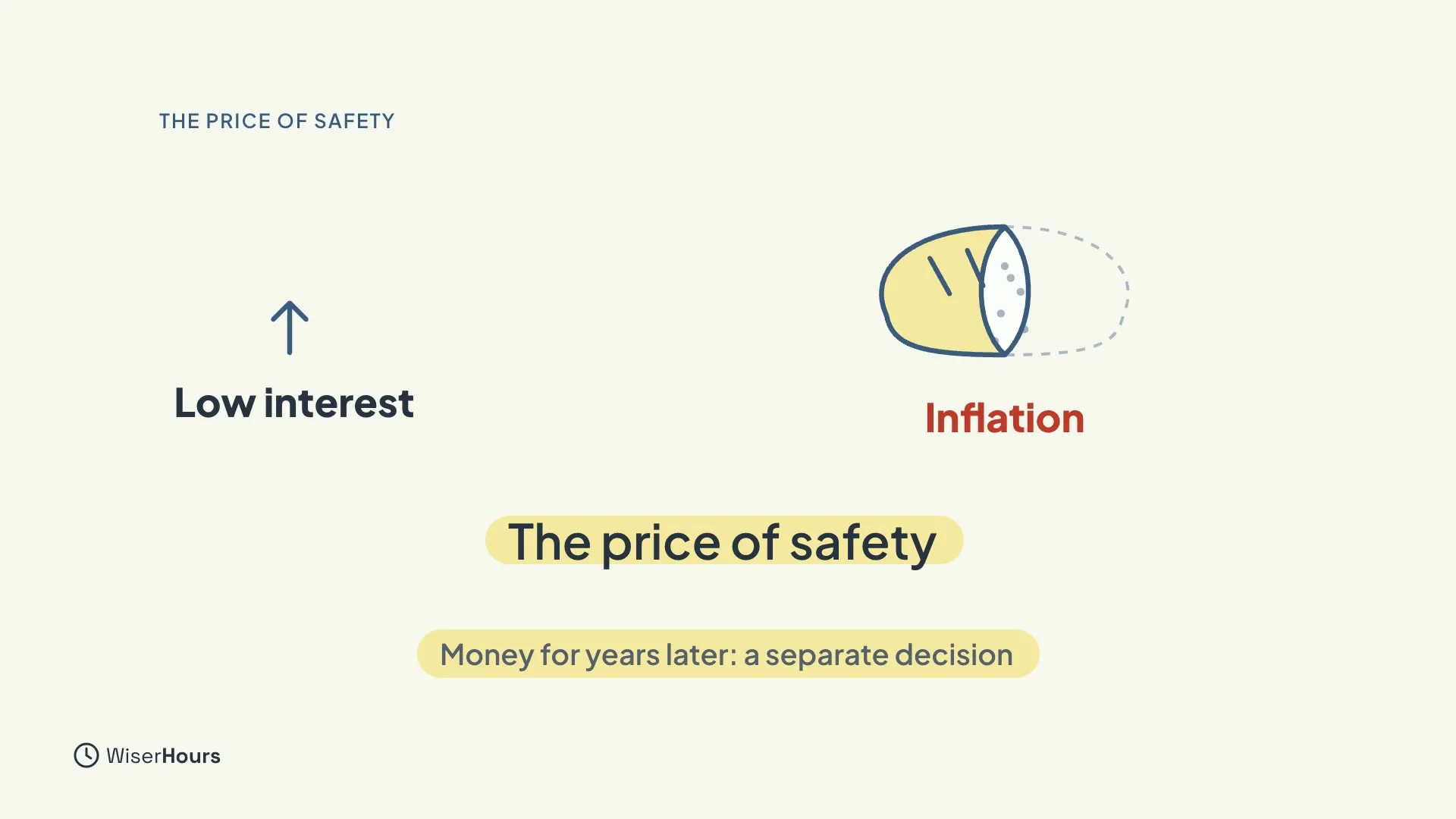
Easy-access savings accounts usually pay low interest, and inflationinflation: A general rise in the prices of goods and services over time, so that the same amount of money buys less. Returns are often reported after inflation, in real terms, to show what a gain is worth in buying power.Full entry in the glossary can eat into that interest over time. That is the price of having the money there on a bad day. You are not trying to grow this money. You are keeping it ready. Money you will not need for years is a separate decision, and it is best made with a qualified, regulated adviser.
 (opens the full-size picture)
Check your rate
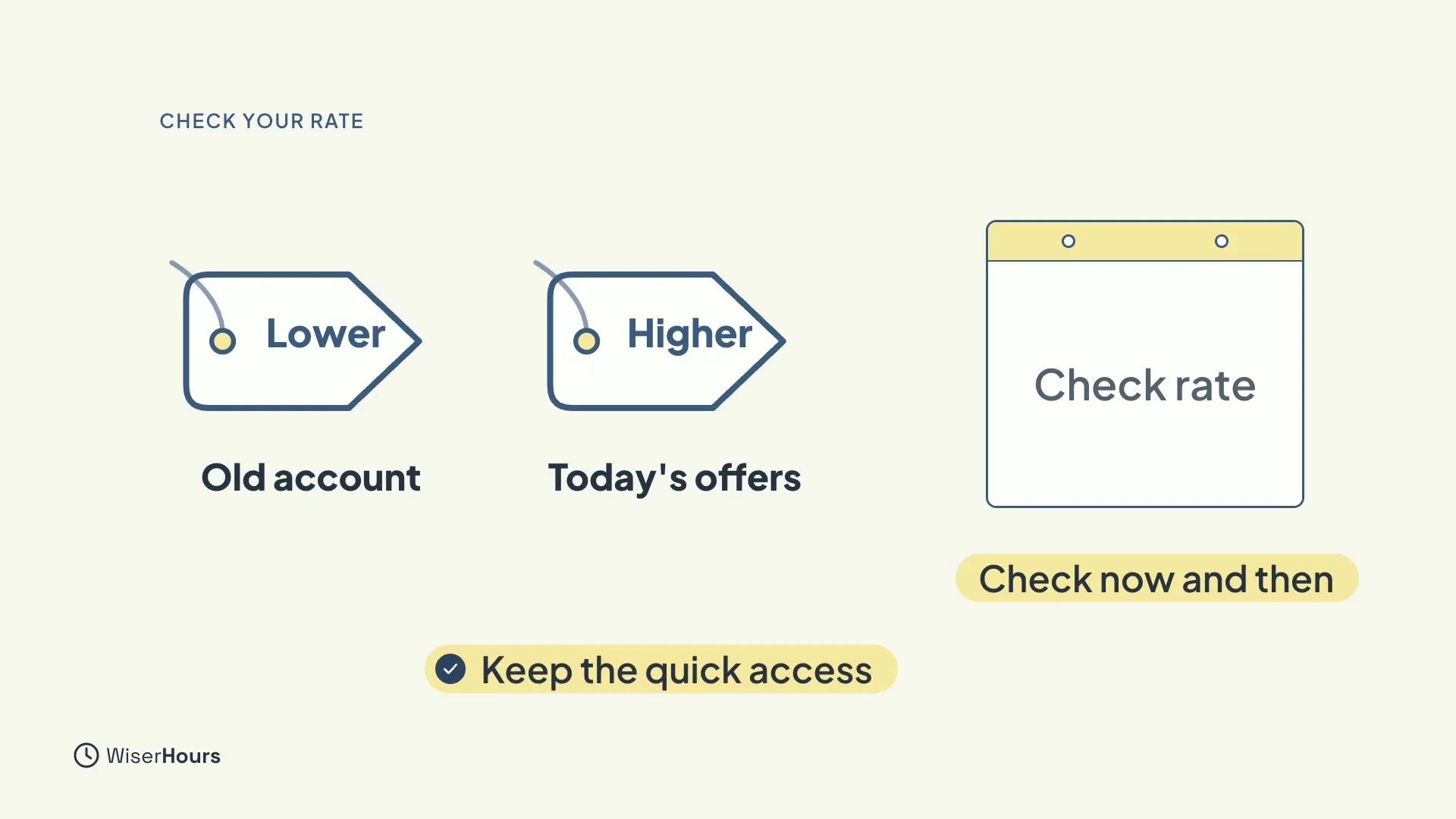
Loyal customers can lose out on savings too. A UK competition review included cash savings among the markets where long-standing customers paid or earned worse deals. So check your rate now and then, and compare it with what is on offer today. If you move, keep the quick access you need.
 (opens the full-size picture)
This page gives general information, not financial advice, and it names no banks, apps or products.
YOUR TURN
Read more
- Emergency Fund Basics: how deposit protection works and why apps need a second look.
- Cash Stuffing Explained: the risks of holding savings as cash at home.
- Investing for Beginners: why money you need soon belongs in savings.
- Negotiating Subscriptions and Cancellations: how loyalty can cost you, including on savings.
Read the full lesson script
In this lesson, you'll learn where to keep your emergency fund, so it's there on a bad day.
It needs three things. Reachable within a day or two. Covered by a government deposit protection scheme. And apart from your everyday spending, so you can see at a glance whether it's full.
Deposit protection means that if a bank fails, your savings are covered up to a limit. Each country runs its own scheme with its own limit, so check yours. And check that an app holding your money is a covered bank itself, not just a partner of one.
Where not to keep it: not in investments, which can fall just when you need the money; not as cash at home, which can be lost or stolen; and not in an account you can't get at quickly.
Easy-access savings usually pay low interest, and inflation can eat into it. That's the price of having the money there on a bad day. Money you won't need for years is a separate decision.
Loyal customers can lose out on savings too. So check your rate now and then, and keep the quick access you need.
So remember: reachable, protected, and apart. Before the next lesson, check that your savings account is covered by your country's deposit protection. Next, you'll decide what counts as an emergency.
MAKE IT A SMALL WIN
Finished this lesson?
Mark it complete to save your progress on this device.