Use it well · Lesson 9 of 10
Use Your Emergency Fund, Then Refill It Without Guilt
Learn that spending from your emergency fund is the point, how to refill it from payday, and where to turn if bills start to slip.
 Video coming soon
Many people feel guilty when they spend from their emergency fund. They should not. This lesson shows why using the fund is the plan working, how to refill it, and what to do if you also owe money.
Using it is the point
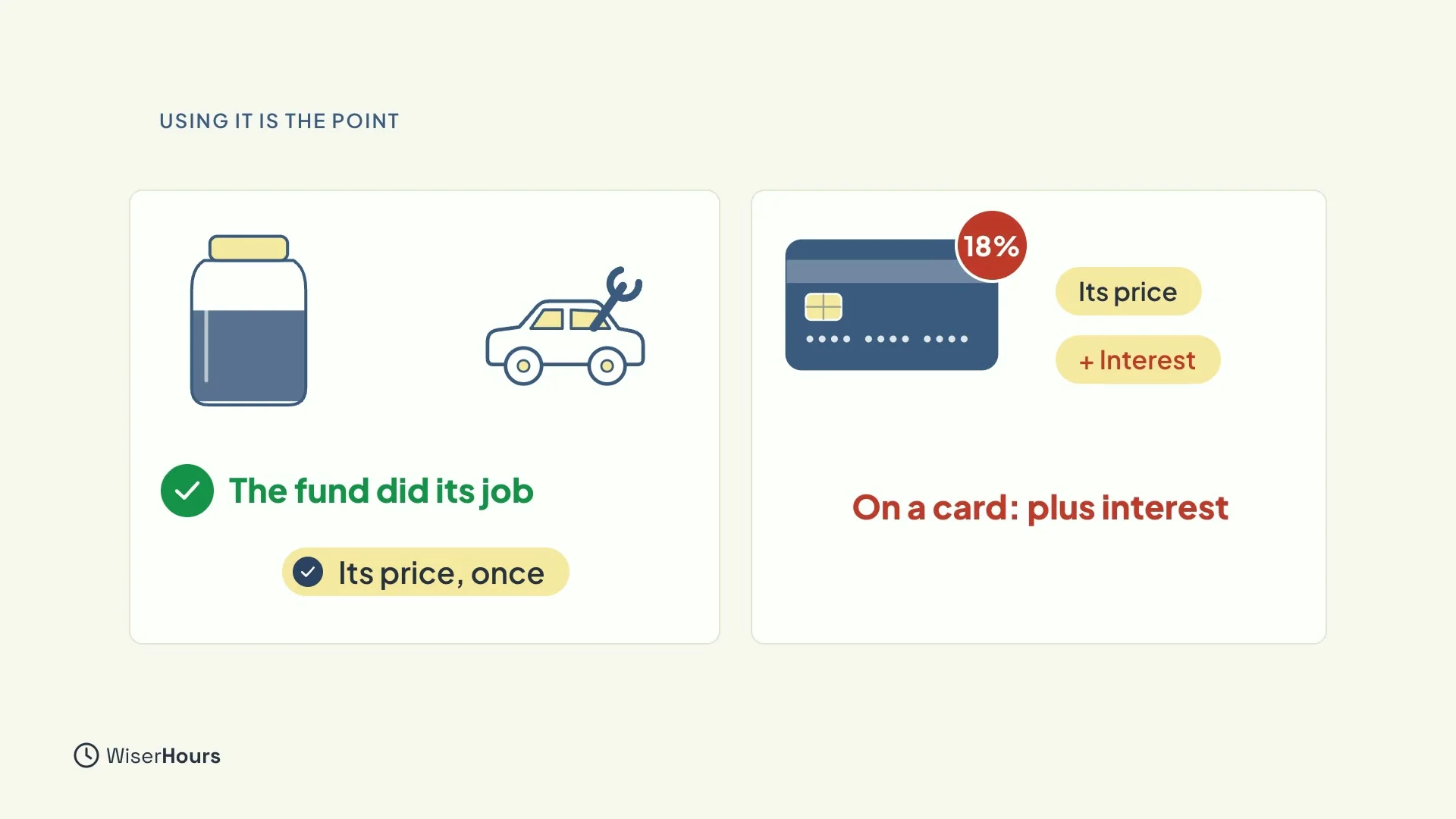
A shock paid from savings costs its price once. The same shock on a card costs its price plus interest. So when the car needs a repair and you pay from the fund, the fund has done its job. Nothing has gone wrong.
 (opens the full-size picture)
Restart the transfer
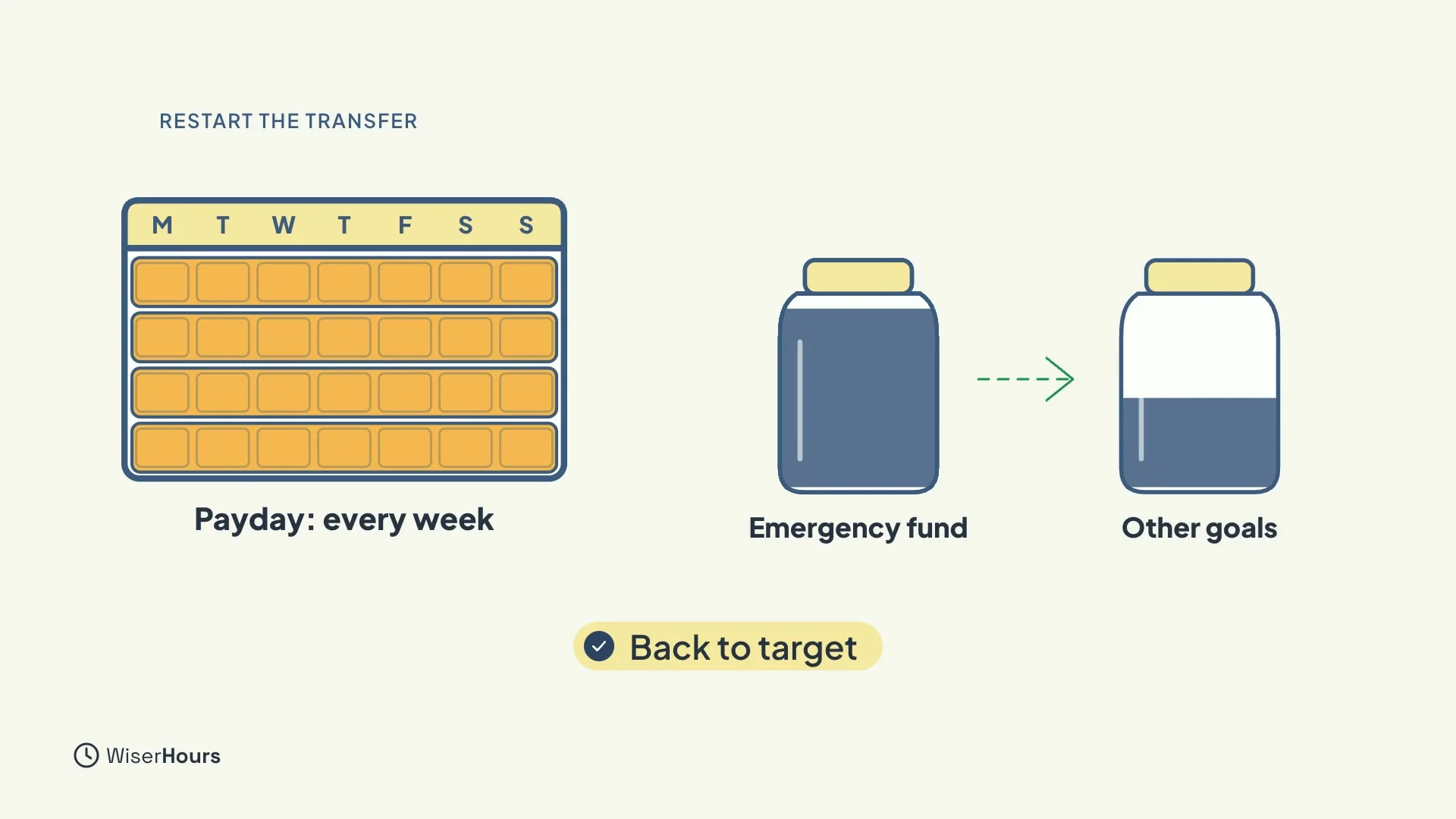
Once the bill is paid, restart your payday transfer until the balance is back to your target. This is the same habit you built earlier in the course. When the fund is full again, let the same amount carry on toward your other goals.
 (opens the full-size picture)
Write a refill rule
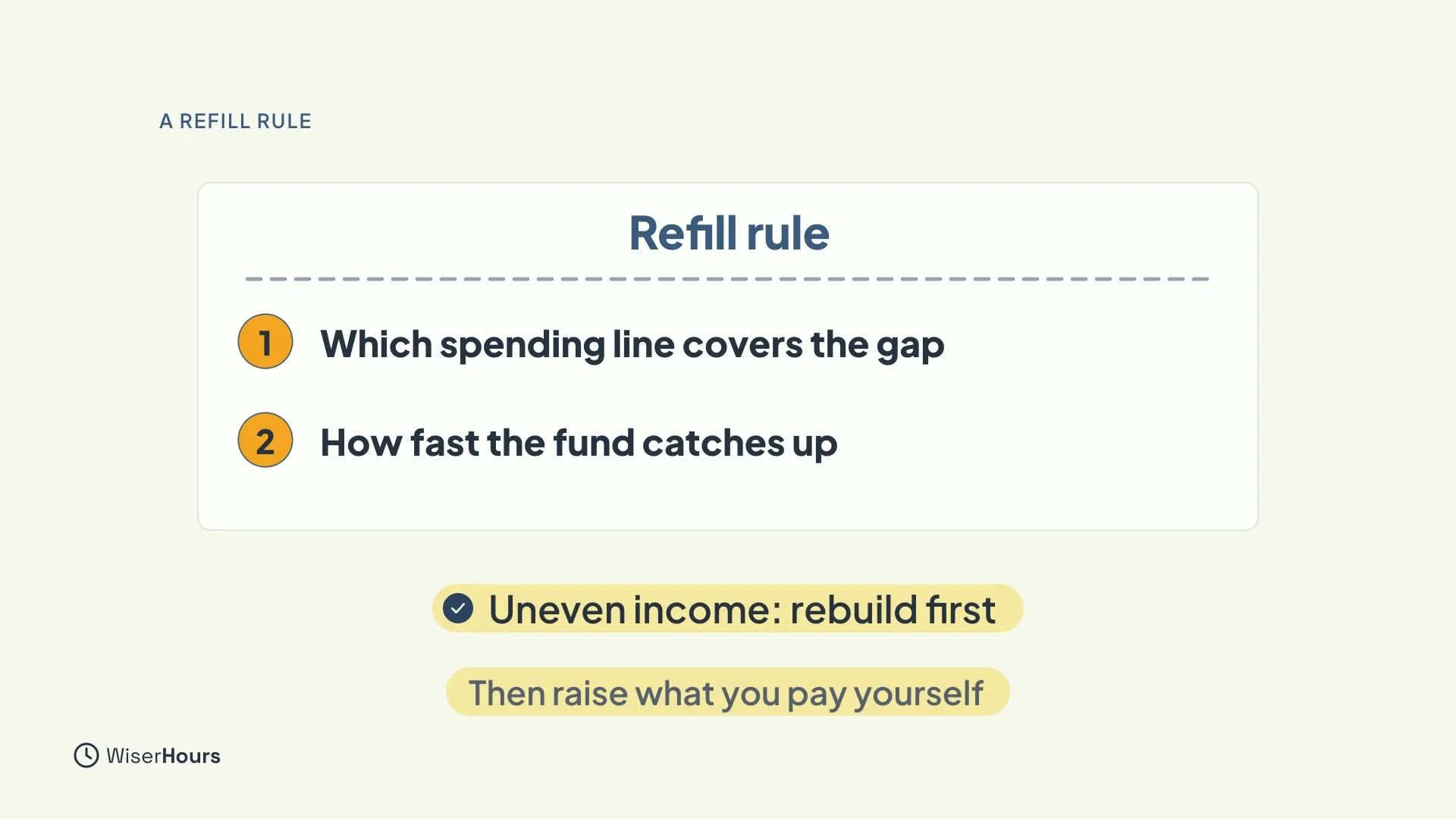
Write your refill rule before you need it. It answers two questions: which spending line covers the gap, and how fast the fund catches up. Deciding in calm times means you do not have to decide while you are stressed.
If your income is uneven, rebuild the fund before you raise what you pay yourself. After a lean stretch, a cautious rule is to raise your regular payment only when your baseline income has risen for several months, not after one strong month.
 (opens the full-size picture)
What if you have costly debt?
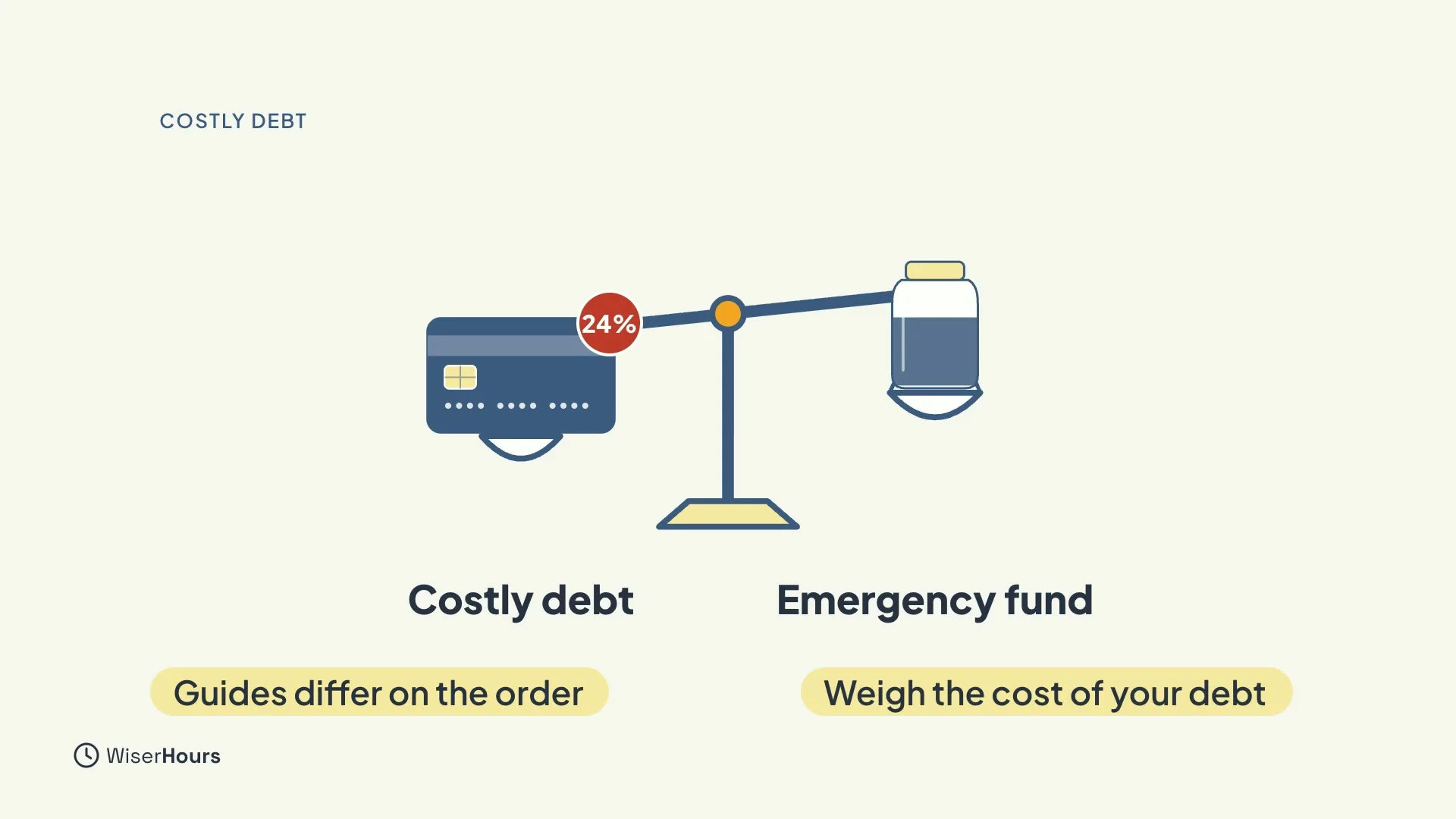
You may also have costly debt, such as credit cards or payday loans. Money guides differ on the order. One guide says paying off expensive debt first is cheaper in the long run, while low-cost borrowing that is under control need not hold the fund back. Another puts a starter fund first, so a shock does not become more debt, and then expensive debt. There is no flat rule. Decide the order with the cost of your debt in mind.
 (opens the full-size picture)
Get help early
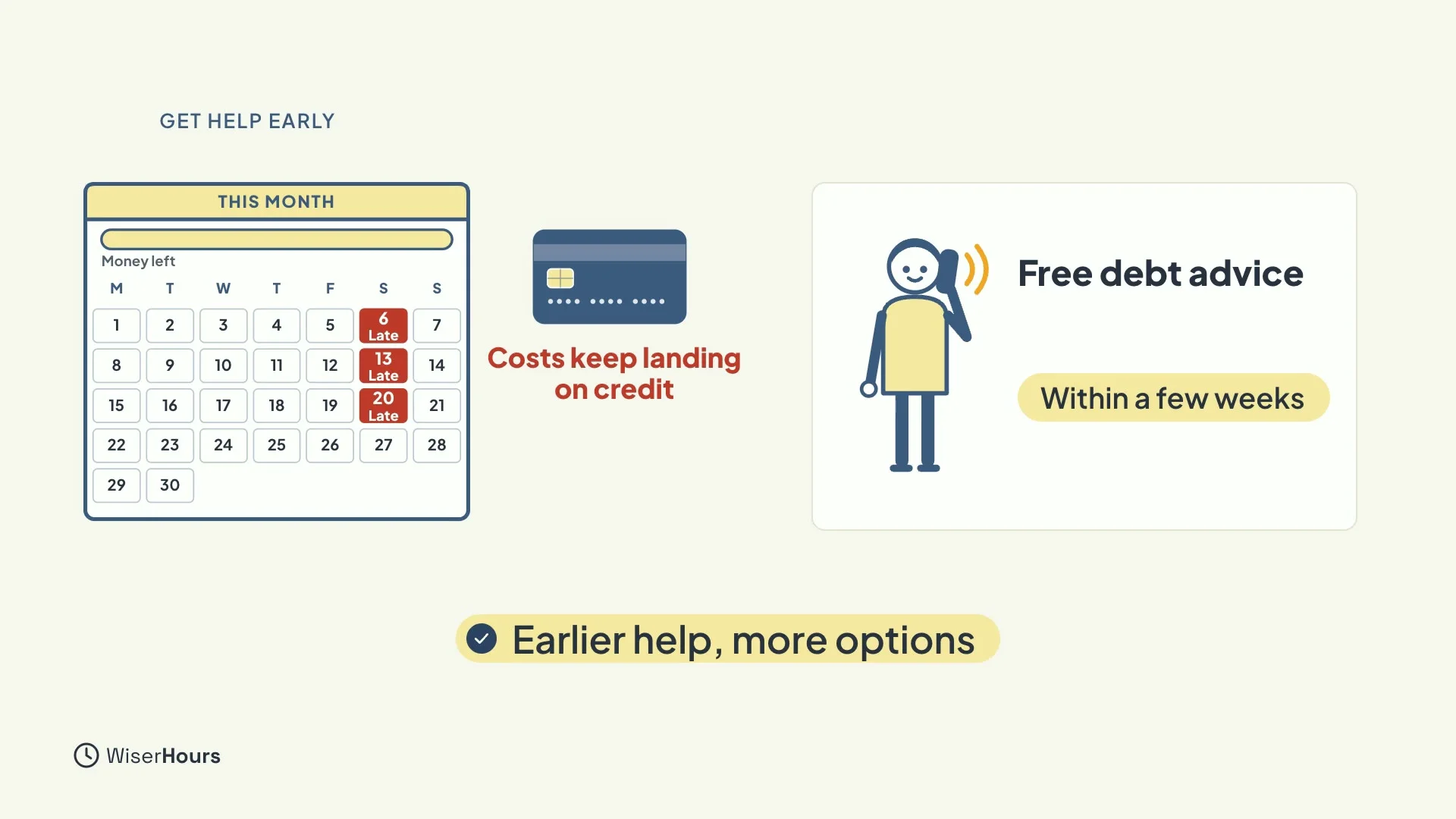
If bills start slipping, or everyday costs keep landing on credit, contact a free debt advice service within a few weeks. The earlier you get help, the more options you have. Look for a free service run by a public or non-profit body in your own country. In the US, credit counseling groups are mostly non-profit, but some charge for certain services, so check before you sign up.
 (opens the full-size picture)
This page gives general information, not financial advice.
YOUR TURN
Read more
- Emergency Fund Basics: why using the fund is the point, and what the sources say about debt.
- Sinking Funds Explained: how to write a shortfall rule in advance.
- How to Budget With Irregular Income: why rebuilding comes before a raise in what you pay yourself.
- Money Anxiety: why early help matters when money worries build up.
Read the full lesson script
In this lesson, you'll learn to use your emergency fund without guilt, and to refill it afterwards.
Using the fund is the point, not a failure. A shock paid from savings costs its price once, instead of its price plus interest.
Once the bill is paid, restart your payday transfer until the balance is back to your target. Then let the same amount carry on toward your other goals.
Write your refill rule before you need it: which spending line covers the gap, and how fast the fund catches up. If your income is uneven, rebuild the fund before you raise what you pay yourself.
What if you also have costly debt, like credit cards or payday loans? Money guides differ on the order. Paying off expensive debt is often cheaper in the long run. Decide the order with the cost of your debt in mind.
And if bills start slipping, or everyday costs keep landing on credit, contact a free debt advice service within a few weeks. The earlier you get help, the more options you have.
So remember: using it is the point, refill it on payday, and get free help early. Before the next lesson, write your refill rule. Next, you'll learn to save for bigger goals.
MAKE IT A SMALL WIN
Finished this lesson?
Mark it complete to save your progress on this device.