Get unstuck · Lesson 9 of 10
Get Out of Your Head: Use Action to Break a Loop
Use one small, timed, active or absorbing task to get out of a thought loop, and rate your mood before and after to see what helps.
 Video coming soon
When you are stuck in a loop, thinking harder rarely helps. In this lesson you learn a simple way out of your head: doing something. The evidence behind these ideas is mostly about mood and energy, not about overthinking itself, so treat this as a practical experiment, not a cure.
Action first, mood second
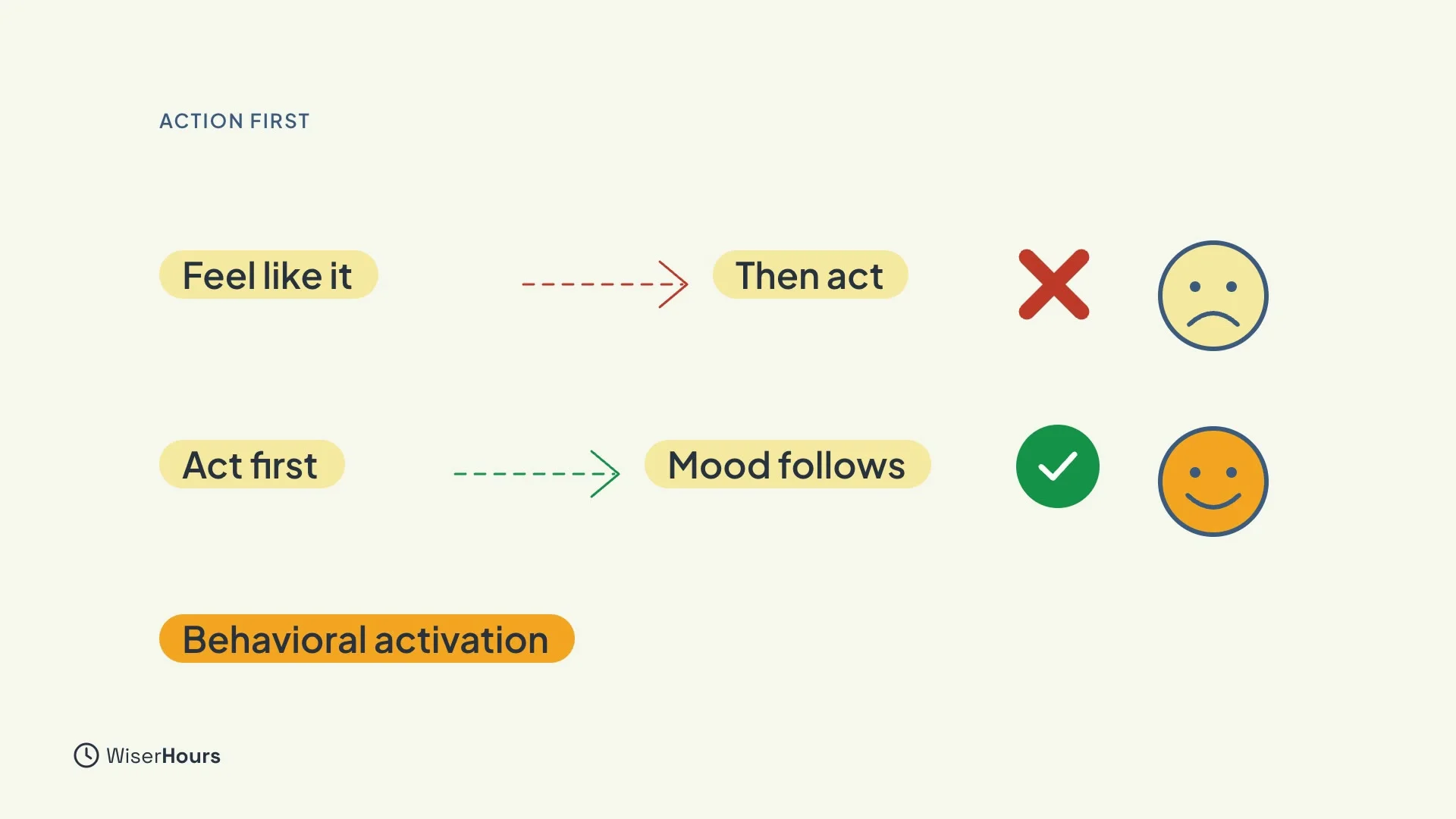
When you are stuck in a loop, it is tempting to wait until you feel like doing something. But motivation often follows action, not the other way round. A talking therapy called behavioral activation builds on this: do small things first, and let mood follow. That therapy was built for depression, so using the idea on an ordinary hard day is an extension of it.
 (opens the full-size picture)
Why pulling back backfires
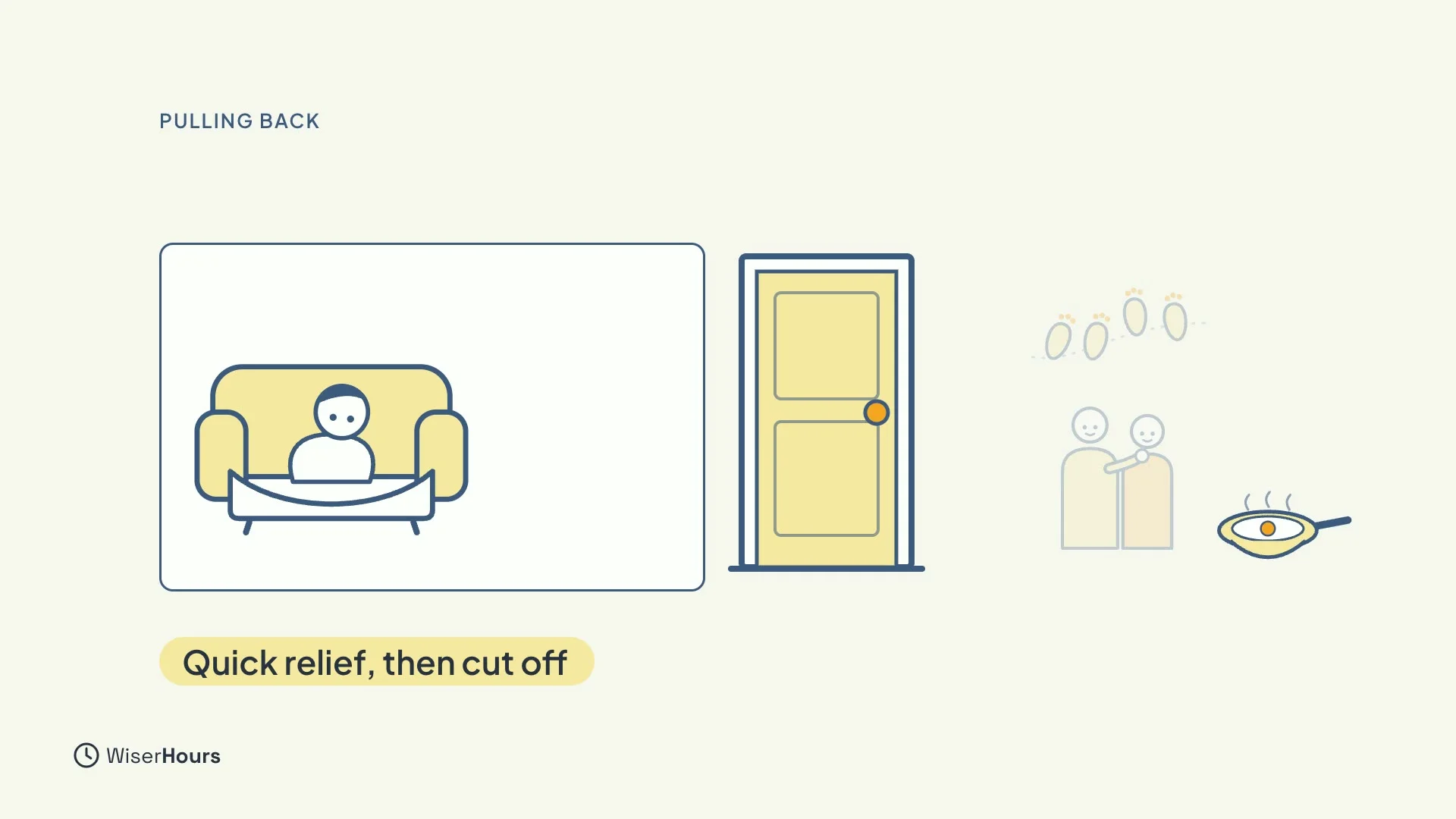
When you feel low, pulling back brings quick relief. But it also cuts you off from the activities that could lift you.
 (opens the full-size picture)
Make it small and timed
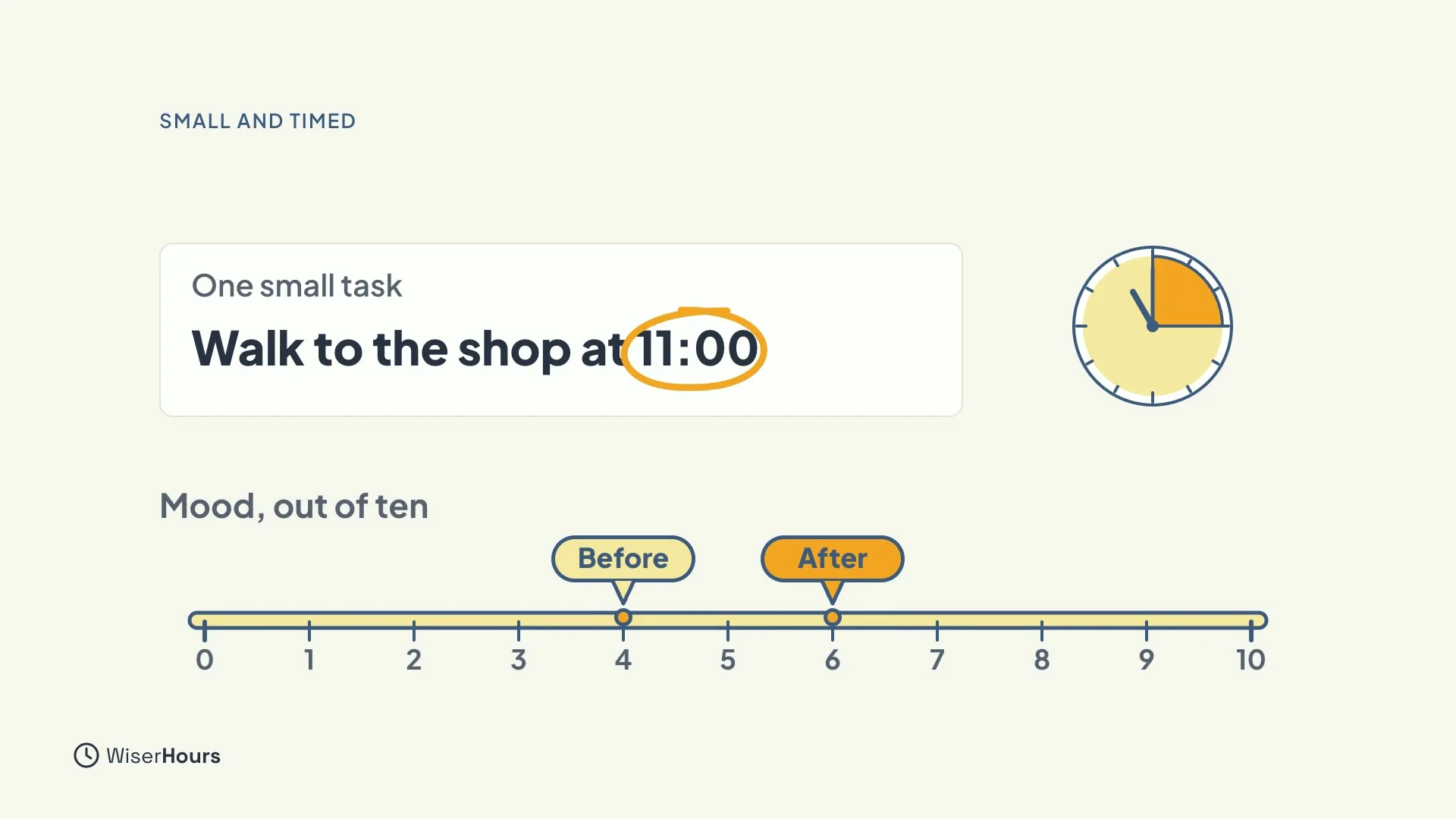
So pick one small, doable task, and give it a time: walk to the shop at eleven. Do it whatever your mood. Then rate your mood out of ten, before and after. The numbers in the picture are only an illustration. Your own scores will tell you what helps you.
 (opens the full-size picture)
Movement is one good choice
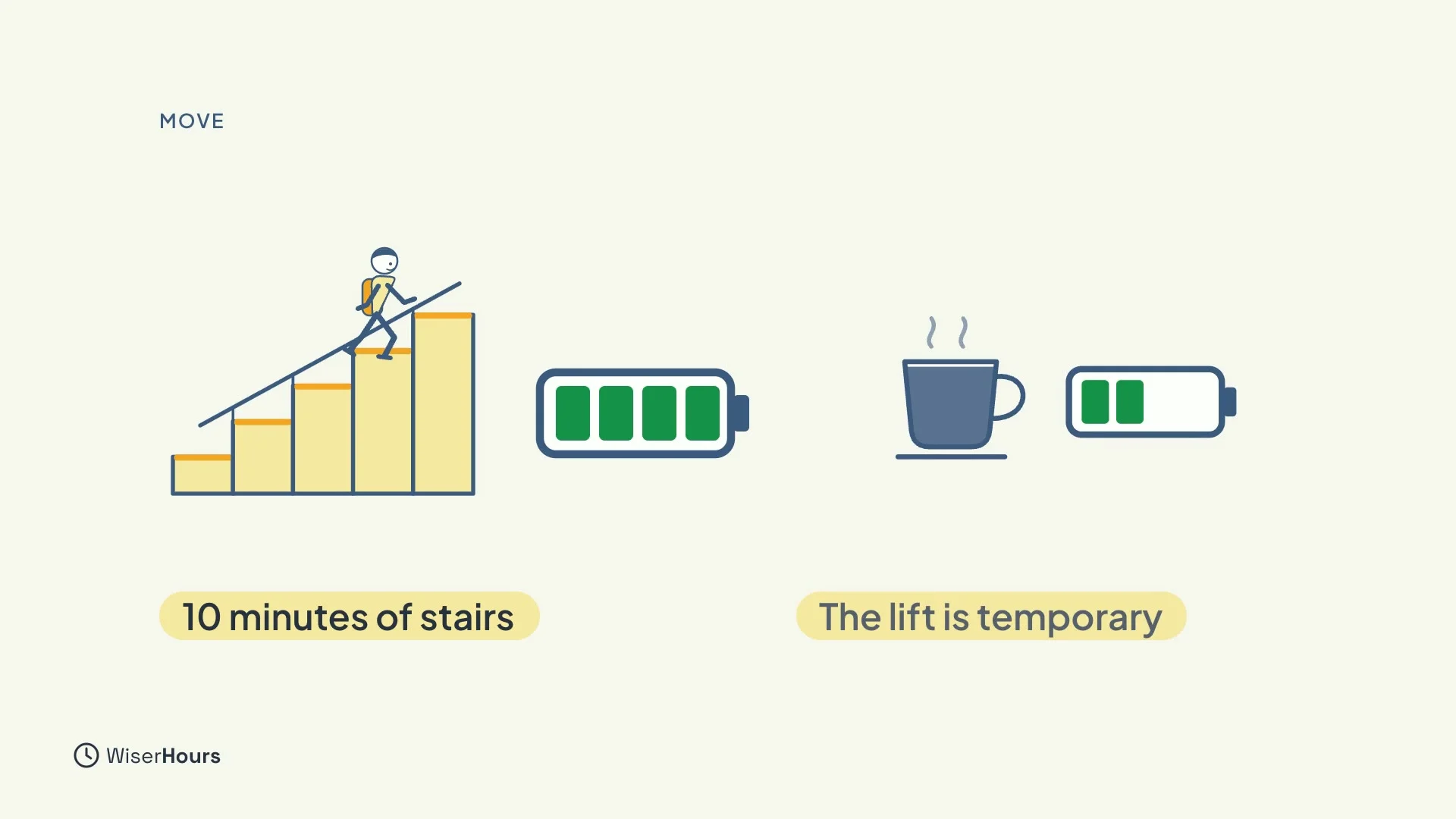
Movement is one good choice. In one small experiment with 18 physically active young women who usually slept too little, ten minutes of walking up and down stairs lifted energy more than a small dose of caffeine (50 mg), though the lift was temporary. It was a small study, so do not read it as a promise. Pick movement that suits you, and if you have ME/CFS or long COVID, where exercise can make fatigue worse, check with your doctor first.
 (opens the full-size picture)
Or choose something absorbing
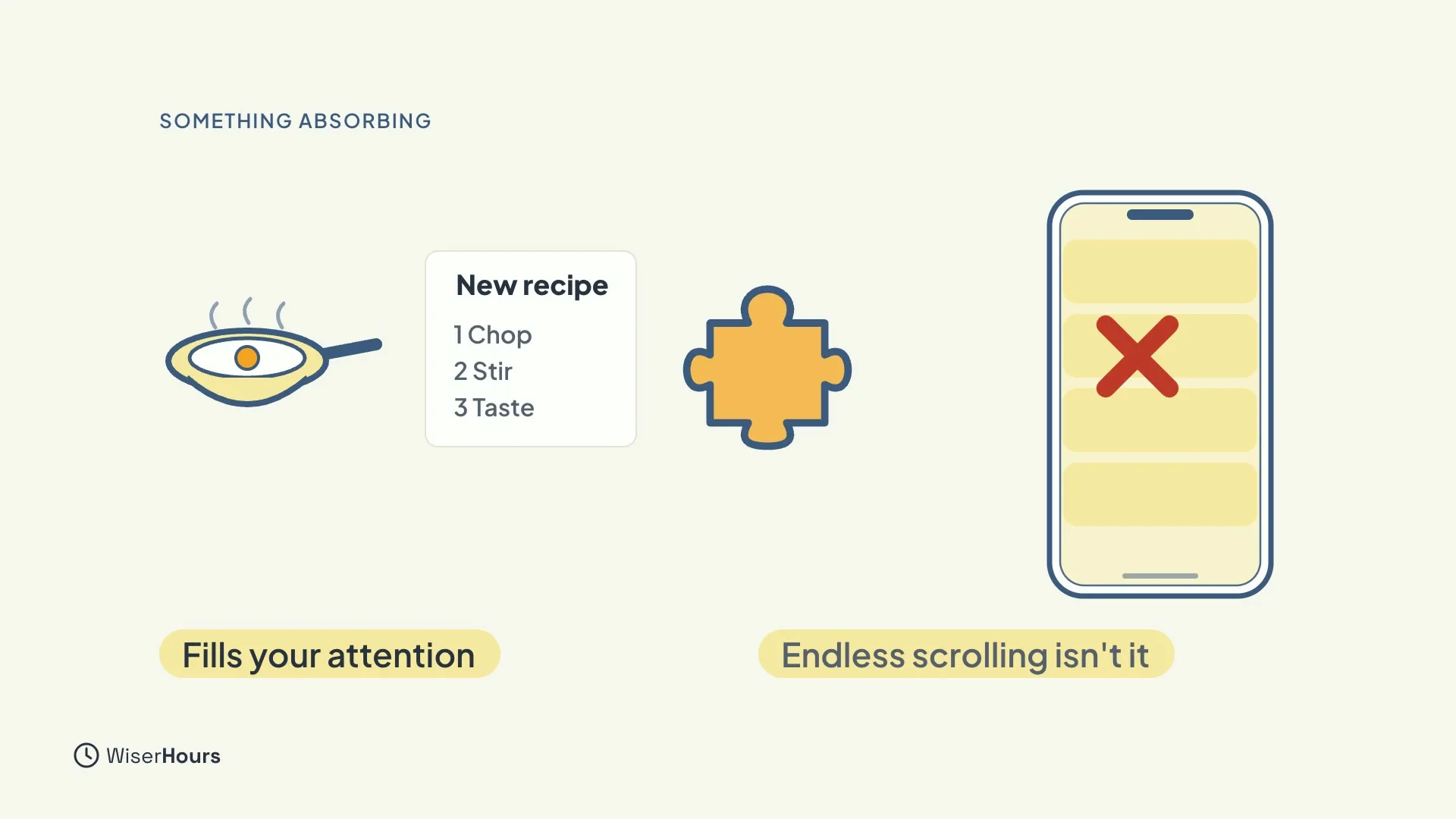
Another choice is something that fills your attention, like cooking a recipe you have never tried, or a hard puzzle. It leaves less room for the loop. People call complete absorption in an activity a flow stateflow state: Complete absorption in a challenging task, with action and awareness merging, less self-consciousness and time seeming to pass differently. Mihaly Csikszentmihalyi named it; it tends to appear when a task stretches your skills and gives clear feedback.Full entry in the glossary, though you cannot switch that on at will. Scrolling for more news is not that kind of action: it keeps you scanning long after it stops telling you anything useful.
 (opens the full-size picture)
YOUR TURN
Read more
- How to Get Motivated When You Don’t Feel Like Doing Anything: the small, timed steps behind behavioral activation.
- Does Exercise Give You More Energy? What the Research Says: the stair-walking experiment and its limits.
- Languishing: The Feeling of “Blah” and How to Move Through It: finding something absorbing on a flat day.
- Flow State Explained: What It Is and How to Get Into It: what total absorption feels like and why it cannot be forced.
- Doomscrolling: Why You Do It and How to Stop: why endless scrolling is not helpful action.
Read the full lesson script
In this lesson, you'll learn a simple way out of your head: doing something.
When you're stuck in a loop, it's tempting to wait until you feel like doing something. But motivation often follows action, not the other way round. A talking therapy called behavioral activation builds on this: do small things first, and let mood follow.
When you feel low, pulling back brings quick relief. But it also cuts you off from the activities that could lift you.
So pick one small, doable task, and give it a time: walk to the shop at eleven. Do it whatever your mood. Then rate your mood out of ten, before and after.
Movement is one good choice. In one small experiment, ten minutes of walking up and down stairs lifted energy more than a small dose of caffeine, though the lift was temporary.
Another choice is something that fills your attention, like cooking a recipe you've never tried, or a hard puzzle. It leaves less room for the loop. Scrolling for more news isn't that kind of action: it keeps you scanning long after it stops telling you anything useful.
So remember: act first and mood follows, keep it small and timed, and choose something absorbing. Before the next lesson, the next time you're stuck in a loop, do one ten-minute active or absorbing thing, and rate your mood before and after. Next, you'll learn when it's more than overthinking.
MAKE IT A SMALL WIN
Finished this lesson?
Mark it complete to save your progress on this device.