Simple tools · Lesson 4 of 10
Write It Down: Get a Worry Out of Your Head
Learn how to put a worry on paper in its exact words, write three possible endings, and plan unfinished tasks, plus what writing can and can't do.
 Video coming soon
A worry is often easier to deal with once it is on paper. In this lesson you will learn to get a worry out of your head and onto a page, and you will be told honestly what writing can and cannot do.
Use the exact words
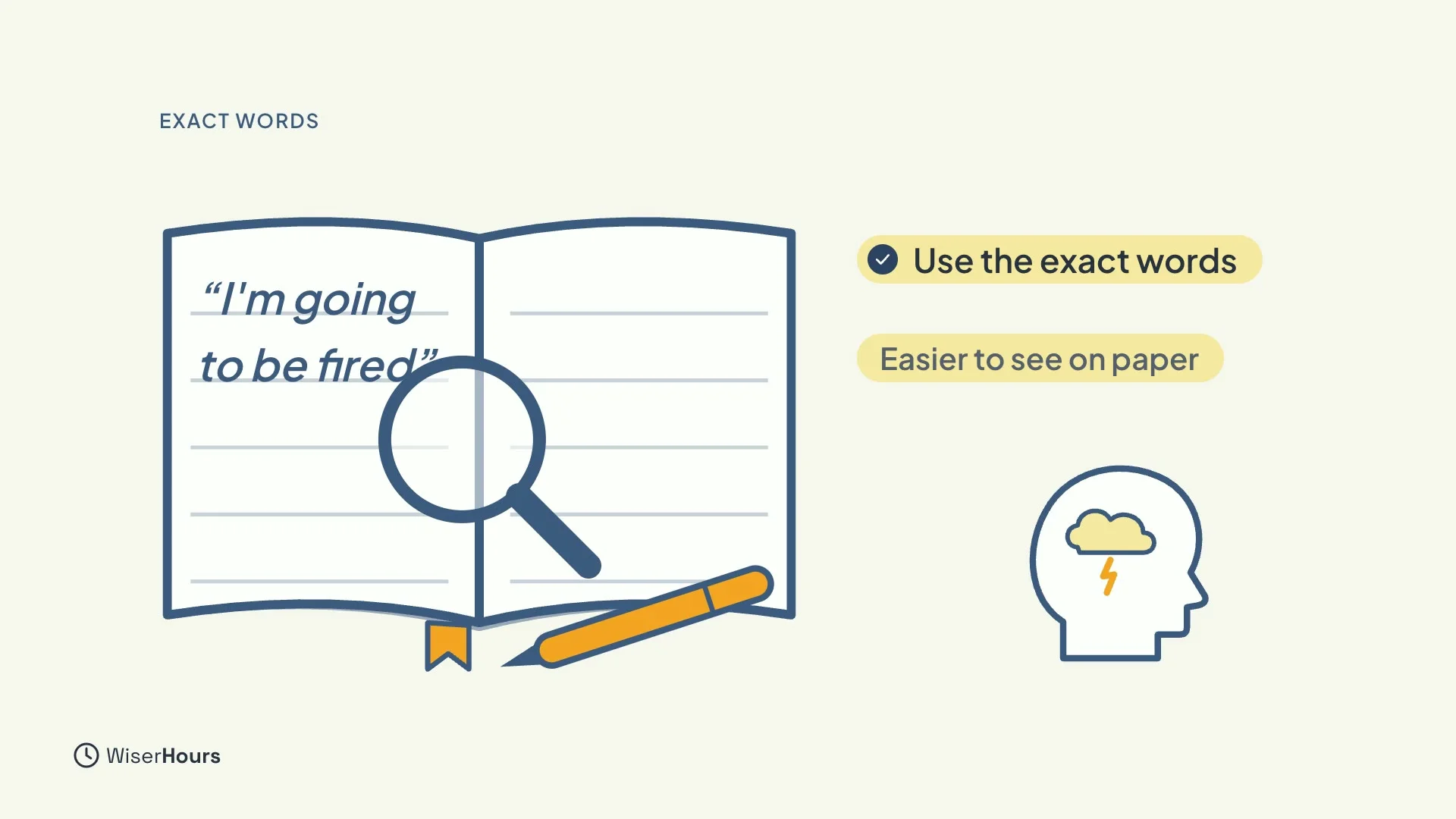
Start by writing the thought in the exact words your mind used. “I’m going to be fired” is easier to examine on paper than inside your head. In your head it is loud and vague. On the page it is a sentence you can read, question and check.
 (opens the full-size picture)
Three endings
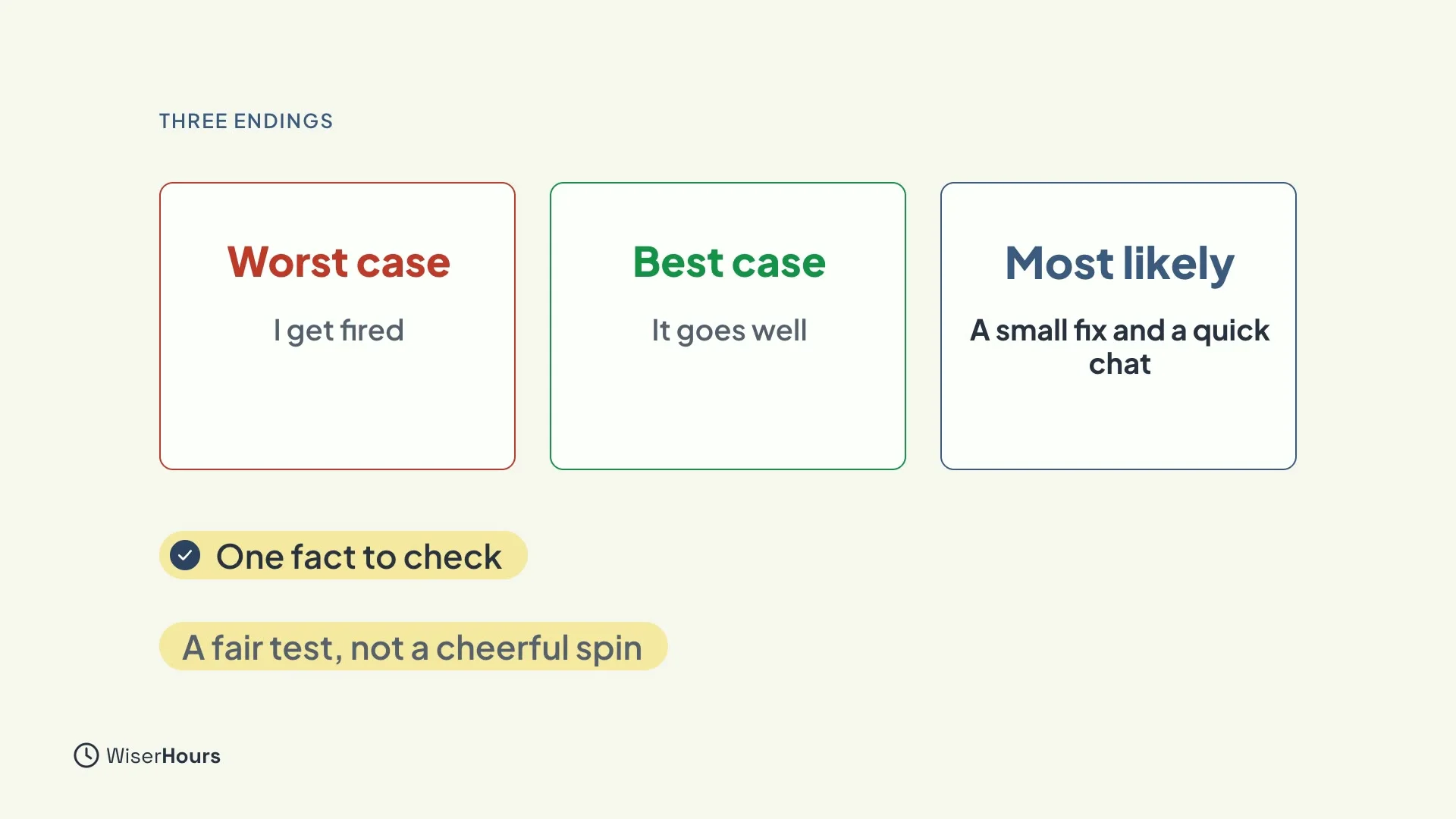
Then write at least two other endings: the best case and the most likely case. Add one fact you could check. The aim is a fair test, not a cheerful spin. If the most likely case is a small fix and a quick chat, write that down, even if it feels less dramatic than the worst case.
 (opens the full-size picture)
Unfinished tasks
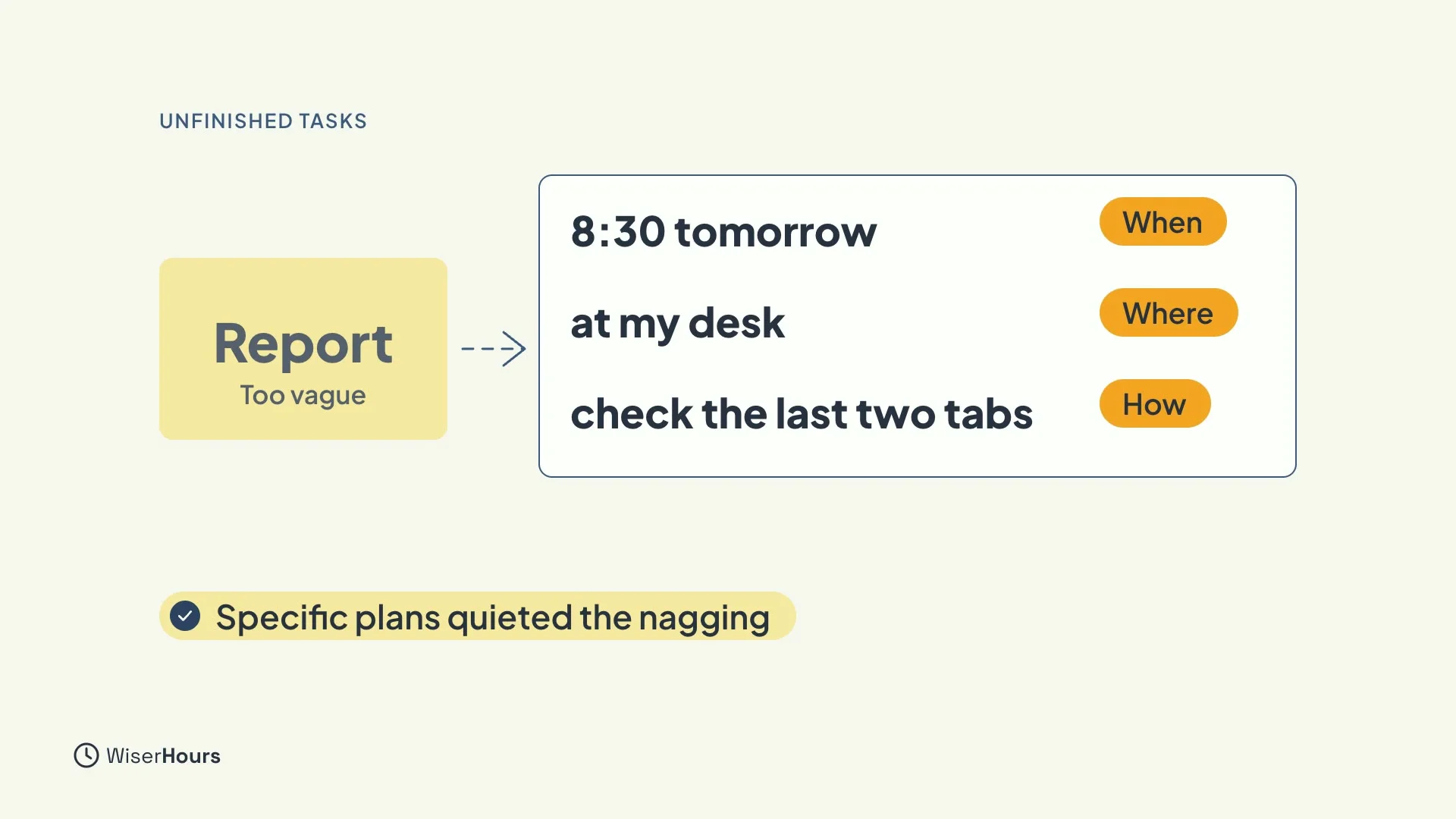
Some loops are about unfinished tasks. For each one, write where, when and how you will pick it up. Not just “report”, but “8:30 tomorrow, at my desk, check the last two tabs”. In small experiments with students, a specific plan like this stopped tasks from intruding on people’s thoughts.
 (opens the full-size picture)
Before bed
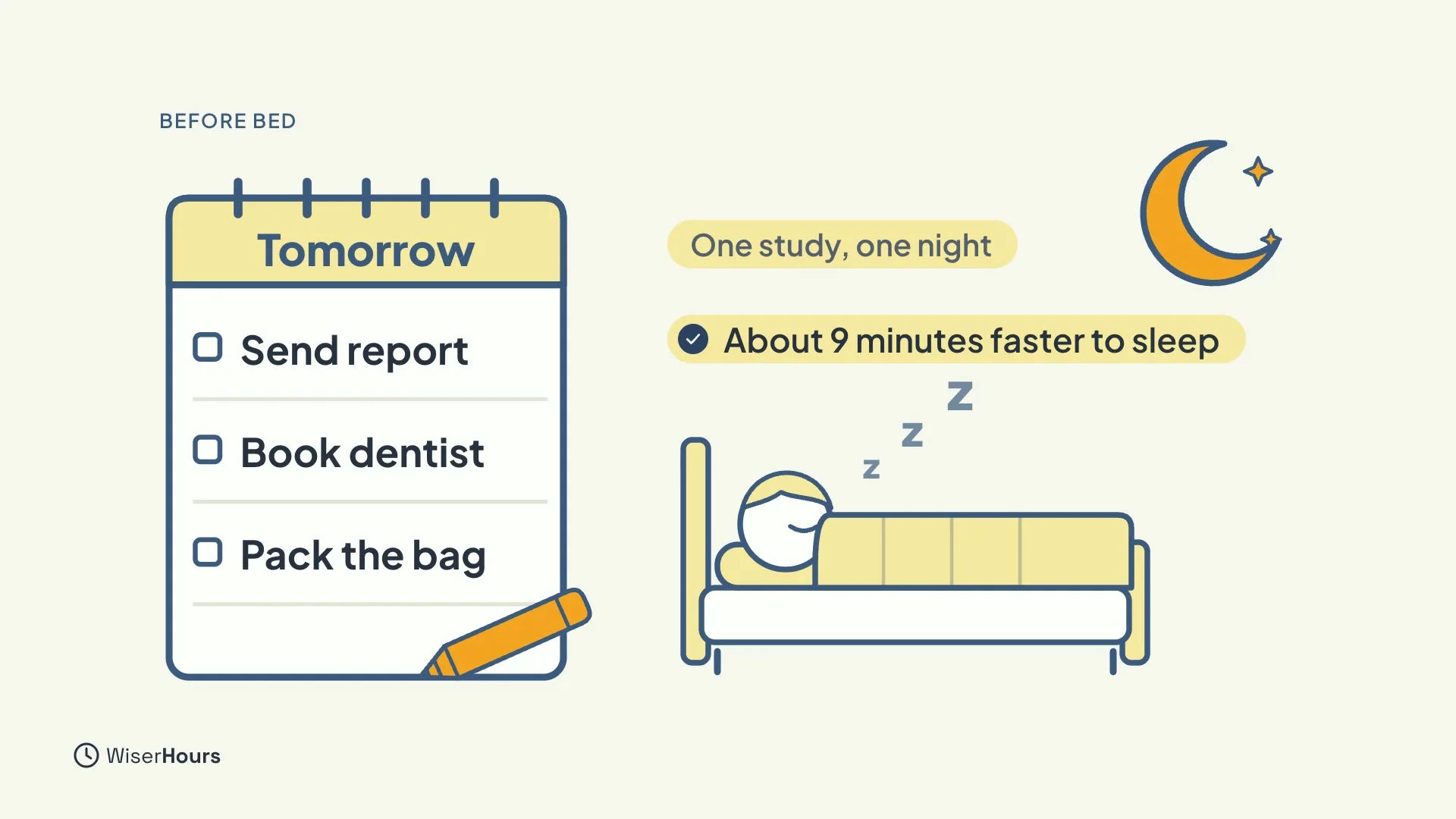
If you worry in bed, try listing tomorrow’s tasks before you sleep. In one sleep lab study, people who wrote a five-minute to-do list fell asleep about nine minutes faster than people who wrote about tasks they had already done. That was one study, measuring one night.
 (opens the full-size picture)
How much does writing help?
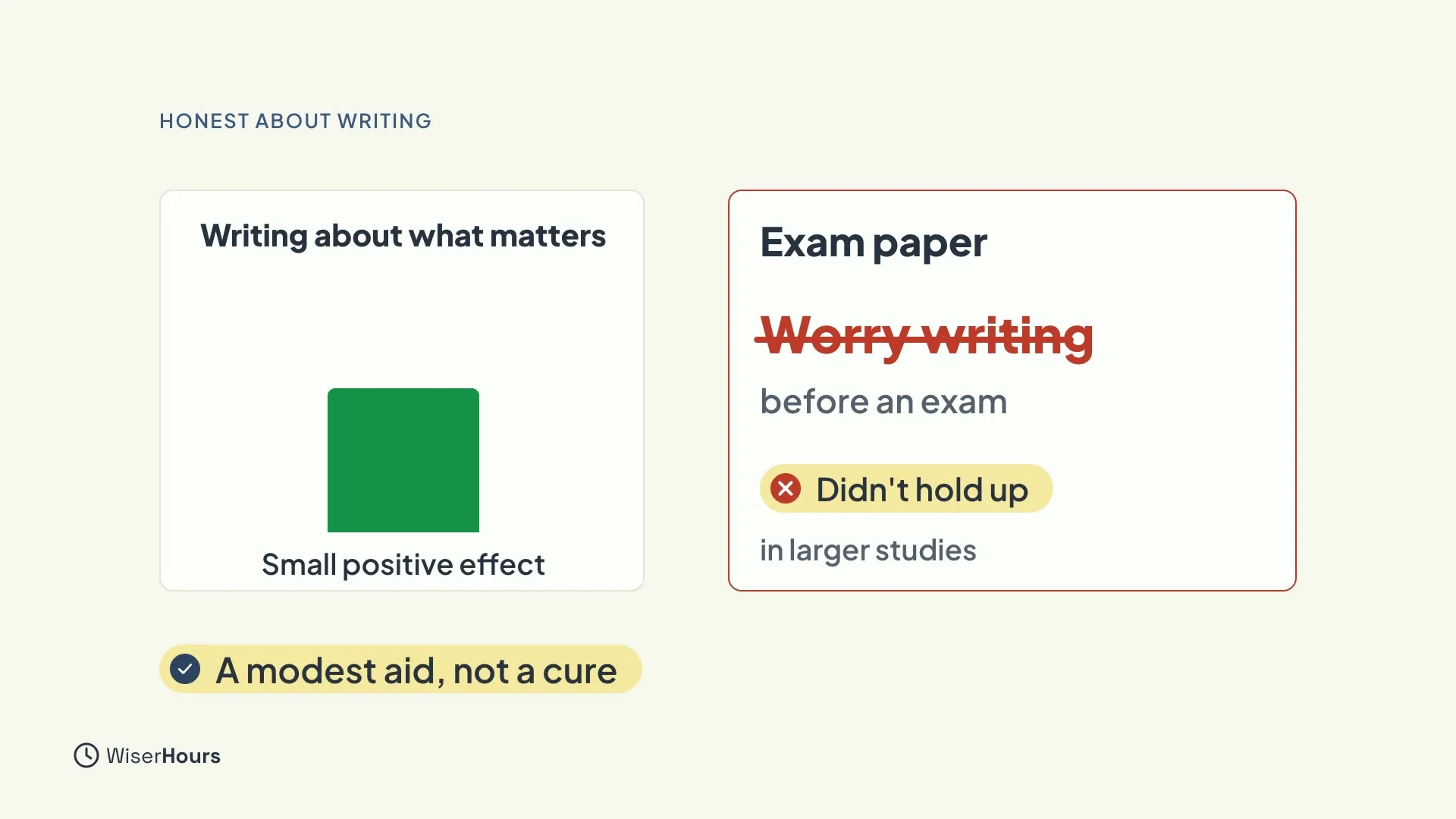
Be honest about what writing can do. Writing about something that matters to you had a small positive effect on average, across many studies. And one famous trick, writing out your worries just before an exam, did not hold up in larger studies. So treat writing as a modest aid, not a cure.
 (opens the full-size picture)
YOUR TURN
Read more
- Catastrophizing: How to Catch Worst-Case Thinking and Test It: writing the thought in its exact words and testing it.
- How to Reduce Stress: 15 Everyday Habits With Evidence Behind Them: the worst, likeliest and one fact to check, and what writing adds.
- The Daily Review: Five Minutes to Stay on Track: specific plans for unfinished tasks and the bedtime to-do list.
- Test Anxiety: Why Your Mind Goes Blank and What Helps: what the research says about writing worries before an exam.
- Why You Wake Up at 3 AM: listing tomorrow’s tasks before sleep, and when to see a doctor.
Read the full lesson script
In this lesson, you'll learn to get a worry out of your head and onto paper, and what writing can and can't do.
Start by writing the thought in the exact words your mind used. I'm going to be fired is easier to examine on paper than inside your head.
Then write at least two other endings: the best case and the most likely case. Add one fact you could check. The aim is a fair test, not a cheerful spin.
Some loops are about unfinished tasks. For each one, write where, when and how you'll pick it up. Not just report, but eight thirty tomorrow, at my desk, check the last two tabs. In small experiments, a specific plan like this stopped tasks intruding on people's thoughts.
If you worry in bed, try listing tomorrow's tasks before you sleep. In one sleep lab study, people who wrote a five-minute to-do list fell asleep about nine minutes faster than people who wrote about tasks they'd already done.
How much does writing help? Writing about something that matters to you had a small positive effect on average, across many studies. And one famous trick, writing out your worries just before an exam, didn't hold up in larger studies. So treat writing as a modest aid, not a cure.
So remember: exact words, three endings, and a where, when and how for unfinished tasks. Before the next lesson, write tonight's loudest worry in its exact words, then its most likely ending. Next, you'll learn to set up worry time.
MAKE IT A SMALL WIN
Finished this lesson?
Mark it complete to save your progress on this device.