Simple tools · Lesson 5 of 10
Worry Time: Give Your Worries a Place and a Time
Learn how worry time works: postpone worries to a short daily slot, then plan what you can act on and let the rest go for now.
 Video coming soon
Worry time is a simple way to give your worries a place, so they do not follow you all day. WiserHours has no article on this technique, so this lesson uses three outside sources, linked at the end: the NHS Every Mind Matters page on tackling worries, a page from MindWell Leeds, and a review of trials on worry postponement.
Postpone, don’t fight
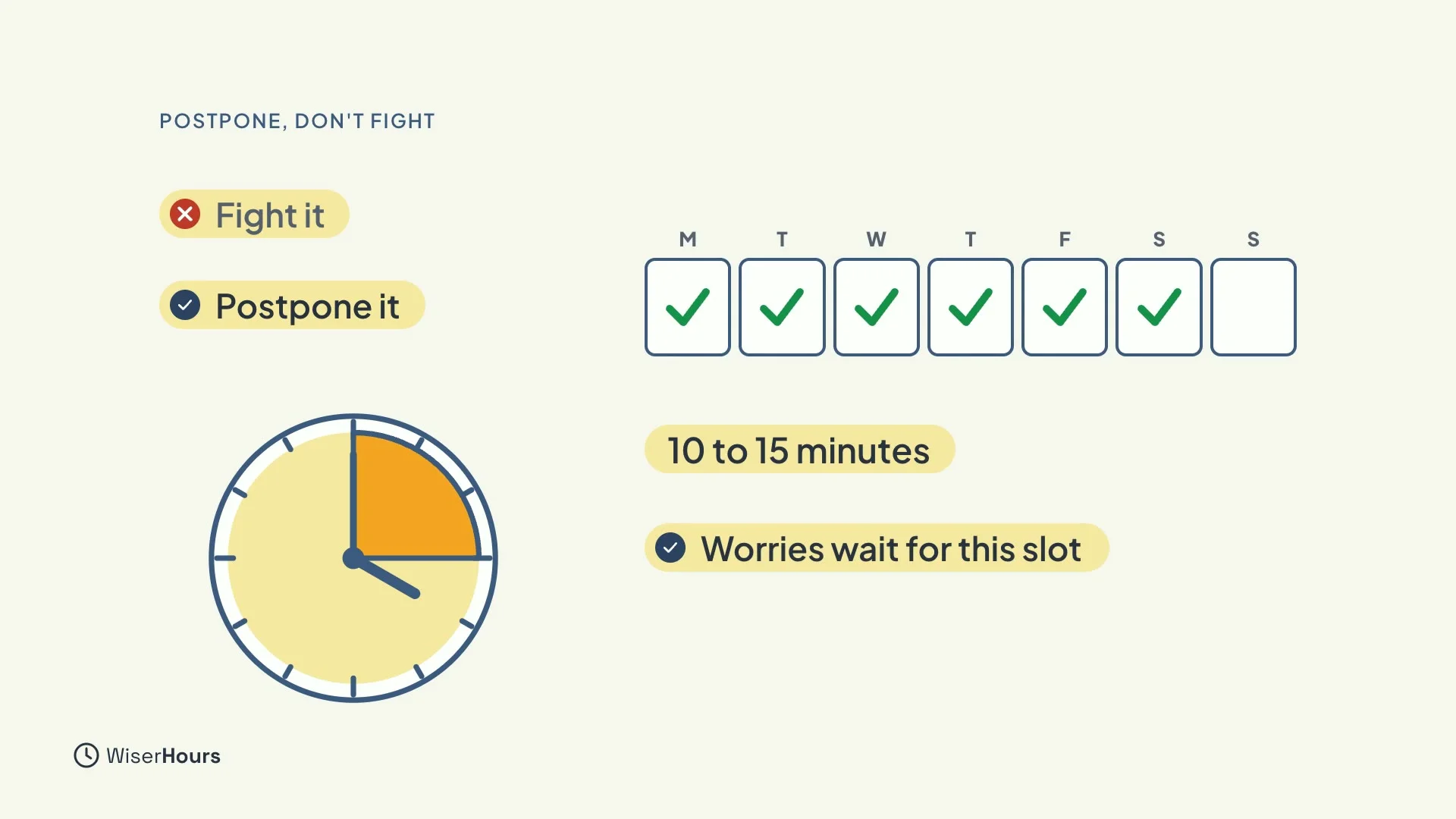
Instead of trying to stop a worry, you postpone it. You set a short, regular slot, about 10 to 15 minutes on most days, and save your worries for then. The idea is not to ban worrying. It is to give worries an appointment, so they can wait.
 (opens the full-size picture)
During the day
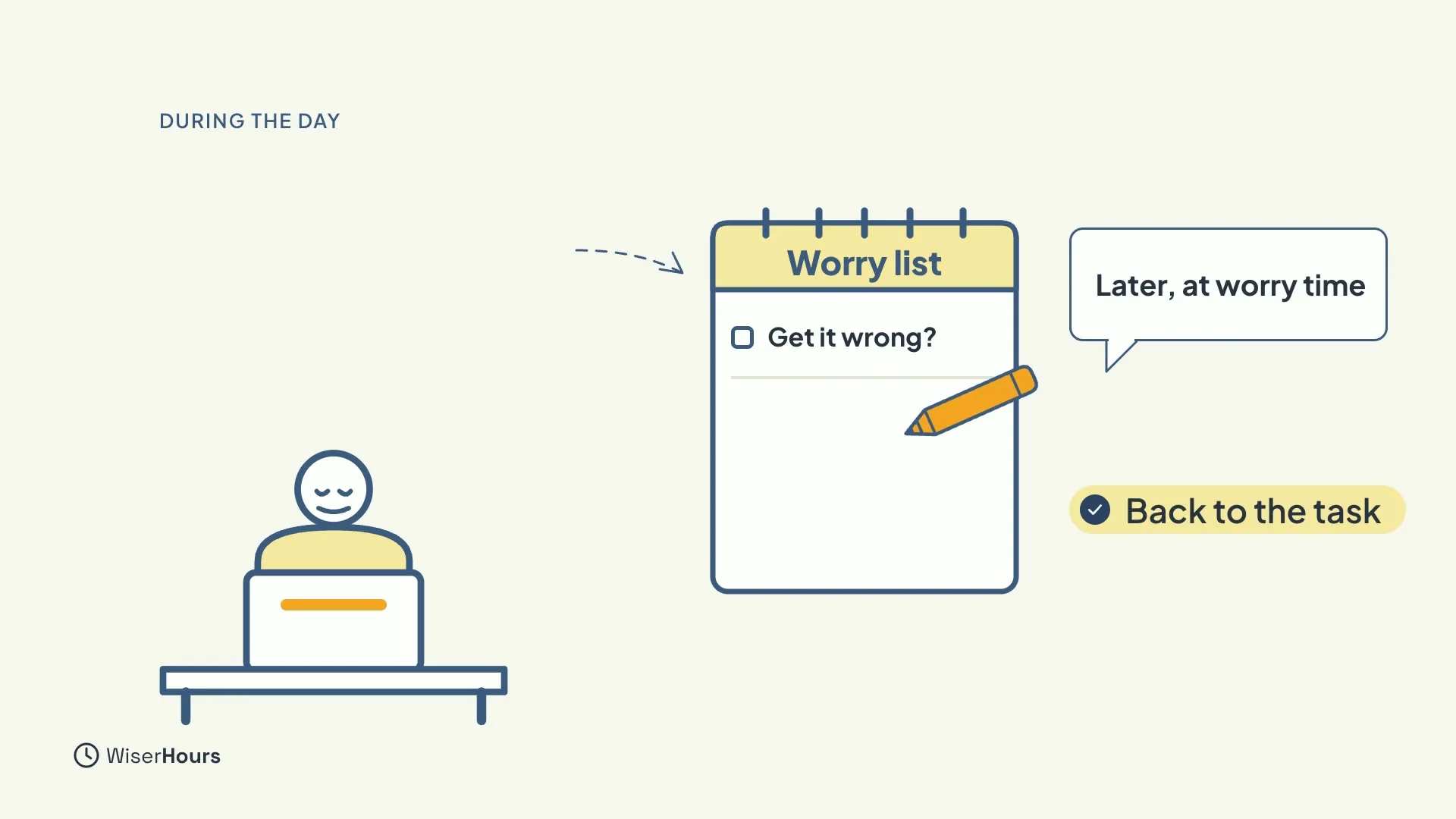
When a worry pops up outside that slot, write it down in a few words, tell yourself you will deal with it at worry time, and go back to what you were doing. The list is where the worry waits. Keep it somewhere you can reach, so jotting is quick.
 (opens the full-size picture)
In worry time
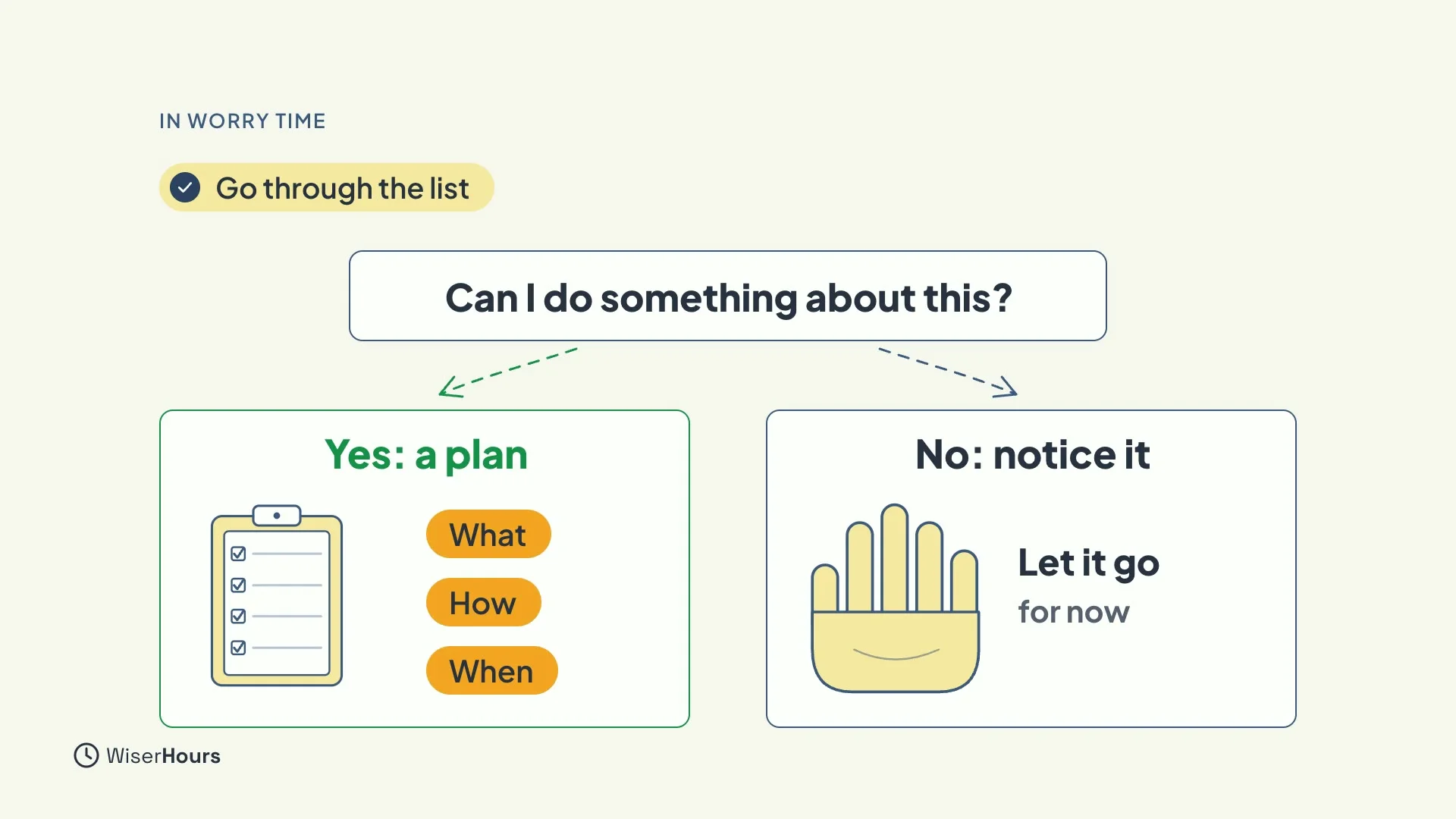
When your slot comes, go through the list. For each worry, ask: can I do something about this? If you can, write a specific plan: what, how and when. If you cannot, notice it, acknowledge it, and let it go for now instead of dwelling on it.
 (opens the full-size picture)
Give it two weeks
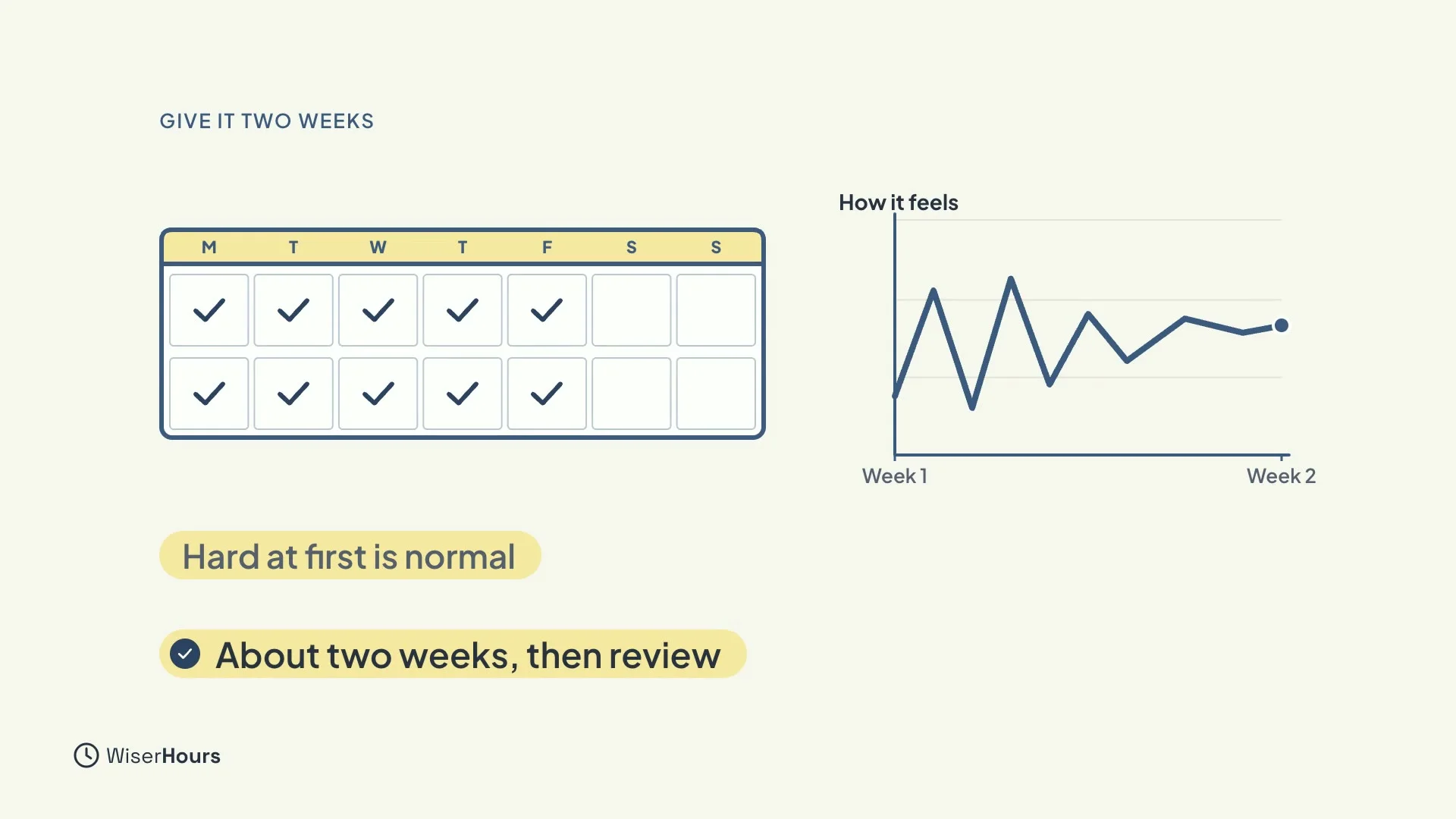
It may feel hard at first. That is normal, and it should get easier as the habit settles in. Try it for about two weeks, keeping your list, then look back at how it went.
 (opens the full-size picture)
What the research says
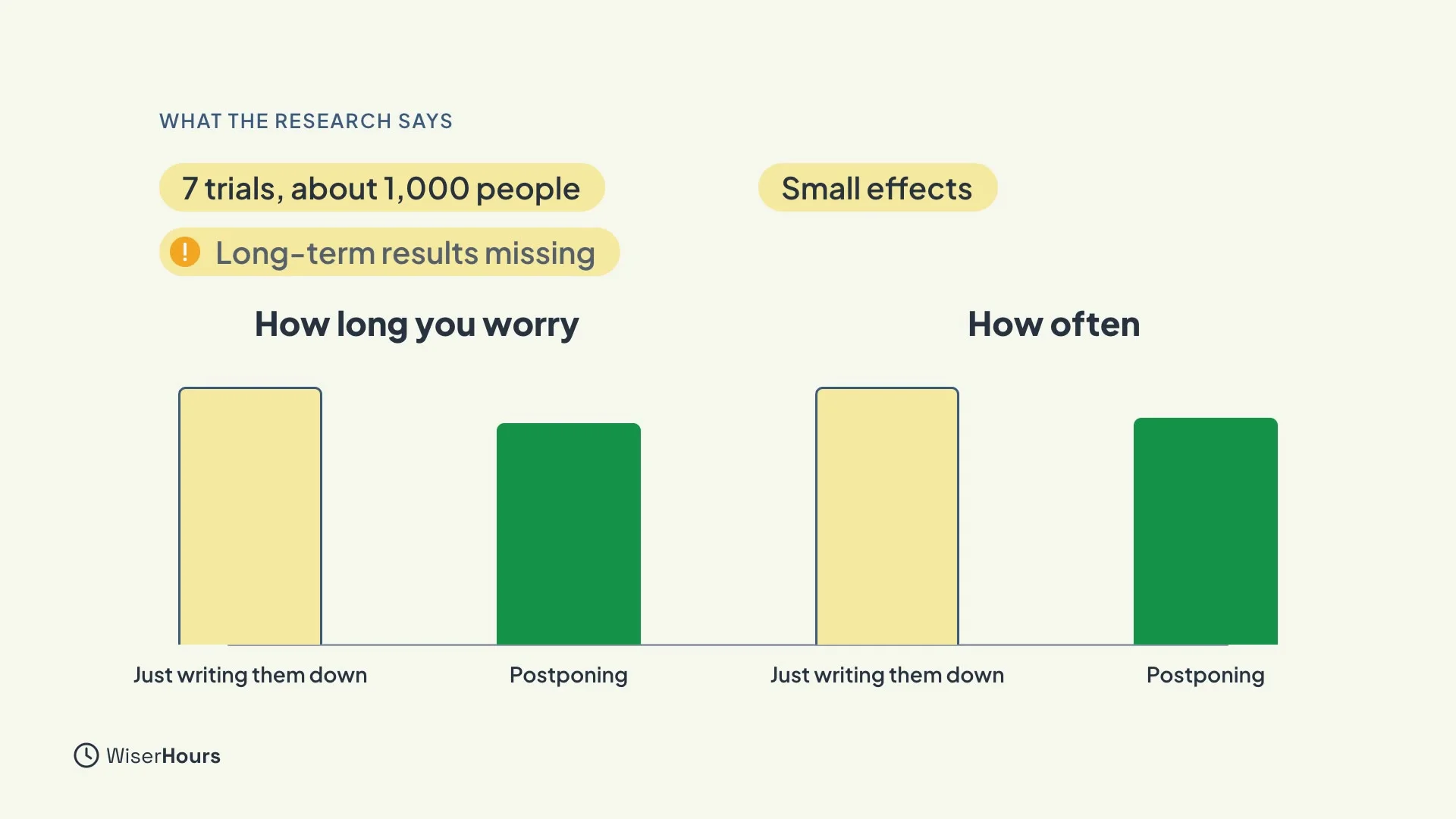
A review of seven trials with about a thousand people found that postponing worry cut how long and how often people worried, by a small amount, compared with simply writing worries down. These were small effects, and long-term results are still missing, so treat worry time as something to try, not a guaranteed fix.
 (opens the full-size picture)
YOUR TURN
Read more
The first three links are the outside sources this lesson relies on. The last two are WiserHours articles on related ideas.
- Tackling your worries (NHS Every Mind Matters): how worry time works, and how to plan for worries you can solve.
- Taking control of worrying (MindWell Leeds): a worry list and a two-week review.
- Effects of worry postponement on daily worry: a meta-analysis: the review of seven trials, in the International Journal of Cognitive Therapy.
- How to Stop Thinking About Work in the Evening: giving a returning thought a next step or a time slot.
- Money Anxiety: Why It Happens, How It Shows Up, and What Helps: a short, fixed weekly time for money worries.
Read the full lesson script
In this lesson, you'll learn worry time: a simple way to give your worries a place, so they don't follow you all day.
Instead of trying to stop a worry, you postpone it. You set a short, regular slot, about ten to fifteen minutes on most days, and save your worries for then.
When a worry pops up outside that slot, write it down in a few words, tell yourself you'll deal with it at worry time, and go back to what you were doing.
When your slot comes, go through the list. For each worry, ask: can I do something about this? If you can, write a specific plan: what, how and when. If you can't, notice it, and let it go for now.
It may feel hard at first. That's normal, and it should get easier as the habit settles in. Try it for about two weeks, then look back at how it went.
What does the research say? A review of seven trials with about a thousand people found that postponing worry cut how long and how often people worried, by a small amount, compared with simply writing worries down. Long-term results are still missing.
So remember: postpone, don't fight; one short, regular slot; and in worry time, plan it or let it go. Before the next lesson, choose your worry-time slot for the next two weeks. Next, you'll learn to turn a worry into a next step.
MAKE IT A SMALL WIN
Finished this lesson?
Mark it complete to save your progress on this device.