Spot the loop · Lesson 2 of 10
Stewing or Solving: Two Kinds of Repeated Thinking
Learn to tell thinking that goes round in circles from thinking that goes somewhere, with one simple question you can ask in the moment.
 Video coming soon
Not all repeated thinking is the same. In this lesson you will learn to tell two kinds apart: stewing, which goes round in circles, and solving, which goes somewhere. Once you can tell which one you are doing, you can choose what to do next.
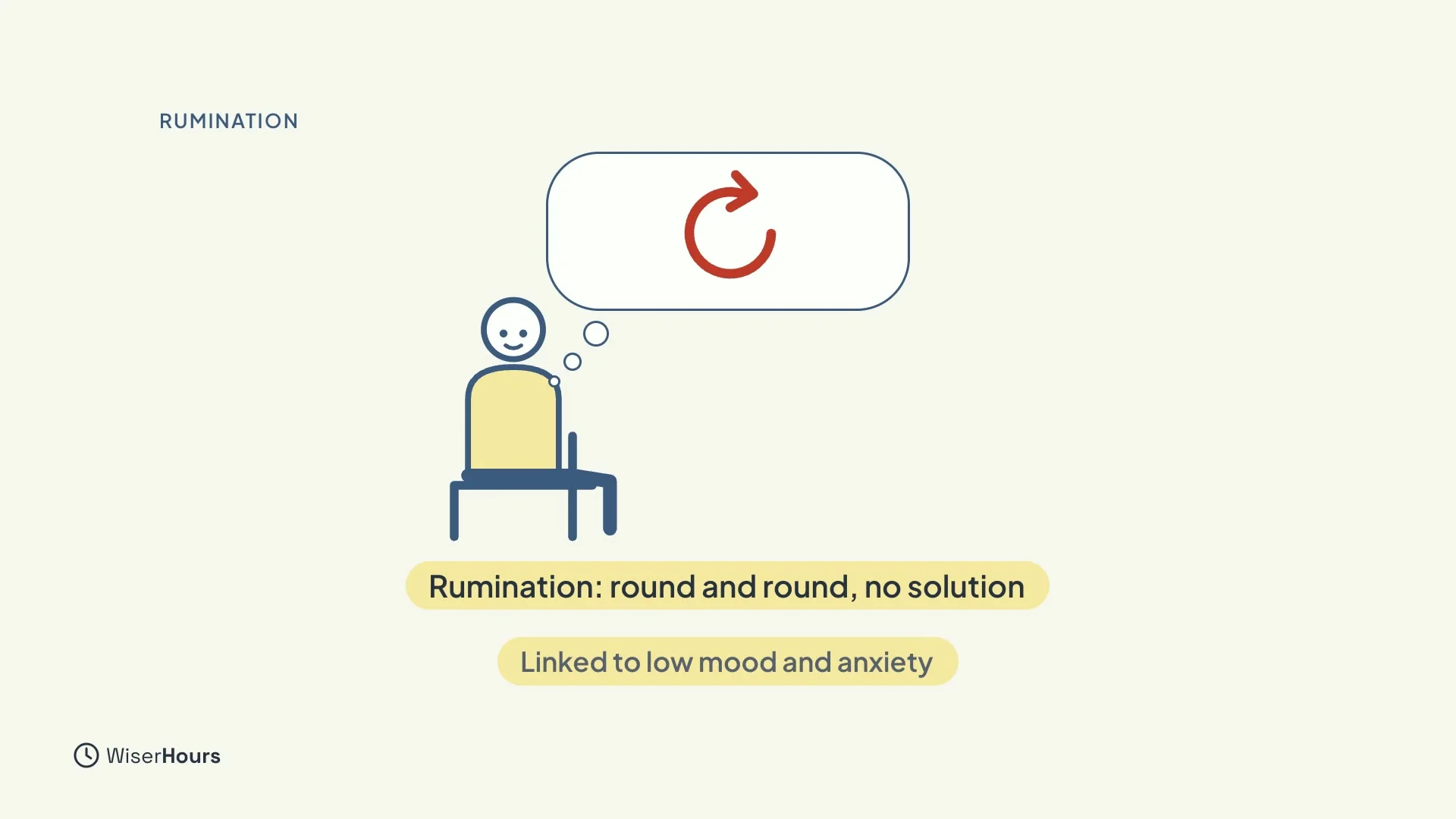
Rumination: round and round
Psychologists call the going-round kind ruminationrumination: Repetitive, passive dwelling on problems, feelings or their causes and consequences, without moving toward a solution. It is linked to depression and anxiety, and when it is about work it can keep the job on your mind long after the working day ends.Full entry in the glossary: dwelling again and again on a problem, or on how you feel about it, without moving toward a solution. It is linked to low mood and anxiety, so it is worth learning to notice.
 (opens the full-size picture)
Two kinds of thinking
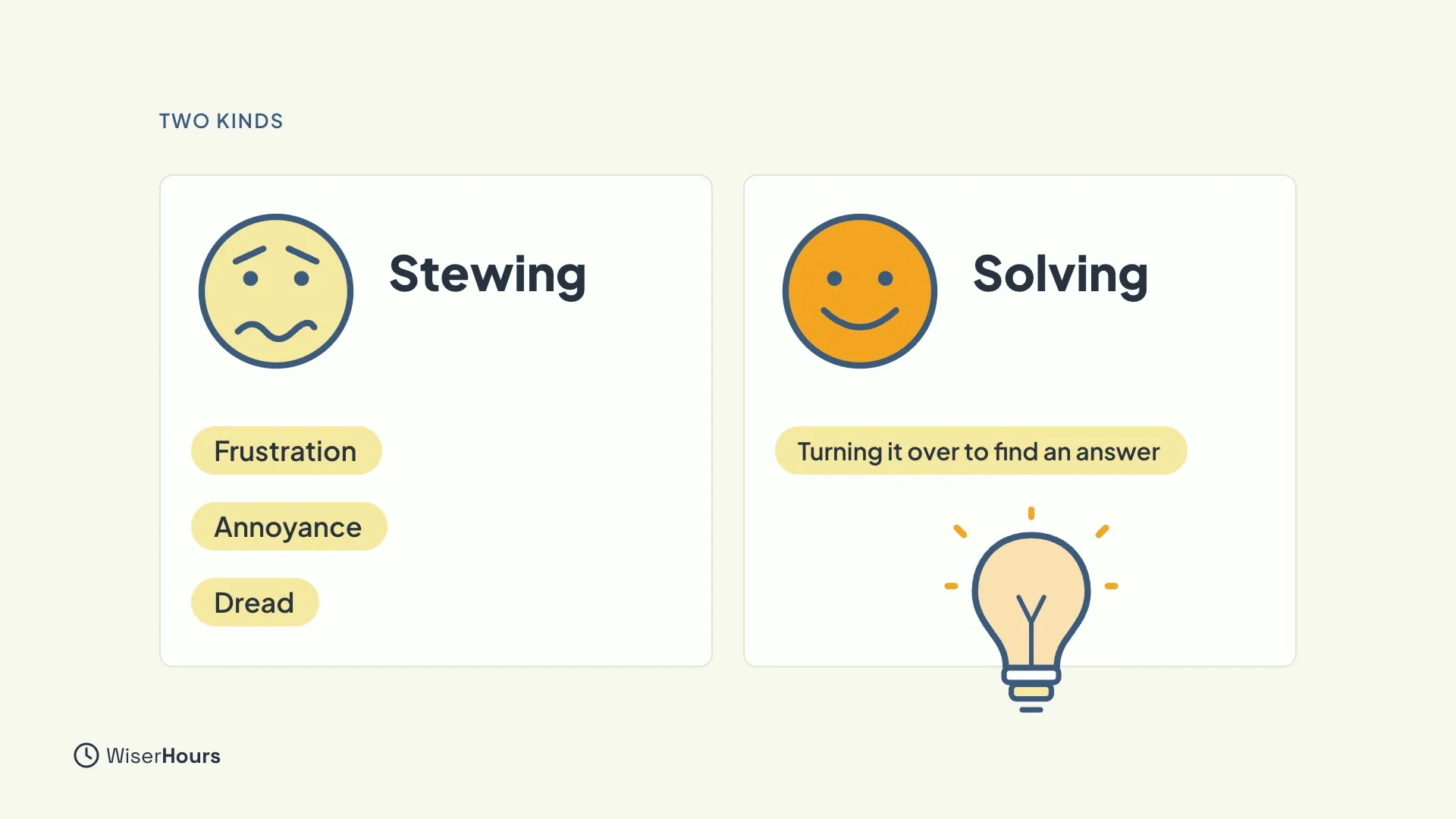
Researchers who study evenings after work describe two kinds of thinking. Stewing is thinking with a negative charge: frustration, annoyance or dread. Solving is turning a problem over to find an answer.
 (opens the full-size picture)
What stewing costs
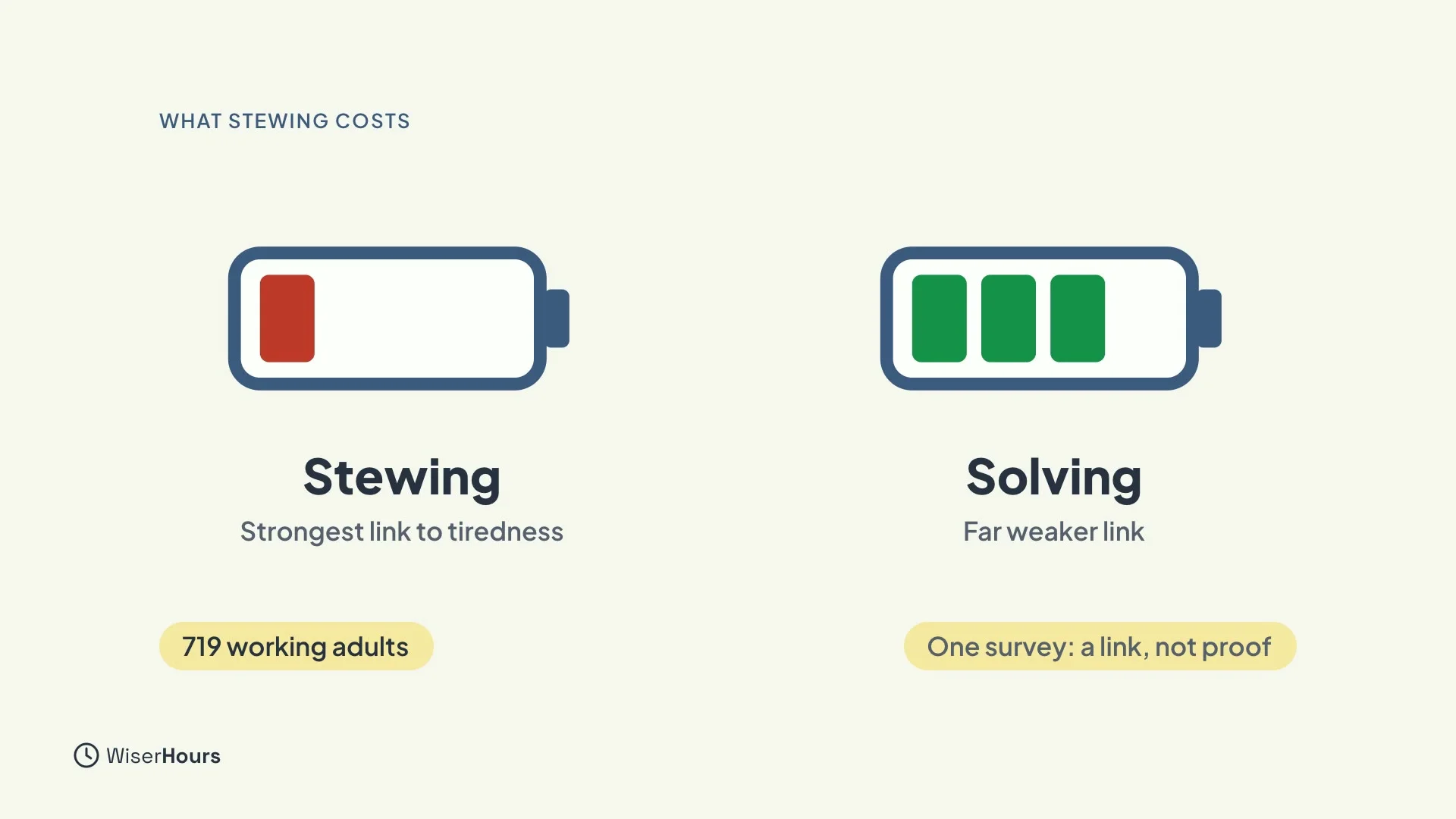
The difference shows in your body. Stewing keeps body and mind keyed up, which gets in the way of rest. In one survey of 719 working adults, stewing was the strongest link to tiredness. Calmly working through a problem was far more weakly linked.
This was a single survey taken at one point in time, so it shows a link, not proof that stewing causes tiredness.
 (opens the full-size picture)
The check
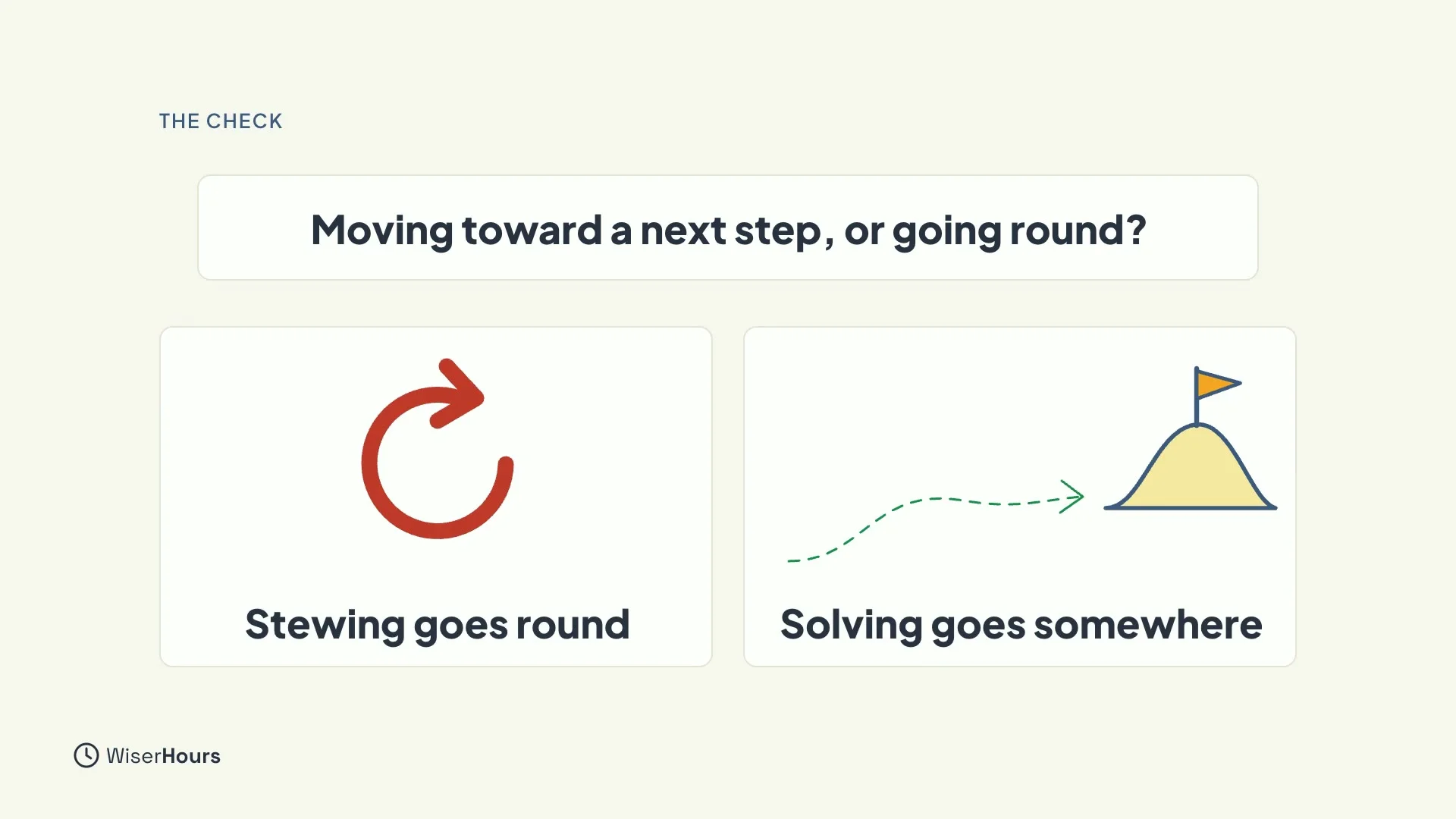
Here is a simple check. When a thought keeps coming back, ask yourself: is this thought moving toward a next step, or going round the same loop with the same feeling? Stewing goes round. Solving goes somewhere.
 (opens the full-size picture)
Some worry is real
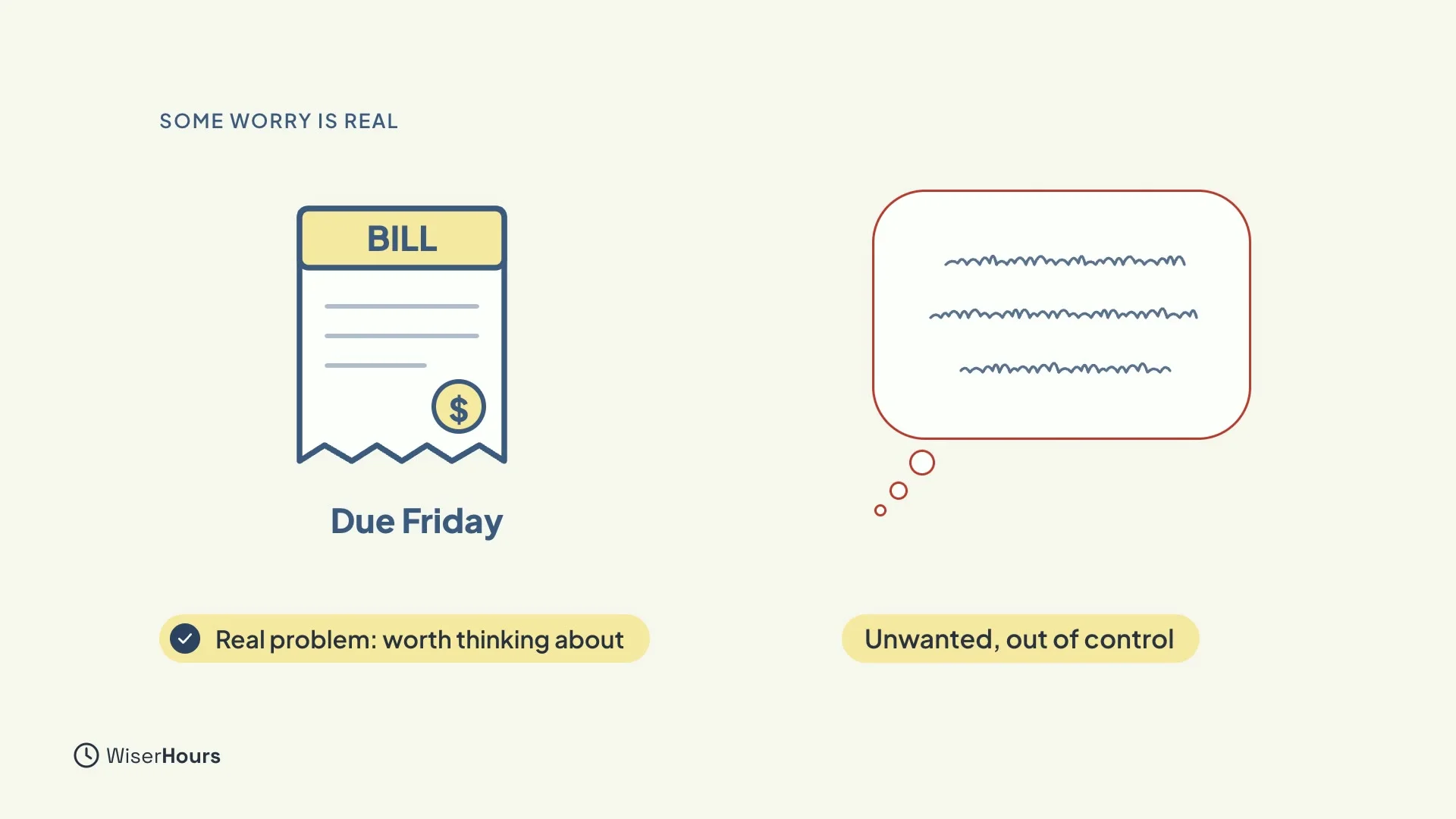
Thinking about a problem is not always bad. Some worry points at something real, like a bill you cannot cover, and a mind that keeps returning to it is responding to a real risk. The trouble starts when the thinking is unwanted and feels out of your control.
 (opens the full-size picture)
Solve on purpose
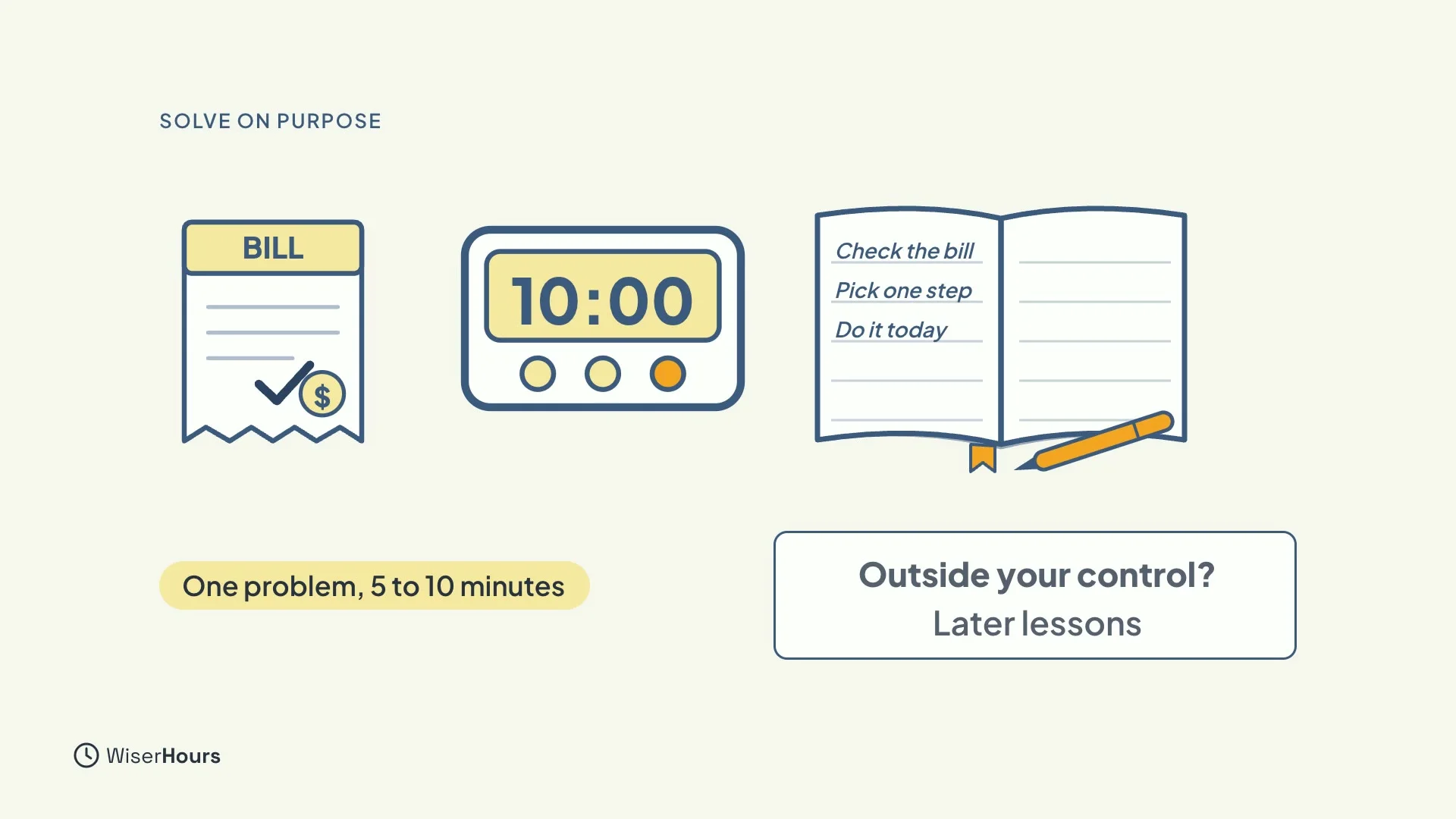
If a worry has a practical side, solve it on purpose. Give one solvable problem five or ten minutes and make a plan. If it is outside your control, that is a different job, and later lessons will help with it.
 (opens the full-size picture)
YOUR TURN
Read more
- How to Stop Thinking About Work in the Evening: the stewing and solving research, and what helps after work.
- Catastrophizing: How to Catch Worst-Case Thinking and Test It: how to plan for the solvable worries.
- Money Anxiety: Why It Happens, How It Shows Up, and What Helps: when worry points at a real risk.
Read the full lesson script
In this lesson, you'll learn to tell two kinds of repeated thinking apart: stewing, which goes round in circles, and solving, which goes somewhere.
Psychologists call the going-round kind rumination: dwelling again and again on a problem, or on how you feel about it, without moving toward a solution. It's linked to low mood and anxiety.
Researchers who study evenings after work describe two kinds of thinking. Stewing is thinking with a negative charge: frustration, annoyance, or dread. Solving is turning a problem over to find an answer.
The difference shows in your body. Stewing keeps body and mind keyed up, which gets in the way of rest. In a survey of seven hundred and nineteen working adults, stewing was the strongest link to tiredness. Calmly working through a problem was far more weakly linked.
So here's a simple check. Ask yourself: is this thought moving toward a next step, or going round the same loop with the same feeling? Stewing goes round. Solving goes somewhere.
Thinking about a problem isn't always bad. Some worry points at something real, like a bill you can't cover. The trouble starts when the thinking is unwanted, and feels out of your control.
If a worry has a practical side, solve it on purpose. Give one solvable problem five or ten minutes, and make a plan. If it's outside your control, that's a different job, and later lessons will help with it.
So remember: stewing goes round, solving goes somewhere, and some worry points at something real. Before the next lesson, when a thought loops, ask the check question, and write down which one it is. Next, you'll learn to notice the loop early.
MAKE IT A SMALL WIN
Finished this lesson?
Mark it complete to save your progress on this device.