Simple tools · Lesson 6 of 10
Turn a Worry Into One Next Step You Control
Sort a worry, check the odds against your own record, and choose one next step with a time and a place so you can stop going in circles.
 Video coming soon
A worry feels big because it has no edges. In this lesson you turn one worry into one next step that you control. The method comes from a stress article on worst-case thinking, and it takes only a few minutes.
Sort it first
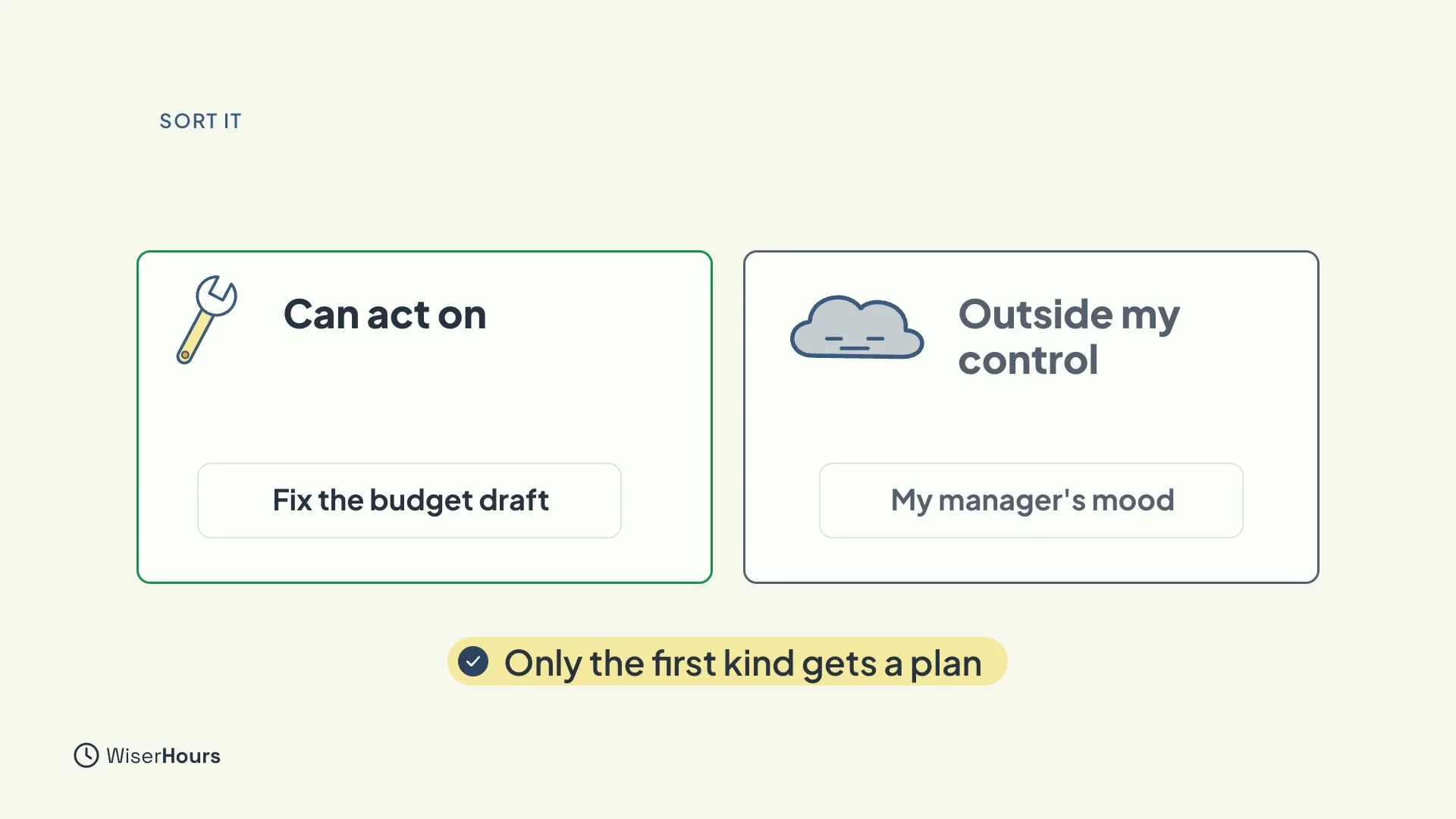
Some worries are problems you can do something practical about. Others are about things outside your control. Only the first kind gets a plan. For example, the worry “the budget draft has mistakes” can be fixed, while “my manager is in a bad mood” cannot.
 (opens the full-size picture)
Check the odds with your own record
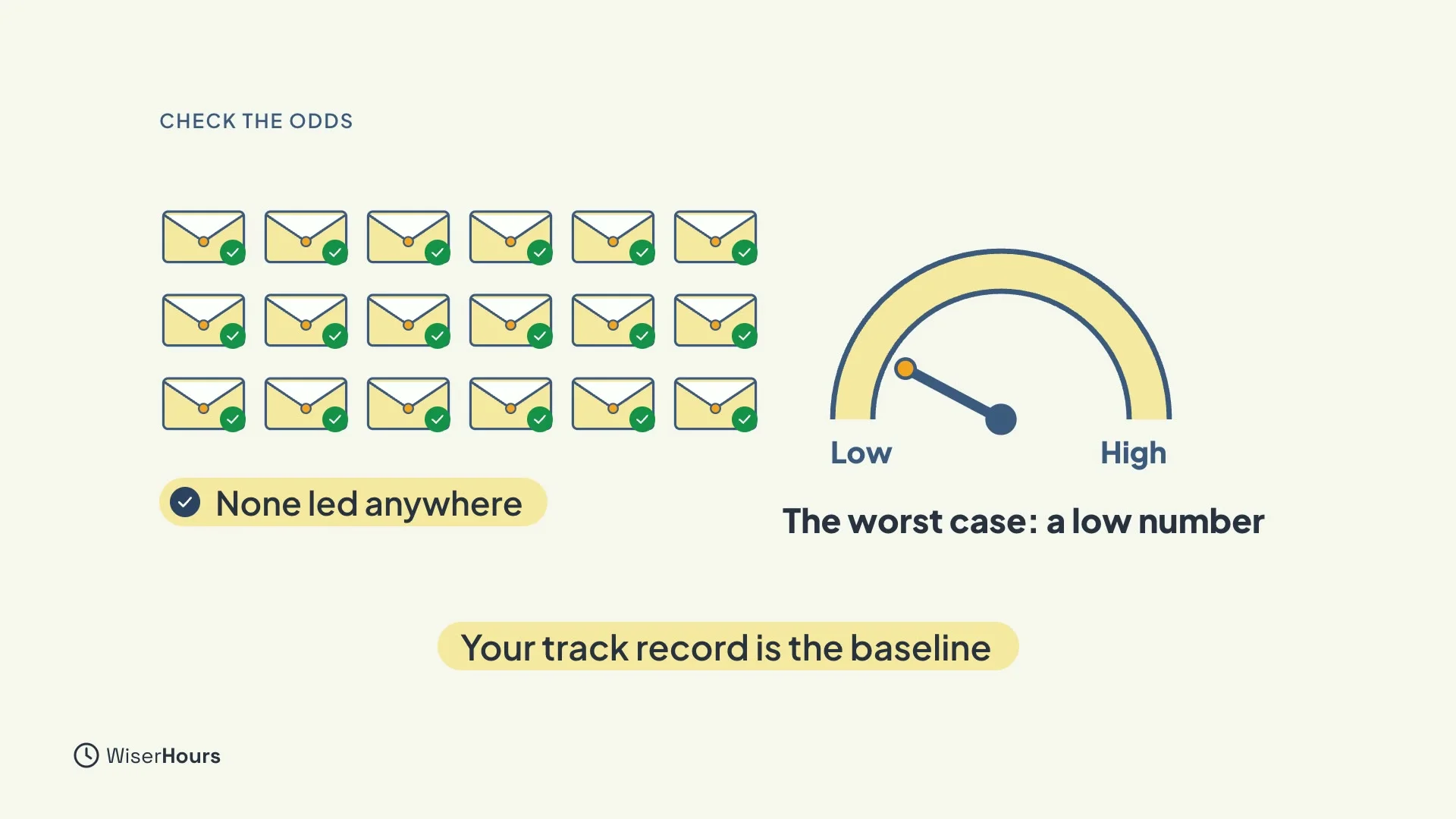
Next, use your own track record as the starting point. Ask: how many short, curt emails from this manager led to anything serious? If the honest answer is dozens, and none, the worst case deserves a low number, even if it still feels high. You are not trying to feel cheerful. You are trying to read the situation fairly.
 (opens the full-size picture)
Test the two claims separately
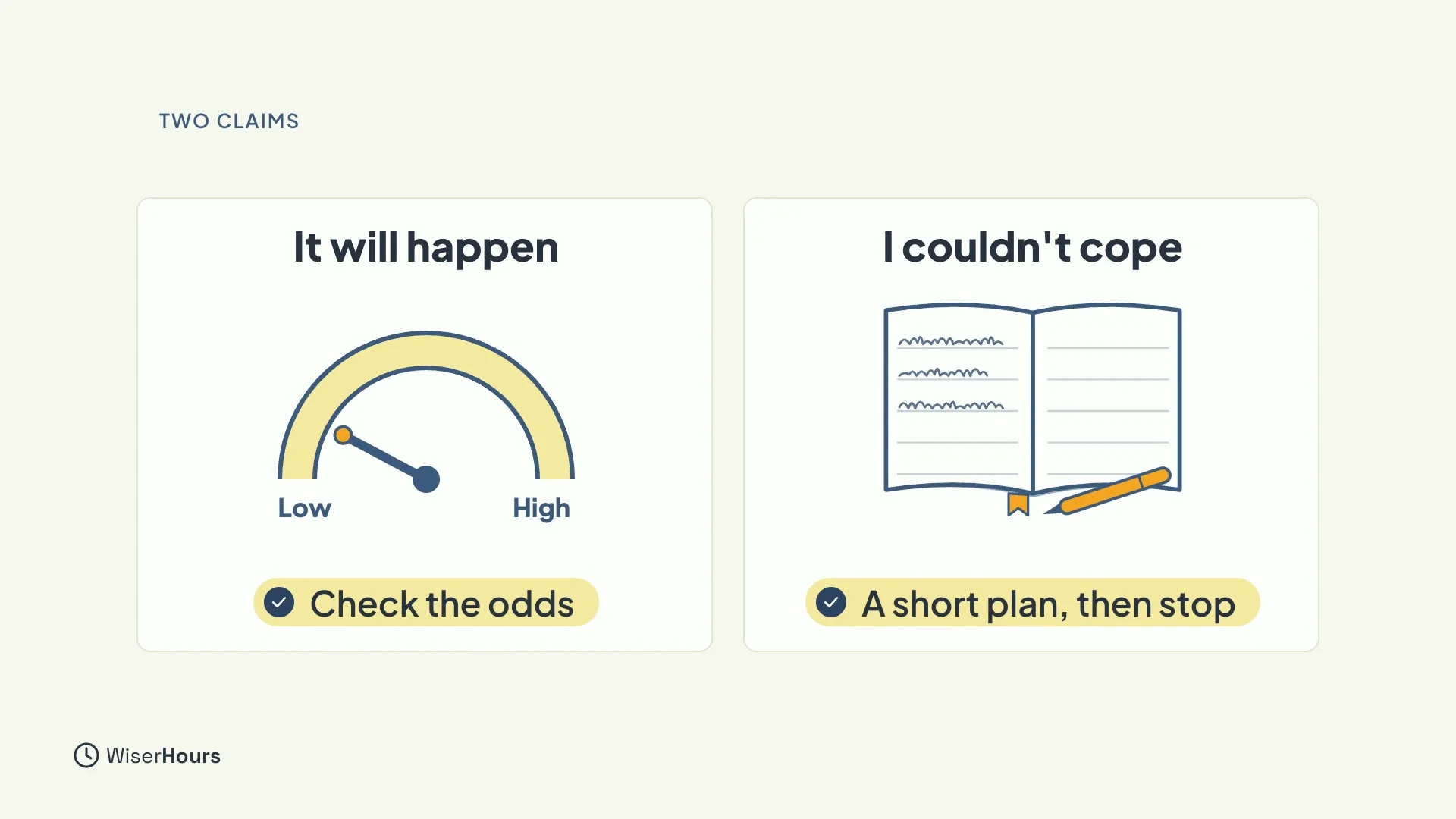
A worry often makes two claims at once: that the worst will happen, and that you couldn’t cope if it did. Each can be tested on its own. For the first, check the odds, as above. For the second, write a short plan for the worst case, then stop. A short plan reminds you that you have more options than the worry suggests, and stopping keeps the plan from turning into another loop.
 (opens the full-size picture)
Decide what is in your control
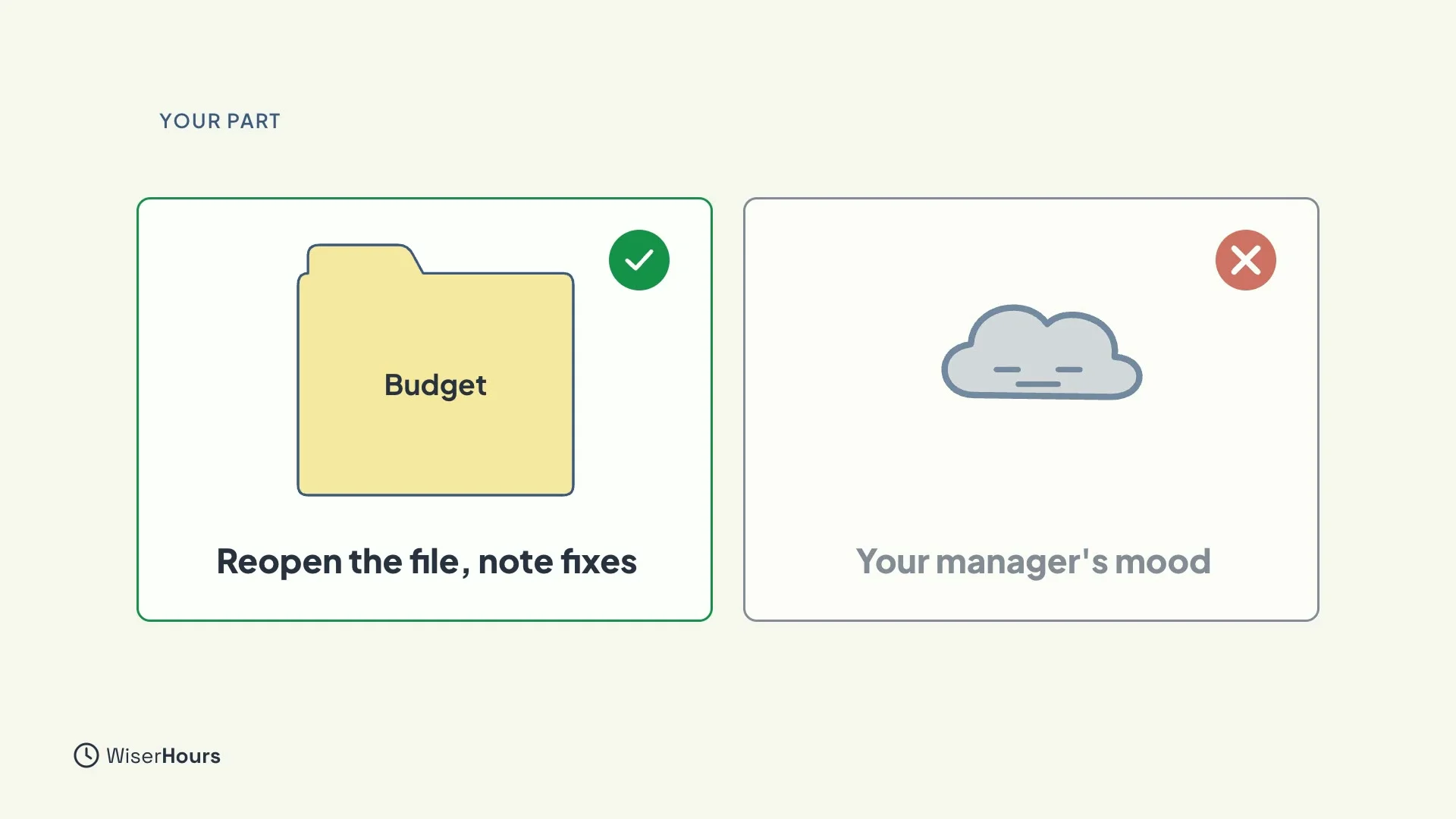
Now decide what is in your control. Before tomorrow’s meeting, you can reopen the file and note what you would fix. You can’t control your manager’s mood. Put your effort into the first and let the second go.
 (opens the full-size picture)
Choose one step, with a time and a place
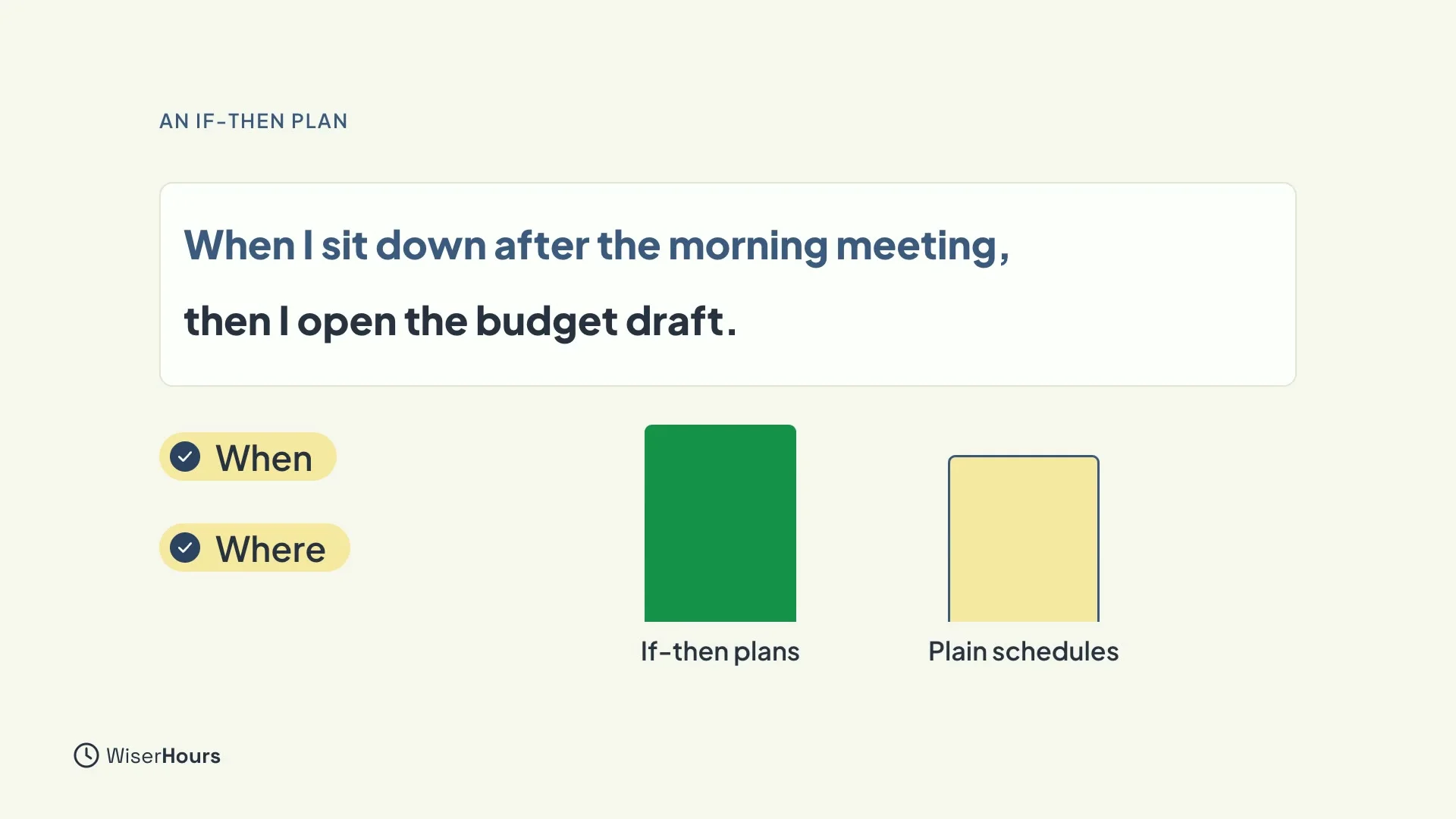
Finally, choose one next step and say when and where you will do it. This is called an implementation intentionimplementation intention: A plan in if-then form that ties a specific action to a specific situation, such as 'if it is nine o'clock, then I open the report.' It hands the decision about when and where to act to the situation itself.Full entry in the glossary, or if-then plan. A plan such as “when I sit down after the morning meeting, I open the budget draft” gives the worry somewhere to go. In a large review of if-then plans, they worked better than plain schedules, and stating both when and where helped. The typical gain was small, so treat it as a useful habit, not a guarantee.
 (opens the full-size picture)
An honest note
These steps are self-help versions of techniques used in talking therapy. Their evidence comes from therapy trials, not from people using them on their own, and the sequence as a whole has not been tested. If worry is taking over your days, see the last lesson of this course.
YOUR TURN
Read more
- Catastrophizing: How to Catch Worst-Case Thinking and Test It: the full set of steps behind this lesson.
- The Daily Review: Five Minutes to Stay on Track: more on if-then plans for your next step.
- Money Anxiety: Why It Happens, How It Shows Up, and What Helps: finishing a money worry with a single next step.
- Buyer’s Remorse: Why It Happens and How to Shop With Fewer Regrets: deciding once, then moving on.
Read the full lesson script
In this lesson, you'll learn to take one worry and turn it into one next step that you control.
First, sort it. Some worries are problems you can do something practical about. Others are about things outside your control. Only the first kind gets a plan.
Next, check the odds with your own track record. How many short emails from this manager led to anything serious? If the answer is dozens, and none, the worst case deserves a low number, even if it still feels high.
A worry often makes two claims at once: that the worst will happen, and that you couldn't cope if it did. Test each one. For the first, check the odds. For the second, write a short plan for the worst case, then stop.
Then decide what's in your control. Before tomorrow's meeting, you can reopen the file and note what you'd fix. You can't control your manager's mood.
Finally, choose one next step, and give it a time and a place. Use an if-then plan: when I sit down after the morning meeting, I open the budget draft. In a large review, plans like this, with a when and a where, worked better than plain schedules.
These steps are self-help versions of techniques used in talking therapy. Their evidence comes from therapy trials, not from people using them on their own.
So remember: sort it, check the odds, and choose one step with a time and a place. Before the next lesson, turn one worry into one next step. Next, you'll learn to step back from your thoughts.
MAKE IT A SMALL WIN
Finished this lesson?
Mark it complete to save your progress on this device.