Get unstuck · Lesson 8 of 10
Good-Enough Decisions: How to Stop Researching and Choose
Stop researching and decide: ask if you can undo it, set a bar, name the one fact that matters, and give the choice a date and a default.
 Video coming soon
Comparing options can feel safer than choosing one. In this lesson you learn a few simple tools to stop researching and decide. They come from the site’s articles on analysis paralysis and decisions, and they are meant for everyday choices, not a promise of a perfect result.
Not deciding is also a decision
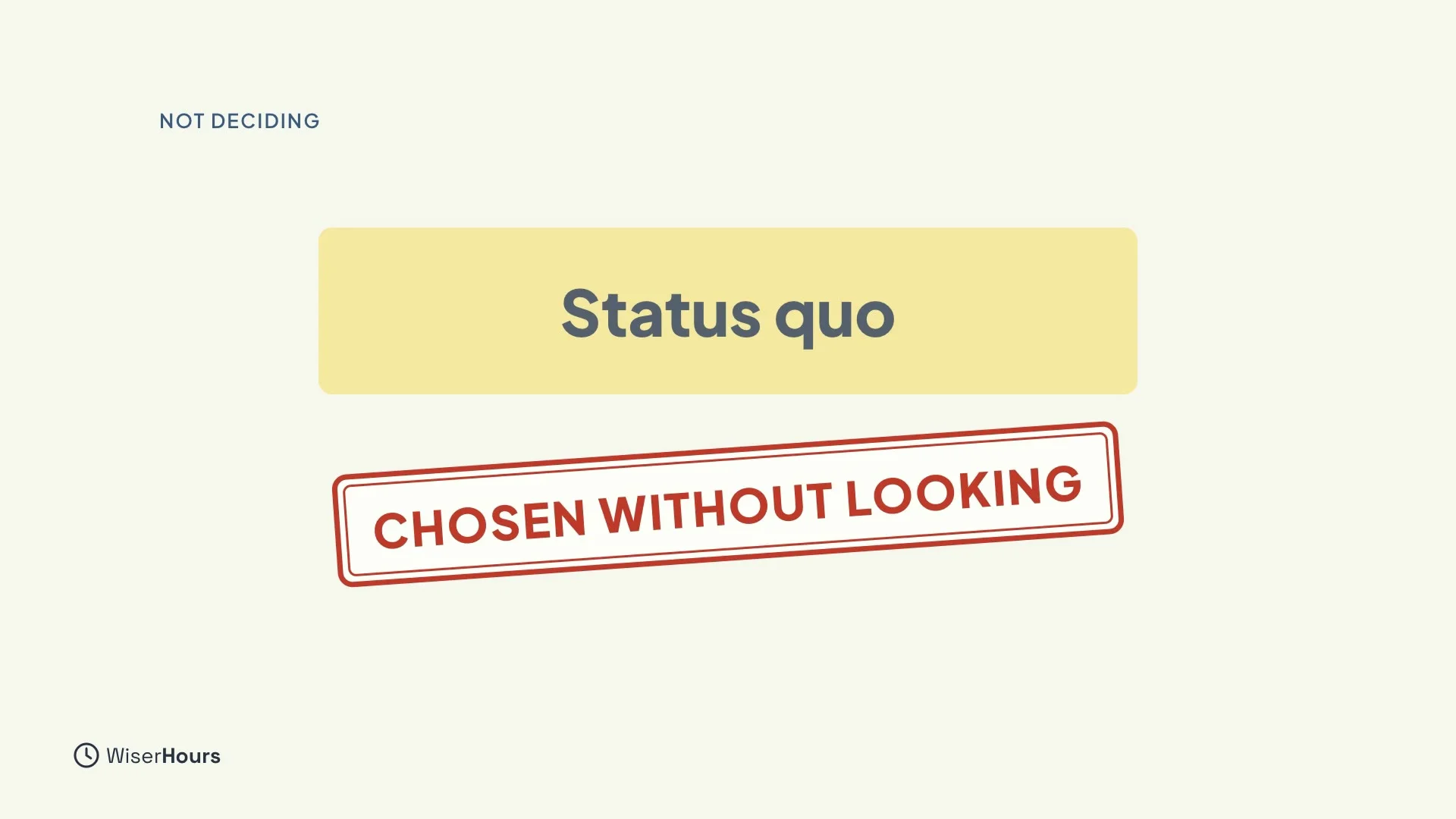
Analysis paralysis is getting stuck before a choice because comparing the options feels safer than committing to one. But not deciding is also a decision. It usually picks the way things are, and it picks it without looking.
 (opens the full-size picture)
The best option or a good-enough one
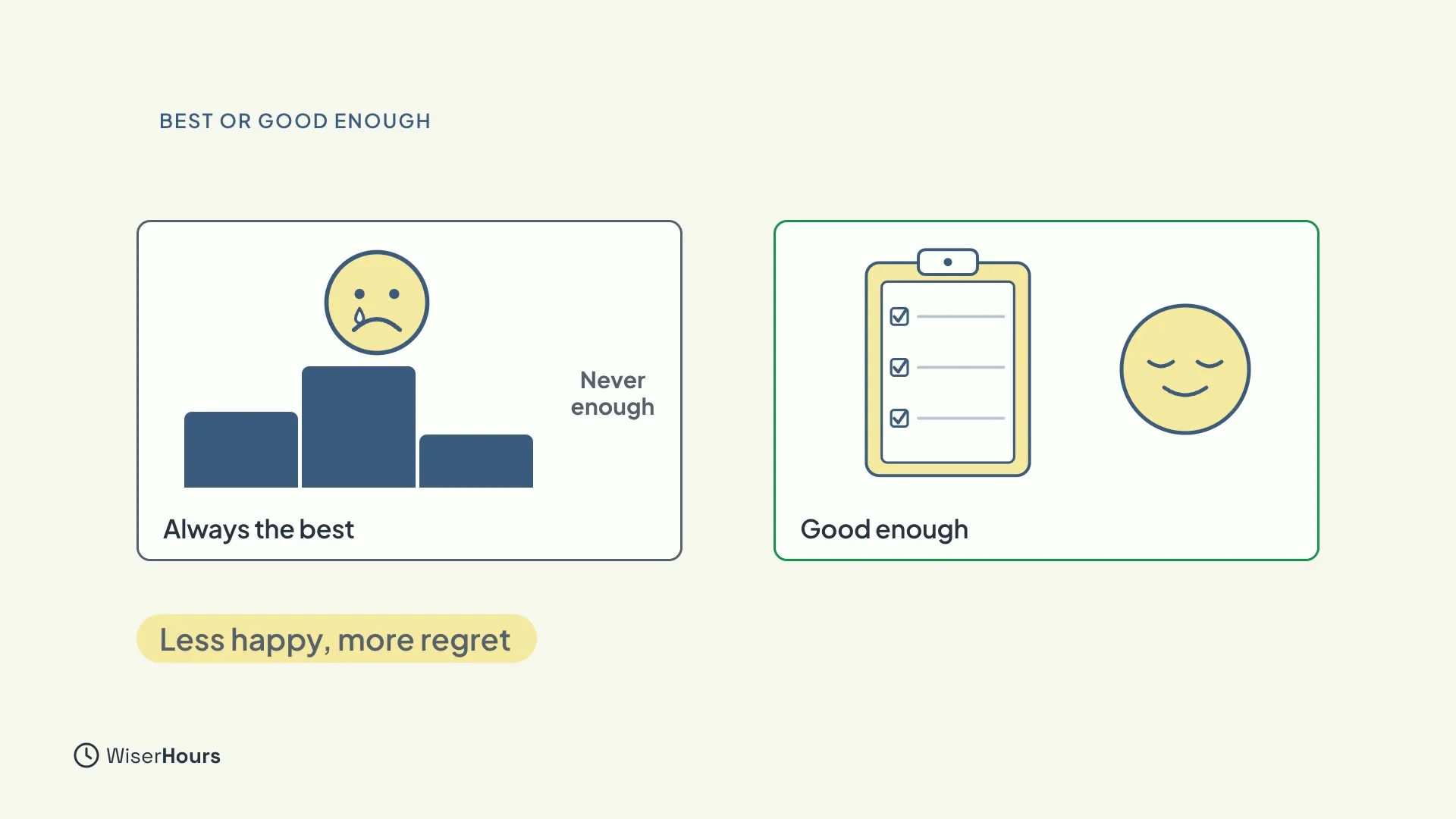
Some people always aim for the best possible option. Others aim for one that is good enough. In surveys, people who always aimed for the best reported less happiness and more regret. These were questionnaire studies, so they show a link, not proof that aiming for the best causes the unhappiness.
 (opens the full-size picture)
First, ask whether you can undo it
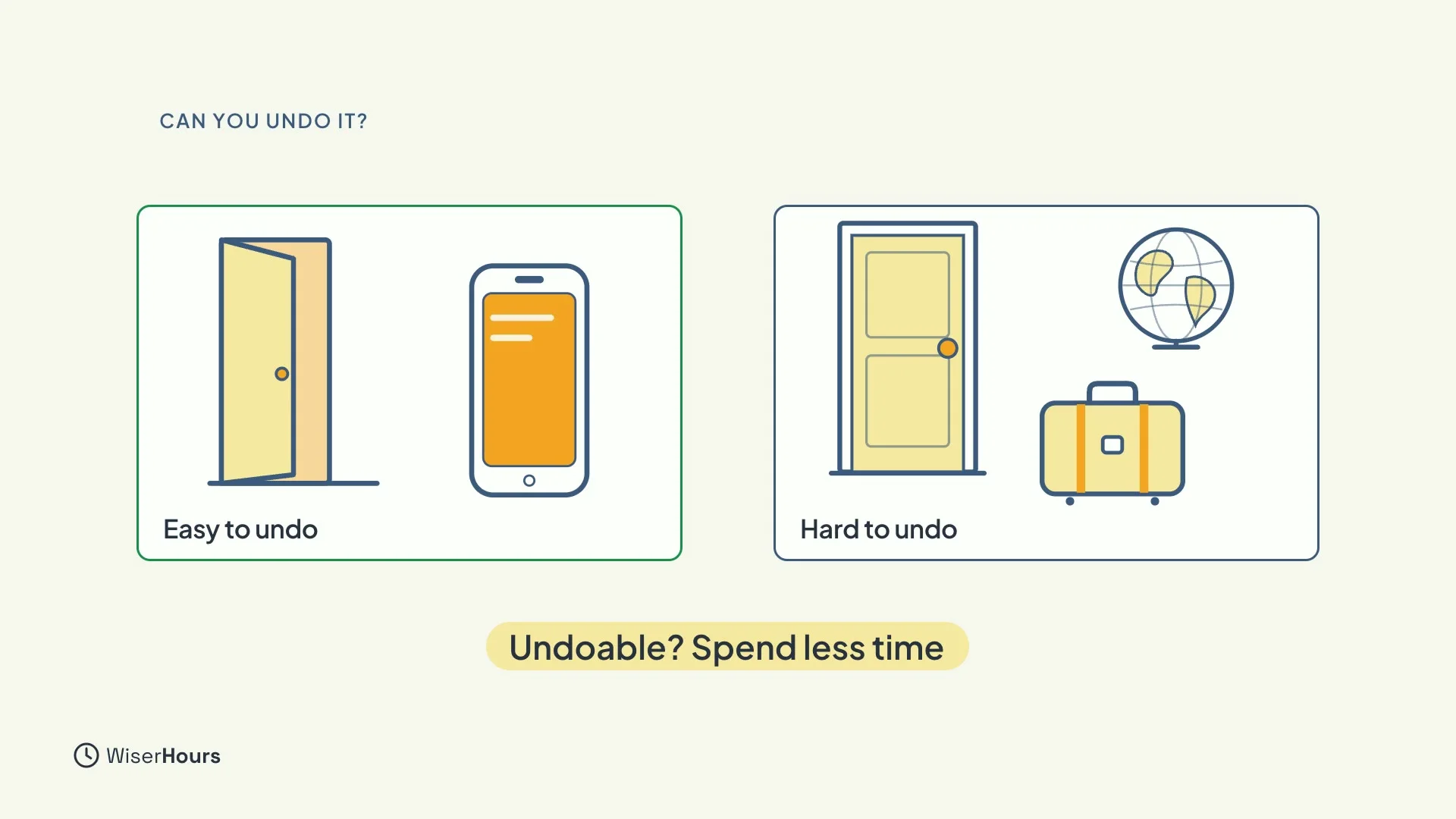
A monthly phone plan is easy to change. Moving country for a job is not. Choices you can undo deserve less time. Ask: if this turns out to be the wrong choice, what would it cost to undo, and how soon would I find out?
 (opens the full-size picture)
Set a bar, then take the first option that clears it
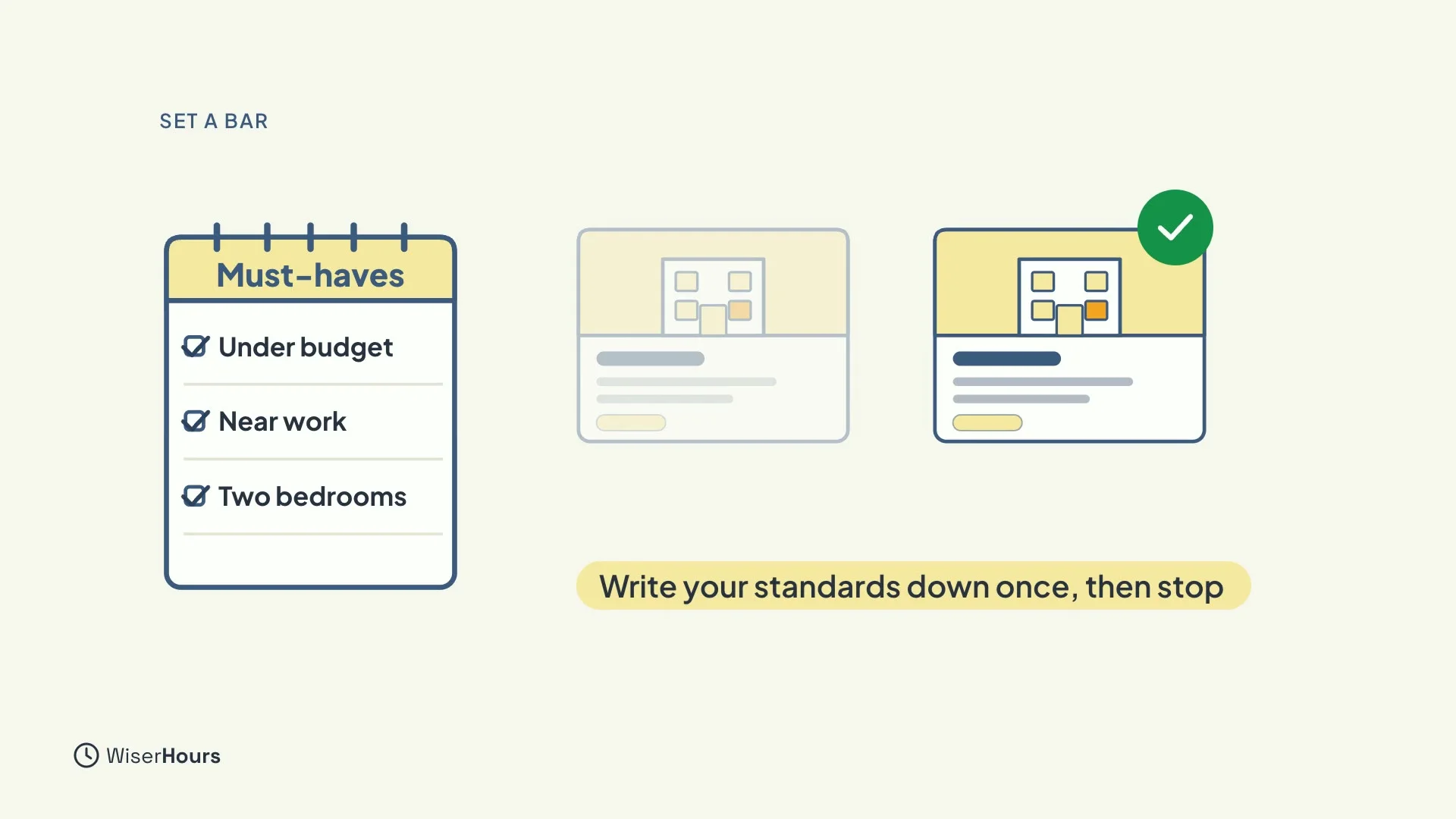
Write down two or three must-haves, with a bar for each, and take the first option that clears them all. For a flat, the must-haves might be under budget, near work and two bedrooms. You aren’t lowering your standards. You are writing them down once, and stopping when something meets them. No study has yet tested this bar as a fix for stalling, so treat it as a practical suggestion.
 (opens the full-size picture)
Name the one fact that would change your mind
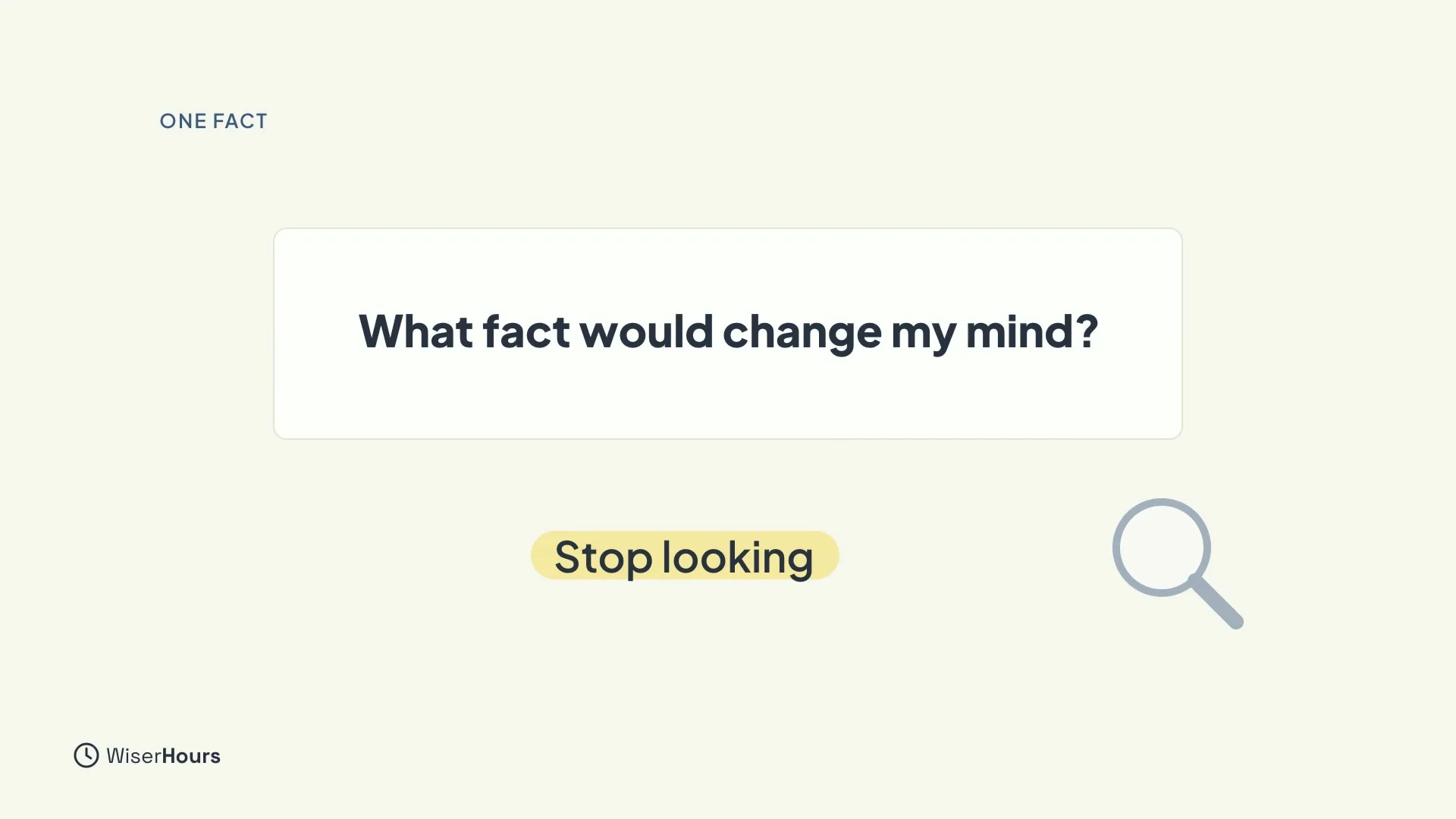
If you are still researching, name the one fact that would change your mind. A useful way to say it is: if I learn this, I choose A, otherwise B. If nothing would change the choice, stop looking.
 (opens the full-size picture)
Put a date on it, with a default
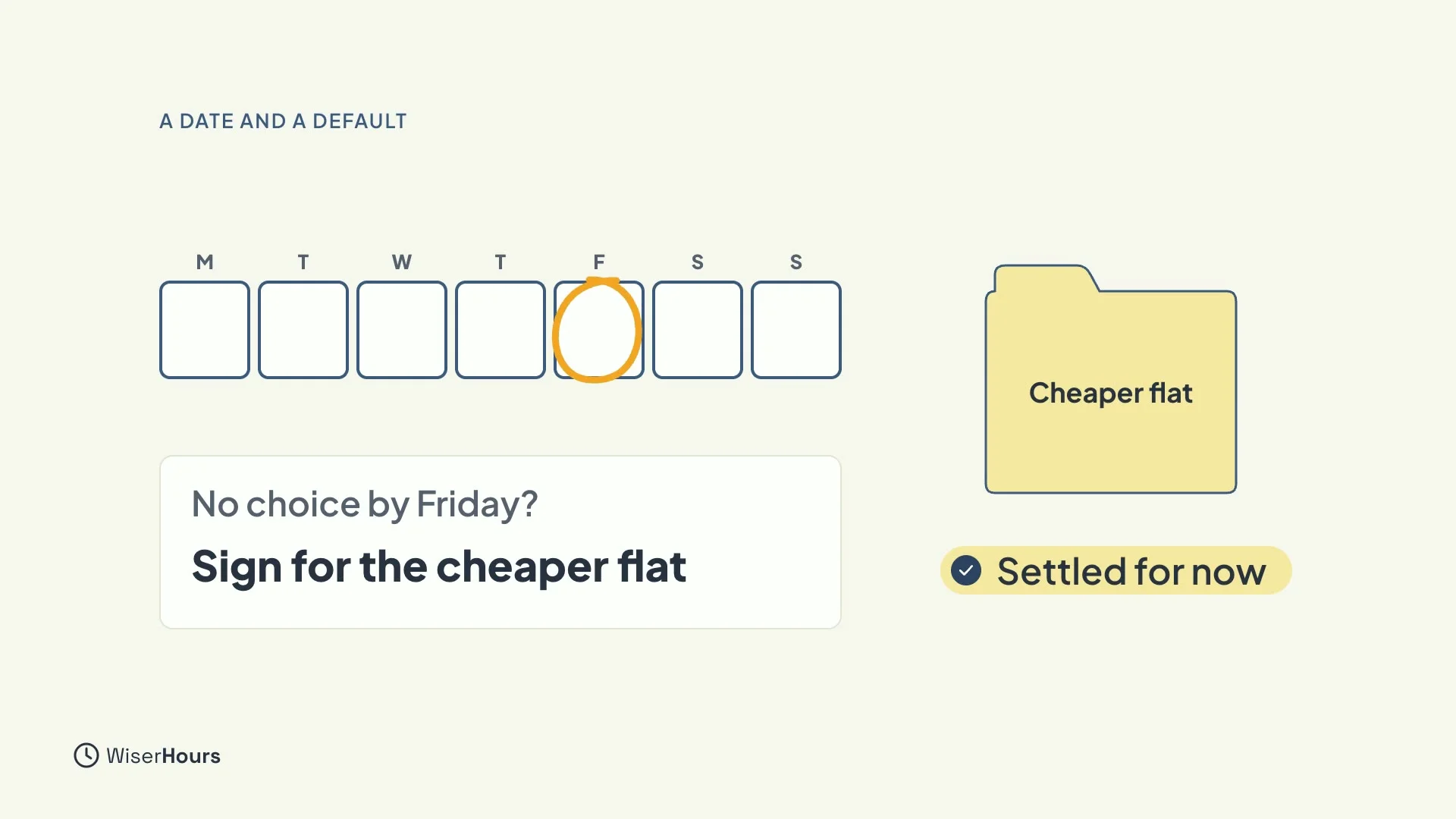
Finally, put a date on it, and decide what happens if the date passes: if I haven’t chosen by Friday, I’ll sign for the cheaper flat. Then treat the choice as settled for a while, instead of keeping it open in your head.
 (opens the full-size picture)
YOUR TURN
Read more
- Analysis Paralysis: Why You Can’t Decide and How to Get Unstuck: the full set of steps used in this lesson.
- How We Make Decisions: The Psychology in Plain English: why a good-enough option is a sound goal.
- Buyer’s Remorse: Why It Happens and How to Shop With Fewer Regrets: deciding once, then leaving the choice settled.
- Perfectionism Explained: Healthy Striving vs. the Kind That Hurts: saying which work needs polish and which needs speed.
Read the full lesson script
In this lesson, you'll learn to stop researching and decide, with a few simple tools for good-enough decisions.
Analysis paralysis is getting stuck before a choice, because comparing feels safer than committing. But not deciding is also a decision. It usually picks the way things are, and it picks it without looking.
Some people always aim for the best possible option. Others aim for one that's good enough. In surveys, people who always aimed for the best reported less happiness and more regret.
First, ask whether you can undo it. A monthly phone plan is easy to change. Moving country for a job is not. Choices you can undo deserve less time.
Then write down two or three must-haves, with a bar for each, and take the first option that clears them all. You aren't lowering your standards. You're writing them down once, and stopping.
If you're still researching, name the one fact that would change your mind. If nothing would, stop looking.
Finally, put a date on it, and decide what happens if it passes: if I haven't chosen by Friday, I'll sign for the cheaper flat. Then treat the choice as settled for a while, instead of keeping it open in your head.
So remember: not deciding is a decision, set a good-enough bar, and give it a date and a default. Before the next lesson, set a decision date and a default for one choice you've been putting off. Next, you'll learn to use action to get out of your head.
MAKE IT A SMALL WIN
Finished this lesson?
Mark it complete to save your progress on this device.