Get unstuck · Lesson 7 of 10
Step Back From Your Thoughts and Speak Like a Friend
Learn to see a thought as a mental event, not a fact, and to talk to yourself kindly, with a short guided practice you can follow.
 Video coming soon
When a worry loops, it can feel as if the thought is the truth. In this lesson you learn to step back from a thought and to speak to yourself more kindly. At the end there is a short guided moment you can do with one thought of your own.
A thought is not a fact
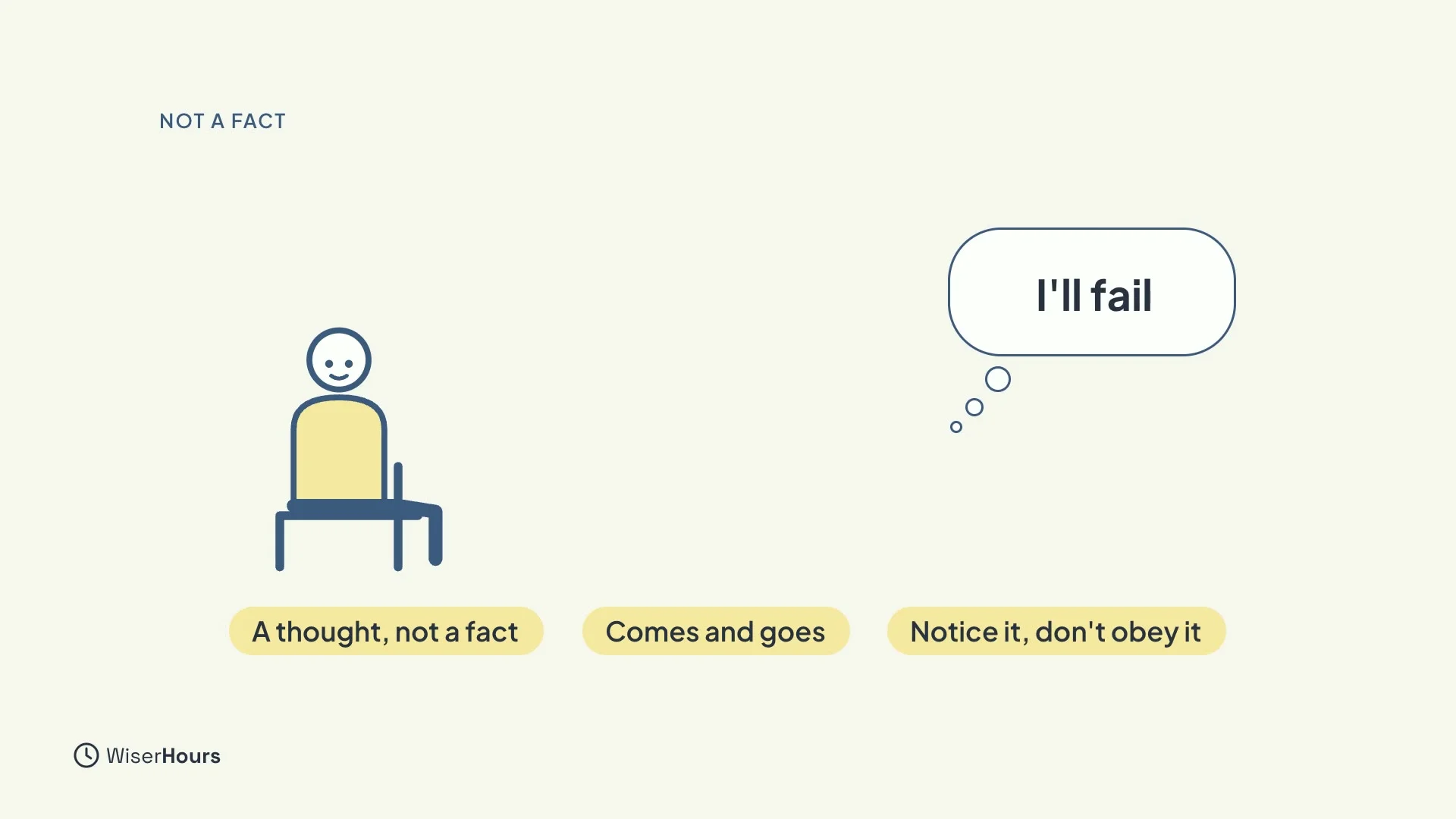
A thought isn’t a fact. It’s a mental event that comes and goes. You can notice a thought as a thought, without having to obey it or argue with it. The thought “I’ll fail” may show up, but its showing up does not make it true. This idea is central to mindfulnessmindfulness: Paying attention to what is happening in the present moment, including thoughts and sensations, on purpose and without judging it. The word covers both a state of mind and the courses that train it, and most research tests the courses.Full entry in the glossary: seeing thoughts as mental events instead of facts you have to act on.
 (opens the full-size picture)
Pushing a thought down tends to backfire
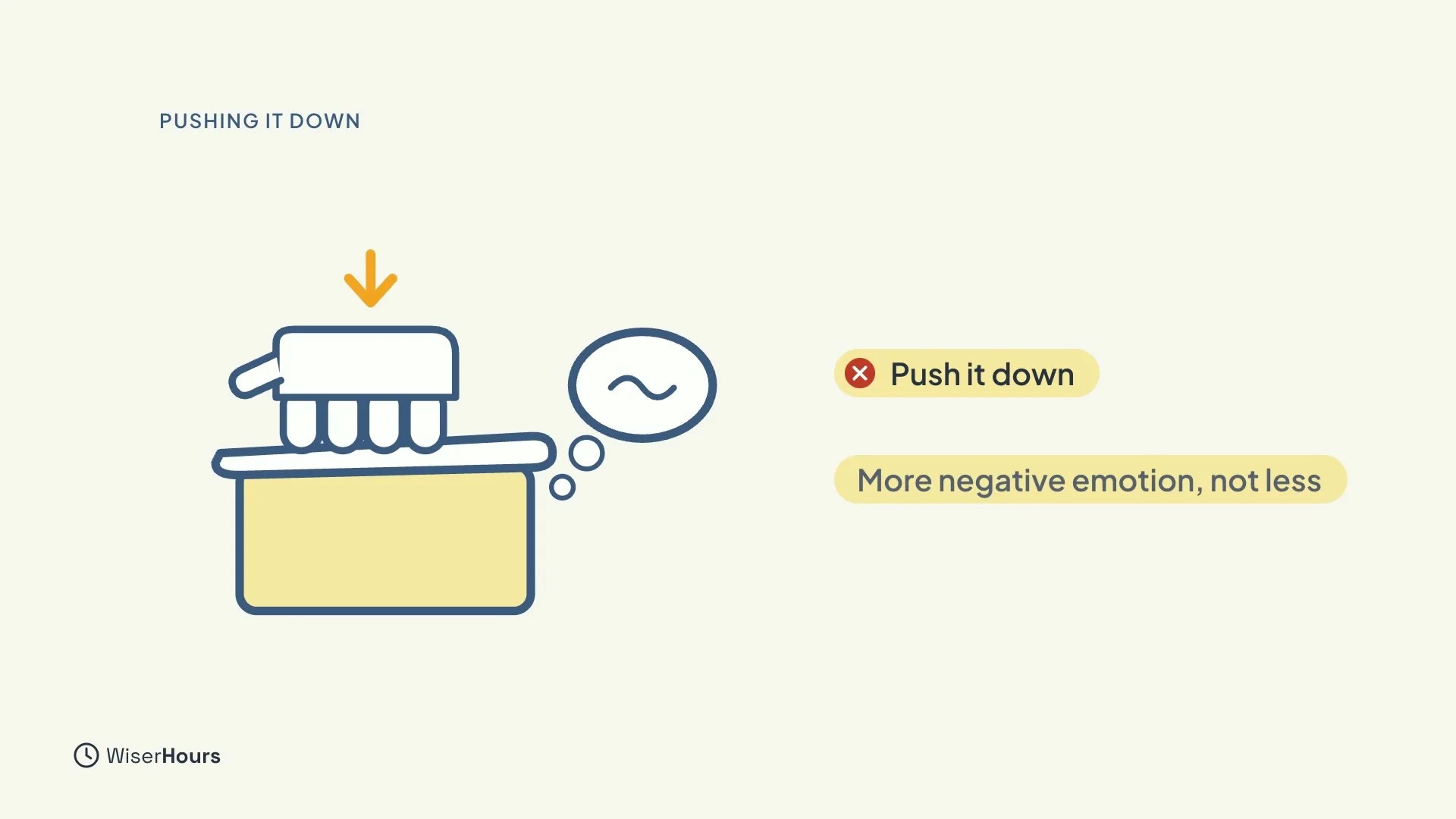
Trying to push thoughts and feelings away doesn’t tend to work. In studies, people who habitually held their feelings down reported more negative emotion, not less. So the aim is not to silence the thought. It is to let it be there while you decide what to do.
 (opens the full-size picture)
Talk to yourself like a friend
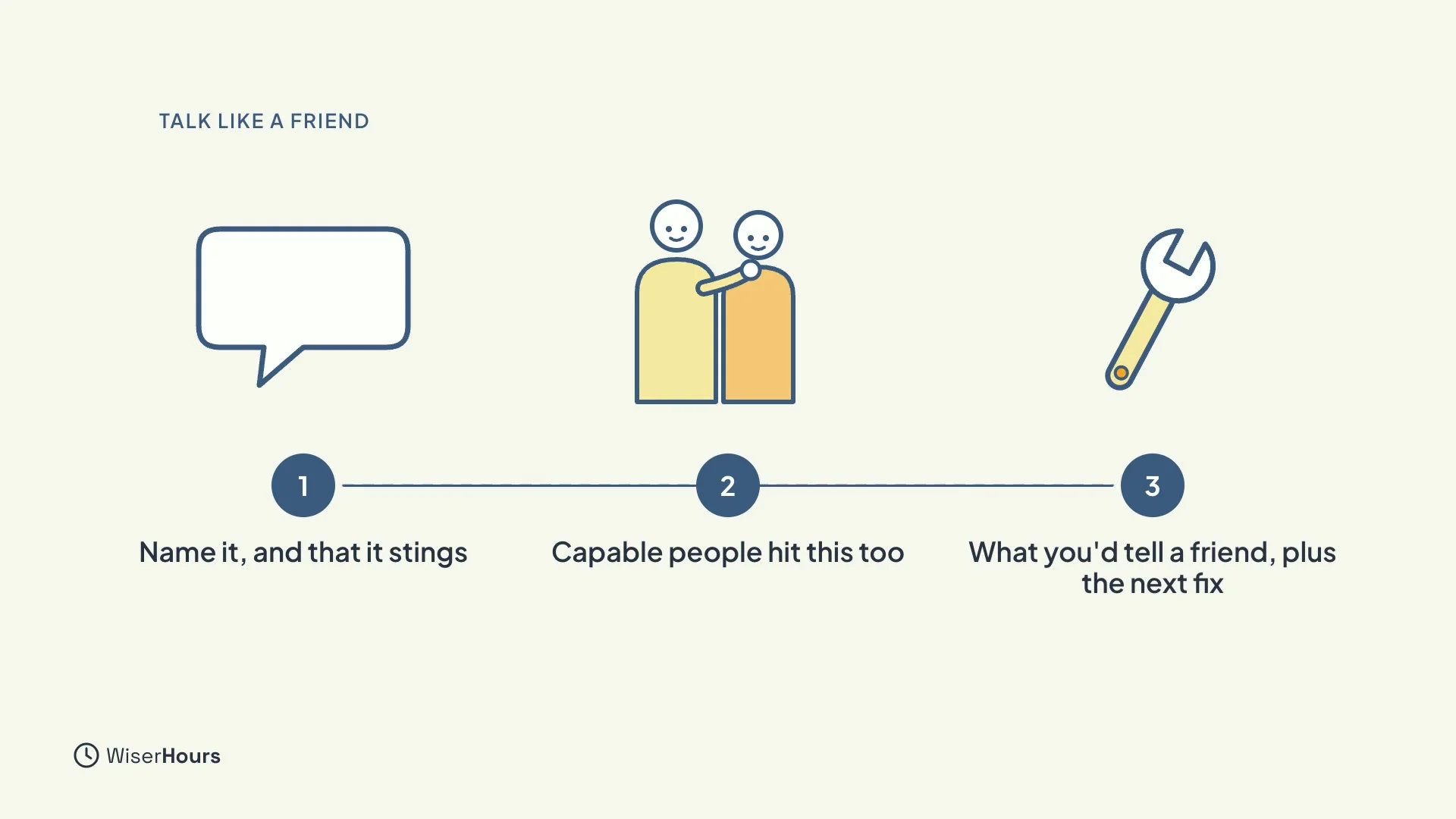
Then speak to yourself the way you would to a friend. There are three parts:
- Name what happened, and that it stings, without replaying it on a loop.
- Remember that capable people run into the same kind of problem.
- Say what you would tell a friend, including the next fix.
 (opens the full-size picture)
Critic or friend?
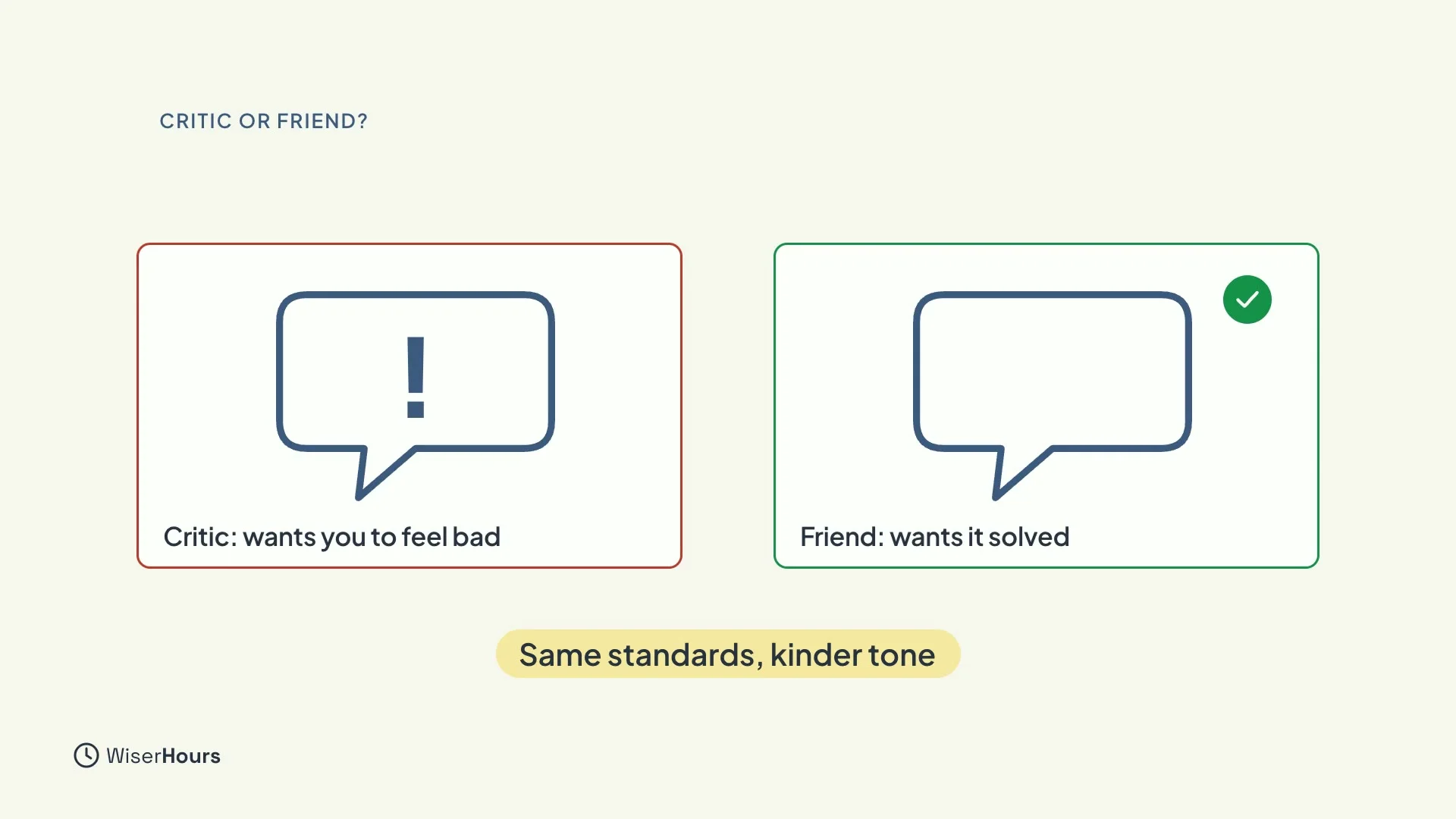
This isn’t going easy on yourself. Mistakes still get noticed and fixed. What changes is the tone. Ask: does my inner voice sound like a critic who wants me to feel bad, or like someone on my side who wants the problem solved? The friend still sees the mistake, and points at the next step.
 (opens the full-size picture)
What the research says, and its limits
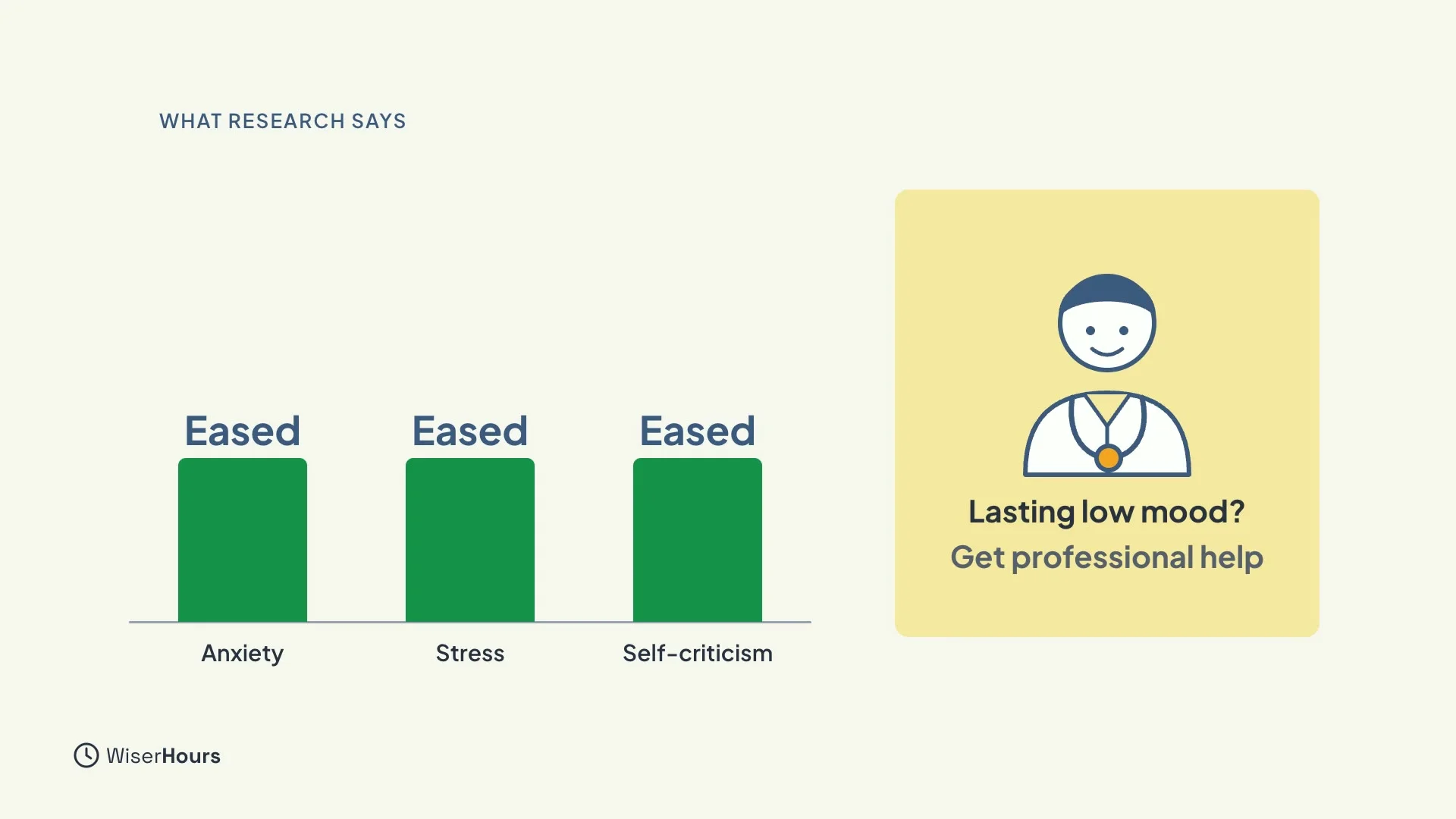
In reviews of trials, self-compassion training eased anxiety, stress and self-criticism. The effects were small to medium, and the reviewers judged the risk of bias in the trials to be high. It is a skill worth practicing, not a treatment. It isn’t a treatment for depression, and low mood that lasts is a reason to get professional help.
 (opens the full-size picture)
A guided moment with one thought
The video includes a guided version of this practice with real silences, so you have time to do each step. If you can, watch it. If not, you can follow the same steps here, and pause as long as you like between them.
- Sit comfortably, and take a slow breath.
- Bring to mind one thought that has been looping for you lately. Not the hardest one, just one.
- Notice where you feel it in your body.
- Now say to yourself: this is a thought, not a fact.
- Now ask: what would I say to a friend who had this thought?
- Say those words to yourself, gently.
- Take one more slow breath. When you are ready, come back.
 (opens the full-size picture)
Go gently
Choose a small, everyday thought. If a thought feels too heavy or the exercise makes you feel worse, stop, and consider talking it over with a doctor or a mental health professional.
YOUR TURN
Read more
- Self-Compassion Explained: What Kristin Neff’s Research Shows: the three parts and what the trials found.
- What Is Mindfulness? A Plain-English Definition Without the Mysticism: noticing thoughts without suppressing them.
- MBCT Explained: Mindfulness-Based Cognitive Therapy and Who It’s For: a structured program built around thoughts as mental events.
- Catastrophizing: How to Catch Worst-Case Thinking and Test It: how to spot worst-case thoughts and test them.
Read the full lesson script
In this lesson, you'll learn to step back from a thought, and to speak to yourself more kindly. Then we'll try it together with one thought.
A thought isn't a fact. It's a mental event that comes and goes. You can notice a thought as a thought, without having to obey it or argue with it.
Trying to push thoughts and feelings away doesn't tend to work. In studies, people who habitually held their feelings down reported more negative emotion, not less.
Then speak to yourself the way you would to a friend. Name what happened, and that it stings. Remember that capable people run into the same problems. And say what you'd tell a friend, including the next fix.
This isn't going easy on yourself. Mistakes still get noticed and fixed. What changes is the tone. Ask: does my inner voice sound like a critic who wants me to feel bad, or like someone on my side who wants the problem solved?
In reviews of trials, self-compassion training eased anxiety, stress and self-criticism. It isn't a treatment for depression, though, and low mood that lasts is a reason to get professional help.
Let's try it with one thought. Sit comfortably, and take a slow breath. Bring to mind one thought that's been looping for you lately. Not the hardest one, just one. Notice where you feel it in your body. Now say to yourself: this is a thought, not a fact. Now ask: what would I say to a friend who had this thought? Say those words to yourself, gently. Take one more slow breath. When you're ready, come back.
So remember: a thought isn't a fact, notice it without obeying it, and speak to yourself like a friend. Before the next lesson, write what you'd tell a friend in your situation, then read it to yourself. Next, you'll learn to make good-enough decisions.
MAKE IT A SMALL WIN
Finished this lesson?
Mark it complete to save your progress on this device.