Your plan · Lesson 10 of 10
When It's More Than Overthinking, and Your Plan
Know when worry may be more than overthinking, where to get help, and make a simple plan for everyday loops with a checklist.
 Video coming soon
Most overthinking is an everyday habit, and the tools in this course can help with it. Sometimes, though, worry is a sign of something more. In this last lesson you learn what to watch for, where to get help, and how to make your own overthinking plan.
Emergencies come first
If you might be in danger
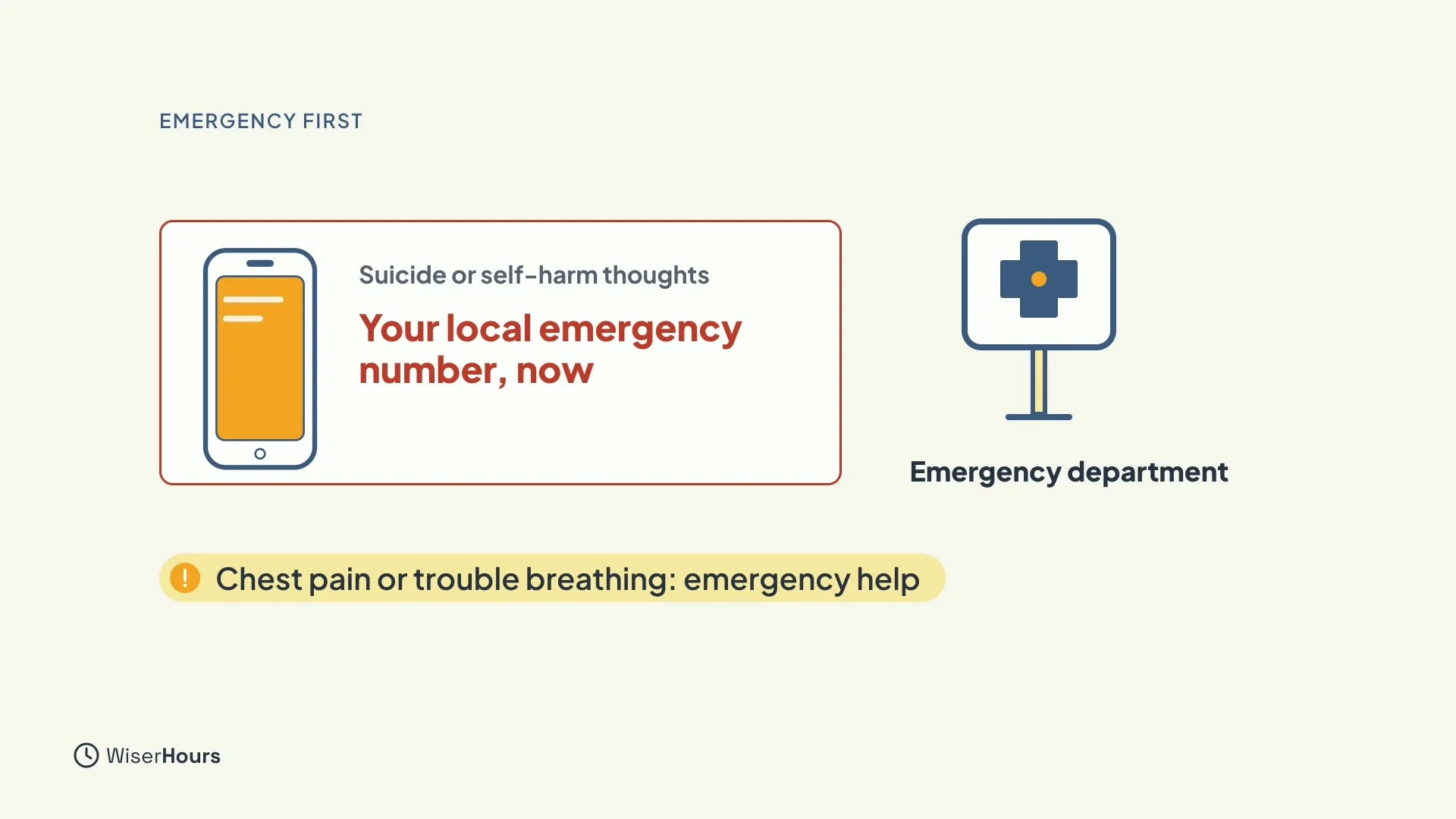
If you might act on thoughts of suicide or self-harm, call your local emergency number now, or go to an emergency department. Call for emergency help for chest pain or trouble breathing, even if you’ve had panic attacks before.
How it feels cannot tell a panic attack from a heart problem. Medical tests can. If you are unsure, treat chest pain or trouble breathing as an emergency.
 (opens the full-size picture)
When worry may be an anxiety disorder
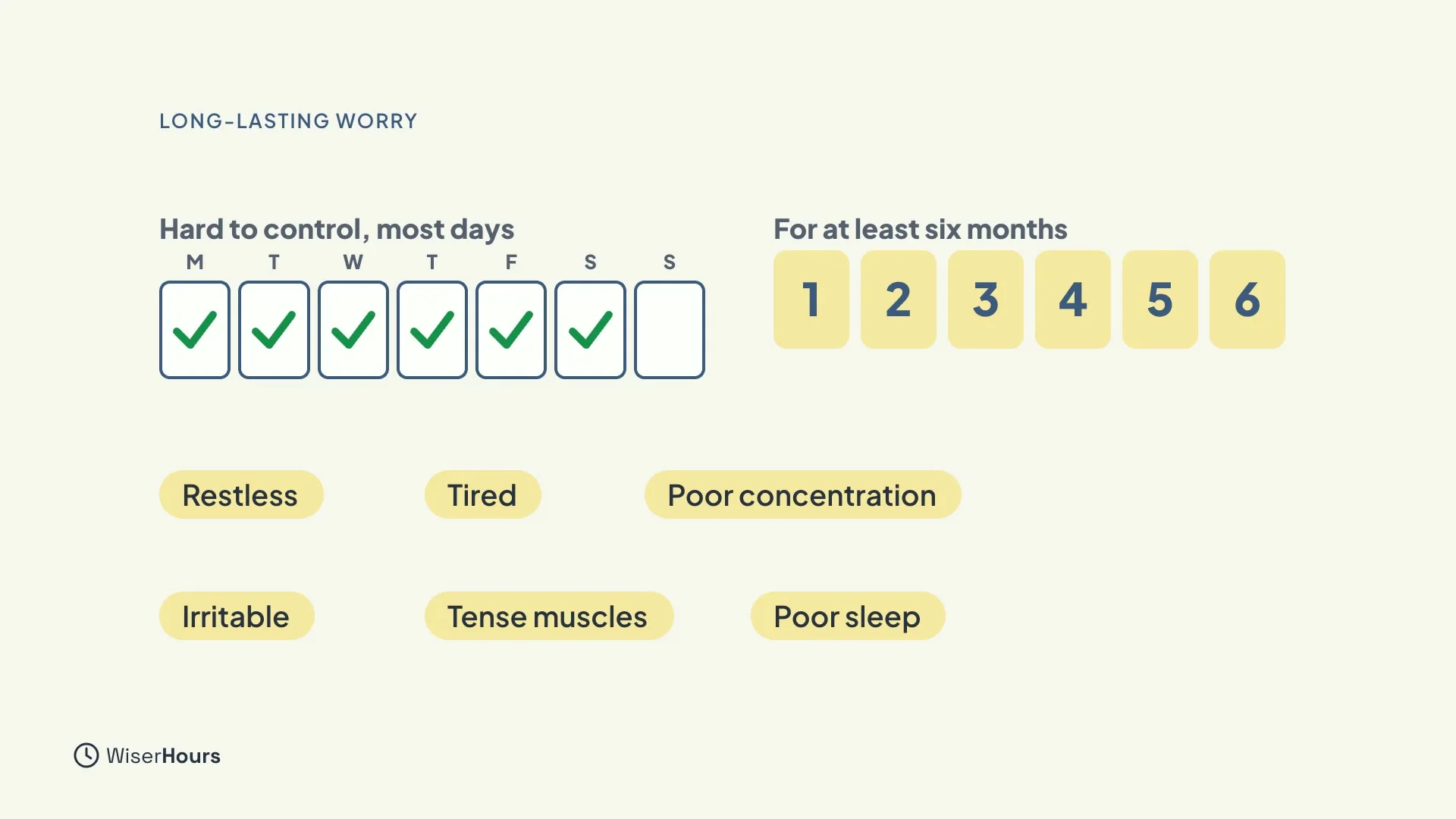
Worry may be part of an anxiety disorderanxiety disorder: A mental health condition in which worry or fear is persistent, out of proportion to the situation and hard to control, and gets in the way of daily life. It differs from ordinary anxiety, which passes, and it is diagnosed by a clinician.Full entry in the glossary when it is hard to control on most days for at least six months. It usually comes with other signs, such as restlessness, tiredness, poor concentration, irritability, tense muscles or poor sleep. Having a few of these on a bad week does not mean you have a disorder. It is the long, hard-to-control pattern that matters.
 (opens the full-size picture)
Low mood and obsessive thoughts
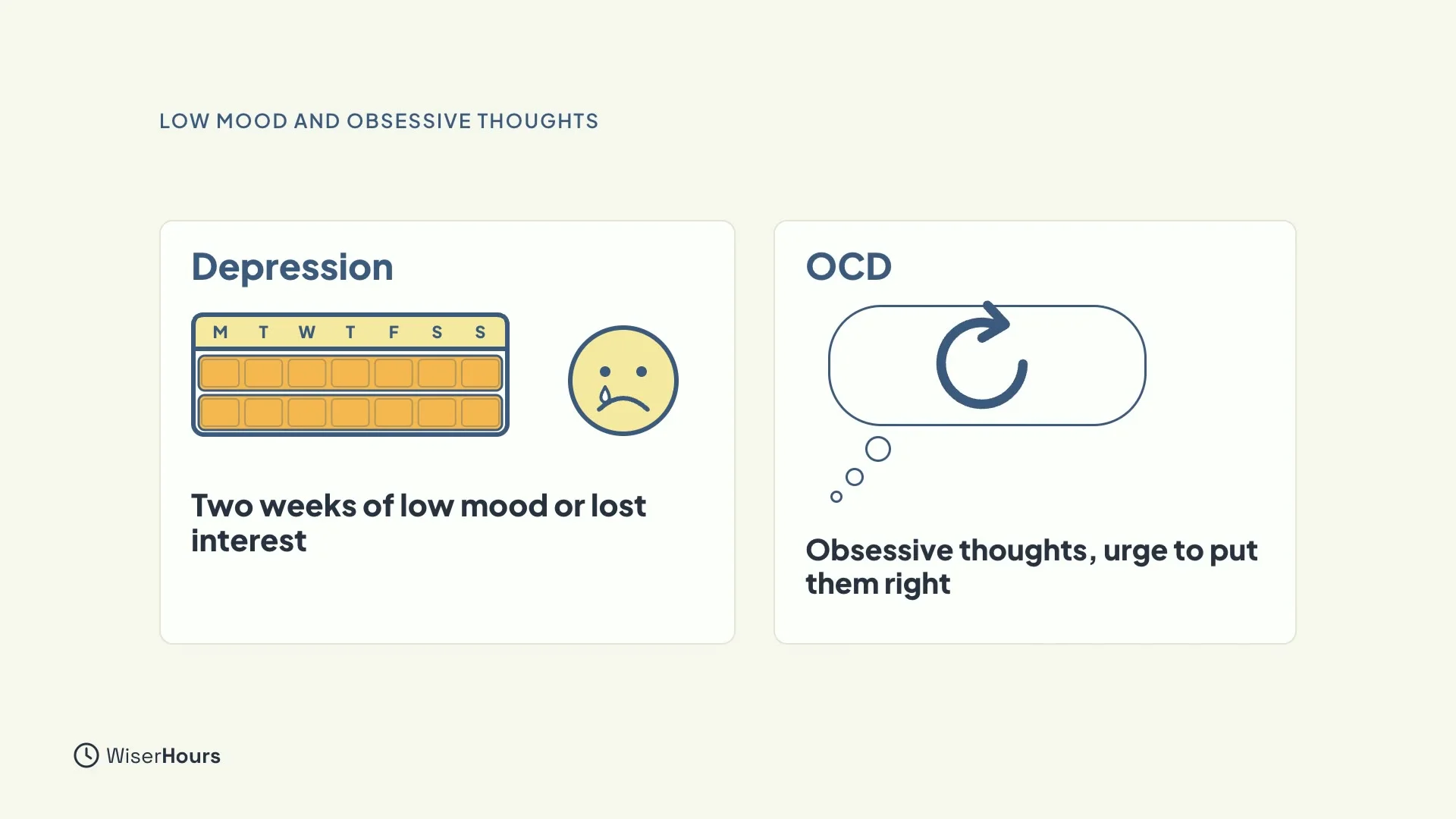
Low mood or lost interest, nearly every day for at least two weeks, can be a sign of depression. And obsessive thoughts that come with an urge to put them right can be part of OCD, which stands for obsessive-compulsive disorder. These are not the same as ordinary overthinking, and ordinary tools may not be enough for them.
 (opens the full-size picture)
Help works
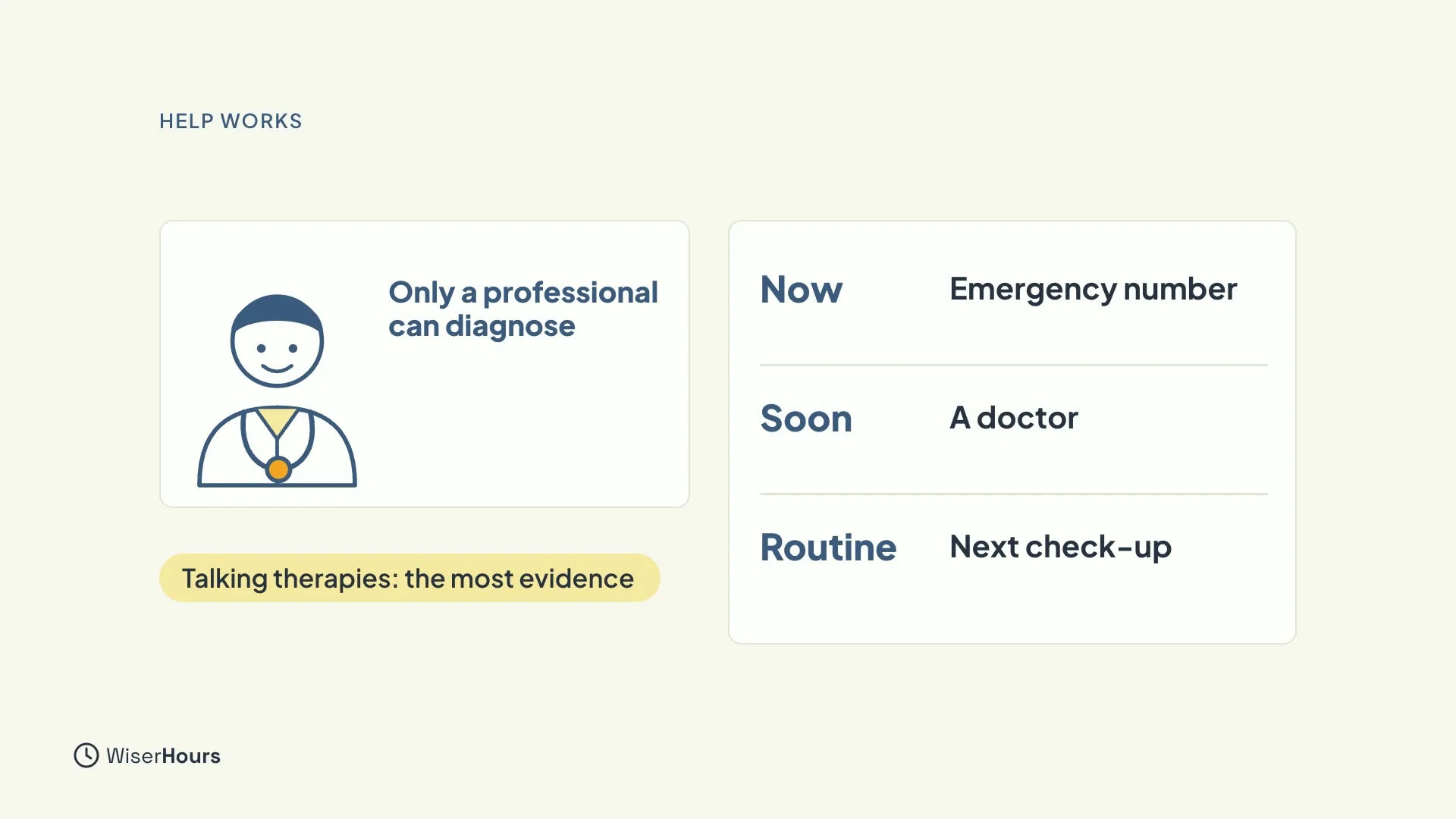
Only a professional can diagnose these, and effective help exists. Talking therapies such as cognitive behavioral therapycognitive behavioral therapy: A structured talking therapy that works on the links between thoughts, feelings and behavior, usually over a set number of sessions with practice between them. It is given by a trained therapist or through guided programs, and versions exist for specific problems.Full entry in the glossary have the most evidence for anxiety. See a doctor if worry comes most days and stops you sleeping or acting, or if low mood lasts. Mention worst-case thinking too, if it arrives most days.
 (opens the full-size picture)
Make your plan
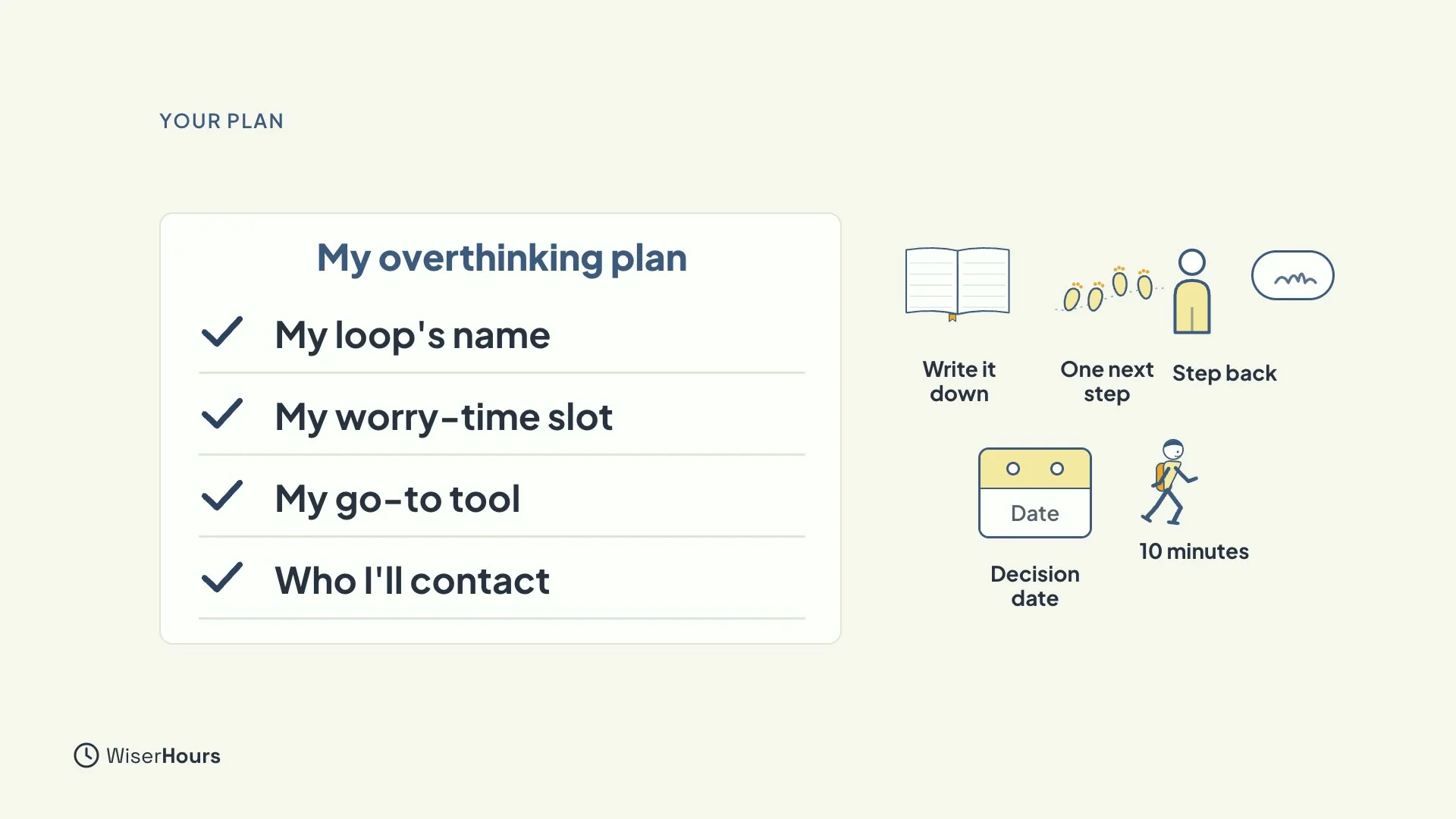
Now make your plan. Name your most common loop. Choose your worry-time slot. Pick your go-to tool: writing it down, one next step, stepping back, a decision date, or ten minutes of action. And write down who you will contact if it is more than overthinking, for example a doctor or a local crisis line.
 (opens the full-size picture)
My overthinking plan
YOUR TURN
Read more
- Therapy for Anxiety: CBT, ACT, and Exposure Approaches Compared: what the main talking therapies involve.
- Catastrophizing: How to Catch Worst-Case Thinking and Test It: when worst-case thinking is worth mentioning to a doctor.
- Why You Wake Up at 3 AM: Common Causes, What to Do, and When to See a Doctor: when poor sleep and worry go together.
- Self-Compassion Explained: What Kristin Neff’s Research Shows: why it is a skill, not a treatment.
- Panic Attack vs. Anxiety Attack: What’s the Difference?: why chest pain needs emergency help.
Read the full lesson script
In this last lesson, you'll learn when overthinking may be something more, where to get help, and you'll make your own plan.
First, the most important part. If you might act on thoughts of suicide or self-harm, call your local emergency number now, or go to an emergency department. And call for emergency help for chest pain or trouble breathing, even if you've had panic attacks before.
Worry may be part of an anxiety disorder when it's hard to control on most days for at least six months, along with things like restlessness, tiredness, poor concentration, irritability, tense muscles or poor sleep.
Low mood or lost interest, nearly every day for at least two weeks, can be a sign of depression. And obsessive thoughts that come with an urge to put them right can be part of OCD.
Only a professional can diagnose these, and effective help exists. Talking therapies such as CBT have the most evidence for anxiety. See a doctor if worry comes most days and stops you sleeping or acting, or if low mood lasts.
Now make your plan. Name your most common loop. Choose your worry-time slot. Pick your go-to tool: writing it down, one next step, stepping back, a decision date, or ten minutes of action. And write down who you'll contact if it's more than overthinking.
So remember: the emergency number comes first, see a doctor when it lasts, and keep a simple plan for everyday loops. Before you go, fill in your overthinking plan. Thank you for taking this course, and good luck getting unstuck.
MAKE IT A SMALL WIN
Finished this lesson?
Mark it complete to save your progress on this device.