Spot the loop · Lesson 3 of 10
Notice an Overthinking Loop Early and Name It
Learn to spot the early signs of an overthinking loop, name it, and keep a simple log so you can see your own patterns.
 Video coming soon
You can catch an overthinking loop early, in the moment before it gathers speed. This lesson shows you the first sign to look for, a simple way to name the loop, and a one-week log that helps you see your own patterns.
The jolt
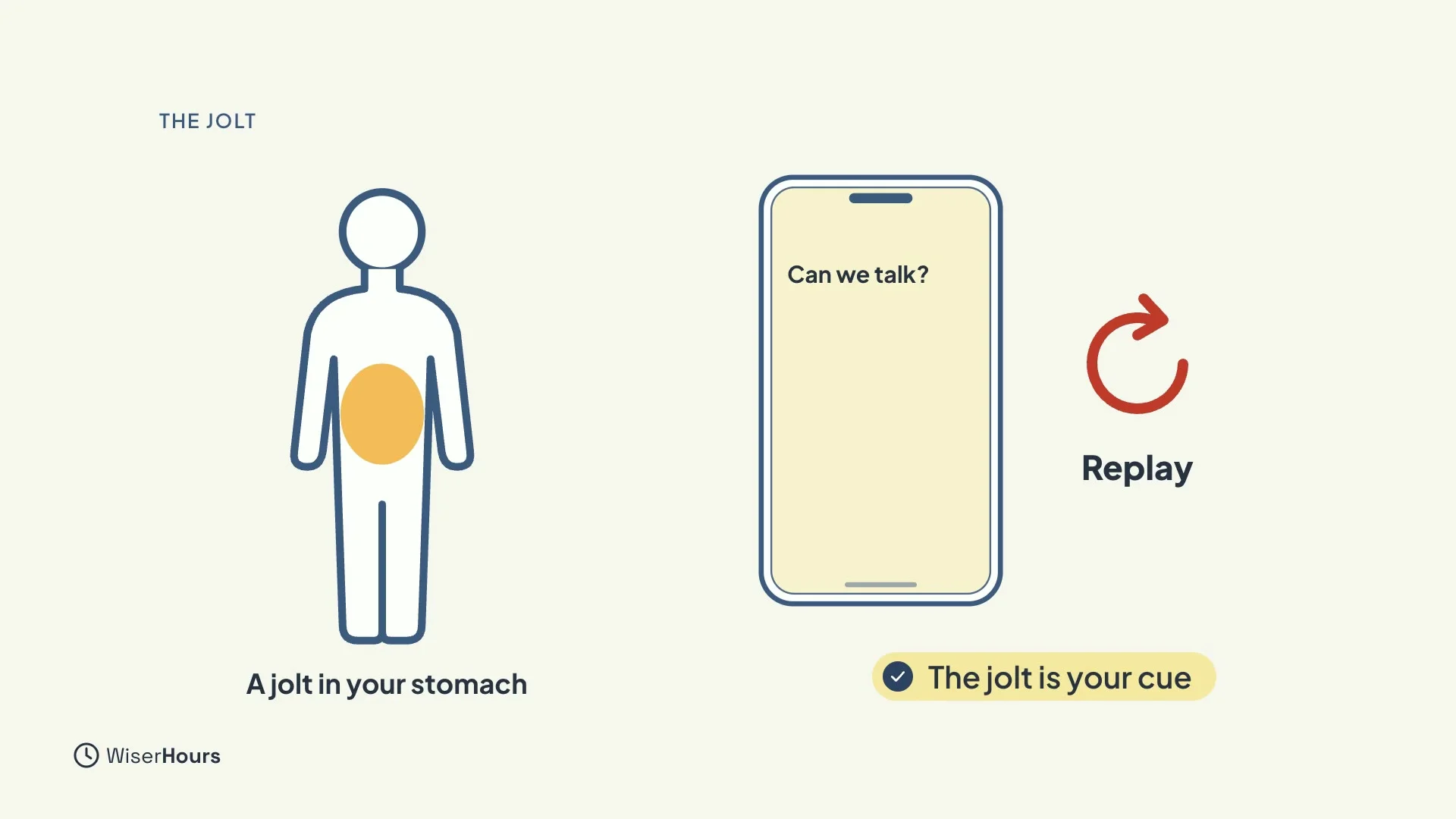
Overthinking often arrives as a feeling before it arrives as words: a jolt in your stomach, or a replay of a message in your head. Treat that jolt as your cue. It is the earliest moment you can notice what is starting.
 (opens the full-size picture)
Name it
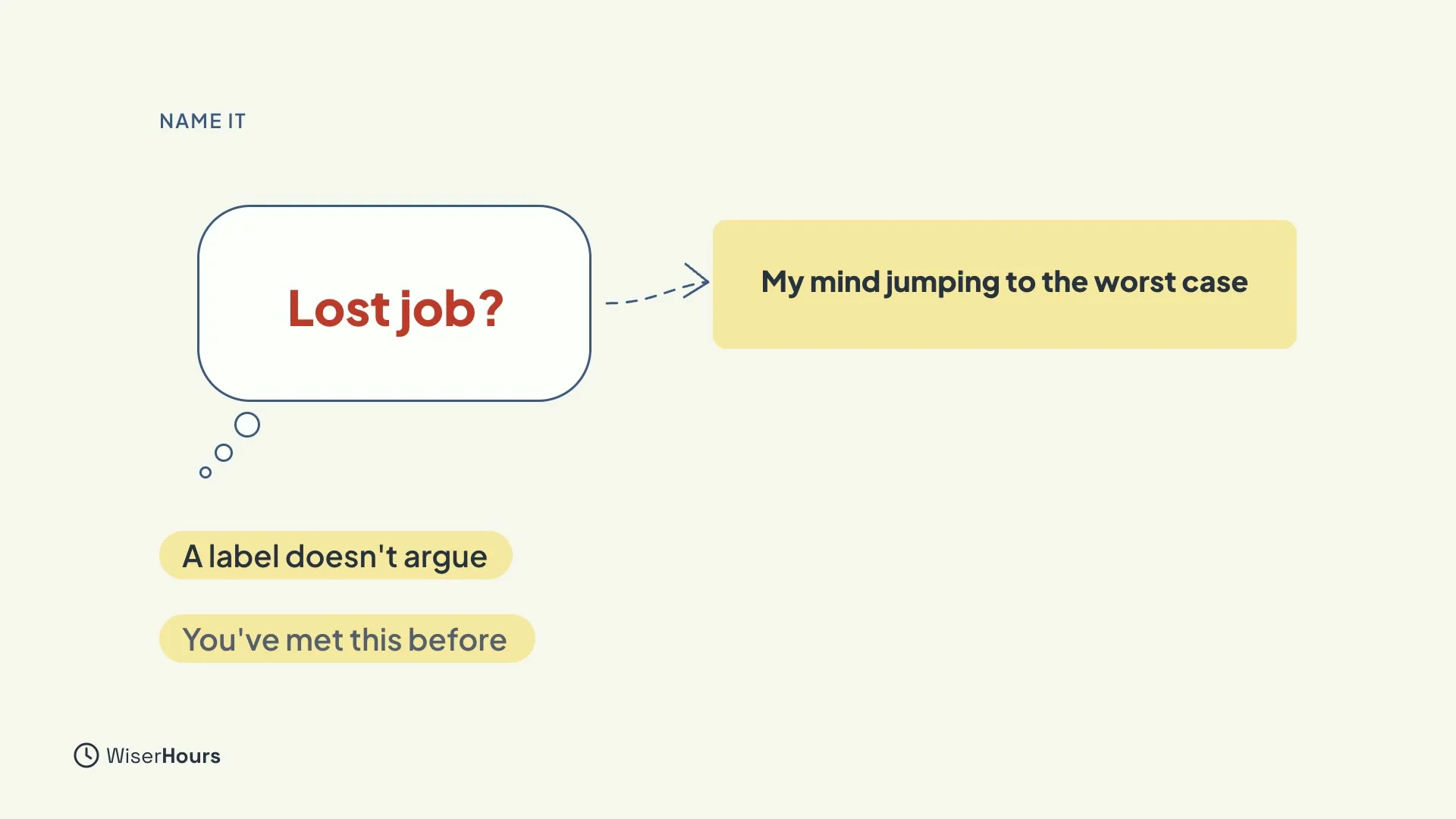
Then name it. You might say to yourself: this is my mind jumping to the worst case. A label does not argue with the thought. It reminds you that you have met this pattern before.
 (opens the full-size picture)
Catch it, check it, change it
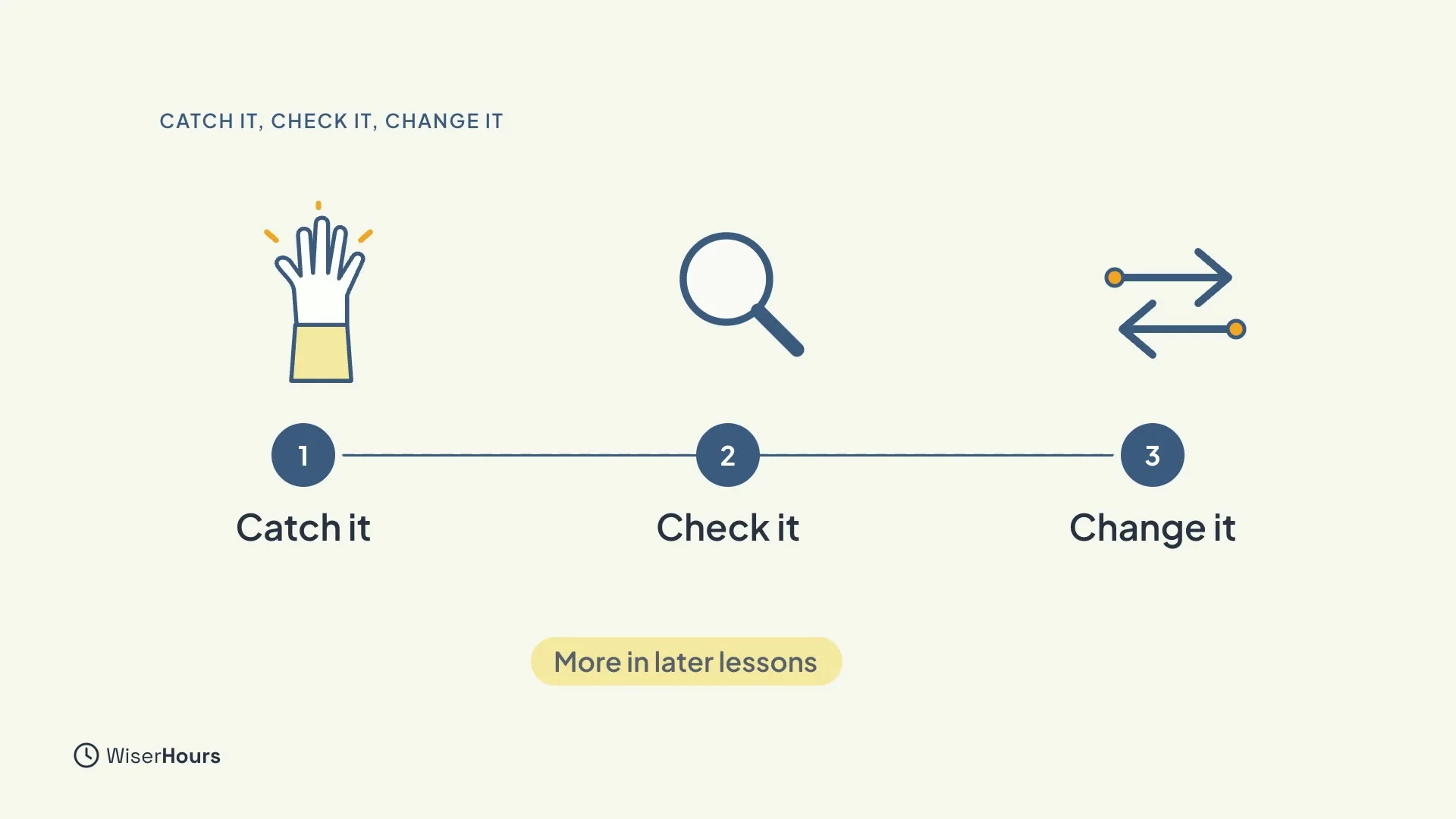
A common approach in talking therapy is catch it, check it, change it. Catch the unhelpful thought. Check the evidence for it. Then look for other ways to see the situation. You will practise the checking and changing in later lessons. For now, catching is the whole job.
 (opens the full-size picture)
Keep a log
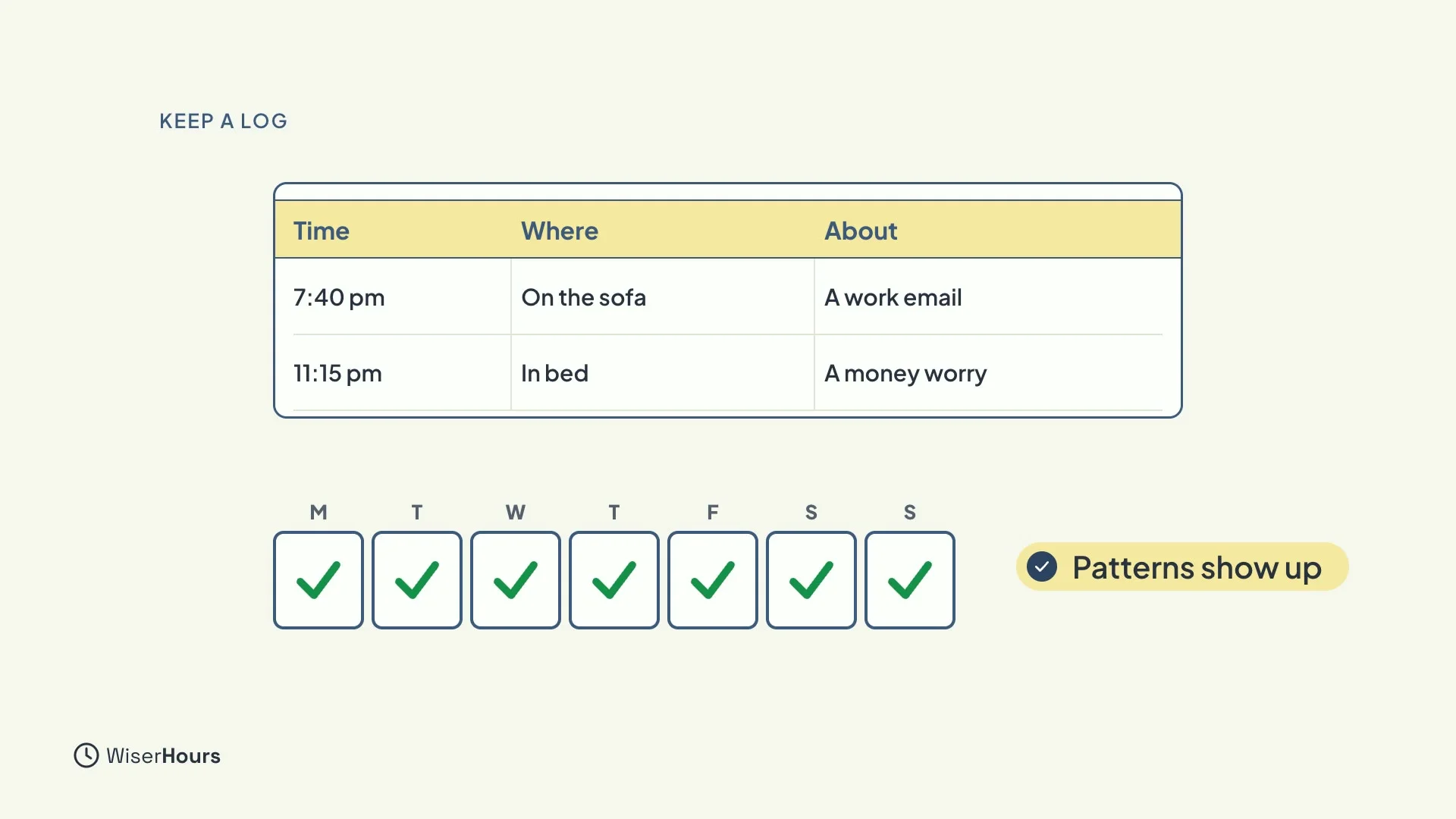
To get better at noticing, keep a simple log for a week. When a loop starts, jot down the time, where you were and what it was about. A pattern may show up within a week or two.
 (opens the full-size picture)
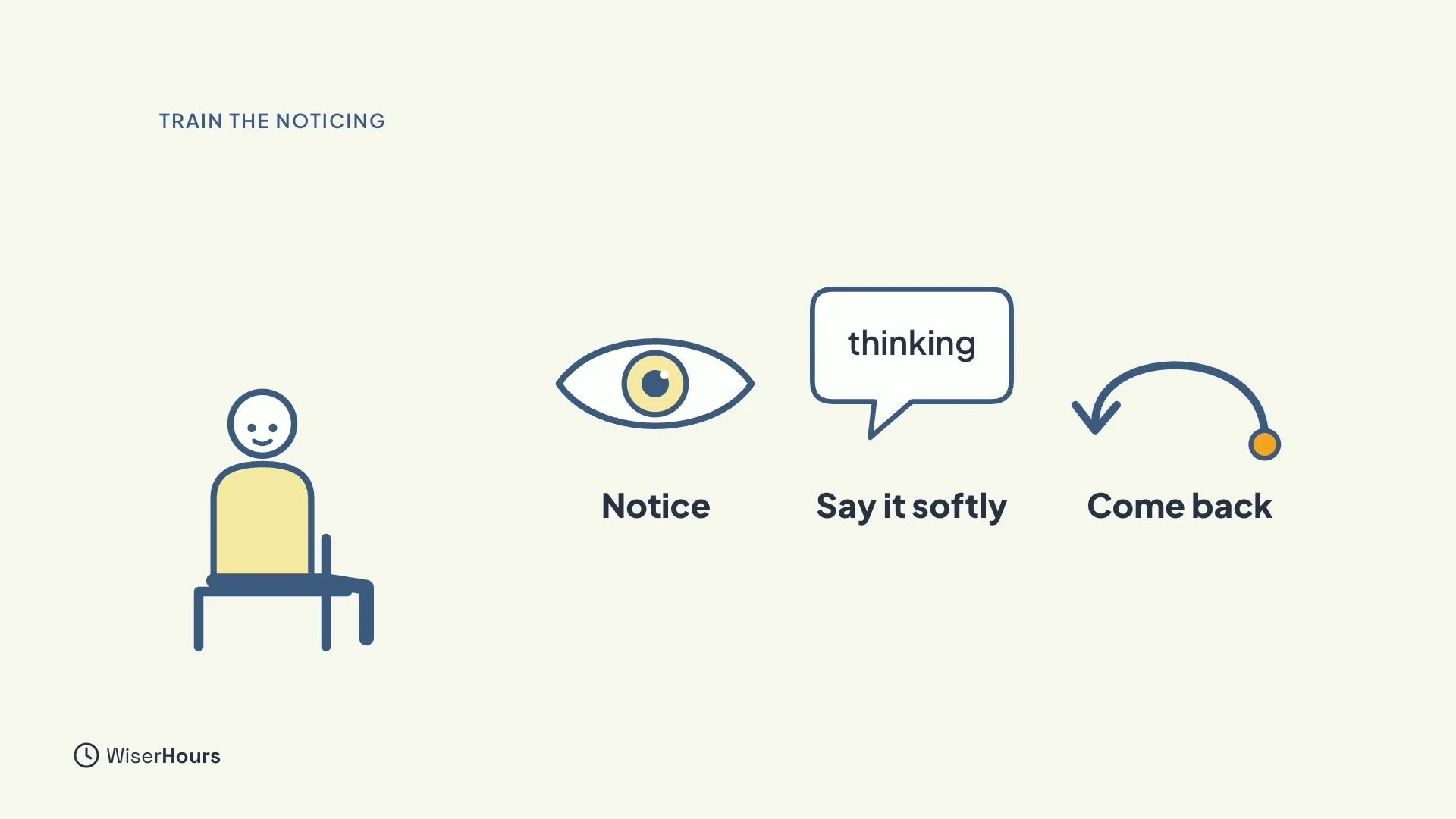
Train the noticing
Noticing is a skill you can train. In meditation you practise the same move: notice that your mind has wandered, say thinking softly in your head, and come back. You do not need to meditate to use the idea. The same three moves work when a loop starts.
 (opens the full-size picture)
YOUR TURN
Read more
- Catastrophizing: How to Catch Worst-Case Thinking and Test It: the jolt, the label and catch it, check it, change it.
- MBCT Explained: Mindfulness-Based Cognitive Therapy and Who It’s For: training yourself to catch the early moment.
- How to Meditate: A Beginner’s Guide to Your First Ten Minutes: the noticing move in practice.
Read the full lesson script
In this lesson, you'll learn to catch an overthinking loop early, in the moment before it gathers speed.
Overthinking often arrives as a feeling before it arrives as words: a jolt in your stomach, or a replay of a message in your head. Treat that jolt as your cue.
Then name it. You might say to yourself: this is my mind jumping to the worst case. A label doesn't argue with the thought. It reminds you that you've met this pattern before.
A common approach in talking therapy is catch it, check it, change it. Catch the unhelpful thought. Check the evidence for it. Then look for other ways to see the situation. You'll practice the checking and changing in later lessons.
To get better at noticing, keep a simple log for a week. When a loop starts, jot down the time, where you were, and what it was about. A pattern may show up within a week or two.
Noticing is a skill you can train. In meditation, you practice the same move: notice that your mind has wandered, say thinking softly in your head, and come back.
So remember: the jolt is your cue, name the loop, and keep a simple log. Before the next lesson, give your most common loop a name, and use it the next time it starts. Next, you'll learn to write it down.
MAKE IT A SMALL WIN
Finished this lesson?
Mark it complete to save your progress on this device.