Spot the loop · Lesson 1 of 10
What Overthinking Looks Like and When It Becomes a Problem
Learn what overthinking looks like in everyday life, and how to tell a normal worried thought from one that is costing you too much.
 Video coming soon
This lesson shows you what overthinking looks like in everyday life, and when it starts to become a problem. Once you can recognise the common shapes, the rest of the course gets much easier to use.
Please read this first
This course is general information. It is not a treatment for anxiety, depression or OCD. If worry comes on most days and stops you sleeping or doing what you need to do, talk to a doctor. The last lesson shows what to look out for.
An everyday word
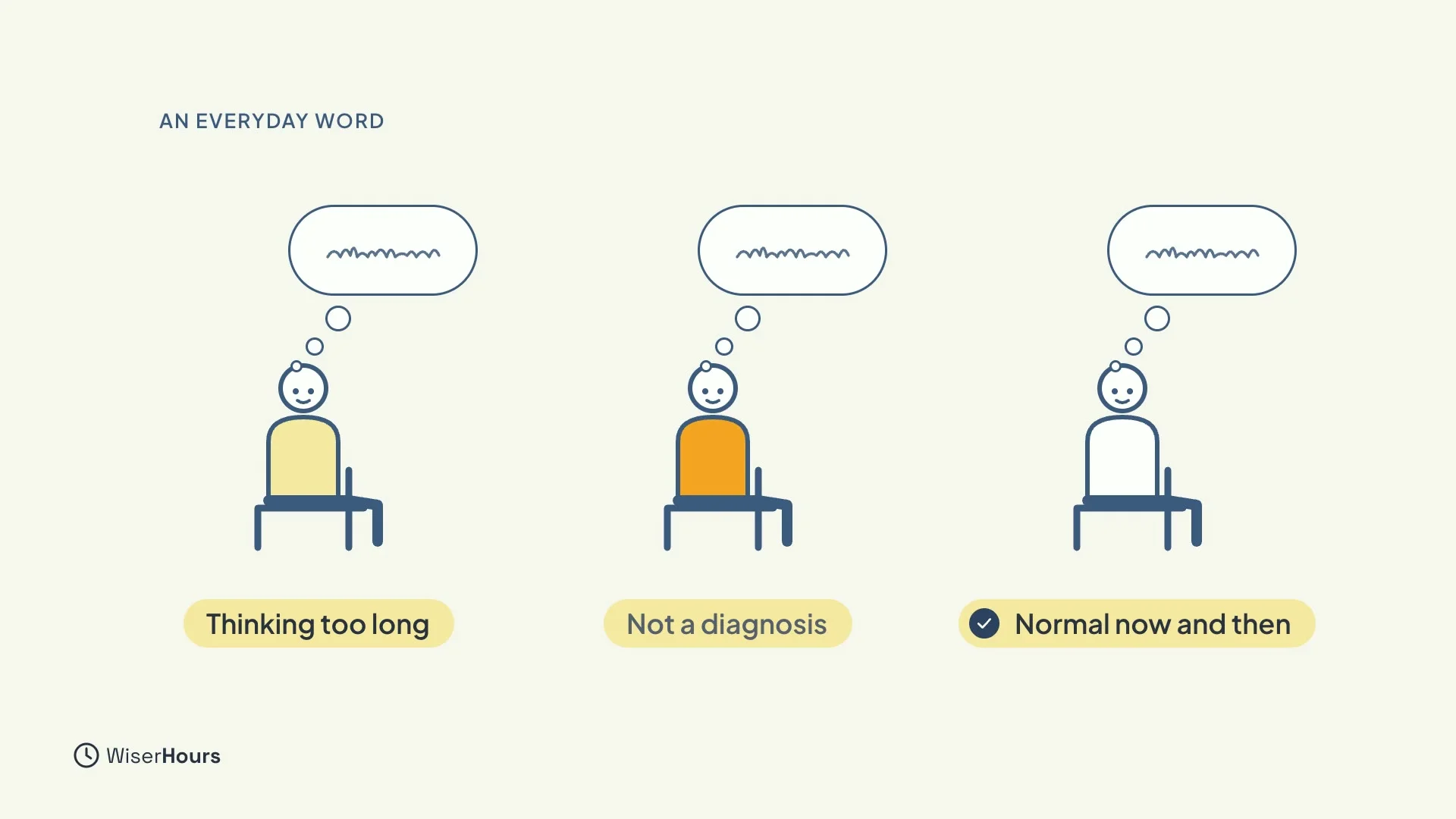
Overthinking is an everyday word for thinking too long about something. It is not a diagnosis. Everyone does it sometimes, and a worried thought now and then is a normal part of being human. You are not broken if you recognise yourself in this lesson.
 (opens the full-size picture)
The email
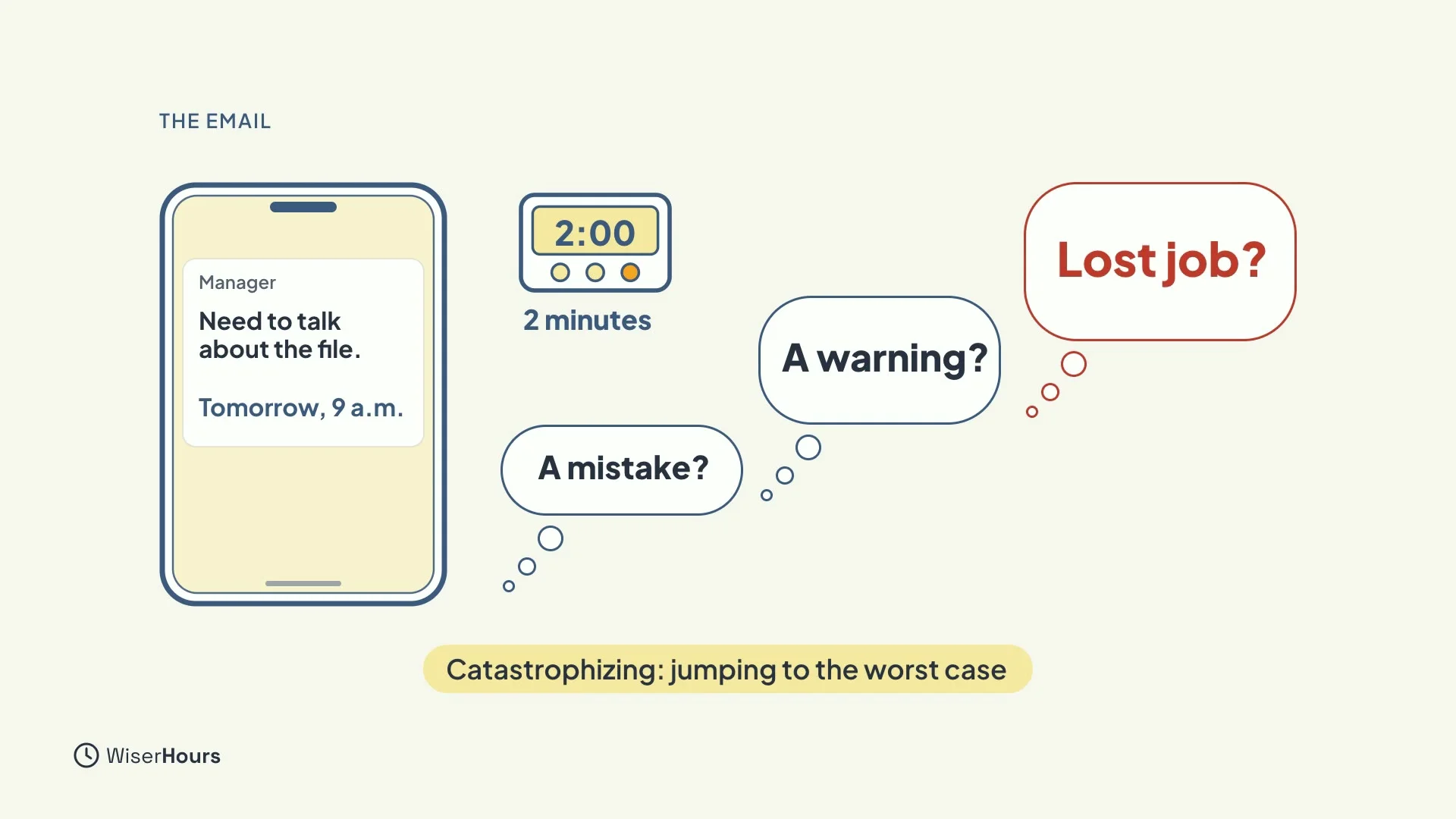
Here is a common version. A short message arrives from your manager: need to talk about the file, tomorrow at nine. Within about two minutes, your mind has turned it into a mistake, a warning and a lost job. That jump to the worst case is called catastrophizing, which means exaggerating the negative consequences of an event.
 (opens the full-size picture)
Three in the morning
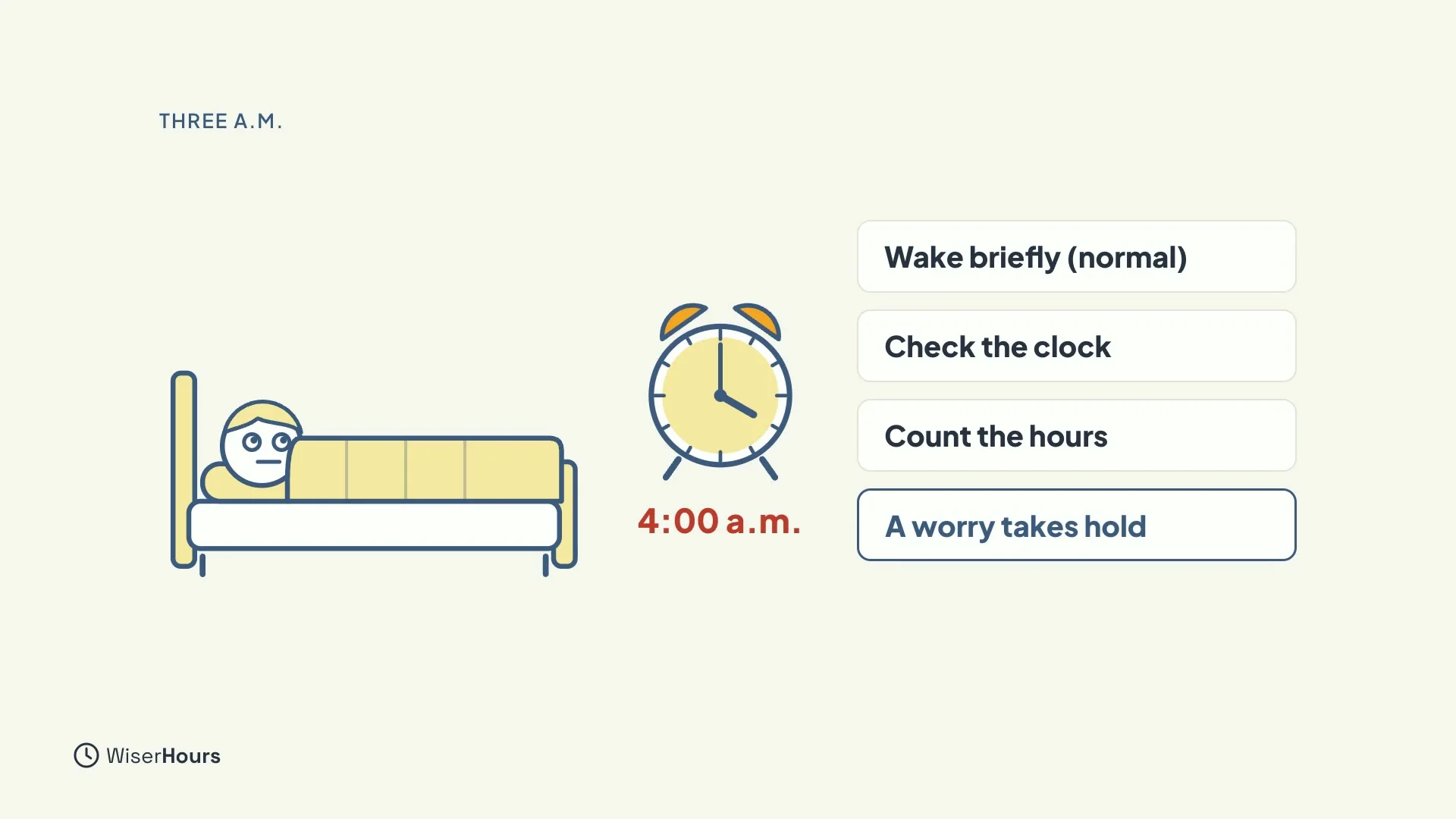
Another version happens at night. You wake briefly at three, which is normal. Then you check the clock, count the hours left, and a worry takes hold. The waking was brief. The worry is what stretches it into an hour.
 (opens the full-size picture)
The replay
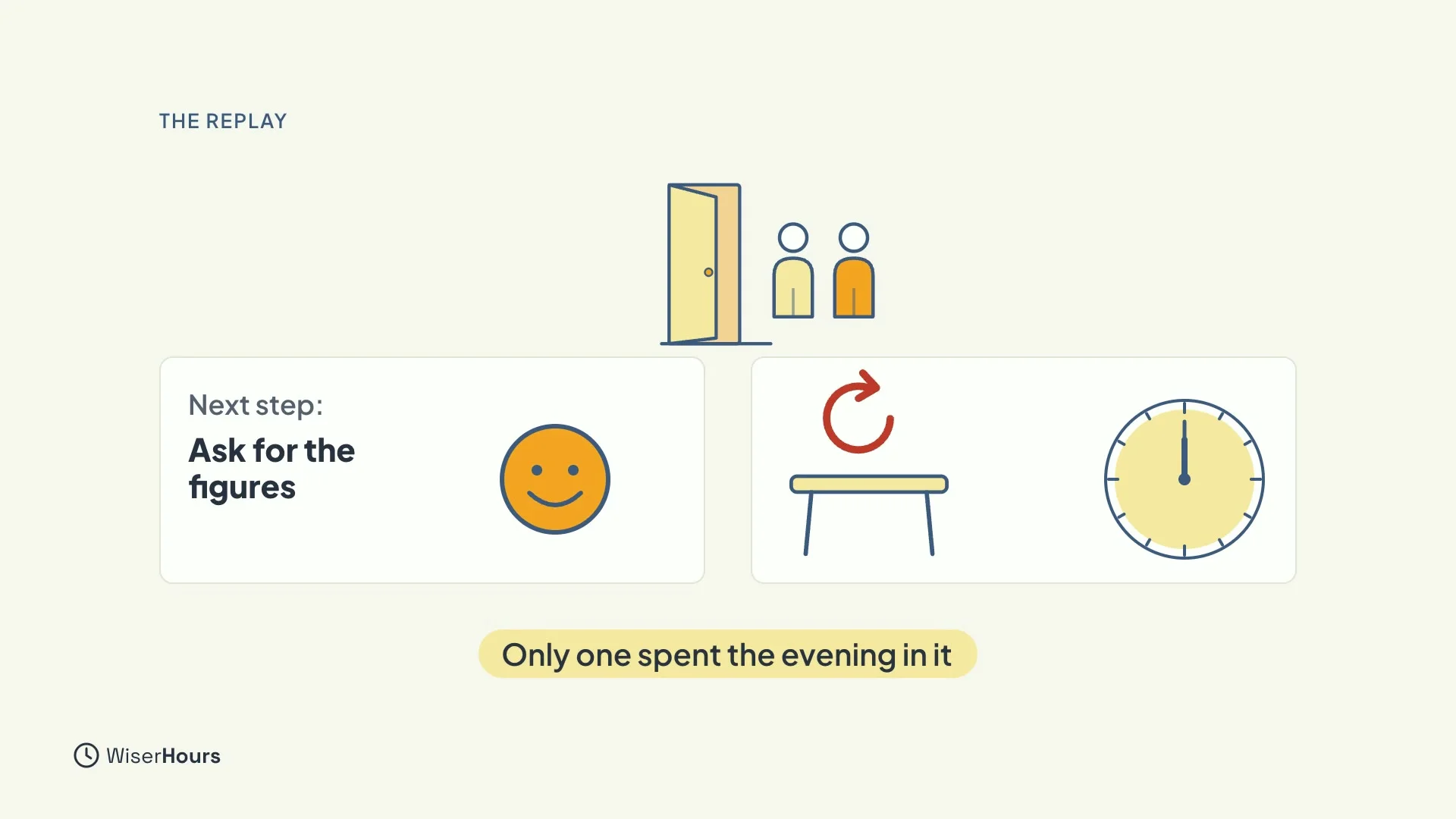
Or two people leave the same tense meeting. One works out what to do next, then lets it go. The other replays it all evening. Both thought about work. Only one spent the evening in it.
 (opens the full-size picture)
Endless research
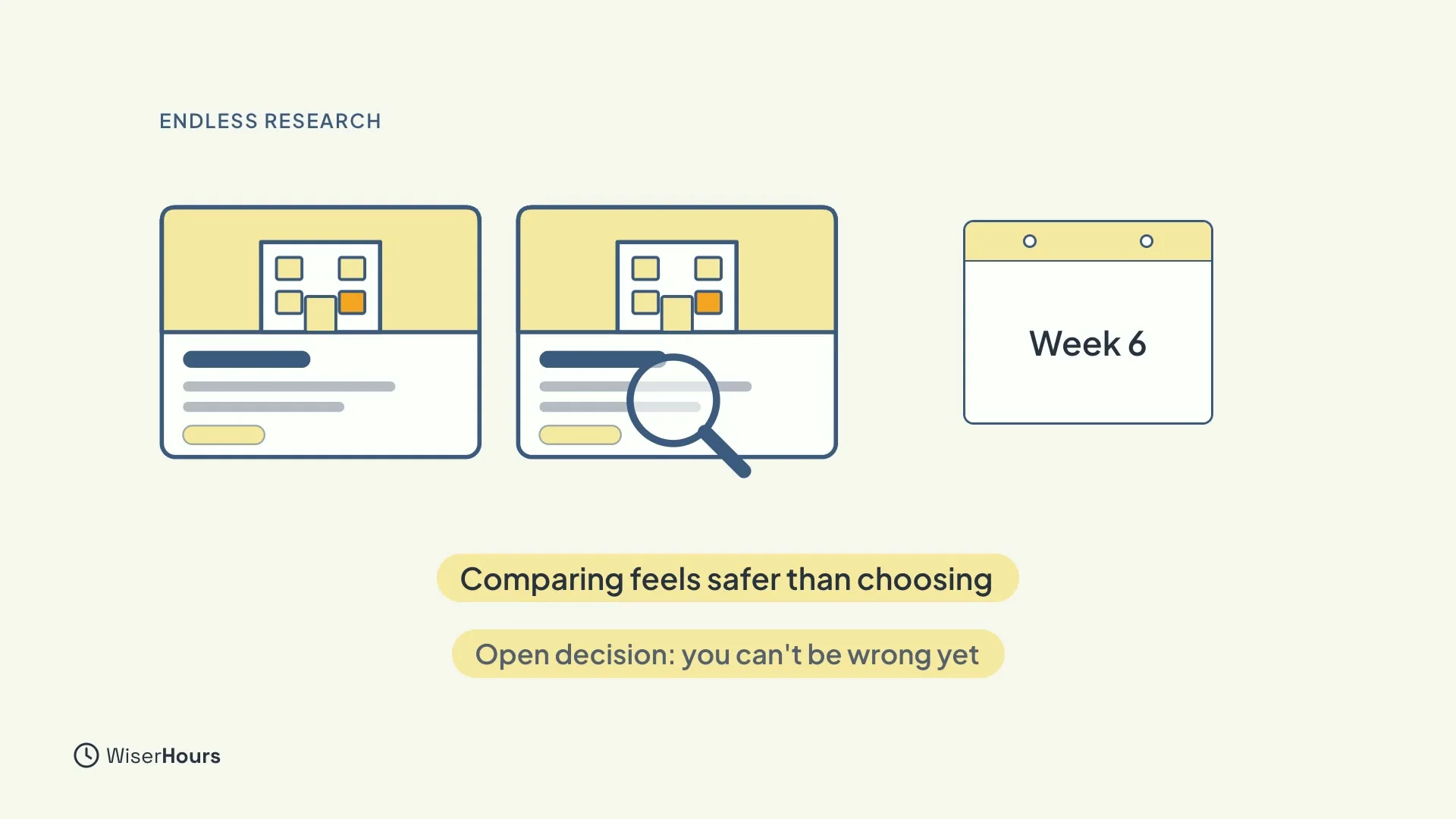
Sometimes overthinking looks like research. You compare two flats for weeks, because comparing feels safer than choosing. While a decision stays open, you cannot yet be wrong about it. That feels comfortable, but it keeps the decision open.
 (opens the full-size picture)
When it becomes a problem
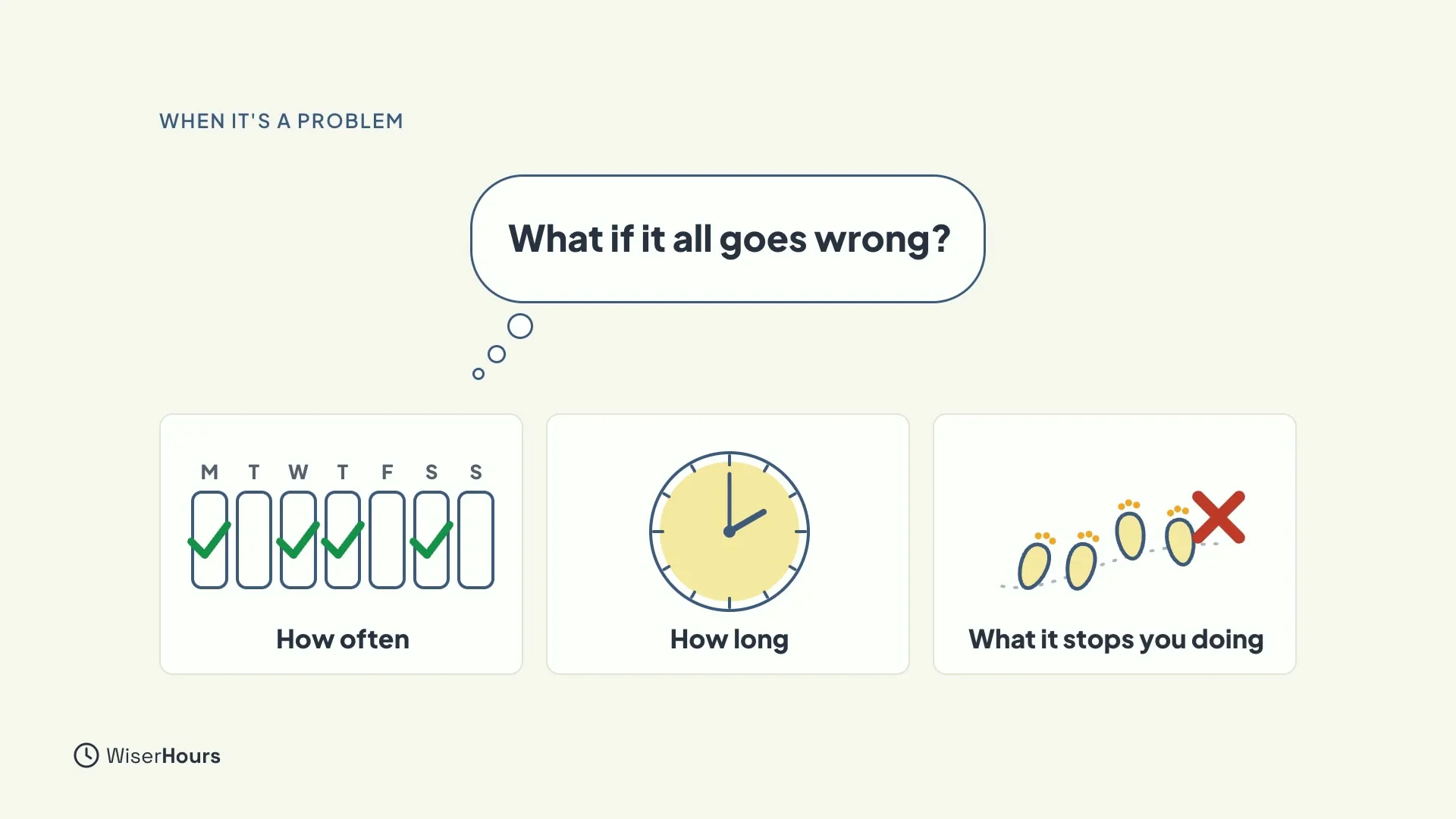
So when is it a problem? Not the thought itself. What separates an ordinary worst-case moment from a problem is how often it comes, how long it stays and what it stops you doing. That is what this course will help you change.
 (opens the full-size picture)
The course ahead
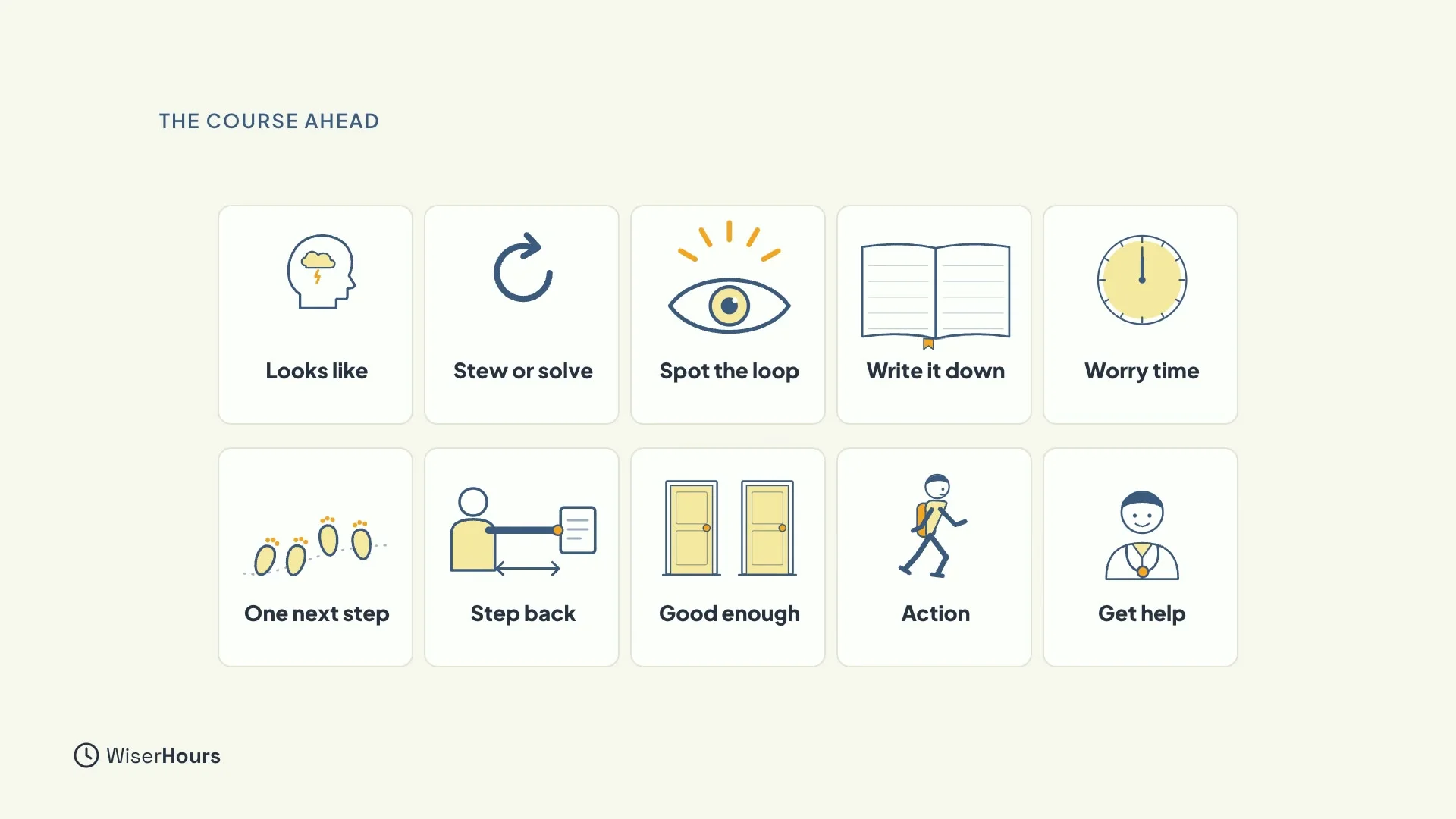
First you will learn to tell stewing from solving, and to notice the loop early. Then you will try three tools: writing it down, worry time, and turning a worry into a next step. After that you will learn to step back from your thoughts, make good-enough decisions, and use action to get out of your head. Finally you will learn when it is more than overthinking, and make your plan.
 (opens the full-size picture)
YOUR TURN
Read more
- Catastrophizing: How to Catch Worst-Case Thinking and Test It: the worst-case jump in more detail, and how to test it.
- Analysis Paralysis: Why You Can’t Decide and How to Get Unstuck: why comparing feels safer than choosing.
- How to Stop Thinking About Work in the Evening: the replay after a tense day.
- Why You Wake Up at 3 AM: common causes, what to do, and when to see a doctor.
Read the full lesson script
Welcome to Stop Overthinking. In this first lesson, you'll see what overthinking looks like, and when it starts to become a problem. This course is general information, not a treatment for anxiety or depression.
Overthinking is an everyday word for thinking too long about something. It isn't a diagnosis. Everyone does it sometimes, and a worried thought now and then is a normal part of being human.
Here's a common version. A short message arrives from your manager: need to talk about the file, tomorrow at nine. Within about two minutes, your mind has turned it into a mistake, a warning, and a lost job. That jump to the worst case is called catastrophizing.
Another version happens at night. You wake briefly at three, which is normal. Then you check the clock, count the hours left, and a worry takes hold. The waking was brief. The worry is what stretches it into an hour.
Or two people leave the same tense meeting. One works out what to do next, then lets it go. The other replays it all evening. Both thought about work. Only one spent the evening in it.
And sometimes overthinking looks like research. You compare two flats for weeks, because comparing feels safer than choosing. While a decision stays open, you can't be wrong about it.
So when is it a problem? Not the thought itself, but how often it comes, how long it stays, and what it stops you doing. That's what this course will help you change.
Here's the course. First, you'll learn to tell stewing from solving, and to notice the loop early. Then you'll try three tools: writing it down, worry time, and turning a worry into a next step. Next, you'll learn to step back from your thoughts, make good-enough decisions, and use action to get out of your head. Finally, you'll learn when it's more than overthinking, and make your plan.
So remember: overthinking is common, it comes in many shapes, and what matters is what it costs you. Before the next lesson, notice one moment you overthink, and write down what set it off. Next, you'll learn to tell stewing from solving.
MAKE IT A SMALL WIN
Finished this lesson?
Mark it complete to save your progress on this device.