The basics · Lesson 1 of 11
Investing vs Saving: What Investing Is and How It Works
Learn what investing is, how it differs from saving, and what stocks, bonds and funds are, in plain words and without being told what to buy.
 Video coming soon
Investing sounds like something for experts, but the basic ideas are simple. In this lesson you learn what investing is, how it differs from saving, and the three building blocks you will hear about everywhere: stocks, bonds and funds. This course is general education. It will not tell you what to buy.
Saving: safe, but not standing still
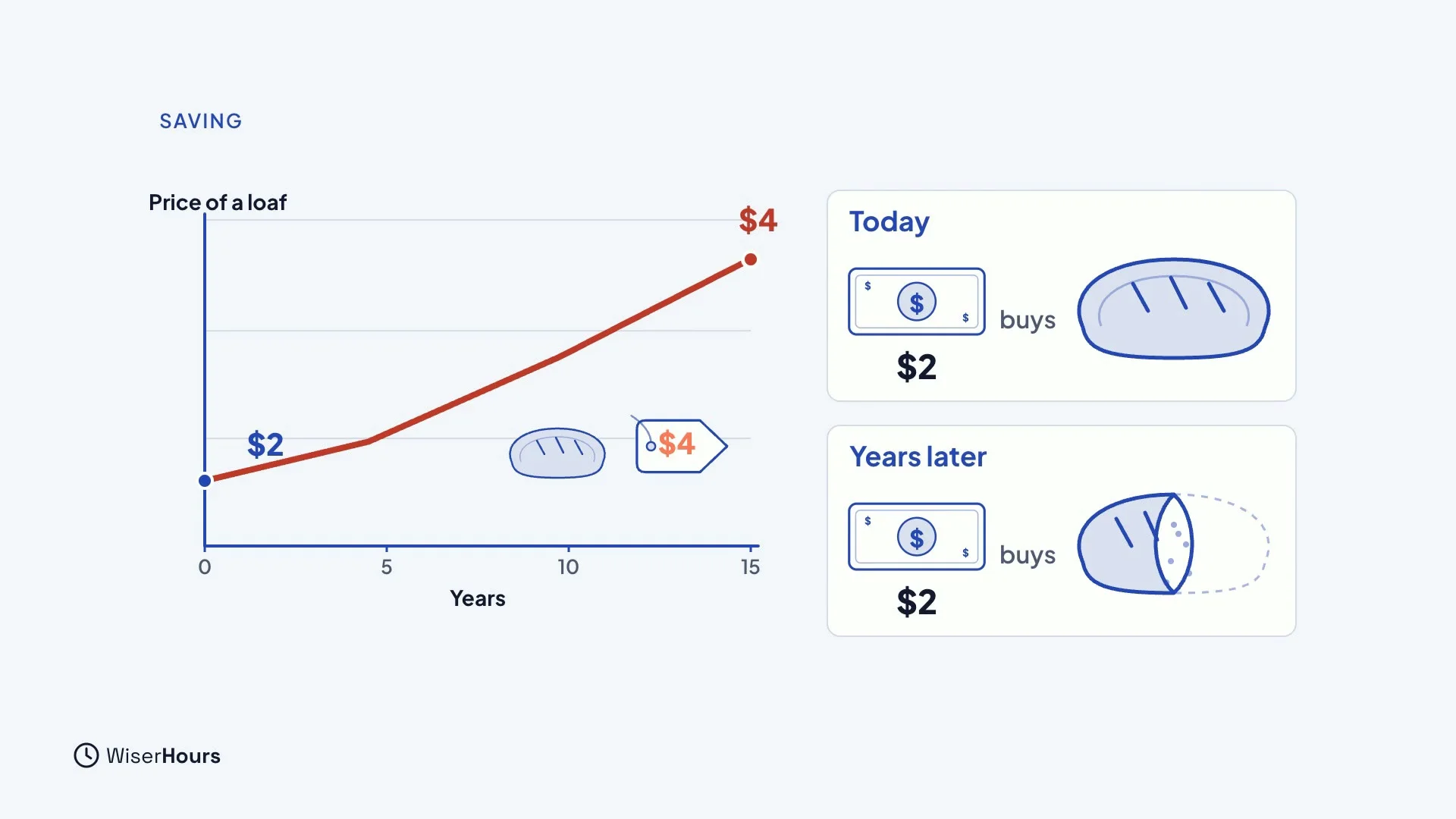
Money in a savings account is safe and easy to reach. That is exactly what you want for money you may need soon. The catch is that prices tend to rise over time. This is inflationinflation: A general rise in the prices of goods and services over time, so that the same amount of money buys less. Returns are often reported after inflation, in real terms, to show what a gain is worth in buying power.Full entry in the glossary. If a loaf of bread costs a little more every year, the same pile of cash buys a little less every year, until one day it buys only half a loaf.
 (opens the full-size picture)
Investing: a trade, not a promise
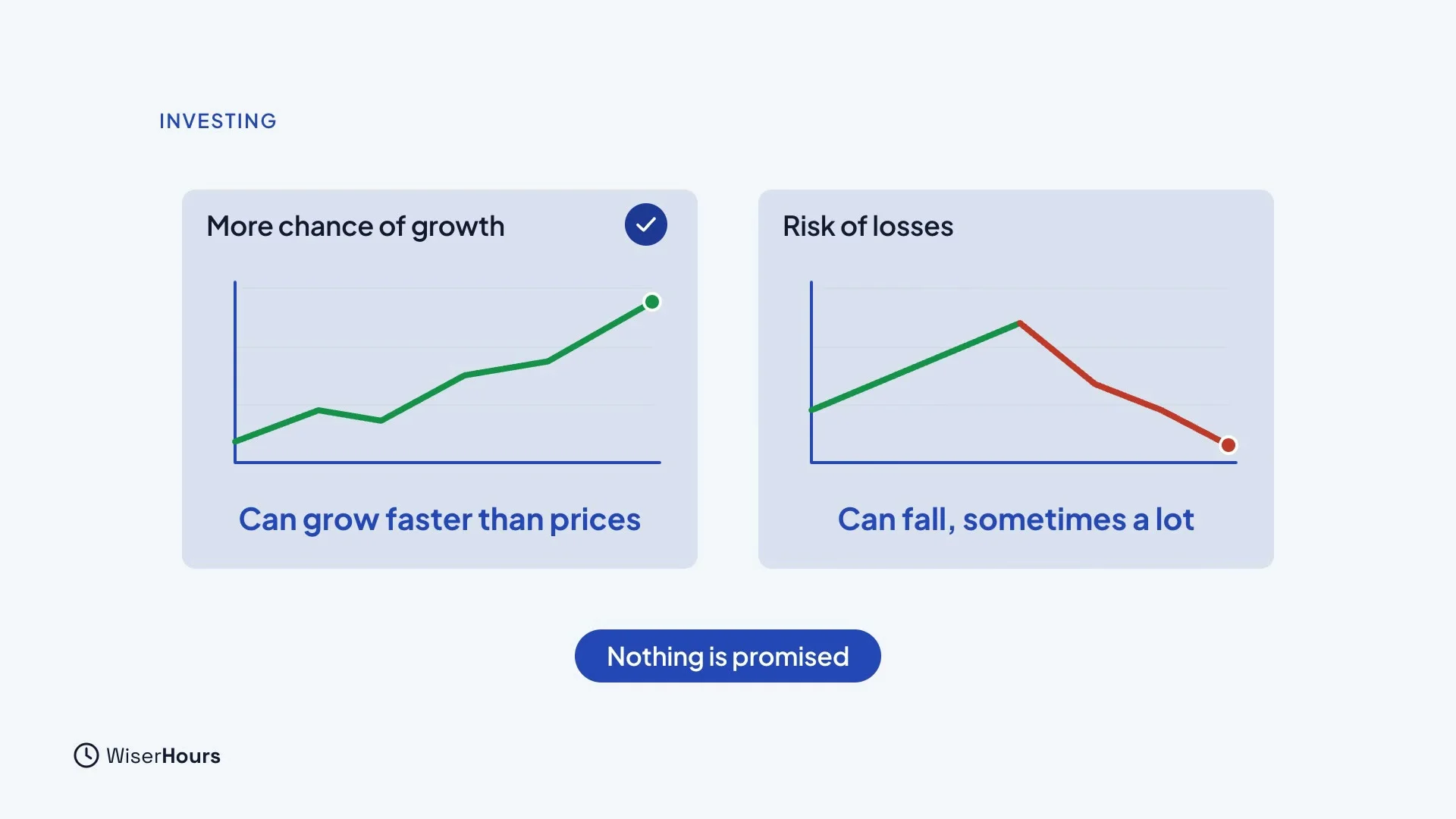
Investing means putting money into something that can grow faster than prices rise. The trade is simple: you get a better chance of growth, and in exchange you accept the risk that the value goes down, sometimes by a lot. Nobody can promise you the good side without the bad side.
 (opens the full-size picture)
Stocks and bonds
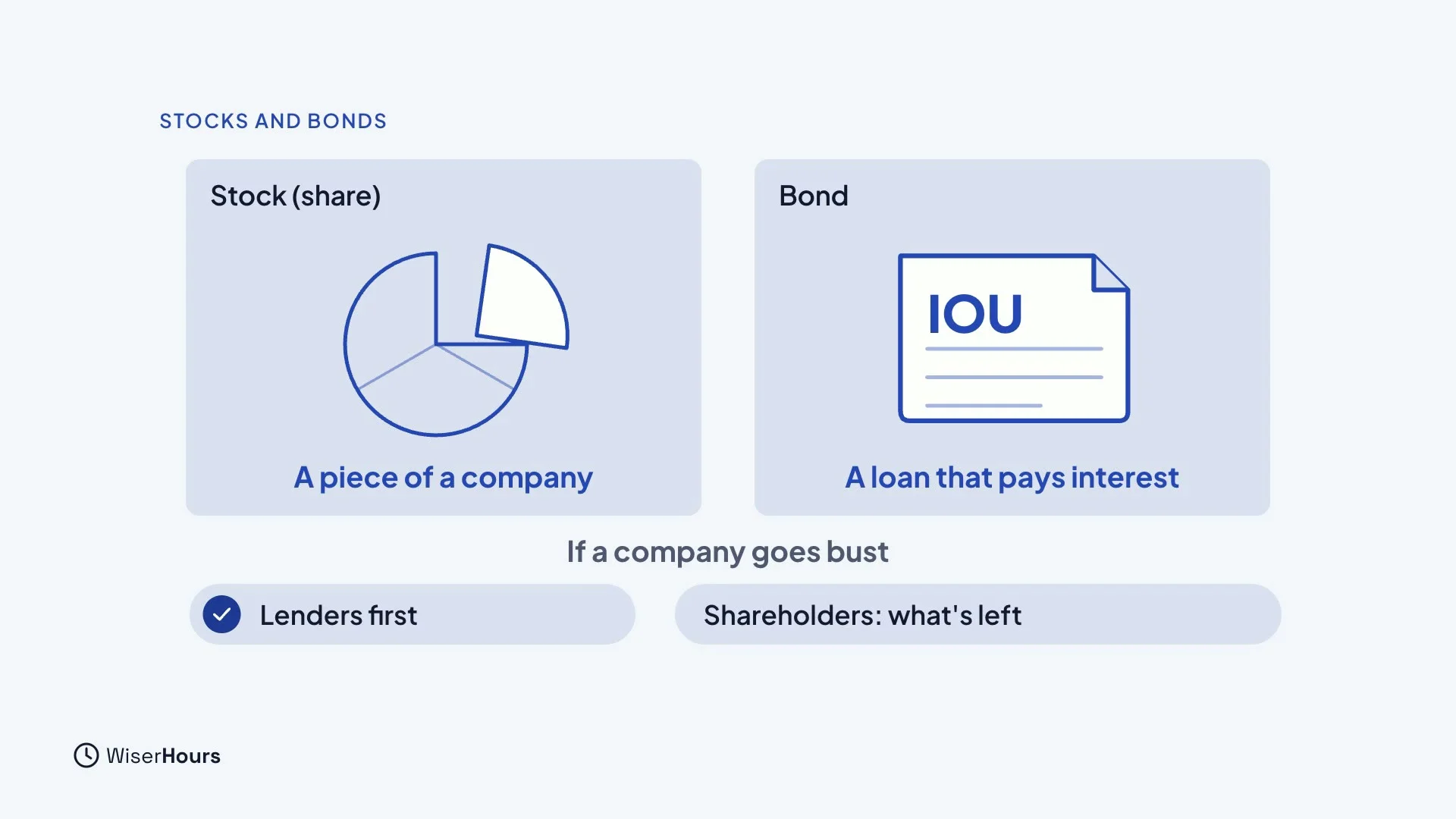
Most investments are built from two simple things. A stock, also called a share, is a small piece of a company. If the company does well, your piece can be worth more. A bondbond: A loan to a government or company that pays the lender interest, usually at a fixed rate, and repays the amount lent on a set date. Bond prices move when interest rates change, and the borrower can fail to pay, so a bond can lose value.Full entry in the glossary is a loan to a company or a government, and it pays you interest.
The two behave differently if a company goes bust. Lenders are paid first. Shareholders get whatever is left, which may be nothing. That is one reason stocks tend to swing more than bonds.
 (opens the full-size picture)
Funds: many pieces in one purchase
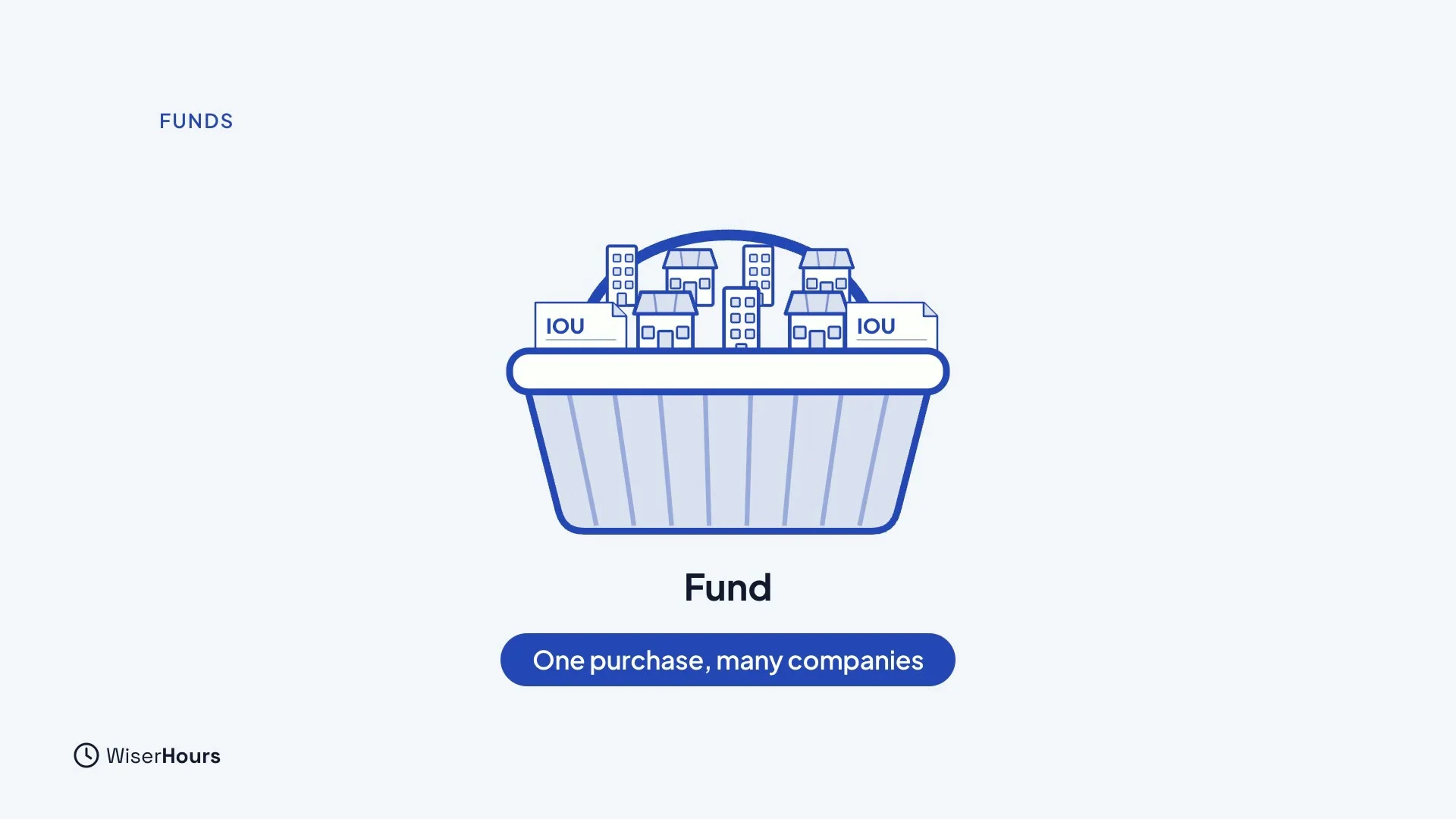
Most beginners do not pick single shares. They buy a fund. A fund pools money from many people and uses it to buy lots of stocks, or bonds, or both. With one purchase you own a small slice of many companies.
 (opens the full-size picture)
How the money grows
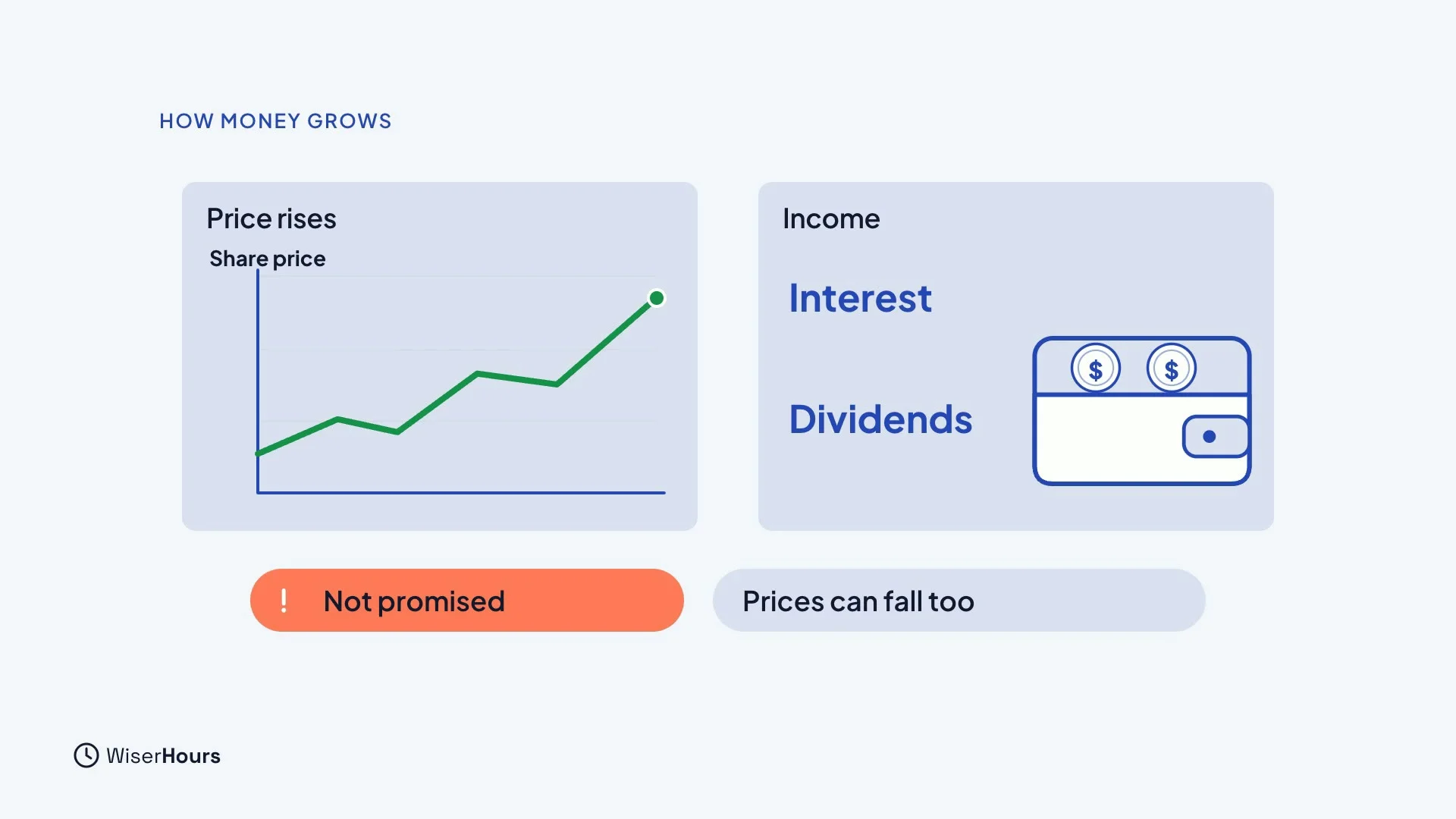
Your money can grow in two ways. The price of what you own can rise. Or it can pay you income: interest from bonds, and dividendsdividend: A portion of a company's profit paid out to its shareholders, usually in cash. A dividend is not free money: the share price tends to fall by about the payout when the share goes ex-dividend, and the tax on it depends on the country.Full entry in the glossary, which are a share of a company’s profits. Neither is guaranteed. Dividends are not promised, and prices can fall as well as rise.
 (opens the full-size picture)
What this course covers
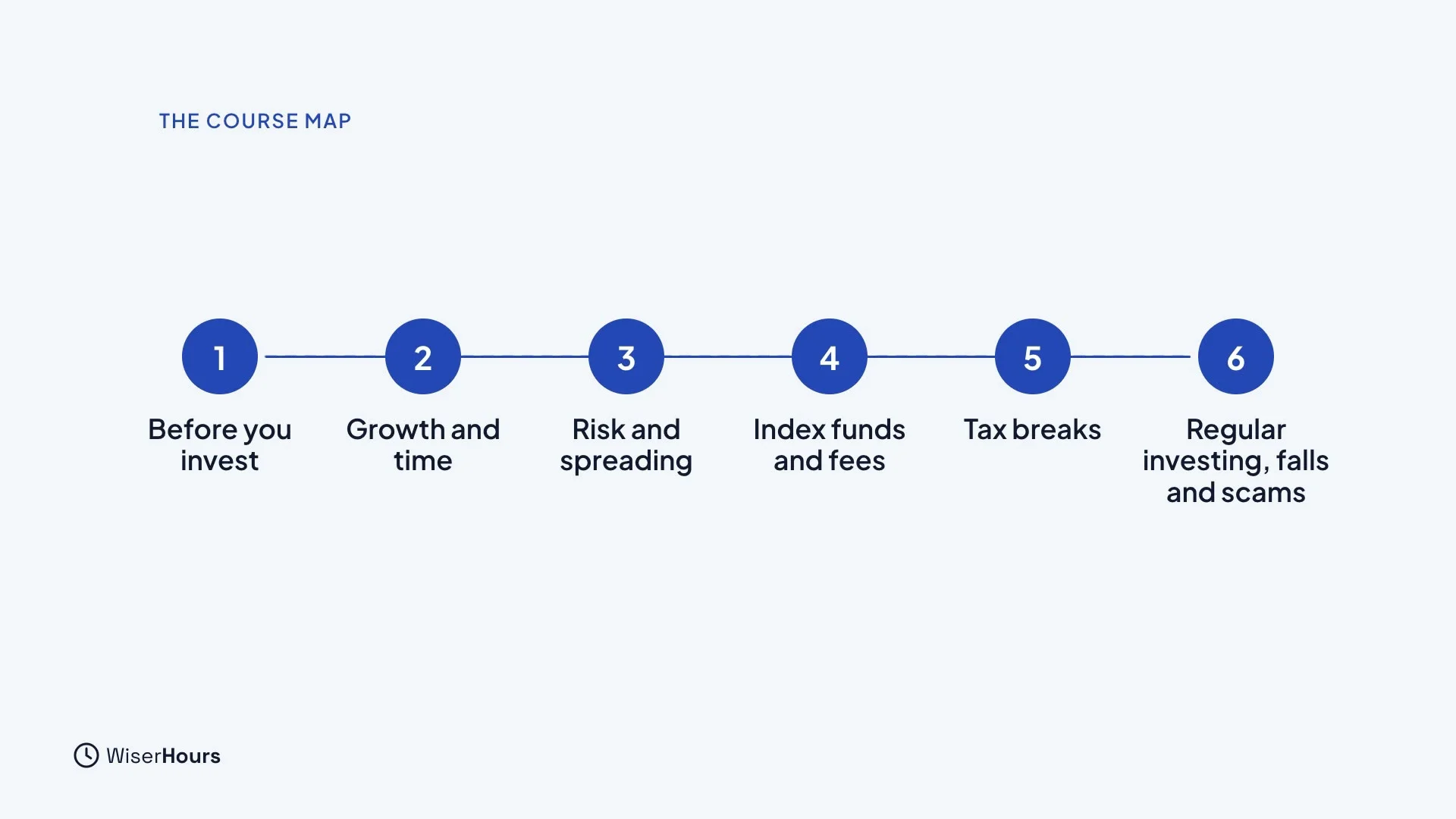
You will go step by step. First, what to sort out before you invest, and how growth and time work together. Then risk, spreading your money, index funds, fees and tax breaks. Finally, how to invest regularly, stay calm when markets fall, and spot scams.
 (opens the full-size picture)
YOUR TURN
This course is general education, not personal advice. Check any firm on your national regulator’s register before you deal with it, and for your own decisions talk to a regulated adviser.
Read more
- Investing for Beginners: How It Works and Where to Start: the seven steps in the right order.
- What Are Dividends? A Plain-English Explainer for First-Time Investors: how dividends work and why they are not guaranteed.
Read the full lesson script
Welcome to Investing Basics for Beginners. In this first lesson, you'll learn what investing actually is, and how it's different from saving. We'll keep it simple, and we won't tell you what to buy. You'll just see how it works.
Let's start with saving. Money in a savings account is safe and easy to reach. But prices tend to rise over time. That's inflation. So the money that buys a loaf of bread today may only buy half a loaf years from now.
Investing means putting money into something that can grow faster than prices rise. The trade is simple: more chance of growth, in exchange for the risk that the value goes down, sometimes a lot. Nothing is promised.
Most investments are built from two things. A stock, or share, is a small piece of a company. If the company does well, your piece can be worth more. A bond is a loan to a company or a government, which pays you interest. If a company goes bust, lenders are paid first, and shareholders get what's left, which may be nothing.
Most beginners don't pick single shares. They buy a fund. A fund pools money from many people and buys lots of stocks, or bonds, or both. With one purchase, you own a small slice of many companies.
Your money can grow in two ways. The price of what you own can rise. Or it can pay you income: interest from bonds, and dividends, which are a share of a company's profits. Dividends aren't promised, and prices can fall as well as rise.
In this course, we'll go step by step. First, you'll see what to sort out before you invest, and how growth and time work together. Then you'll learn about risk, spreading your money, index funds, fees and tax breaks. Finally, you'll learn how to invest regularly, stay calm when markets fall, and spot scams.
So remember: saving keeps money safe, but inflation slowly eats it. Investing can grow faster, but nothing is promised. A stock is a piece of a company, a bond is a loan, and a fund holds many of them. Before the next lesson, write down one goal you might invest for, and roughly when you'll need the money. In the next lesson, you'll see what to sort out before you invest.
MAKE IT A SMALL WIN
Finished this lesson?
Mark it complete to save your progress on this device.