Stay the course · Lesson 11 of 11
Investment Scams and Your Simple Investing Plan
Learn the warning signs of investment scams, how to check a firm on your regulator's register, and a seven-step plan to follow.
 Video coming soon
In this final lesson you will learn how to spot investment scams. Then you will put everything from this course into one simple plan that you can tick off, one step at a time.
A big problem
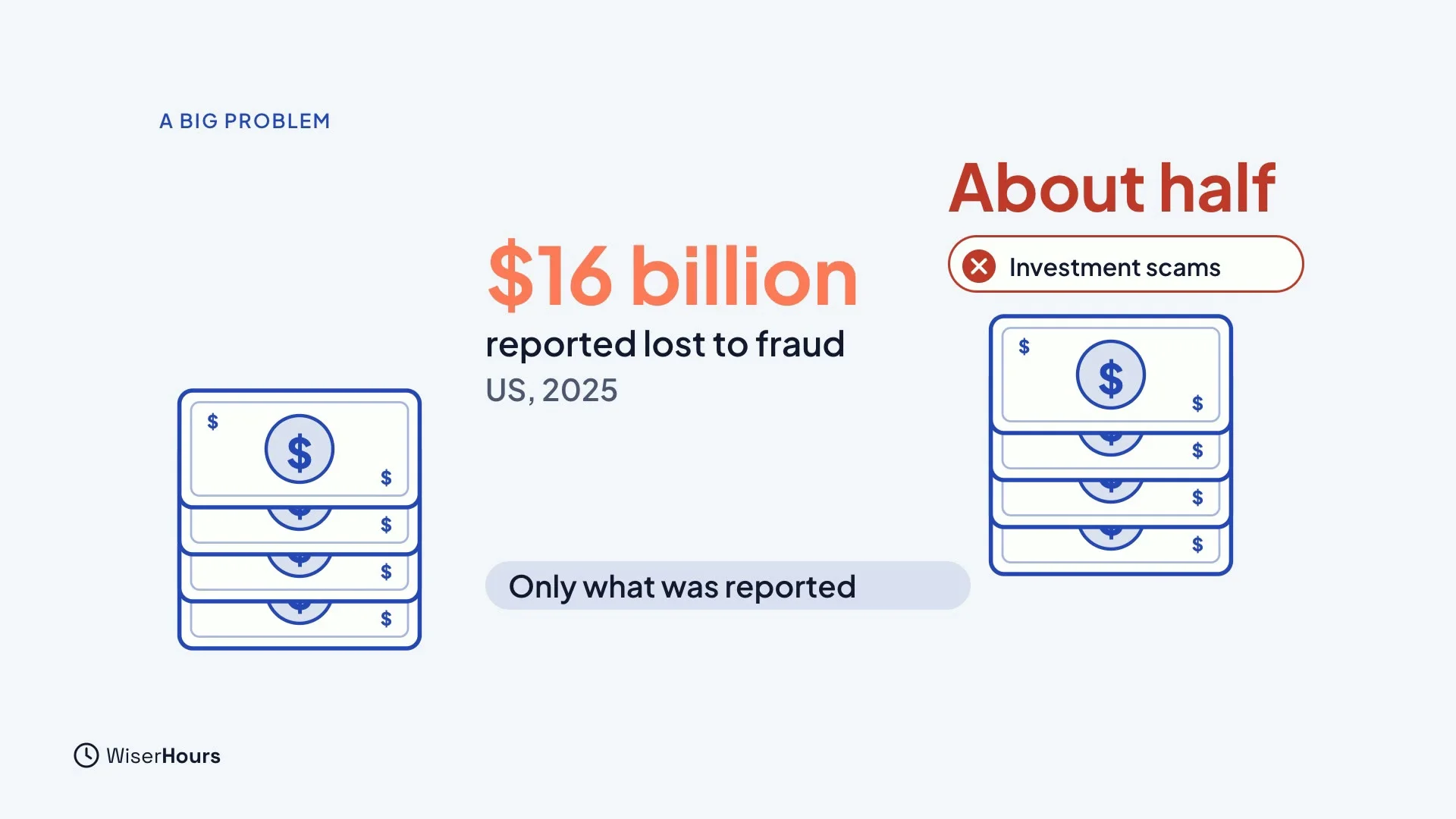
Investment scams cost people a fortune. In the US, people reported losing almost 16 billion dollars to fraud in 2025, and about half of that was investment scams. And those are only the losses people reported.
 (opens the full-size picture)
The warning signs
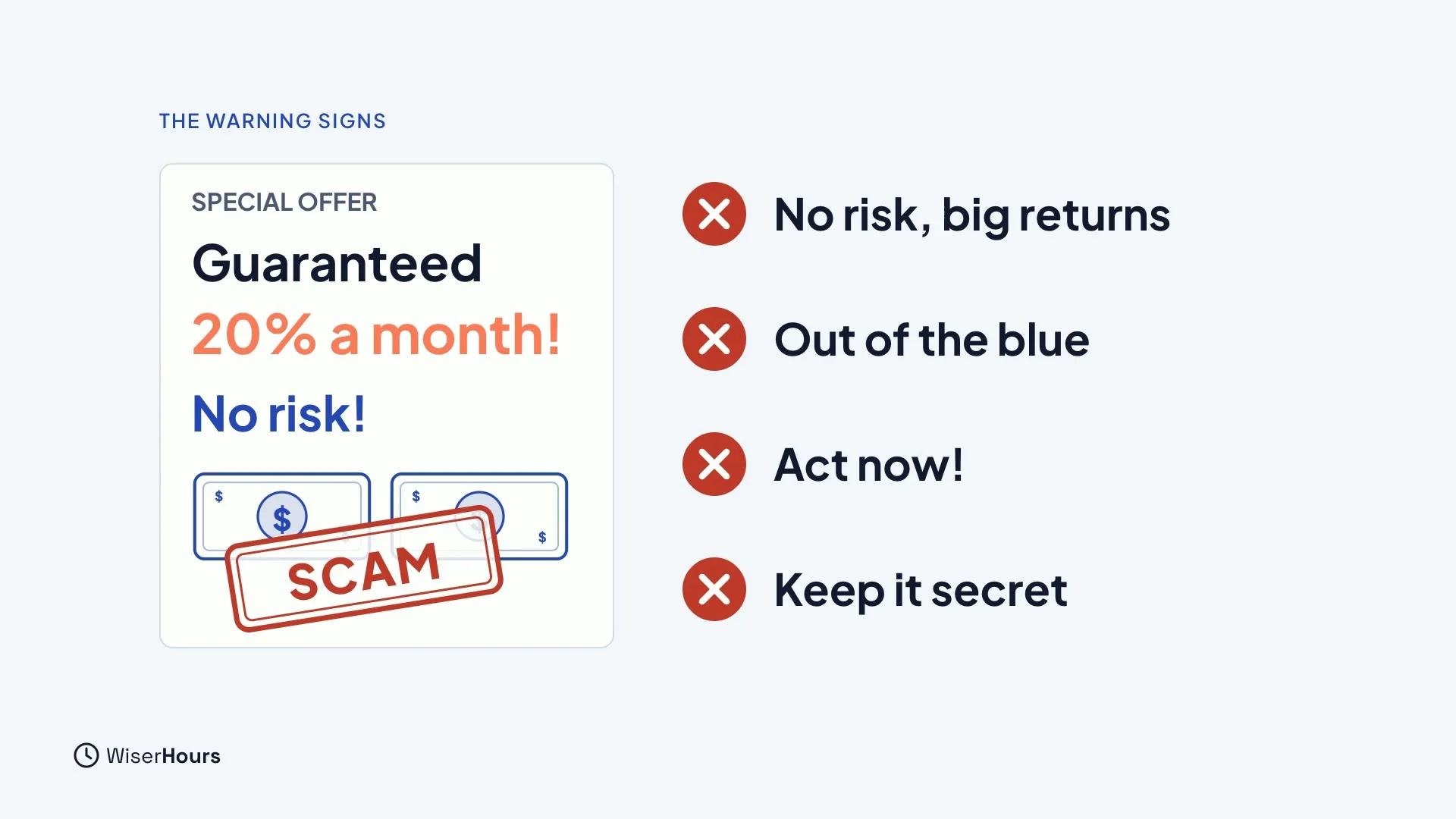
Most scams share the same warning signs:
- They promise big returns with little or no risk.
- They contact you out of the blue.
- They push you to act quickly.
- They ask you to keep it secret.
 (opens the full-size picture)
No risk is the red flag
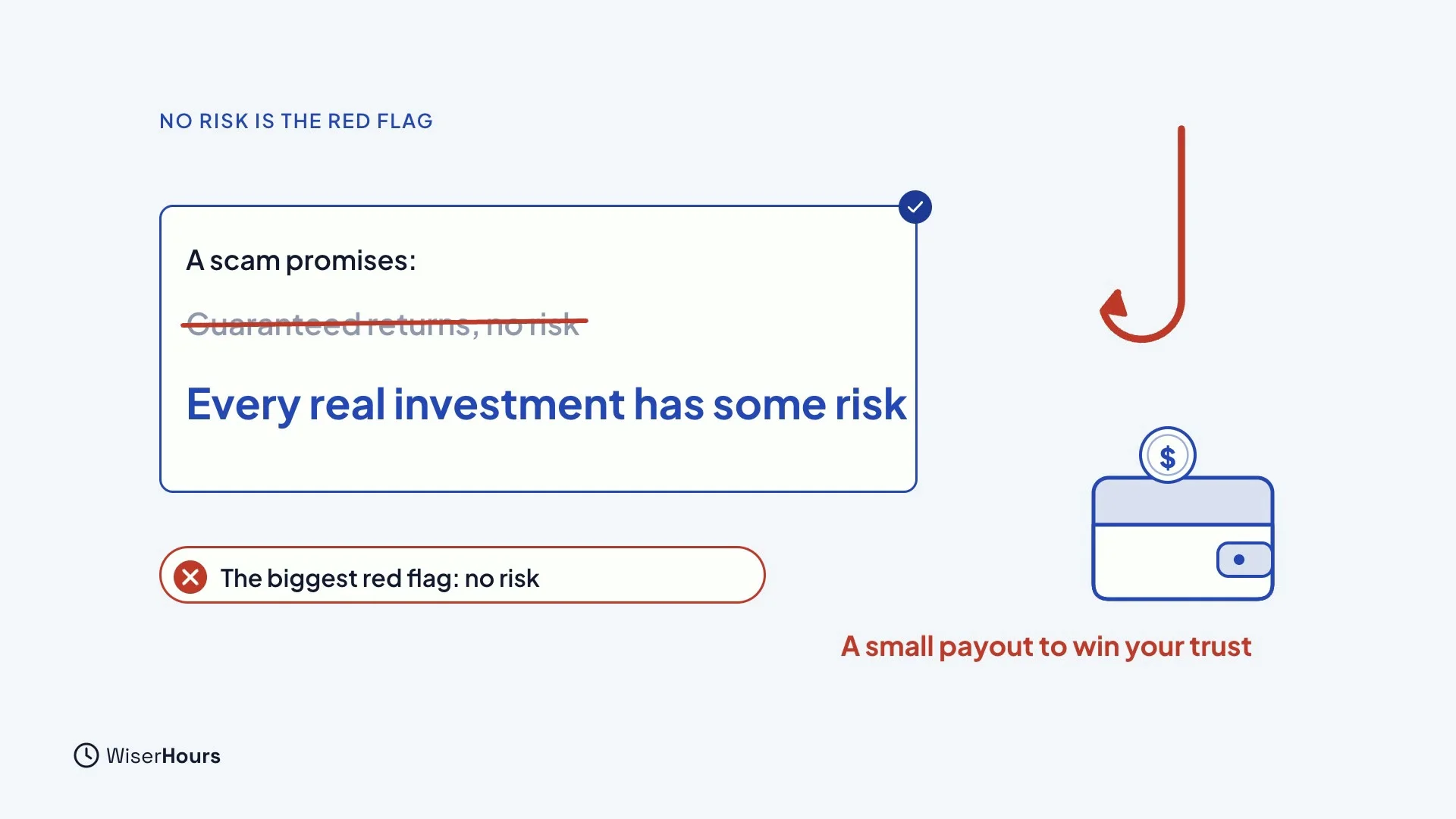
Every real investment carries some risk. So a promise that returns cannot fall is the biggest red flag of all. Some scams even let you take out a little money at first, to win your trust before you put in more.
 (opens the full-size picture)
A second trap
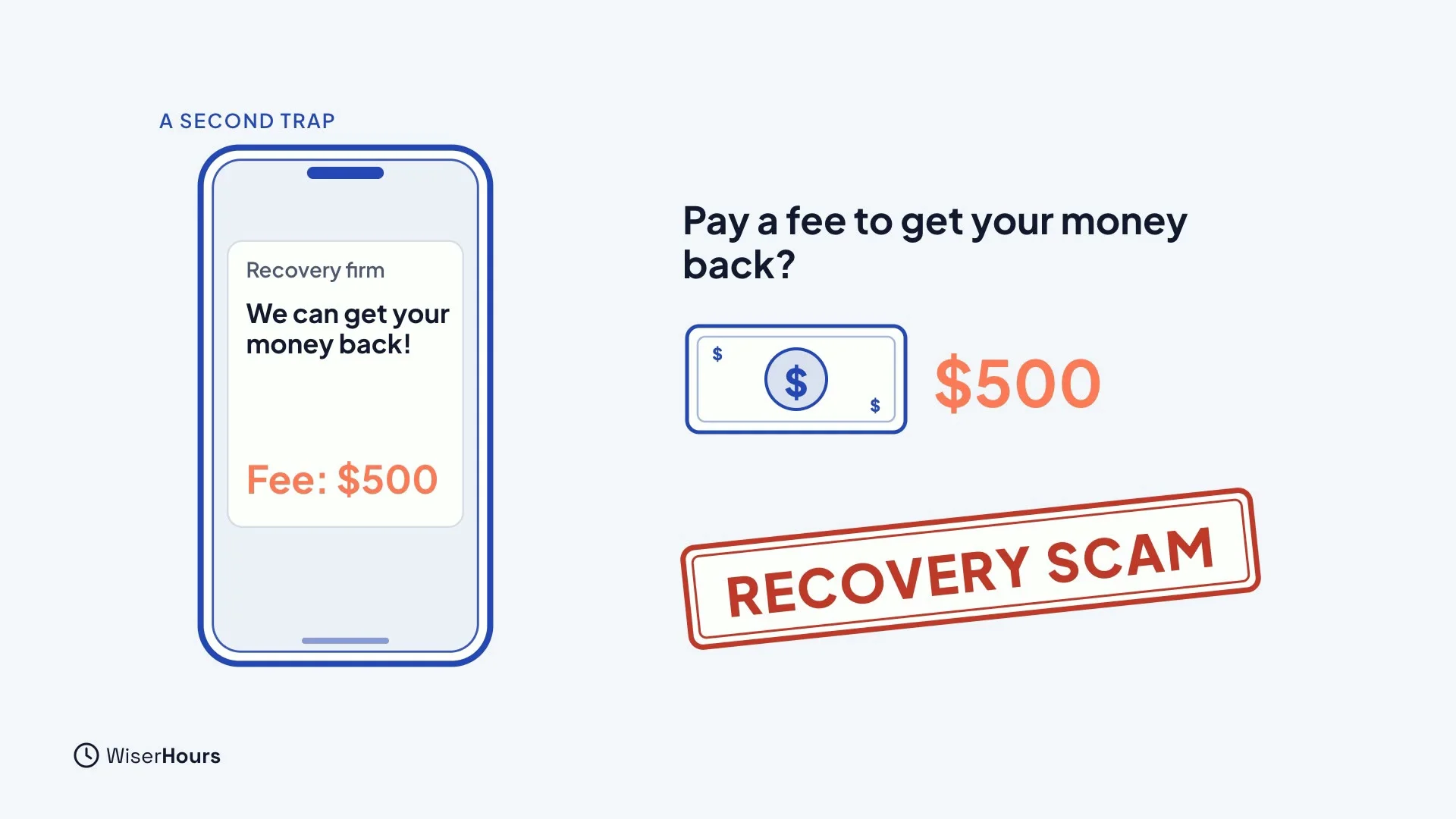
If you have already lost money, watch out for a second trap. So-called recovery firms offer to get your money back for a fee. These are scams too. If this has happened to you, report it to your national fraud service instead of paying.
 (opens the full-size picture)
Check before you pay
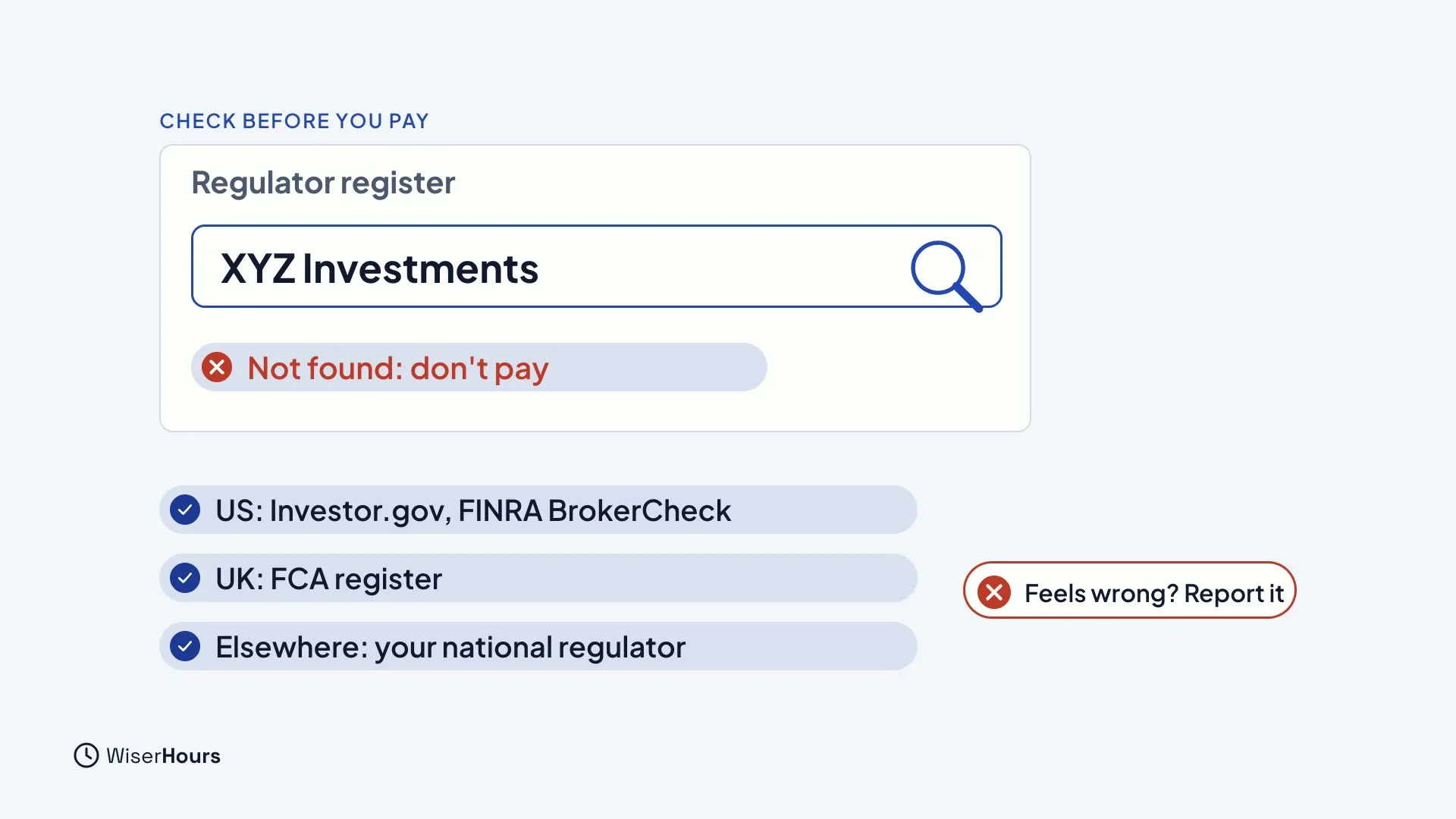
Before you hand money to any firm, check it on your financial regulator’s official register. In the US, you can use Investor.gov or FINRA BrokerCheck. In the UK, use the FCA’s register. Elsewhere, find your national regulator. And if something feels wrong, report it.
For example, search for a firm by name. If “XYZ Investments”, a made-up firm, is not found on the register, do not pay.
 (opens the full-size picture)
Not on the register?
A firm that is missing from the register is a reason to walk away, not a reason to ask the firm why. Look up the register yourself, rather than using a link or phone number the firm gives you.
Your simple plan
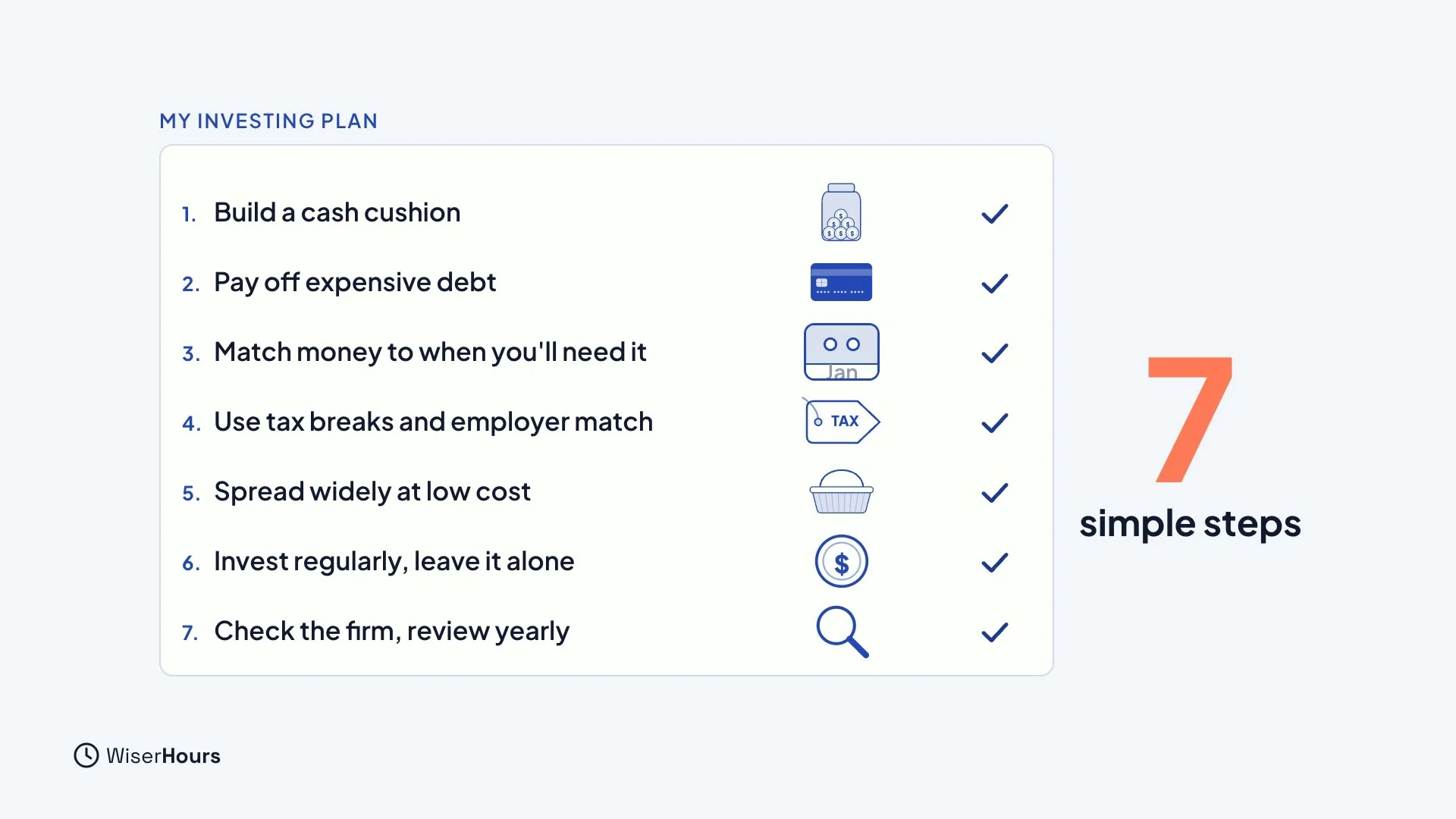
Now put the whole course together. Seven steps, in order:
- Build a cash cushion.
- Pay off expensive debt.
- Match your money to when you will need it.
- Use tax breaks and any employer match.
- Spread your money widely at low cost.
- Invest regularly and leave it alone.
- Check who you are dealing with, and review your plan once a year.
 (opens the full-size picture)
This course is general education, not advice. Every real investment carries some risk, and past results do not predict the future. For decisions about your own situation, talk to a regulated adviser.
YOUR TURN
My simple investing plan
Read more
- Passive Income Scams: the patterns behind scam pitches, and where to report one by country.
- Investing for Beginners: the whole path from saving to investing in one guide.
Read the full lesson script
In this final lesson, you'll learn how to spot investment scams. Then you'll put everything from this course together into one simple plan.
Investment scams cost people a fortune. In the US, people reported losing almost 16 billion dollars to fraud in 2025, and about half of that was investment scams. And those are only the losses people reported.
Most scams share the same warning signs. They promise big returns with little or no risk. They contact you out of the blue. They push you to act quickly. And they ask you to keep it secret.
Remember, every real investment carries some risk. So a promise that returns can't fall is the biggest red flag of all. Some scams even let you take out a little money at first, to win your trust before you put in more.
If you've already lost money, watch out for a second trap. So-called recovery firms offer to get your money back for a fee. These are scams too.
Before you hand money to any firm, check it on your financial regulator's official register. In the US, you can use Investor.gov or FINRA BrokerCheck. In the UK, use the FCA's register. Elsewhere, find your national regulator. And if something feels wrong, report it.
Now let's put the whole course together. First, build a cash cushion. Second, pay off expensive debt. Third, match your money to when you'll need it. Fourth, use tax breaks and any employer match. Fifth, spread your money widely at low cost. Sixth, invest regularly and leave it alone. And seventh, check who you're dealing with, and review your plan once a year.
So remember: every real investment carries some risk, so anything that promises otherwise is a warning sign. Check every firm on your regulator's register. And follow your simple plan, one step at a time. For decisions about your own situation, talk to a regulated adviser. As your final task, find your country's financial regulator register and bookmark it. Then fill in the plan on the lesson page. Congratulations, you've finished Investing Basics for Beginners.
MAKE IT A SMALL WIN
Finished this lesson?
Mark it complete to save your progress on this device.