How money grows · Lesson 4 of 11
Risk and Return: Match Your Money to Time
Understand how risk and return go together, why money needed soon belongs somewhere steadier, and how a simple sleep test helps you choose.
 Video coming soon
Every investment carries some risk, and the investments with the most growth tend to carry the most. In this lesson you see how risk and return go together, and how to match your money to the date you will need it. This is how people decide how much risk is sensible for each goal.
Three places for your money
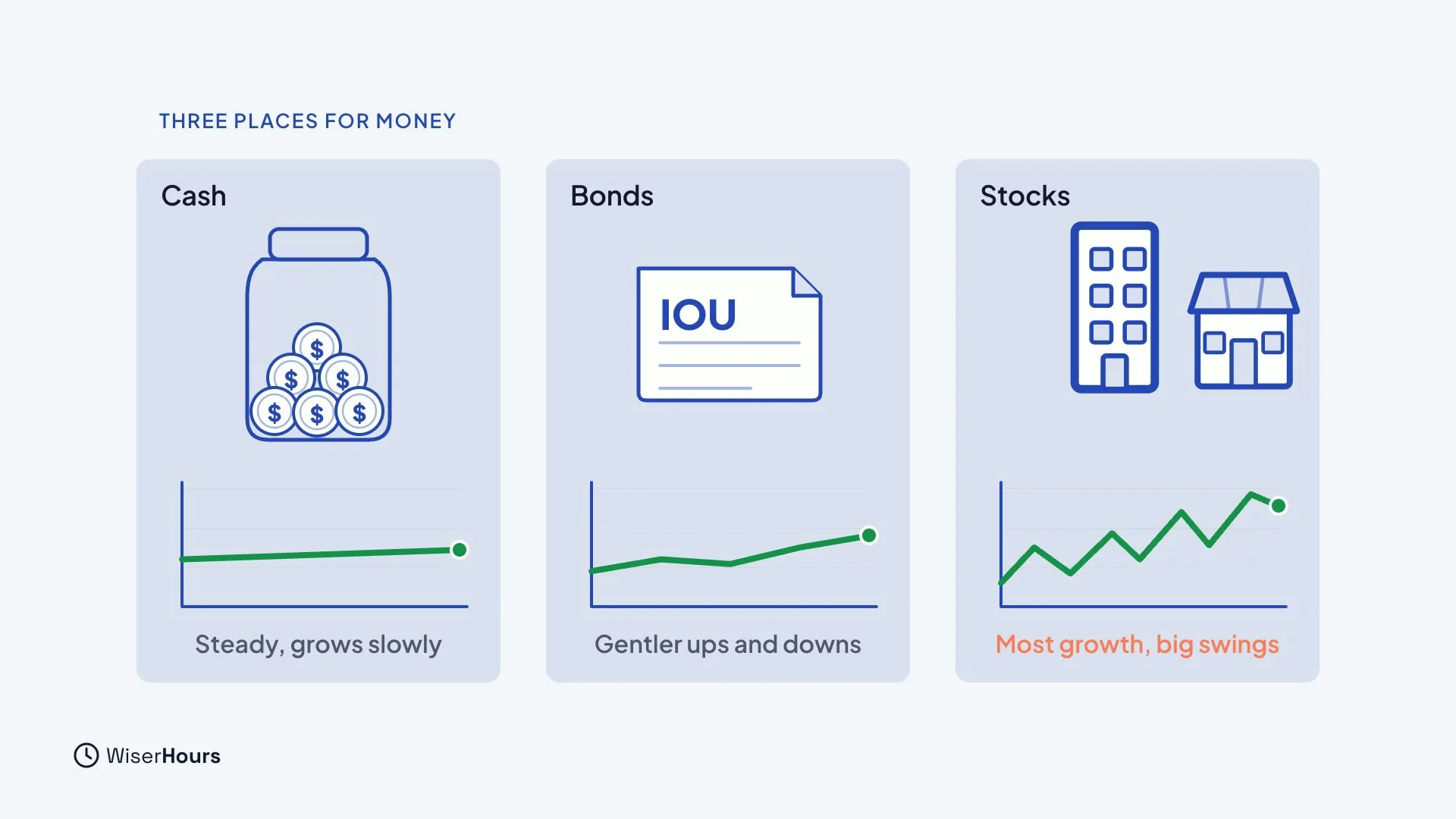
Think of three main places: cash, bonds and stocks. Cash in a savings account is steady, but it grows slowly. Bonds usually move more gently than stocks. Stocks can grow the most over long periods, but they swing up and down the most along the way.
 (opens the full-size picture)
What one long record shows
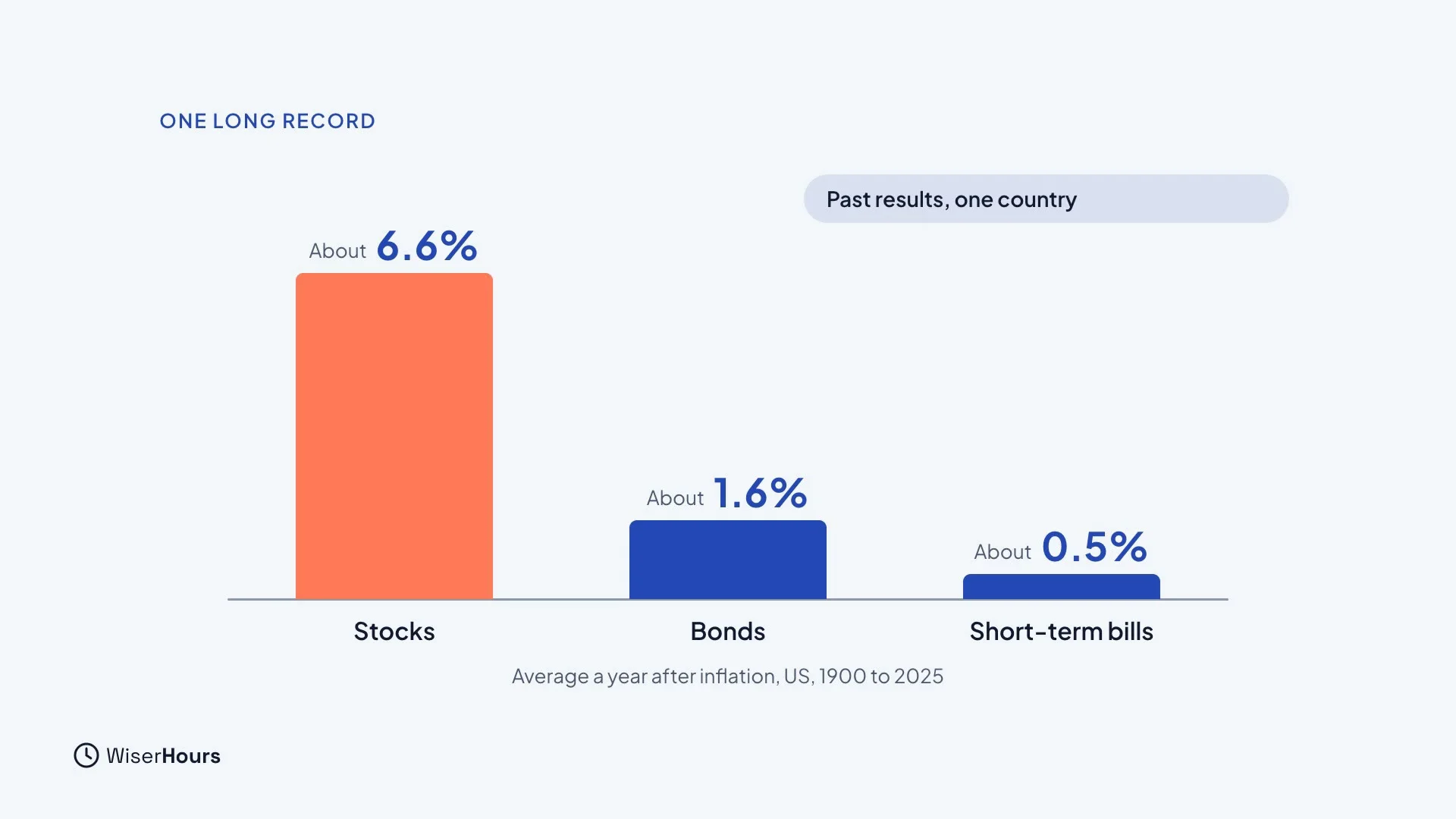
Here is what one long record from the United States shows. From 1900 to 2025, after inflation, stocks grew about 6.6 percent a year on average. Bonds grew about 1.6 percent, and short-term government bills about half a percent. That is the past, in one country, so it cannot promise the future.
 (opens the full-size picture)
The price of that growth
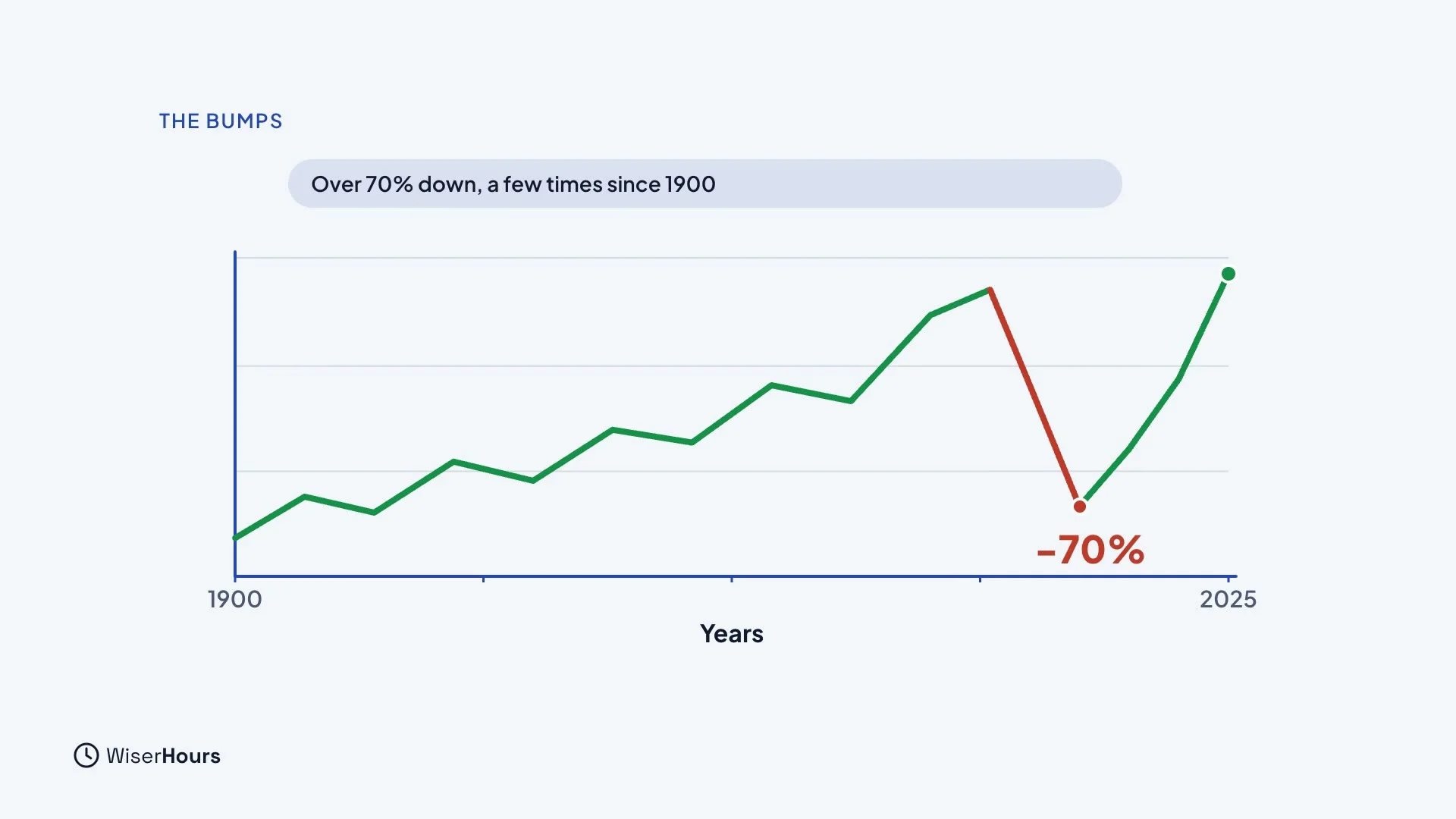
The price is the bumps. Large US stocks have lost money in about one year out of three. And a few times since 1900, markets have fallen by more than 70 percent after inflation, before they recovered. Seeing that on a chart is easy. Living through it with your own money is much harder.
 (opens the full-size picture)
Time changes the answer
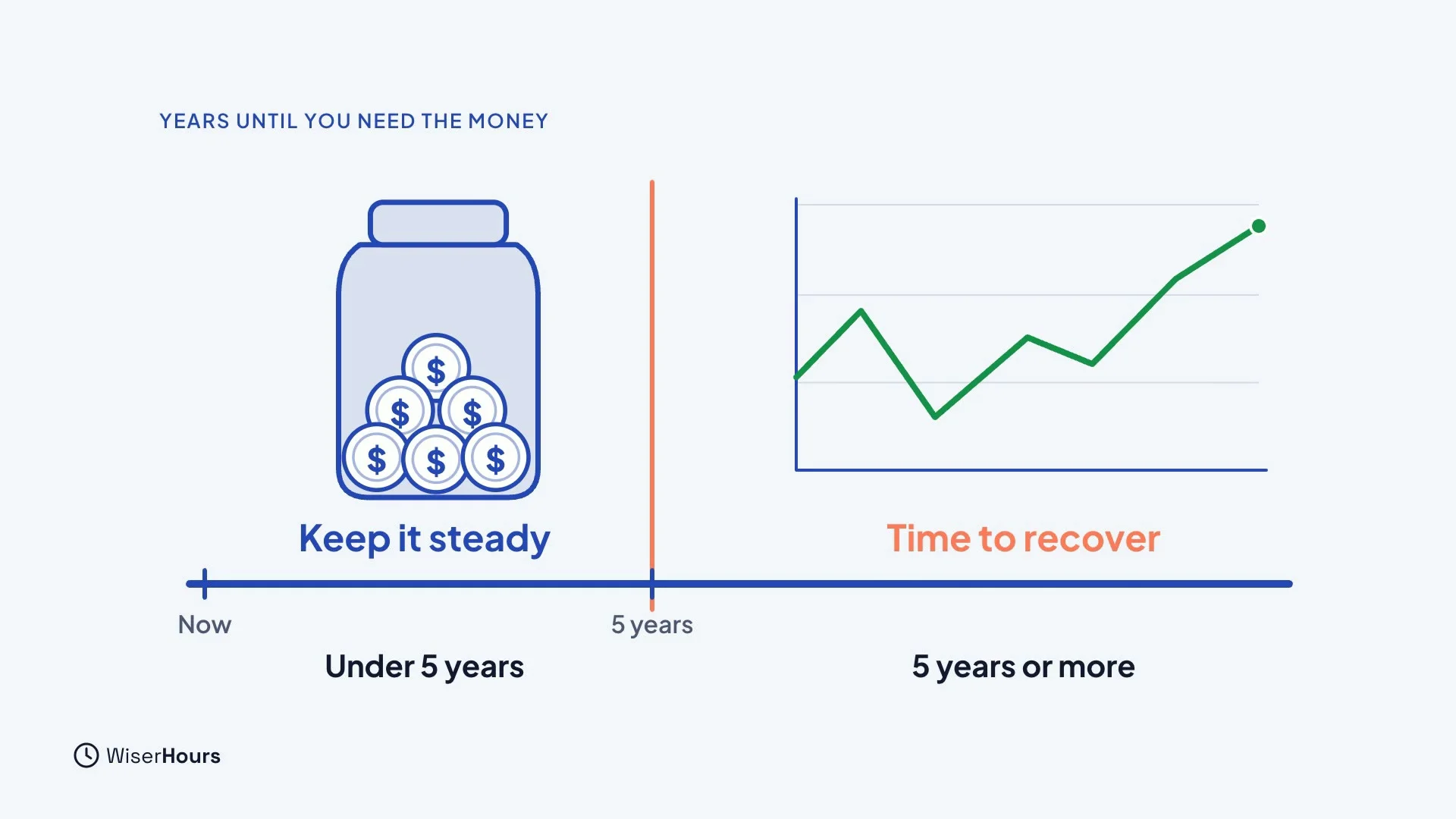
That is why time matters. Money you will need within about five years is better kept somewhere steady, like savings. Money you will not touch for five years or more has time to recover from a fall.
 (opens the full-size picture)
Goals on the timeline
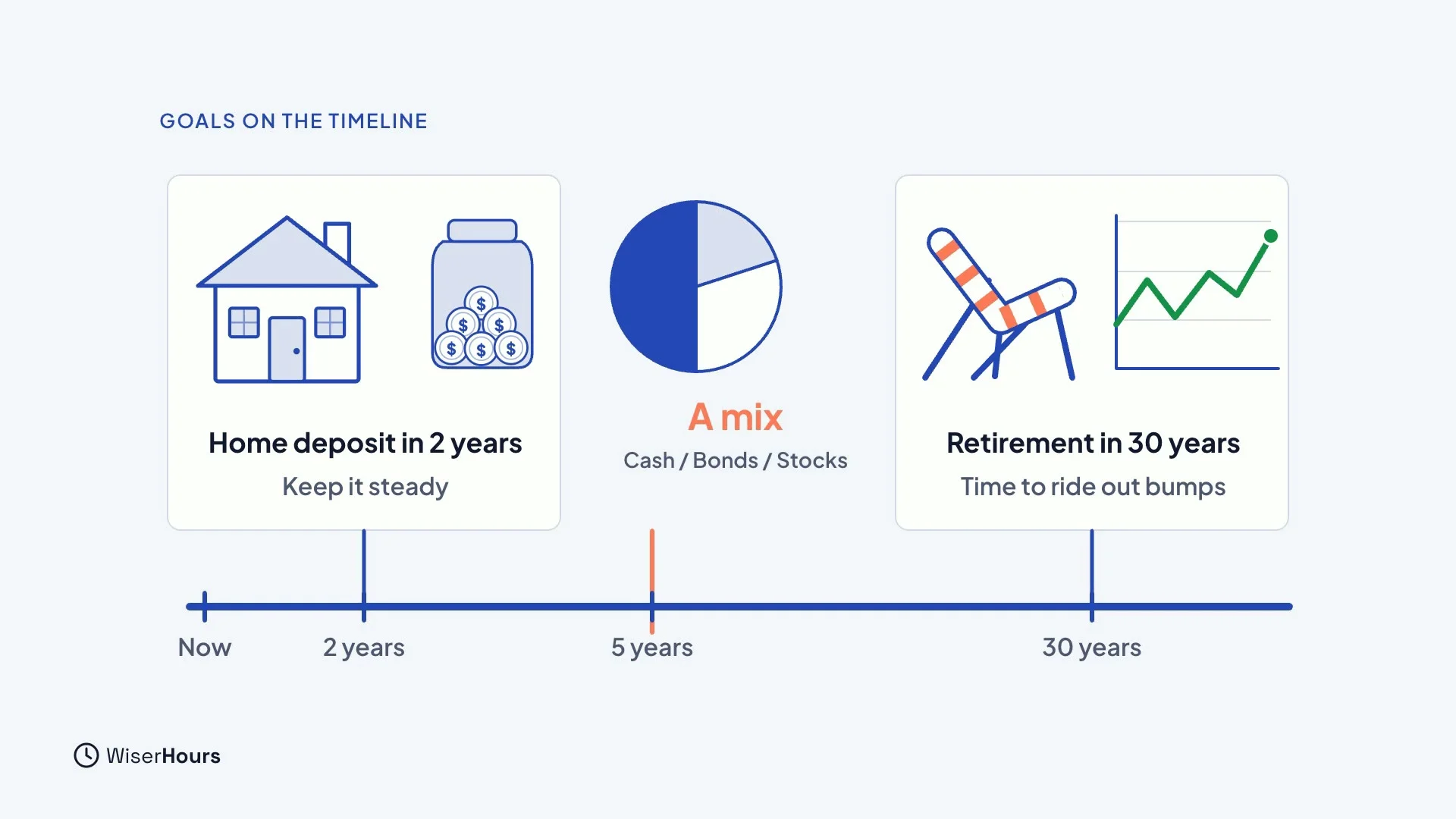
For example, a deposit for a home in two years belongs in savings. Retirement in thirty years has time to ride out the bumps. Many people hold a mix: more steady money for near goals, and more stocks for distant ones.
 (opens the full-size picture)
The sleep test
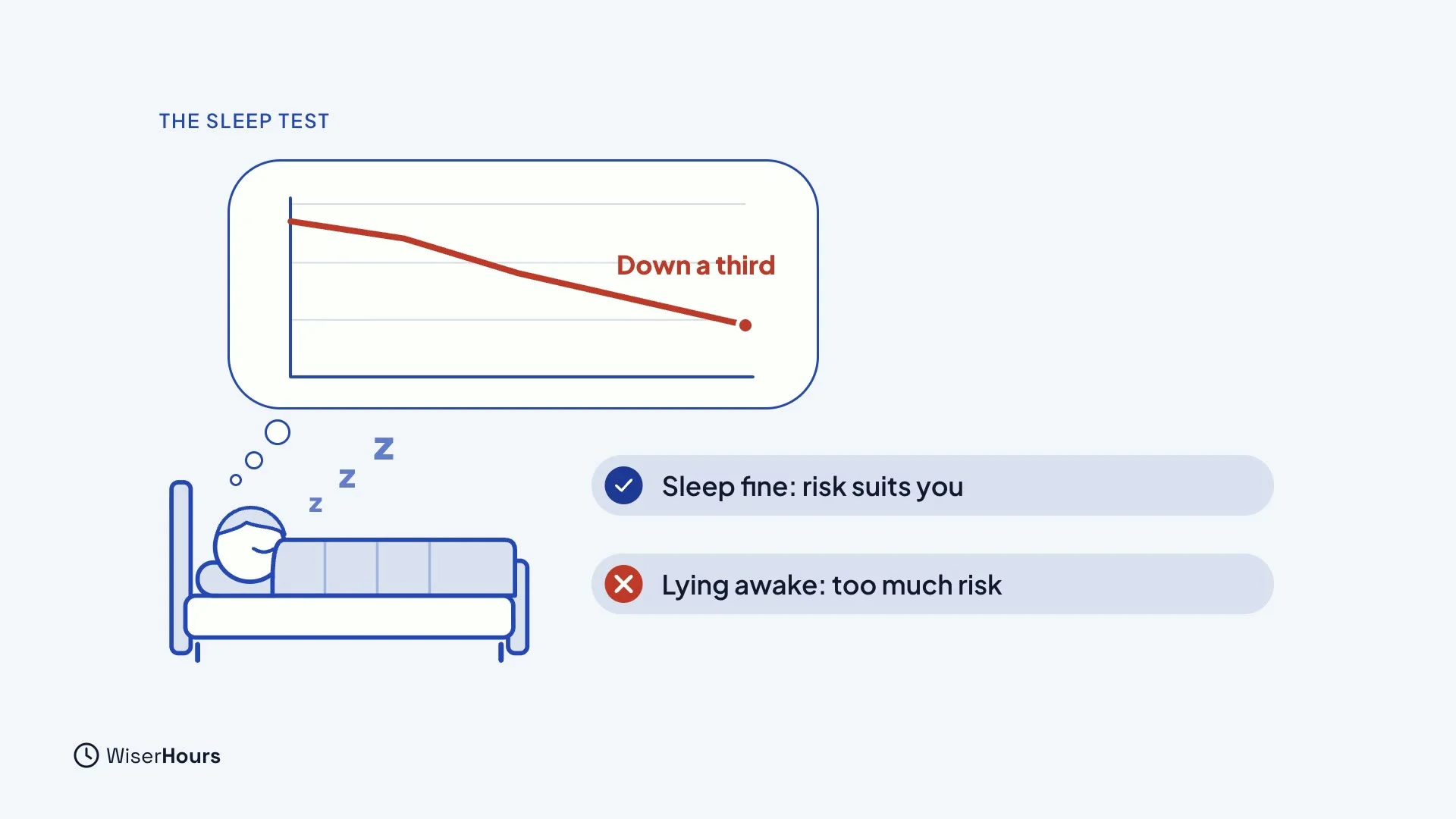
There is one more test. Ask yourself: could I sleep at night if this investment fell by a third? If the answer is no, the risk is too high for you, and you might sell at the worst moment.
 (opens the full-size picture)
YOUR TURN
All figures here are past and mostly from the US. This is general education, not personal advice, so for your own decisions see a regulated adviser.
Read more
- Investing for Beginners: How It Works and Where to Start: matching money to time in the full sequence.
- Bear Markets Explained: What They Are and How Long They’ve Lasted Historically: how deep and how long falls have been.
Read the full lesson script
Every investment comes with some risk. In this lesson, you'll see how risk and return go together, and how to match your money to when you'll need it.
Think of three main places for your money: cash, bonds and stocks. Cash in a savings account is steady, but it grows slowly. Bonds usually move more gently than stocks. Stocks can grow the most over long periods, but they swing up and down the most along the way.
Here's what one long record from the United States shows. From 1900 to 2025, after inflation, stocks grew about 6.6 percent a year on average. Bonds grew about 1.6 percent, and short-term government bills about half a percent. That's the past, in one country, so it can't promise the future.
The price of that growth is the bumps. Large US stocks have lost money in about one year out of three. And a few times since 1900, markets have fallen by more than 70 percent after inflation, before they recovered.
That's why time matters. Money you'll need within about five years is better kept somewhere steady, like savings. Money you won't touch for five years or more has time to recover from a fall.
For example, a deposit for a home in two years belongs in savings. Retirement in thirty years has time to ride out the bumps. Many people hold a mix: more steady money for near goals, and more stocks for distant ones.
There's one more test. Ask yourself: could I sleep at night if this investment fell by a third? If the answer is no, the risk is too high for you, and you might sell at the worst moment.
So remember: more growth comes with bigger swings. Match your money to time: under five years, keep it steady, and five years or more can take more risk. And choose a level of risk you can live with. Before the next lesson, sort your goals into two lists: under five years, and five years or more. In the next lesson, you'll see why spreading your money matters.
MAKE IT A SMALL WIN
Finished this lesson?
Mark it complete to save your progress on this device.