How money grows · Lesson 3 of 11
Compound Growth: Why Starting Early and Steady Both Help
See how compound growth works, why time does much of the work, and how three savers compare, with a clear reminder that growth is never promised.
 Video coming soon
People say it pays to start early, and there is real arithmetic behind it. In this lesson you see how money can grow on its own growth, how three savers end up in different places, and why none of it is a promise.
Simple or compound
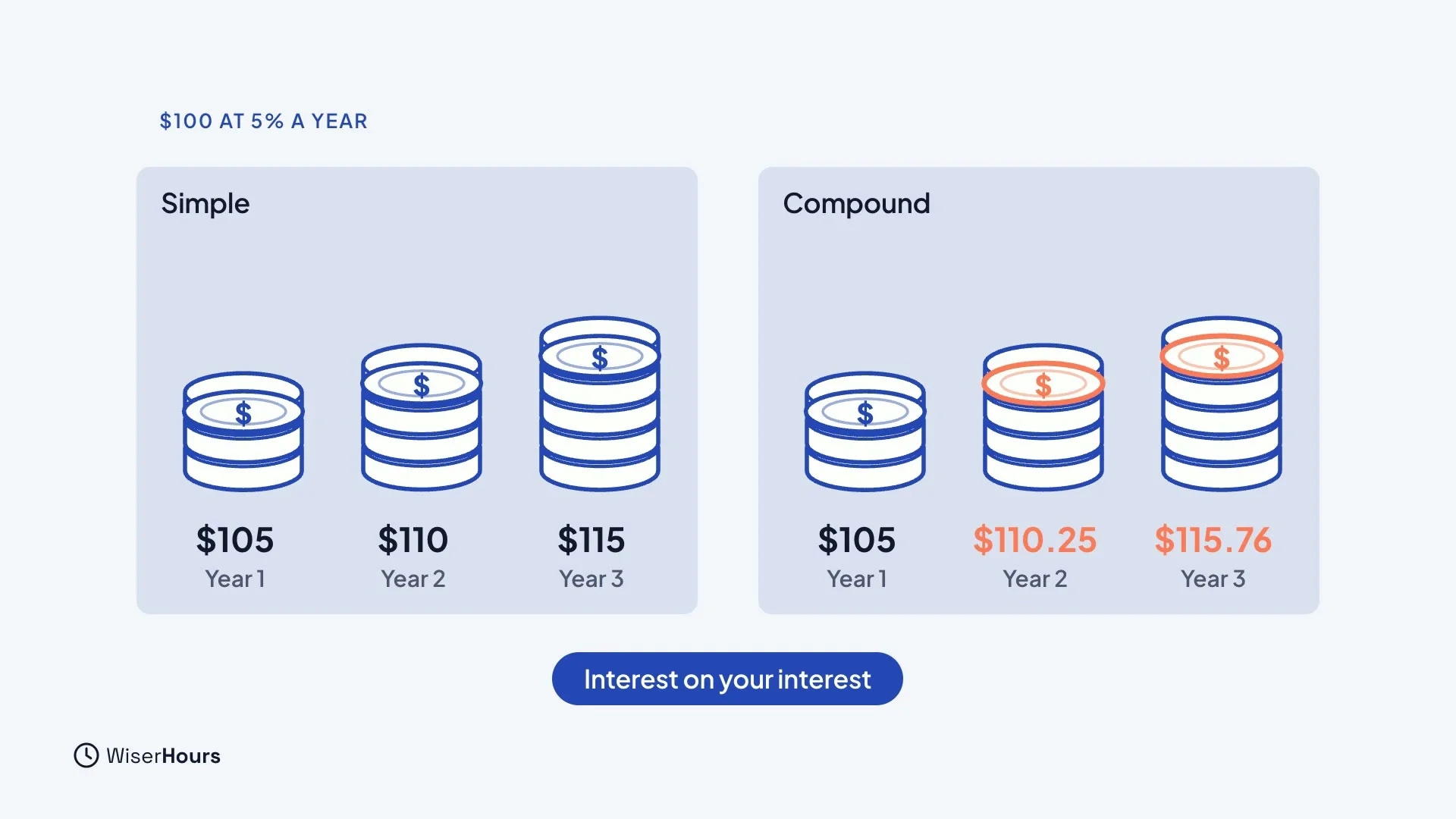
Say you put 100 dollars somewhere that earns 5 percent a year. After one year you have 105 dollars. With simple interest, you earn the same 5 dollars every year. With compound interestcompound interest: Interest worked out on the original amount plus the interest already added to it, so the total grows faster over time. It works for savers and against borrowers, whose unpaid interest itself starts to attract interest.Full entry in the glossary, you also earn interest on the interest you already earned. So after three years you would have 115 dollars and 76 cents, instead of 115. That is growth on your growth.
 (opens the full-size picture)
What 30 years does
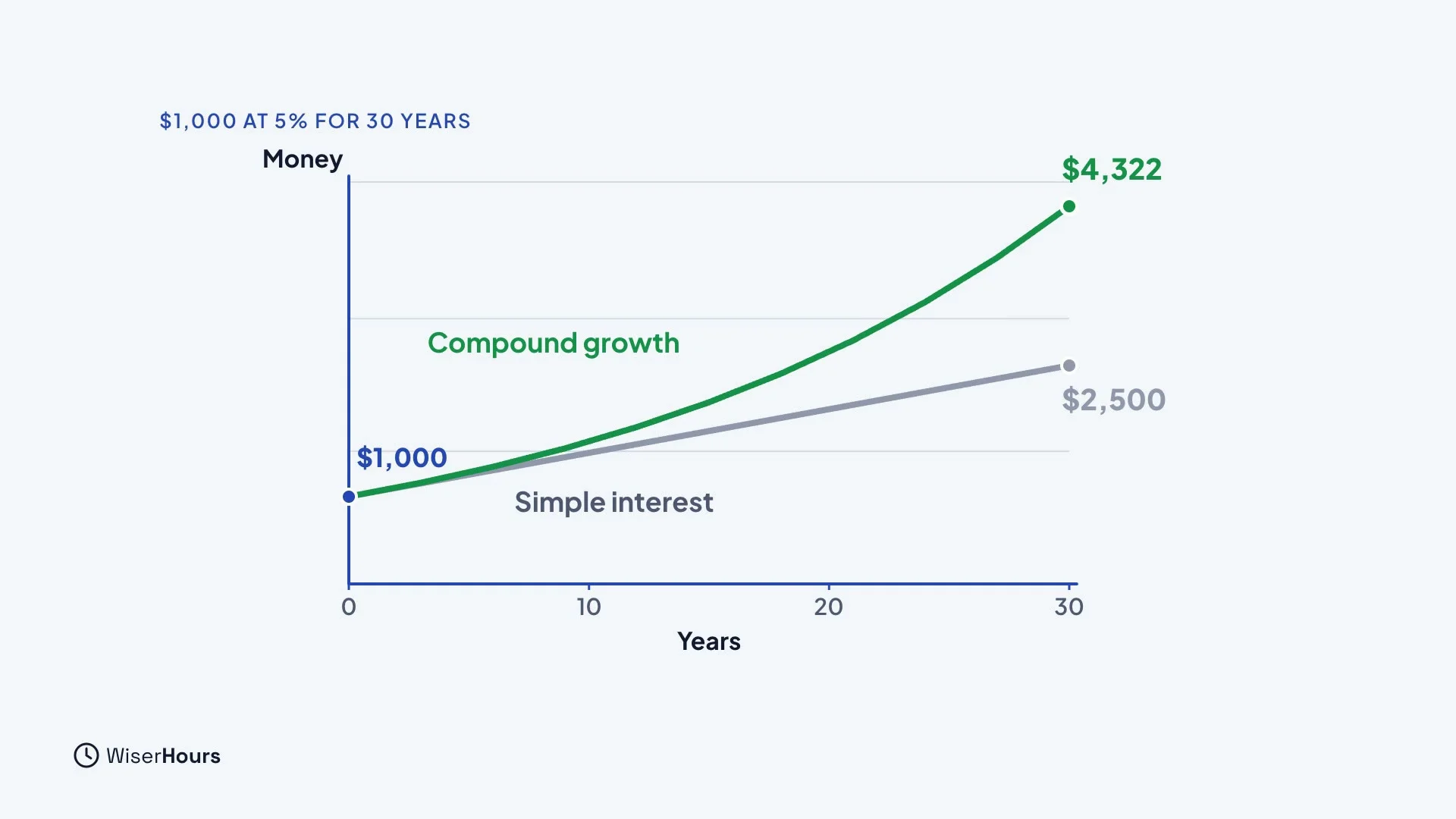
That small difference grows with time. Leave 1,000 dollars at 5 percent for 30 years and add nothing. With simple interest it reaches 2,500 dollars. With compound growth it reaches about 4,322 dollars. The curve bends upward because each year’s growth is bigger than the last. Early on the two lines look almost the same, and the difference only becomes obvious after many years.
 (opens the full-size picture)
Three savers
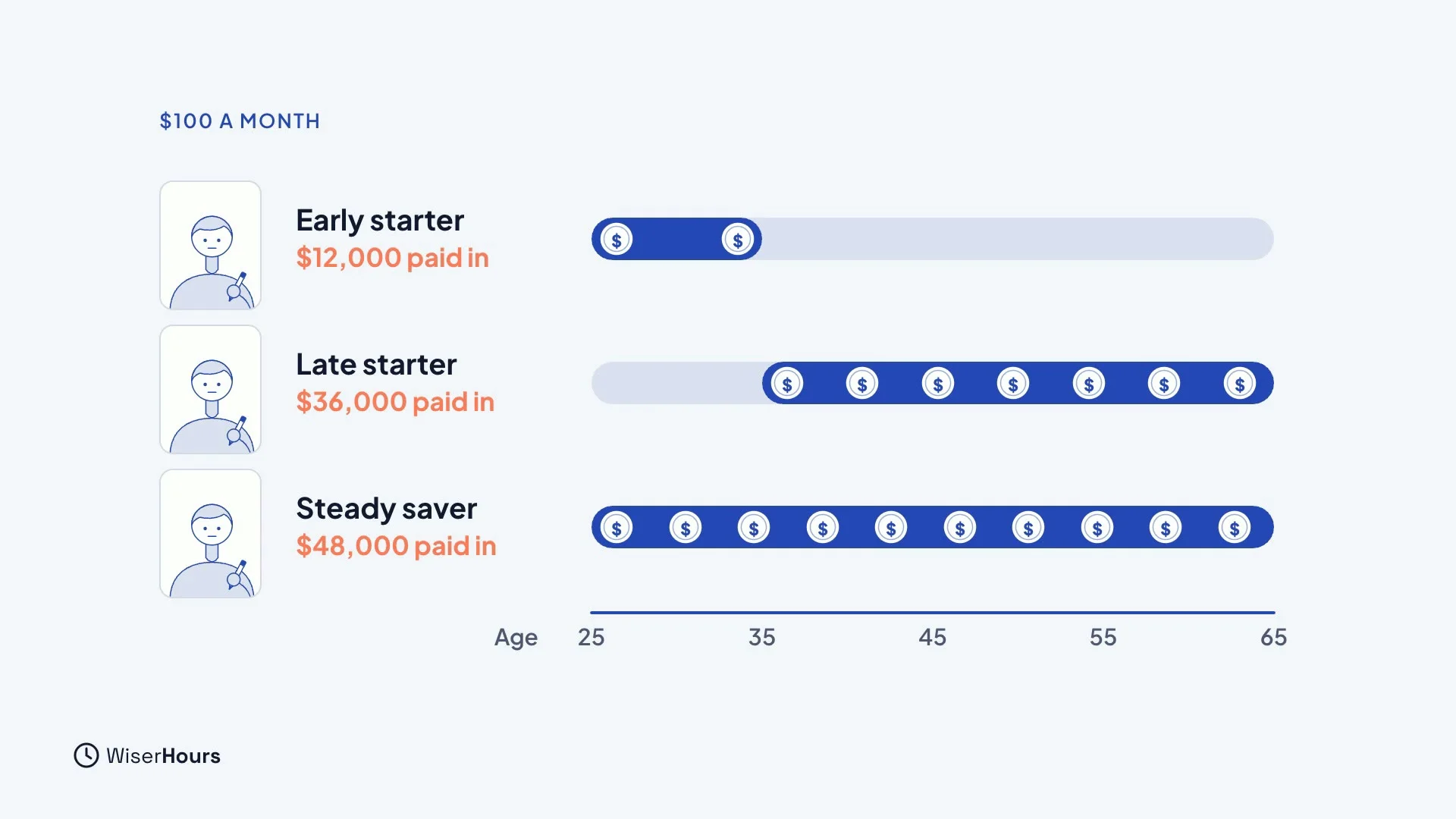
Now meet three savers. Each puts in 100 dollars a month. The early starter saves from age 25 to 35, then stops. The late starter saves from 35 to 65. The steady saver saves from 25 all the way to 65. These are made-up people, used to show how the numbers behave.
 (opens the full-size picture)
Who ends ahead
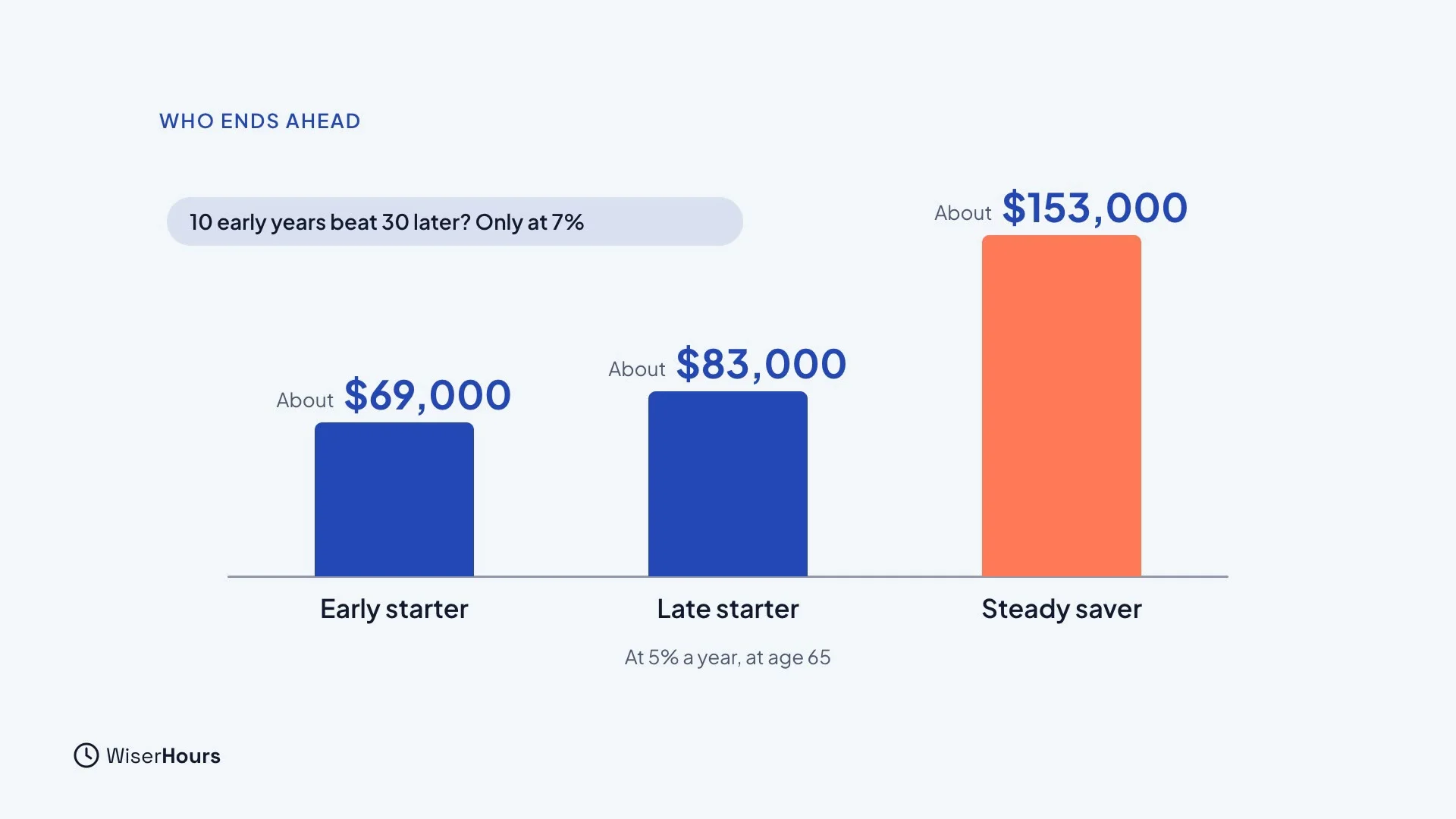
At 5 percent a year, the early starter ends with about 69,000 dollars. The late starter ends with about 83,000. The steady saver ends with about 153,000. You may have heard that ten early years beat thirty later ones. In this example that only happened at 7 percent. The steady saver came out ahead every time.
 (opens the full-size picture)
Growth is never promised
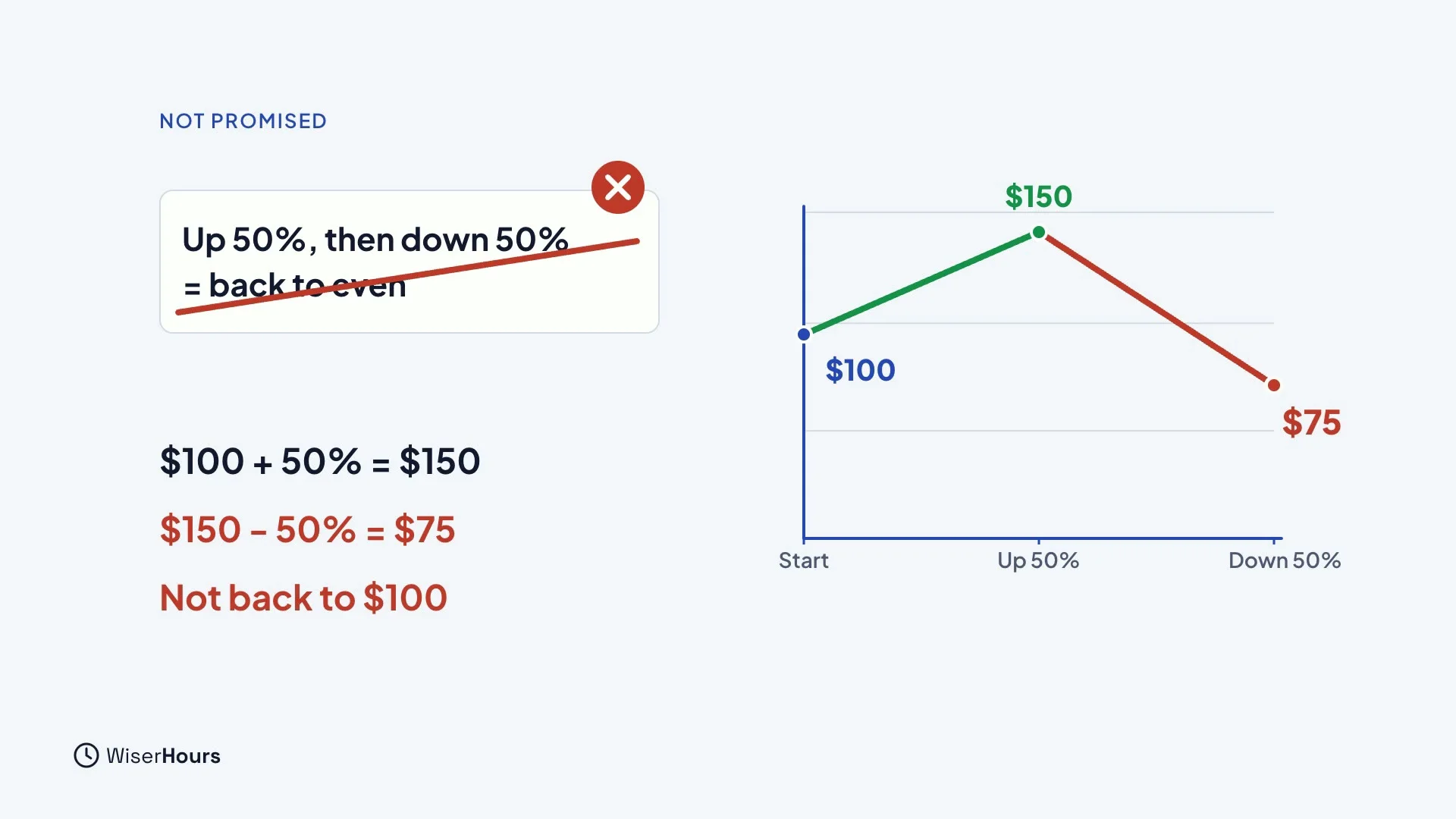
Growth from investing is not guaranteed. Returns can be low, or even negative for a while. Losses also hurt more than the matching gain helps: a 50 percent gain followed by a 50 percent loss does not bring you back to even. It turns 100 dollars into 75.
 (opens the full-size picture)
Help compounding do its work
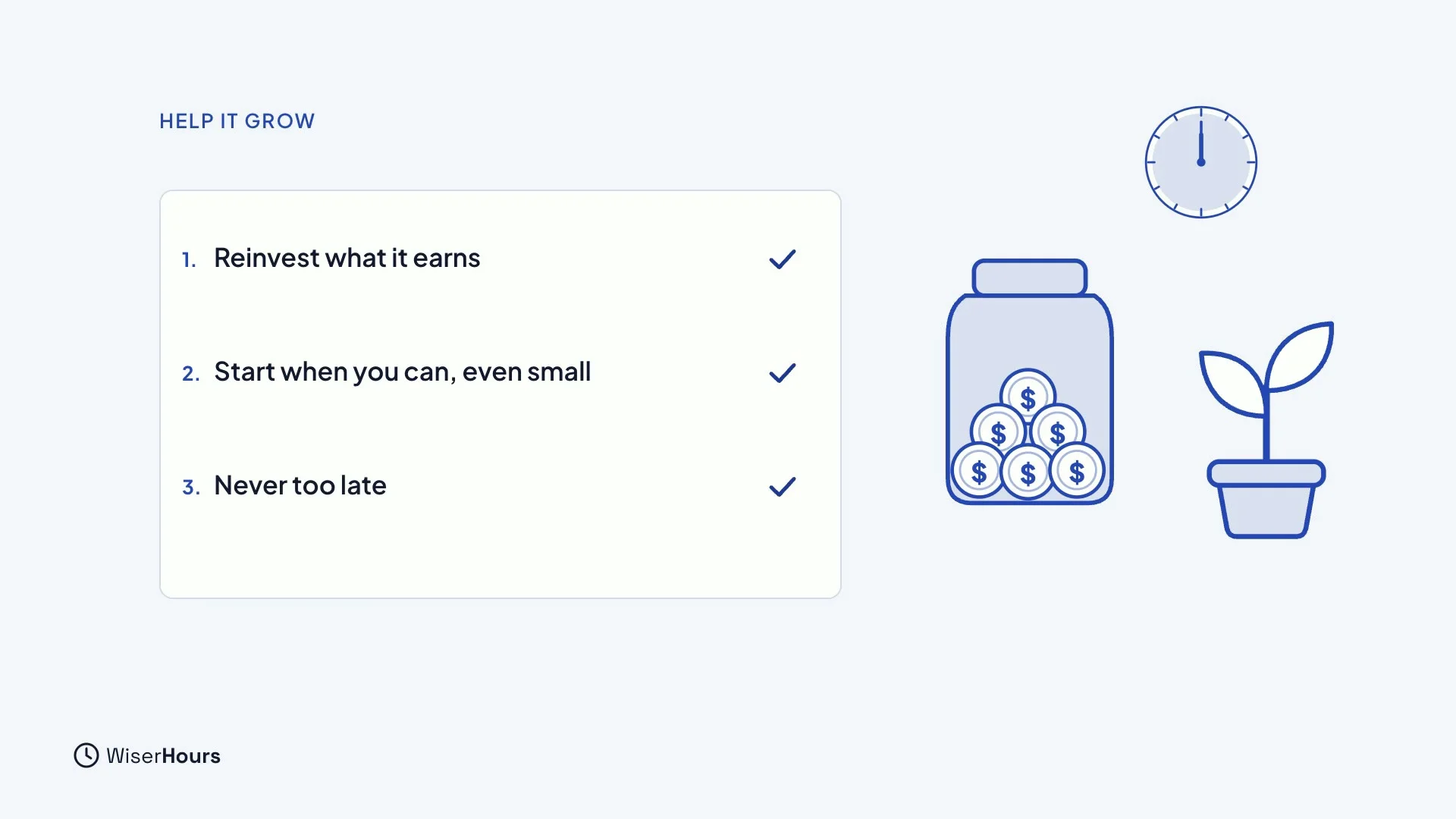
You can give compounding a better chance in three ways. Reinvest what your money earns, such as dividendsdividend: A portion of a company's profit paid out to its shareholders, usually in cash. A dividend is not free money: the share price tends to fall by about the payout when the share goes ex-dividend, and the tax on it depends on the country.Full entry in the glossary, instead of spending it. Start when you can, even with a small amount. And remember that it is never too late to begin.
 (opens the full-size picture)
YOUR TURN
These figures are examples, not forecasts. For personal decisions, see a regulated adviser.
Read more
- Compound Interest Explained: Why Starting Early Can Make Such a Difference: the formula, more examples and the limits of the idea.
Read the full lesson script
Why do people say it pays to start early? In this lesson, you'll see how money can grow on its own growth, and why time matters so much.
Say you put 100 dollars somewhere that earns 5 percent a year. After one year, you have 105 dollars. With simple interest, you earn 5 dollars every year. With compound interest, you also earn interest on your interest. So after three years, you'd have 115 dollars and 76 cents, instead of 115.
That small difference grows with time. Leave 1,000 dollars at 5 percent for 30 years, and add nothing. With simple interest, it reaches 2,500 dollars. With compound growth, it reaches about 4,322 dollars.
Now meet three savers. Each one puts in 100 dollars a month. The early starter saves from age 25 to 35, then stops. The late starter saves from 35 to 65. The steady saver saves from 25 all the way to 65.
At 5 percent a year, the early starter ends with about 69,000 dollars. The late starter ends with about 83,000. And the steady saver ends with about 153,000. You may have heard that ten early years beat thirty later ones. In our example, that only happened at 7 percent. The steady saver came out ahead every time.
Growth from investing is never promised, though. Returns can be low, or even negative for a while. And a 50 percent gain followed by a 50 percent loss doesn't bring you back to even. It turns 100 dollars into 75.
You can help compounding do its work. Reinvest what your money earns, such as dividends, instead of spending it. Start when you can, even with a small amount. And remember, it's never too late to begin.
So remember: compound growth is growth on your growth. Time does a lot of the work, so starting earlier and saving steadily both help. And nothing is promised. Before the next lesson, use a free compound interest calculator. Try 100 dollars a month at 3, 5 and 7 percent, then start five years later and compare. In the next lesson, you'll see how risk and time fit together.
MAKE IT A SMALL WIN
Finished this lesson?
Mark it complete to save your progress on this device.