Where to invest · Lesson 7 of 11
Investment Fees: How a Small Yearly Charge Adds Up
See how a small yearly fee compounds over decades, where fees hide, and how to find what you pay on a fund or pension.
 Video coming soon
A yearly fee of one percent sounds tiny. In this lesson you will see how a small fee, charged every year, can add up to a big difference over time, and what you can do about it. All the figures below are examples of how the arithmetic works, not forecasts of what any investment will earn.
How a yearly fee works
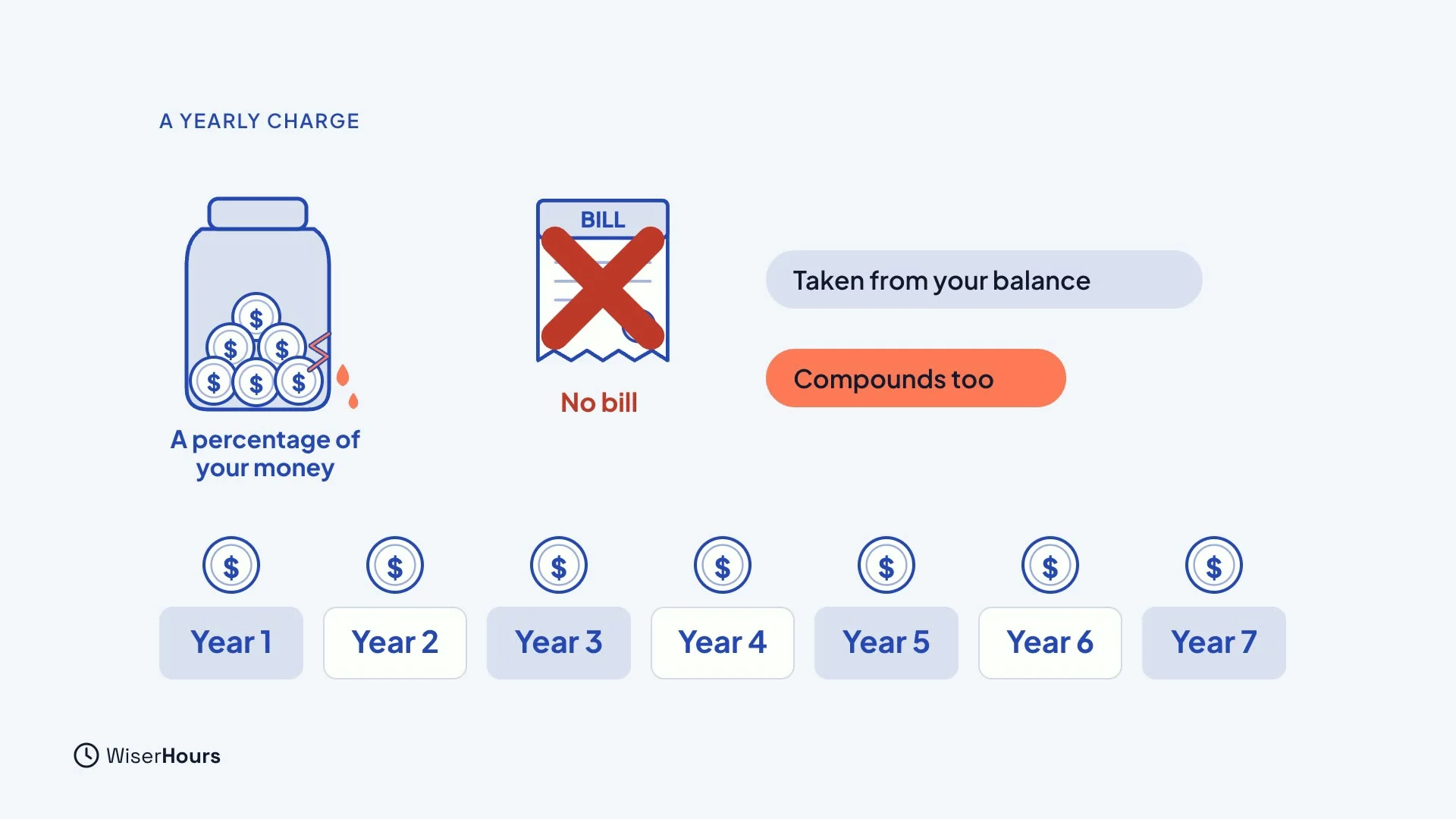
Most funds, and many pensions, take a yearly charge: a percentage of your money, every year. You do not get a bill for it. It is quietly taken from your balance, so it is easy to forget it is there.
Because the fee comes out every year, it compounds, just like growth does. The money taken this year is also money that can no longer grow in the years after.
 (opens the full-size picture)
A regulator’s example
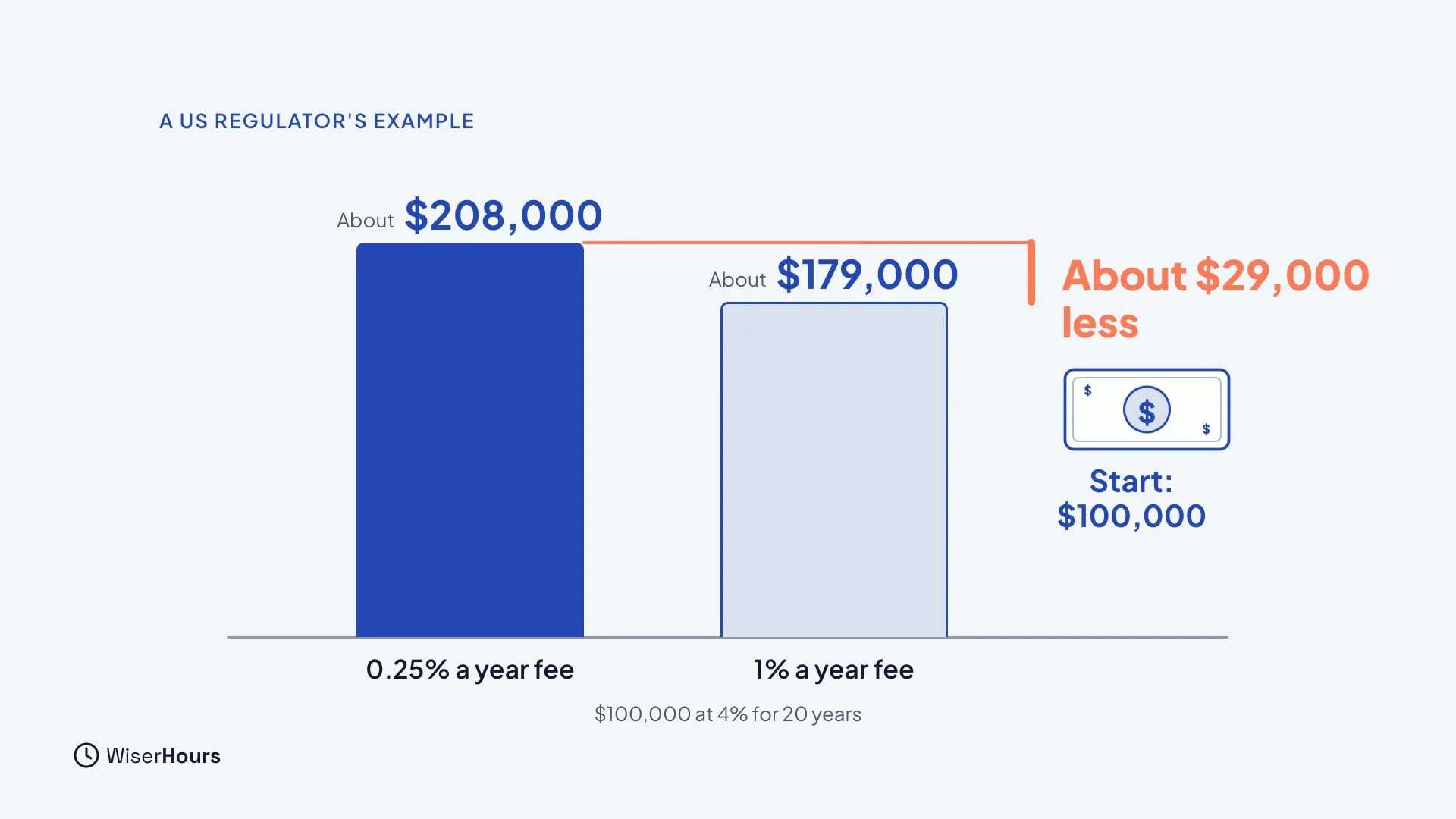
A US regulator gives a clear example. Put 100,000 dollars into an investment that grows 4 percent a year for 20 years. With a yearly fee of a quarter of a percent, you end up with about 208,000 dollars. With a fee of 1 percent, you end up with about 179,000. That is about 29,000 dollars less, from a fee gap of three quarters of a percentage point.
 (opens the full-size picture)
A monthly saver
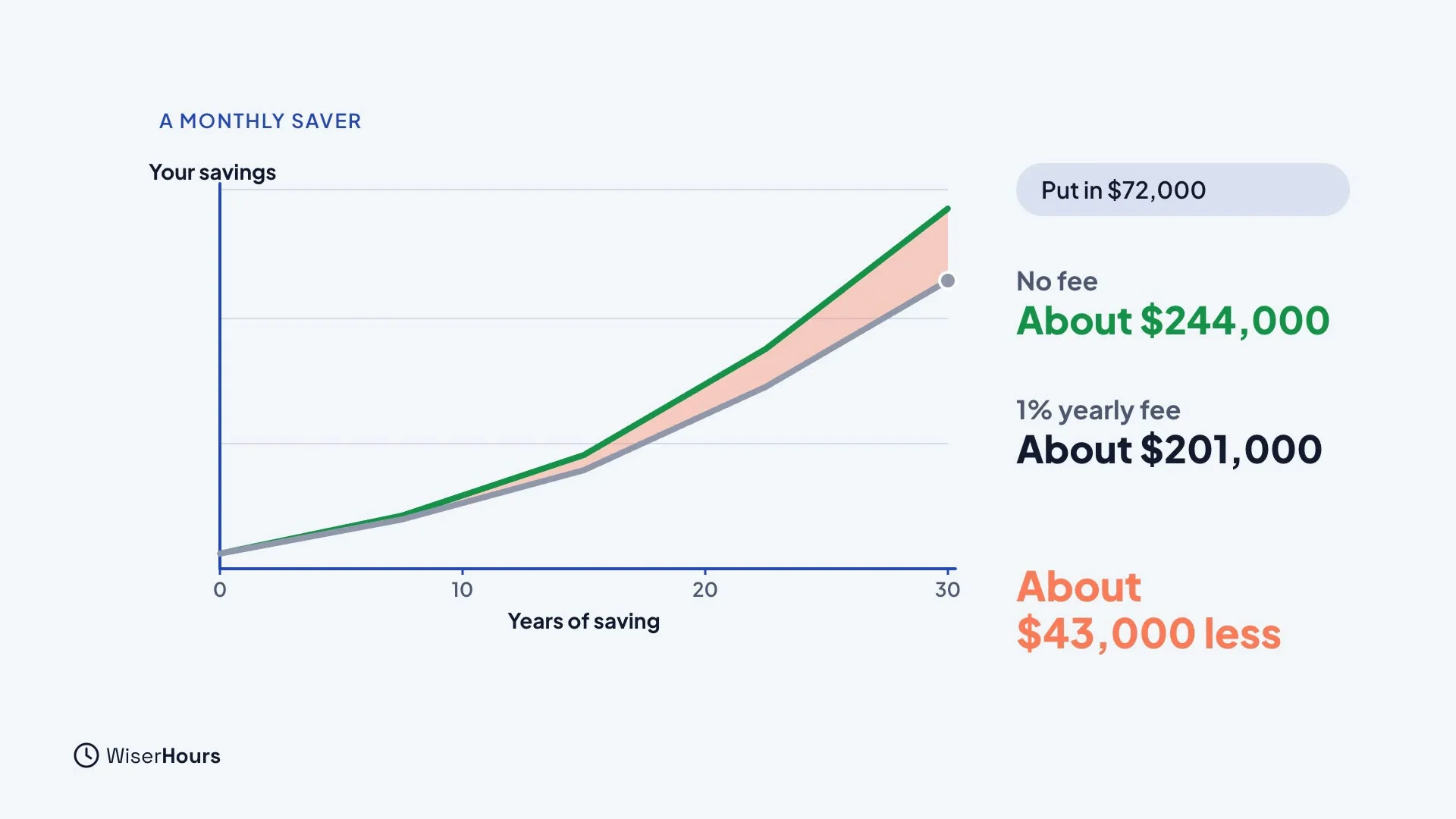
Most people do not invest one lump sum. Take a monthly saver who puts in 200 dollars a month for 30 years, which is 72,000 dollars in total. At 7 percent a year, that could grow to about 244,000 dollars. With a 1 percent yearly fee, it comes to about 201,000. The two lines on the chart start together and slowly pull apart, and the gap is widest at the end, when the pot is largest.
 (opens the full-size picture)
Where fees hide
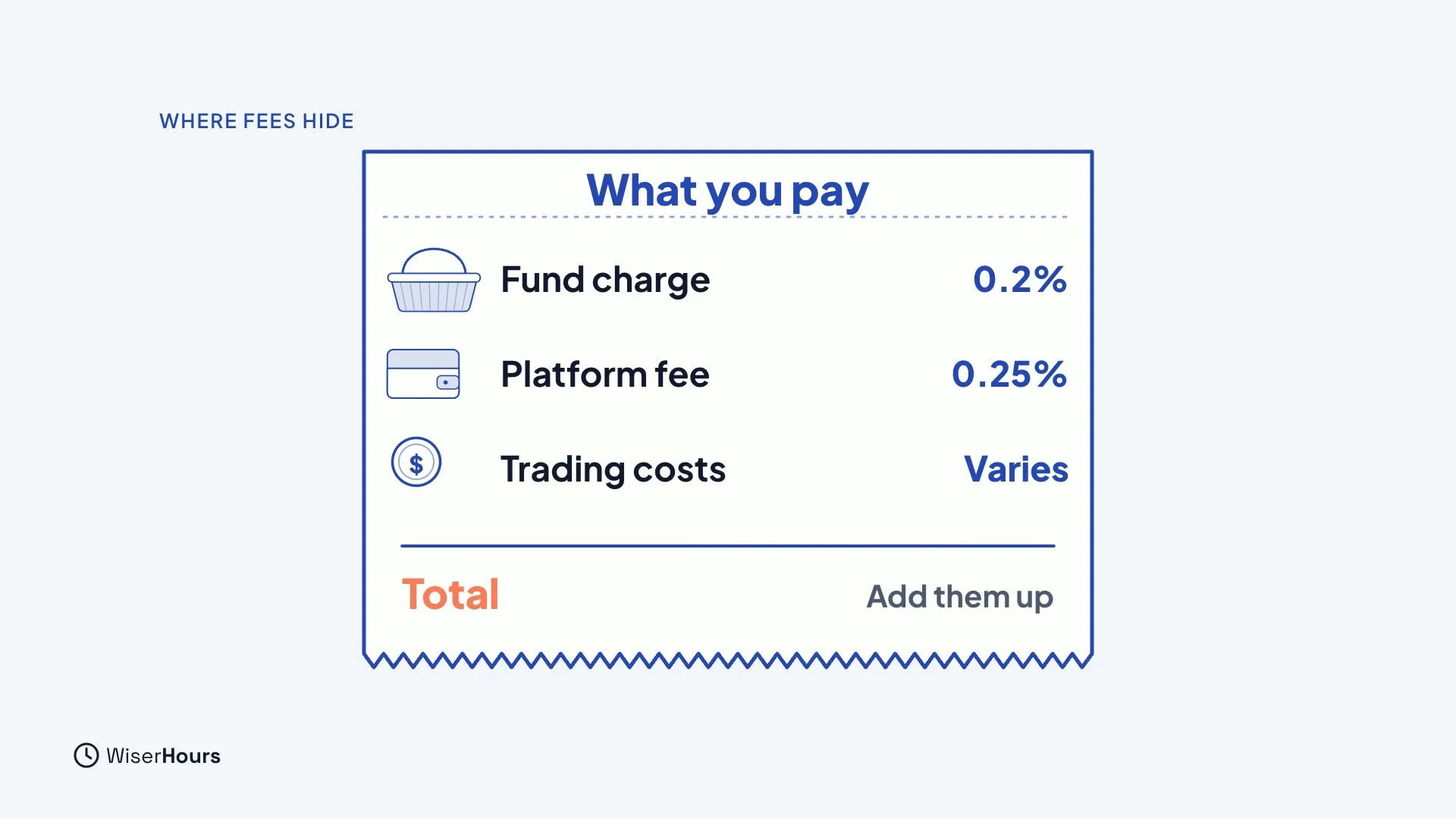
Fees come in different forms, so look for all of them:
- The fund’s own yearly charge.
- A fee for the platform or account that holds your investments.
- Trading costs each time you buy or sell.
Add them up to see what you really pay. The numbers on the picture below are made up, to show the idea.
 (opens the full-size picture)
Cheapest is not automatically best
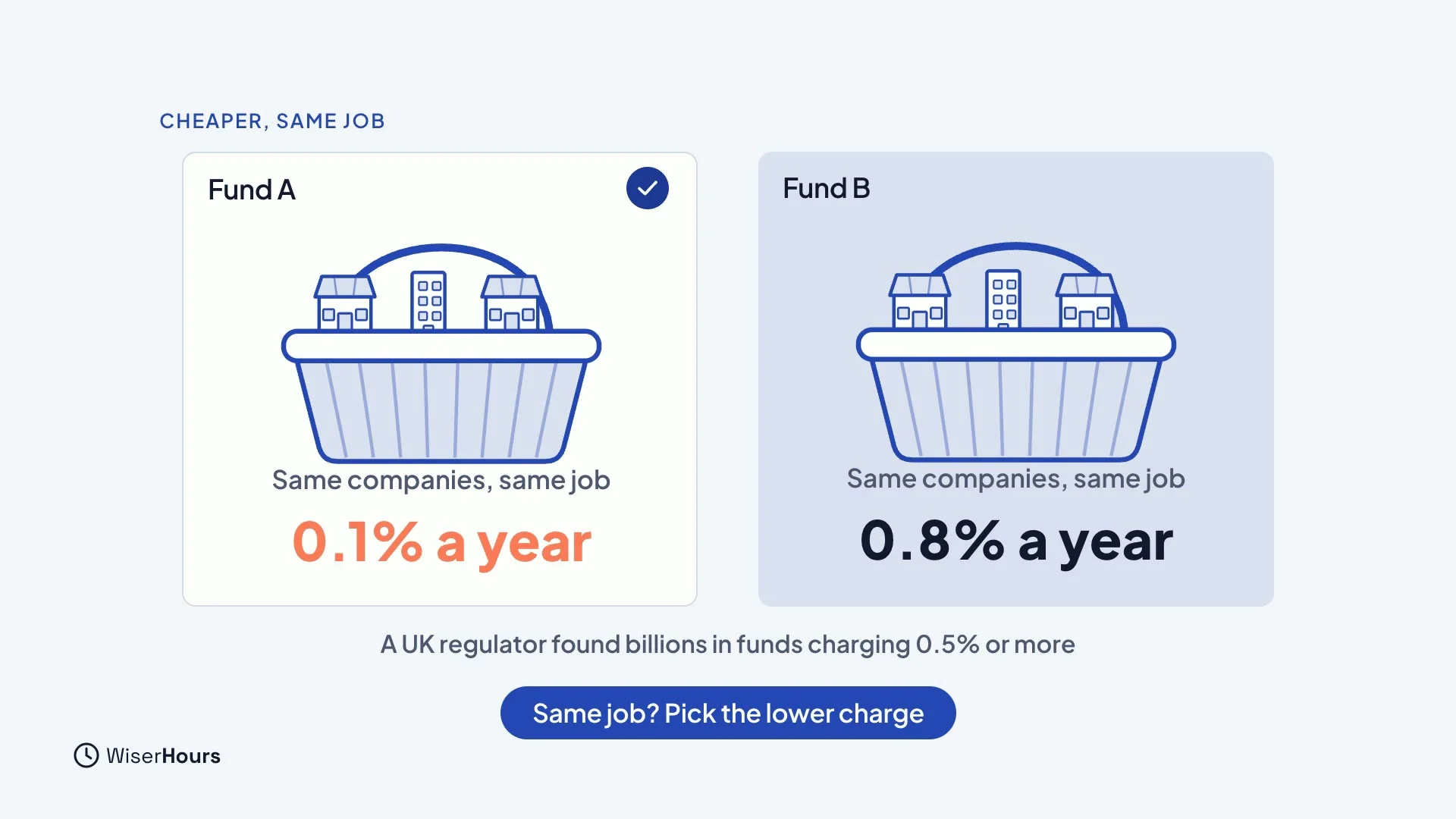
A fund also needs to hold what you want and track it well. But when two funds do the same job, the lower charge usually leaves more for you. One UK regulator found billions in tracker funds charging half a percent or more, where people would probably be better off in a cheaper one. A tracker, also called an index fund, copies a market index. The article on index funds explains how to compare them.
 (opens the full-size picture)
Not advice
This lesson is general education, not advice about a fund or provider. For decisions about your own situation, speak to a regulated adviser.
YOUR TURN
Read more
- What Is an Index Fund?: how funds that copy a market index work, and why two of them can charge very different amounts.
- Investing for Beginners: where fees fit into the bigger picture of starting to invest.
Read the full lesson script
A yearly fee of one percent sounds tiny. In this lesson, you'll see how small fees can add up to a big difference over time, and what you can do about it.
Most funds, and many pensions, take a yearly charge: a percentage of your money, every year. You don't get a bill for it. It's quietly taken from your balance. And because it comes out every year, it compounds, just like growth does.
Here's an example from a US regulator. Put 100,000 dollars into an investment that grows 4 percent a year for 20 years. With a yearly fee of a quarter of a percent, you end up with about 208,000 dollars. With a fee of 1 percent, you end up with about 179,000. That's about 29,000 dollars less.
Now take a monthly saver. Put in 200 dollars a month for 30 years, which is 72,000 dollars in total. At 7 percent a year, that could grow to about 244,000 dollars. With a 1 percent yearly fee, it comes to about 201,000.
Fees come in different forms. There's the fund's own yearly charge. There may be a fee for the platform or account. And there are trading costs each time you buy or sell. Add them up to see what you really pay.
Here's the key point. Future returns are uncertain, but fees are certain. You can't control what markets do. You can choose lower-cost funds, and you can avoid trading often.
Cheapest isn't automatically best. A fund also needs to hold what you want and track it well. But when two funds do the same job, the lower charge usually leaves more for you. One UK regulator found billions in tracker funds charging half a percent or more, where people would probably be better off in a cheaper one.
So remember: fees come out every year, and they compound. A difference of under 1 percent can cost tens of thousands of dollars over decades. And fees are one of the few things you control. Before the next lesson, find the yearly charge on any pension or fund you already have. In the next lesson, you'll see how tax breaks and your employer can add to your savings.
MAKE IT A SMALL WIN
Finished this lesson?
Mark it complete to save your progress on this device.