How money grows · Lesson 5 of 11
Diversification: Why Not to Put All Your Eggs in One Basket
Learn what diversification means, why single stocks are riskier than they look, and how spreading your money softens falls without removing them.
 Video coming soon
You have probably heard the saying: do not put all your eggs in one basket. In this lesson you see what it means for your money, why it matters so much, and where spreading stops helping. The idea has a proper name, diversificationdiversification: Spreading money across many investments, and across different kinds of investment, so that a fall in one has less effect on the whole. It reduces the risk tied to any single holding but cannot remove the risk of the whole market falling.Full entry in the glossary, and it is one of the most useful ideas in investing.
Two sellers at the beach
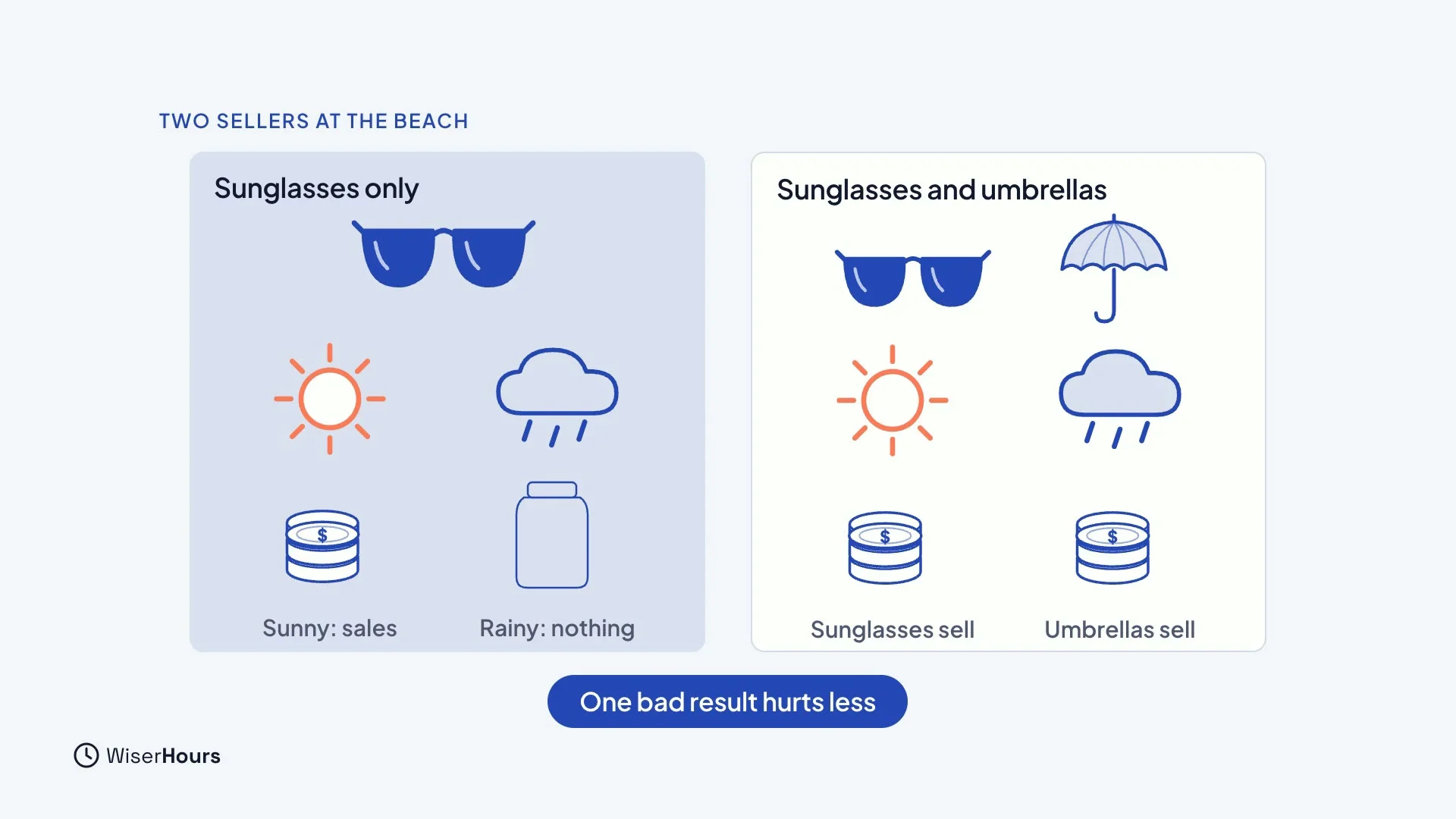
Picture a seller at the beach who sells only sunglasses. On rainy days they sell nothing. A seller who sells sunglasses and umbrellas earns something in any weather. That is diversification: spreading your money so one bad result hurts less.
 (opens the full-size picture)
Single stocks are riskier than they look
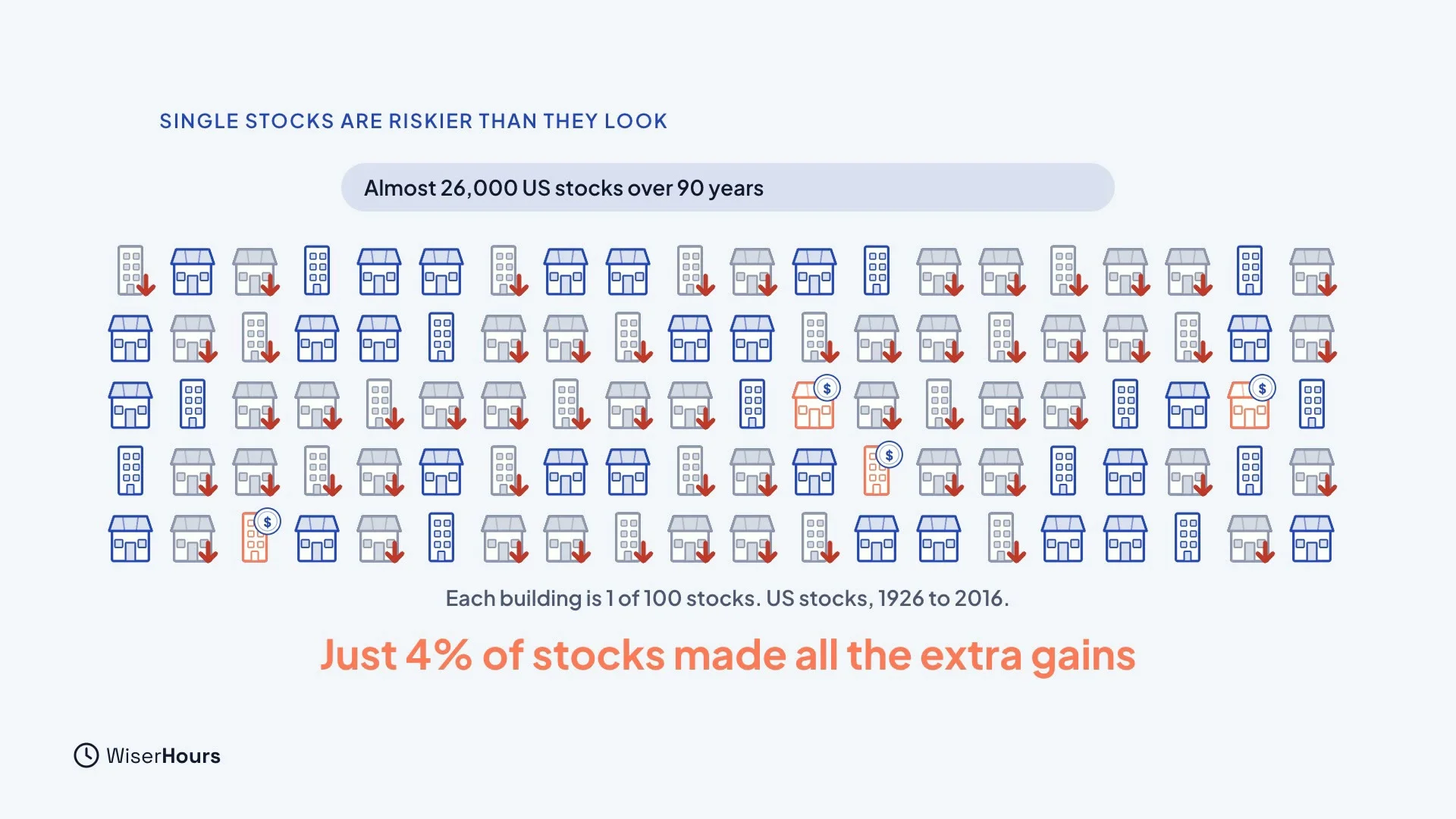
Spreading matters because single stocks are riskier than they look. One study followed almost 26,000 US stocks over 90 years. More than half did worse over their lives than safe government bills. And just 4 percent of them produced all the gains above what those bills paid. Finding those few winners in advance is very hard, which is why spreading your money across many companies is the usual starting point.
 (opens the full-size picture)
How many companies is enough?
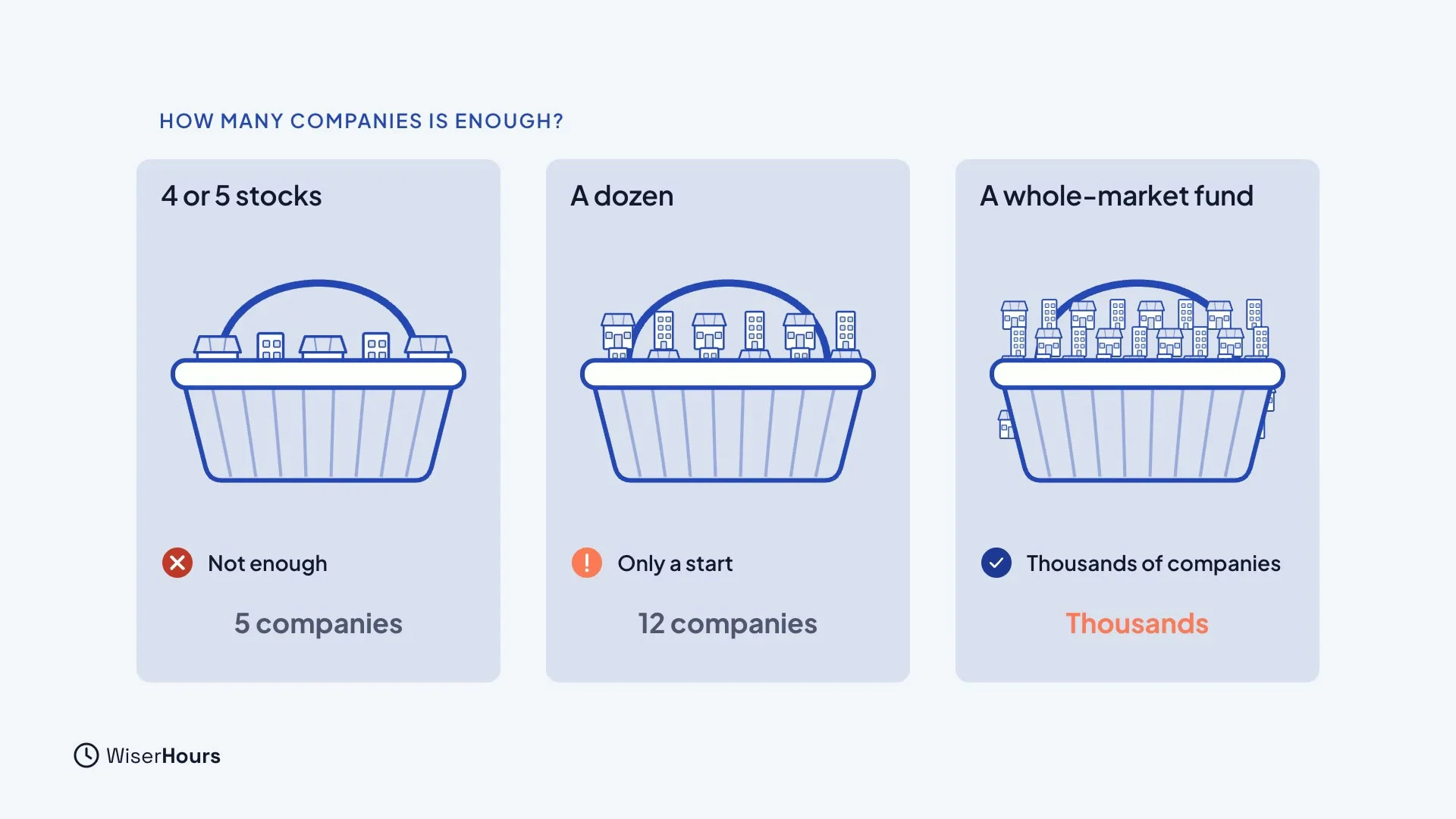
So owning four or five stocks is not enough. Even a dozen carefully chosen ones is only a start. A fund that holds a whole market can own thousands of companies in one go.
 (opens the full-size picture)
Two ways to spread
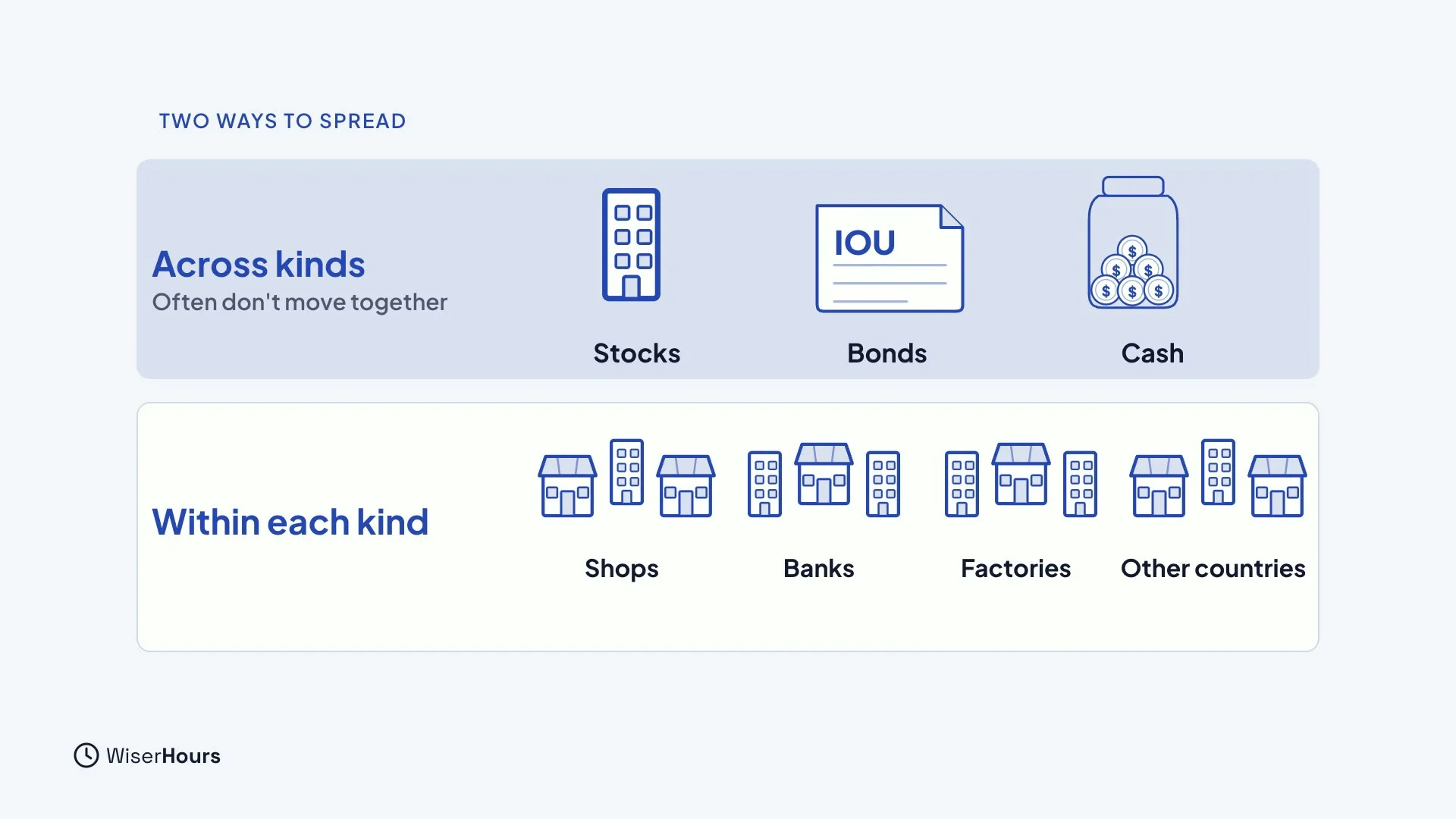
You can spread money in two ways. The first is across kinds of investment, like stocks, bonds and cash, which often do not move together. The second is within each kind: across many companies, industries and countries.
 (opens the full-size picture)
Spreading has a limit
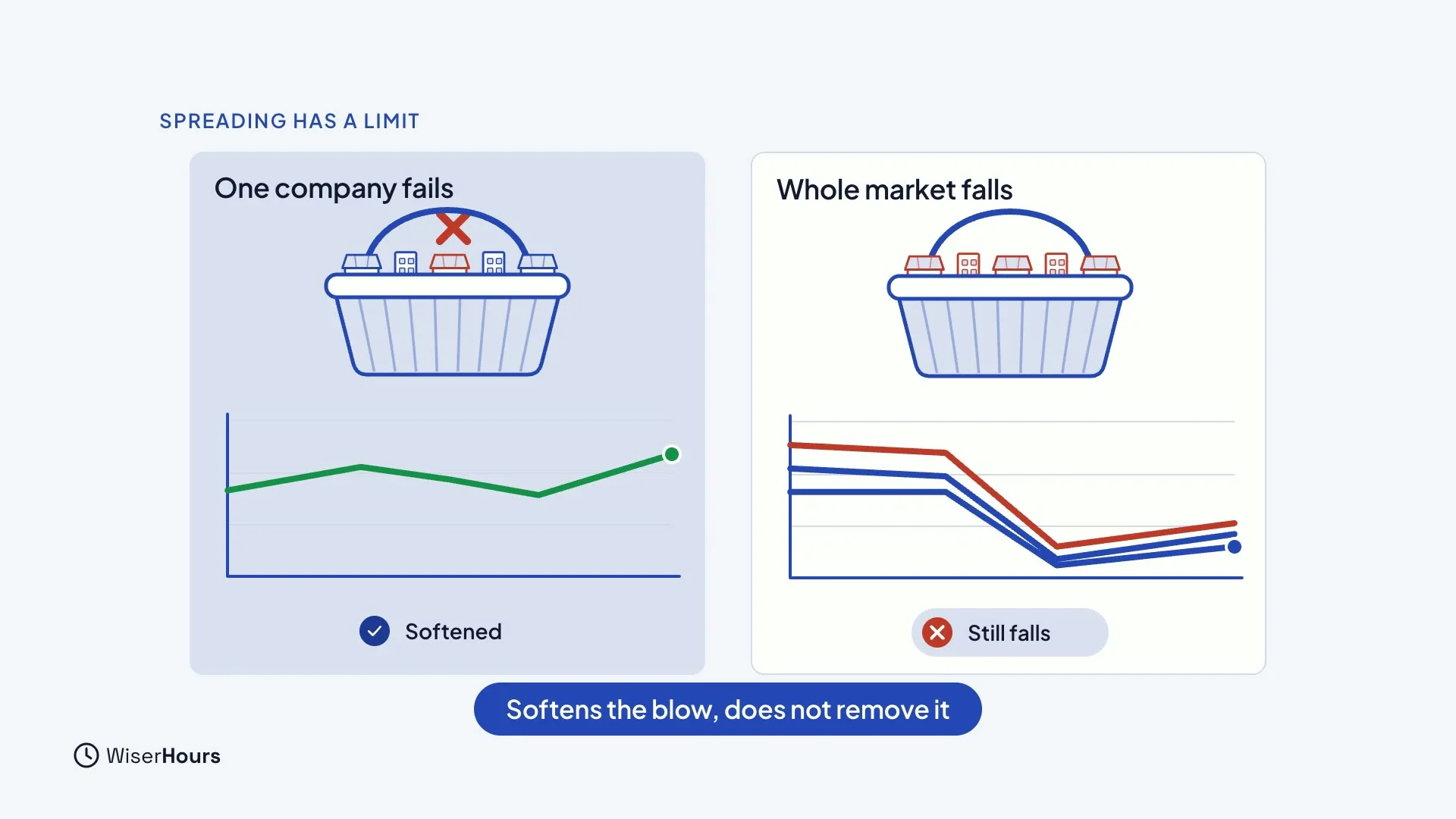
Spreading cannot remove every risk. It cuts the risk of one company failing, but not the risk of the whole market falling. In a crash, many markets tend to fall together, so even a well-spread portfolio can lose value for a while. So diversification softens the blow, but it does not remove it.
 (opens the full-size picture)
Watch for hidden piles
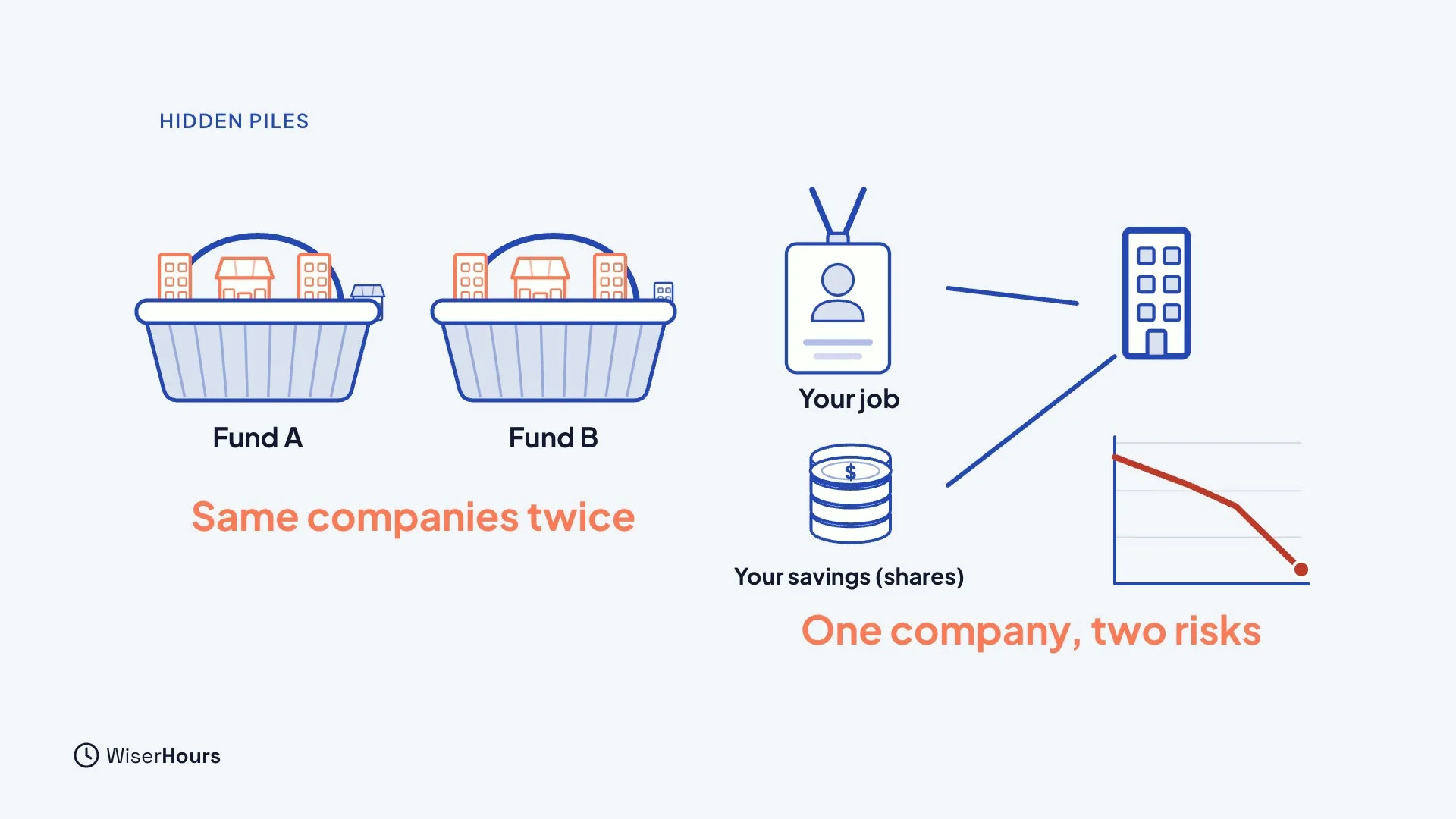
Also watch out for hidden piles. Several funds can hold the same big companies, so owning many funds may not spread your money as much as it seems. And if your job and a big part of your savings both depend on your employer’s shares, one bad year could hit both at once.
 (opens the full-size picture)
YOUR TURN
This is general education, not personal advice. For your own decisions, see a regulated adviser.
Read more
- Diversification Explained: Why Spreading Your Money Reduces Risk: the evidence and the limits of spreading.
- Investing for Beginners: How It Works and Where to Start: where spreading fits among the steps.
Read the full lesson script
You've probably heard the saying: don't put all your eggs in one basket. In this lesson, you'll see what it means for your money, and why it matters so much.
Picture a seller at the beach who sells only sunglasses. On rainy days, they sell nothing. A seller who sells sunglasses and umbrellas earns something in any weather. That's diversification: spreading your money so one bad result hurts less.
Spreading matters because single stocks are riskier than they look. One study followed almost 26,000 US stocks over 90 years. More than half did worse over their lives than safe government bills. And just 4 percent of them produced all the gains above what those bills paid.
So owning four or five stocks isn't enough. Even a dozen carefully chosen ones is only a start. A fund that holds a whole market can own thousands of companies in one go.
You can spread money in two ways. The first is across kinds of investment, like stocks, bonds and cash, which often don't move together. The second is within each kind, across many companies, industries and countries.
Spreading has a limit, though. It cuts the risk of one company failing, but not the risk of the whole market falling. In a crash, many markets tend to fall together, so even a well-spread portfolio can lose value for a while. So diversification softens the blow, but it doesn't remove it.
Also watch out for hidden piles. Several funds can hold the same big companies. And if your job and a big part of your savings both depend on your employer's shares, one bad year could hit both at once.
So remember: spread your money across many companies and different kinds of investment. Single stocks are riskier than they look. And spreading softens falls, but it doesn't stop them. Before the next lesson, list everything you already hold, like a pension, funds or shares, and note anything that's a big part of it. In the next lesson, you'll see how index funds let you own a whole market cheaply.
MAKE IT A SMALL WIN
Finished this lesson?
Mark it complete to save your progress on this device.