Stay the course · Lesson 9 of 11
Invest Regularly: Monthly Investing vs. a Lump Sum
See why investing a set amount each month works, what research says about lump sums, and why trading less usually earns more.
 Video coming soon
How should you actually put your money in: a little at a time, or all at once? In this lesson you will see why investing regularly works well, what the research says about lump sums, and why doing less once you are invested often pays. The figures are past results, mostly from the US, and they do not predict the future.
A set amount every month
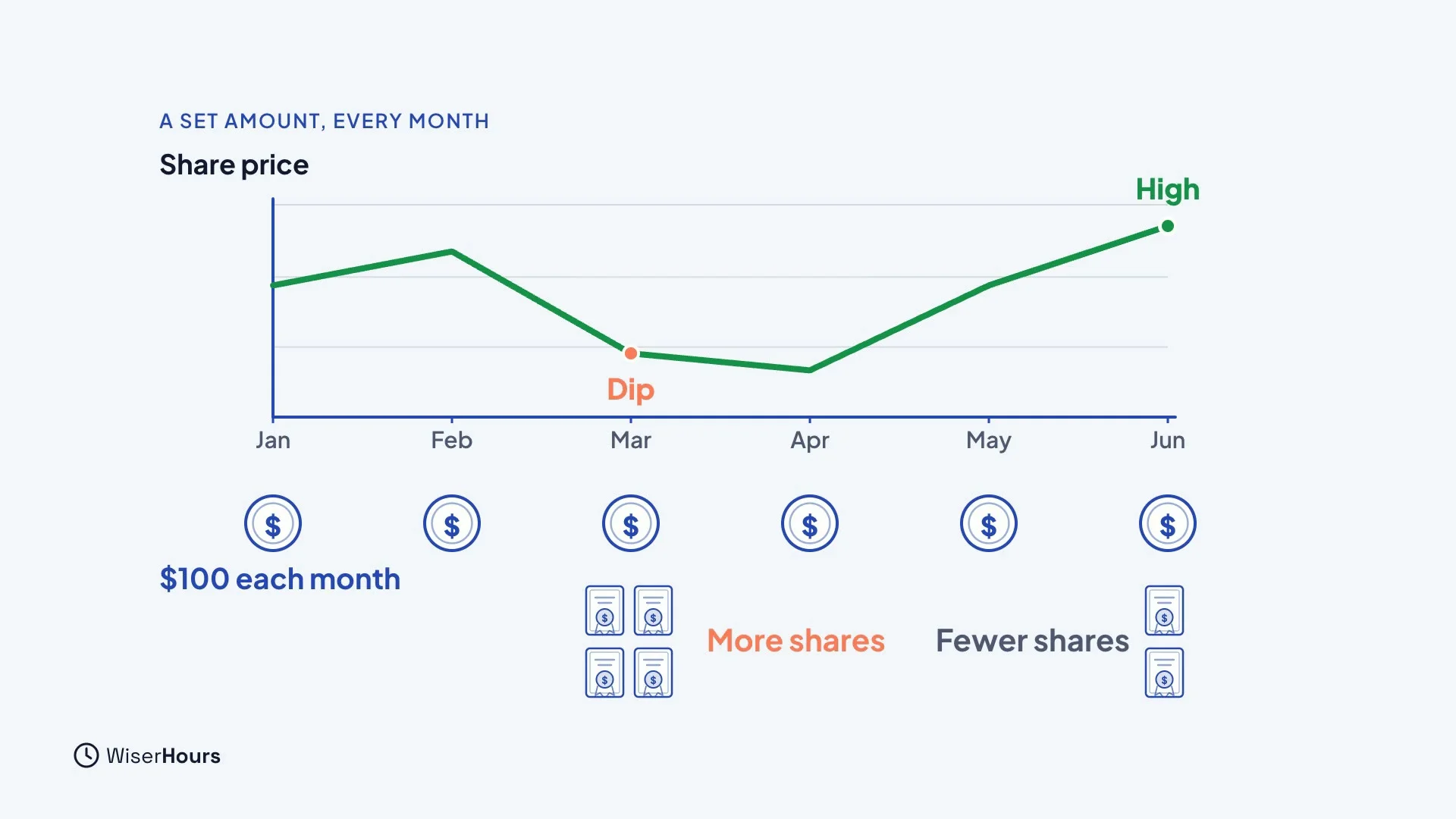
The simplest habit is to invest a set amount every month, straight from your pay. When prices dip, your money buys more shares. When prices are high, it buys fewer. And you never have to guess the right moment.
 (opens the full-size picture)
A made-up example
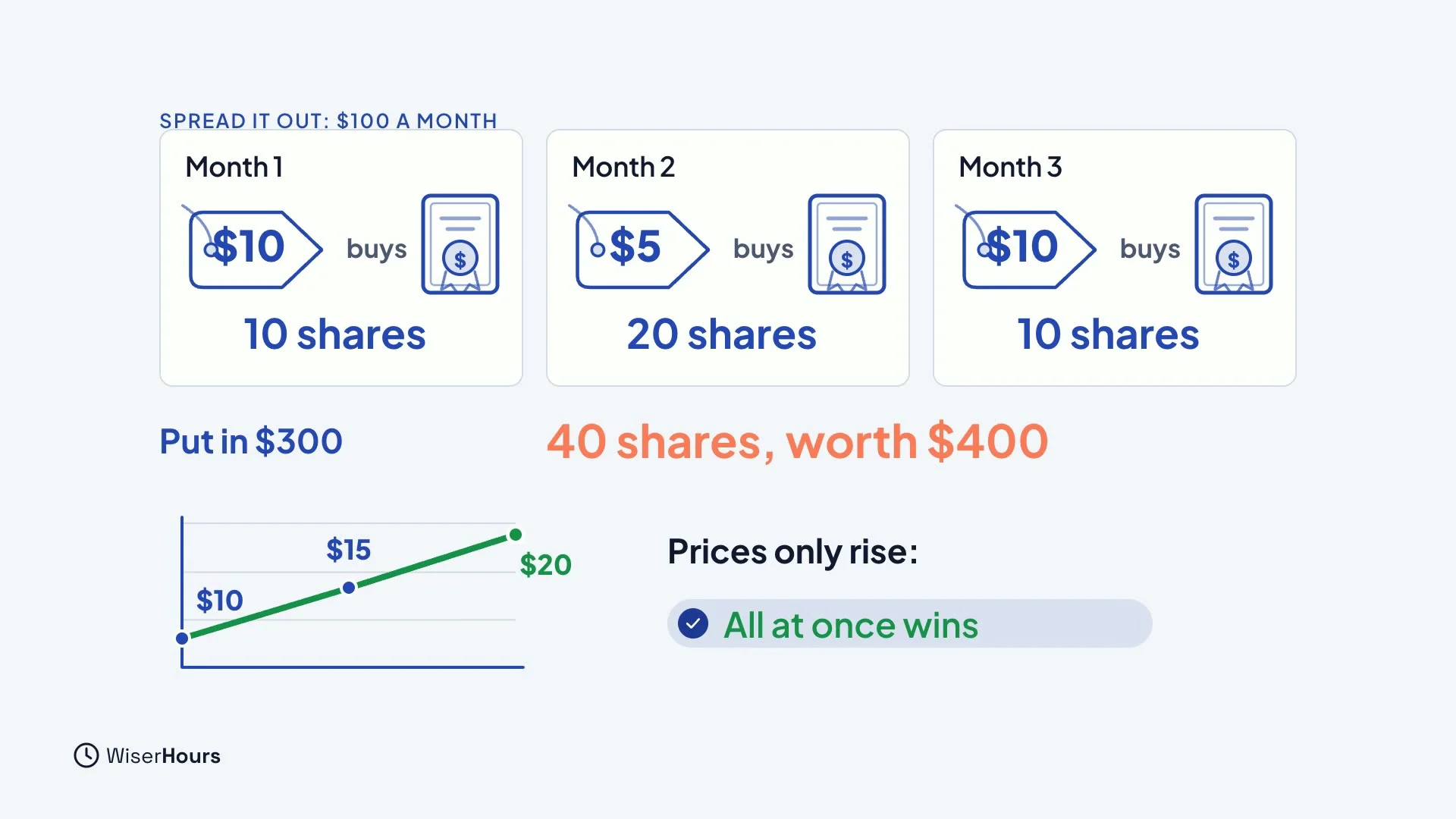
Say you invest 100 dollars a month. The price is 10 dollars, then 5, then 10 again. So you buy 10 shares, then 20, then 10. That is 40 shares for 300 dollars, and they are worth 400 at the end. But if prices only rise, from 10 to 15 to 20, buying everything at once would have done better. Regular investing is not a trick that always wins. It is a habit that removes the need to time the market.
 (opens the full-size picture)
What about a lump sum?
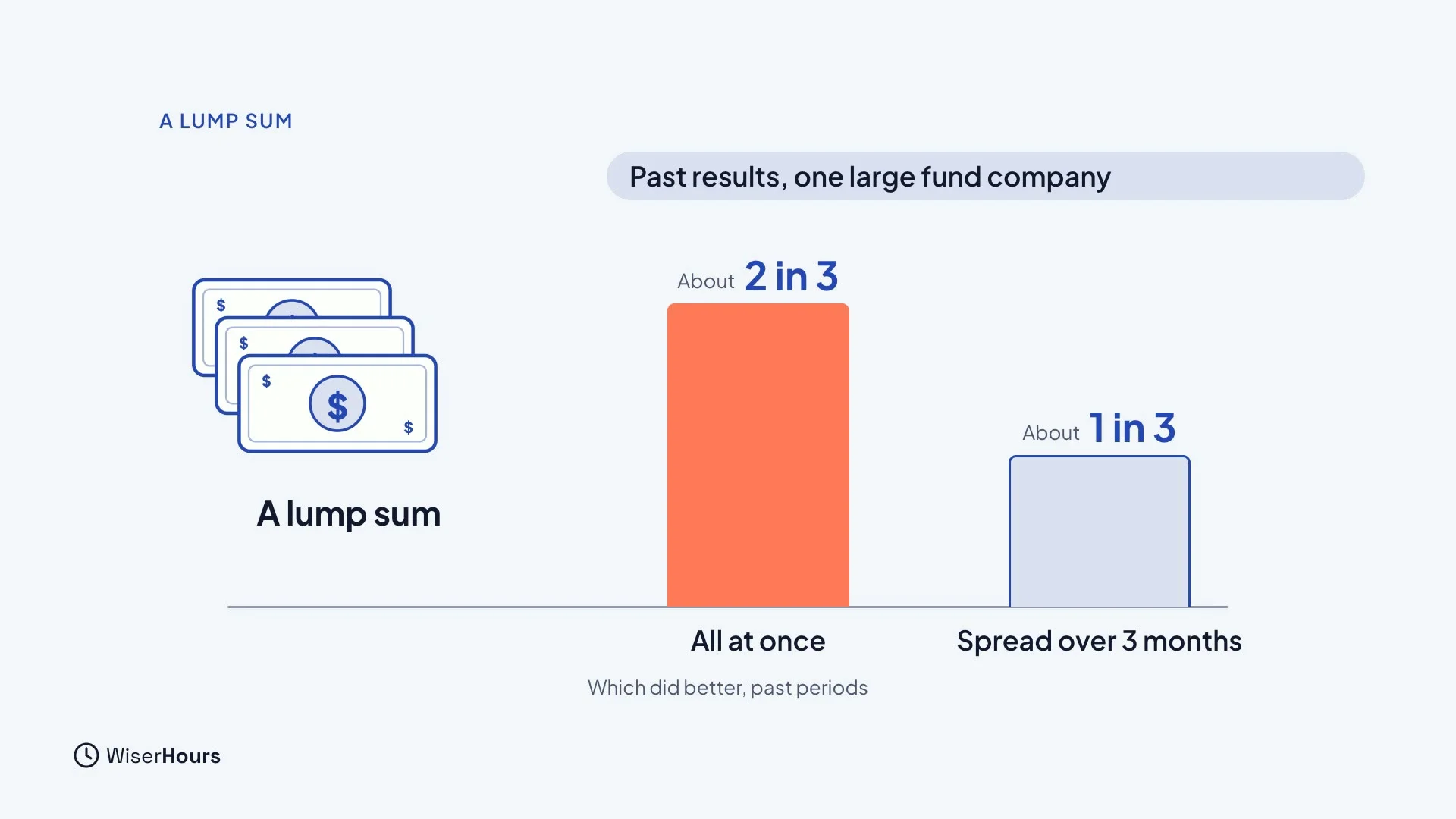
What if you already have a lump sum, like a bonus or an inheritance? Research from one large fund company found that investing it all at once beat spreading it over three months in about two-thirds of past periods. That is because markets have risen more often than they have fallen. Past periods do not promise the next one.
 (opens the full-size picture)
The one real benefit of spreading it out
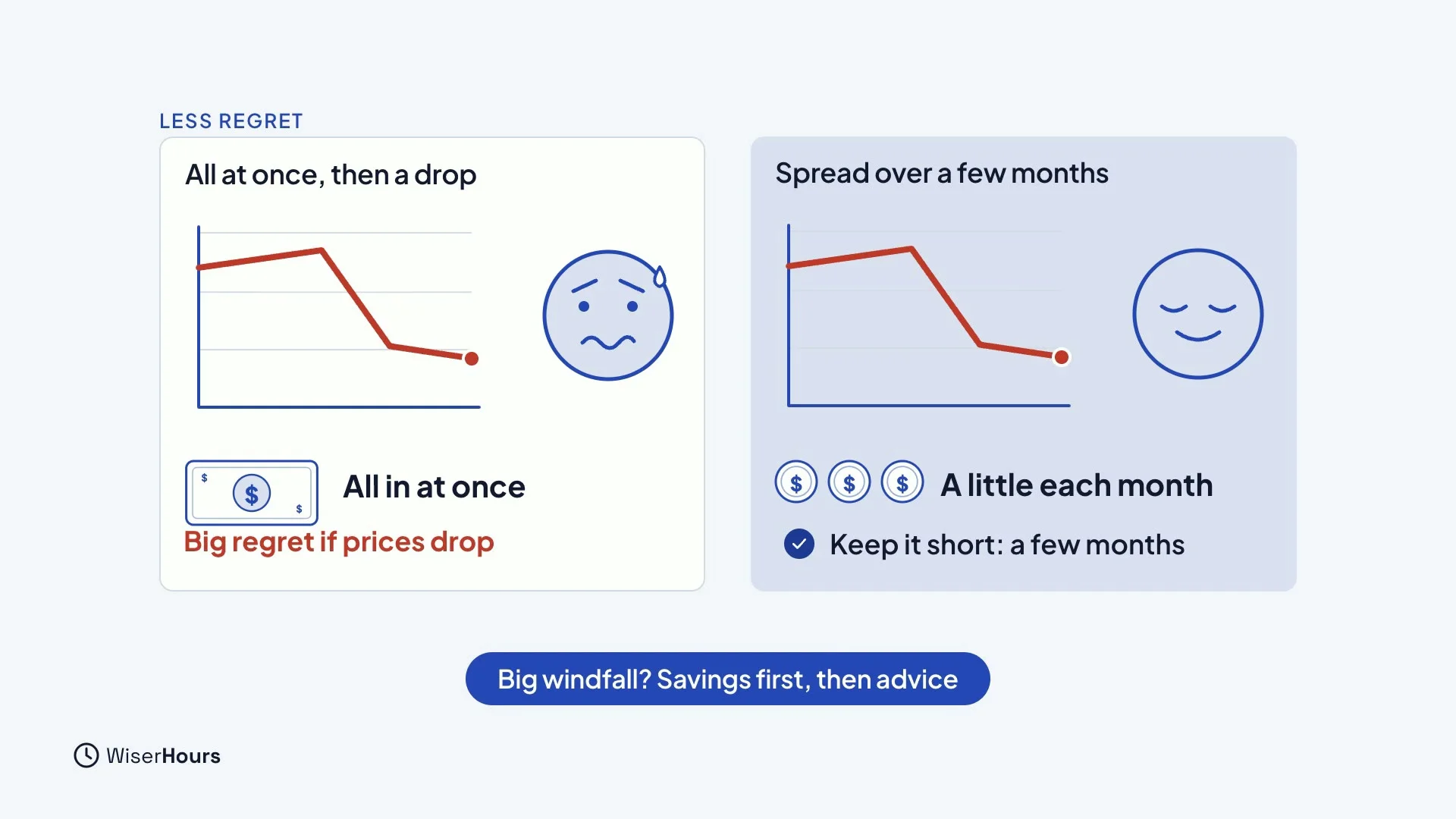
Spreading it out has one real benefit: less regret if prices drop right after you invest. If that helps you sleep, keep the spread short, a few months, rather than waiting for a perfect moment. With a big windfall, it is also fine to keep it in savings while you get advice.
 (opens the full-size picture)
Once you are invested, trade less
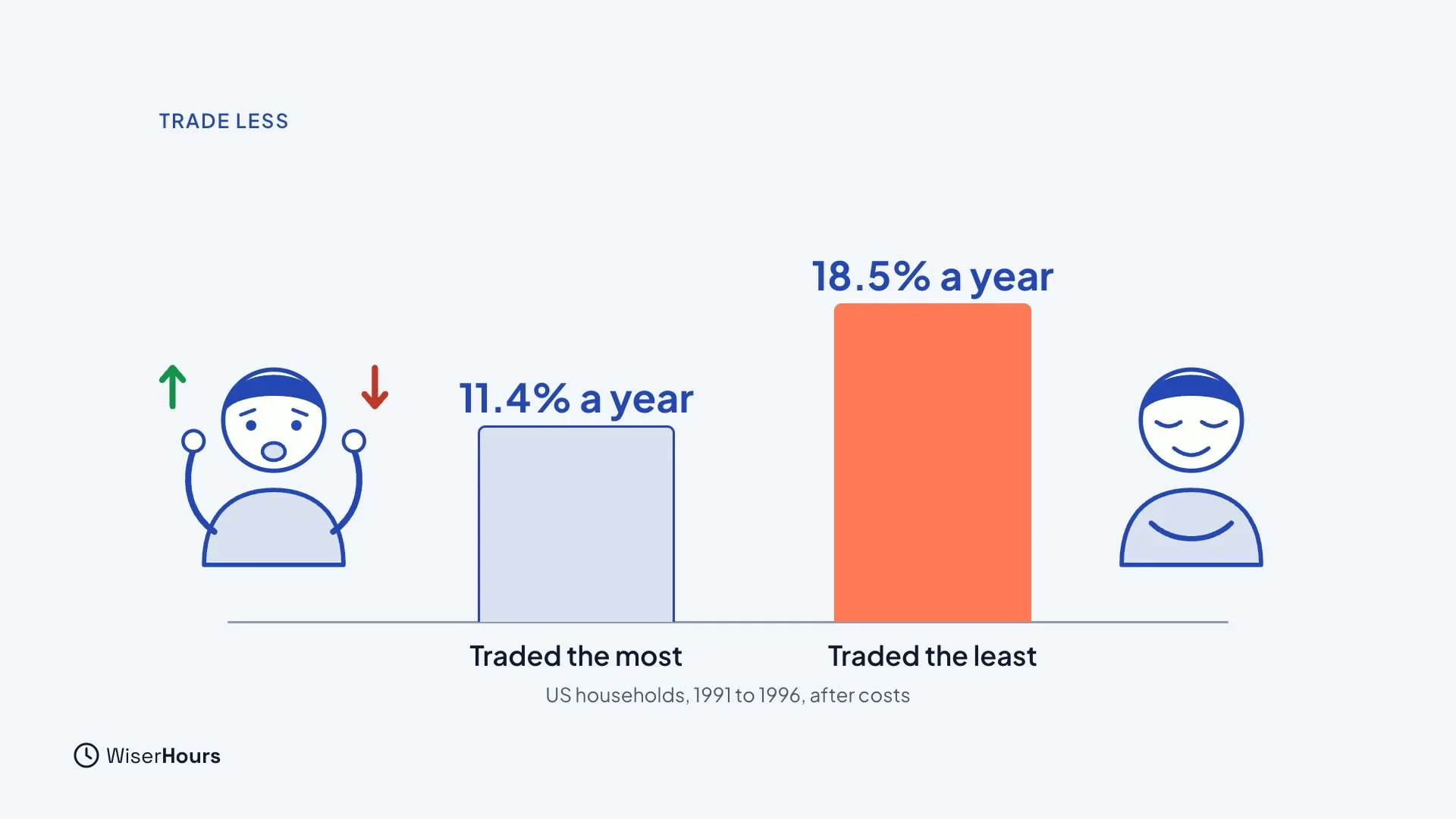
Once you are invested, the hardest part is doing nothing. In one study of about 66,000 US households, the people who traded the most earned 11.4 percent a year after costs. Those who traded the least earned 18.5 percent. Every trade has a cost, and every rush to act is a chance to act at the wrong moment.
 (opens the full-size picture)
Make it automatic
Set up a regular payment on payday, choose a broad, low-cost fund, and check on it about once a year, not every day. A plan like this is boring on purpose.
General education only
Nothing here says what you should invest in, or how much. For decisions about your own situation, speak to a regulated adviser.
YOUR TURN
Read more
- Dollar-Cost Averaging vs. Lump Sum: what the research says about each way of putting money in.
- The Behavior Gap: how trading and timing decisions can leave investors behind their own funds.
- Investing for Beginners: how regular investing fits into the whole plan.
Read the full lesson script
How should you actually put your money in: a little at a time, or all at once? In this lesson, you'll see why investing regularly works well, and what the research says about lump sums.
The simplest habit is to invest a set amount every month, straight from your pay. When prices dip, your money buys more shares. When prices are high, it buys fewer. And you never have to guess the right moment.
Here's an example. You invest 100 dollars a month. The price is 10 dollars, then 5, then 10 again. So you buy 10 shares, then 20, then 10. That's 40 shares for 300 dollars, and they're worth 400 at the end. But if prices only rise, from 10 to 15 to 20, buying everything at once would have done better.
What if you already have a lump sum, like a bonus or an inheritance? Research from one large fund company found that investing it all at once beat spreading it over three months in about two-thirds of past periods. That's because markets have risen more often than they've fallen.
Spreading it out has one real benefit, though: less regret if prices drop right after you invest. If that helps you sleep, keep the spread short, a few months, rather than waiting for a perfect moment. With a big windfall, it's also fine to keep it in savings while you get advice.
Once you're invested, the hardest part is doing nothing. In one study of about 66,000 US households, the people who traded the most earned 11.4 percent a year after costs. Those who traded the least earned 18.5 percent.
So make it automatic. Set up a regular payment on payday, choose a broad, low-cost fund, and check on it about once a year, not every day.
So remember: investing a set amount regularly takes the guessing out. A lump sum has usually done better invested sooner, but a short spread is fine if it helps you. And trading less usually earns more. Before the next lesson, choose an amount you could invest automatically each month, however small. In the next lesson, you'll see what to do when markets fall.
MAKE IT A SMALL WIN
Finished this lesson?
Mark it complete to save your progress on this device.