The basics · Lesson 2 of 11
Before You Invest: A Cash Cushion and Costly Debt
See the two steps that come before investing: an emergency fund, then expensive debt. Learn how big a cushion to build and which debt to pay first.
 Video coming soon
Two things come before your first investment: cash for surprises, and a plan for expensive debt. Skipping them is the most common beginner mistake, because investing money you may need next week, or while a card charges you a high rate, works against you. This lesson shows you what to do first, and how much.
Why a cash cushion comes first
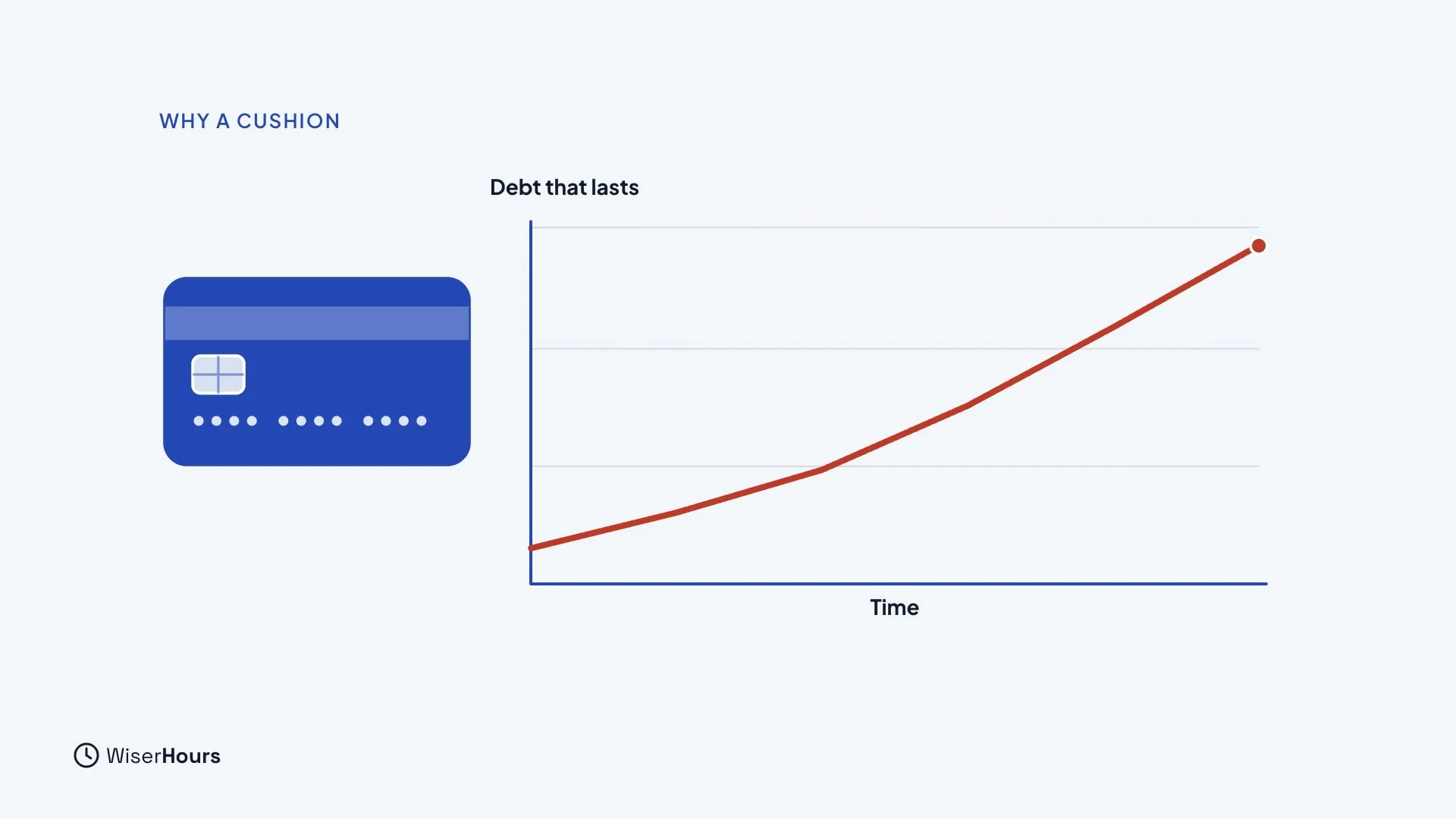
The first step is an emergency fundemergency fund: Money kept in an account you can reach quickly, to cover unexpected costs or a drop in income without borrowing. How much to hold depends on your circumstances, and official guidance differs by country.Full entry in the glossary. That is cash you set aside for things you did not plan for, like a car repair, a big bill or losing your income. Without it, a surprise cost often goes on a credit card, and a short shock turns into debt that lasts.
 (opens the full-size picture)
Even a little helps
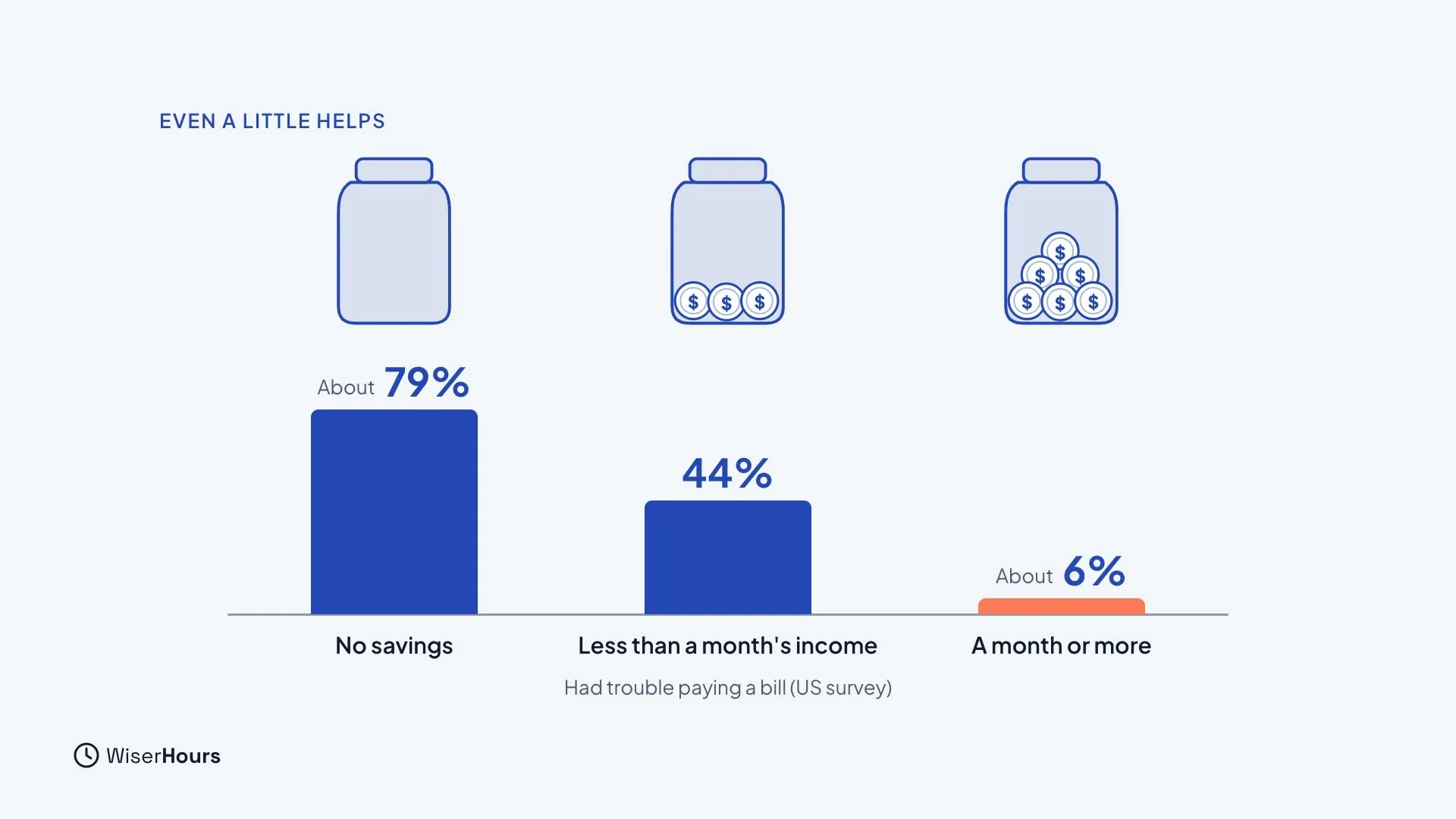
You do not need a big pile to feel a difference. In one US survey, about 79 percent of people with no savings had trouble paying a bill in the past year. With some savings, but less than a month’s income, it was 44 percent. With at least a month saved, it was only about 6 percent.
 (opens the full-size picture)
How big should it be?
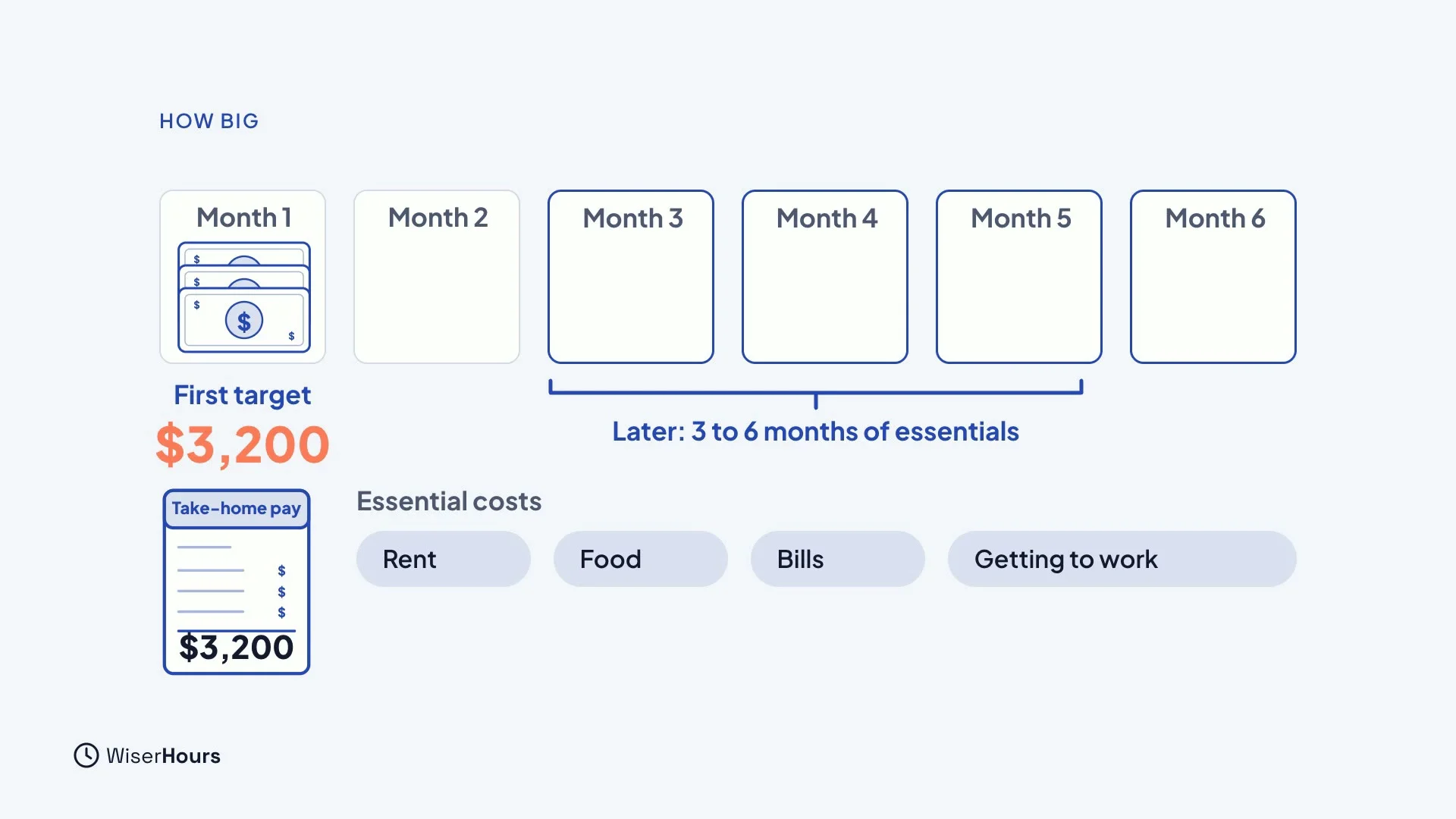
A common guide is three to six months of your essential costs, such as rent, food, bills and getting to work. That can feel like a lot, so start smaller. A good first target is about one month of take-home pay. For example, if you take home 3,200 dollars a month, aim for 3,200 dollars first, and build up from there.
 (opens the full-size picture)
Where to keep it
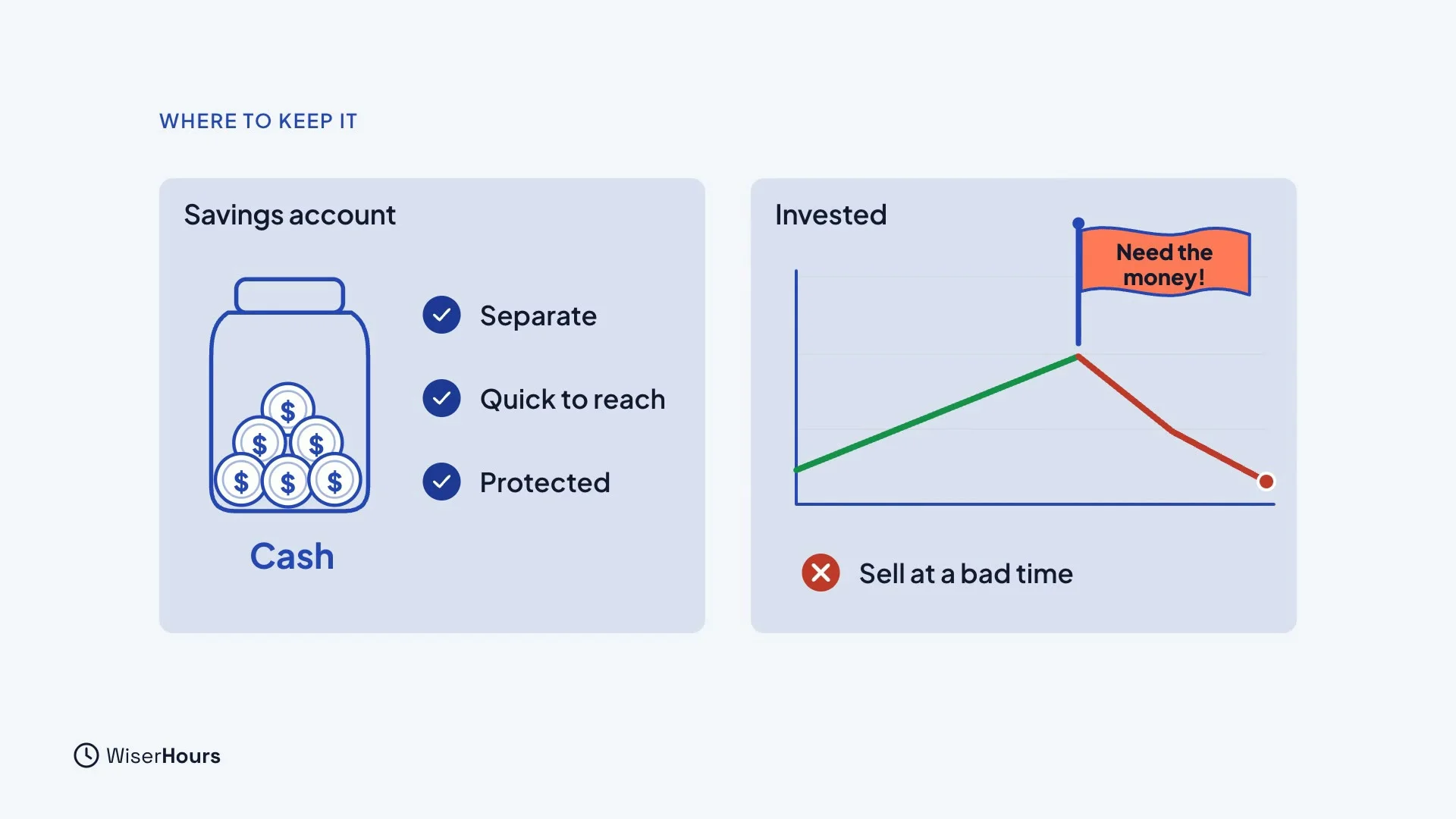
Keep this money as cash, in a separate savings account you can reach quickly, at a bank covered by your country’s deposit protection scheme. Do not invest it. If prices fall just when you need the money, you would have to sell at a bad time.
 (opens the full-size picture)
Step two: costly debt
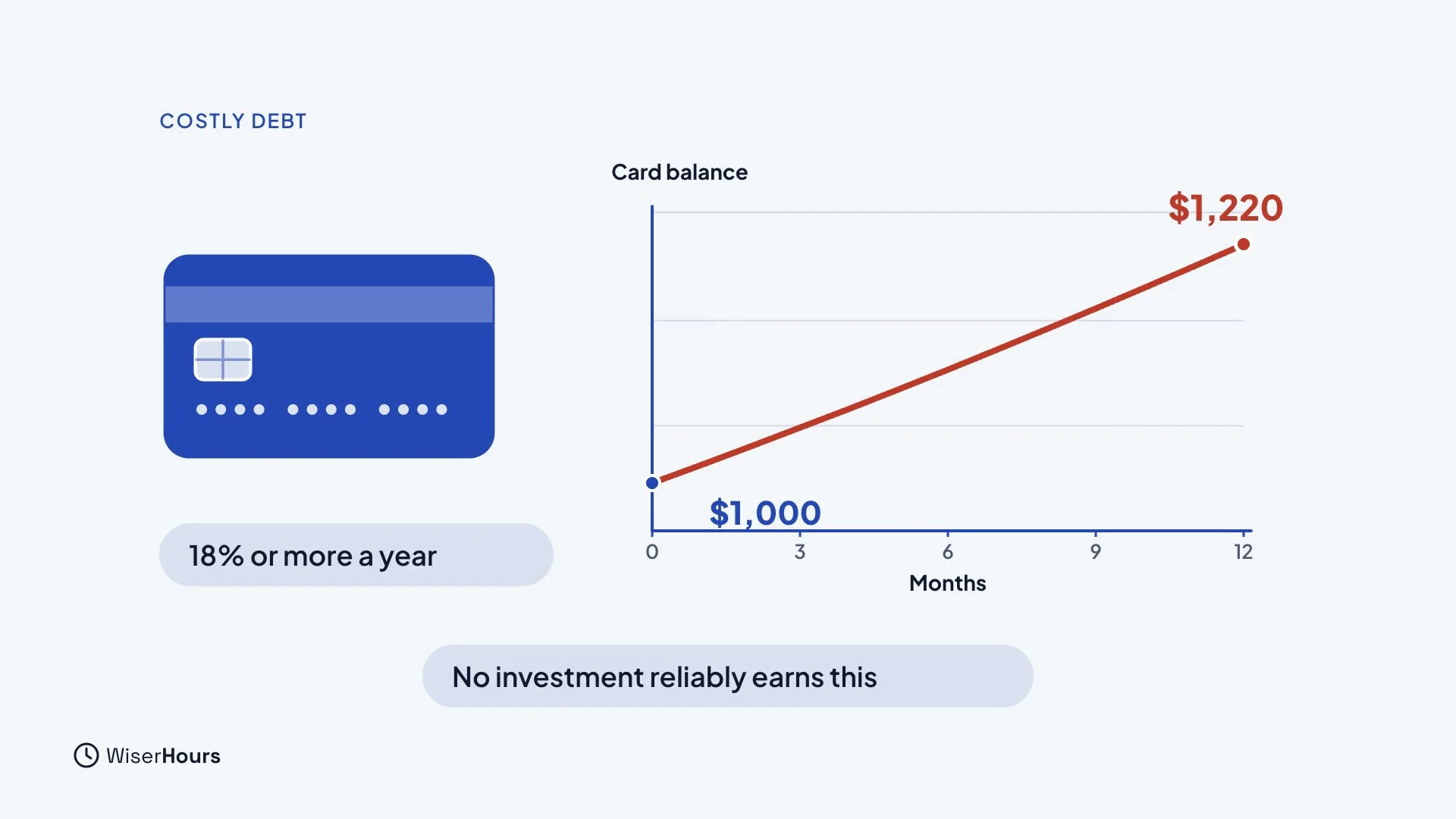
The second step is expensive debt. Credit cards often charge 18 percent a year or more. Leave a 1,000 dollar balance for a year at 20 percent, and it grows to about 1,220 dollars. Virtually no investment reliably earns that much, so clearing the debt comes first.
 (opens the full-size picture)
Highest rate first
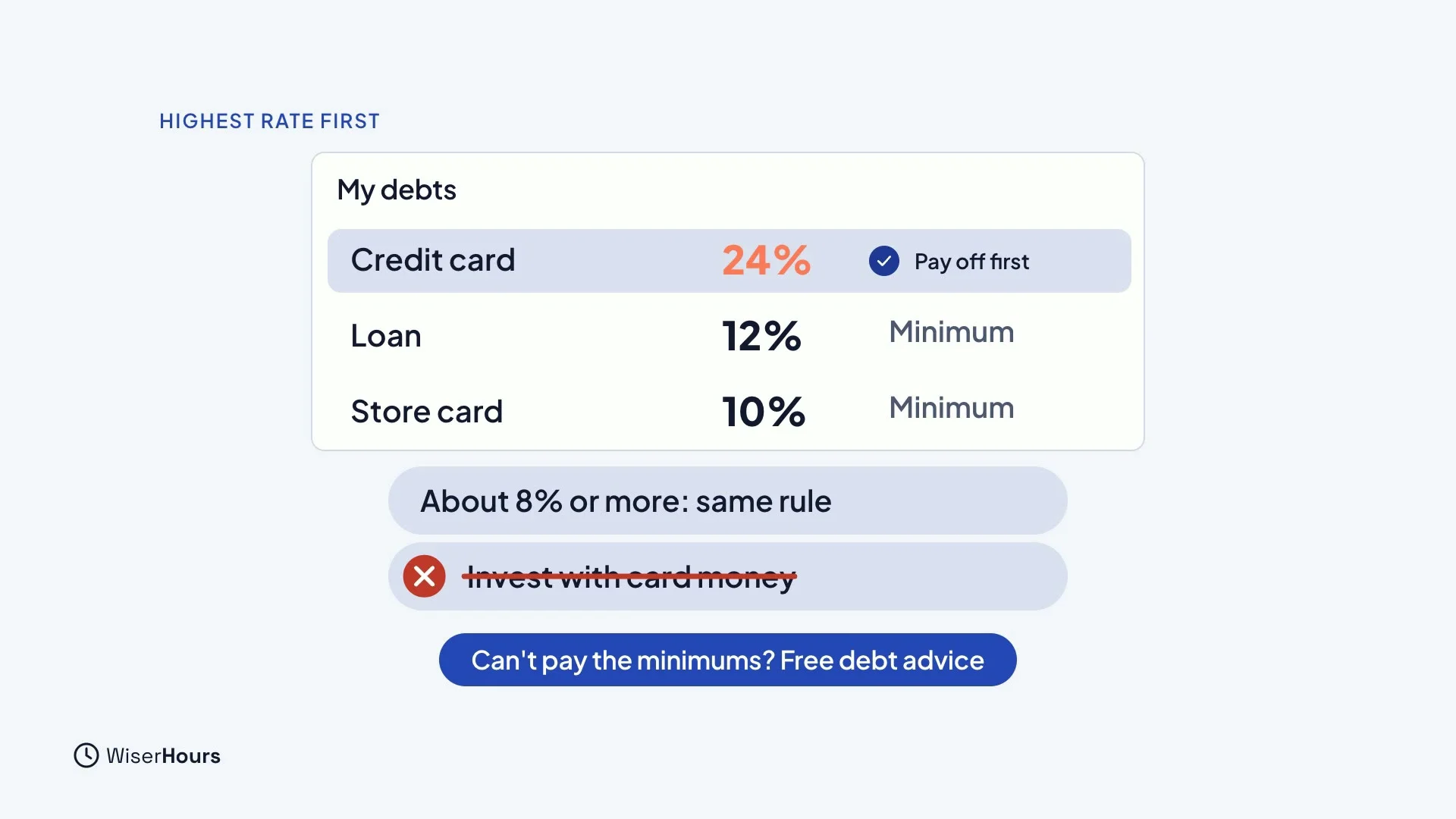
Pay off the most expensive debt first, and pay the minimum on everything else. Treat other loans at about 8 percent or more the same way. Never invest with money borrowed on a card. And if you cannot cover the minimum payments, get free debt advice first.
 (opens the full-size picture)
If there is little left each month
These two steps are the whole plan for now, and that is fine. A cushion and less expensive debt put you in a stronger position when you do start investing.
YOUR TURN
This is general education, not personal advice. For your own decisions, see a regulated adviser or a free debt advice service.
Read more
- Emergency Fund Basics: What It’s For, How Big, and Where to Keep It: how to size and build your cushion.
- How Debt Works: Principal, Interest, and Why Time Matters So Much: why interest makes debt grow.
- Debt Snowball vs. Debt Avalanche: What the Research Says: two ways to order your payments.
- Investing for Beginners: How It Works and Where to Start: where these two steps fit in the full order.
Read the full lesson script
Before you put a single dollar into investments, two things come first. In this lesson, you'll see what they are, and why they matter so much.
The first is an emergency fund. That's cash you set aside for things you didn't plan for, like a car repair, a big bill, or losing your income. Without it, a surprise cost often goes on a credit card, and a short shock turns into debt that lasts.
Even a small cushion makes a real difference. In one US survey, about 79 percent of people with no savings had trouble paying a bill in the past year. With some savings, but less than a month's income, it was 44 percent. With at least a month saved, it was only about 6 percent.
So how much should you keep? A common guide is three to six months of your essential costs, like rent, food, bills and getting to work. That can feel like a lot, so start smaller. A good first target is about one month of take-home pay. For example, if you take home 3,200 dollars a month, aim for 3,200 dollars first, and build up from there.
Keep this money as cash, in a separate savings account you can reach quickly, at a bank covered by your country's deposit protection. Don't invest it. If prices fall just when you need the money, you'd have to sell at a bad time.
The second step is expensive debt. Credit cards often charge 18 percent a year or more. Leave a 1,000 dollar balance for a year at 20 percent, and it grows to about 1,220 dollars. Virtually no investment reliably earns that much.
So pay off the most expensive debt first, and pay the minimum on everything else. Treat other loans at about 8 percent or more the same way. Never invest with money borrowed on a card. And if you can't cover the minimum payments, get free debt advice first.
So remember: build a cash cushion first, starting with one month of take-home pay. Pay off expensive debt, highest rate first. And if there's little left over each month, these two steps are the whole plan for now, and that's fine. Before the next lesson, add up one month of your essential costs. In the next lesson, you'll see how money can grow on its own growth.
MAKE IT A SMALL WIN
Finished this lesson?
Mark it complete to save your progress on this device.