Where to invest · Lesson 6 of 11
Index Funds Explained: Owning a Whole Market Cheaply
Learn what an index and an index fund are, why they are usually cheap, where they still carry risk, and the five questions to ask before you choose one.
 Video coming soon
There is a simple way to own a small piece of hundreds or thousands of companies at once. In this lesson you learn what an index fundindex fund: A mutual fund or exchange-traded fund that aims to track a market index by holding the securities in it, or a sample of them. Tracking an index does not protect against losses, and funds tracking the same index can charge very different fees.Full entry in the glossary is, why so many beginners start there, and what to check. You will not be told which one to buy. The aim is to help you read any fund’s description.
What an index is
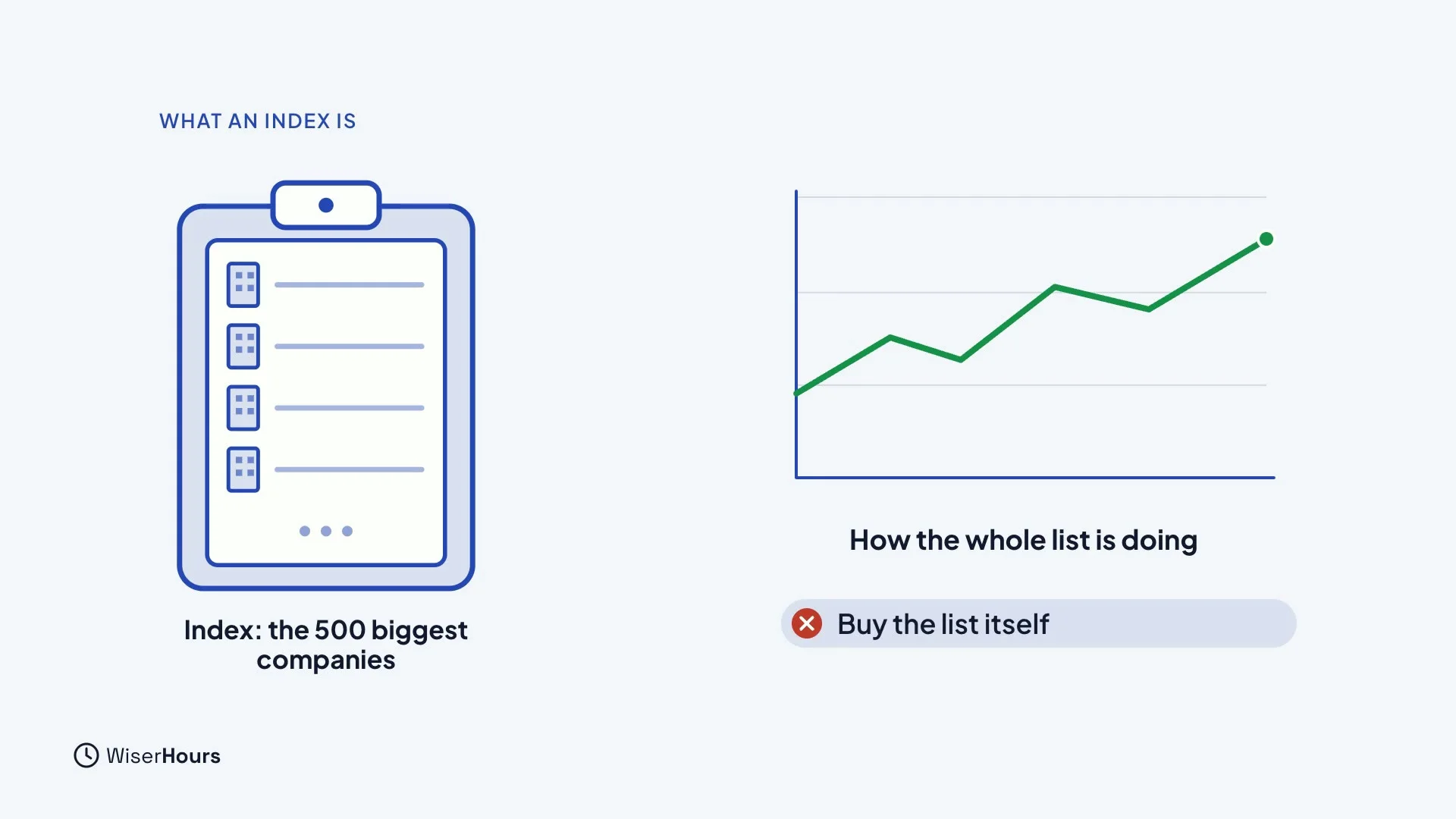
First, what is an index? A market indexmarket index: A defined list of securities, such as the shares of a country's largest companies, whose prices are combined into one number to show how that part of the market is doing. The index itself cannot be bought; funds that copy it charge costs.Full entry in the glossary is a list of companies that stands for a market, such as the biggest companies in one country. Its value shows how that whole group is doing. You cannot buy an index itself, because it is just a list.
 (opens the full-size picture)
The fund copies the list
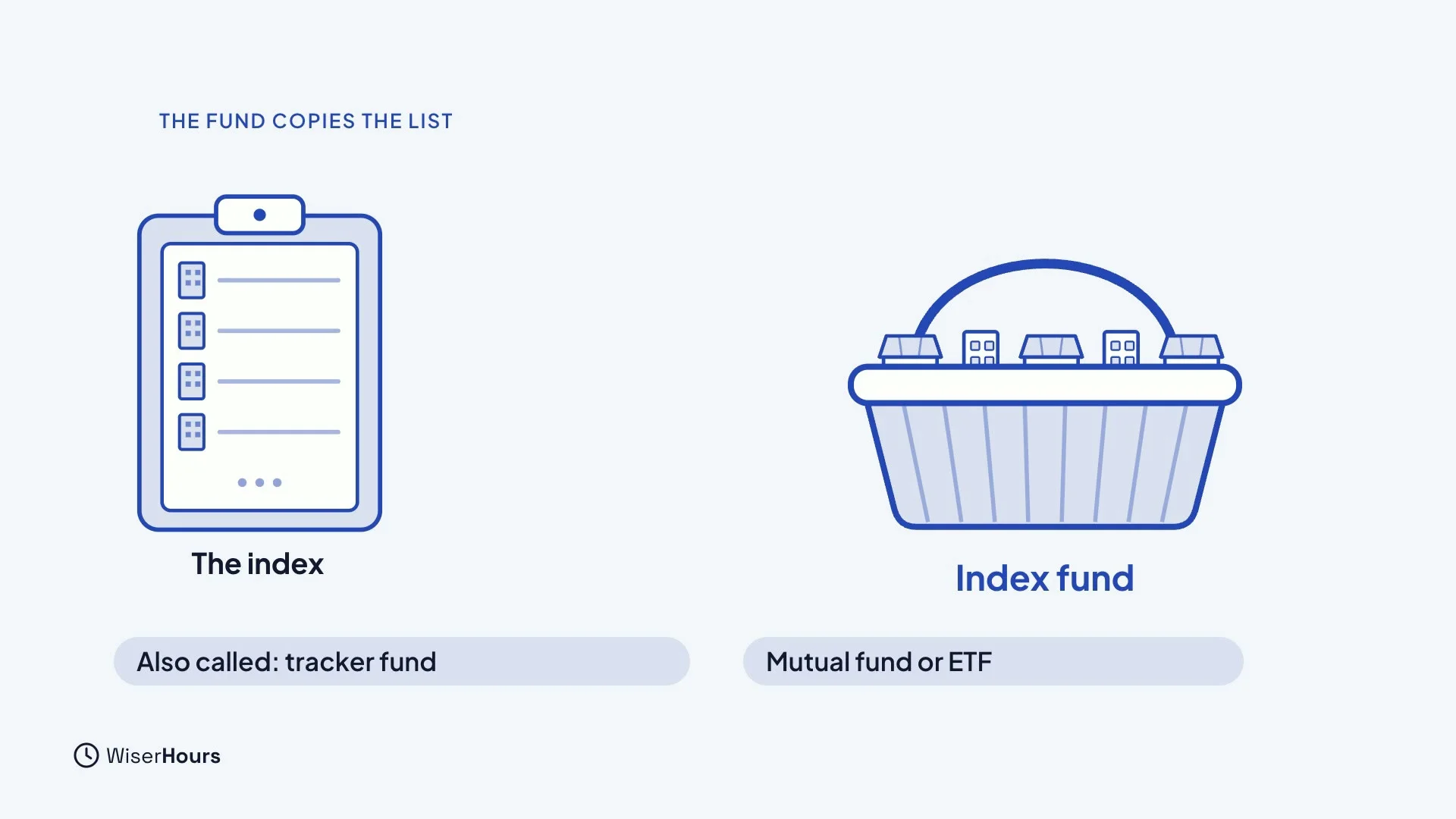
An index fund copies that list. It buys all the companies in the index, or a careful sample, so its returns follow the index. In the UK it is often called a tracker fund. It can be a mutual fund, or an ETFexchange-traded fund: A pooled fund whose shares are bought and sold on a stock exchange during the day, like a company's shares. Many track a market index, but some are narrowly focused or use complex strategies, and fees, risks and tax treatment differ between funds and countries.Full entry in the glossary, which is a fund you buy and sell on a stock exchange.
 (opens the full-size picture)
Usually cheaper
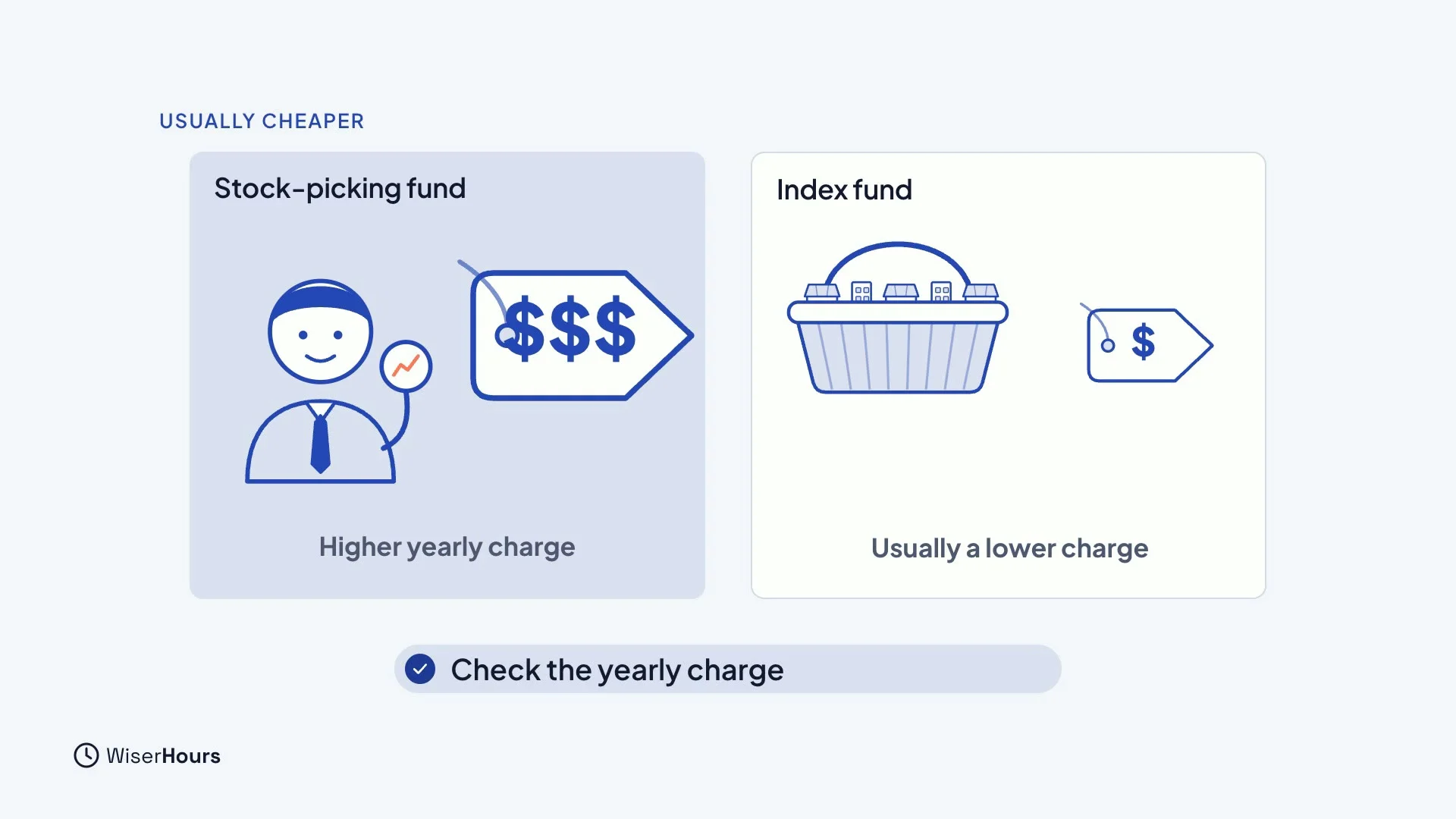
Because nobody is paid to pick stocks, index funds usually cost less to run. But not always, so check the yearly charge. The charge comes out of your money every year, and a later lesson shows how much a small difference adds up to.
 (opens the full-size picture)
Most pickers fall behind
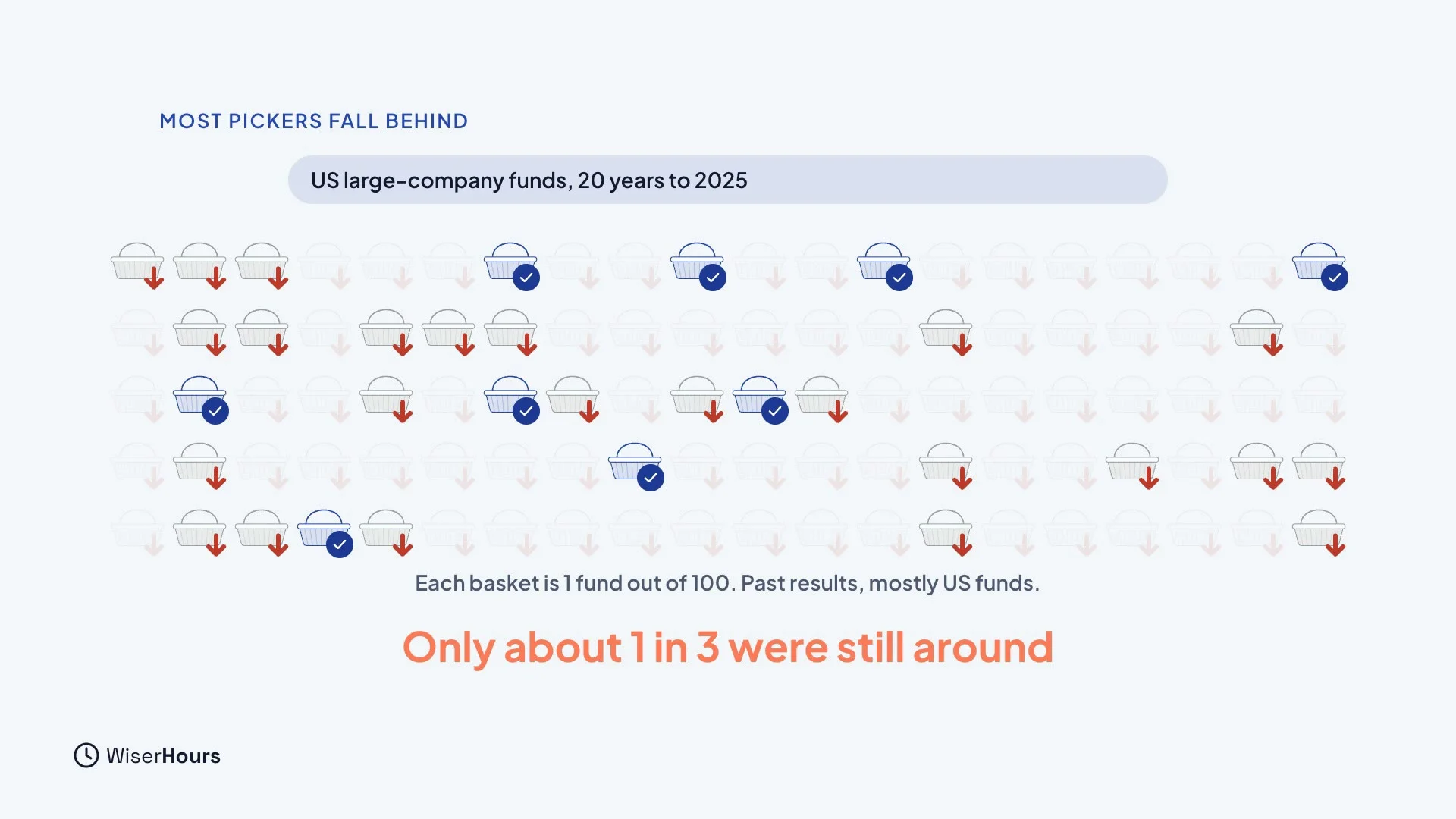
Funds where managers pick stocks are trying to beat their index. Over long periods, most do not. In one count of US large-company funds, 91 percent did worse than their index over 20 years. And only about a third of those funds were still around at the end. These are past results, mostly from US funds, and they do not predict the future.
 (opens the full-size picture)
Not risk-free
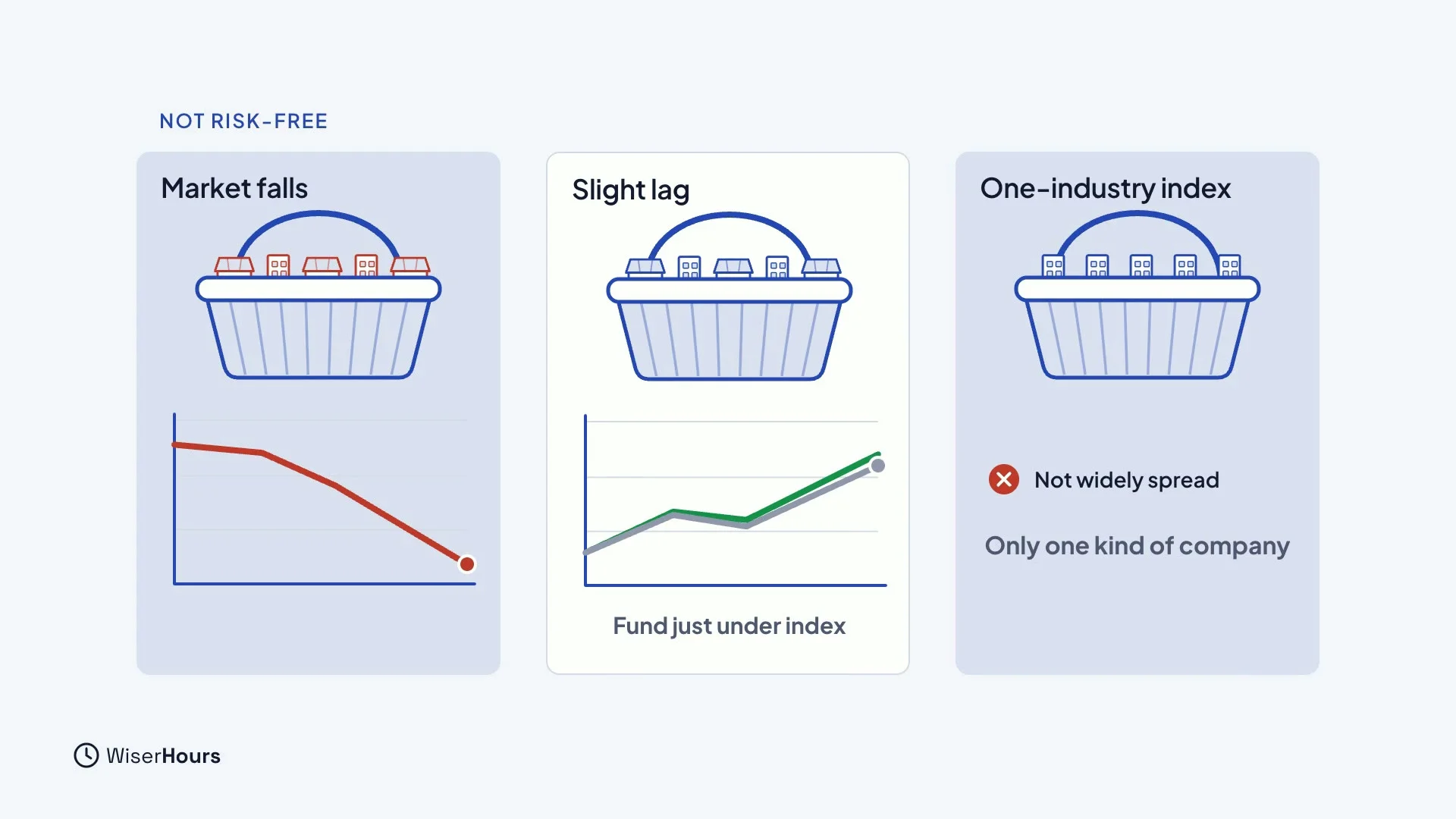
An index fund is not risk-free. When the market falls, the fund falls too. It can trail its index slightly, because of fees and trading costs. And a fund that tracks just one industry will not spread your money widely.
 (opens the full-size picture)
Five questions before you choose
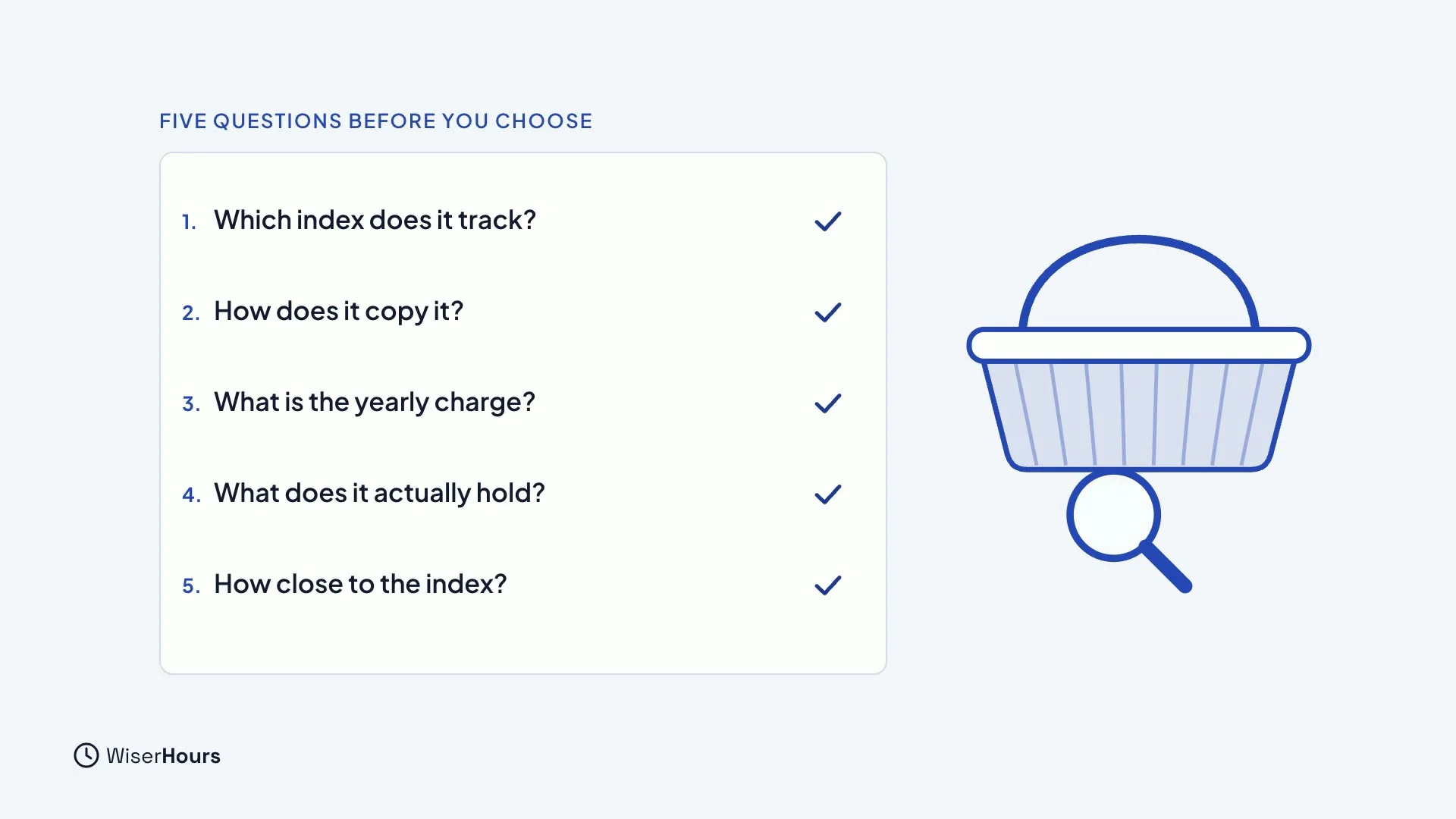
Before you choose any fund, ask five questions. Which index does it track? How does it copy it? What is the yearly charge? What does it actually hold? And how close has its return been to the index over several years? The answers are usually in the fund’s own information sheet.
 (opens the full-size picture)
YOUR TURN
This lesson names no fund and recommends none. Check any firm on your regulator’s register, and for your own decisions see a regulated adviser.
Read more
- What Is an Index Fund? How Tracking a Market Index Works: how tracking works, with the risks and costs in detail.
Read the full lesson script
There's a simple way to own a small piece of hundreds or thousands of companies at once. In this lesson, you'll learn what an index fund is, and why so many beginners start there.
First, what's an index? It's a list of companies that stands for a market, such as the biggest companies in one country. Its value shows how that whole group is doing. You can't buy an index itself, because it's just a list.
An index fund copies that list. It buys all the companies in the index, or a careful sample, so its returns follow the index. In the UK, it's often called a tracker fund. It can be a mutual fund, or an ETF, which is a fund you buy and sell on a stock exchange.
Because nobody is paid to pick stocks, index funds usually cost less to run. But not always, so check the yearly charge.
Funds where managers pick stocks are trying to beat their index. Over long periods, most don't. In one count of US large-company funds, 91 percent did worse than their index over 20 years. And only about a third of those funds were still around at the end.
An index fund is not risk-free. When the market falls, the fund falls too. It can trail its index slightly, because of fees and trading costs. And a fund that tracks just one industry won't spread your money widely.
Before you choose any fund, ask five questions. Which index does it track? How does it copy it? What's the yearly charge? What does it actually hold? And how close has its return been to the index over several years?
So remember: an index fund copies a list of companies, so you own a whole market in one go. It's usually cheap, but it still falls when the market falls. And always check the index and the charge. Before the next lesson, look up one index fund, and find which index it tracks and its yearly charge. In the next lesson, you'll see why that small charge matters so much.
MAKE IT A SMALL WIN
Finished this lesson?
Mark it complete to save your progress on this device.