Make it part of your week · Lesson 10 of 11
How to Focus While You Study: Fewer Switches, Better Plans
Learn why switching tasks costs you, how to put the phone away and write things down, and how to plan when and where you study.
 Video coming soon
In this lesson you learn how to protect your focus while you study. New material needs your full attention, and that attention is easy to lose. A few simple moves, made before you start, keep more of it on what you are learning.
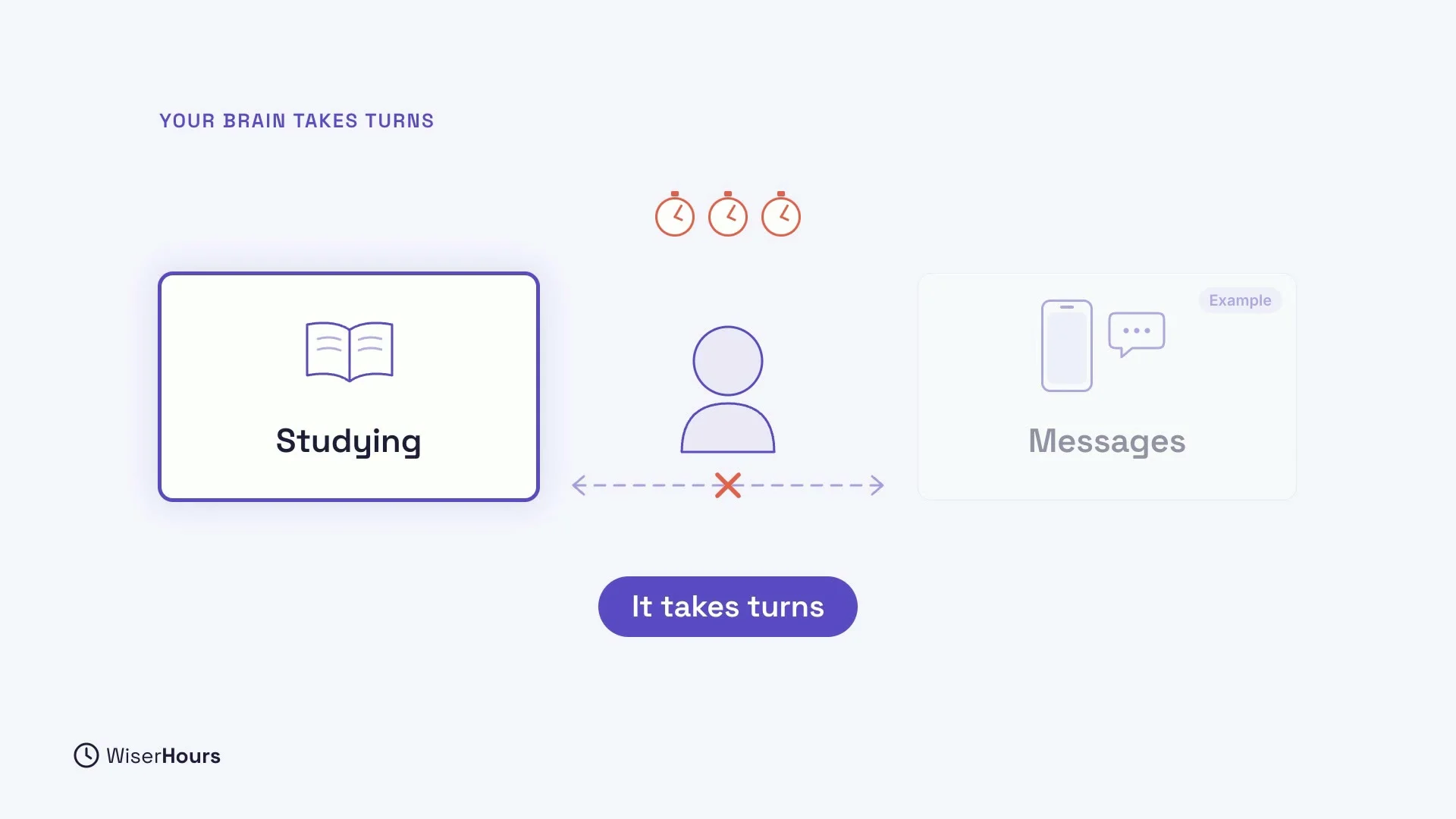
Your brain takes turns
When you try to do two thinking tasks at once, your brain does not run them side by side. It takes turns. Psychologists call this task switchingtask switching: Moving attention from one task to another and later back again. What people call multitasking is usually rapid switching of this kind, and each switch and return tends to cost some time or accuracy.Full entry in the glossary: each time you change task, you drop the rules of one and pick up the rules of the other. And every switch between them costs a little time.
 (opens the full-size picture)
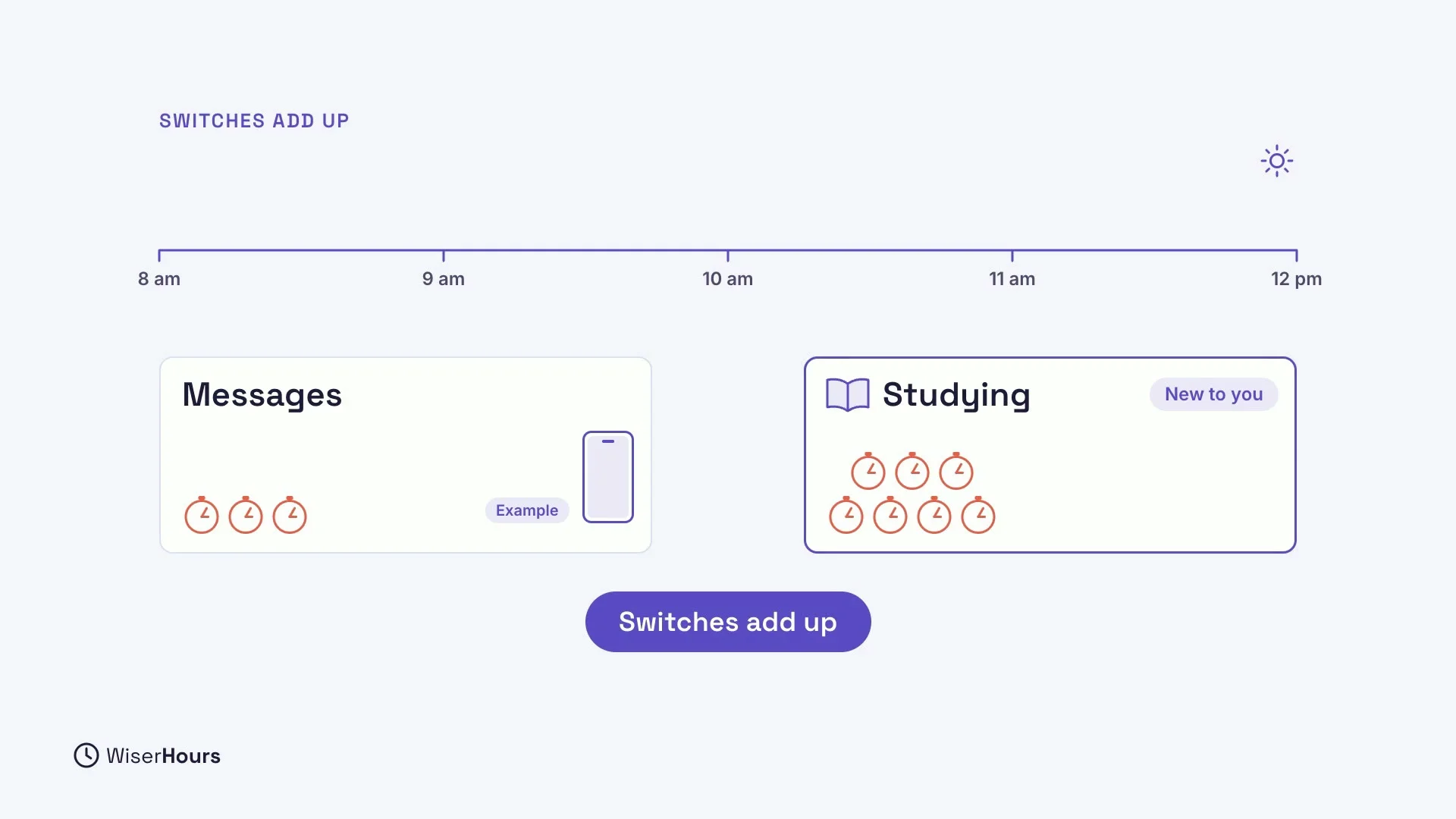
Switches add up
Each switch is small, but they add up when you go back and forth all morning. And the task you know least well pays the most. That is usually the new thing you are trying to learn. For example, if you check messages every few minutes while you study, most of the cost lands on the studying.
 (opens the full-size picture)
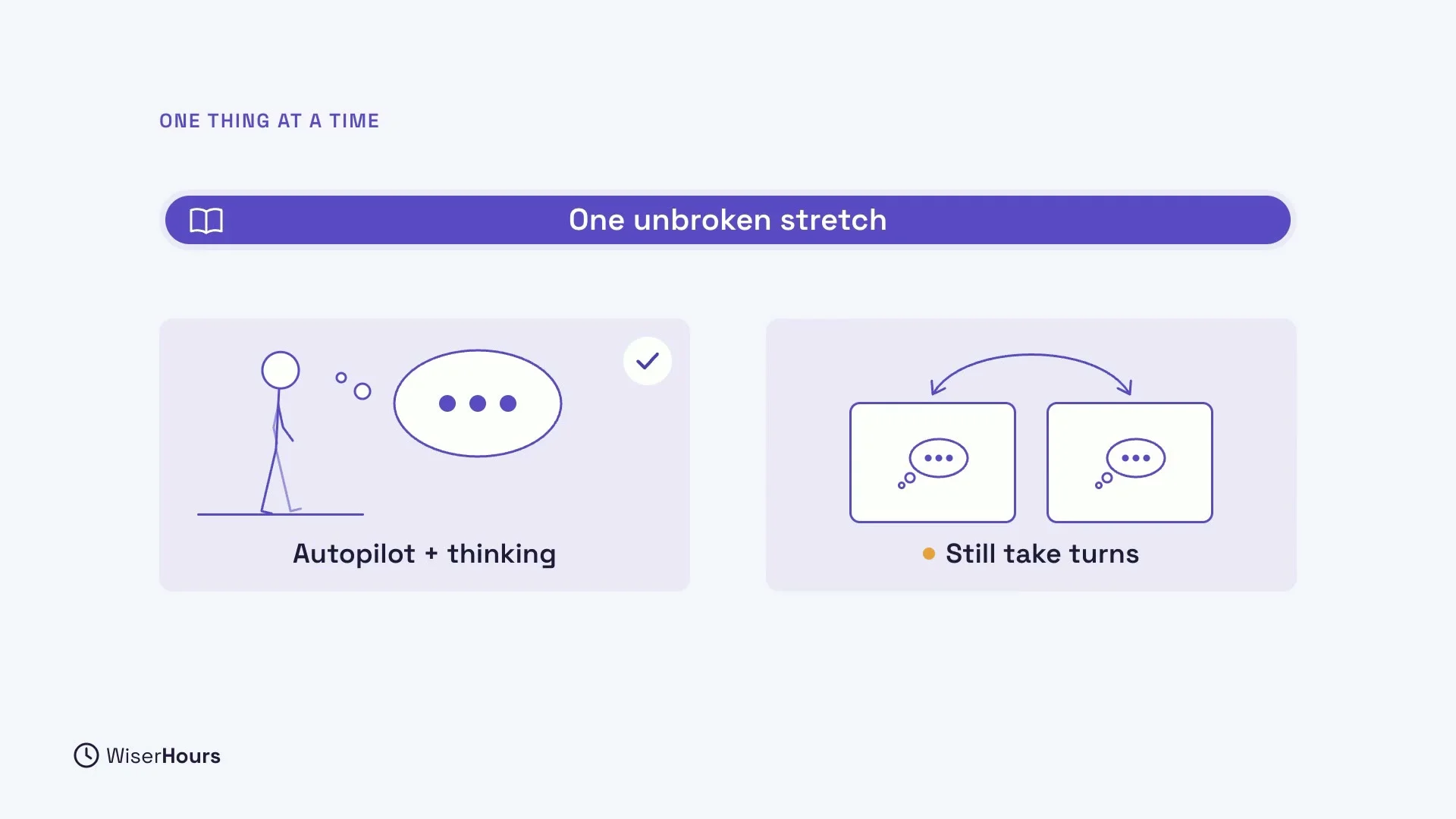
One thing at a time
So give new material one unbroken stretch of time. The only easy pairing is a task on autopilot, like walking, with something that needs thought. Two thinking tasks will still take turns, whatever you do.
 (opens the full-size picture)
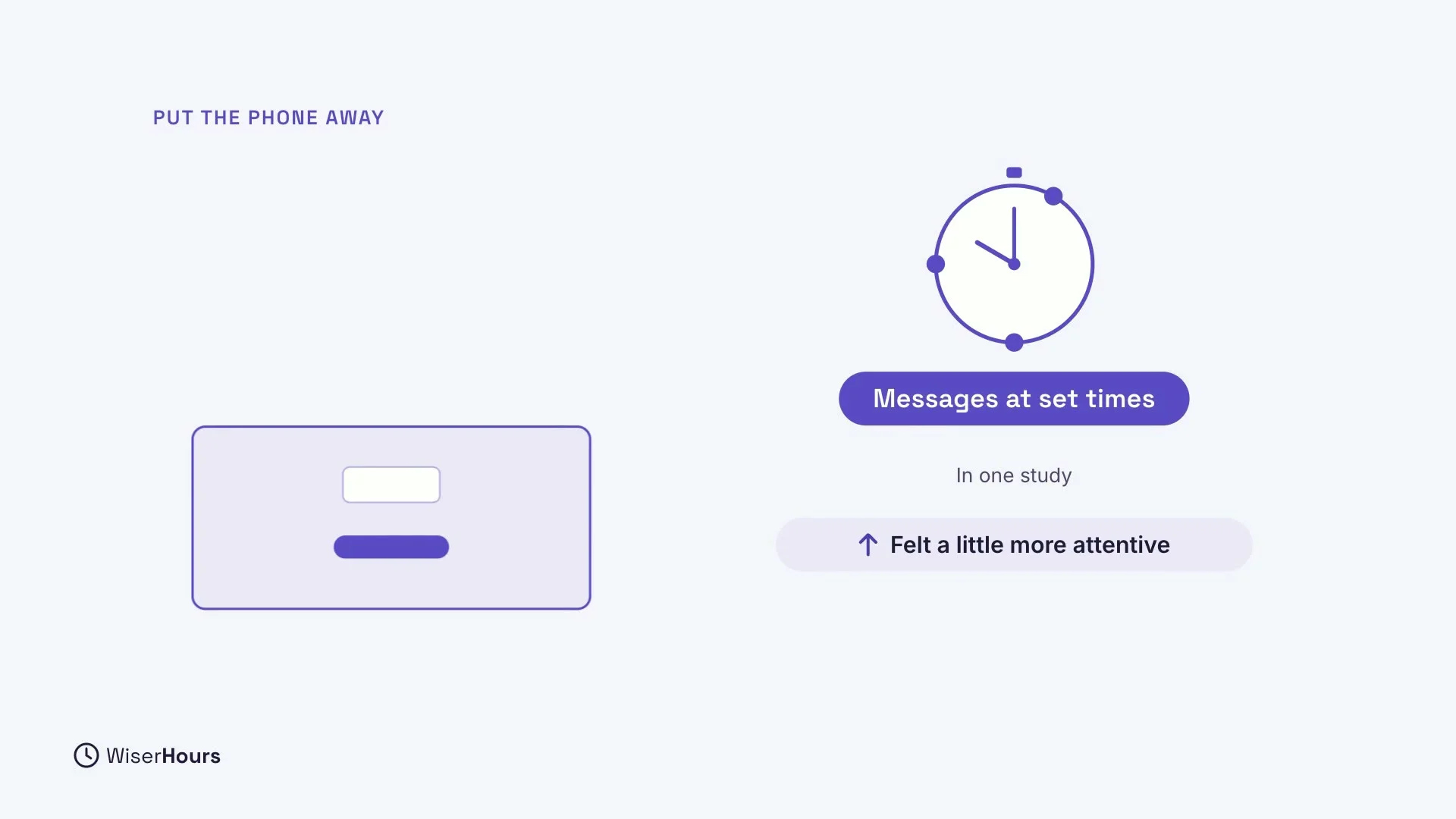
Put the phone away
Turn off the alerts you don’t need, and put your phone in a bag or a drawer. Check messages at set times instead, for example at the start of each break. In one study, fewer alerts and a phone out of sight left students feeling a little more attentive. It is a small change, but it is easy to make.
 (opens the full-size picture)
Write things down
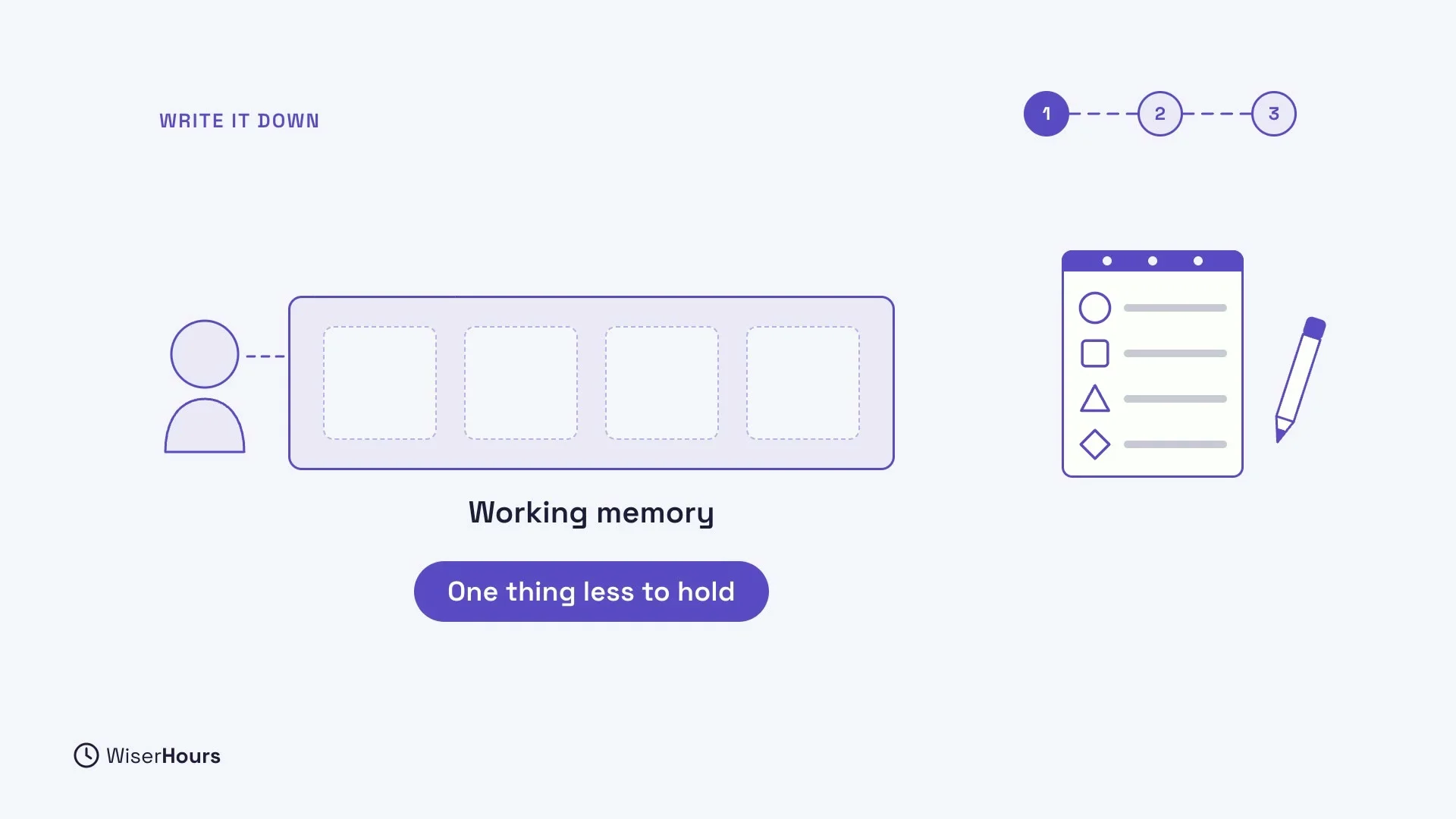
Your working memoryworking memory: The small mental workspace that holds and handles the information you are using right now, such as a phone number you are about to dial. Its capacity is limited, which is why juggling several things at once quickly overloads it.Full entry in the glossary, the small space where you hold things while you use them, fills up fast. So write things down: a question you want to look up, a task you must not forget, the next step of a problem. Each note is one thing less to hold, and more room for what you are learning.
 (opens the full-size picture)
Plan when and where
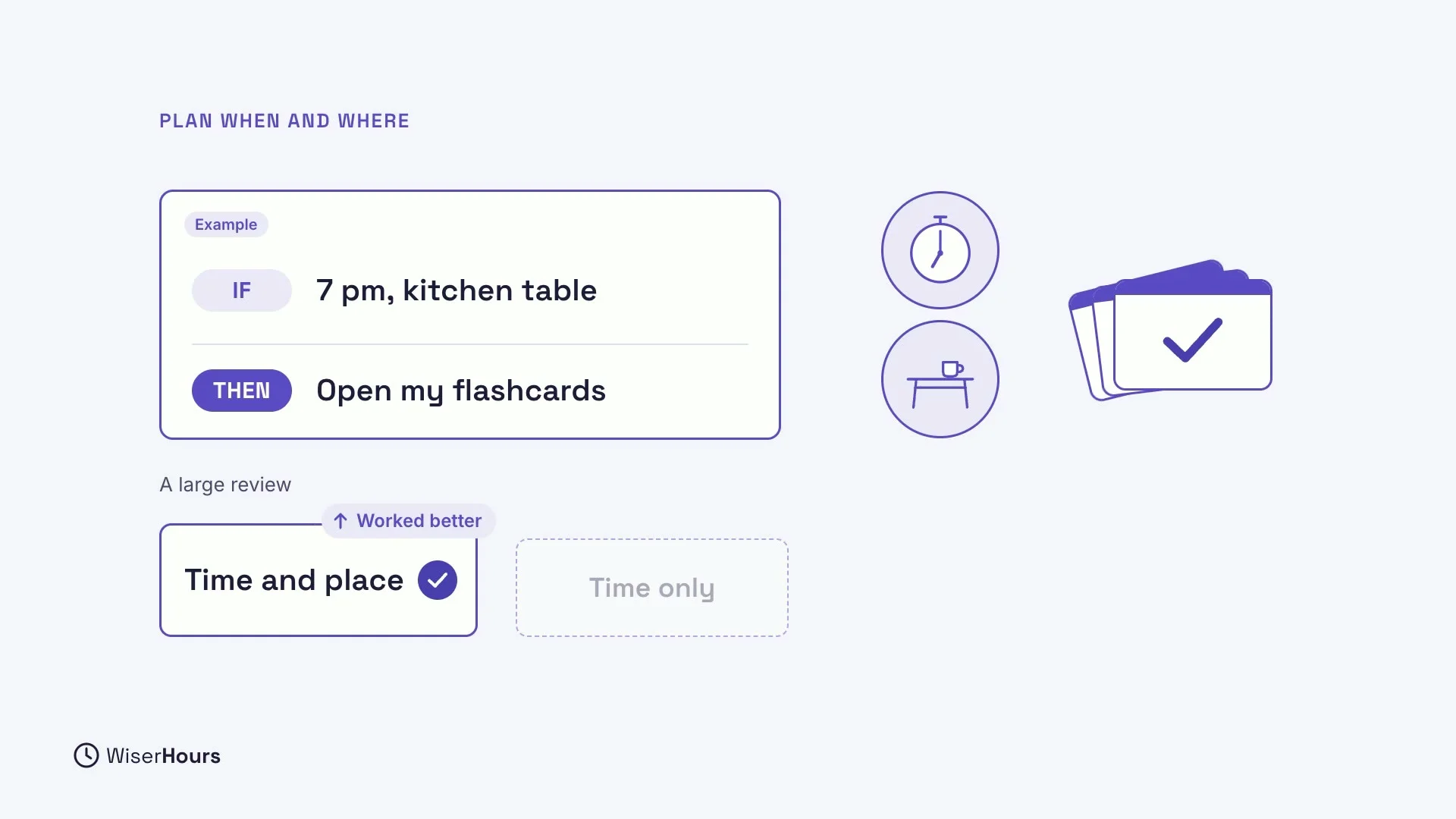
Then decide when and where you will study, as an if-then planimplementation intention: A plan in if-then form that ties a specific action to a specific situation, such as 'if it is nine o'clock, then I open the report.' It hands the decision about when and where to act to the situation itself.Full entry in the glossary. If it is seven in the evening, I open my flashcards at the kitchen table. In a large review, plans with a time and a place worked better than a time alone. The plan makes the decision for you, so when the moment comes, you just start.
 (opens the full-size picture)
Plan for distractions too
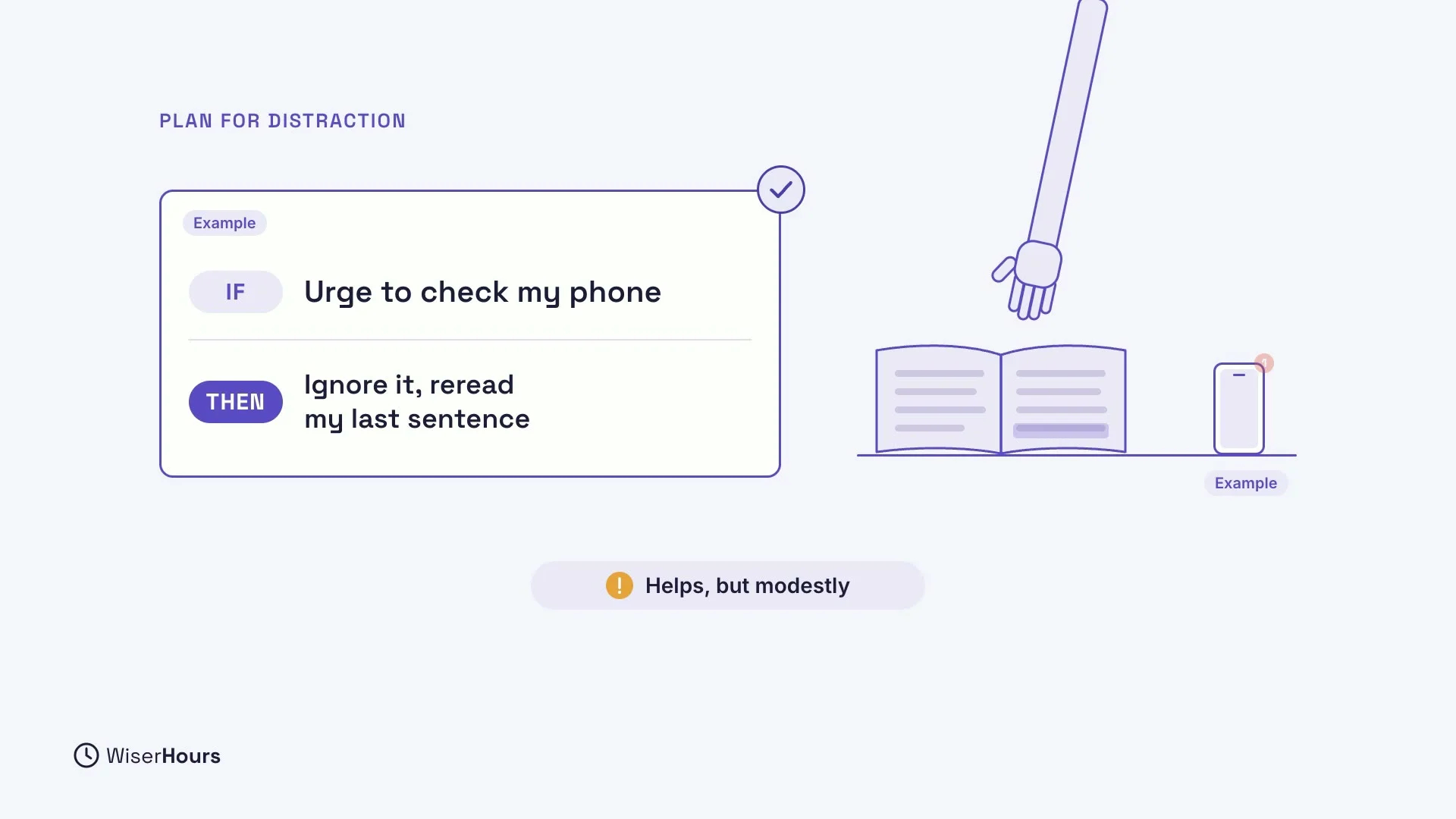
You can plan for distractions too. If I feel the urge to check my phone, then I ignore it and reread my last sentence. Pick the distraction most likely to pull you away, and give it a response you can carry out in seconds.
 (opens the full-size picture)
An honest note
Plans like these help people act on their goals, though the benefit is small. They are quick to make, so they are still worth a try.
YOUR TURN
Read more
- Why Multitasking Doesn’t Work: The Evidence in Plain English: why the brain takes turns, and when doing two things at once is fine.
- How to Focus: A Research-Backed Guide to Concentrating on What Matters: if-then plans, alerts and breaks, with how strong the evidence is for each.
- Working Memory Explained: Your Brain’s Mental Scratchpad: the small space where you hold things, and how to ask less of it.
Read the full lesson script
In this lesson, you will learn how to protect your focus while you study. New material needs your full attention, and that attention is easy to lose.
When you try to do two thinking tasks at once, your brain does not run them side by side. It takes turns. And every switch between them costs a little time.
Each switch is small, but they add up when you go back and forth all morning. And the task you know least well pays the most. That is usually the new thing you are trying to learn.
So give new material one unbroken stretch of time. The only easy pairing is a task on autopilot, like walking, with something that needs thought. Two thinking tasks will still take turns.
Turn off the alerts you don't need, and put your phone in a bag or a drawer. Check messages at set times. In one study, fewer alerts and a phone out of sight left students feeling a little more attentive.
Your working memory, the small space where you hold things while you use them, fills up fast. So write things down. Each note is one thing less to hold.
Then decide when and where you will study, as an if-then plan. If it is seven in the evening, I open my flashcards at the kitchen table. In a large review, plans with a time and a place worked better than a time alone.
You can plan for distractions too. If I feel the urge to check my phone, then I ignore it and reread my last sentence. Plans like this help people act on their goals, though the benefit is small.
So, give new material your full attention, put the phone away, write things down and plan when and where. Before the next lesson, write one if-then study plan with a time and a place. Next, you will drop three popular learning myths and build your weekly plan.
MAKE IT A SMALL WIN
Finished this lesson?
Mark it complete to save your progress on this device.