The two big habits · Lesson 4 of 11
Spaced Practice: How to Spread Your Study Over Days
Learn to spread your study over several days instead of cramming, plan your reviews backward from a date, and choose how long to wait.
 Video coming soon
Spacing means spreading your reviews of a topic over several days instead of cramming them into one. It is the second study habit with the strongest research behind it, and it costs no extra time: you use the same hours, just in a different order. In this lesson you will learn how to plan it.
Same hours, different results
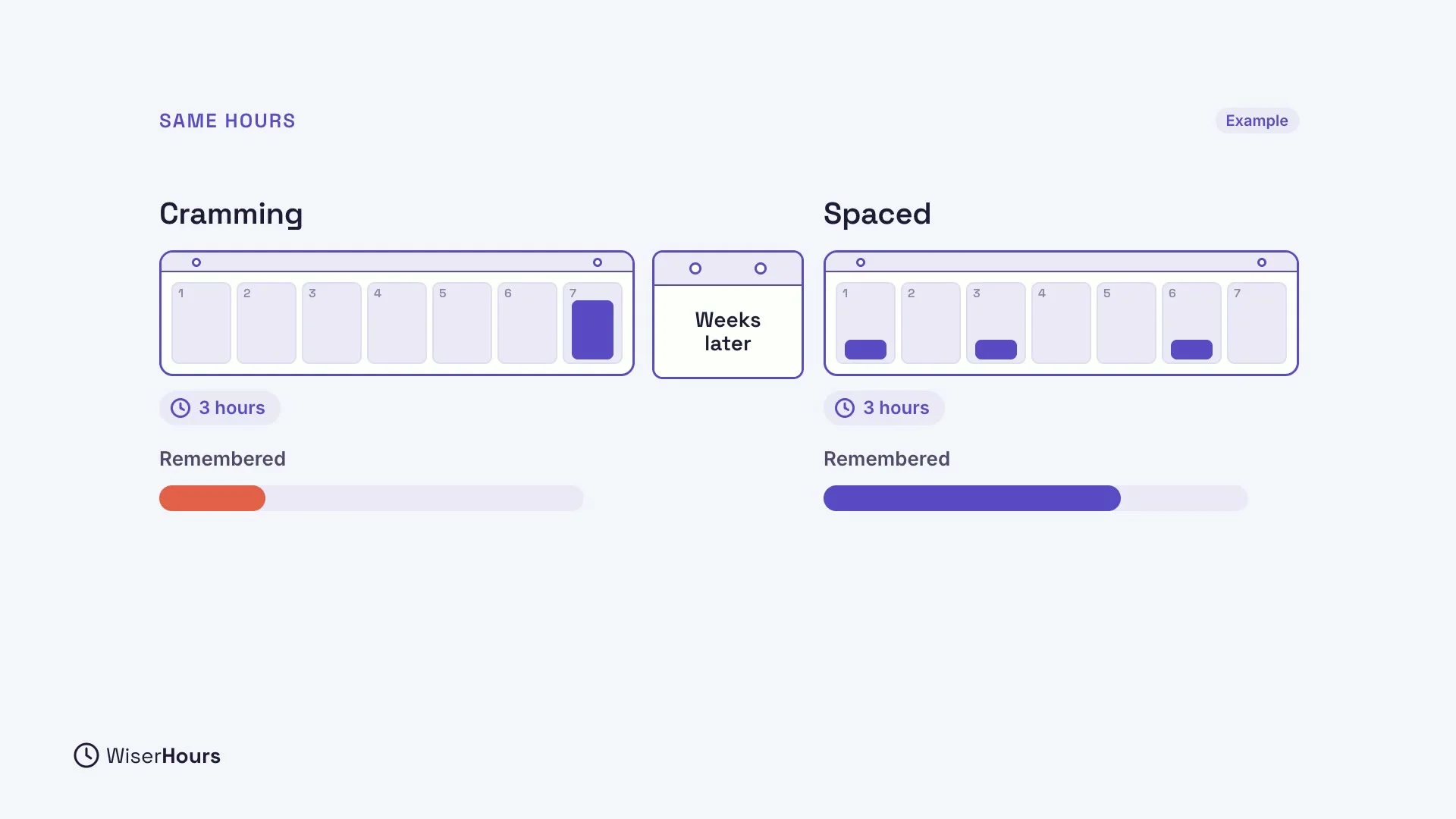
Cramming is better than not studying at all, in the short term. It can get you through tomorrow. But the same hours spread across days or weeks do more for remembering over the long run. Researchers call this distributed practicedistributed practice: Spreading study or practice of the same material across several sessions with gaps between them, rather than cramming it into one. Also called spacing, it tends to give longer-lasting learning than the same time spent in a single block.Full entry in the glossary, or simply spacing.
 (opens the full-size picture)
It feels worse, but works better
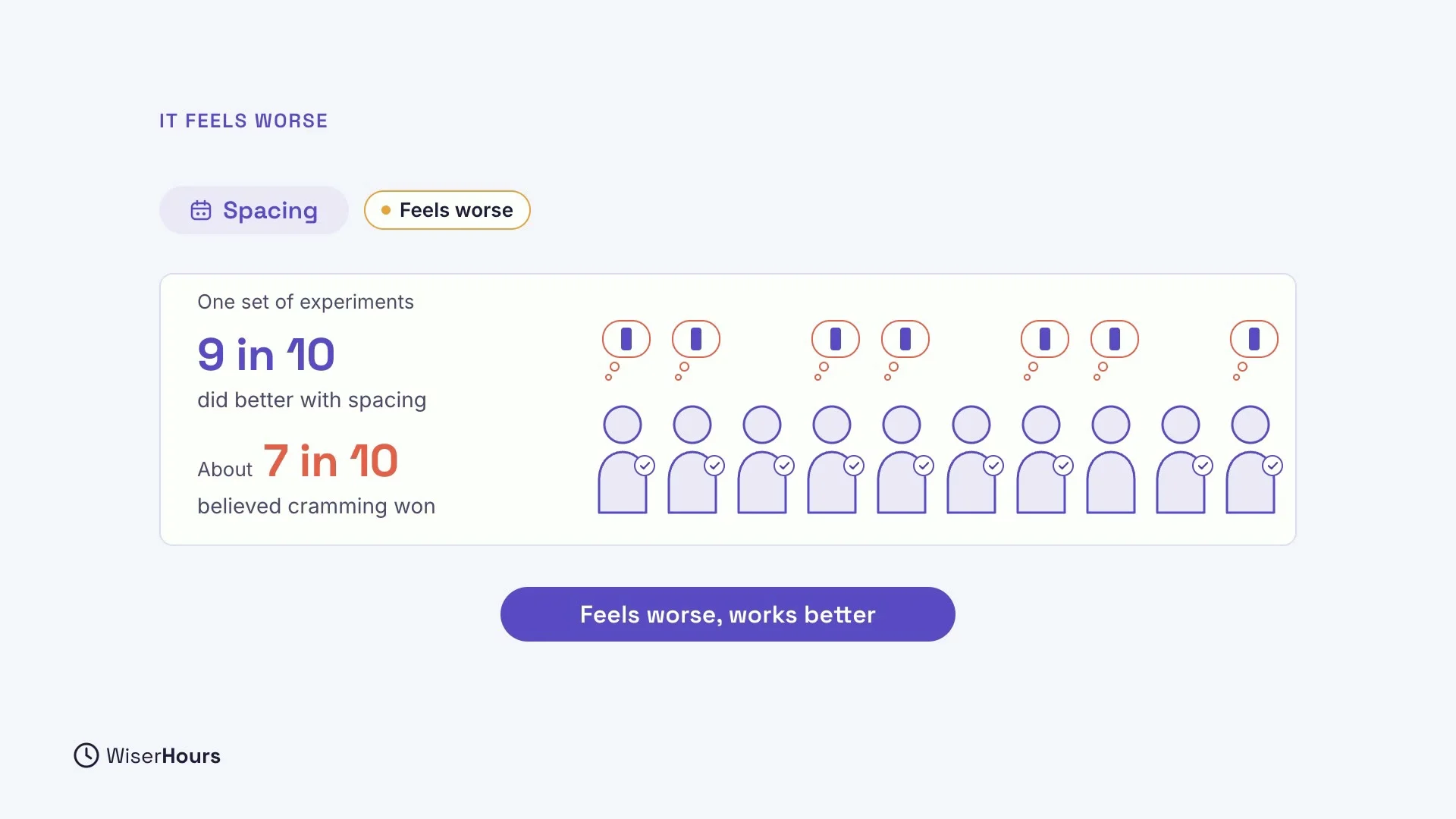
Spacing often feels worse, which is why people skip it. In one set of experiments where people learned word pairs with flashcards, spacing worked better for nine in ten people. Yet after the first session, about seven in ten believed cramming had worked better.
So don’t judge your plan by how it feels on the day. Judge it by what you can remember later.
 (opens the full-size picture)
Rusty is the point
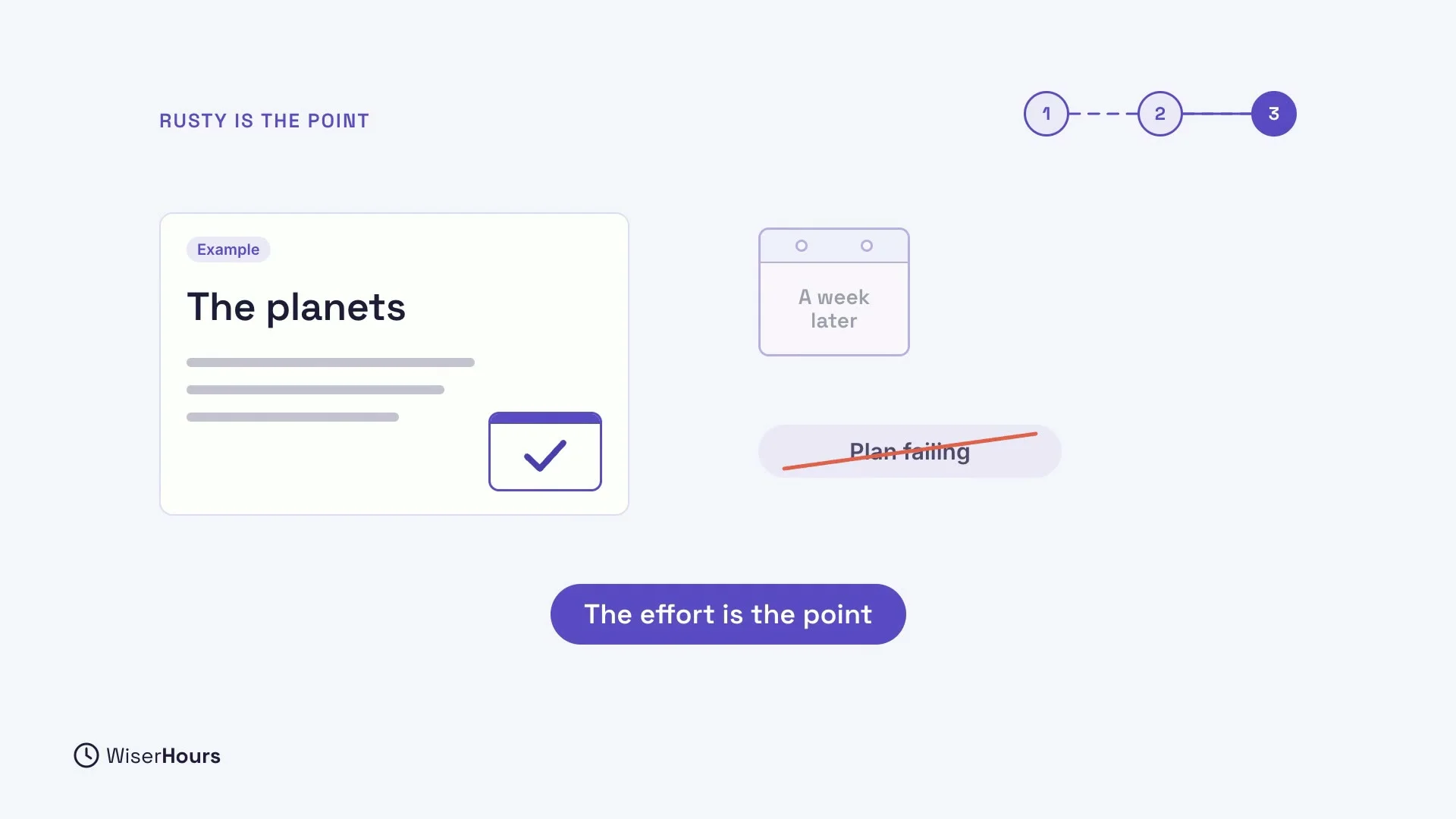
When you come back to a topic after a gap, it may feel rusty. You have to dig to bring things back. That effort is not a sign the plan is failing. It is the reason the gap helps: each time you dig a memory back up, it becomes easier to find next time.
 (opens the full-size picture)
Plan backward from the date
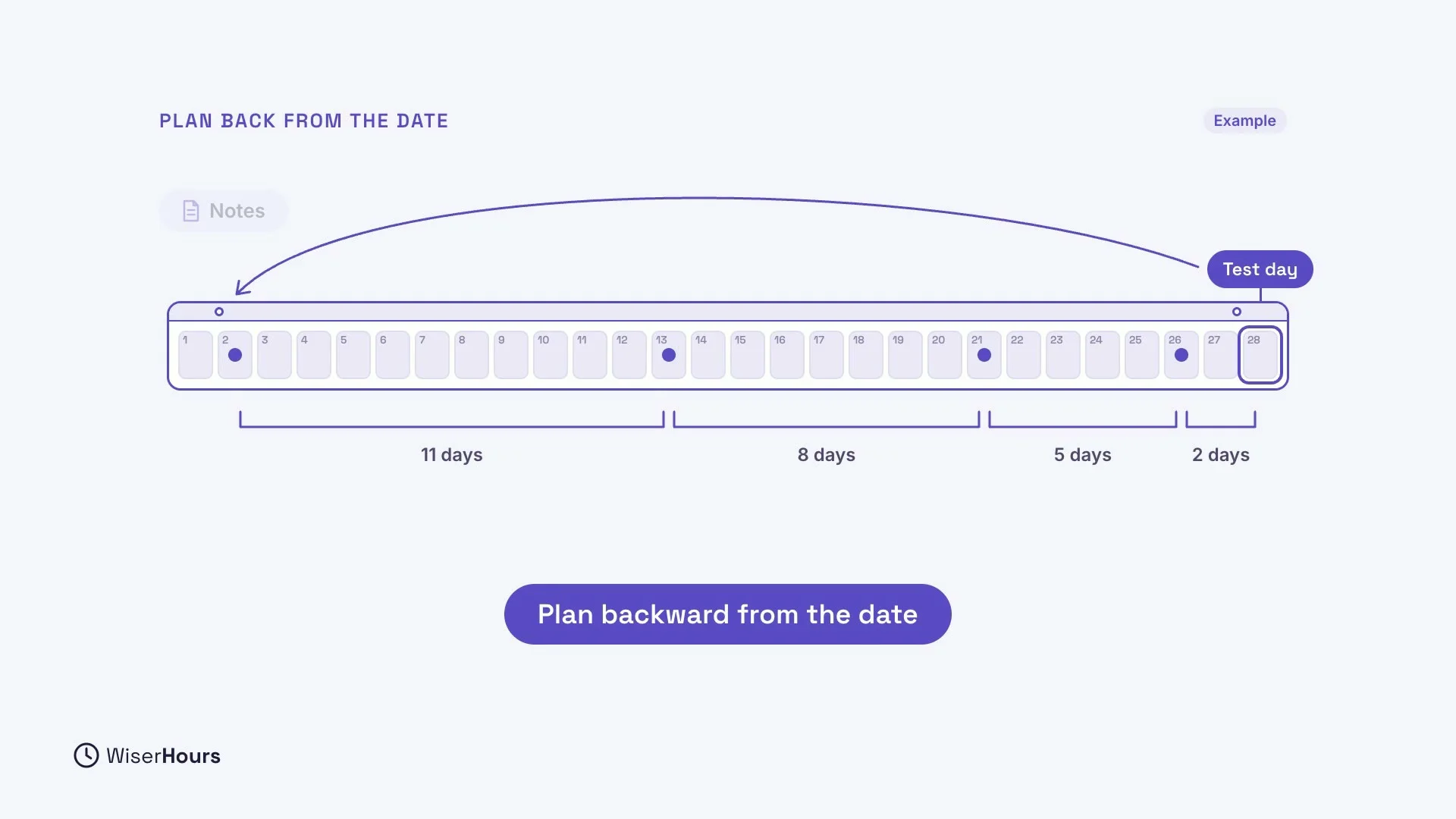
So start with the calendar, not your notes. Write down when you need to know this: a test, a trip, a presentation. Then plan backward from that date. The further away it is, the longer your gaps can be.
The best gap depends on how long you need to remember something. If you need it next week, short gaps are fine. If you need it in a few months, you can wait longer between reviews.
 (opens the full-size picture)
When unsure, wait longer
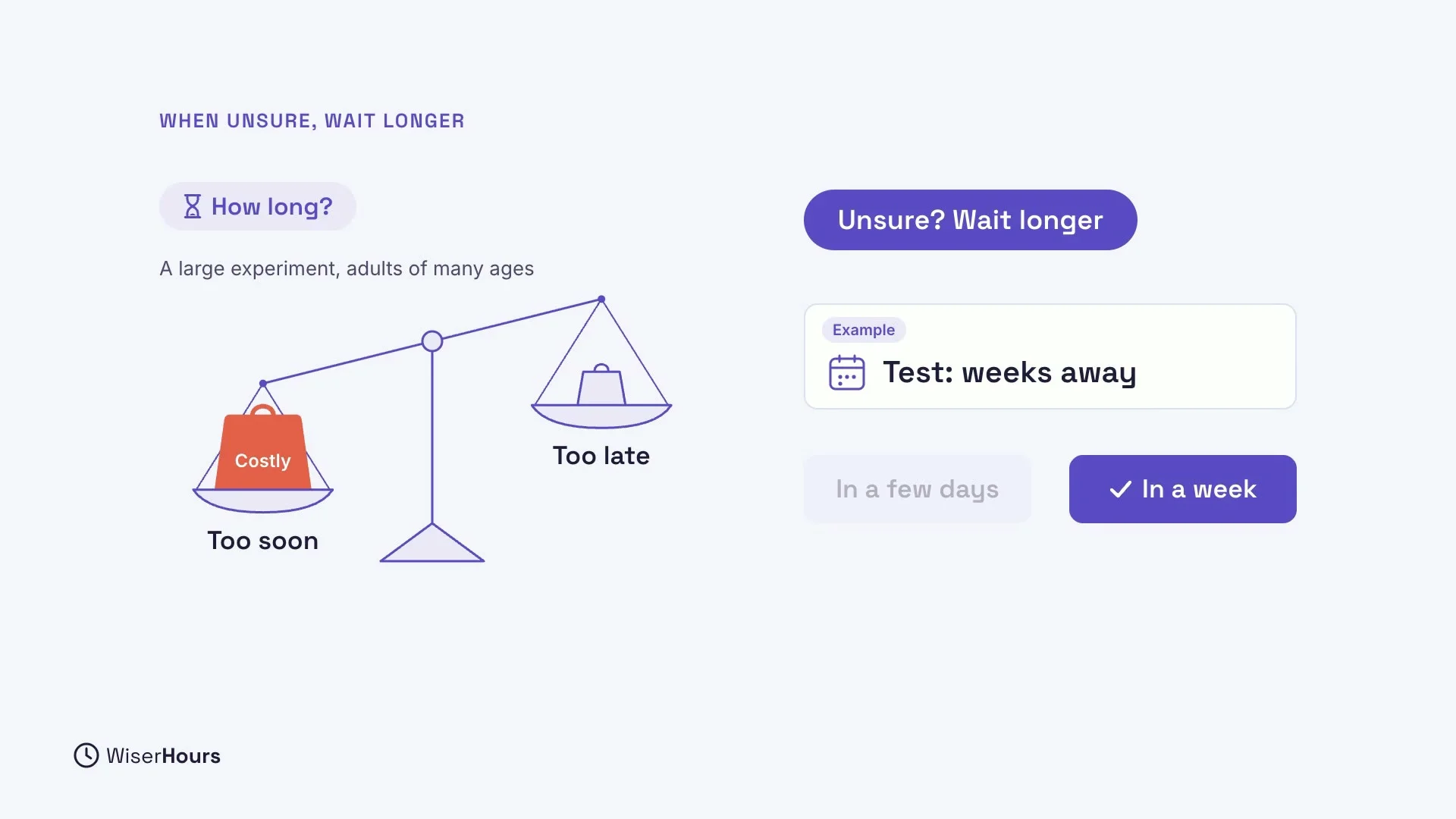
How long should you wait between reviews? In a large experiment with adults of many ages, reviewing too soon cost far more than reviewing too late. So when you are unsure, choose the longer gap. If your date is weeks away, come back after a week, not after a few days.
 (opens the full-size picture)
Three visits for each topic
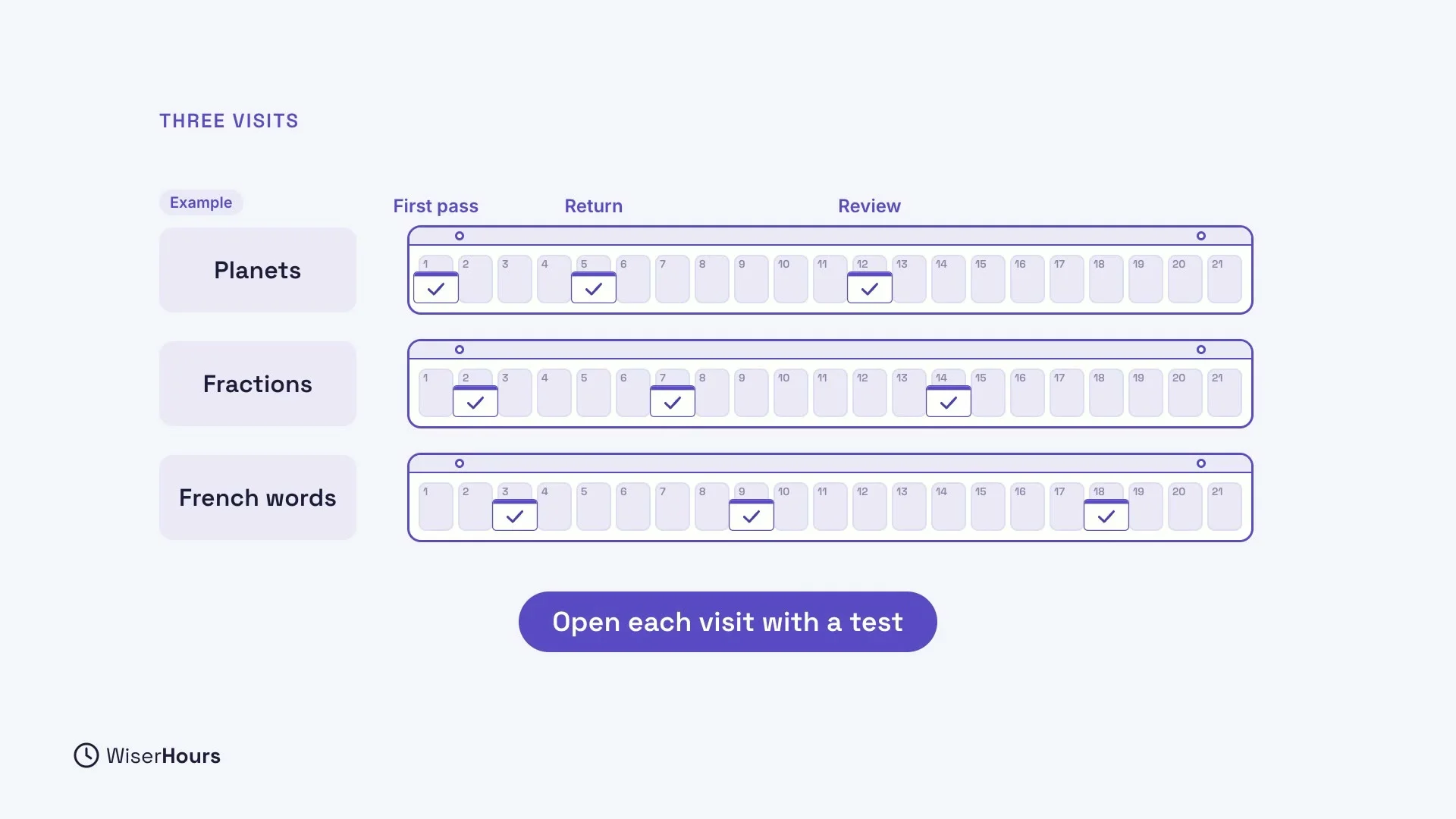
A simple way to start is to give each topic at least three visits on different days:
- A first pass, when you learn it.
- A return after a gap.
- A later review, after a longer gap.
Open each visit by testing yourself: answer a few questions from memory before you look at your notes. What you miss tells you what the visit is for.
 (opens the full-size picture)
A fair warning
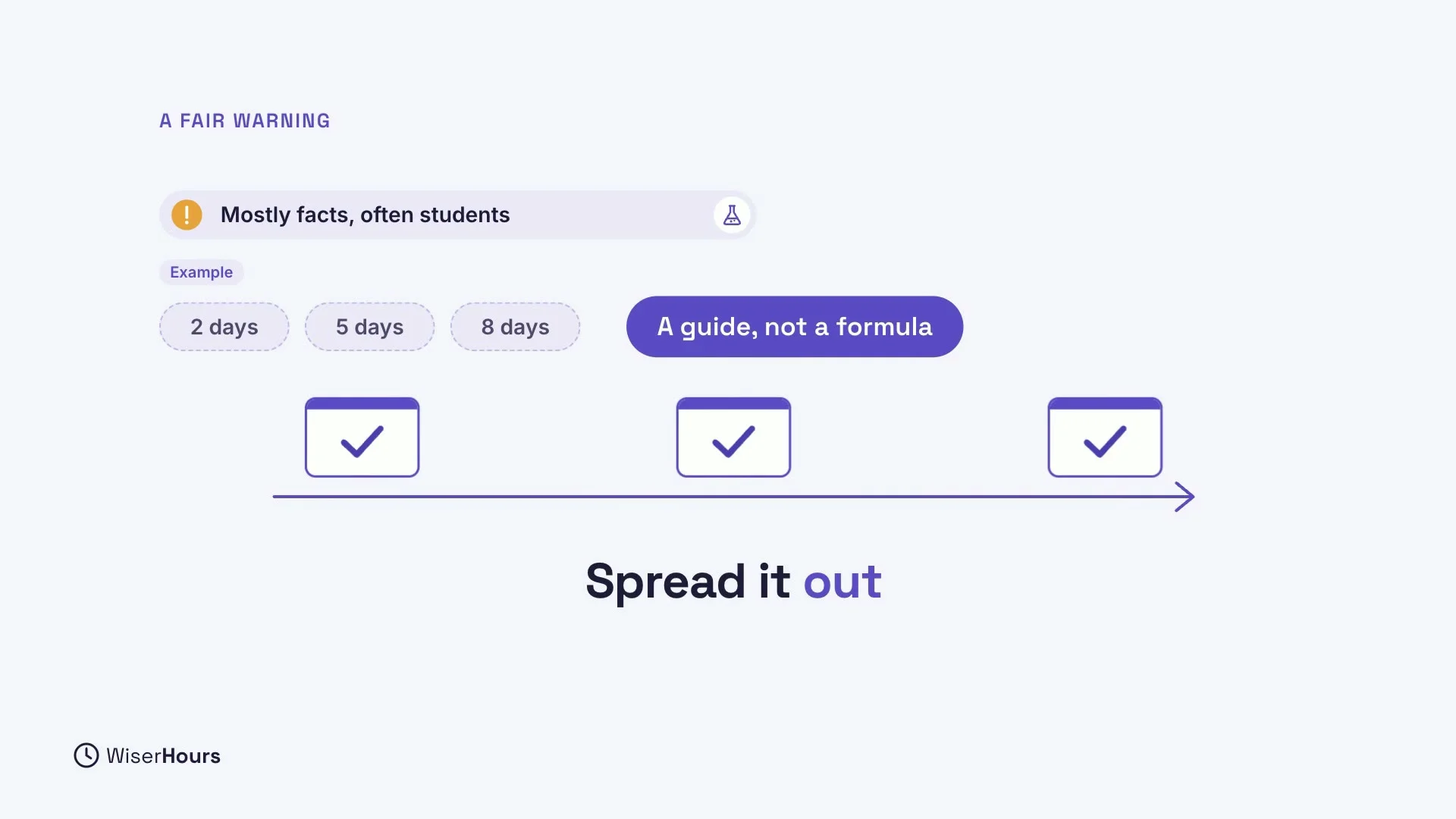
Most of this research involves people learning facts, often students, and many of the experiments used simple material like word pairs or trivia. The exact gaps are a guide, not a formula. But the direction is clear: spread it out.
 (opens the full-size picture)
YOUR TURN
Read more
- How to Study for an Exam: A Research-Backed Plan: how to plan your sessions backward from an exam date, step by step.
- Learning How to Learn: A Research-Backed Guide for Beginners: how spacing fits with testing yourself and the other well-supported habits, including the large experiment on gap length.
Read the full lesson script
In this lesson, you will learn to space out your study. That means spreading your reviews over several days instead of cramming. It is the second habit with the strongest research behind it, and it costs no extra time.
Cramming is better than not studying at all, in the short term. But the same hours spread across days or weeks do more for remembering over the long run.
Spacing often feels worse, which is why people skip it. In one set of experiments, spacing worked better for nine in ten people. Yet after the first session, about seven in ten believed cramming had worked better.
When you come back to a topic after a gap, it may feel rusty. That effort of digging it back up is not a sign the plan is failing. It is the reason the gap helps.
So start with the calendar, not your notes. Write down when you need to know this, then plan backward from that date. The further away it is, the longer your gaps can be.
How long should you wait? In a large experiment with adults of many ages, reviewing too soon cost far more than reviewing too late. So when you are unsure, choose the longer gap. If your date is weeks away, come back after a week, not a few days.
A simple way to start is to give each topic at least three visits on different days. A first pass, a return after a gap, and a later review. Open each visit by testing yourself.
Most of this research involves people learning facts, often students. The exact gaps are a guide, not a formula. But the direction is clear. Spread it out.
So, spread your study over days, plan backward from when you need it, and when unsure, wait longer. Before the next lesson, put three short reviews in your calendar for this week. Next, you will mix up your practice and learn from solved examples.
MAKE IT A SMALL WIN
Finished this lesson?
Mark it complete to save your progress on this device.