Practice and understand · Lesson 7 of 11
Metacognition: How to Judge What You Really Know
Learn why feeling sure right after study misleads you, and how to judge what you know later, with only the question in view.
 Video coming soon
In this lesson you learn to judge what you really know. It matters because people tend to stop studying something once they feel they know it. If that feeling is wrong, the gaps stay, and you only find them when it is too late.
Thinking about your own learning
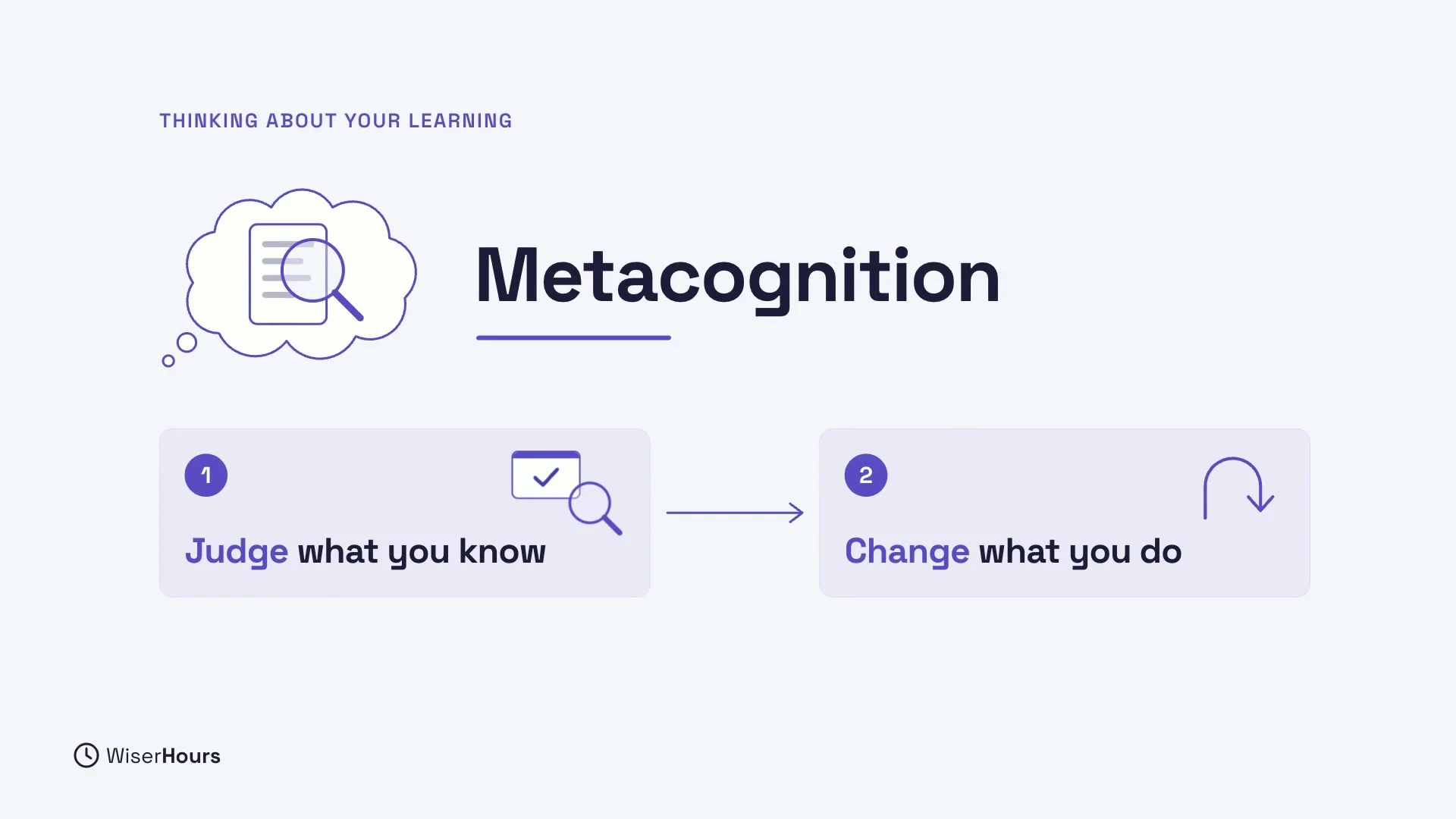
Thinking about your own learning has a name: metacognition. It has two parts. First, you judge what you know. Then, you change what you do because of that judgment. For example, you notice you can’t explain a chart without your notes, so you turn that chart into a practice question.
The two parts depend on each other. A plan to restudy can only be as good as the judgment behind it. If you misjudge what you know, you may work hard on the wrong material.
 (opens the full-size picture)
Why your judgment is too rosy
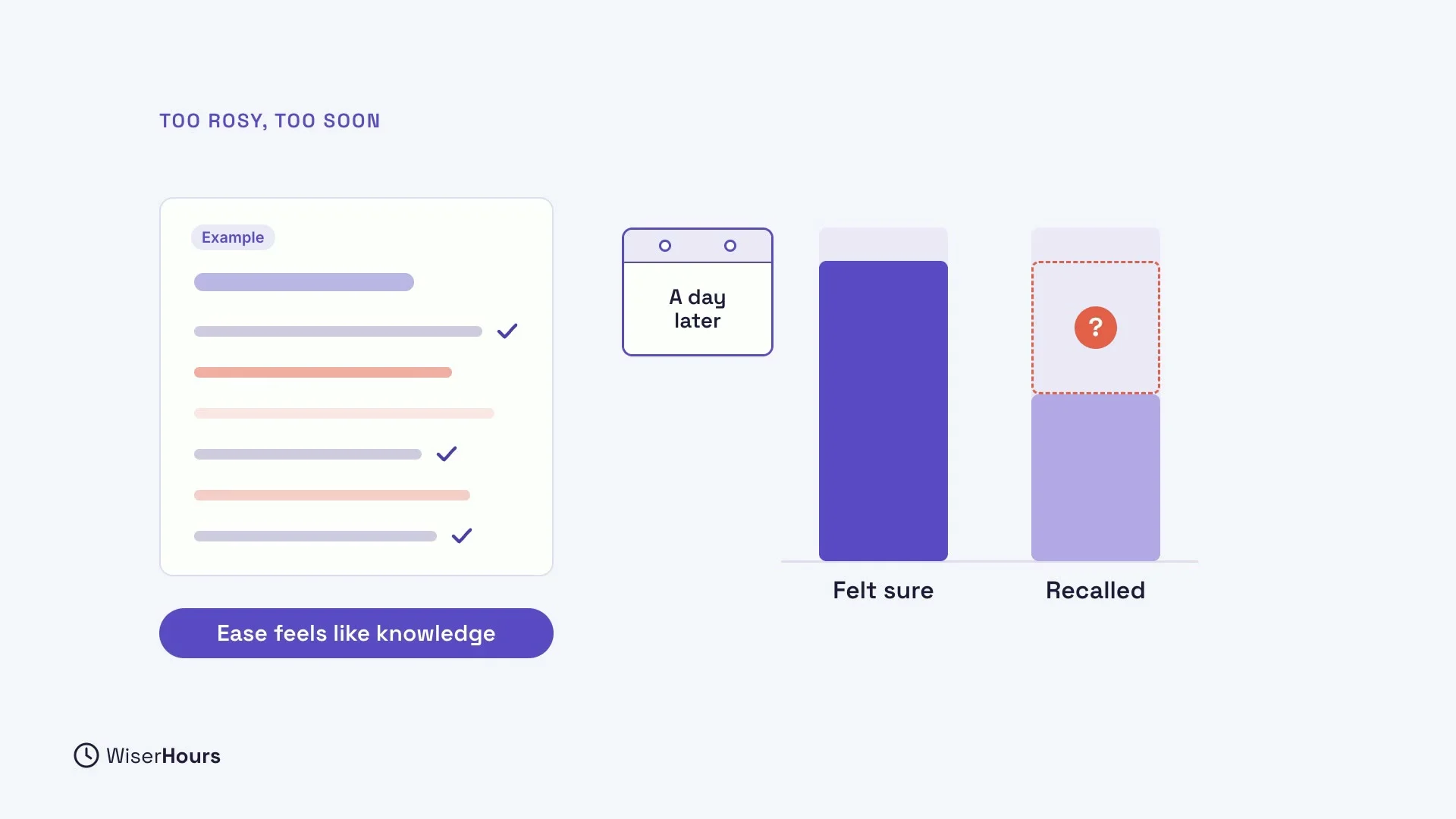
Right after you study, your judgment is too rosy. The material is fresh and comes to mind easily, and that ease feels like knowledge. A day later, some of it will be gone, with little warning of which part.
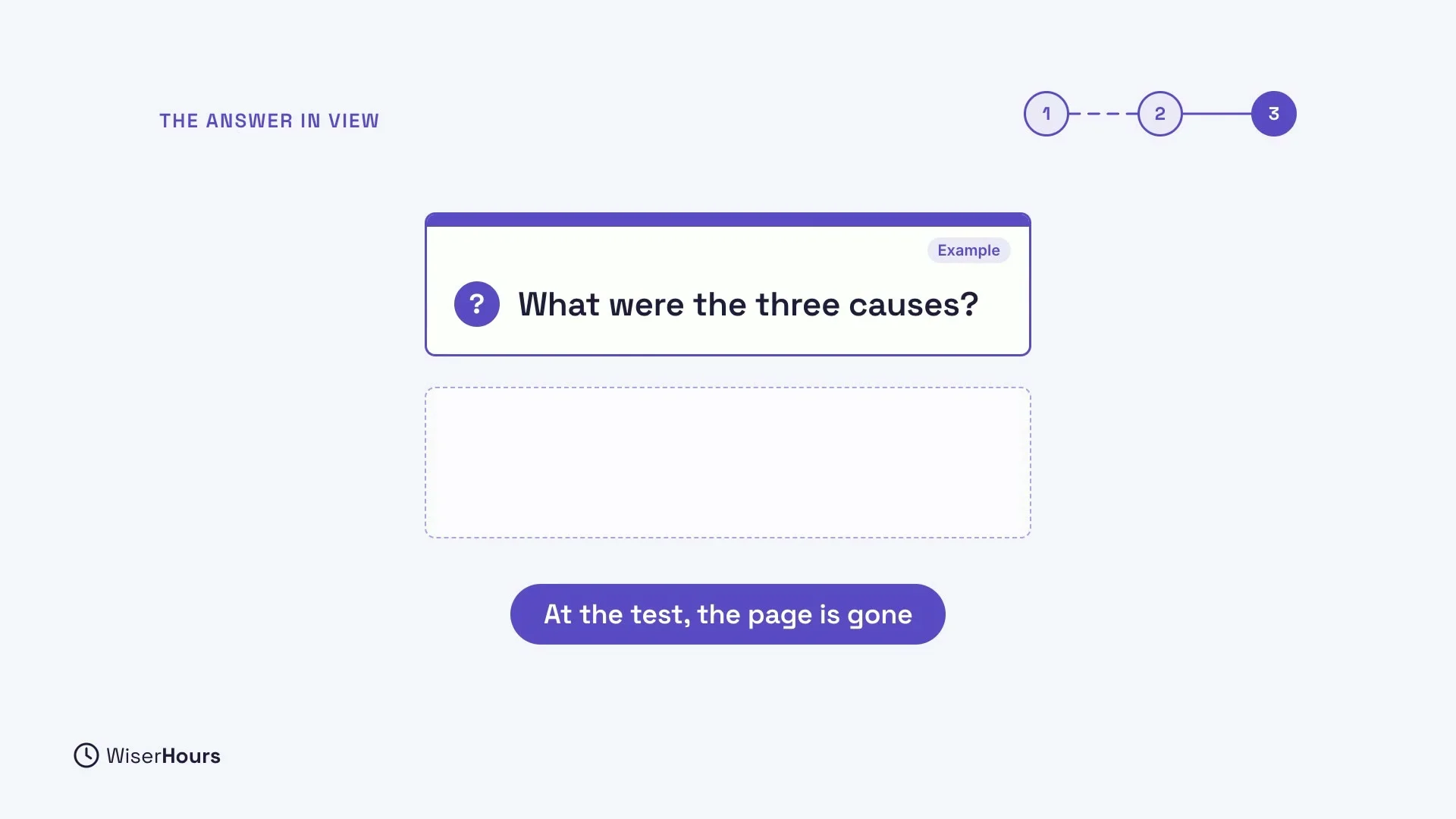
Having the answer in view fools you too. When you reread your notes, every point looks familiar, because it is right there on the page. At the test, the page is gone, and you have to get the answer back from memory alone.
 (opens the full-size picture)
 (opens the full-size picture)
Judge later, with only the question
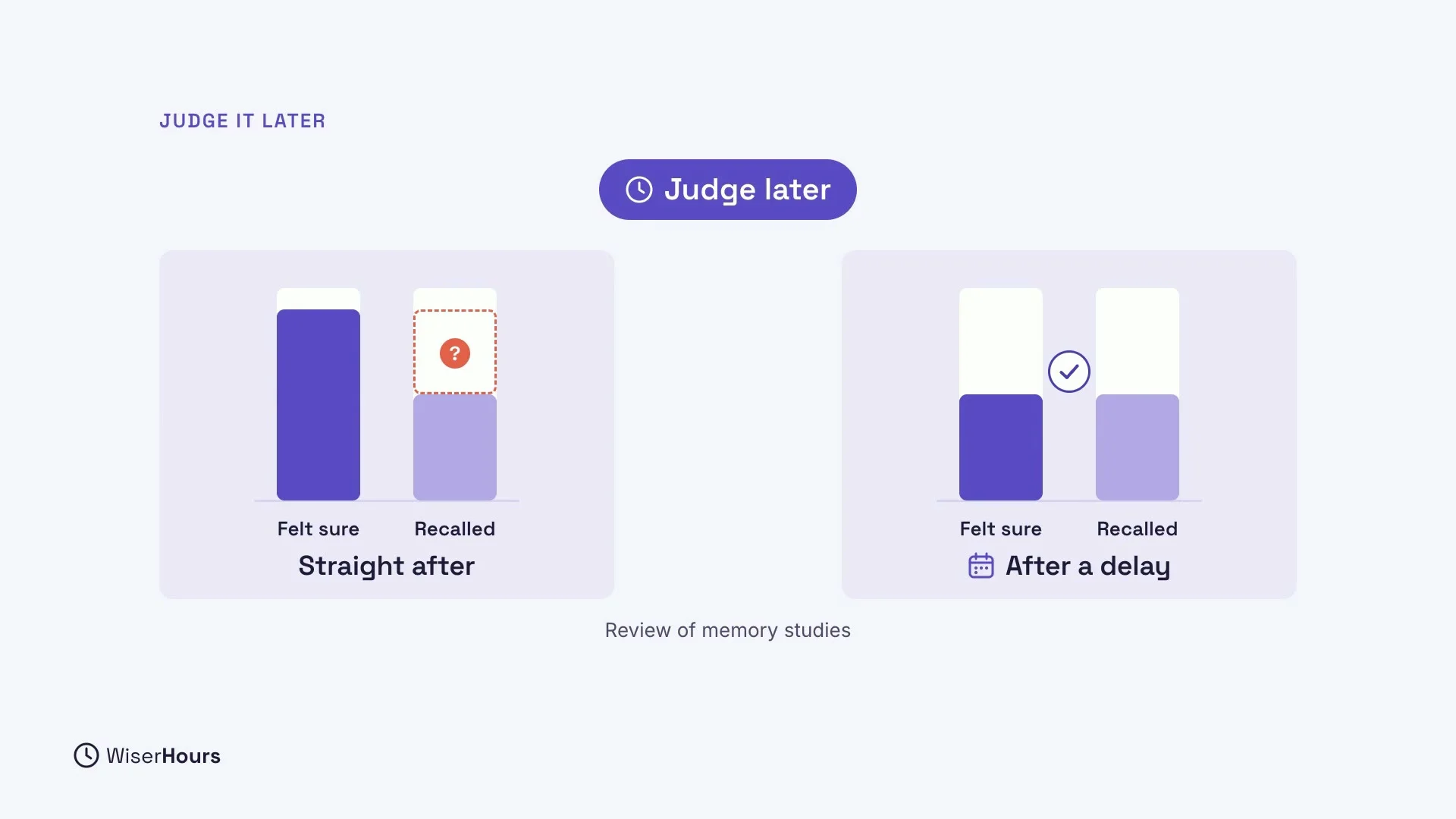
The fix is simple: judge later. A large review of memory studies found that people were far better at predicting what they would remember when they judged after a delay, not straight after studying. After a delay, trying to recall something is a real test of whether it lasted.
 (opens the full-size picture)
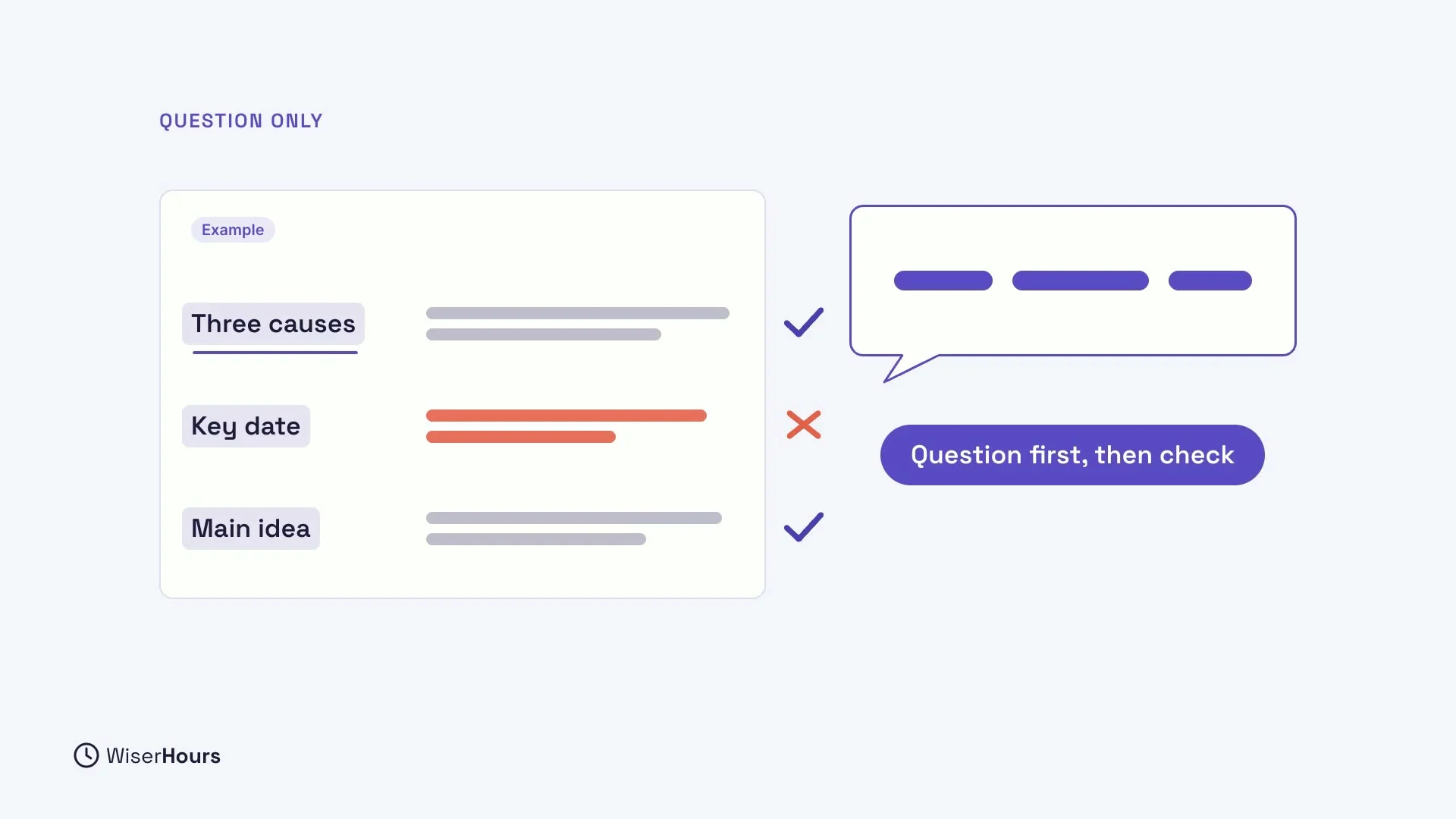
And look only at the question, not the answer. Cover your notes, read just a heading or a question, and try to produce the answer. Only then decide whether you know it. Then uncover the notes and check.
 (opens the full-size picture)
Act on what you missed
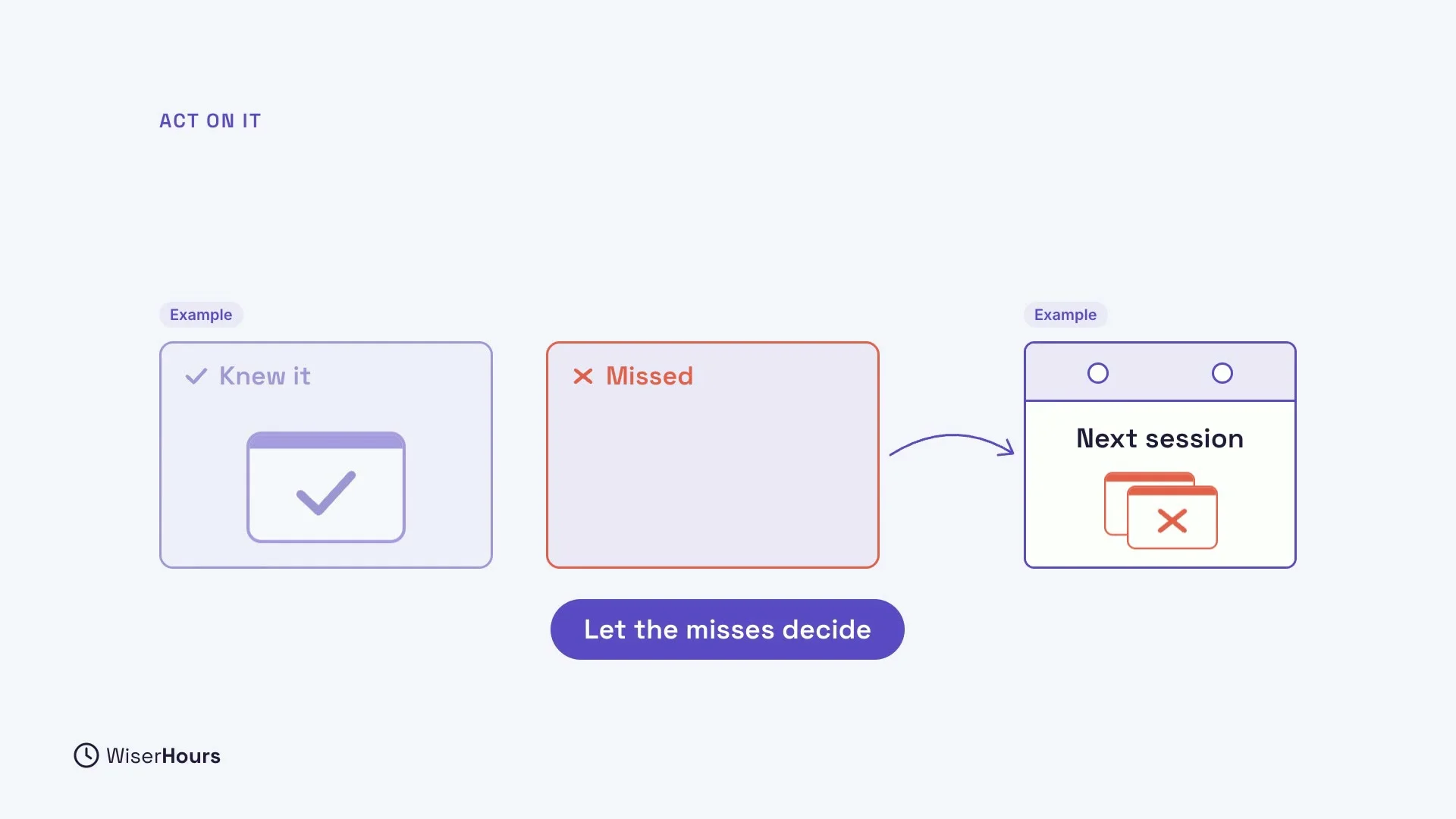
Spend your next session on the points you missed, not the ones you already know well. It is tempting to go over the parts that feel good, but they are not where your time pays off. Let the misses decide what you study next.
 (opens the full-size picture)
Plan, check, adjust
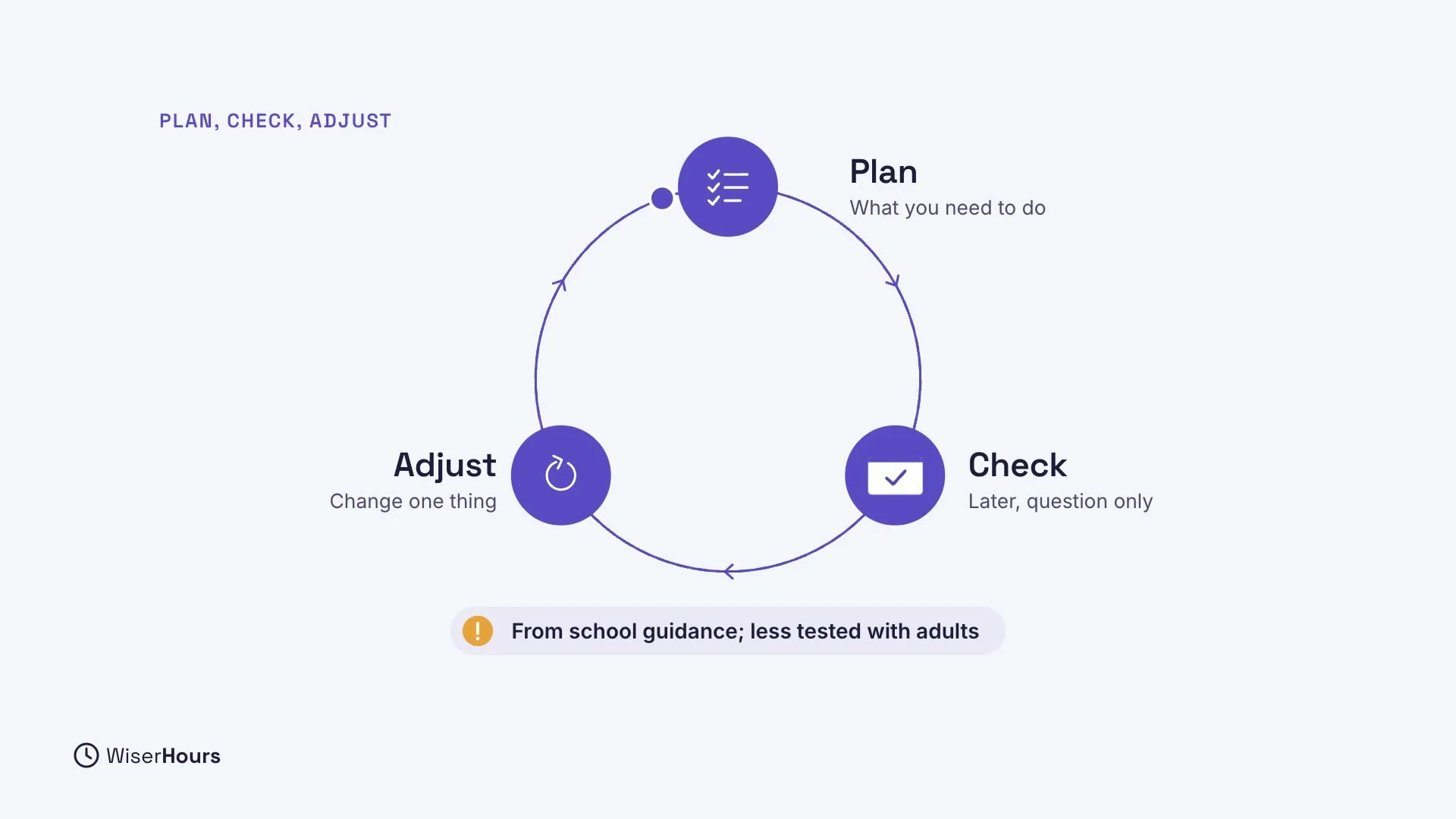
You can make this a simple loop. Plan what you need to be able to do, for example “explain the three causes without my notes.” Check yourself later, with only the question. Then adjust, and change one thing next time.
 (opens the full-size picture)
An honest note
This loop comes from guidance for schools, so the evidence for adults is thinner. The idea of judging later, with only the question, is the better-supported part.
YOUR TURN
Read more
- Metacognition Explained: How to Think About Your Own Learning: why your judgments go wrong, and the plan, monitor, evaluate routine in more detail.
Read the full lesson script
In this lesson, you will learn to judge what you really know. It matters, because people tend to stop studying something once they feel they know it. If that feeling is wrong, the gaps stay.
Thinking about your own learning has a name: metacognition. It has two parts. First, you judge what you know. Then, you change what you do because of that judgment.
Right after you study, your judgment is too rosy. The material is fresh and comes to mind easily, and that ease feels like knowledge. A day later, some of it will be gone, with little warning of which part.
Having the answer in view fools you too. When you reread your notes, every point looks familiar, because it is right there on the page. At the test, the page is gone.
The fix is simple. Judge later. A large review of memory studies found that people were far better at predicting what they would remember when they judged after a delay, not straight after studying.
And look only at the question, not the answer. Cover your notes, read just a heading or a question, and try to produce the answer. Only then decide whether you know it.
A judgment only helps if it changes what you do. Spend your next session on the points you missed, not the ones you already know well.
You can make this a simple loop. Plan what you need to be able to do. Check yourself later, with only the question. Then adjust, and change one thing next time. This loop comes from guidance for schools, so the evidence for adults is thinner.
So, judge your learning later, with only the question in view, and restudy what you missed. Before the next lesson, cover your notes a day after studying and rate each point: knew it, half knew it, or didn't. Next, you will take notes and read in ways that stick.
MAKE IT A SMALL WIN
Finished this lesson?
Mark it complete to save your progress on this device.