How learning works · Lesson 2 of 11
How Memory Works: Take It In, Keep It, Get It Back
Learn the three stages of memory in plain words, and two simple habits that follow: ask what new things mean, then recall them later.
 Video coming soon
You don’t need to be a scientist to use your memory well, but knowing a few basic steps helps. This lesson explains how memory works, in plain words, and shows why the study habits in this course work.
Three stages: take it in, keep it, get it back
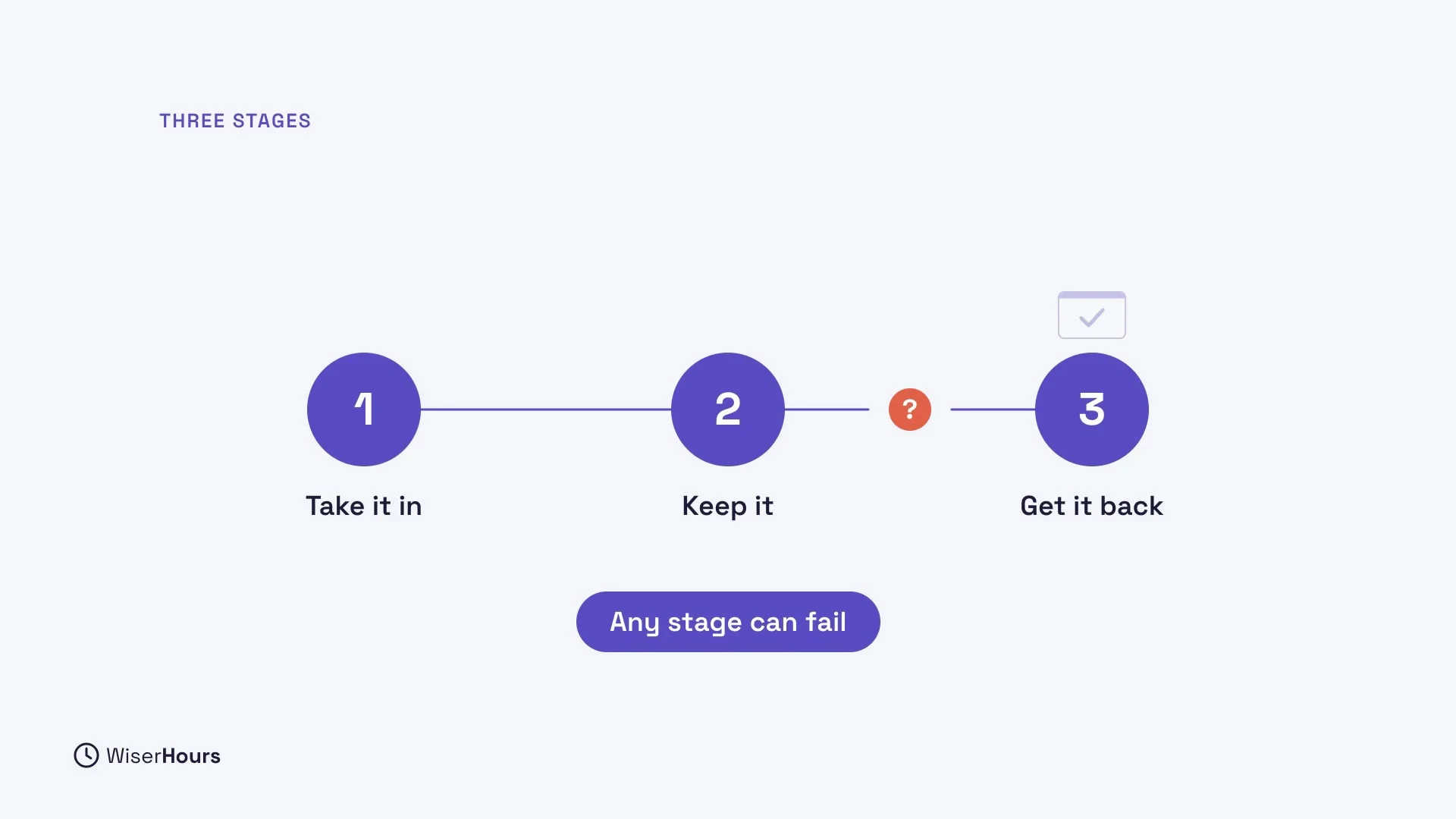
Memory works in three stages. First you take something in. Then you keep it over time. Then you get it back when you need it. Researchers call these stages encodingencoding: The first stage of memory, in which an experience is turned into a form the brain can store. How deeply something is processed at that stage, such as thinking about its meaning, affects how well it can be recalled later.Full entry in the glossary, storage and retrieval. Every act of remembering needs all three, and if any stage fails, you forget.
 (opens the full-size picture)
A name at a party
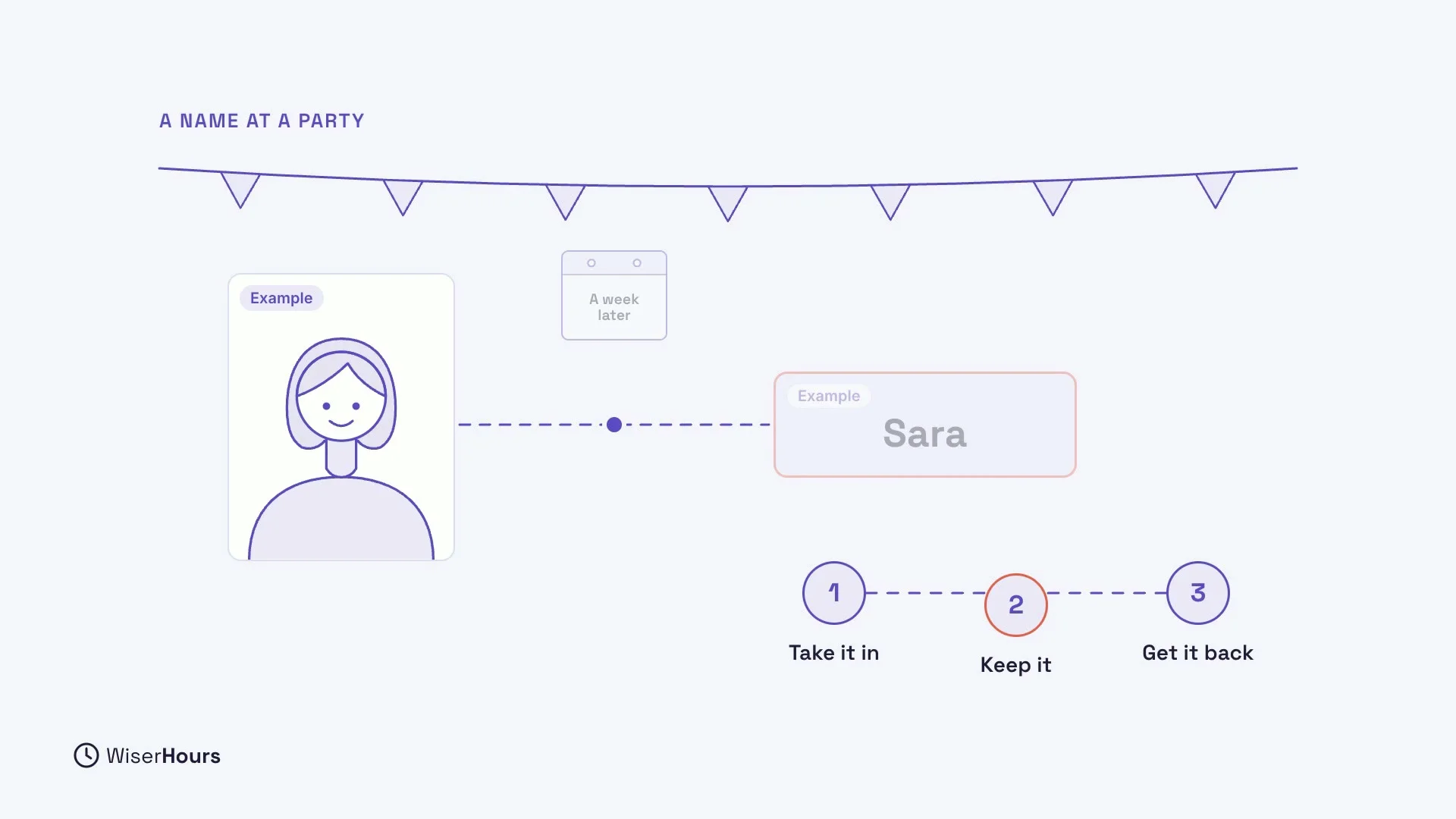
Picture meeting someone at a party. She tells you her name, and you link it to her face. That is taking it in. You hold on to that link for a week. That is keeping it. Then you see her again, and her face has to bring back the name. That is getting it back.
If the name does not come, one of the three stages has slipped. Often it is hard to tell which one.
 (opens the full-size picture)
Meaning sticks
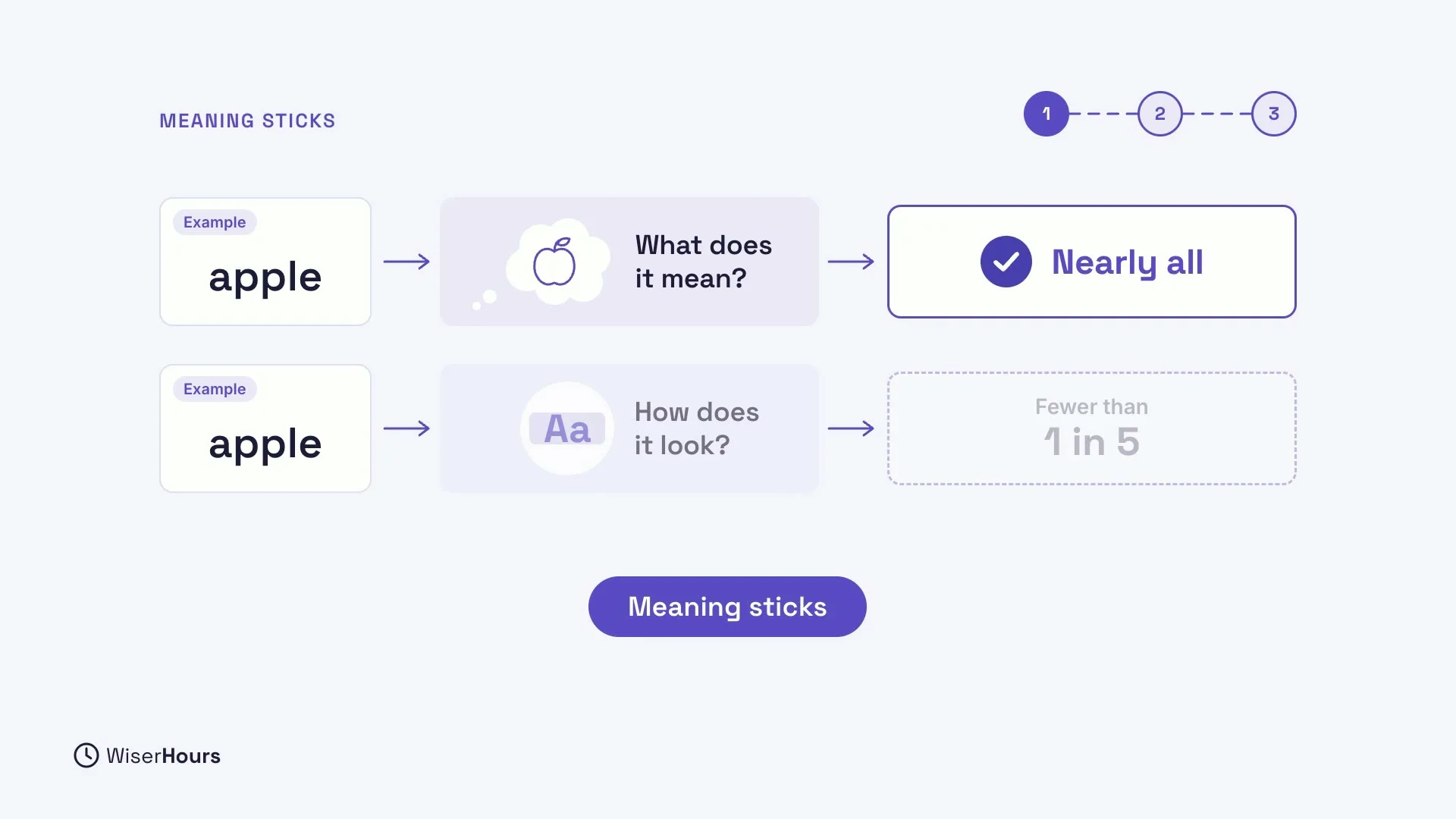
How you take something in matters a lot. In a classic experiment, students answered quick questions about single words. When they thought about what a word meant, they later recognized nearly all of the words. When they only noticed how the word was printed, such as whether it was in capital letters, they recognized fewer than one in five.
The lesson for you: when you meet something new, ask what it means and how it connects to what you already know. How a page looks is the part that fades.
 (opens the full-size picture)
A small workspace
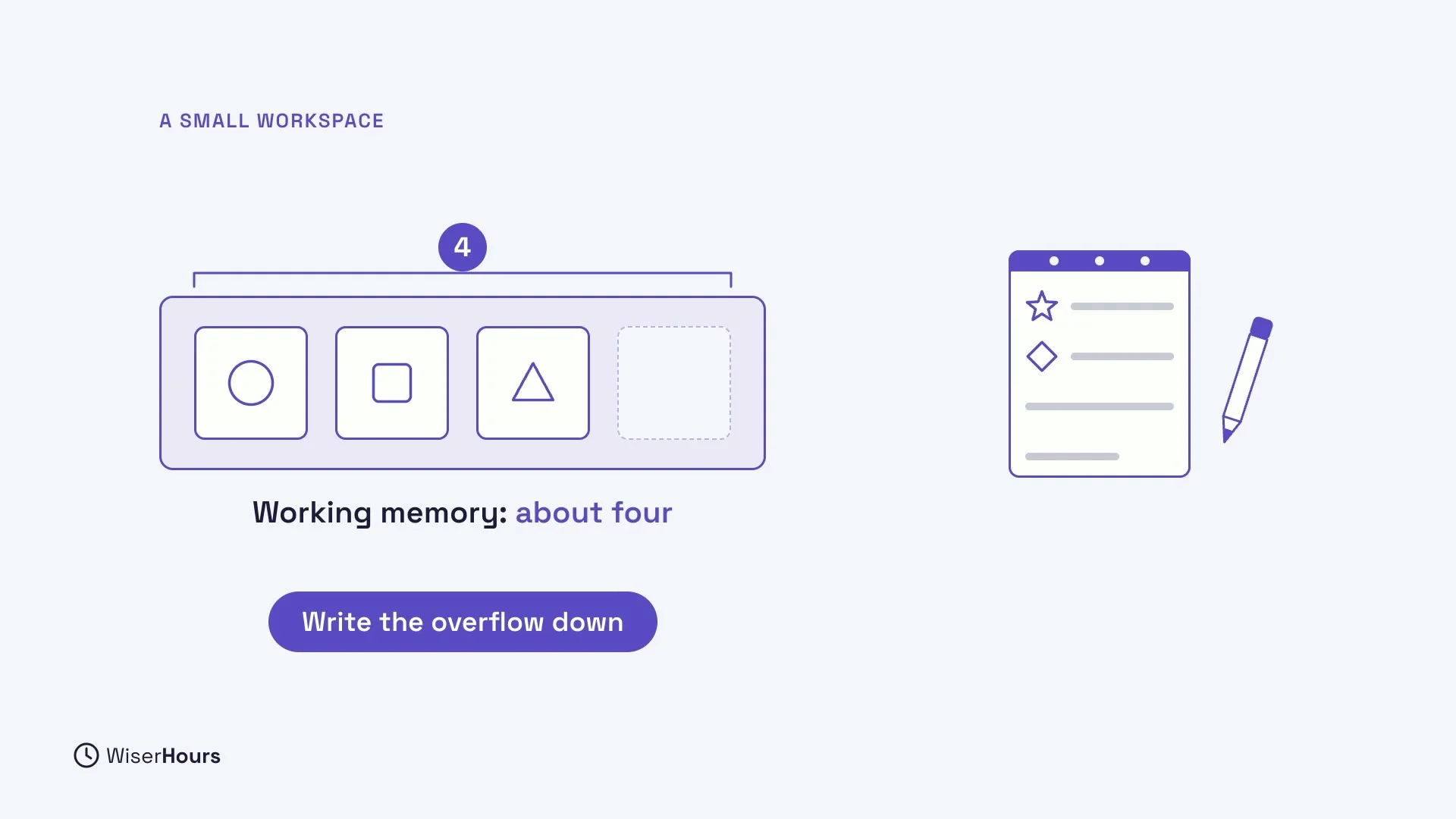
While you think, your mind holds only a few things at once. One leading researcher puts it at about four. Researchers call this small space working memoryworking memory: The small mental workspace that holds and handles the information you are using right now, such as a phone number you are about to dial. Its capacity is limited, which is why juggling several things at once quickly overloads it.Full entry in the glossary. It is where you hold the start of a sentence while you read its end, or a running total while you add up a bill.
When it fills up, things fall out. So write things down to free some room: a note on paper is one thing fewer to hold in your head.
 (opens the full-size picture)
Not a video recording
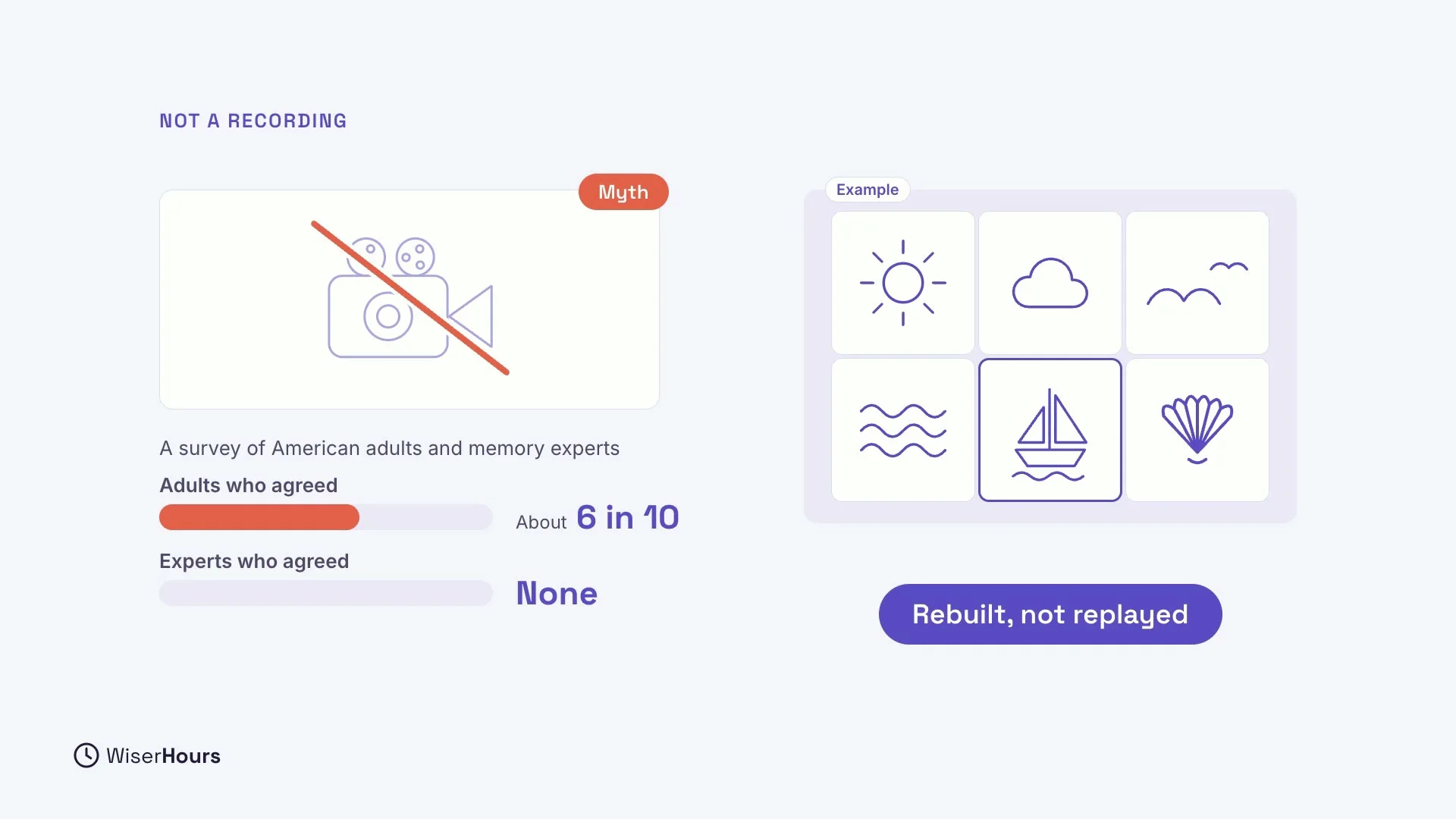
Many people think memory works like a video camera that records events to play back later. In one American survey, about six in ten adults agreed. The memory experts asked all disagreed.
Your mind rebuilds a memory from pieces each time you recall it, a bit like putting together a scene from a few remembered tiles. That is why a memory can change: details you hear about later can even slip into it.
 (opens the full-size picture)
Each recall makes it stronger
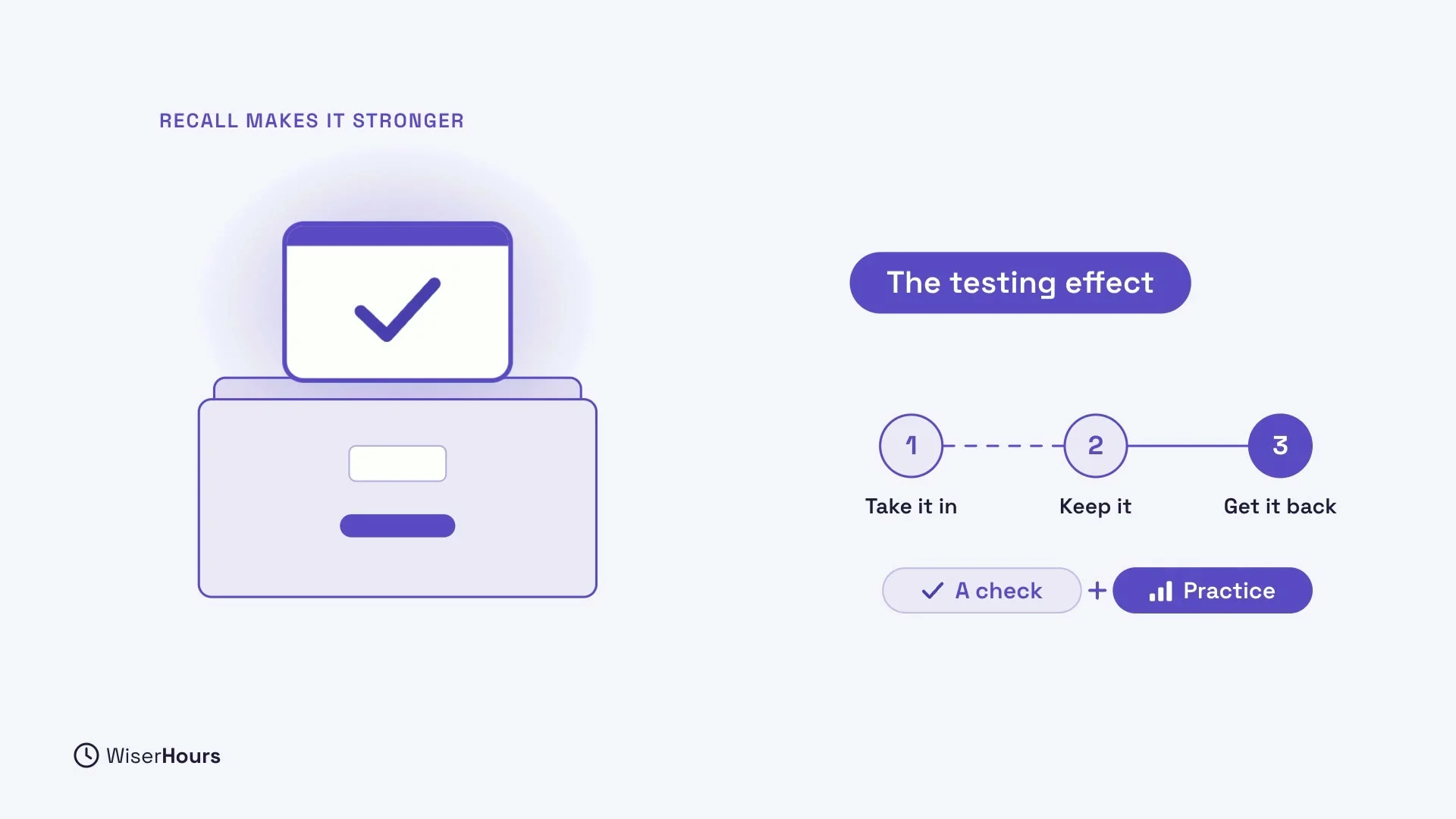
There is good news too. Each time you pull a memory back out, it becomes easier to pull out again. Researchers call this the testing effect. So getting a memory back is not only a check of what you know. It is also practice that makes the memory stronger.
 (opens the full-size picture)
Two habits that follow
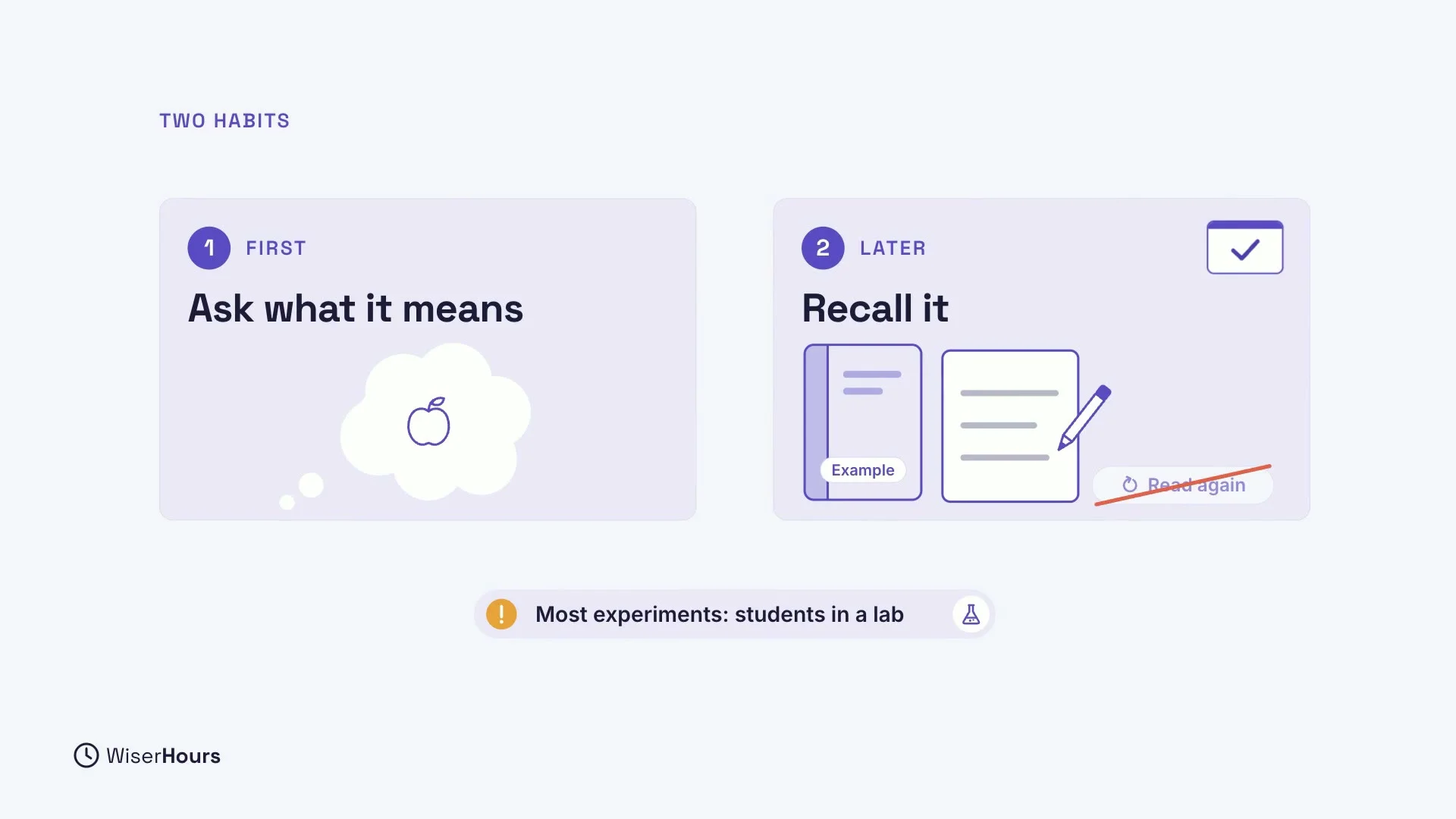
Two simple habits come from these stages. First, when you meet something new, ask what it means. Later, try to recall it from memory, instead of reading it again.
 (opens the full-size picture)
A fair note
Most of these experiments involved students in a lab, often learning single words. Treat them as good guides for your own study, not guarantees.
YOUR TURN
Read more
- How Memory Works: Encoding, Storage, and Retrieval Explained: the three stages in more depth, with the experiments behind them.
- Working Memory Explained: Your Brain’s Mental Scratchpad: what the small mental workspace is, and how it is measured.
Read the full lesson script
In this lesson, you will see how memory works, in plain words. Knowing the basic steps shows you why the study habits in this course work.
Memory works in three stages. First you take something in. Then you keep it over time. Then you get it back when you need it. If any stage fails, you forget.
Picture meeting someone at a party. You link her name to her face. A week later, you see her again, and her face has to bring back the name. If it does not, one of the three stages has slipped.
How you take something in matters. In a classic experiment, students who thought about what a word meant later recognized nearly all of them. When they only noticed how the word was printed, they recognized fewer than one in five.
While you think, your mind holds only a few things at once. One leading researcher puts it at about four. Researchers call this small space working memory. When it fills up, write things down to free some room.
Many people think memory works like a video camera. In one American survey, about six in ten adults agreed. The memory experts asked all disagreed. Your mind rebuilds a memory from pieces each time, so it can change.
There is good news too. Each time you pull a memory back out, it becomes easier to pull out again. Researchers call this the testing effect. Getting it back is not only a check. It is also practice.
So two habits follow. When you first meet something new, ask what it means. Later, try to recall it, instead of reading it again. Most of these experiments involved students in a lab.
So, memory takes in, keeps, and gets back, and meaning and recall make it stronger. Today, after you read something, close it and say what it meant, not what it looked like. Next, you will test yourself instead of rereading.
MAKE IT A SMALL WIN
Finished this lesson?
Mark it complete to save your progress on this device.