Practice and understand · Lesson 5 of 11
Worked Examples and Mixed Practice: How to Practice Skills
Learn two habits for practicing a skill: study solved examples while a topic is new, then mix the kinds of problems you can already do.
 Video coming soon
This lesson gives you two habits for practicing a skill, like solving math problems, working with a spreadsheet or applying rules to cases. First, study solved examples. Then, once each kind of problem makes sense, mix the kinds together. It matters because real tests, and real life, rarely tell you which kind of problem you are facing.
Start with worked examples
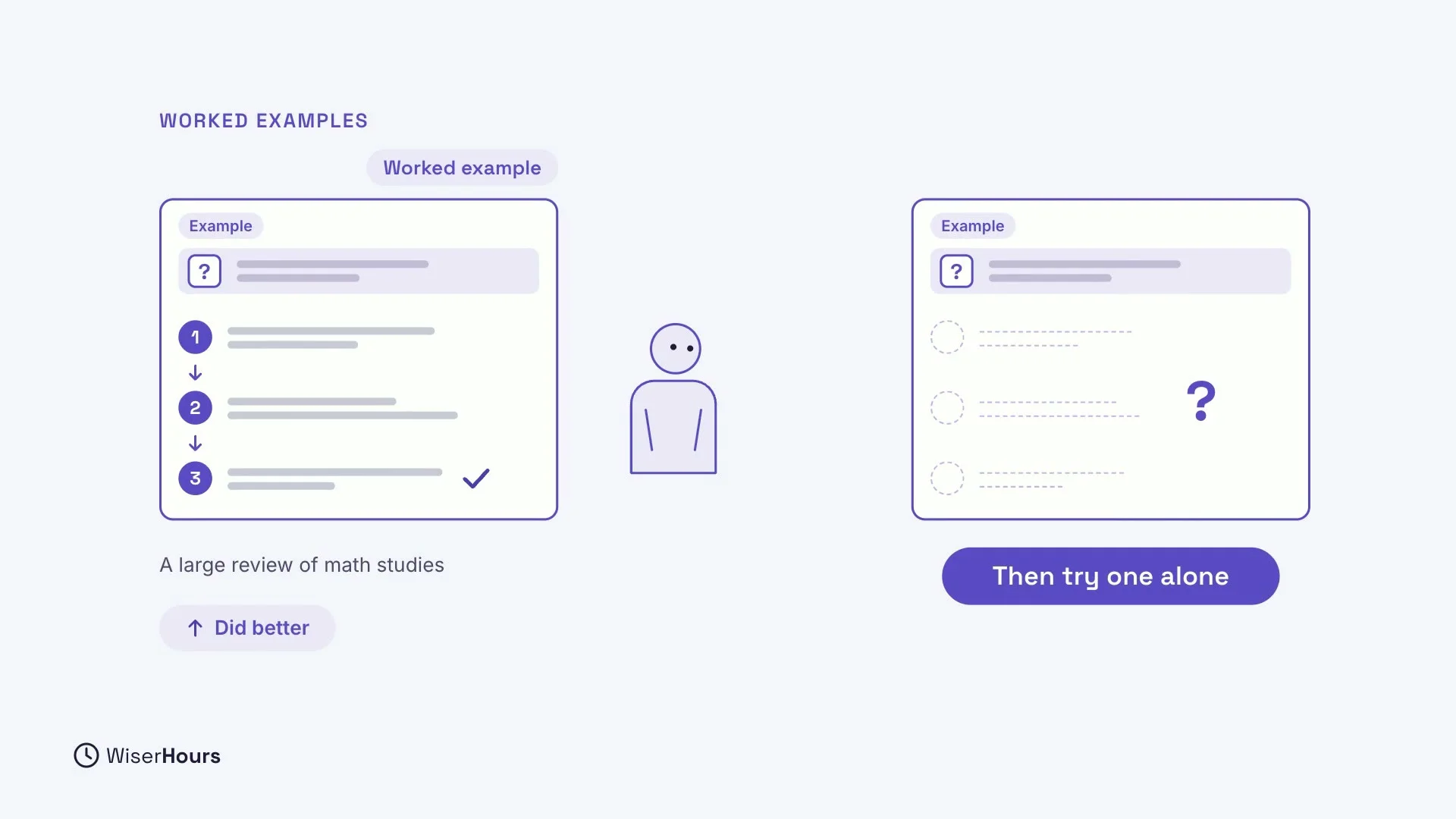
A worked example is a problem solved step by step, with every step shown. Study one before you try a problem alone: follow each step and ask yourself why it comes next. Then cover it and try a similar problem on your own.
A large review of math studies found that learners who studied worked examples did better, in studies ranging from elementary school to university.
 (opens the full-size picture)
Let the help shrink
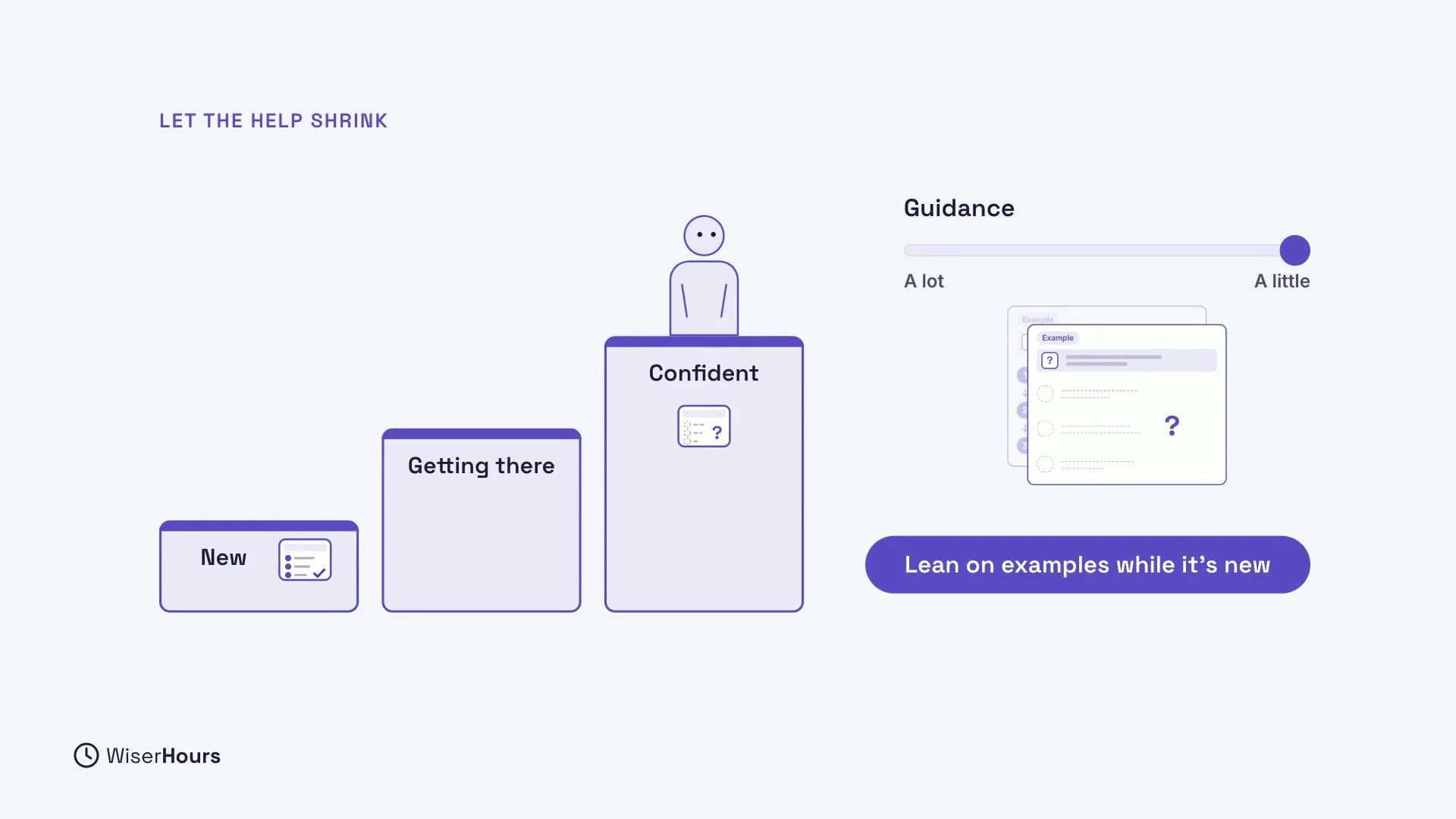
That help should shrink as you improve. Beginners learn more with extra guidance. People who already know the subject do better with less. Researchers call this the expertise reversal effect.
So lean on worked examples while a topic is new. As you get more confident, look at the example less and less, and then solve problems yourself.
 (opens the full-size picture)
Practice in blocks feels smooth
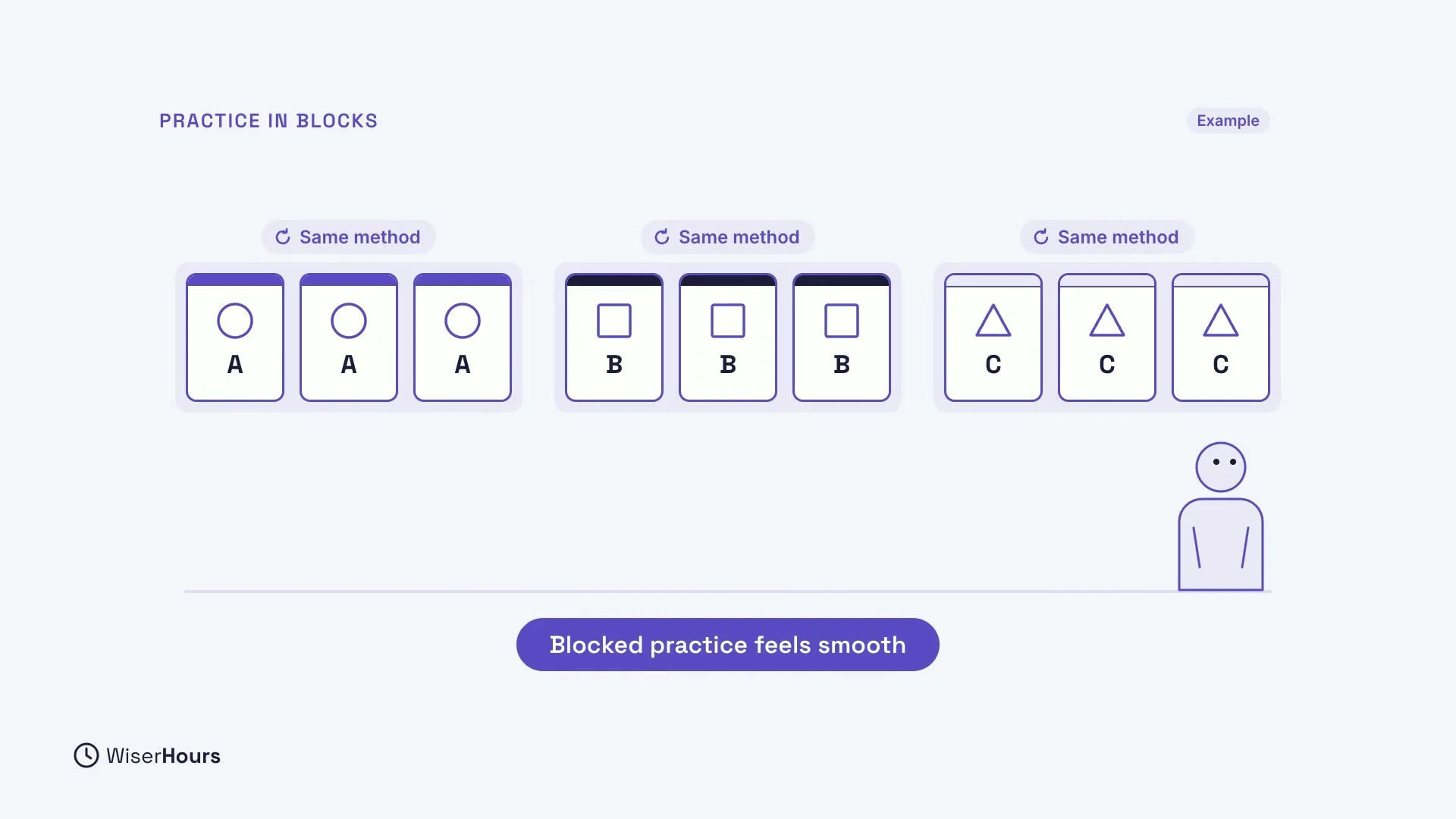
Now, how should you practice? Most people work in blocks: ten problems of one kind, then ten of the next. It feels smooth, because you already know which method to use each time. You just repeat it.
The catch is that a block does an important job for you. It tells you the method before you start.
 (opens the full-size picture)
Mix them up
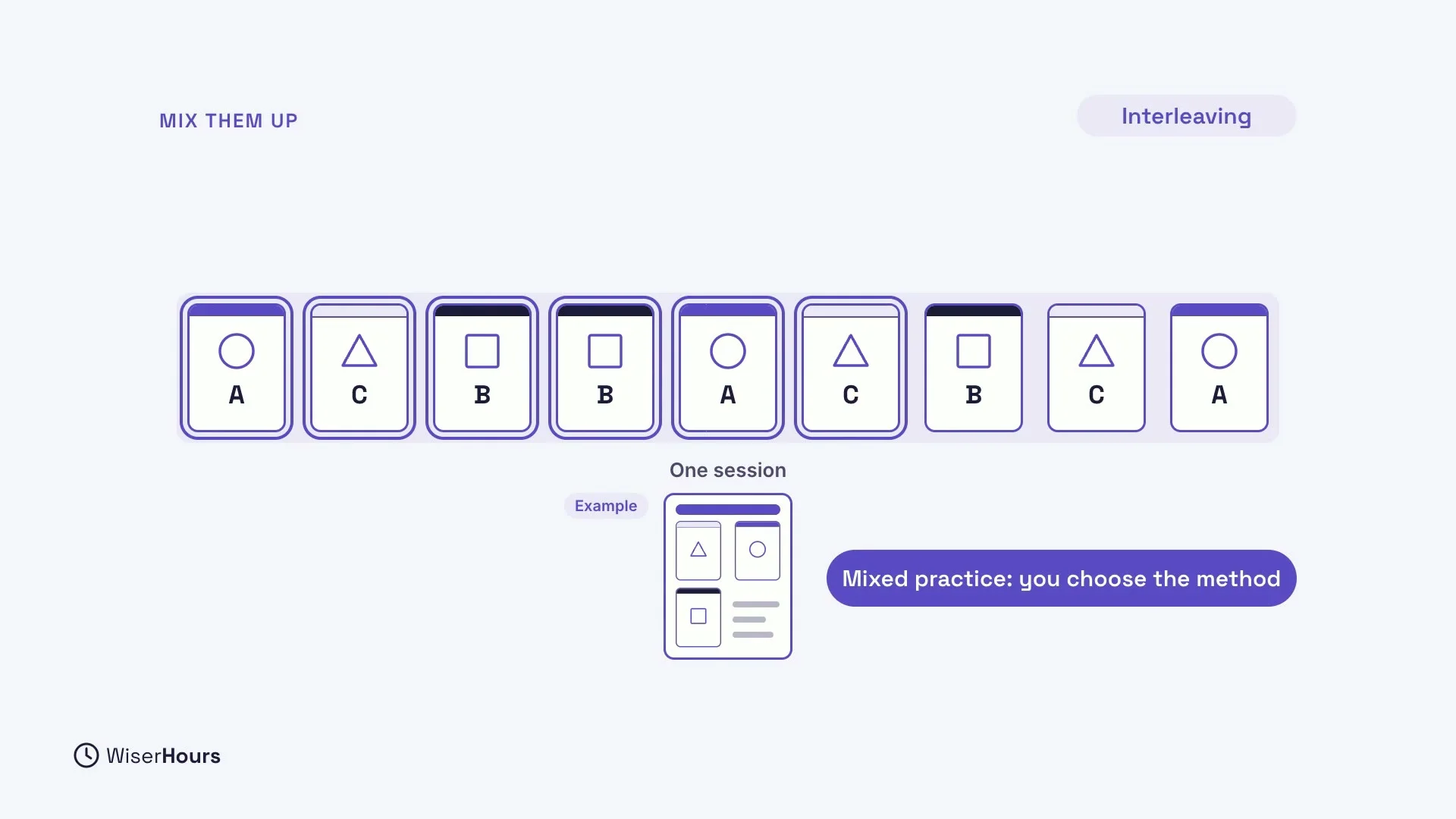
Mixing, which researchers call interleaving, means shuffling different kinds of problems into one session. Now each problem asks a question first: which kind is this, and which method fits? A real test asks the same thing. An exam question rarely says which chapter it comes from.
 (opens the full-size picture)
What one school trial found
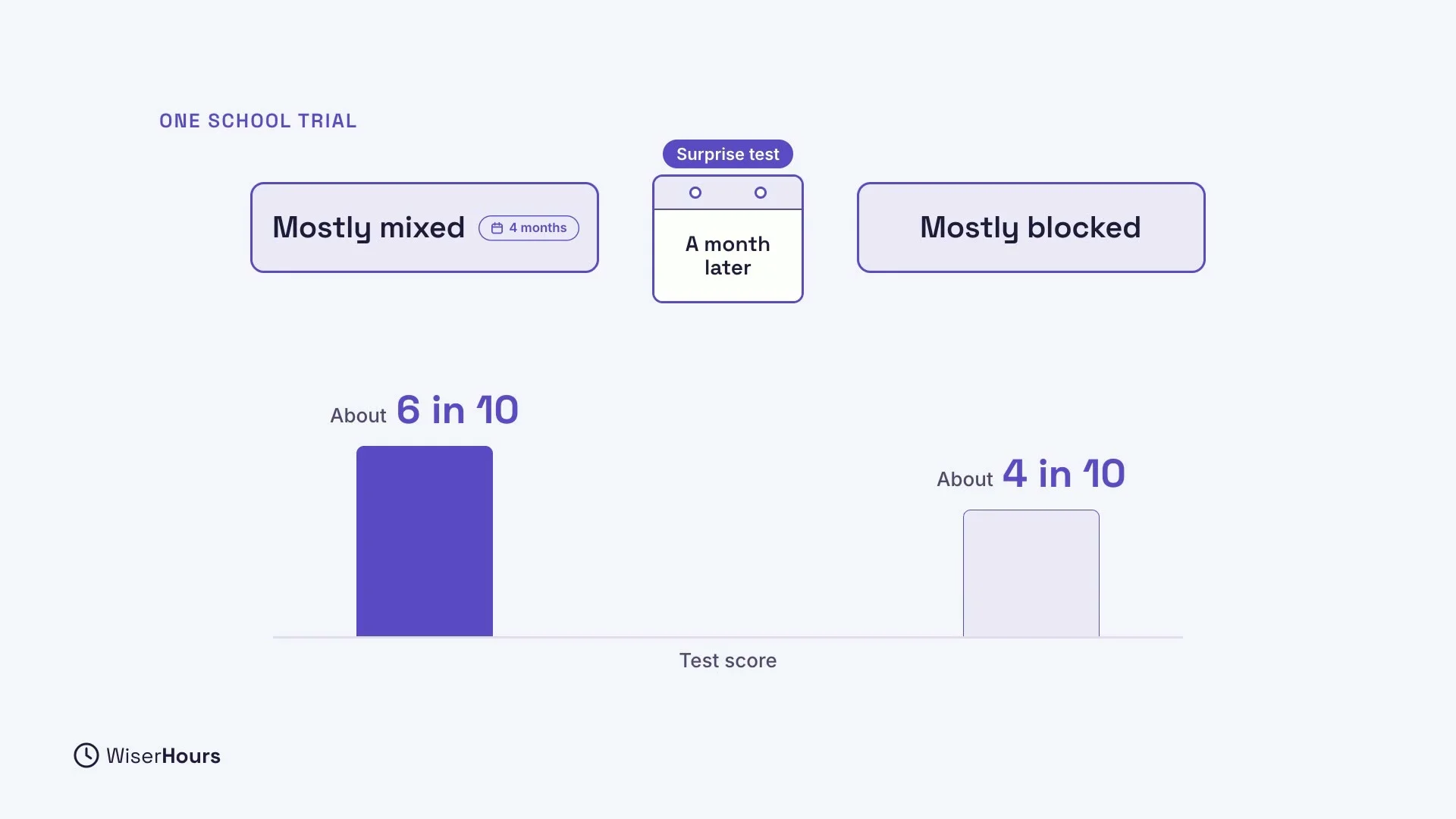
In one trial, school math classes were given mostly mixed practice for four months. On a surprise test a month later, they scored about six in ten. Classes given mostly blocked practice scored about four in ten.
The researchers also noted that mixed practice takes longer, and may work less well when a skill is brand new and has not been practiced on its own first.
 (opens the full-size picture)
Not for everything
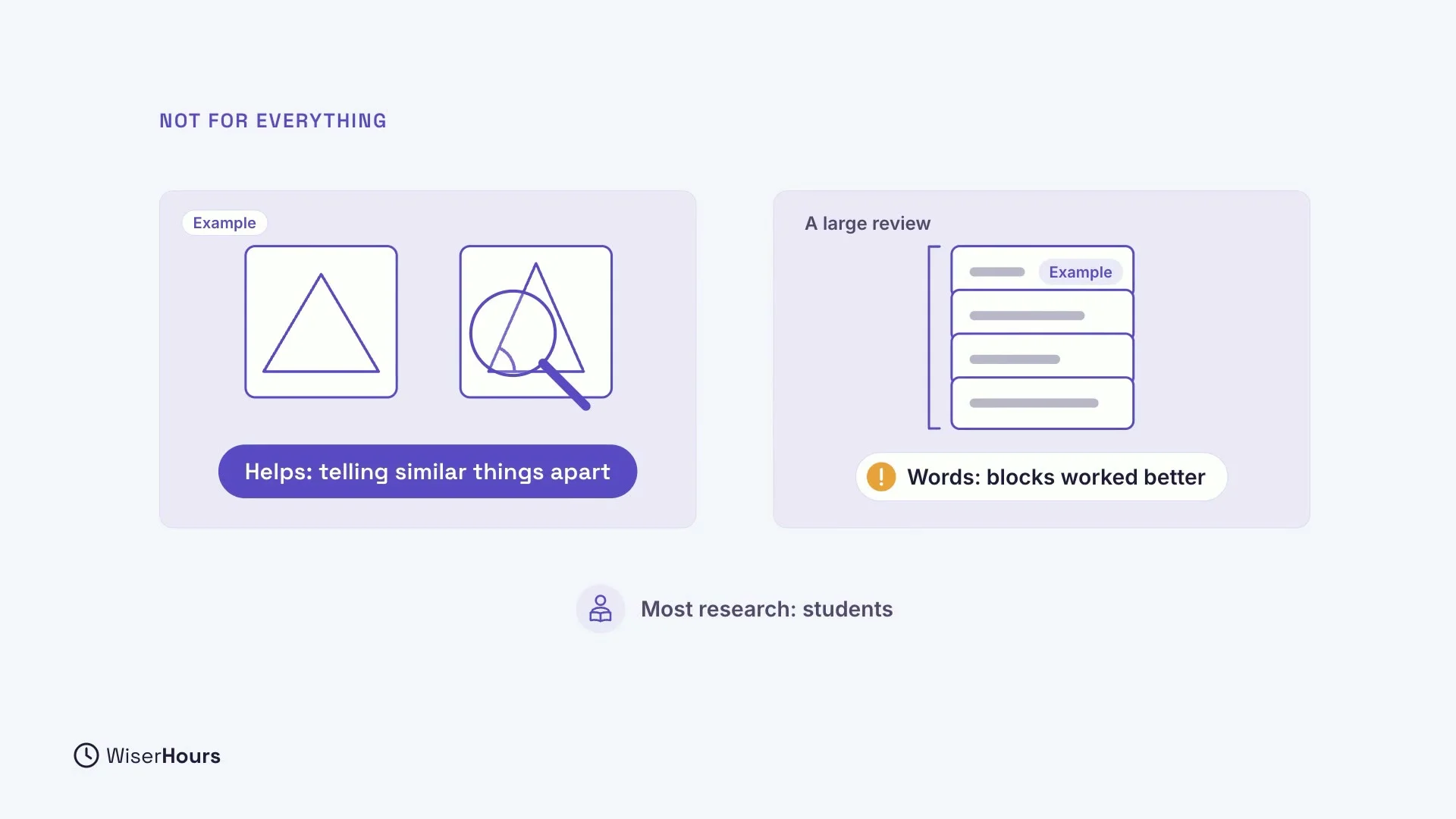
Mixing is not a fix for everything. It helps most when you must tell similar things apart, such as two kinds of problem that look alike, or the styles of different painters. But a large review found that for learning words, keeping them in blocks worked better. And most of this research involves students.
 (opens the full-size picture)
Mix what you already know
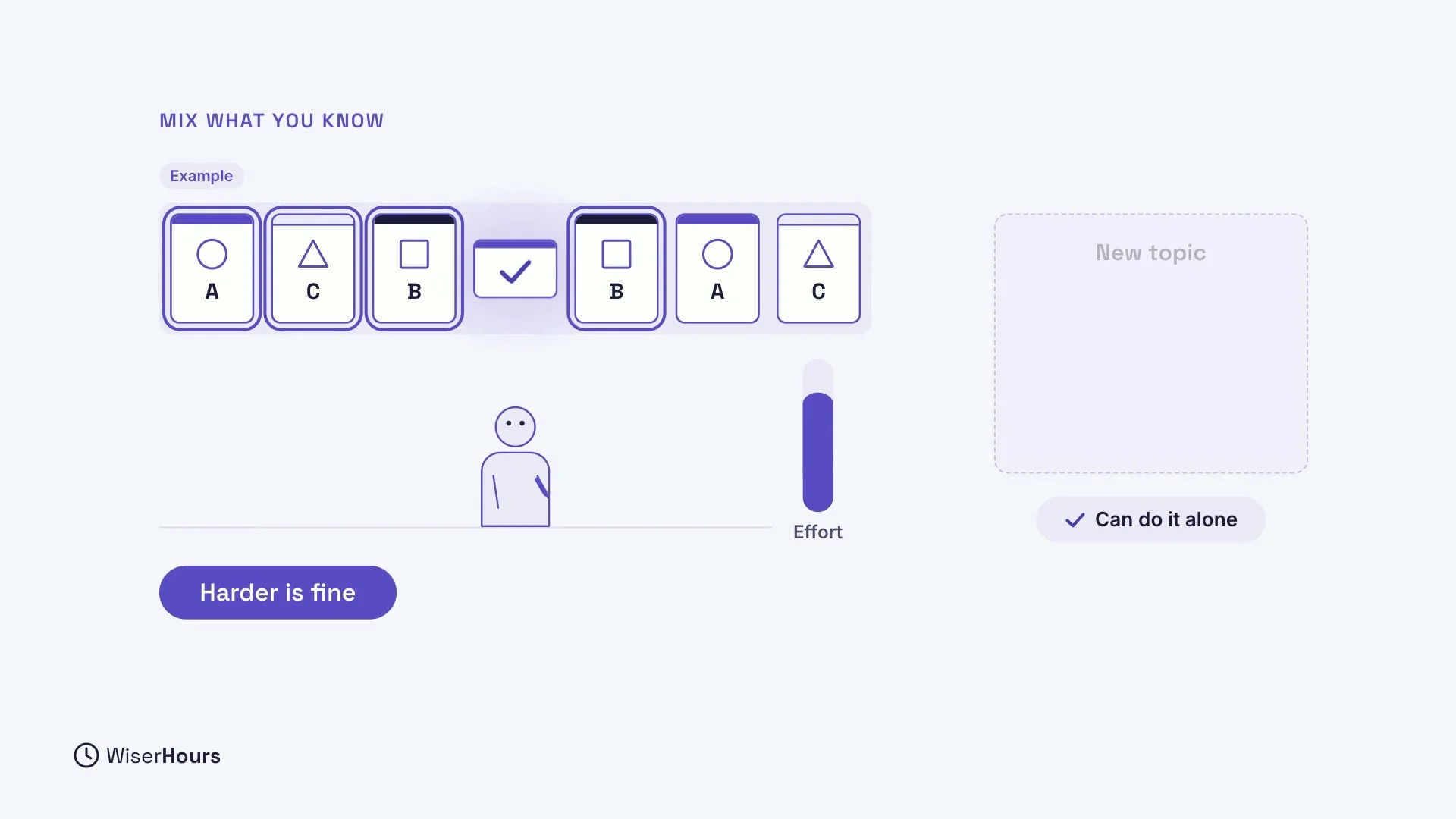
Mixing feels harder and slower than blocks, and that effort is part of how it works. But don’t mix too early. Keep a new topic in its own block until you can answer its problems without help. Then shuffle it in with the kinds you already know.
 (opens the full-size picture)
Mixing different problems is not multitasking
Mixing means switching between kinds of problem on the same subject, inside one practice session. Jumping between unrelated tasks, like studying and checking messages, is something else, and it has a cost of its own.
YOUR TURN
Read more
- Learning How to Learn: A Research-Backed Guide for Beginners: the research on worked examples and mixed practice, and where each one helps less.
- How to Study for an Exam: A Research-Backed Plan: when to start mixing topics in an exam plan, and why exam questions come mixed.
Read the full lesson script
In this lesson, you will learn two habits for practicing a skill. Study solved examples first, then mix different kinds of problems together. It matters, because real tests come mixed.
A worked example is a problem solved step by step, with every step shown. Study one before you try a problem alone. A large review of math studies found that learners who studied them did better.
That help should shrink as you improve. Beginners learn more with extra guidance. People who already know the subject do better with less. So lean on examples while a topic is new, then solve problems yourself.
Now, how should you practice? Most people work in blocks: ten problems of one kind, then ten of the next. It feels smooth, because you already know which method to use each time.
Mixing, which researchers call interleaving, means shuffling different kinds of problems into one session. Now each problem asks a question first. Which kind is this, and which method fits? A real test asks the same.
In one trial, school math classes were given mostly mixed practice for four months. On a surprise test a month later, they scored about six in ten. Classes given mostly blocked practice scored about four in ten.
Mixing is not a fix for everything. It helps most when you must tell similar things apart. But a large review found that for learning words, keeping them in blocks worked better. And most of this research involves students.
Mixing feels harder and slower, and that effort is part of how it works. But keep a new topic in its own block until you can answer without help. Then shuffle it in.
So, study solved examples while a topic is new, then mix the kinds of problems you can already do. In your next session, mix two kinds of question you already know. Next, you will explain an idea in plain words, to see what you understand.
MAKE IT A SMALL WIN
Finished this lesson?
Mark it complete to save your progress on this device.