Make it part of your week · Lesson 8 of 11
How to Take Notes and Read So You Remember
Learn why notes help most when you review them, why highlighting alone does little, and how to recall a chapter from memory.
 Video coming soon
In this lesson you learn to take notes and read in ways that stick. A page full of notes or highlights can feel like progress. What you do afterwards matters more, and a few small changes make your notes far more useful.
Notes pay off when you review them
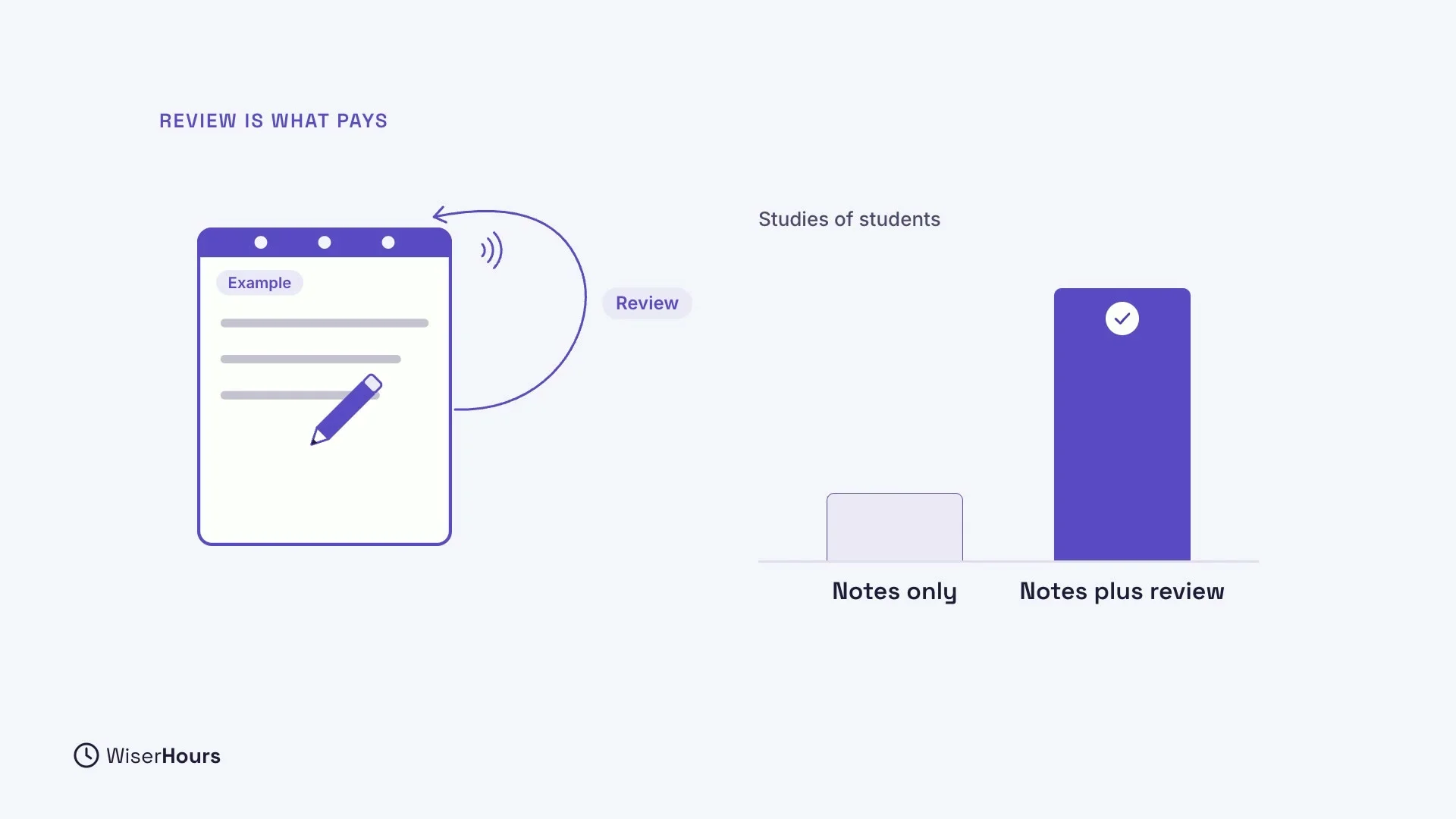
Writing notes makes you think about what you hear. But in studies of students, taking notes helped only a little on its own. Taking notes and then reviewing them helped much more. Your notes are only as useful as your habit of coming back to them.
 (opens the full-size picture)
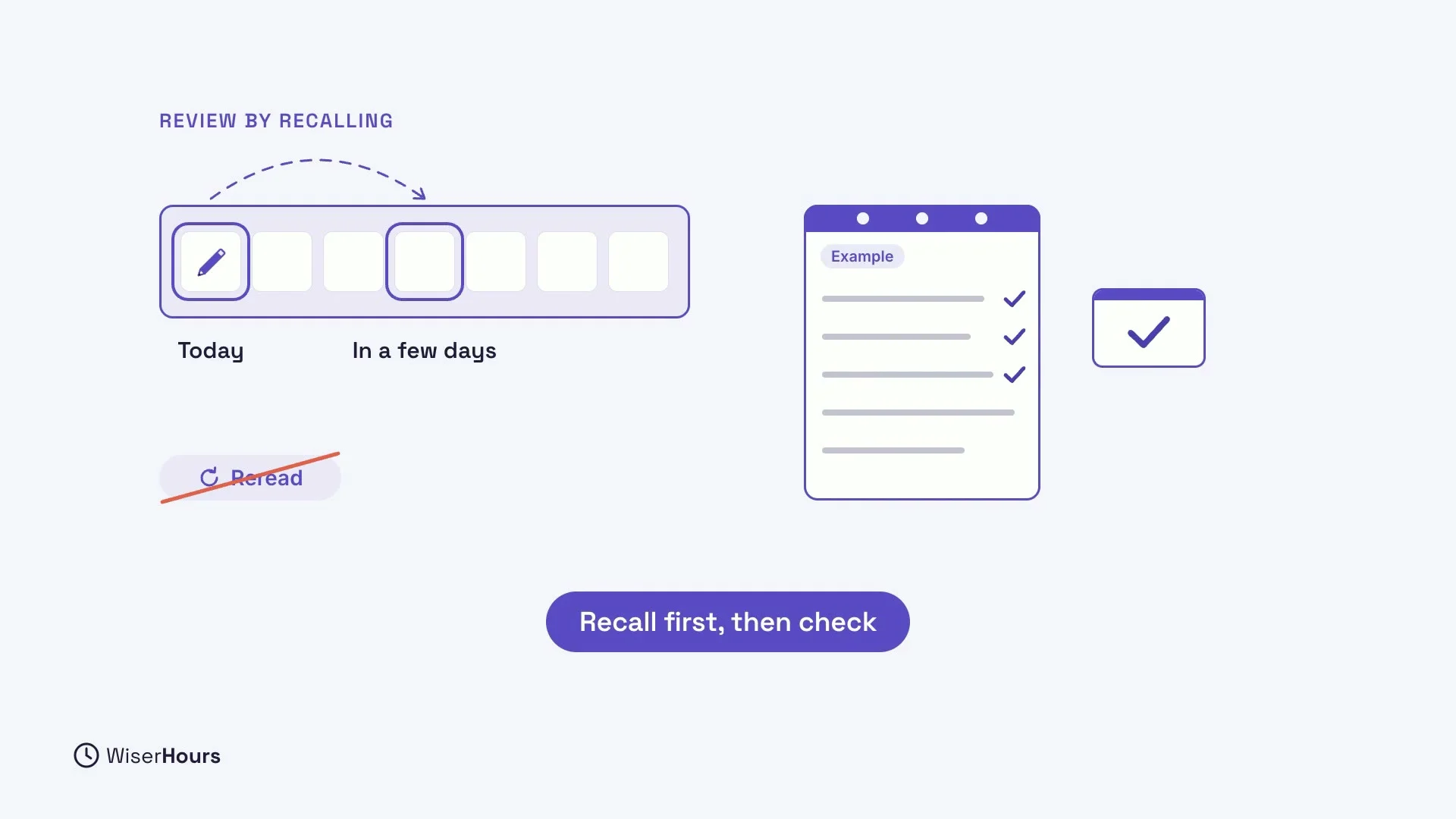
So plan your review when you take the notes: one short look today and another a few days later. When you review, cover the page and recall first, then check. Don’t just reread. Rereading makes every line look familiar, but recalling shows you what you really kept.
 (opens the full-size picture)
Highlighting alone does little
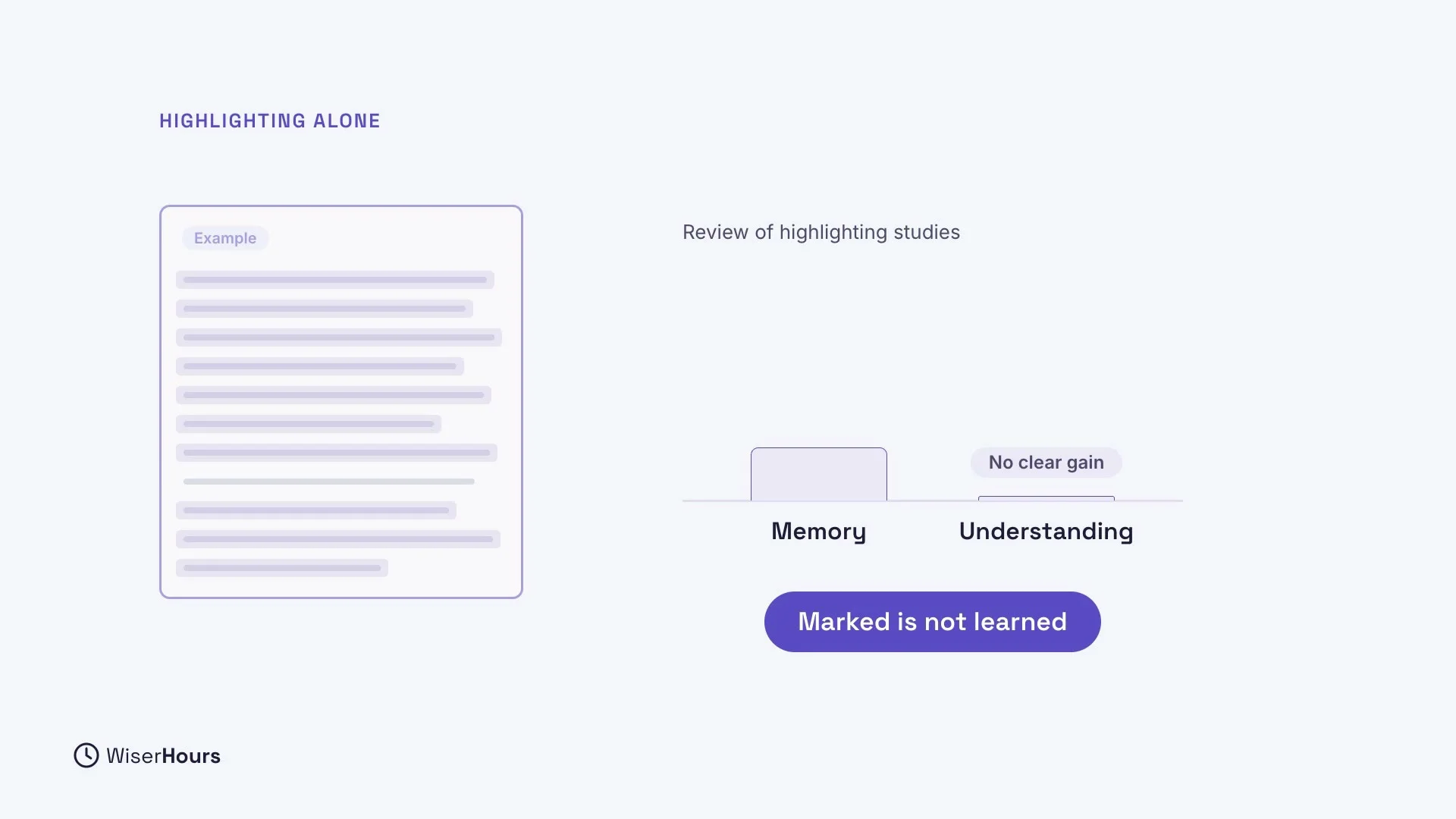
A review of highlighting studies found a small boost to memory, and no clear gain in understanding. Marking a line takes little thought, and a page that is mostly marked has nothing left to stand out. A highlight is a bookmark for later work, not the work itself.
 (opens the full-size picture)
Close the book and write what you remember
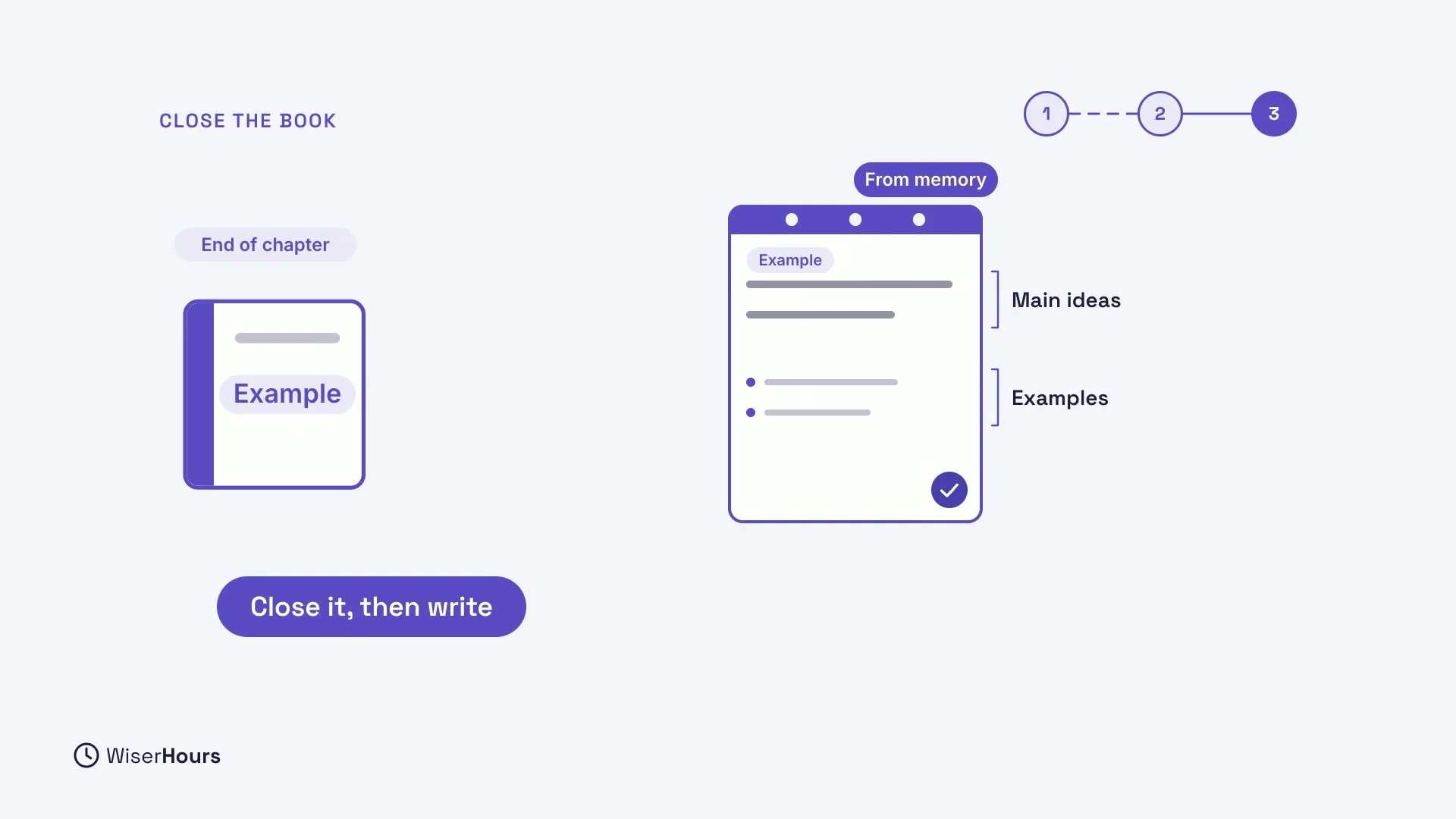
What helps more is simple. After a chapter, close the book and write down what you remember. Main ideas and any examples you recall are enough. A rough list is fine.
 (opens the full-size picture)
This works better than it feels. In two experiments, students who read a science text and then recalled it from memory learned more than students who built a diagram of it with the text open. Most students had not expected that.
 (opens the full-size picture)
Check, fix, then recall again
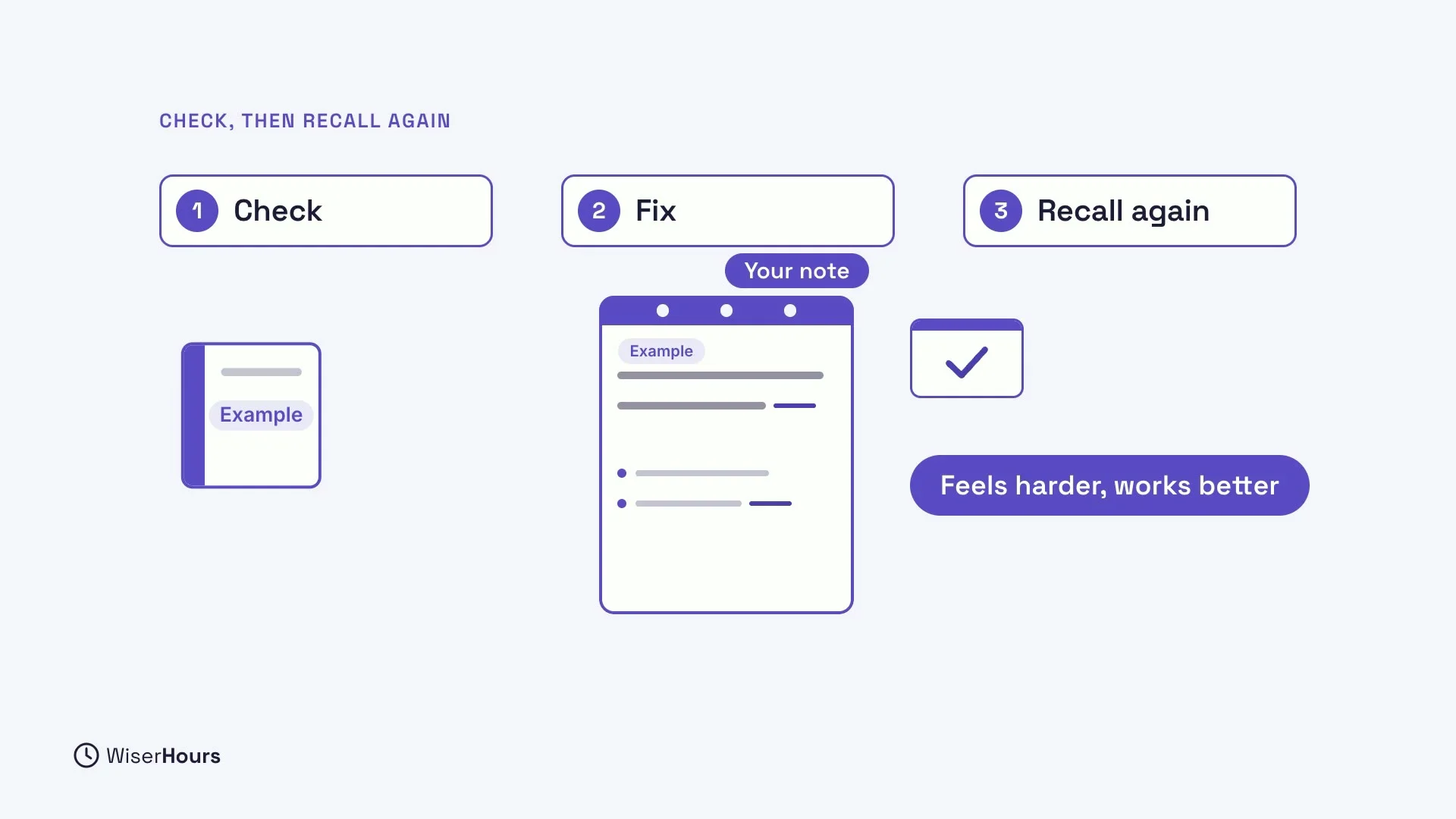
Then open the book, check your page and fix what you missed. Close it and recall once more. Recall feels hard, but it works better than it feels. Your corrected page becomes your note for that chapter.
 (opens the full-size picture)
Add what the page lacks
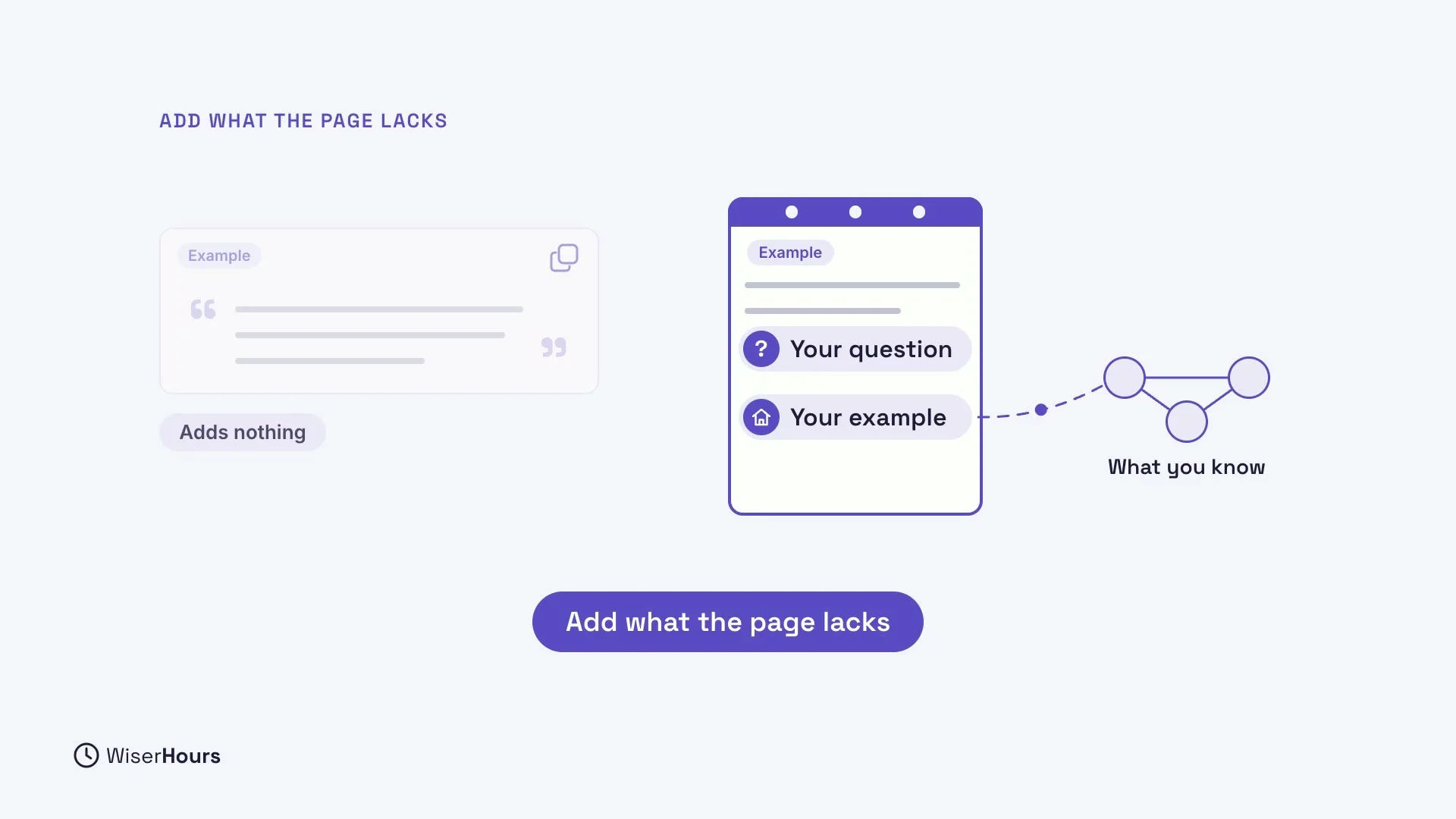
Good notes add something the page does not say. Write a question the chapter leaves open, or an example from your own life. Copying a sentence adds nothing. Your own example ties the idea to what you already know. For example, after a chapter on saving money, you might write how it applies to your own weekly shopping.
 (opens the full-size picture)
If you like highlighting, mark very little
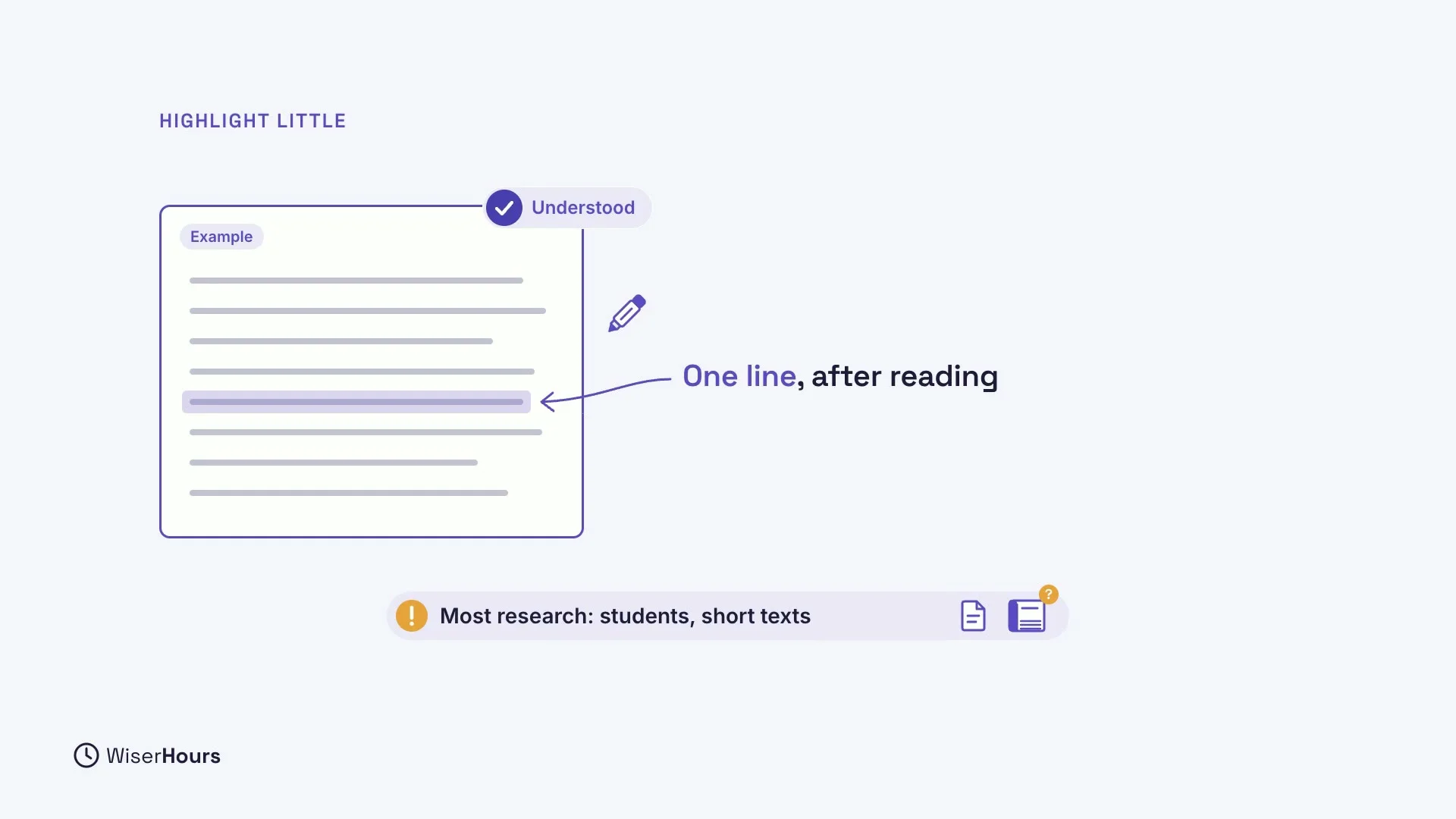
You don’t have to give up highlighting. Mark very little, and only after you understand the section: read it through first, then mark the one line you would quote.
 (opens the full-size picture)
An honest note
Most of this research used students and short texts, not whole books. The habits are simple to try with any book, but treat them as a sensible start, not a promise.
YOUR TURN
Read more
- Why Take Notes at All? What Note-Taking Does for Memory and Thinking: what notes do while you write them, and why review matters most.
- How to Take Notes From Books So You Remember What You Read: a chapter-by-chapter routine, with the research on highlighting and recall.
Read the full lesson script
In this lesson, you will learn to take notes and read in ways that stick. A page full of notes or highlights can feel like progress. What you do afterwards matters more.
Writing notes makes you think about what you hear. But in studies of students, taking notes helped only a little on its own. Taking notes and then reviewing them helped much more.
So plan your review when you take the notes, one short look today and another a few days later. When you review, cover the page and recall first, then check. Don't just reread.
Highlighting alone does little. A review of highlighting studies found a small boost to memory, and no clear gain in understanding.
What helps more is simple. After a chapter, close the book and write down what you remember. Main ideas and any examples you recall are enough.
In two experiments, students who read a science text and then recalled it from memory learned more than students who built a diagram of it with the text open. Most students had not expected that.
Then open the book, check your page and fix what you missed. Close it and recall once more. Recall feels hard, but it works better than it feels. Your corrected page becomes your note.
Good notes add something the page does not say. Write a question the chapter leaves open, or an example from your own life. Copying a sentence adds nothing. Your own example ties the idea to what you already know.
If you like highlighting, mark very little, and only after you understand the section. Most of this research used students and short texts, not whole books.
So, review your notes by testing yourself, and after each chapter, write what you remember before looking back. Before the next lesson, after a chapter or a video, write three things you remember, then check. Next, you will learn memory tricks that help with lists and names.
MAKE IT A SMALL WIN
Finished this lesson?
Mark it complete to save your progress on this device.