How learning works · Lesson 1 of 11
Why Rereading and Highlighting Fade, and What Lasts
See why rereading and highlighting feel productive but fade, which two study habits last longer, and what the rest of this course covers.
 Video coming soon
Some study habits feel productive but fade quickly. Others feel slower and harder, but last. In this lesson you will see the difference, because the same hours of study can leave you with much more, or much less.
Familiar is not the same as learned
Think about rereading your notes, or highlighting a page. After a few passes, the words start to look familiar. And familiar feels like known: you nod along and think, “I’ve got this.”
But looking familiar is not the same as being able to remember it later. Try a quick test: close the book and ask yourself what the page actually said. If the answer is hard to bring back, the page was familiar, not learned.
 (opens the full-size picture)
What one experiment found a week later
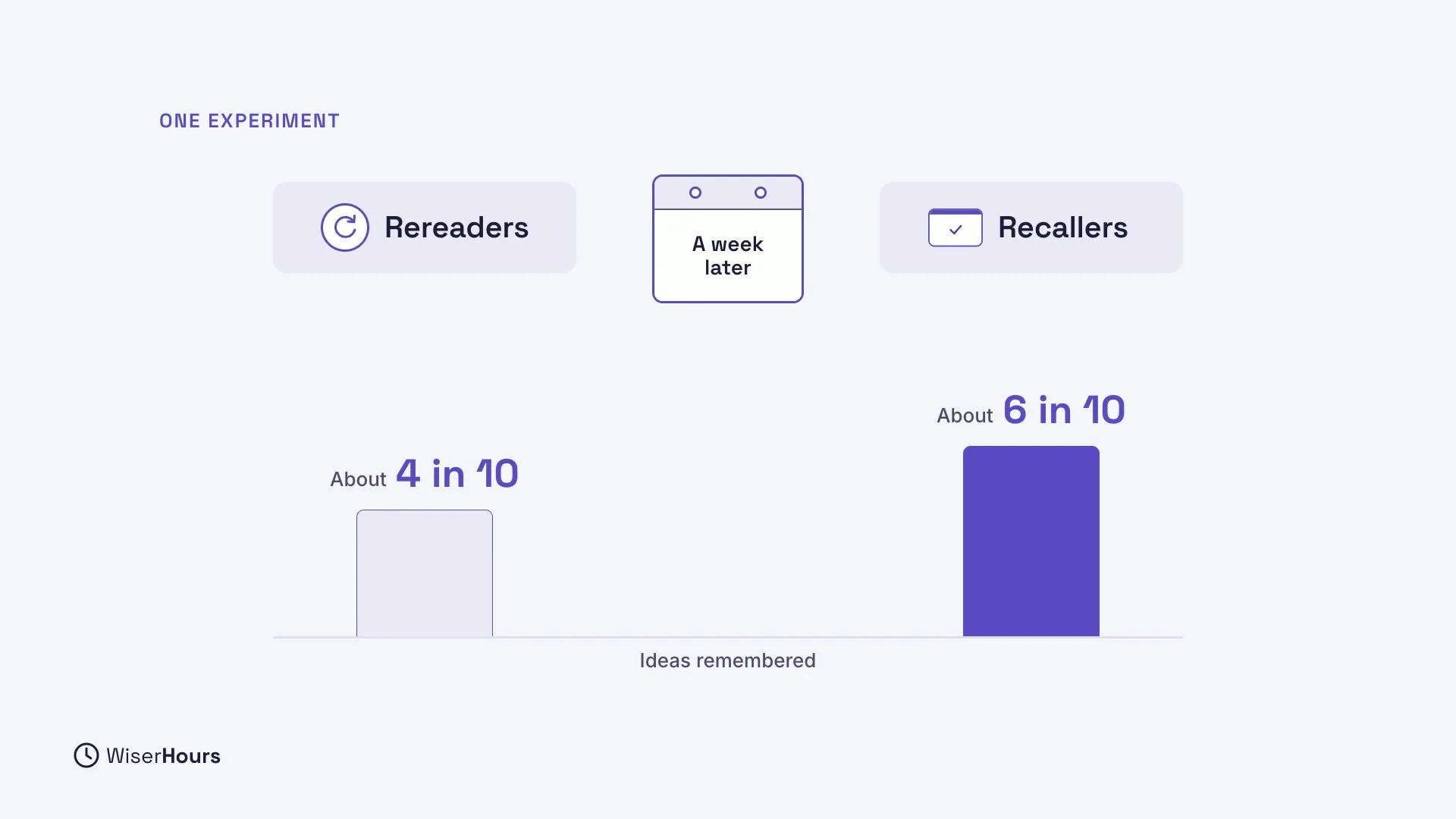
In one experiment, college students read a science passage. Some read it several times. Others read it once, then practiced writing down what they remembered. A week later, the recallers remembered about six in ten of the passage’s ideas. The rereaders remembered about four in ten.
 (opens the full-size picture)
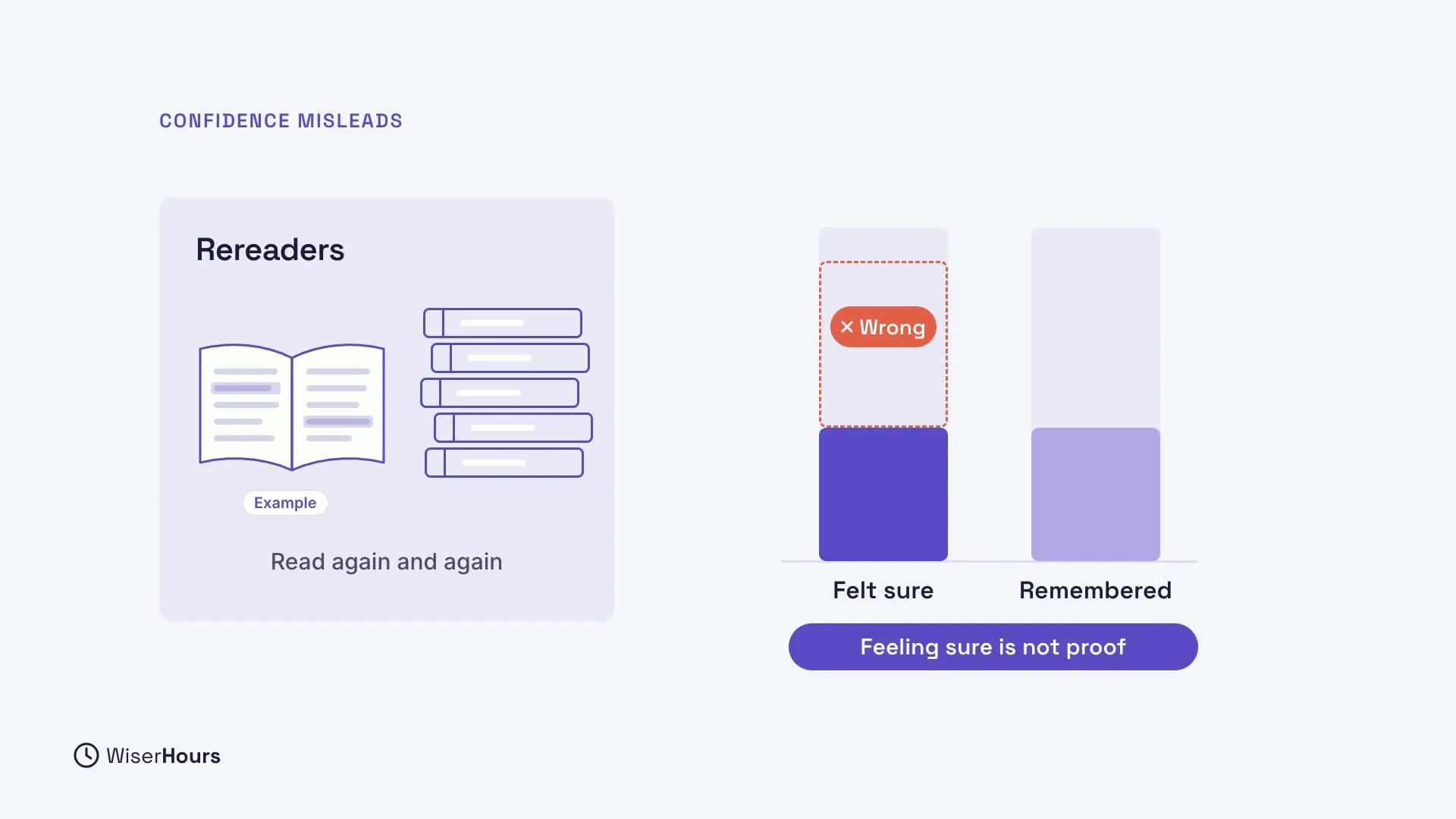
Here is the surprising part. The rereaders had read the passage far more often: about 14 times, against about 3 for the recallers. They also felt more confident that they would remember it. Their feeling of knowing was wrong.
 (opens the full-size picture)
Two habits stood out
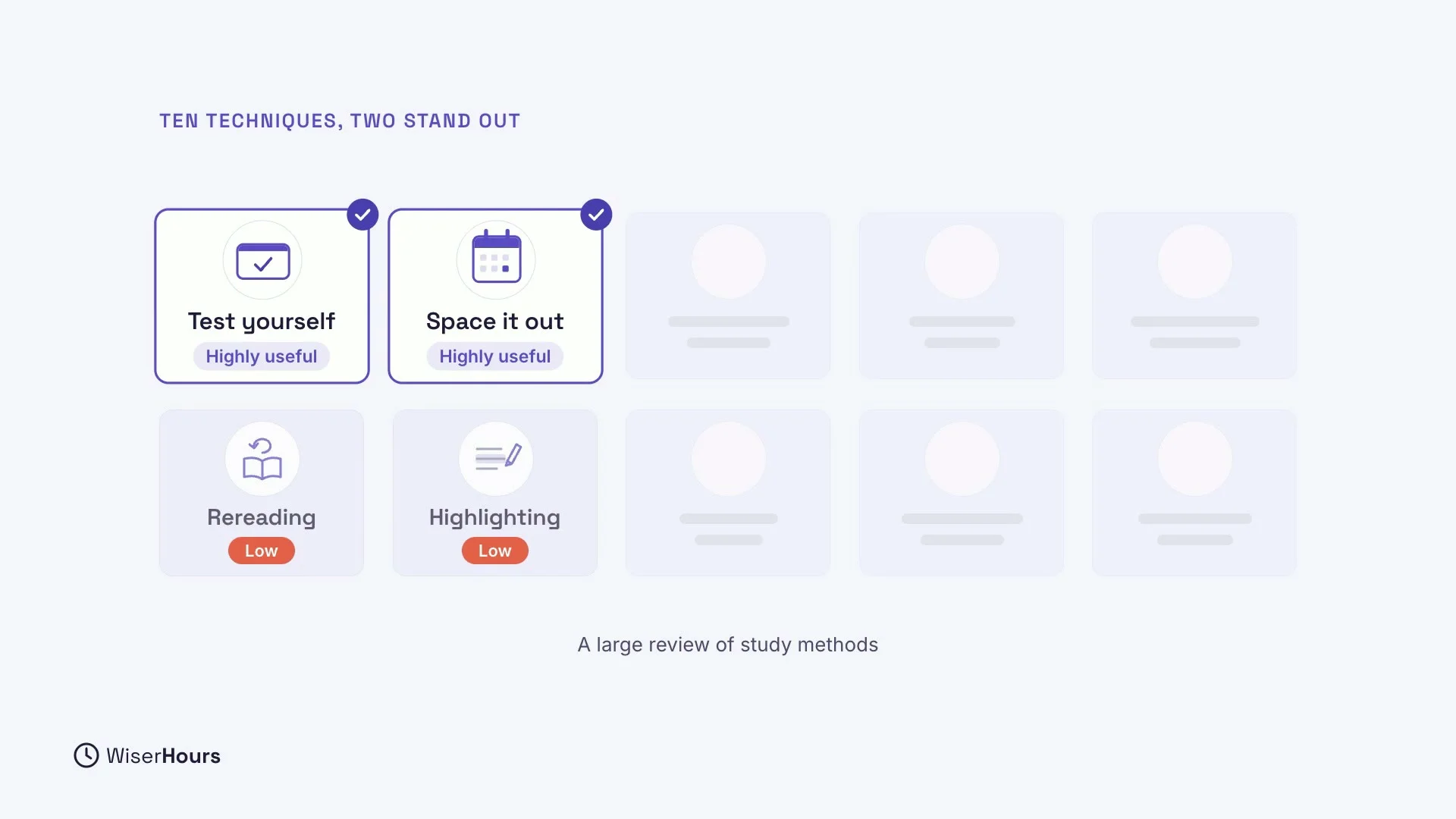
A large review from 2013 graded ten popular study techniques. It rated only two as highly useful: testing yourself, and spreading your study out over time. Rereading and highlighting, two of the most common habits, were rated low, because neither helped people do better in a steady way.
 (opens the full-size picture)
You will learn both of the strong habits in this course: testing yourself, also called retrieval practiceretrieval practice: Learning by recalling material from memory, for example by quizzing yourself, instead of rereading it. Pulling information out makes it easier to recall later, a result also known as the testing effect.Full entry in the glossary, and spacing your study.
Why harder can be better
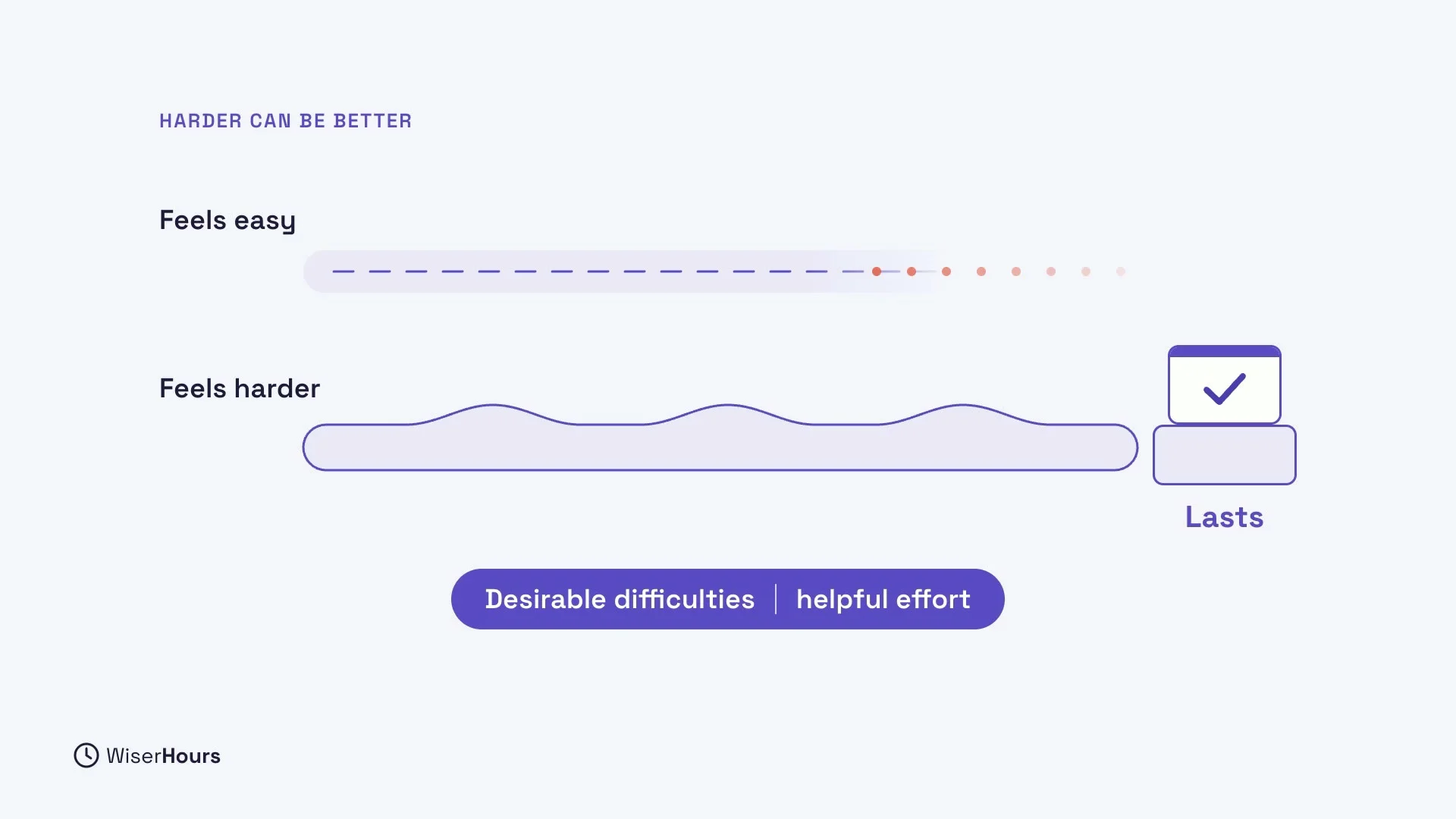
Why do the weak habits feel so good? Easy study gives quick gains that do not last. Methods that feel harder, like testing yourself, slow you down while you study, but they build memory that does last. Researchers call these desirable difficulties, meaning helpful kinds of effort.
 (opens the full-size picture)
Helpful effort, not any effort
A difficulty only helps if you have enough background to meet it. If a question is so hard that you cannot get anywhere with it, go back and study the basics first.
A fair warning
Most of this research involves students learning facts, often tested soon afterwards. So treat these methods as good bets, not promises. The good news is that they are simple to try, whether you are learning for work, a language or a hobby.
 (opens the full-size picture)
What is in this course
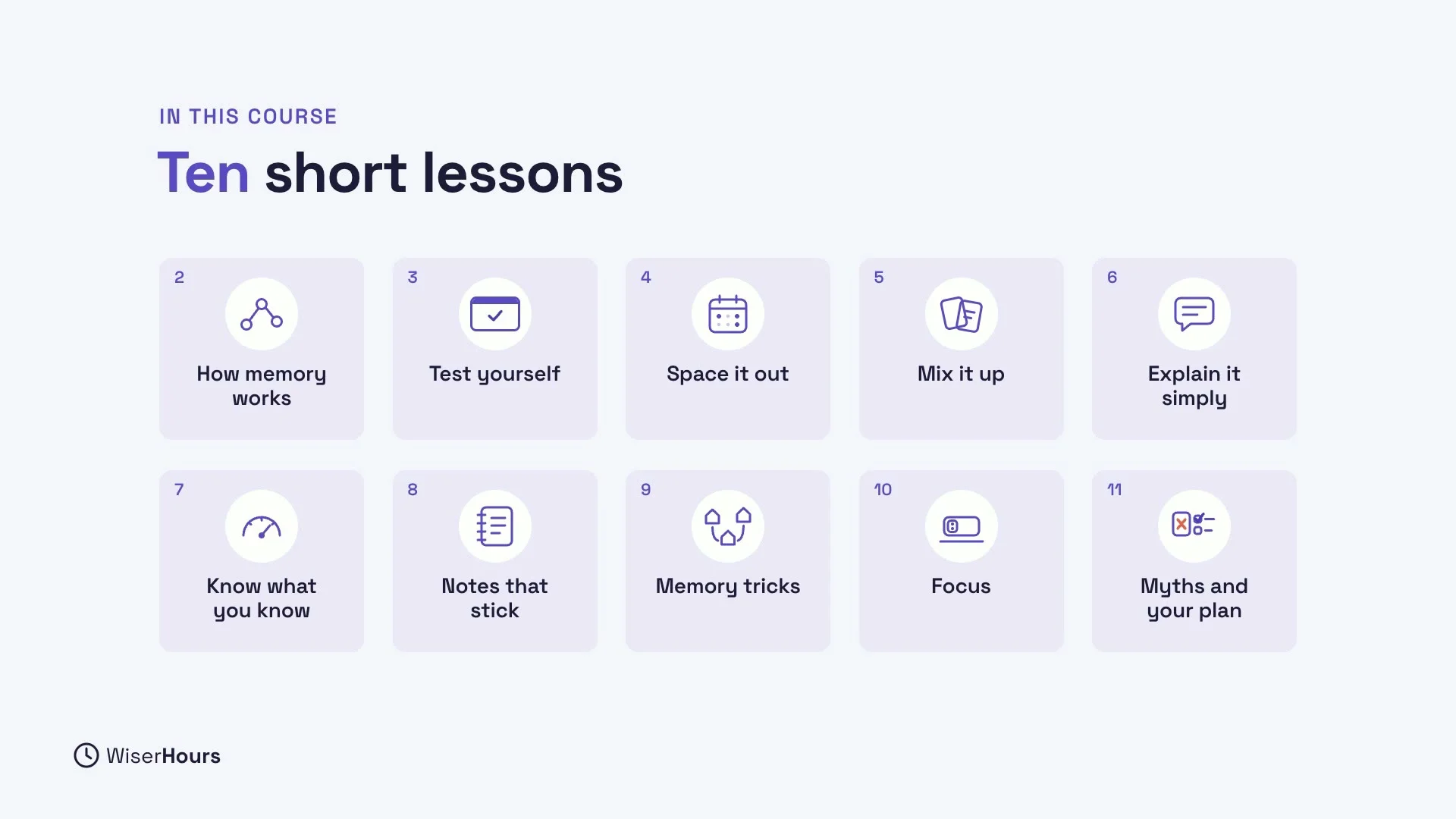
This course has ten more short lessons:
- How memory works, in plain words.
- Test yourself instead of rereading.
- Space it out over several days.
- Mix it up, and learn from solved examples.
- Explain it in plain words.
- Know what you really know.
- Notes and reading that stick.
- Memory tricks that help.
- Focus while you learn.
- Myths to drop, and your learning plan.
 (opens the full-size picture)
YOUR TURN
Read more
- Learning How to Learn: A Research-Backed Guide for Beginners: the full evidence behind the six best-supported study habits, and the popular ideas with weak support.
Read the full lesson script
Welcome to Learn Anything Faster. In this lesson, you will see why some study habits feel productive but fade, and what lasts instead. It matters, because the same hours of study can leave you with much more, or much less.
Think about rereading your notes, or highlighting a page. The words start to look familiar. And familiar feels like known. But looking familiar is not the same as being able to remember it later.
In one experiment, college students read a science passage several times. Others read it once, then practiced writing down what they remembered. A week later, the recallers remembered about six in ten of its ideas. The rereaders remembered about four in ten.
Here is the surprising part. The rereaders had read the passage far more often. They also felt more confident they would remember it. Their feeling of knowing was wrong.
A large review graded ten popular study techniques. It rated only two as highly useful: testing yourself, and spreading your study out over time. Rereading and highlighting were rated low.
Why do the weak habits feel so good? Easy study gives quick gains that do not last. Methods that feel harder, like testing yourself, build memory that does. Researchers call these desirable difficulties, meaning helpful kinds of effort.
Most of this research involves students learning facts, tested soon afterwards. So treat these methods as good bets, not promises. They are simple to try, whatever you are learning.
In this course, you will see how memory works and test yourself. You will space your study and mix your practice. You will explain ideas in plain words and check what you really know. Then come notes, memory tricks, focus, popular myths and your learning plan.
So, rereading and highlighting feel productive, but testing yourself and spacing your study last longer. Today, pick one thing you want to learn this month and write it down. Next, you will see how memory works, in plain words.
MAKE IT A SMALL WIN
Finished this lesson?
Mark it complete to save your progress on this device.