The two big habits · Lesson 3 of 11
Active Recall: Test Yourself Instead of Rereading
Learn to test yourself instead of rereading: which questions work best, why you should check every answer, and what to do with mistakes.
 Video coming soon
Testing yourself is one of the two study habits with the strongest research behind it. It needs no special tools, just a closed book. In this lesson you will learn what it means, which kinds of questions work best, and what to do with your mistakes.
What testing yourself means
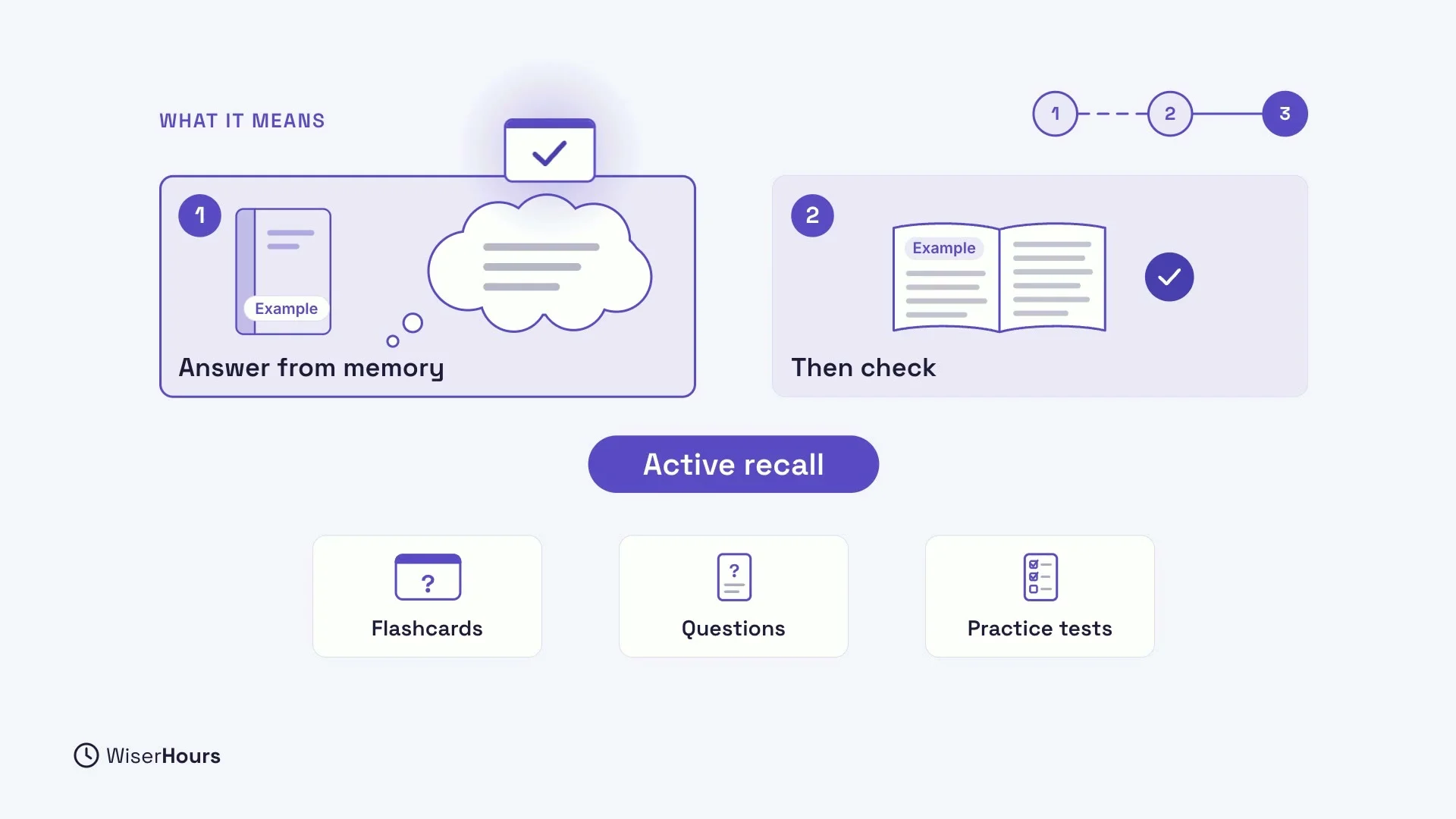
Testing yourself means answering from memory before you look, then checking. Researchers call it active recall, or retrieval practiceretrieval practice: Learning by recalling material from memory, for example by quizzing yourself, instead of rereading it. Pulling information out makes it easier to recall later, a result also known as the testing effect.Full entry in the glossary, which simply means pulling the answer out of your own head instead of reading it again.
Flashcards, practice questions and practice tests all count, as long as you answer first. A flashcard you flip straight away is just rereading on a smaller card.
 (opens the full-size picture)
Recall beats rereading
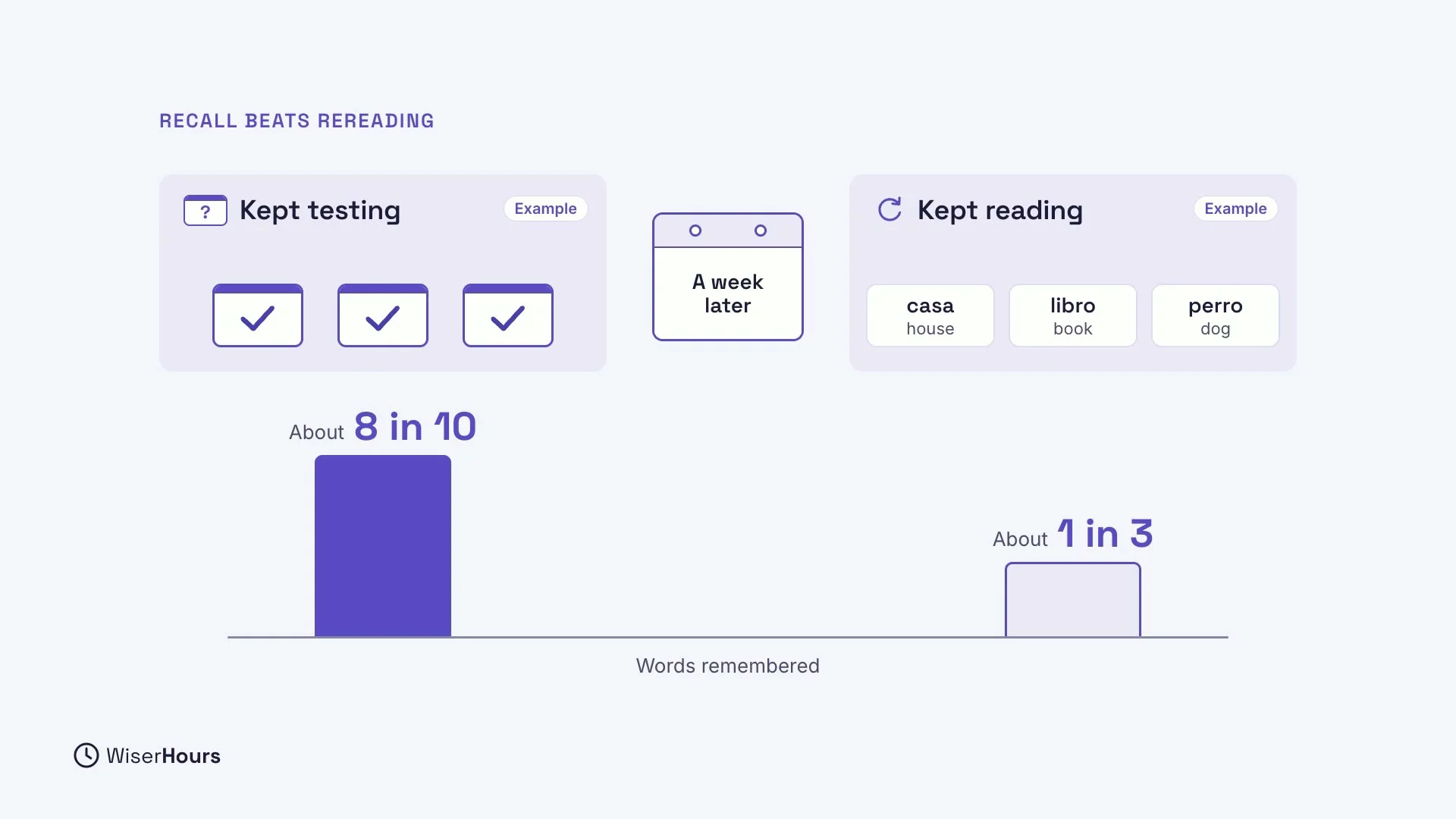
In one experiment, college students learned a list of foreign words. Once they could recall a word, some kept testing themselves on it. Others stopped being tested on it and only kept reading it. A week later, the testers remembered about eight in ten words. The readers remembered about a third.
The extra reading added nothing you could measure. The extra recalling made the difference. And the students had no sense of this: they all predicted roughly the same score.
 (opens the full-size picture)
Make yourself produce the answer
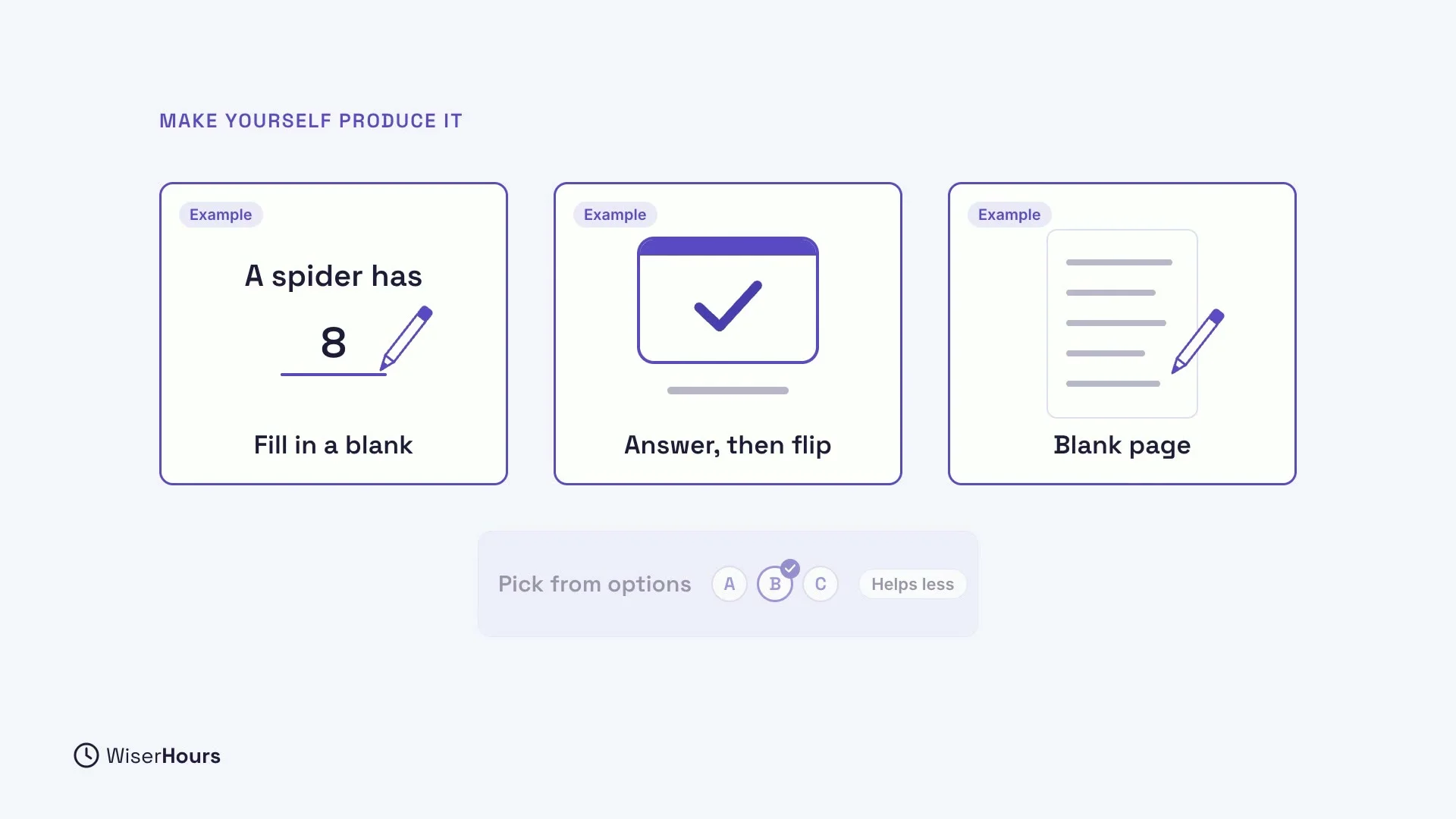
The best questions make you produce the answer, not just recognize it. Here are three easy ways:
- Fill in a blank. For example: A spider has (blank) legs.
- Answer a flashcard before you flip it. Say or write the answer first.
- Use a blank page. Write everything you remember about a topic, then compare.
Picking from options, as in multiple choice, helps too, but less. Choosing from a list lets you lean on a sense of familiarity, while producing an answer makes you search your memory.
 (opens the full-size picture)
Check every answer
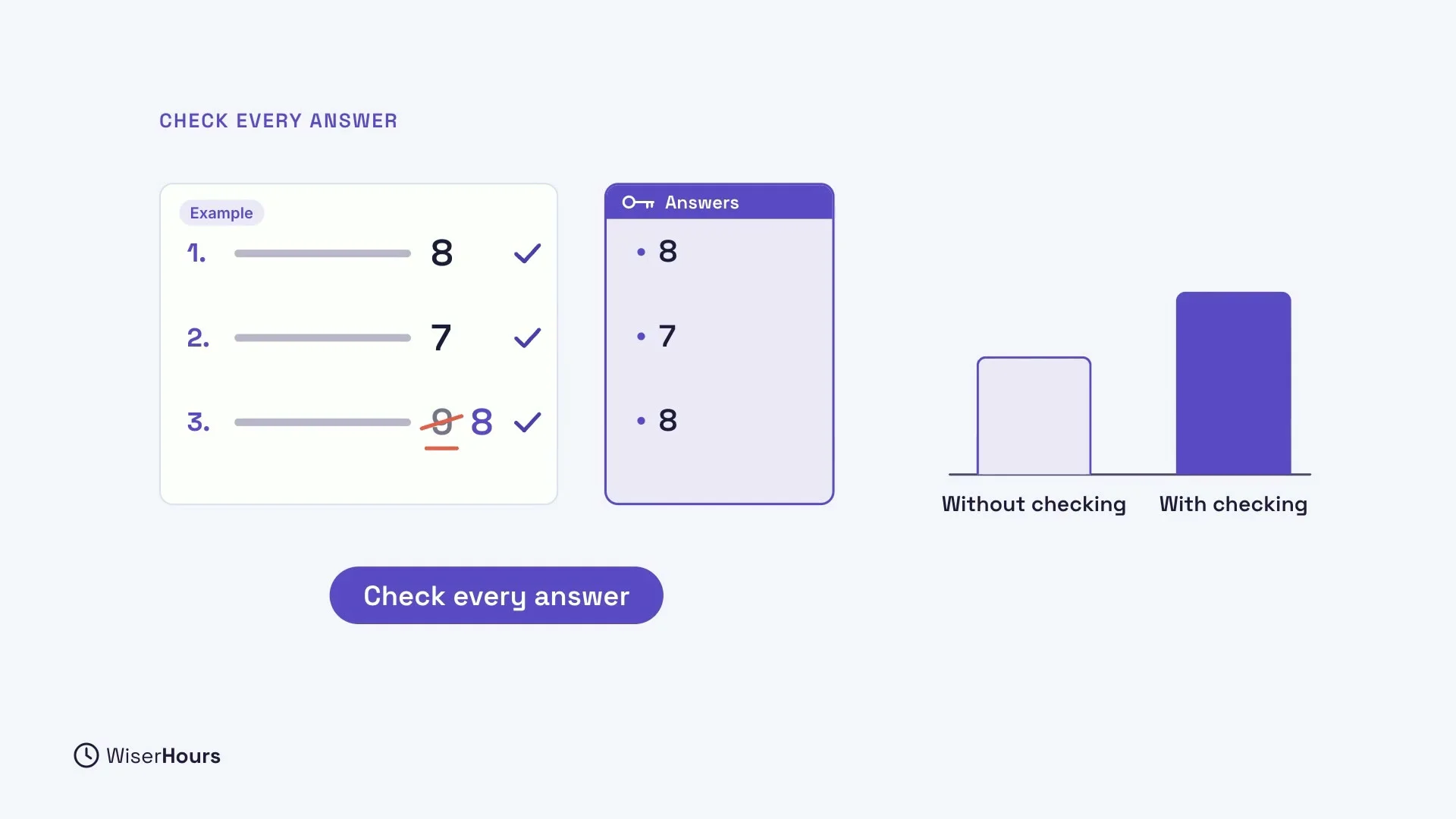
Always check your answers afterwards. Testing helps even without checking, but it helps more with it. And a wrong answer you skip can stay with you as the answer. You don’t need to check after each question: finishing a set and then checking them all works fine.
 (opens the full-size picture)
Confident mistakes are easy to fix
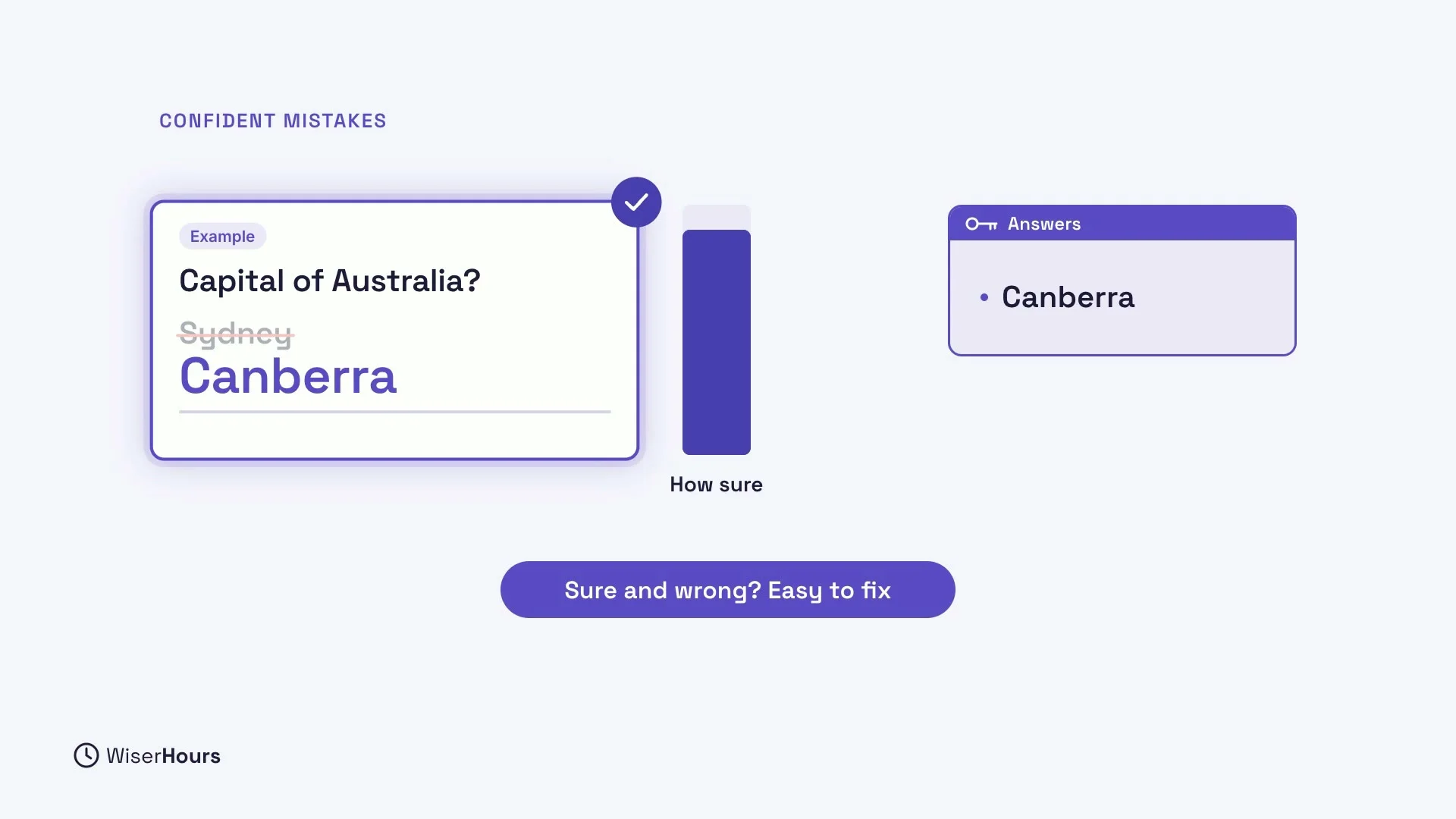
Check the answers you felt sure of too. When you were sure and still wrong, the surprise grabs your attention. Those mistakes are often the easiest to fix once you see the right answer. For example, if you were certain the capital of Australia is Sydney, finding out it is Canberra tends to stick.
 (opens the full-size picture)
Wrong answers are part of it
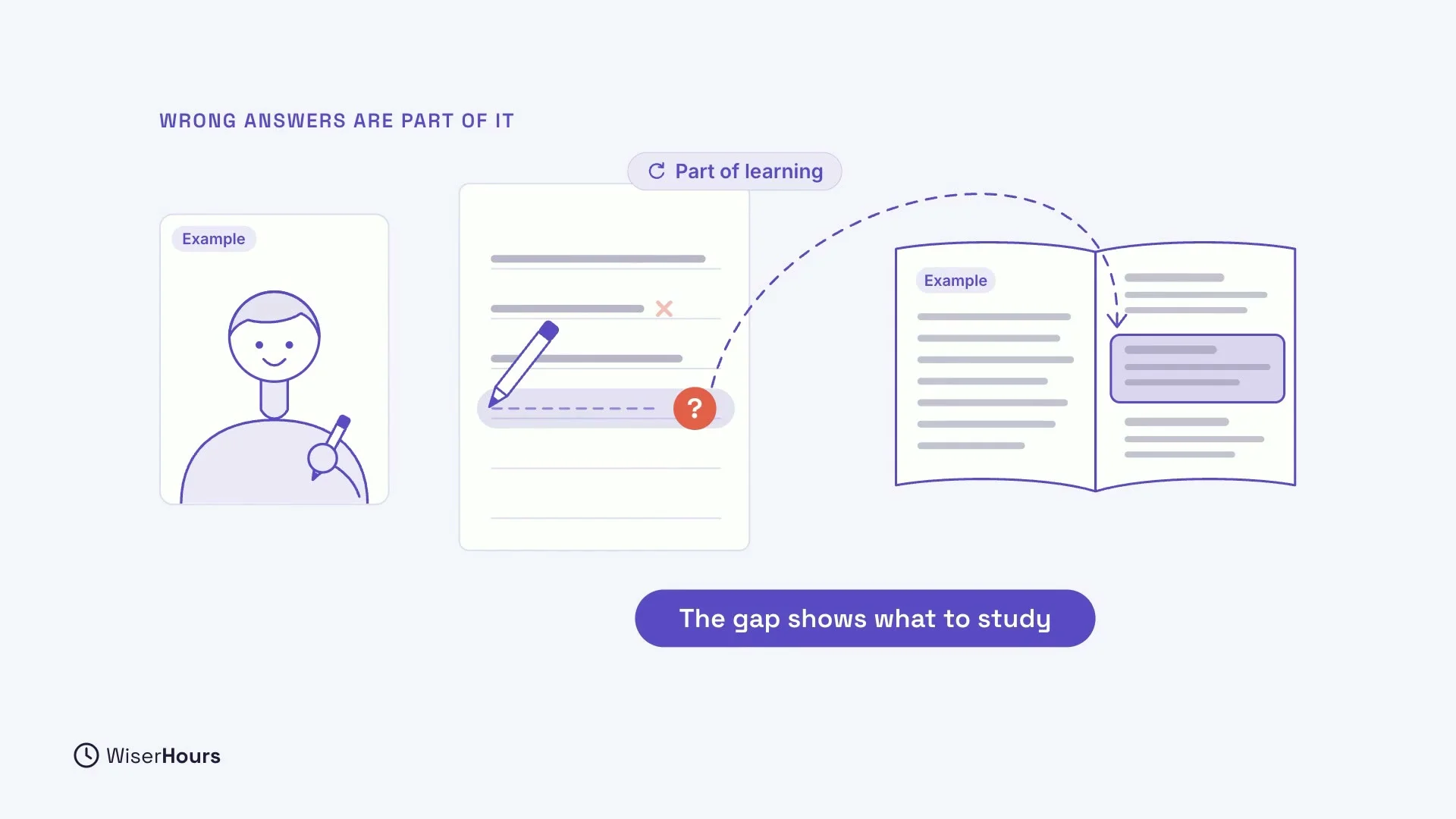
Getting things wrong while you practice is not a sign that you are bad at this. It is part of how learning works. The moment you stall and cannot remember shows you exactly what to study next. Go back to the book for that one part, not the whole chapter.
 (opens the full-size picture)
Keep asking
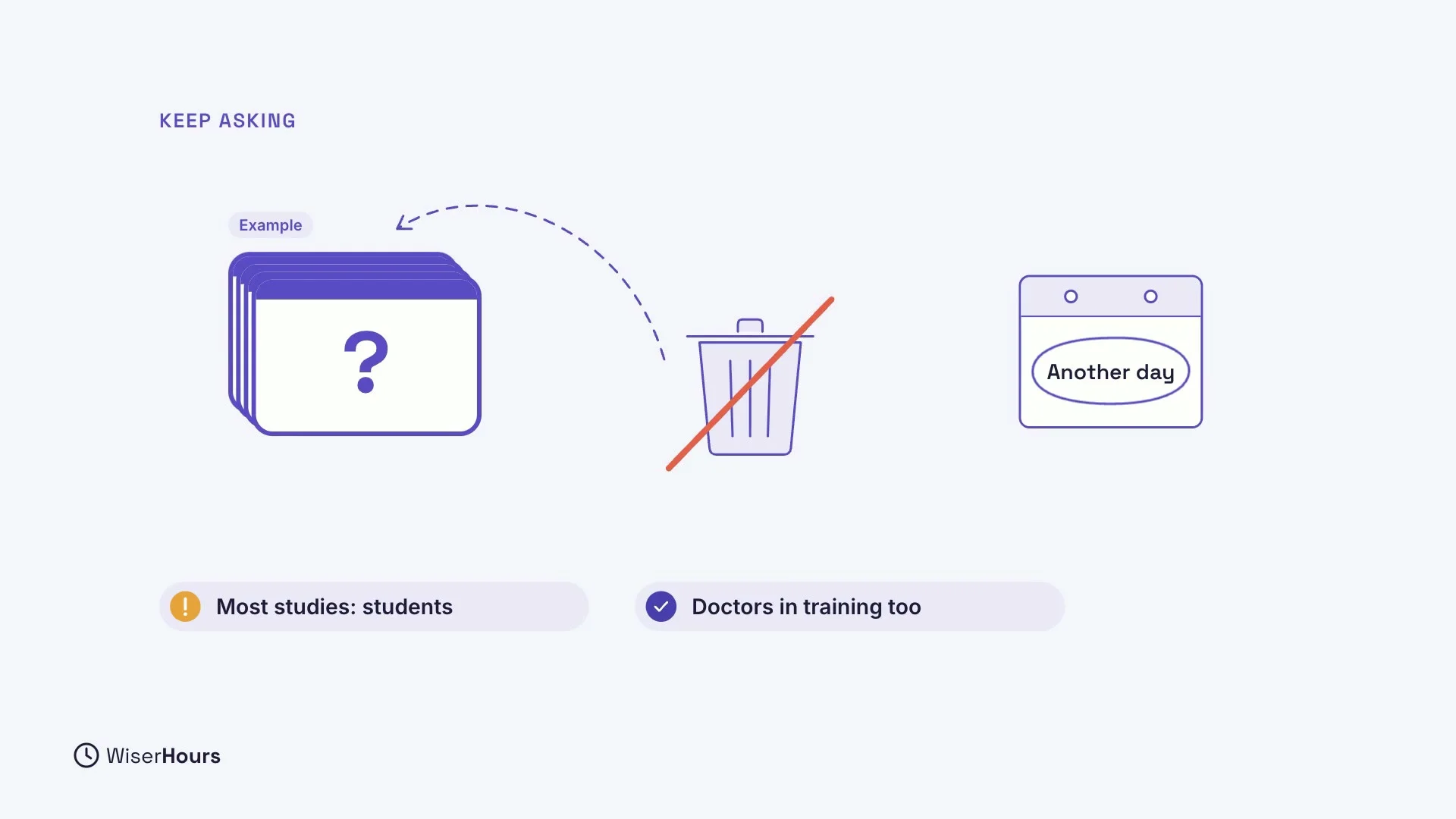
Do not retire a question the first time you get it right. Keep it for another day. In the word experiment, dropping words from testing once they were recalled cost most of the long-term gain.
Most of this research involves students. Studies with doctors in training point the same way, but evidence for other adult learners is thinner, so treat it as a good bet rather than a promise.
 (opens the full-size picture)
YOUR TURN
Read more
- Active Recall: How to Study by Testing Yourself: which question formats work best, what to do with mistakes, and how to build a routine.
- Learning How to Learn: A Research-Backed Guide for Beginners: how testing yourself fits with the other well-supported study habits.
Read the full lesson script
In this lesson, you will learn to test yourself instead of rereading. It is one of the two study habits with the strongest research behind it. And it takes no special tools, just a closed book.
Testing yourself means answering from memory before you look, then checking. Researchers call it active recall, which simply means pulling the answer out of your own head. Flashcards, practice questions and practice tests all count, as long as you answer first.
In one experiment, students learned foreign words. Some kept testing themselves on words they already knew. Others only kept reading them. A week later, the testers remembered about eight in ten. The readers remembered about a third.
The best questions make you produce the answer. Fill in a blank. Answer a flashcard before you flip it. Or write everything you remember on a blank page. Picking from options helps too, but less.
Always check your answers afterwards. Testing helps even without checking, but it helps more with it. And a wrong answer you skip can stay with you as the answer.
Check the answers you felt sure of too. When you were sure and still wrong, the surprise grabs your attention. Those mistakes are often the easiest to fix once you see the right answer.
Getting things wrong while you practice is not a sign that you are bad at this. It is part of how learning works. The stall where you cannot remember shows you exactly what to study next.
Do not retire a question the first time you get it right. Keep it for another day. Most of this research involves students, but studies with doctors in training point the same way.
So, close the book, answer from memory, and check every answer. Today, turn one page of your material into five questions, and answer them tomorrow without looking. Next, you will space your study out over days.
MAKE IT A SMALL WIN
Finished this lesson?
Mark it complete to save your progress on this device.