Make it part of your week · Lesson 9 of 11
Memory Tricks: The Memory Route and Remembering Names
Learn how a memory route helps you remember lists, how to make names stick, and why recalling later is what keeps them.
 Video coming soon
In this lesson you learn a few memory tricks, and when they are worth using. They help most with things you need exactly, like a list, the steps of a routine or a new person’s name. For ideas you need to understand, other habits from this course work better.
Why lists slip
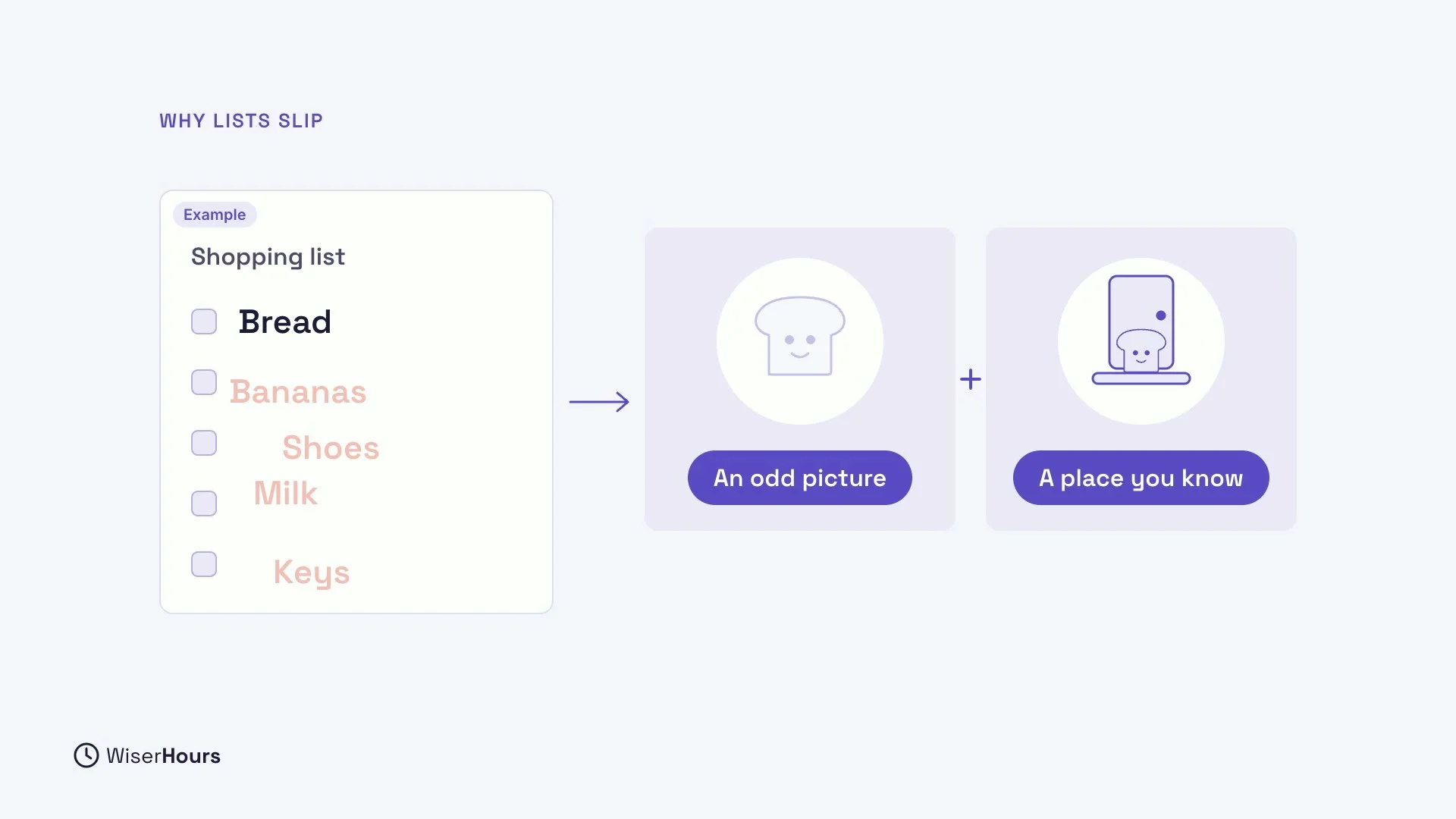
A plain list gives your memory nothing to hold. Nothing about “bread, bananas, shoes” leads from one item to the next, so one item drops out and the rest follow. Memory tricks fix that. They turn each item into an odd picture, and hang it on something you already know well.
 (opens the full-size picture)
The memory route
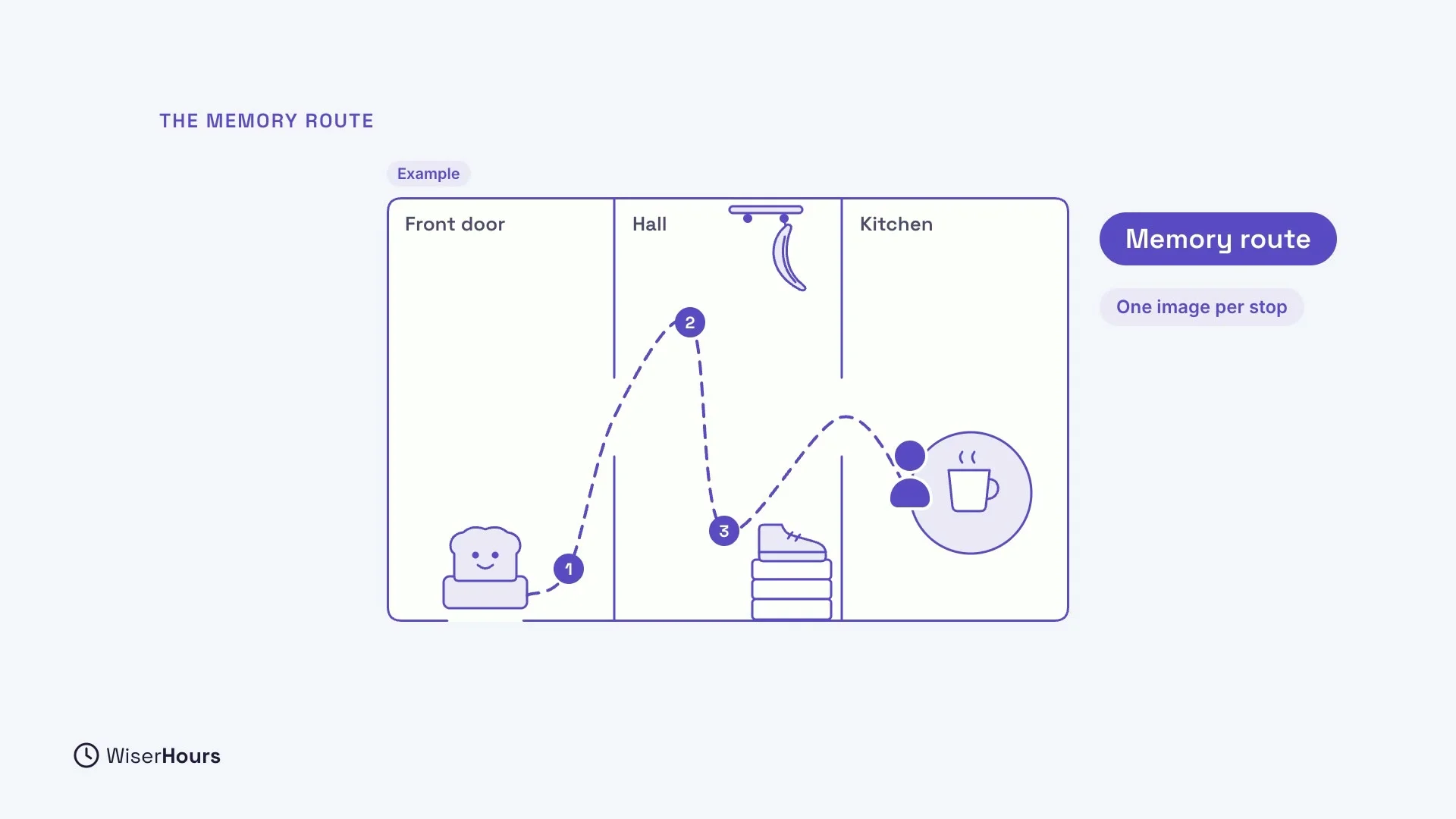
The best-known trick is a memory route. Picture a walk you know well, from your front door to your kitchen. Leave one strange image at each stop, like a loaf of bread on the doormat or a banana hanging from the hall light. The stranger the image, the better. To remember, walk the route in your mind and look at each stop.
 (opens the full-size picture)
What the research says
Does it work? A large review found that a memory route beat simple repetition for lists in order, when people were tested soon after. But the evidence is weak, and nobody knows yet how much it helps. Many of the studies were short lab tests with word lists, so treat the route as a useful tool, not a guarantee.
 (opens the full-size picture)
Start small
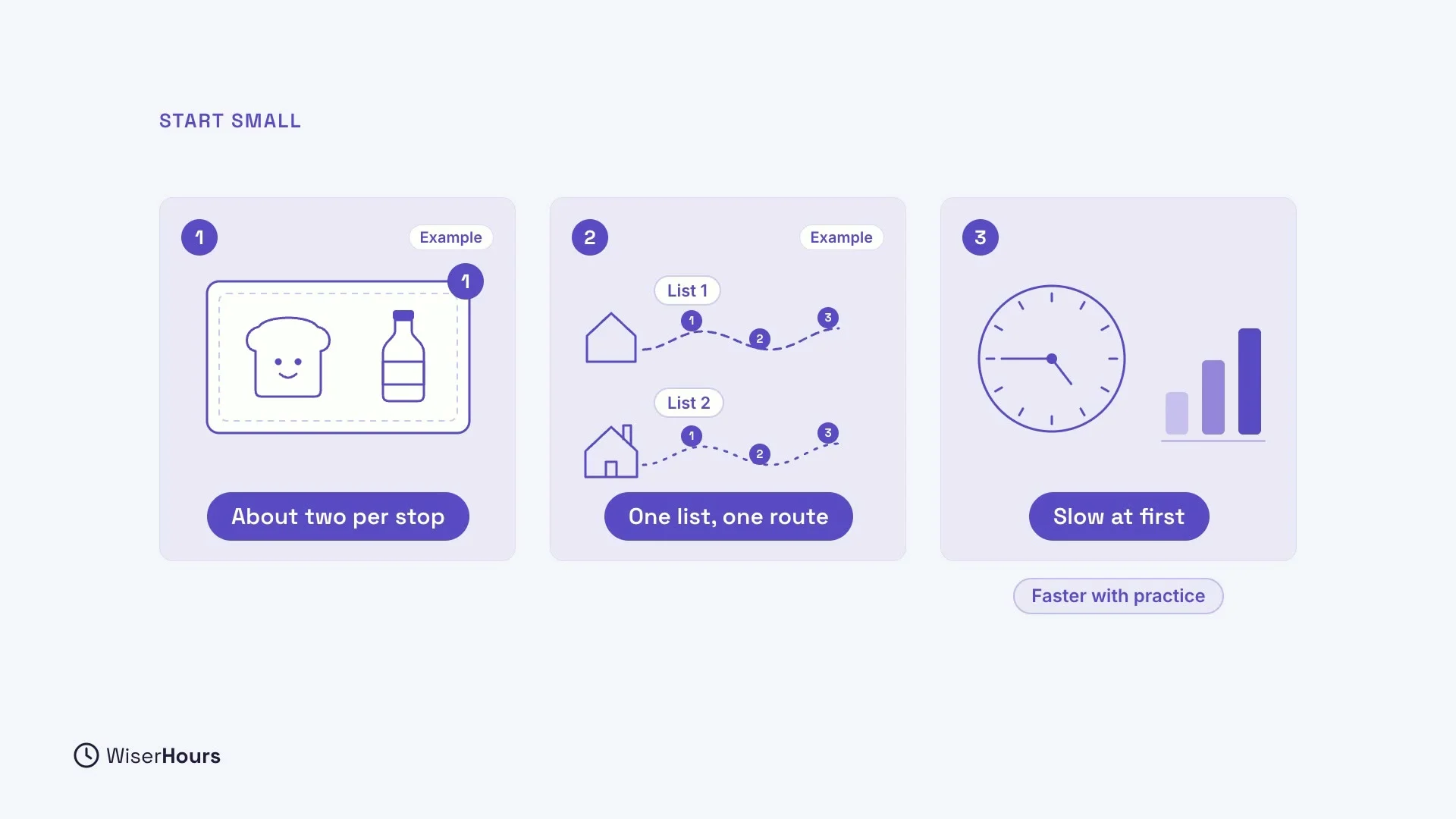
Start small, with about two items per stop. Give each list its own route, because reusing a route for a new list can blur the old one. For example, use your home for the shopping and the walk to work for the points of a talk. It feels slow at first, and gets faster with practice.
 (opens the full-size picture)
Names
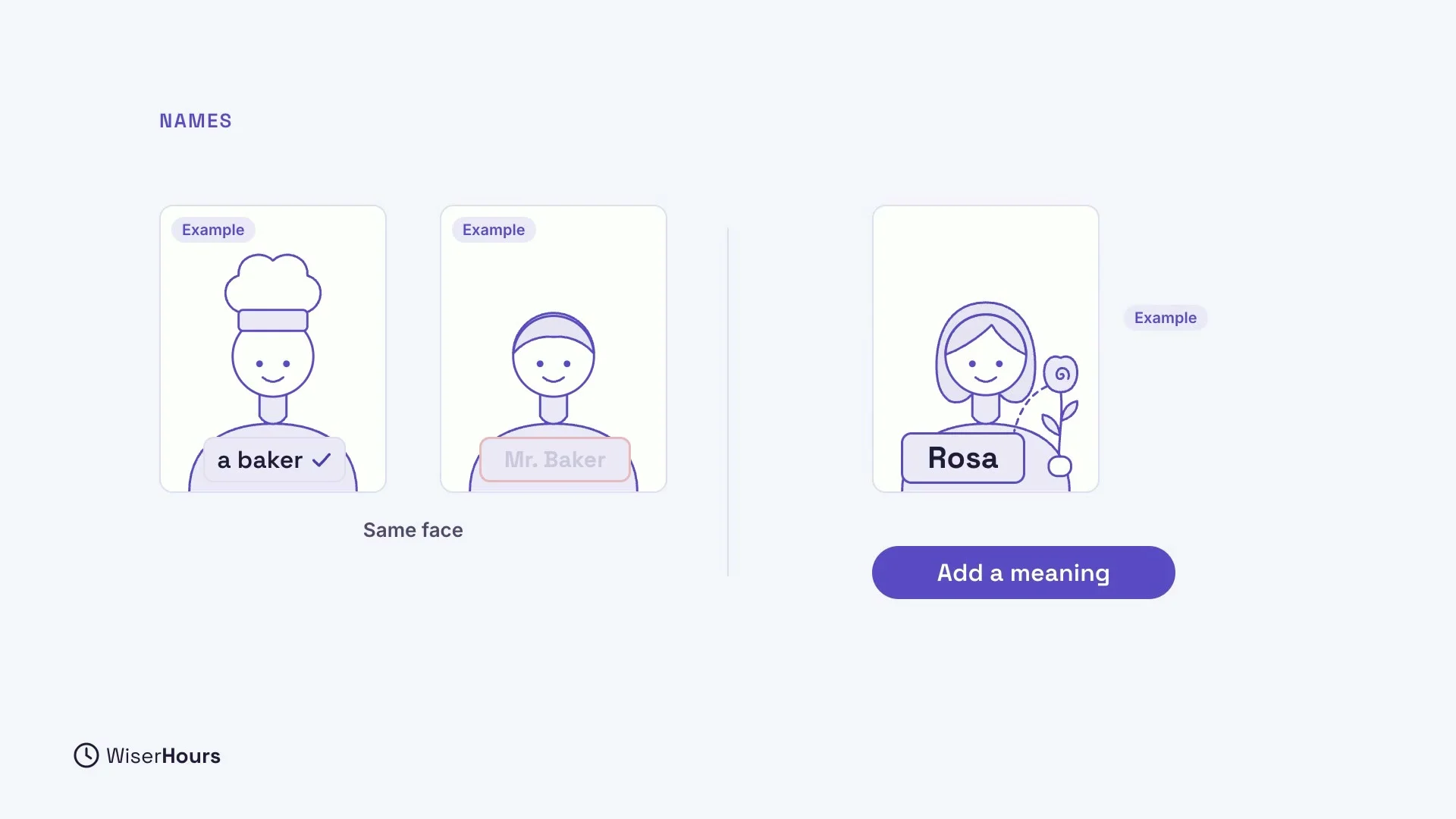
Names are hard, because a name tells you nothing about the person. It is easier to remember that someone is a baker than that they are called Baker. So add a meaning when one comes easily. Rosa can hold a rose. A new colleague called Sam can stand next to a Sam you already know.
 (opens the full-size picture)
Recall is what keeps it
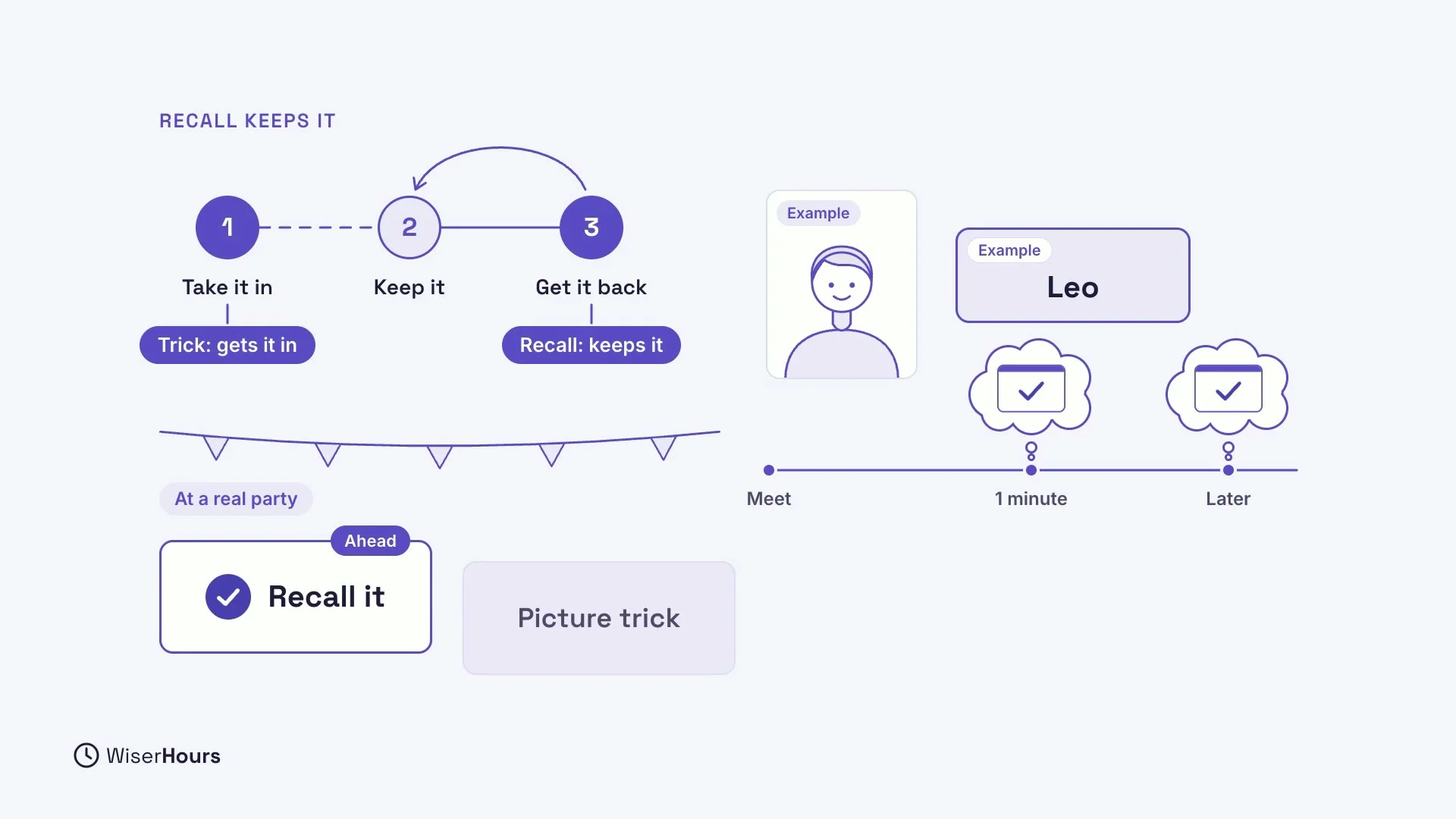
Here is the key part. With a new name, ask yourself the name silently a minute later, then again after a longer gap, for example when you move on and once on the way home. At a real party, that worked better than a picture trick. The same goes for your memory route: walk it again the next day, before you look at the list.
 (opens the full-size picture)
When to use memory tricks
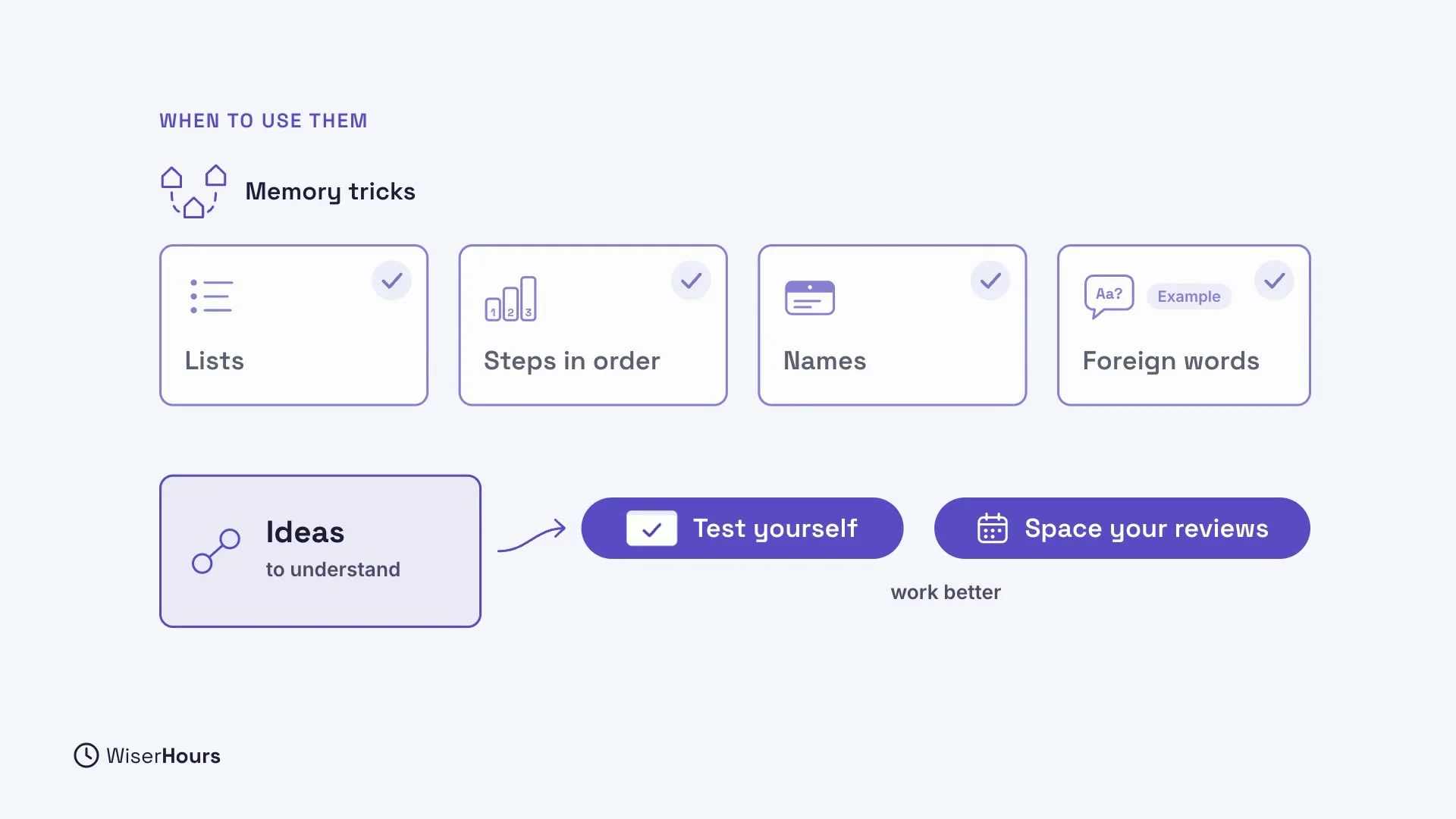
Use these tricks for lists, steps in order, names and stubborn foreign words. For ideas you need to understand, testing yourself and spacing your reviews work better. Earlier in this course you learned both: how to test yourself and how to space your reviews.
 (opens the full-size picture)
YOUR TURN
Read more
- Mnemonics for Beginners: The Memory Techniques Worth Learning: the memory route and other tricks, what each one is good for, and how strong the evidence is.
- How to Remember Names: A Method That Works at Parties and Meetings: why names slip and a simple routine for the next introduction.
Read the full lesson script
In this lesson, you will learn a few memory tricks, and when they are worth using. They help most with things you need exactly, like lists and names.
A plain list gives your memory nothing to hold. Memory tricks fix that. They turn each item into an odd picture, and hang it on something you already know well.
The best-known trick is a memory route. Picture a walk you know well, from your front door to your kitchen. Leave one strange image at each stop, like a loaf of bread on the doormat. To remember, walk the route in your mind and look.
Does it work? A large review found that a memory route beat simple repetition for lists in order, when people were tested soon after. But the evidence is weak, and nobody knows yet how much it helps.
Start small, with about two items per stop. Give each list its own route. It feels slow at first, and gets faster with practice.
Names are hard, because a name tells you nothing about the person. It is easier to remember that someone is a baker than that they are called Baker. So add a meaning when one comes easily. Rosa can hold a rose.
Here is the key part. A trick gets the item in. Recalling it later is what keeps it there. With a new name, ask yourself the name silently a minute later, then again after a longer gap. At a real party, that worked better than a picture trick.
Use these tricks for lists, steps in order, names and stubborn foreign words. For ideas you need to understand, testing yourself and spacing your reviews work better.
So, turn each item into an odd picture, hang it on a place you know, and then recall it later. Today, memorize a five-item list with a route through your home, and recall it tomorrow. Next, you will learn how to keep your focus while you learn.
MAKE IT A SMALL WIN
Finished this lesson?
Mark it complete to save your progress on this device.