Make it part of your week · Lesson 11 of 11
Learning Myths to Drop, and Your Weekly Learning Plan
Drop three popular learning myths, see what makes practice count, and fill in a weekly plan built from five well-supported habits.
 Video coming soon
In this last lesson you drop three popular myths about learning, and leave with a simple weekly plan. Letting go of the myths frees your time for the habits that work. Then you put those habits into a plan you can tick off, week by week.
Myth 1: learning styles
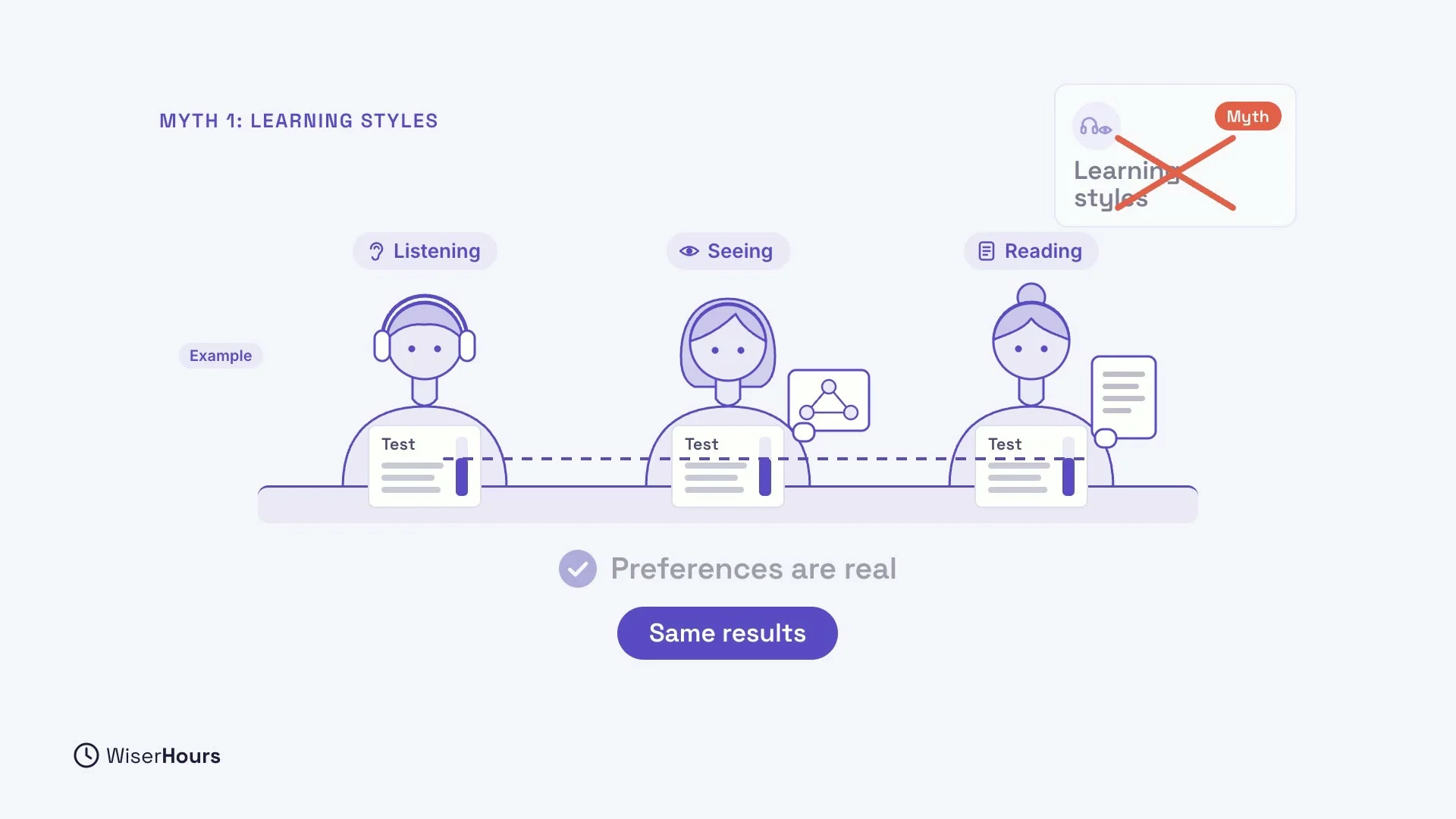
Many people say they learn best by seeing, or by listening. Those preferences are real, and people can tell you theirs. But the popular idea of learning styleslearning styles: The popular belief that each person learns best in one preferred mode, such as visual or auditory, and should be taught in it. Tests of matching teaching to a person's style have found little or no benefit, so it is best treated as a myth.Full entry in the glossary goes one step further: that being taught in your preferred style makes you learn more. Studies that tested teaching people in their preferred style found it did not help them learn more.
 (opens the full-size picture)
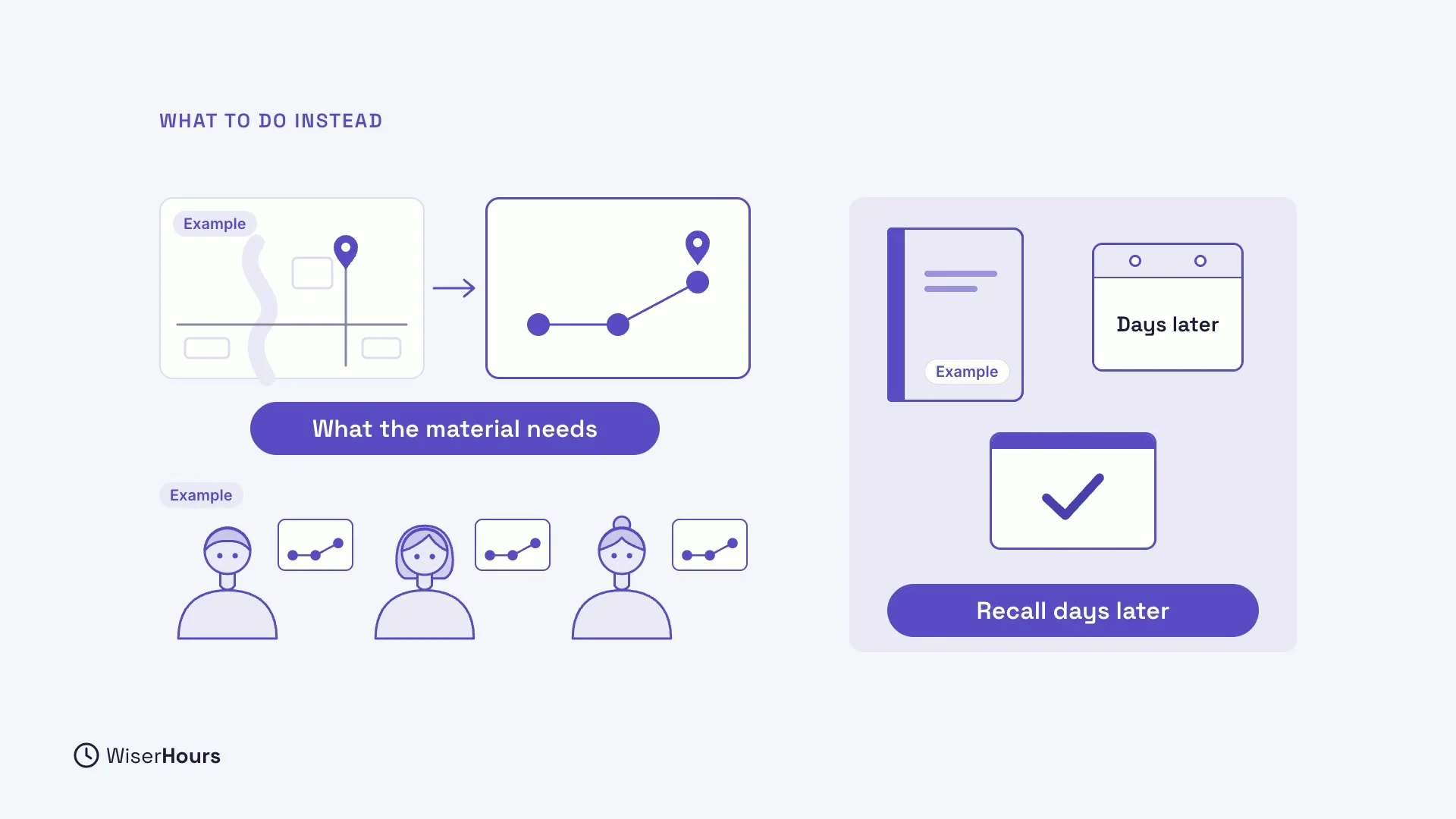
So choose the format the material needs, like a diagram for something you have to picture, such as a route or the parts of a machine. Give everyone the pictures, not only the people who call themselves visual. And judge any method by what you can recall days later, with the page closed.
 (opens the full-size picture)
Myth 2: brain-training games
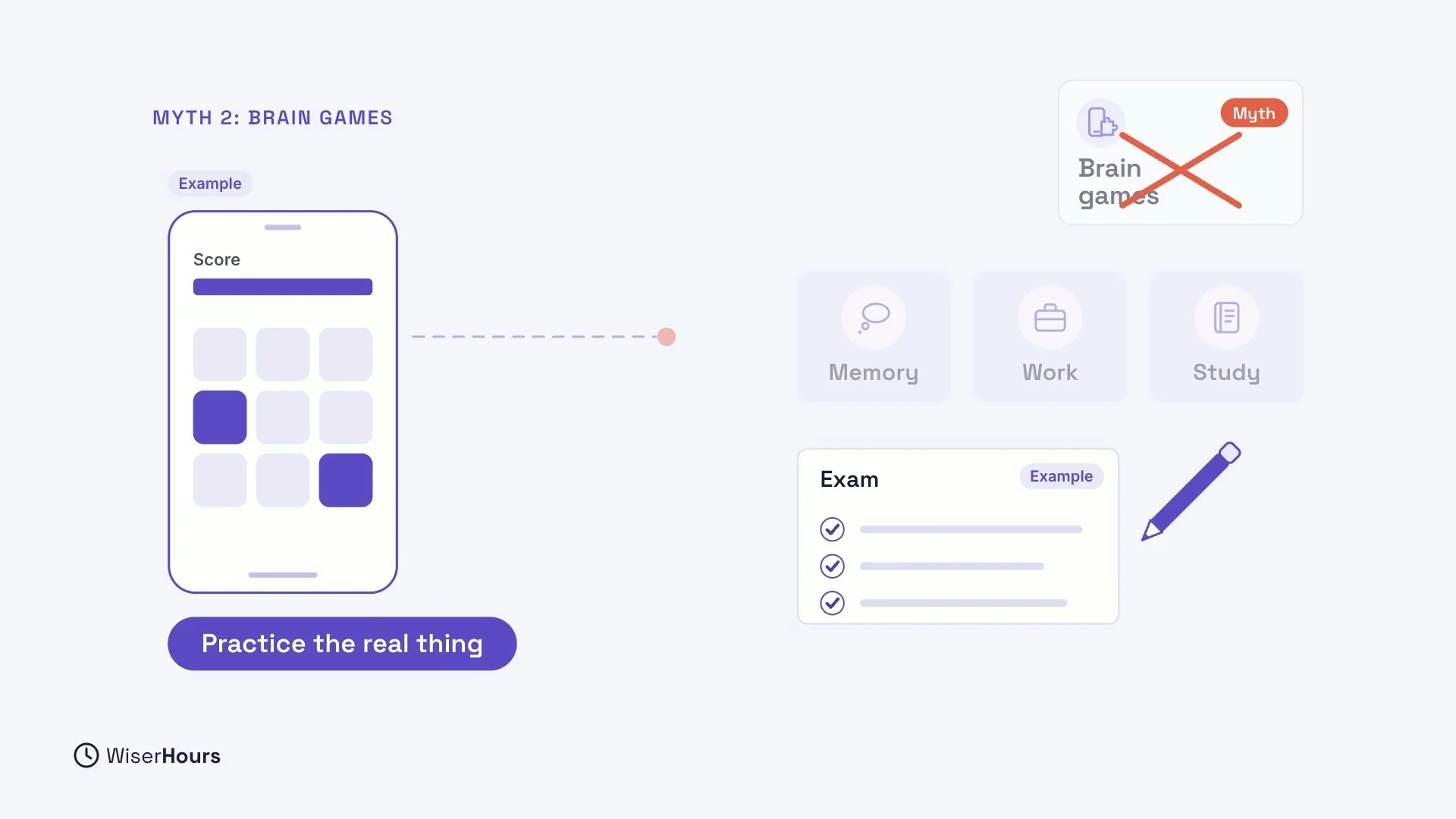
Large studies find that practice on brain-training games makes you better at the game itself. It rarely spreads to everyday memory, work or study. If you enjoy the games, play them as games. But if you want to pass an exam, practice for the exam. If you want to remember names, practice remembering names.
 (opens the full-size picture)
Myth 3: the ten thousand hour rule
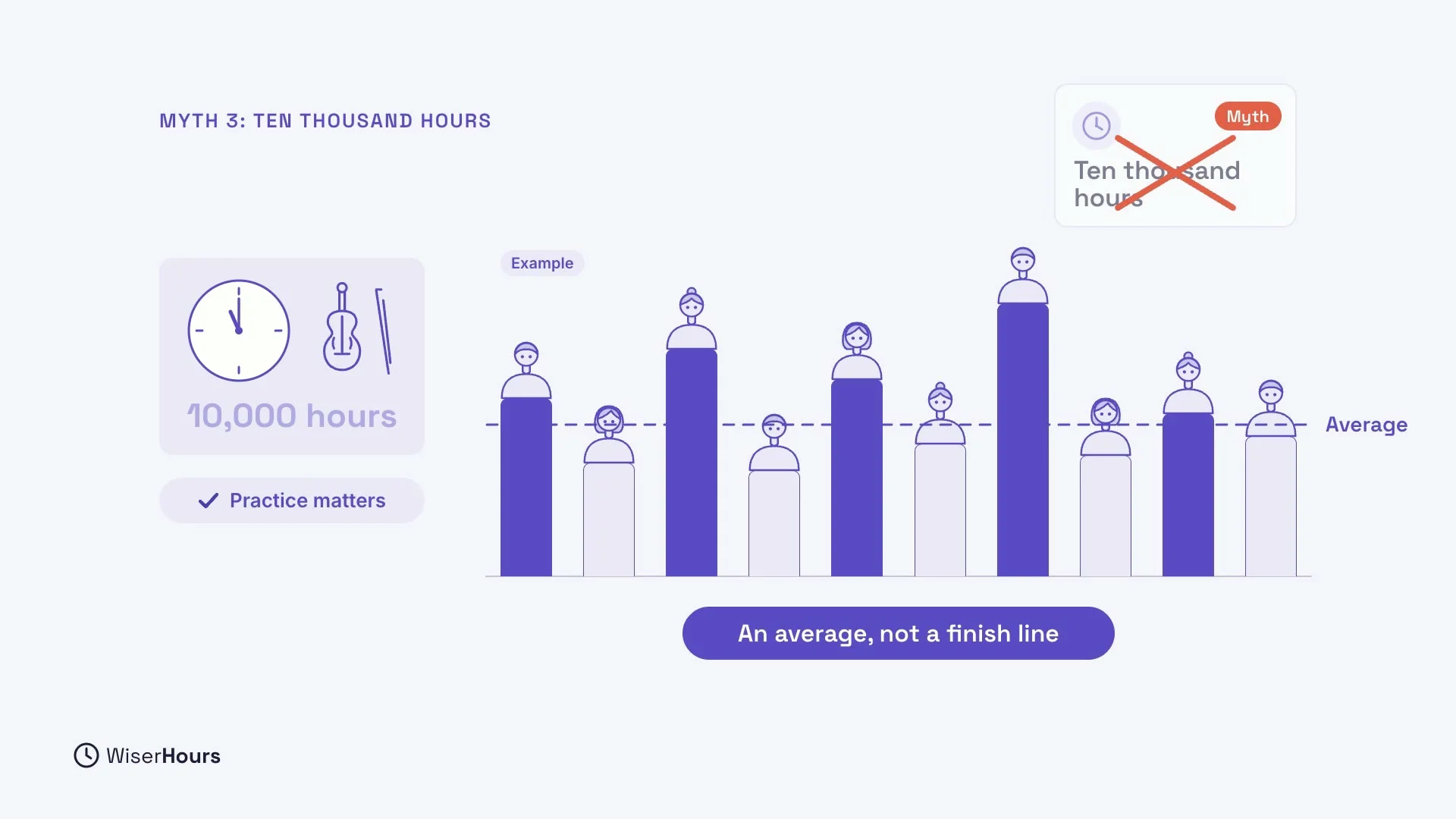
The ten thousand hour rule says that about ten thousand hours of practice makes you an expert. That number began as an average for a small group of top student violinists, and half of that group had not reached it. Practice does matter. But hours alone tell you little about how good someone will get.
 (opens the full-size picture)
What makes an hour count
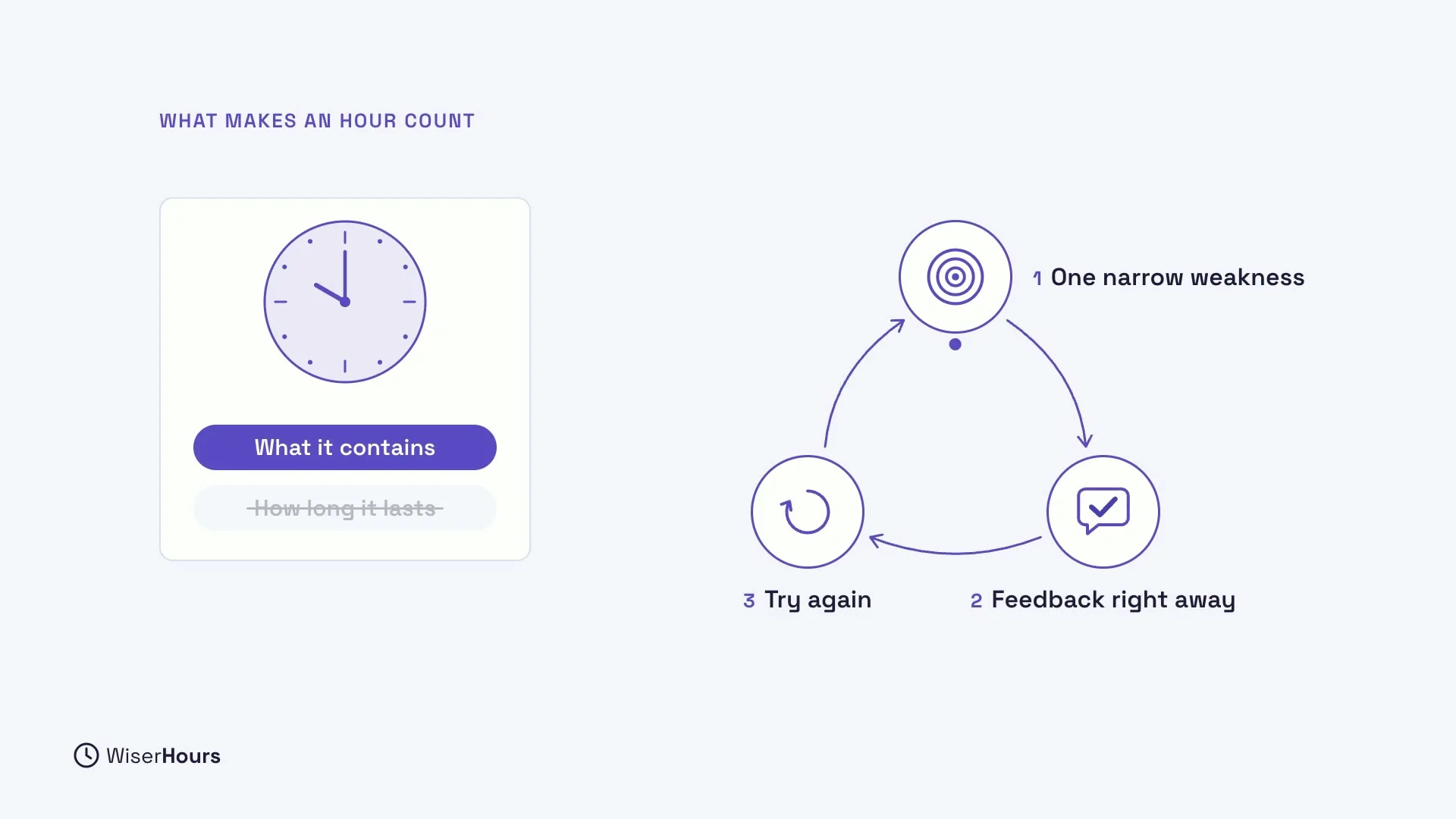
What makes an hour count is what it contains, not how long it lasts. Aim at one narrow weakness, for example one tricky passage of a song or one kind of sum you keep getting wrong. Get feedback right after each try, from a teacher, a friend or an answer key. Then try again.
 (opens the full-size picture)
Your weekly learning plan
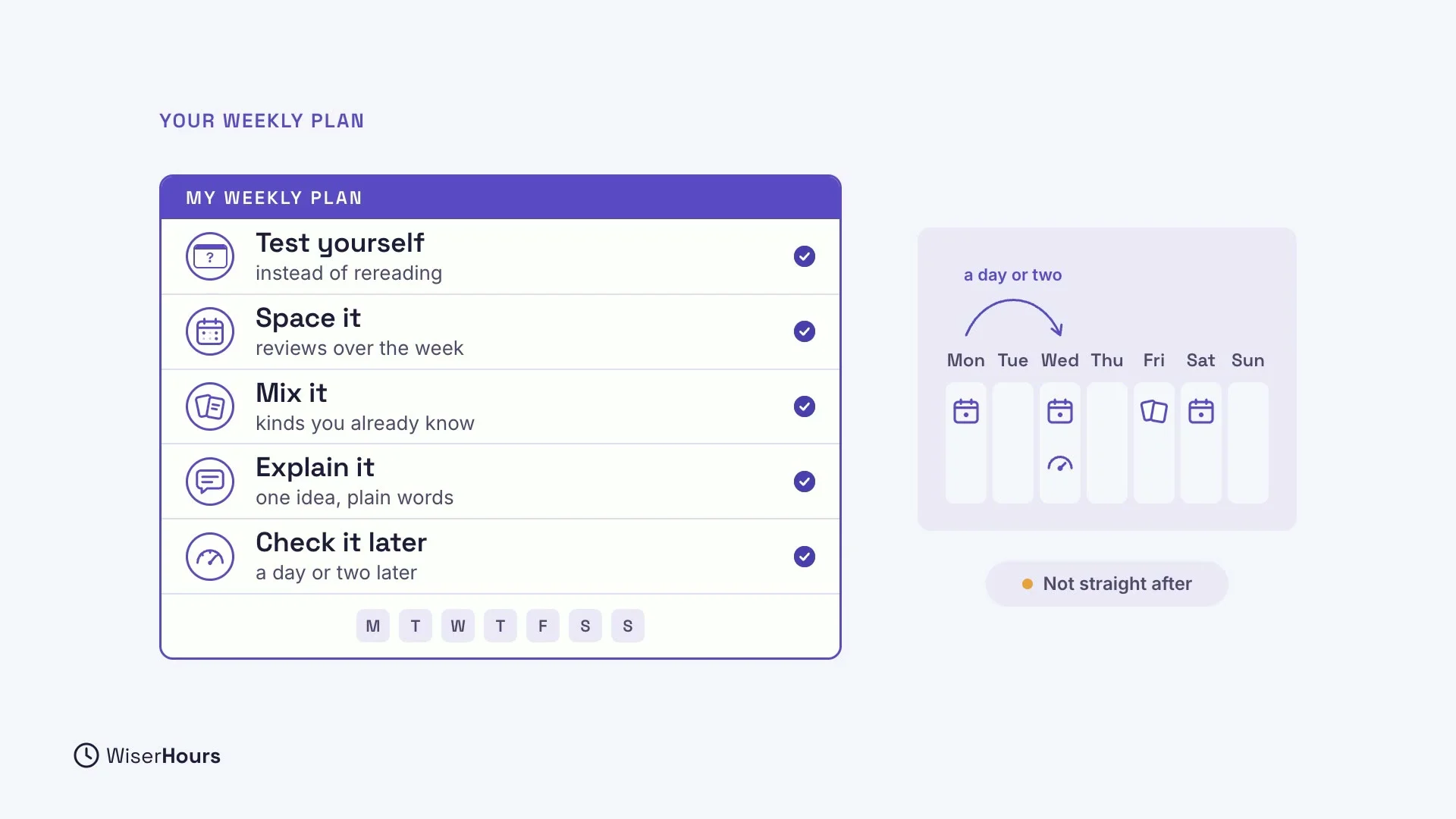
Now your weekly learning plan, built from this course. Each habit has its own lesson if you want a reminder:
- Test yourself instead of rereading (lesson 3).
- Space it: spread your reviews over the week (lesson 4).
- Mix it: mix kinds of questions you already know (lesson 5).
- Explain it: explain one idea in plain words (lesson 6).
- Check it: check what you know a day or two later, not straight after studying (lesson 7).
 (opens the full-size picture)
An honest note
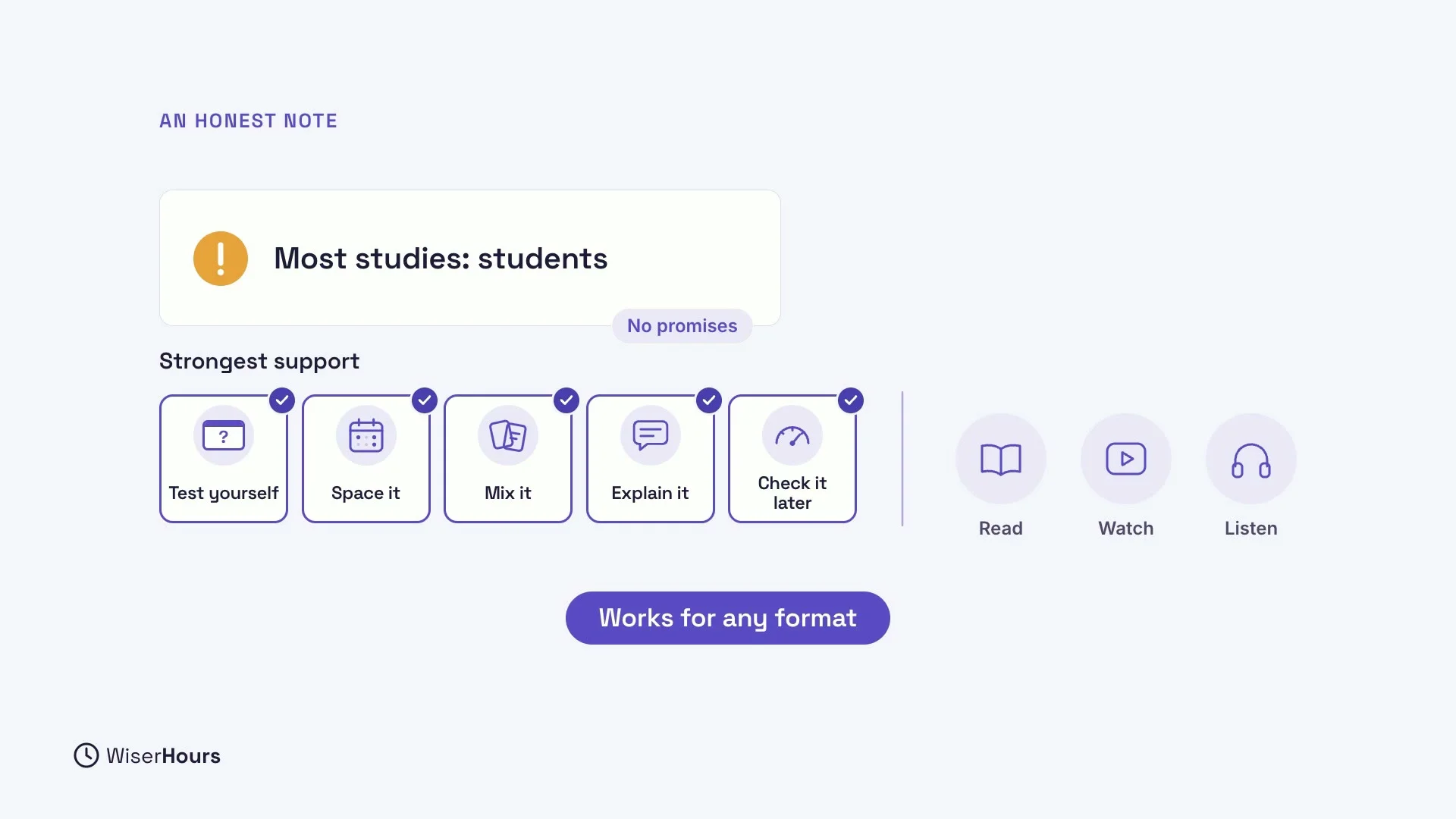
Most of this research involves students, and no method can promise results. But these habits have the strongest support we have, and they work whether you read, watch or listen.
 (opens the full-size picture)
YOUR TURN
My weekly learning plan
Read more
- Learning Styles Are a Myth: What the Research Actually Shows: why preferences are real but matching them does not help, and what to do instead.
- Do Brain-Training Games Work? What Large Studies Found: what the large trials found, and why practicing the real skill is the better bet.
- The 10,000-Hour Rule: What the Original Research Really Found: where the number came from, and what makes practice count.
- Learning How to Learn: A Research-Backed Guide for Beginners: the study habits behind your weekly plan, with the evidence for each.
You finished the course
 (opens the full-size picture)
You have finished Learn Anything Faster. Well done, and enjoy whatever you choose to learn next. Your weekly plan will be here whenever you need it.
Read the full lesson script
In this lesson, you will drop three popular myths about learning, and leave with a simple weekly plan. Letting go of the myths frees your time for the habits that work.
First, learning styles. Many people say they learn best by seeing, or by listening. Those preferences are real. But studies that tested teaching people in their preferred style found it did not help them learn more.
So choose the format the material needs, like a diagram for something you have to picture. Give everyone the pictures. And judge any method by what you can recall days later, with the page closed.
Second, brain-training games. Large studies find that practice makes you better at the game itself. It rarely spreads to everyday memory, work or study. If you want to pass an exam, practice for the exam.
Third, the ten thousand hour rule. That number began as an average for a small group of top student violinists, and half of that group had not reached it. Practice does matter. But hours alone tell you little.
What makes an hour count is what it contains, not how long it lasts. Aim at one narrow weakness. Get feedback right after each try. Then try again.
Now your weekly learning plan, built from this course. Test yourself instead of rereading. Spread your reviews over the week. Mix kinds of questions you already know. Explain one idea in plain words. And check what you know a day or two later, not straight after studying.
Most of this research involves students, and no method can promise results. But these habits have the strongest support we have, and they work whether you read, watch or listen.
So, drop the myths, and judge your learning by what you can recall later. Today, fill in your weekly learning plan on the lesson page. You have finished Learn Anything Faster. Well done, and enjoy whatever you choose to learn next.
MAKE IT A SMALL WIN
Finished this lesson?
Mark it complete to save your progress on this device.