Your plan · Lesson 11 of 11
When Fear of Speaking Needs Help, and Your Speaking Plan
Learn the signs that fear of speaking is more than nerves, where to get help, and put the course into one eight-step plan you can tick off.
 Video coming soon
In this last lesson you learn how to tell ordinary nerves from a fear that needs help, and where to find that help. Then you put your speaking plan together. This lesson is general information, not medical advice. For your own health, talk to a doctor or other health professional.
What to look at
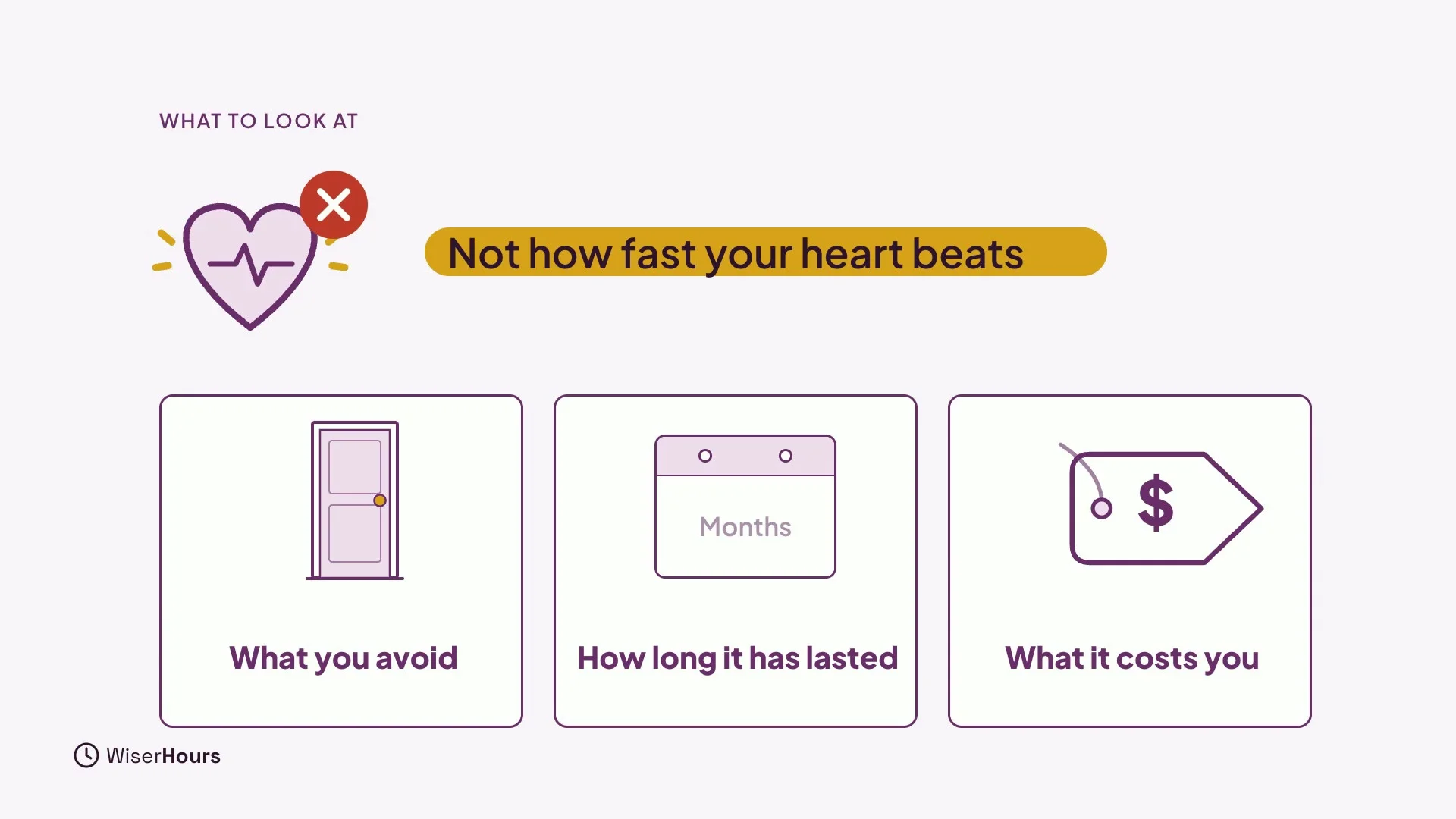
Ordinary nerves are a reason to practise. A fear that steers your choices is a reason to talk to a professional. The question is not how fast your heart beats. It is what the fear makes you avoid, how long it has lasted, and what it costs you.
 (opens the full-size picture)
Four signs
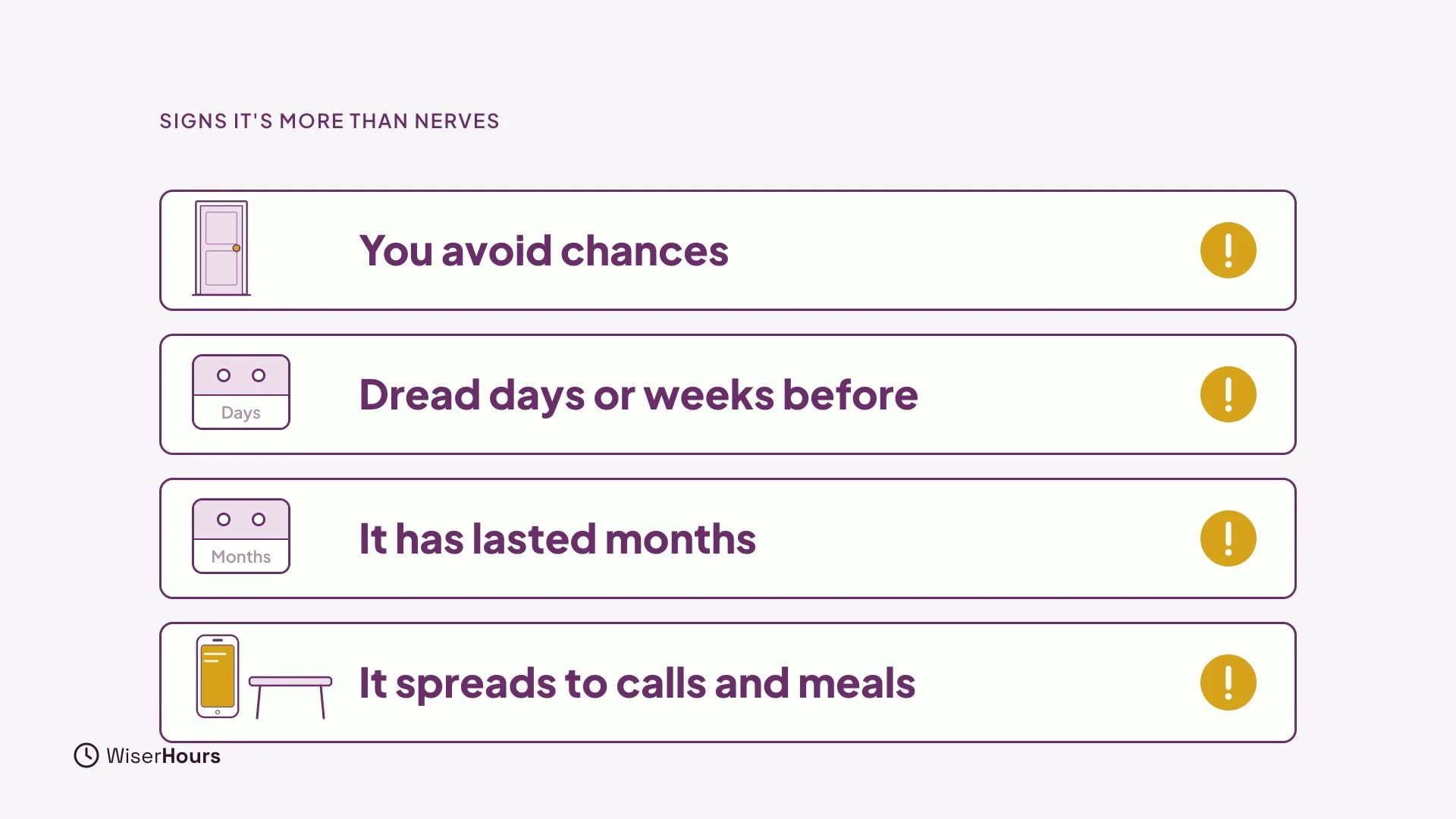
Here are four signs that it may be more than nerves.
- You arrange your life around avoiding speaking, such as turning down talks or letting a promotion go.
- Dread starts days or weeks before even a short talk.
- It has lasted for months, not just one hard season.
- It spreads to phone calls, meetings and meals with colleagues.
 (opens the full-size picture)
A quick check
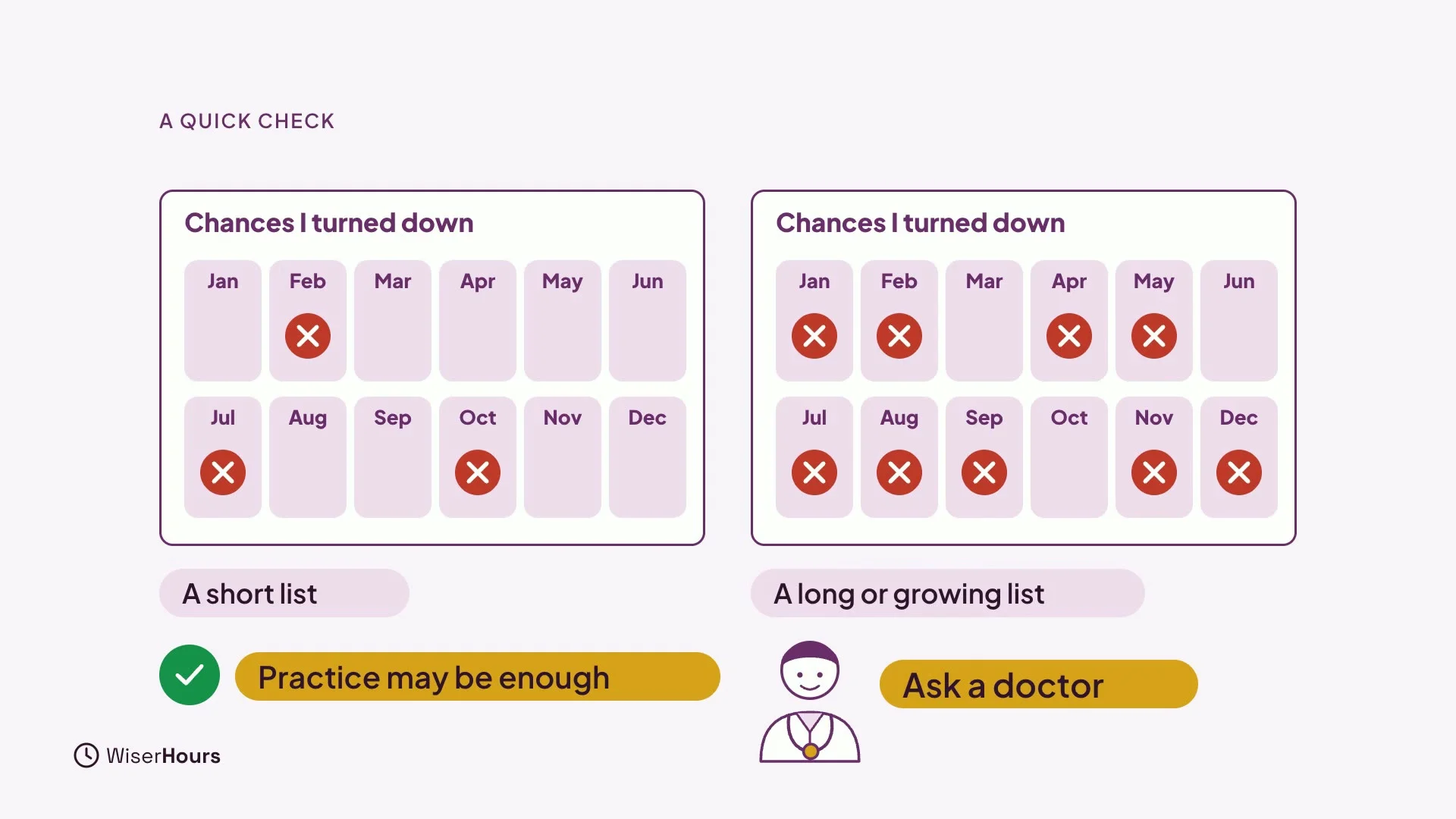
Look back over the past year, and count the speaking chances you turned down. A short list suggests practice may be enough. A long or growing list is a reason to ask a doctor.
 (opens the full-size picture)
It can be treated
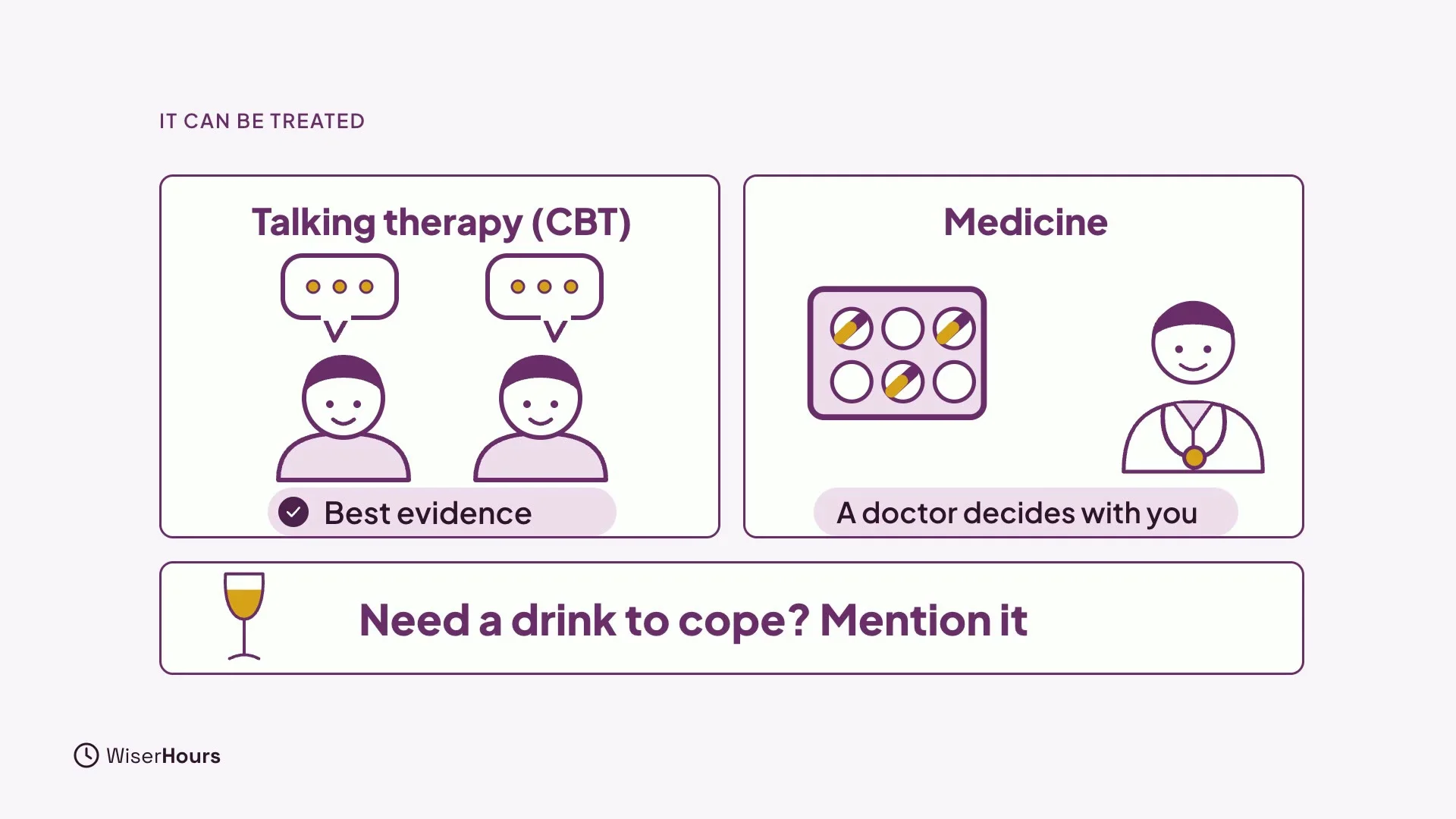
If it is more than nerves, it can be treated, although no source promises a cure. A talking therapy called CBT (cognitive behavioral therapy) has the best evidence. It often includes facing speaking step by step, with a therapist who sets the pace. Medicines such as beta-blockers are for a doctor to decide with you, not to start on your own. And if you need a drink to get through a talk, mention that too. It should not stop you getting treatment.
 (opens the full-size picture)
Where to start
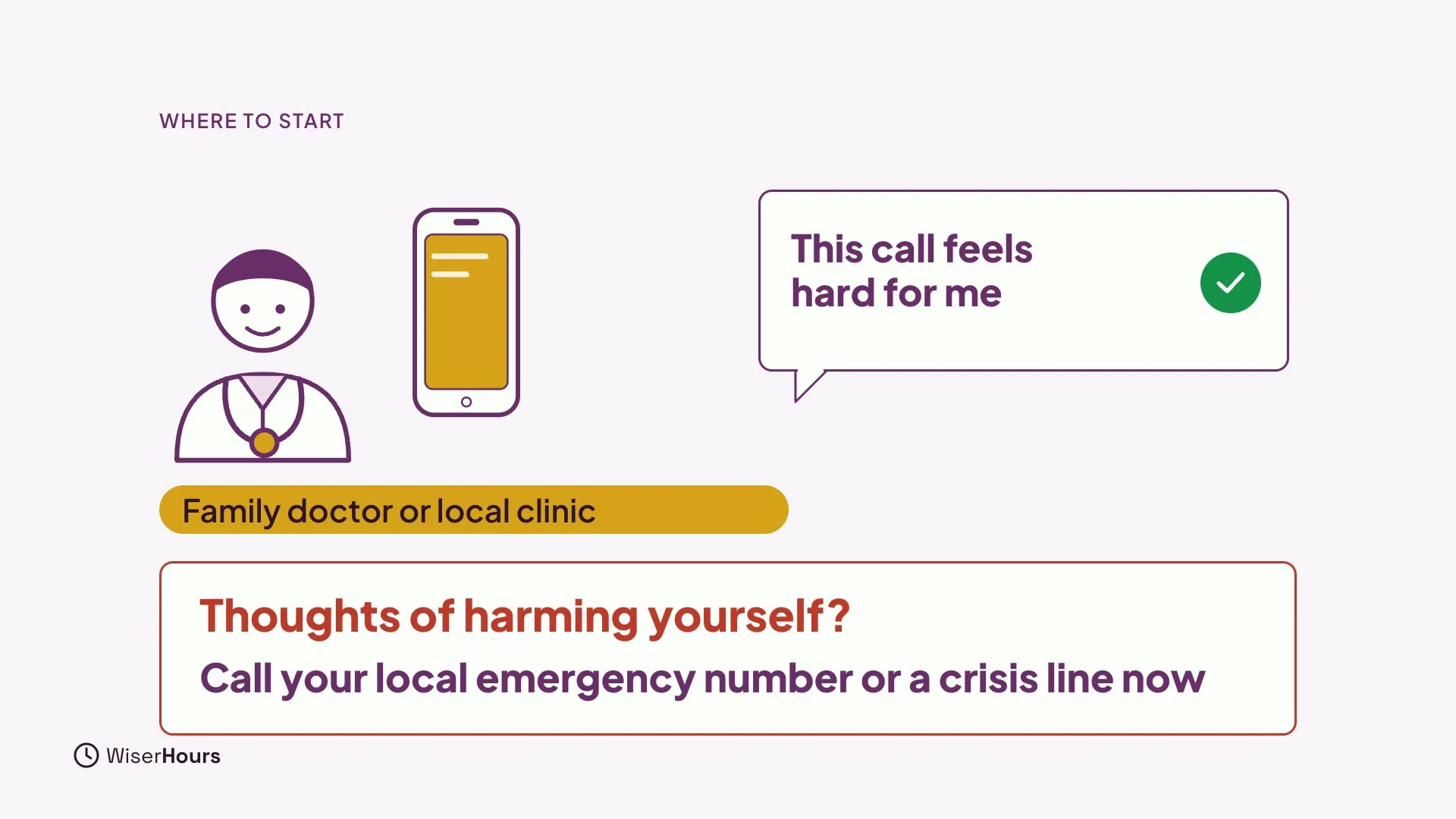
Start with your family doctor or a local clinic. If making that call feels hard, say so. That is common.
If you are in danger or thinking of harming yourself
Call your local emergency number or a crisis line right away. For example, in the US call 911 if a life is in danger, and call or text 988 to reach the Suicide and Crisis Lifeline. In the UK call 999, or call Samaritans free on 116 123 to talk. For other countries, Find A Helpline lists free helplines, and your local emergency number connects you to urgent help.
 (opens the full-size picture)
Your speaking plan
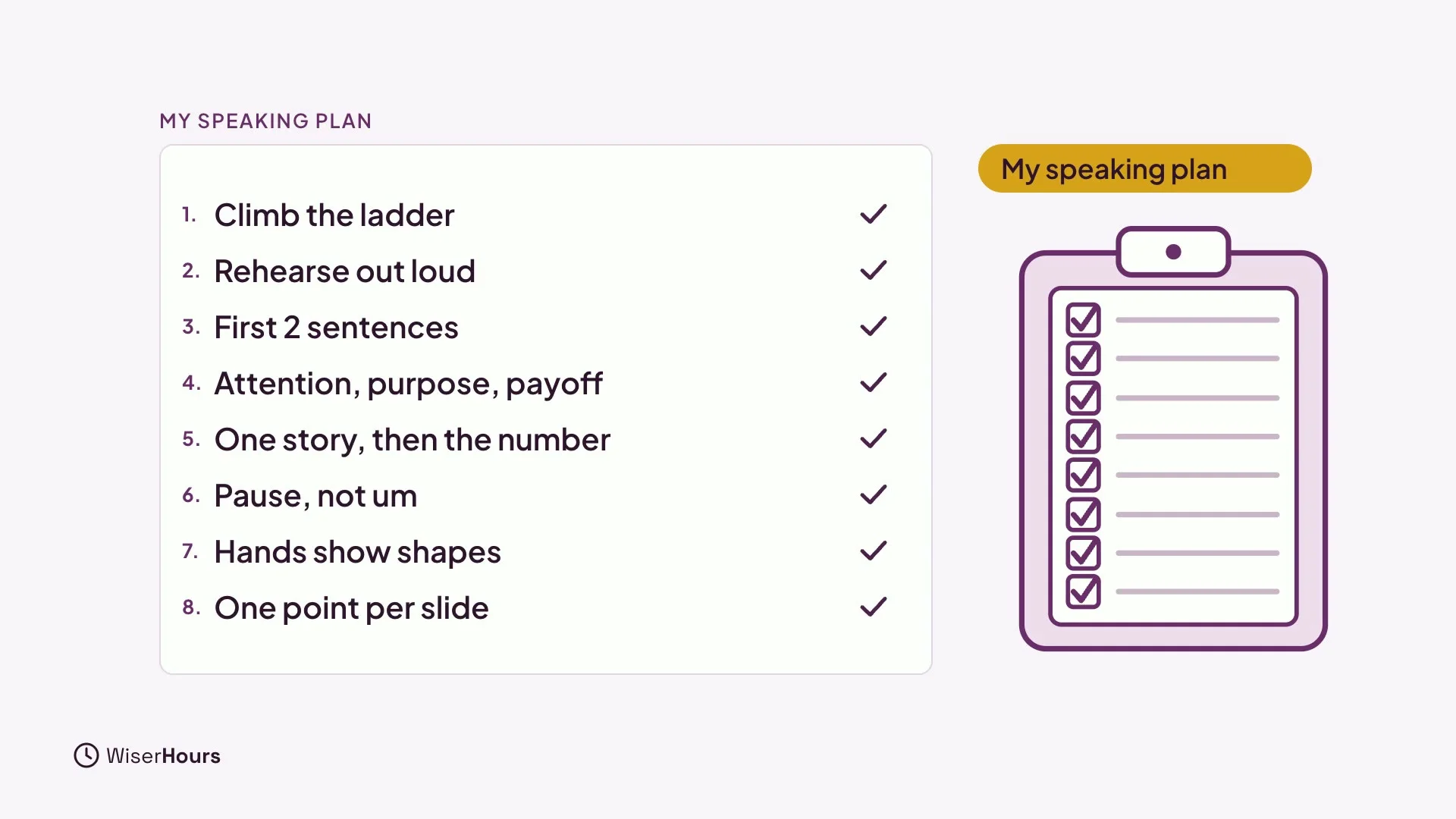
Now your plan. These eight steps are the course in one list. Do not try to do all of them at once. Pick one to work on this week.
 (opens the full-size picture)
My speaking plan
YOUR TURN
Well done for finishing Speak with Confidence.
Read more
- Glossophobia: When Fear of Speaking Becomes a Problem and When to Seek Help: the warning signs, treatments and where to get help.
- Public Speaking for Beginners: A Realistic Starting Plan: a step-by-step starting plan and what the evidence says about treatment.
- Build a Speaking Ladder: Small Steps to Confidence: the small-steps method behind step one of your plan.
Read the full lesson script
In this last lesson, you'll learn how to tell ordinary nerves from a fear that needs help, where to find that help, and you'll put your speaking plan together. This is general information, not medical advice.
Ordinary nerves are a reason to practise. A fear that steers your choices is a reason to talk to a professional. The question isn't how fast your heart beats. It's what the fear makes you avoid, how long it has lasted, and what it costs you.
Here are four signs. You arrange your life around avoiding speaking, like turning down talks or letting a promotion go. Dread starts days or weeks before even a short talk. It has lasted for months, not just one hard season. Or it spreads to phone calls, meetings and meals with colleagues.
Here's a quick check. Look back over the past year, and count the speaking chances you turned down. A short list suggests practice may be enough. A long or growing list is a reason to ask a doctor.
If it is more than nerves, it can be treated. A talking therapy called CBT has the best evidence. It often includes facing speaking step by step, with a therapist. Medicines such as beta-blockers are for a doctor to decide with you, not to start on your own. And if you need a drink to get through a talk, mention that too.
Start with your family doctor or a local clinic. If making that call feels hard, say so. That's common. And if you ever have thoughts of harming yourself, call your local emergency number or a crisis line right away.
Now, your speaking plan. Climb your ladder, one small step at a time. Rehearse out loud, for a listener. Know your first two sentences. Open with attention, purpose and payoff. Tell one short story, with the number right after it. Pause instead of saying um. Let your hands show ideas with a shape. And give each slide one point.
So remember: nerves are a reason to practise. Fear that shapes your choices is a reason to get help. And small, regular steps build confidence. Fill in your speaking plan on the lesson page, and pick your first step for this week. Well done for finishing Speak with Confidence.
MAKE IT A SMALL WIN
Finished this lesson?
Mark it complete to save your progress on this device.