Get used to speaking · Lesson 1 of 11
Speaking Nerves Are Normal and Can Be Trained
Learn why speaking nerves are common, why the more-than-death fear claim is wrong, and why small steps of practice help more than waiting.
 Video coming soon
If speaking in front of people makes your heart race, you are in good company. This lesson shows how common speaking nerves are, clears up a famous fear statistic that is wrong, and explains what actually helps. It also gives you a map of the whole course.
You are not alone
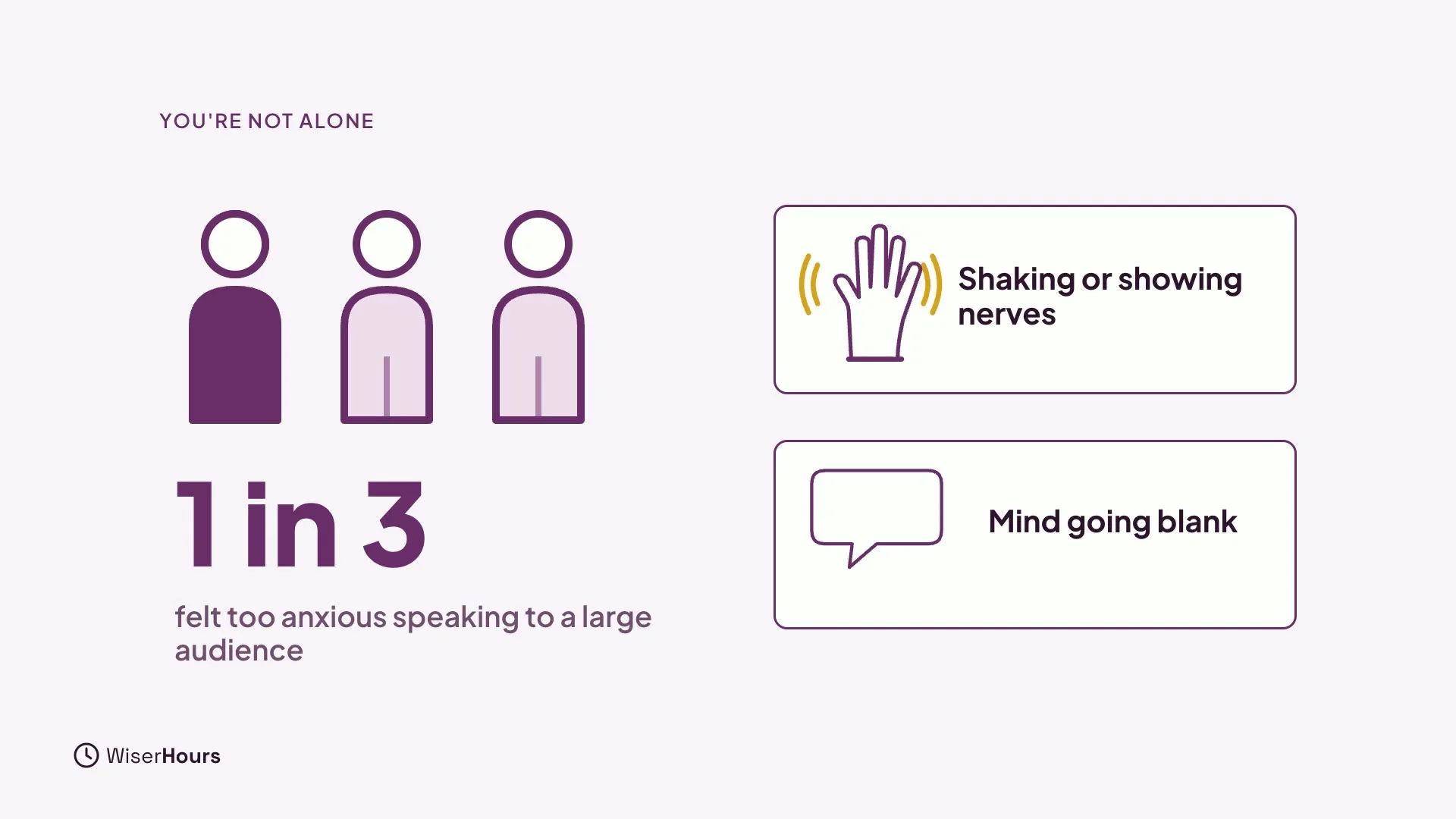
In one Canadian survey, about one in three people said they felt too anxious when speaking to a large audience. Their most common worries were shaking or showing their nerves, and their mind going blank. So if you have ever worried that your hands will shake or that you will forget your words, you share that worry with a lot of other people.
 (opens the full-size picture)
The “more than death” myth
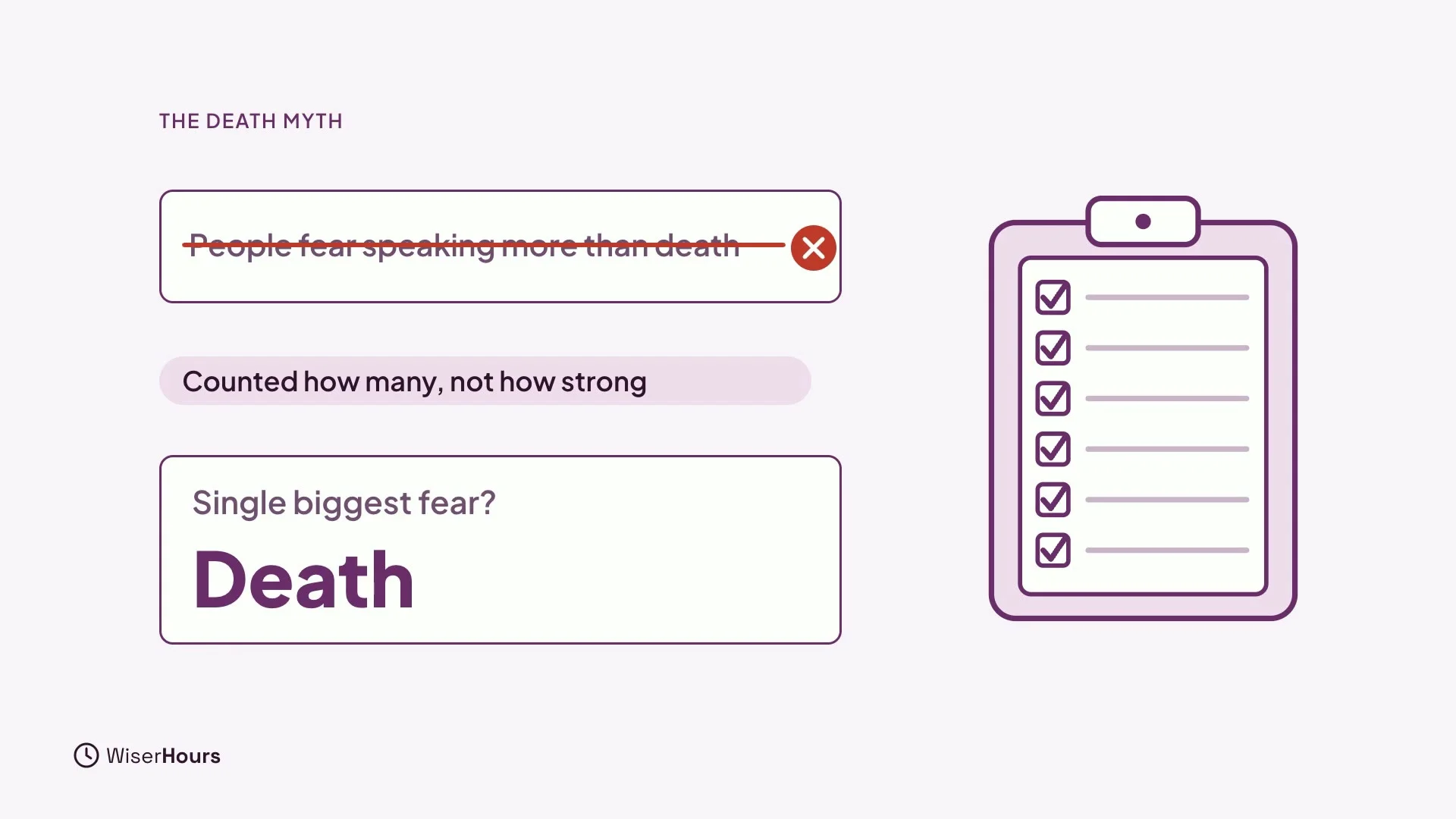
You may have heard that people fear public speaking more than death. That claim comes from an old checklist, where people ticked every fear they had. It counted how many people named a fear, not how strong the fear was. When students in a later study were asked for their single biggest fear, more of them chose death. So speaking is a common fear, but the famous comparison does not hold up.
 (opens the full-size picture)
What actually helps
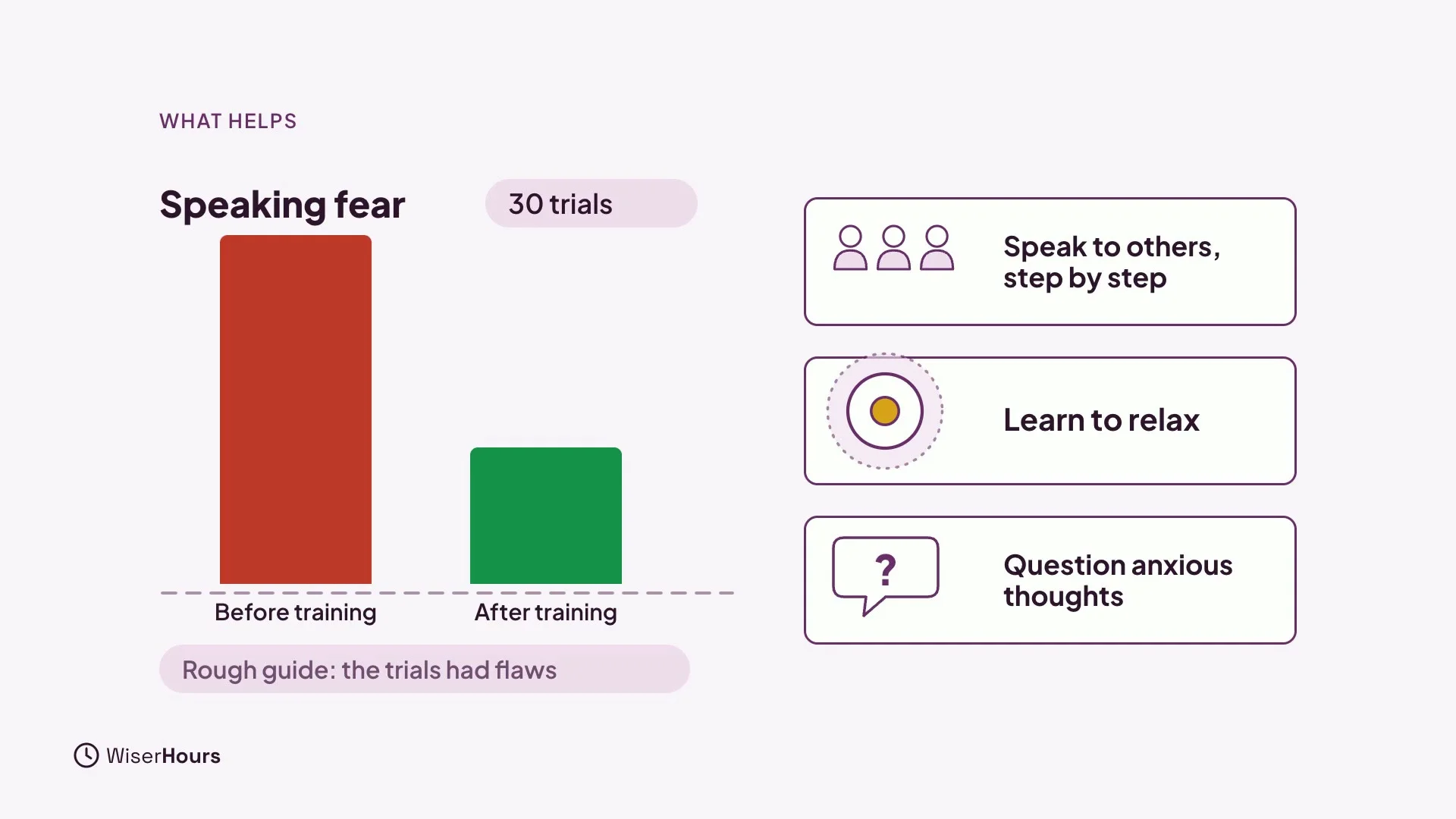
Researchers pooled thirty trials of training for people with a strong fear of speaking. Structured practice cut their fear by a moderate to large amount. Most of the training was simple: speaking in front of others step by step, learning to relax, and questioning anxious thoughts. The trials had flaws, so treat the size of the effect as a rough guide, not a promise.
 (opens the full-size picture)
Don’t wait to feel ready
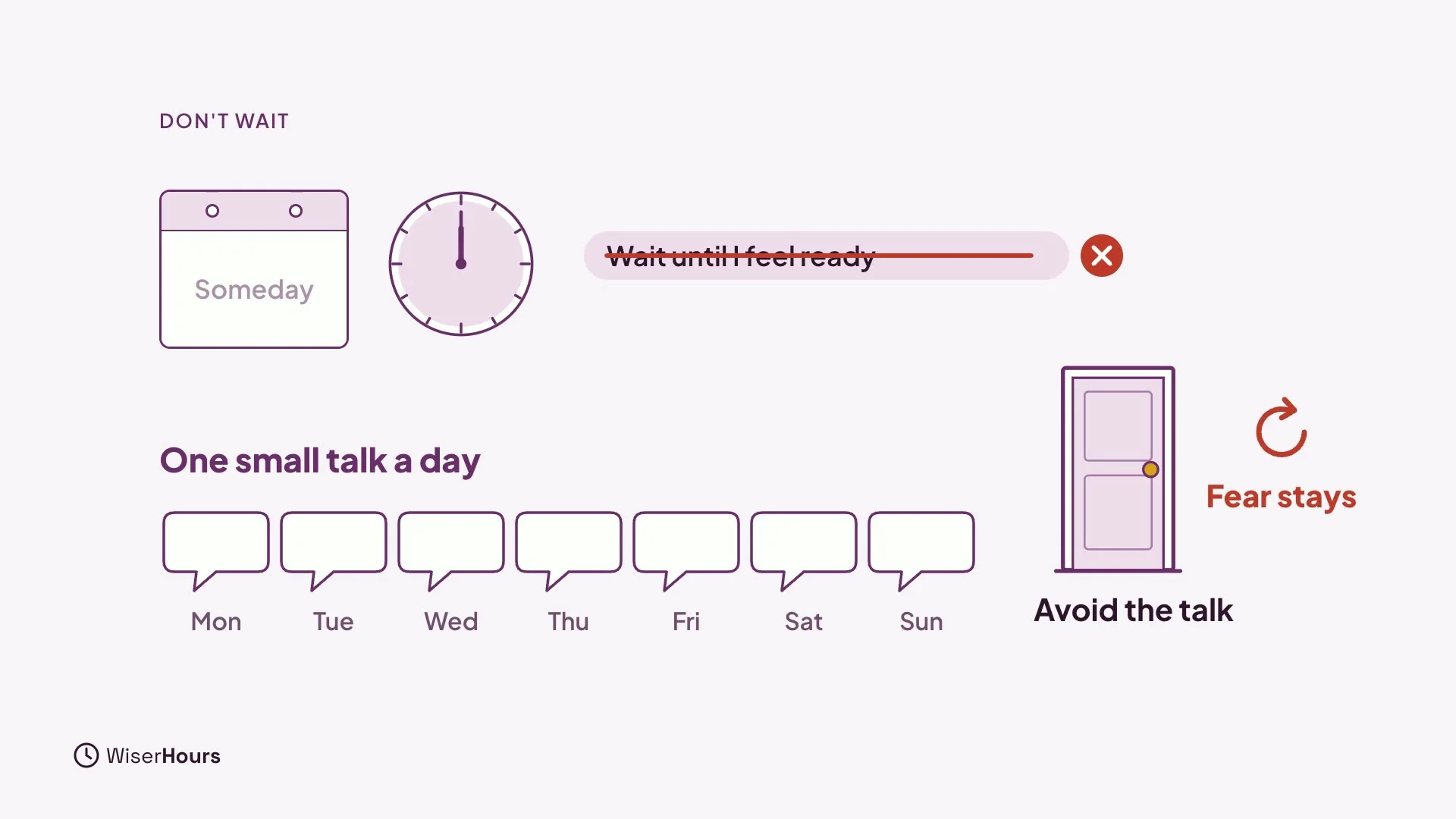
Waiting feels sensible, but it gets the order backward. A talk you avoid feels like relief for a moment, and that relief tends to keep the fear in place. Small, regular turns at speaking work the other way: each one you get through makes the next one more ordinary. Think of one small talk a day, a comment, a question, a short update, instead of one big talk someday.
 (opens the full-size picture)
Nerves, or something more
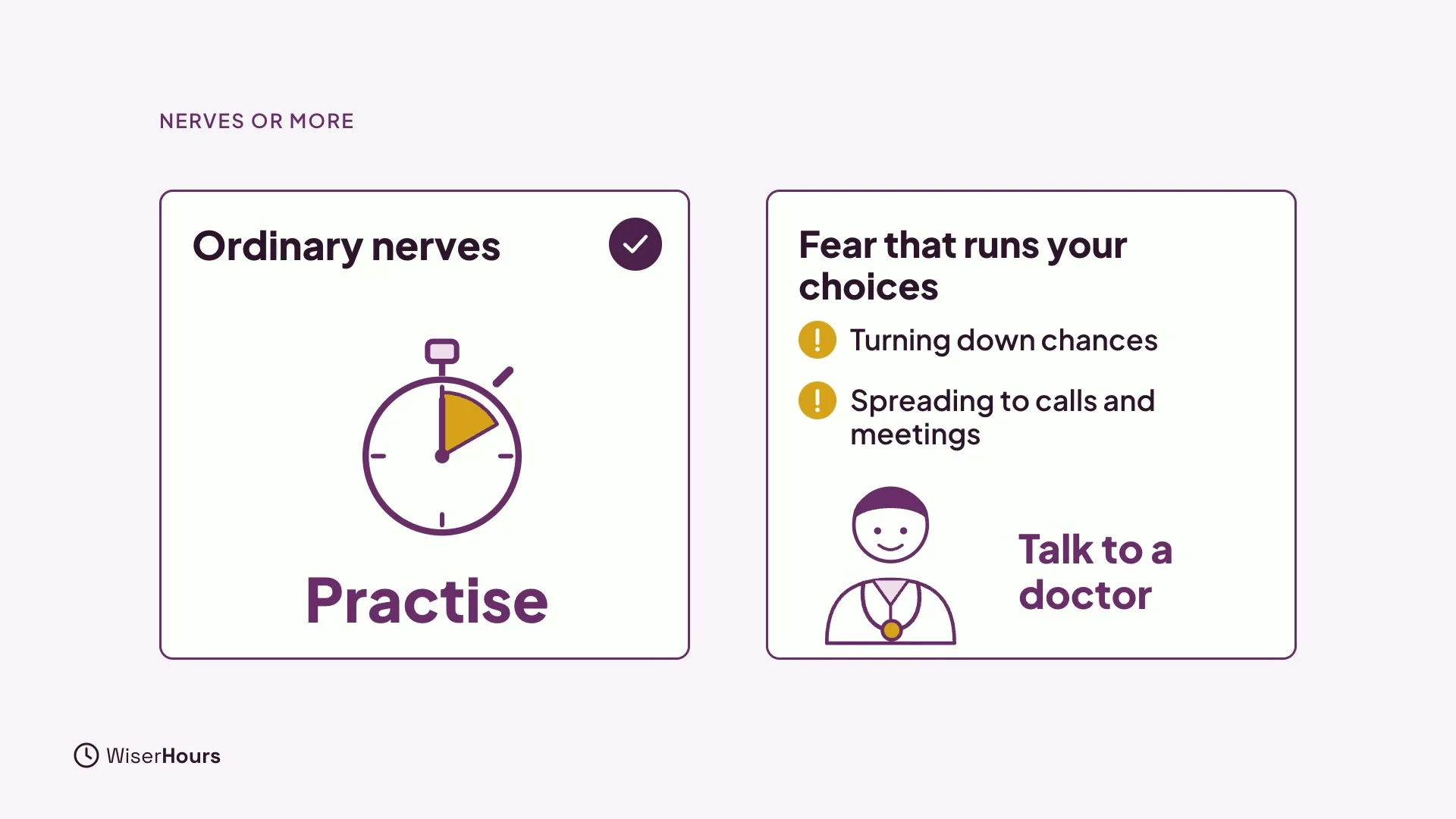
Ordinary nerves are a reason to practise. But if fear makes you turn down chances again and again, or spreads to phone calls and meetings, it is worth talking to a doctor. You will learn the signs in the last lesson of this course.
Ordinary nerves versus fear that runs your choices
Nerves before a talk call for practice. Fear that keeps you turning down chances, or that spreads beyond speaking, is a reason to see a doctor.
 (opens the full-size picture)
The course ahead
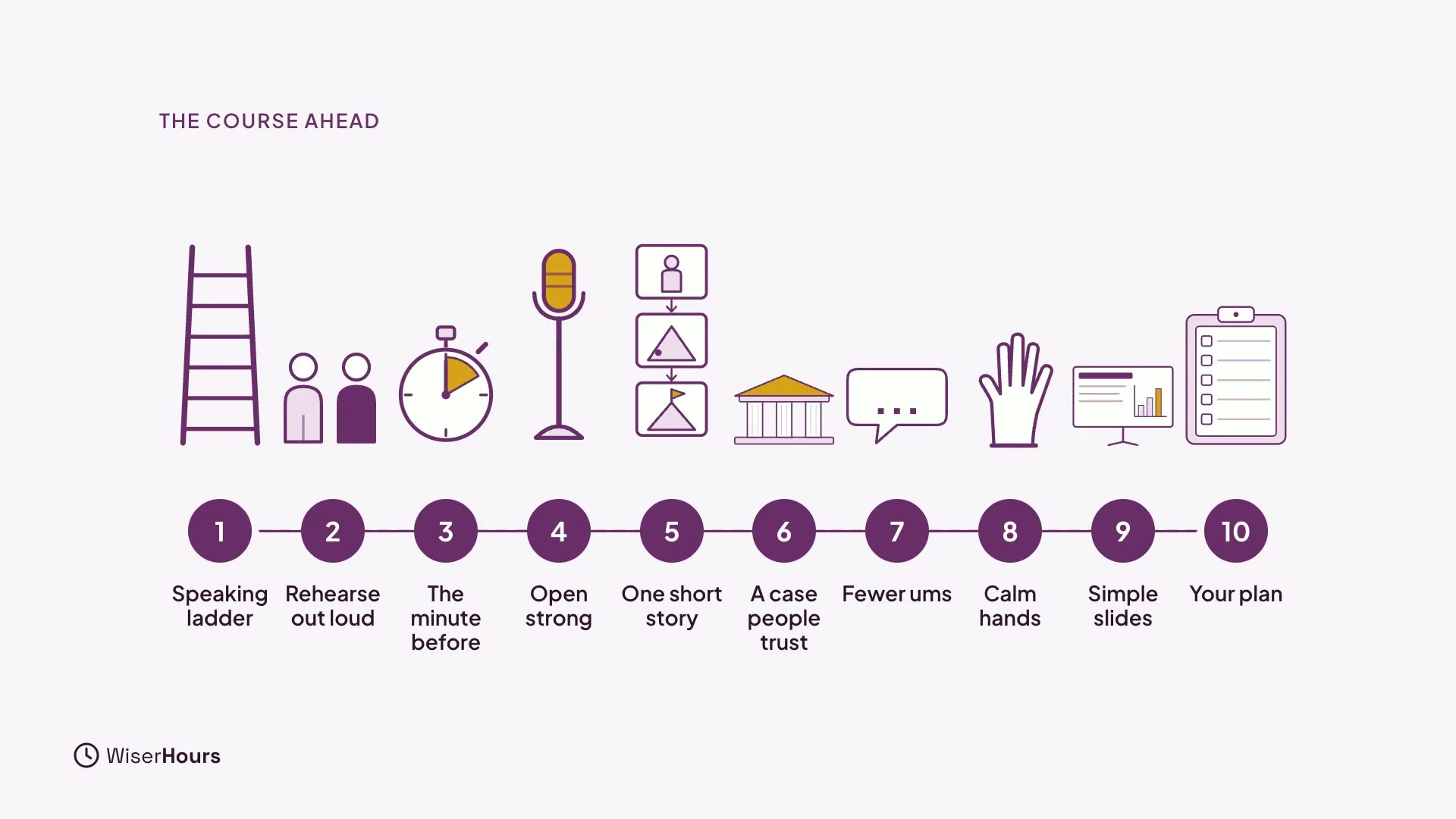
You will build a speaking ladder and rehearse out loud. Then you handle the minute before you speak and open strong. Next you tell one short story and make a case people trust. After that you cut your ums, calm your hands and simplify your slides. At the end you put everything into one plan.
 (opens the full-size picture)
YOUR TURN
Read more
- Public Speaking for Beginners: A Realistic Starting Plan: the full plan and the evidence behind it.
- Glossophobia: Fear of Public Speaking: when fear is more than nerves, and where to get help.
Read the full lesson script
Welcome to Speak with Confidence. In this first lesson, you'll see how common speaking nerves are, why a famous fear statistic is wrong, and what actually helps. You don't need to be a natural speaker to get better at this.
If speaking in front of people makes your heart race, you're in good company. In one Canadian survey, about one in three people felt too anxious when speaking to a large audience. Their most common worries were shaking or showing their nerves, and their mind going blank.
You may have heard that people fear public speaking more than death. That comes from an old checklist, where people ticked every fear they had. It counted how many people named a fear, not how strong it was. When students in a later study were asked for their single biggest fear, more of them chose death.
So what helps? Researchers pooled thirty trials of training for people with a strong fear of speaking. Structured practice cut their fear by a moderate to large amount. Most of it was simple: speaking in front of others step by step, learning to relax, and questioning anxious thoughts. The trials had flaws, so treat the size as a rough guide.
The main idea is this. You don't wait for the fear to go away before you speak. You get used to it by speaking often, in small doses you can handle. Avoiding talks feels like relief, but it tends to keep the fear in place.
Ordinary nerves are a reason to practise. But if fear makes you turn down chances again and again, or spreads to phone calls and meetings, it's worth talking to a doctor. You'll learn the signs in the last lesson.
Here's the course. First, you'll build a speaking ladder and rehearse out loud. Then you'll handle the minute before you speak, and open strong. Next, you'll tell a short story and make a case people trust. After that, you'll cut your ums, calm your hands, and simplify your slides. Finally, you'll put it all into one plan.
So remember: speaking nerves are common. Practice in small steps works better than waiting to feel ready. And avoiding talks keeps the fear going. Before the next lesson, write down three moments in a normal week when you could say something out loud, like a comment in a meeting or a question in a class. Next, you'll build your speaking ladder.
MAKE IT A SMALL WIN
Finished this lesson?
Mark it complete to save your progress on this device.