Polish the delivery · Lesson 8 of 11
Fewer Ums: Why We Say Them and How to Cut Back
Learn why everyone says um, when it starts to matter, and a four-step routine to pause instead and count your ums.
 Video coming soon
Everyone says um. This lesson shows why, when it starts to matter, and a simple routine that helps you say it less.
Ums are normal
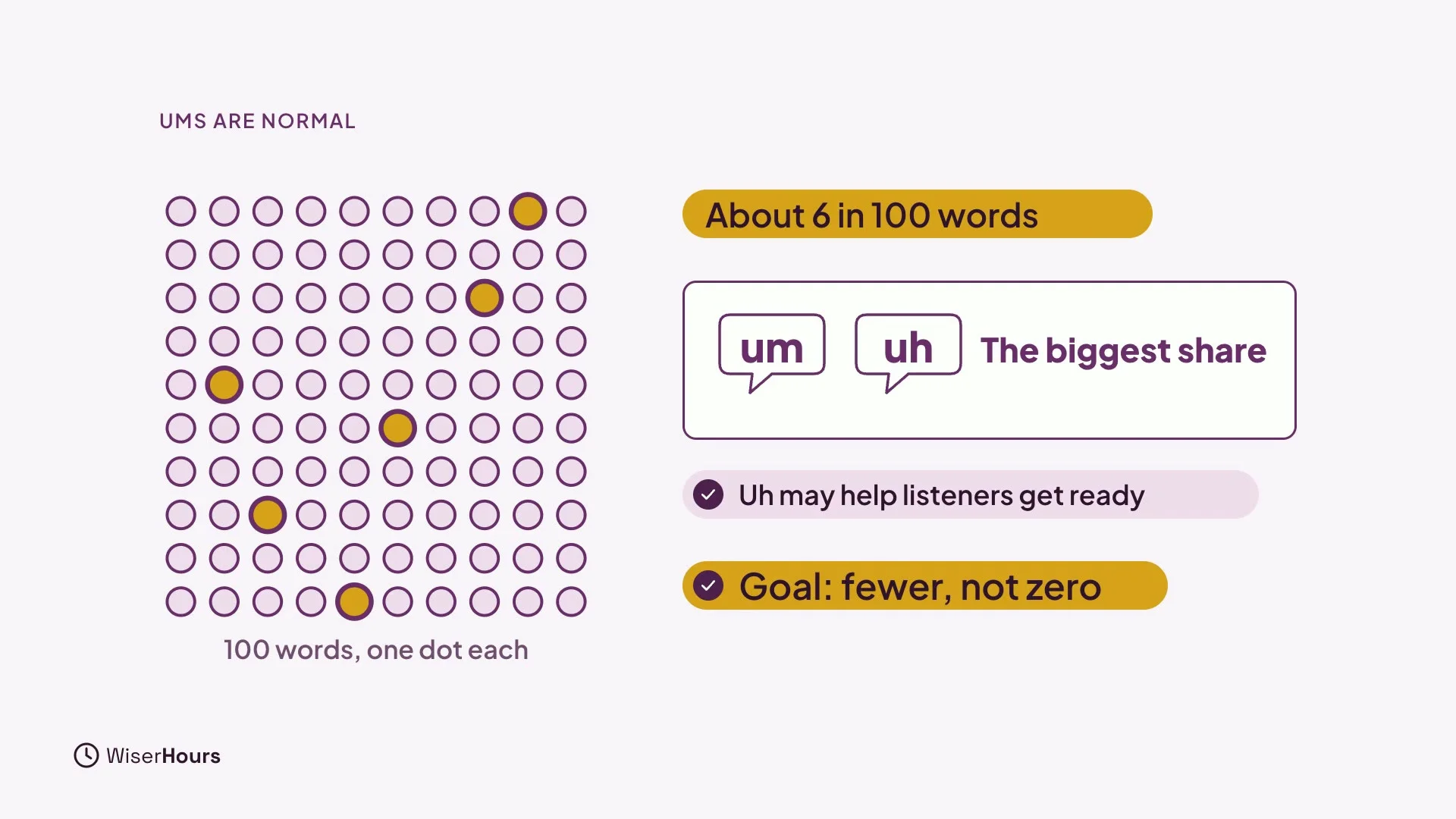
In one study of everyday conversations, people made about six slips for every 100 words, and um and uh were the biggest share. Some research even suggests that uh helps listeners get ready for the next word. So the goal is fewer ums, not zero. A talk with no ums at all is not the target.
 (opens the full-size picture)
Where ums come from
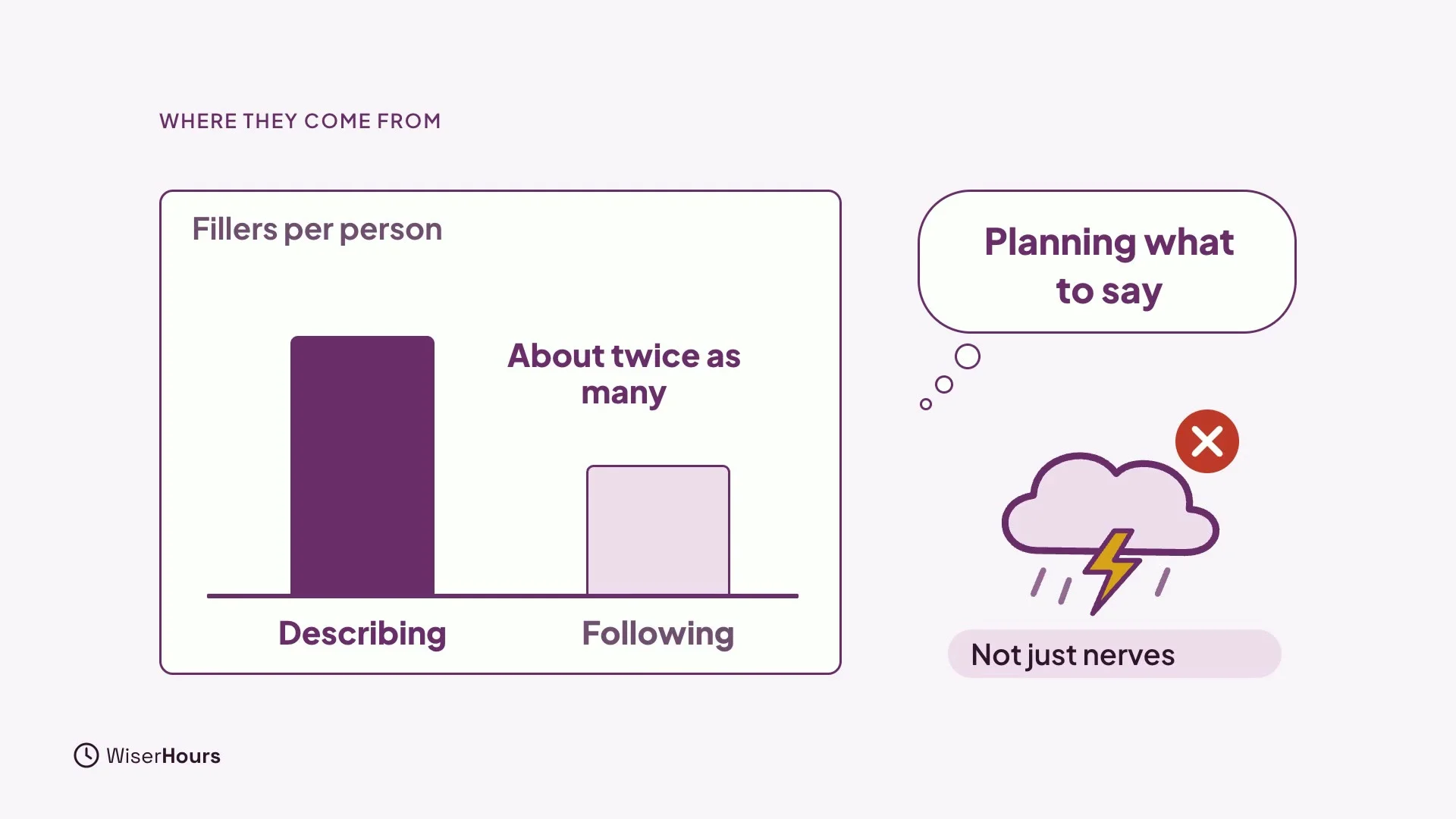
Ums tend to show up where you are planning what to say next. In one study, people who had to describe a picture used almost twice as many fillers as the people following along. Nerves alone did not seem to cause them. The um is a sign that your mind is busy finding the next words.
 (opens the full-size picture)
Plan the hard parts
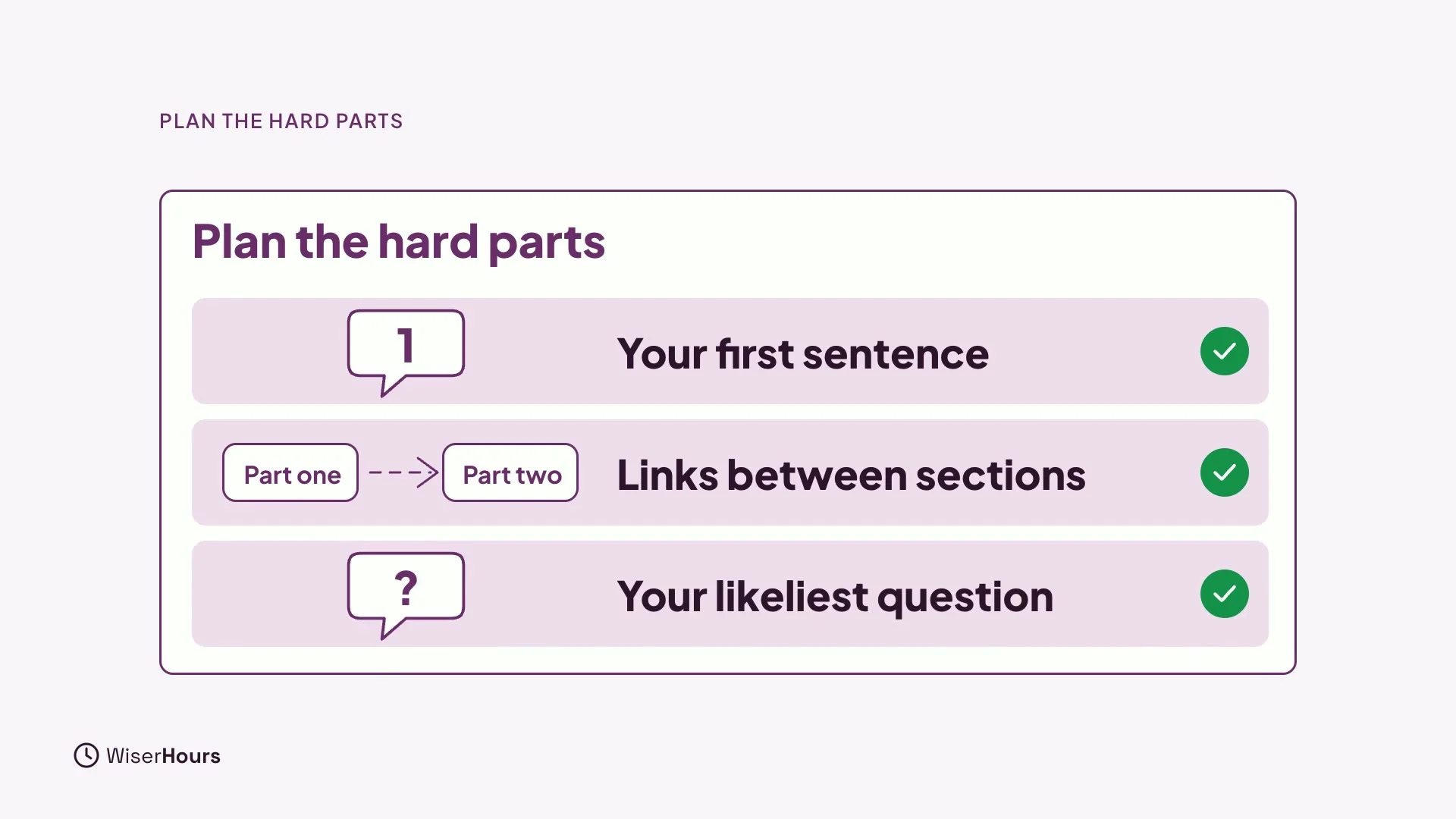
So the cheapest fix is to plan the parts that are hardest to plan on the spot. Write out your first sentence. Decide how you will move from one section to the next. And have a short answer ready for the question you most expect.
 (opens the full-size picture)
When it starts to matter
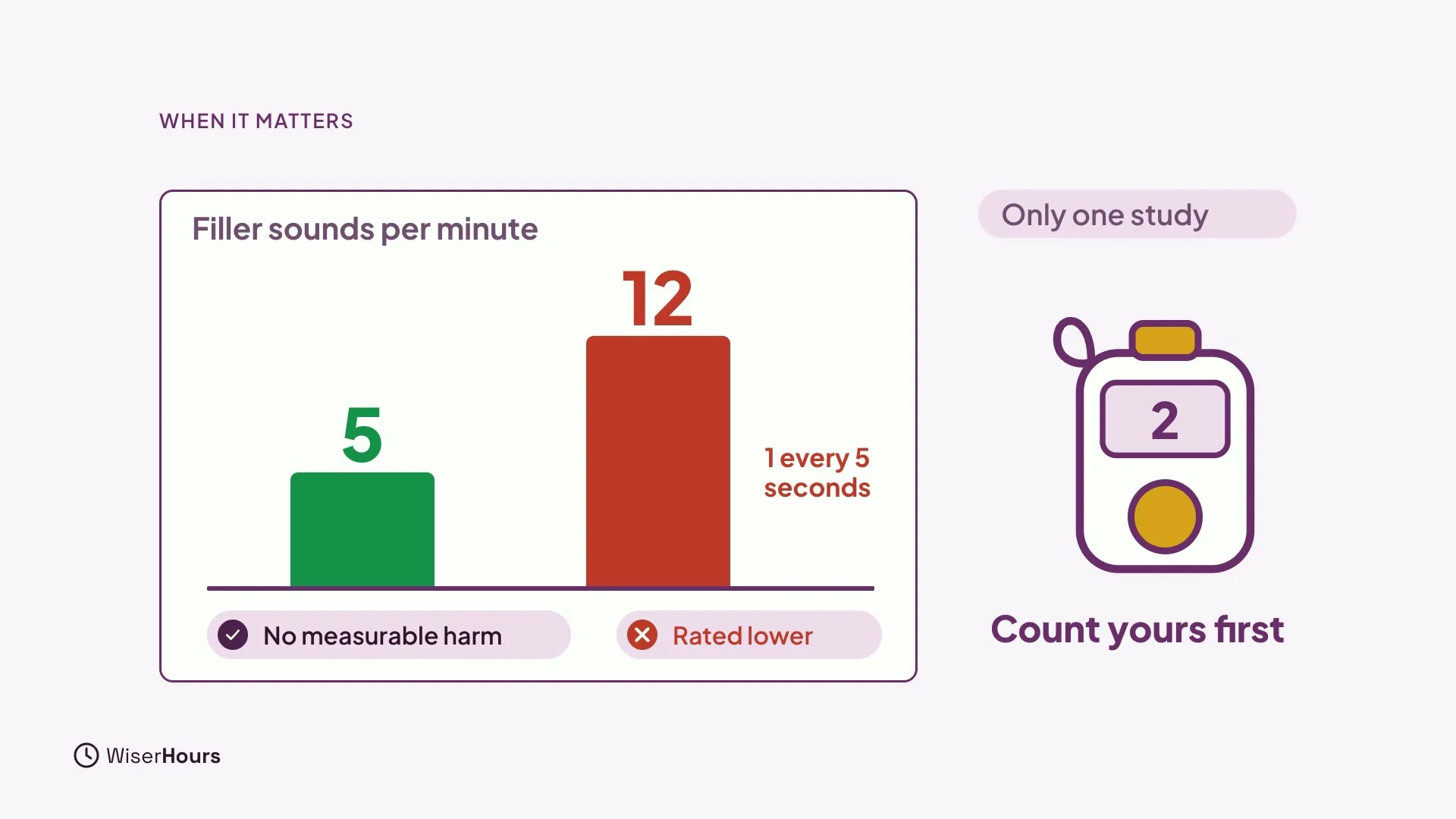
Do ums hurt? In one online study, listeners rated speakers lower at about 12 filler sounds a minute, which is one every five seconds. At five a minute, there was no measurable harm. It is only one study, so count your own ums before you worry. You may find you are already well under the line.
 (opens the full-size picture)
One study, so count first
The 12-a-minute figure comes from a single online study. Use it as a rough guide and measure your own talk before you decide you have a problem.
The four-step routine
This routine worked in several small studies.
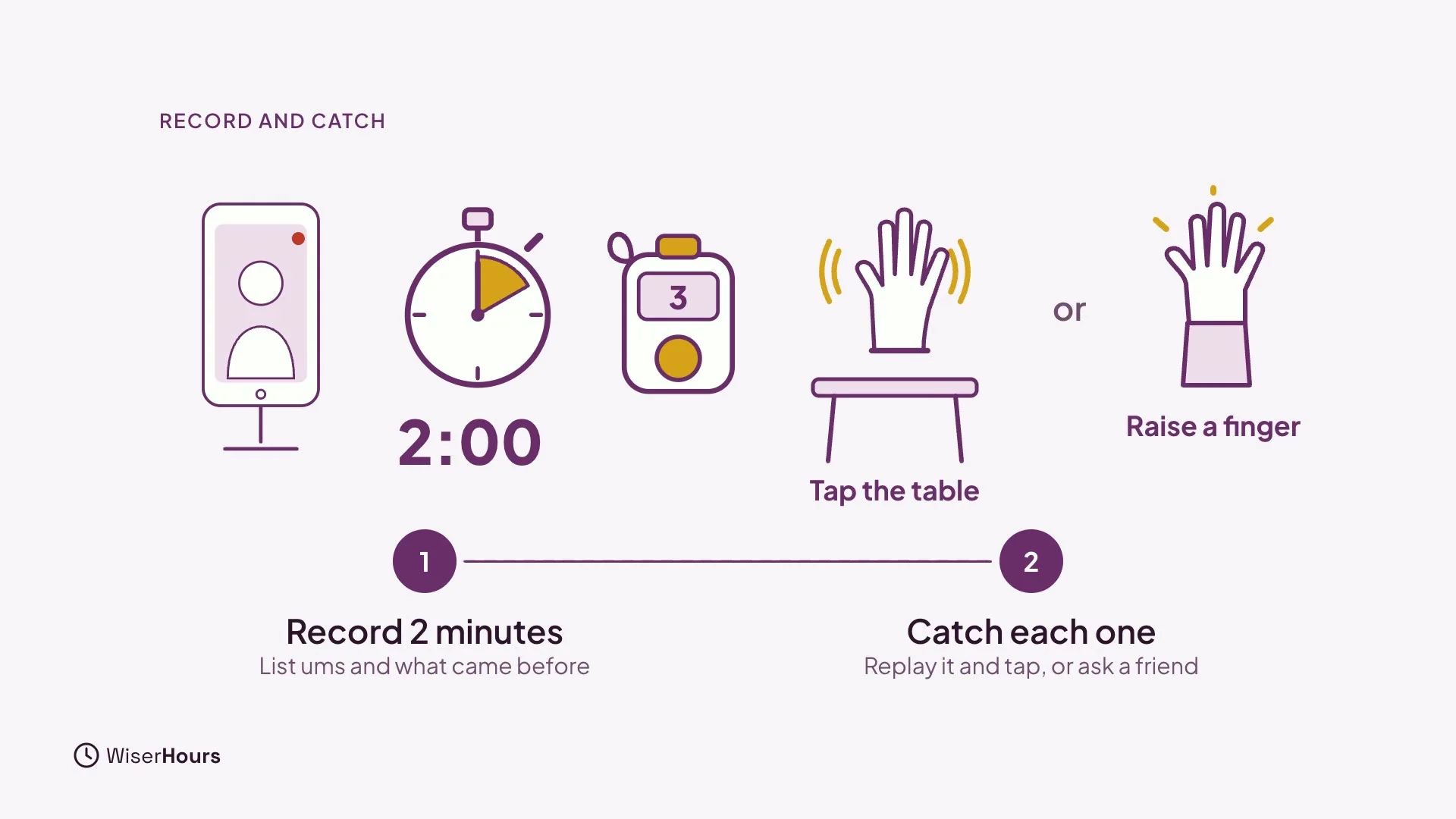
- Record yourself explaining something for two minutes. List your ums, and what came just before them.
- Catch each um as it happens. Replay the recording and tap the table, or ask a colleague to raise a finger.
 (opens the full-size picture)
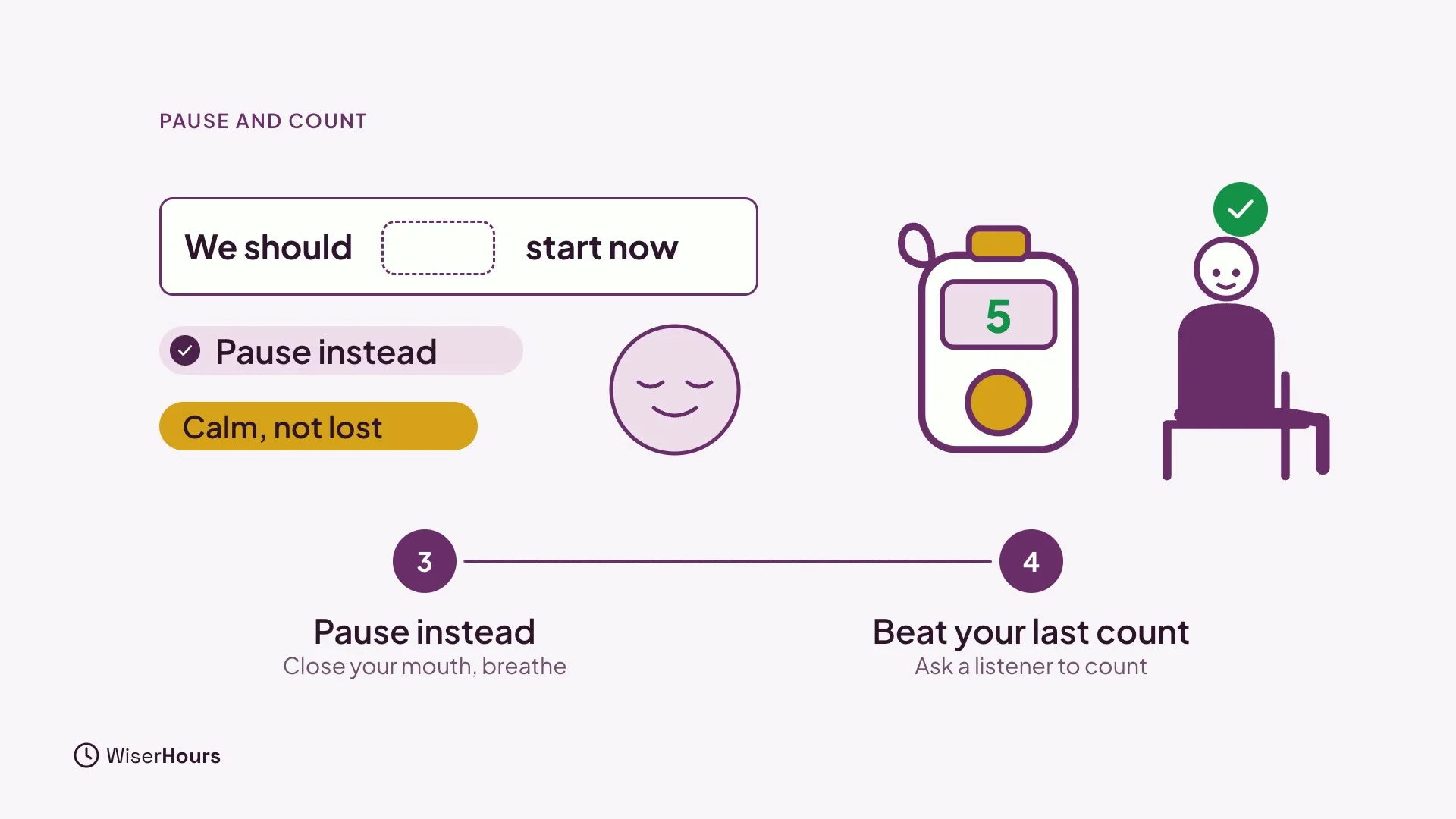
- When you feel an um coming, close your mouth, breathe, and pause in silence instead. A short pause sounds calm, not lost.
- Ask a listener to count your ums, and try to beat your last count.
 (opens the full-size picture)
YOUR TURN
Read more
- Filler Words: Why We Say “Um” and How to Cut Back: the evidence and more ways to practise.
Read the full lesson script
In this lesson, you'll learn why everyone says um, when it starts to matter, and a simple routine to cut back.
First, ums are normal. In one study of everyday conversations, people made about six slips for every hundred words, and um and uh were the biggest share. Some research even suggests that uh helps listeners get ready for the next word. So the goal is fewer ums, not zero.
Ums tend to show up where you're planning what to say next. In one study, people who had to describe a picture used almost twice as many fillers as the people following along. Nerves alone didn't seem to cause them.
So the cheapest fix is to plan the parts that are hardest to plan on the spot. Write out your first sentence. Decide how you'll move from one section to the next. And have a short answer ready for the question you most expect.
When do ums start to hurt? In one online study, listeners rated speakers lower at about twelve filler sounds a minute, one every five seconds. At five a minute, there was no measurable harm. It's only one study, so count yours before you worry.
Here's a routine that worked in several small studies. First, record yourself explaining something for two minutes. List your ums, and what came just before them. Second, catch each um as it happens. Replay the recording and tap the table, or ask a colleague to raise a finger.
Third, when you feel an um coming, close your mouth, breathe, and pause in silence instead. A short pause sounds calm, not lost. Fourth, ask a listener to count your ums, and try to beat your last count.
So remember: ums are normal, so aim for fewer, not zero. Plan your first sentence and your links. And pause instead of saying um. Before the next lesson, record a two-minute explanation and count your ums. Next, you'll learn what to do with your hands.
MAKE IT A SMALL WIN
Finished this lesson?
Mark it complete to save your progress on this device.