Get used to speaking · Lesson 3 of 11
Rehearse a Talk Out Loud and Get Useful Feedback
Rehearse out loud for a listener, run a five-minute dry run and ask for feedback on the work instead of on you.
 Video coming soon
Many people prepare a talk by reading their notes silently. That feels like practice, but a talk is spoken. In this lesson you will learn why to rehearse out loud, why a listener helps, and how to run your first dry run in just five minutes.
Practise it the way you will give it
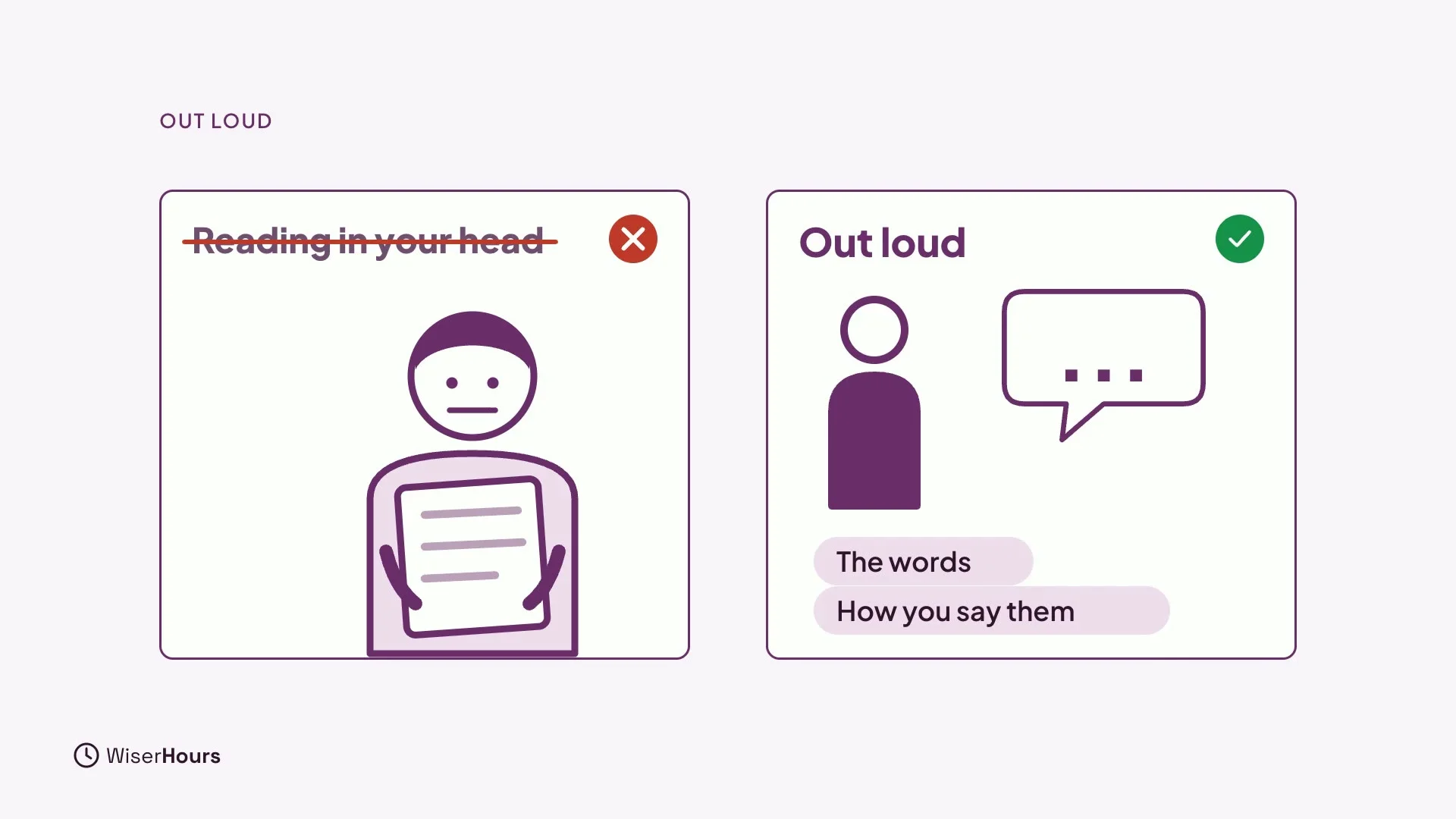
A talk is spoken, so practise it the way you will give it: out loud. That way you practise the words and the way you say them at the same time. Reading in your head skips the second part, and it is often the part that feels hardest on the day.
 (opens the full-size picture)
A listener helps
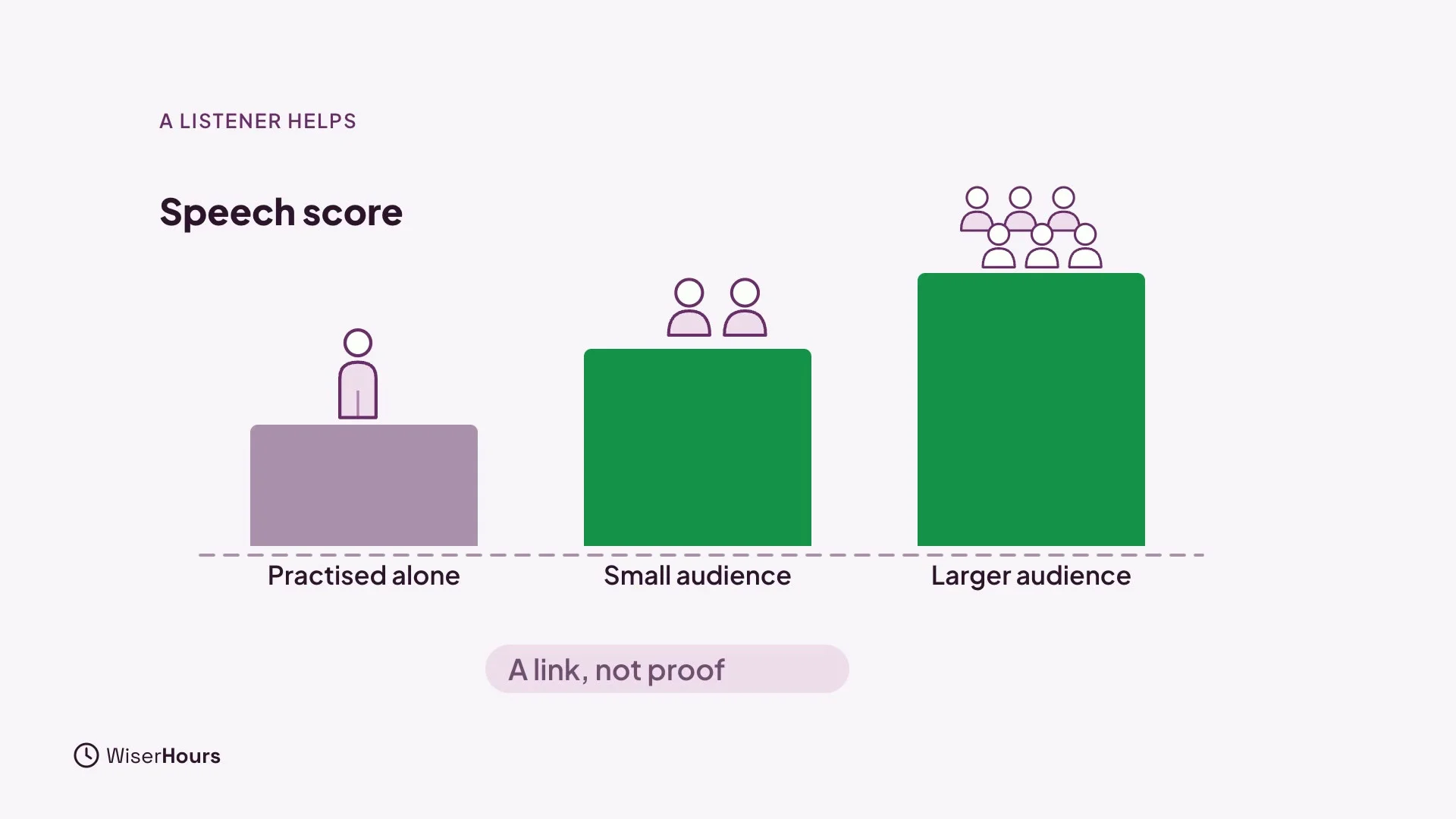
Two studies with students point the same way. In one, the more times people rehearsed in front of an audience, the better their speech was rated. In another, students who practised in front of an audience scored higher than those who practised alone, and a larger audience did even better. These studies show a link, not proof. Students who rehearse more may differ in other ways. Still, a rehearsal for one friendly listener takes only a few minutes.
 (opens the full-size picture)
Make your practice real
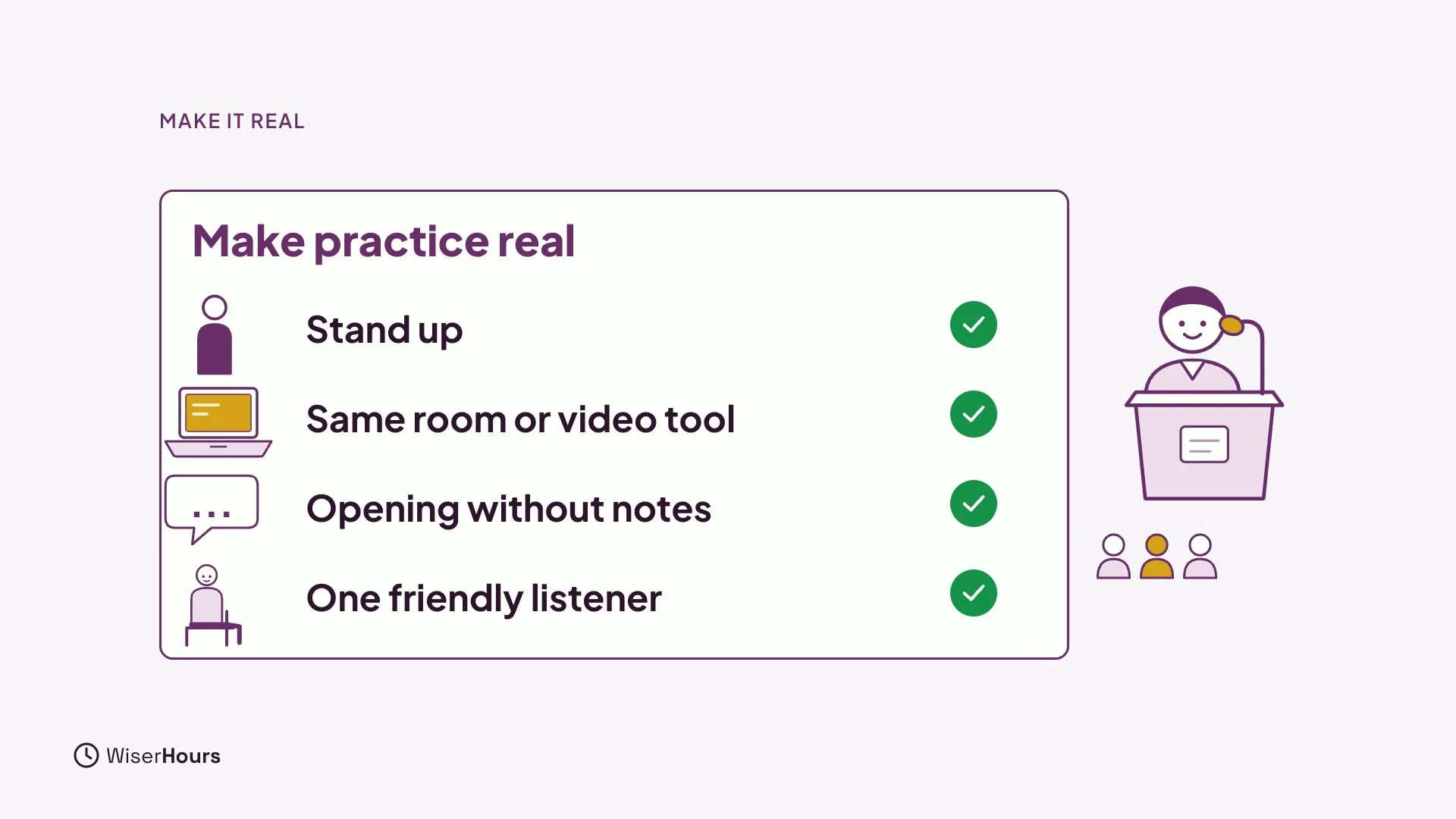
Make your practice close to the real thing. Stand up. Use the room or the video tool you will use on the day, if you can. Rehearse your opening until you can say it without notes. And invite one friendly listener.
 (opens the full-size picture)
Your first dry run
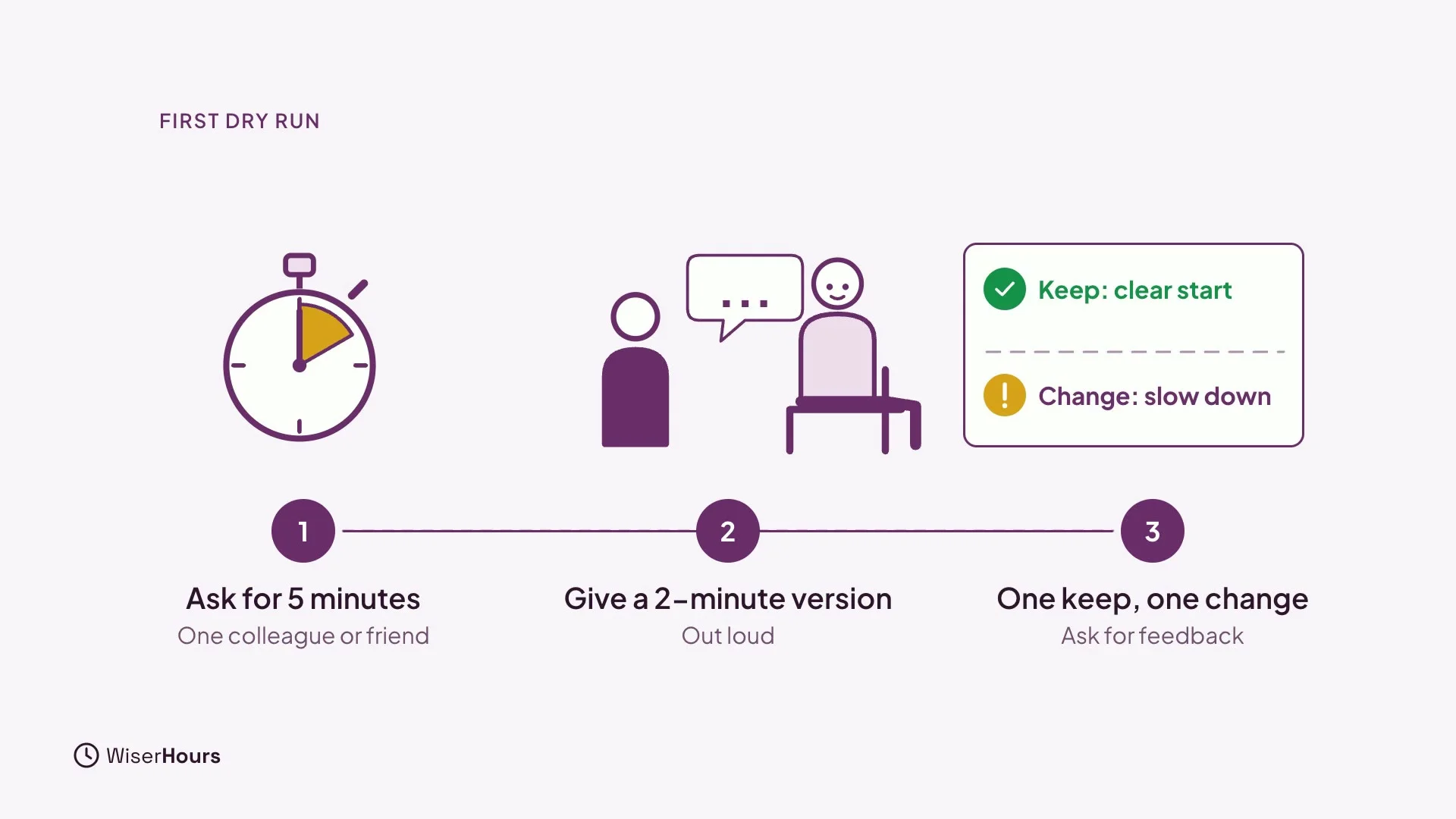
Here is an easy first dry run. Ask one colleague or friend for five minutes. Give them a two-minute version of your talk, out loud. Then ask them for one thing to keep, and one thing to change. Two minutes is enough to learn a lot, and one change at a time is easy to act on.
 (opens the full-size picture)
Ask about the work
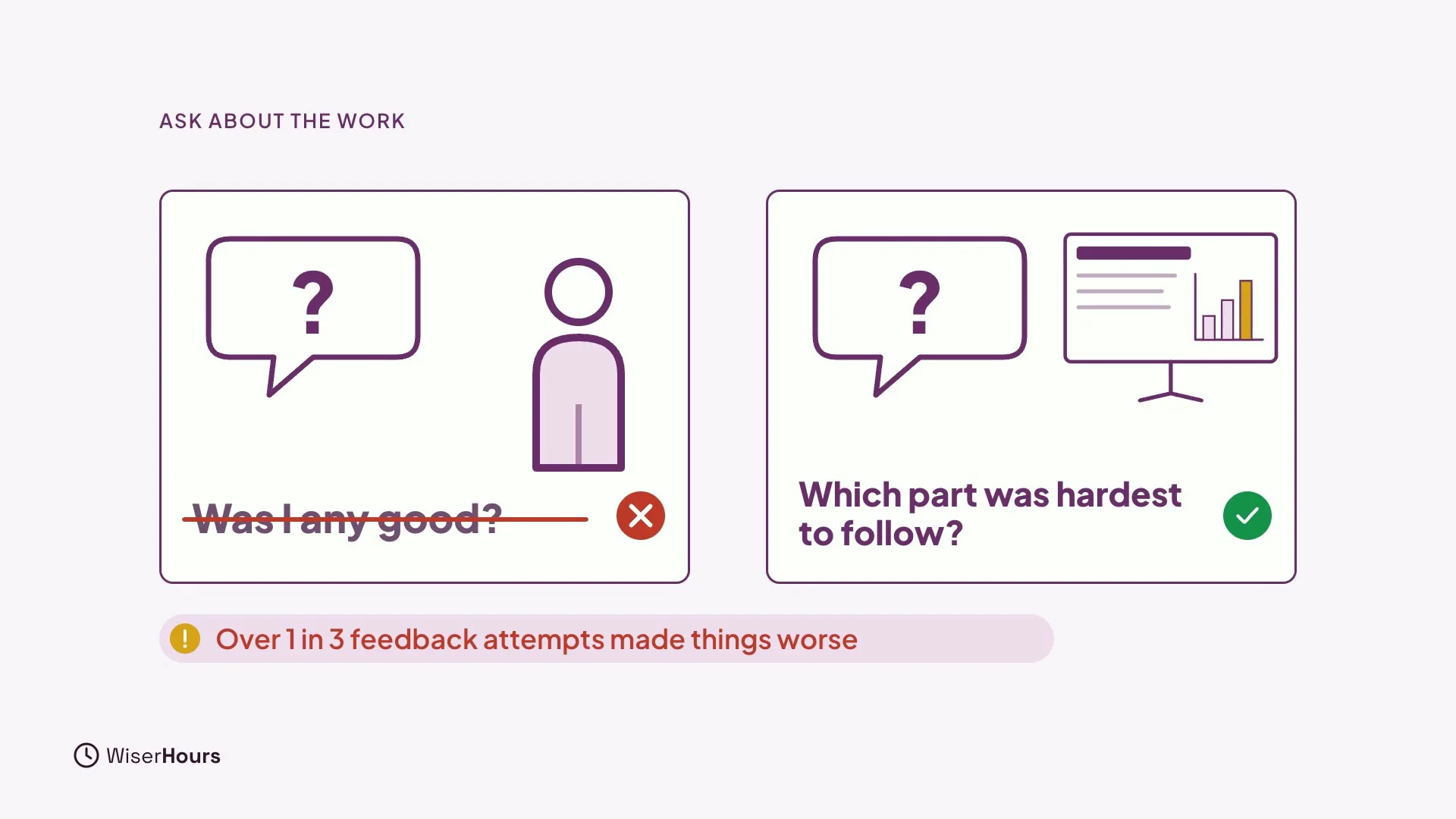
How you ask for feedback matters. In a large review, over a third of feedback made performance worse, and feedback that focused on the person helped least. So don’t ask, “Was I any good?” Ask about the work: “Which part was hardest to follow?” That question points your listener at the talk, and it gives you something you can fix.
 (opens the full-size picture)
Learn from someone like you
It also helps to watch someone like you succeed. A colleague who was nervous last year shows you the route better than a famous speaker. Ask them about their first attempts.
YOUR TURN
Read more
- Public Speaking for Beginners: A Realistic Starting Plan: the studies on rehearsing for an audience.
- How to Build Self-Confidence: What Actually Works: why feedback on the work helps, and how it can backfire.
Read the full lesson script
In this lesson, you'll learn why reading your notes isn't rehearsal, why a listener helps, and how to run your first dry run in just five minutes.
Many people prepare a talk by reading their notes in their head. But a talk is spoken, so practise it the way you'll give it: out loud. That way you practise the words and the way you say them at the same time.
Two studies with students point the same way. In one, the more times people rehearsed in front of an audience, the better their speech was rated. In another, students who practised in front of an audience scored higher than those who practised alone, and a larger audience did even better. These studies show a link, not proof.
Make your practice close to the real thing. Stand up. Use the room or the video tool you'll use on the day, if you can. Rehearse your opening until you can say it without notes. And invite one friendly listener.
Here's an easy first dry run. Ask one colleague or friend for five minutes. Give them a two-minute version of your talk, out loud. Then ask them for one thing to keep, and one thing to change.
How you ask for feedback matters. In a large review, over a third of feedback made performance worse, and feedback that focused on the person helped least. So don't ask, was I any good? Ask about the work: which part was hardest to follow?
It also helps to watch someone like you succeed. A colleague who was nervous last year shows you the route better than a famous speaker. Ask them about their first attempts.
So remember: rehearse out loud, standing up. A listener beats practising alone. And ask about the work, not about you. Before the next lesson, ask one person for five minutes, and give them a two-minute version of a talk. Next, you'll learn what to do in the minute before you speak.
MAKE IT A SMALL WIN
Finished this lesson?
Mark it complete to save your progress on this device.