Get used to speaking · Lesson 2 of 11
Build a Speaking Ladder: Small Steps to Confidence
Build a step-by-step speaking ladder, learn when to move up a rung, and split any step that feels too big.
 Video coming soon
A speaking ladder is a list of small steps that take you from talking alone to speaking to a group. Each step is a little harder than the one before. In this lesson you will see one ladder you could try, learn when to move up, and learn what to do when a step feels too big.
Confidence grows from small wins
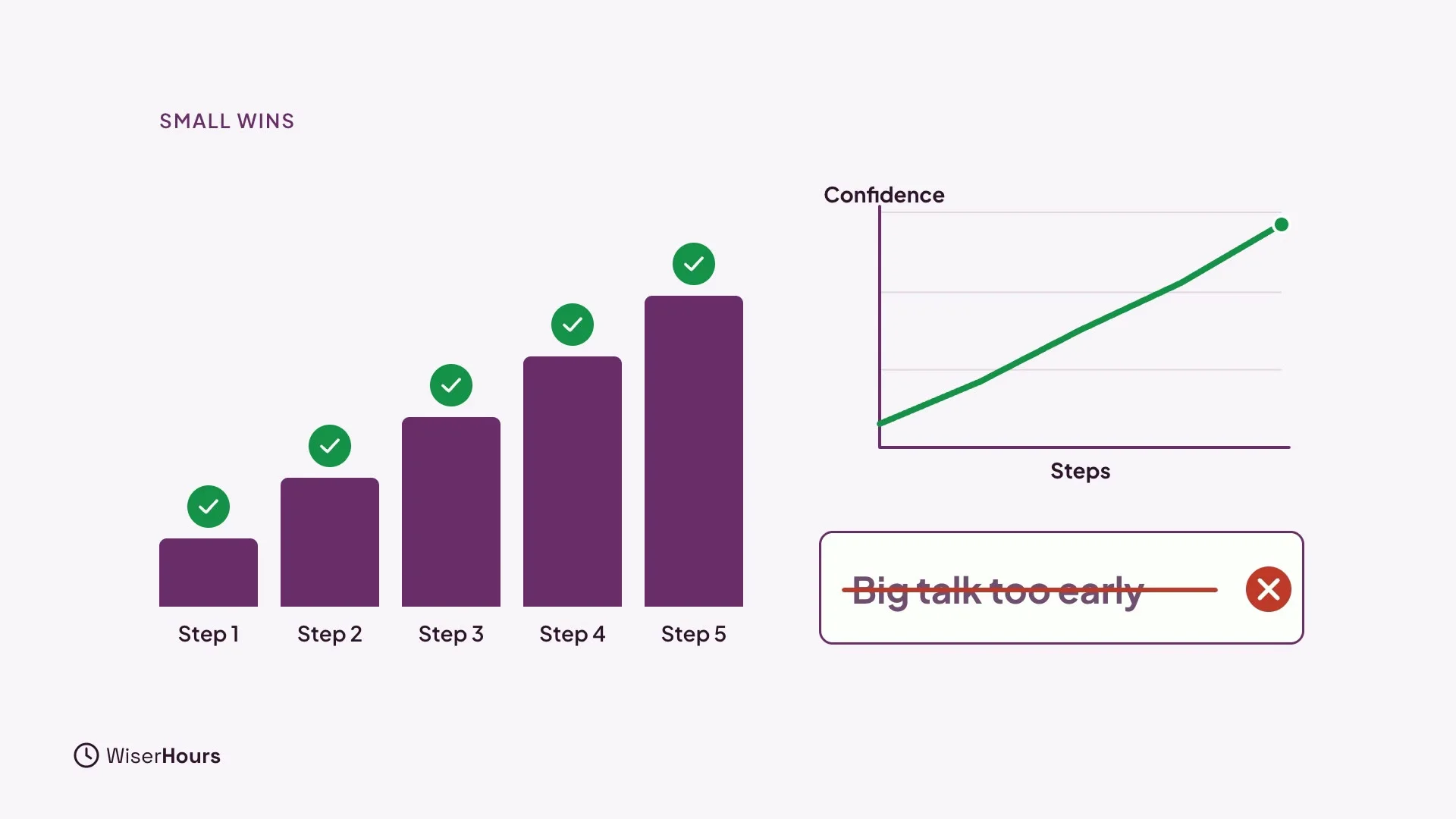
When you succeed at something, you believe a little more that you can do the next thing. So break speaking into steps you will probably manage, and make each one a little harder than the last. Pushing yourself into a big talk too early can do the opposite: if it goes badly, it can leave you less sure of yourself, not more.
 (opens the full-size picture)
A ladder you could try
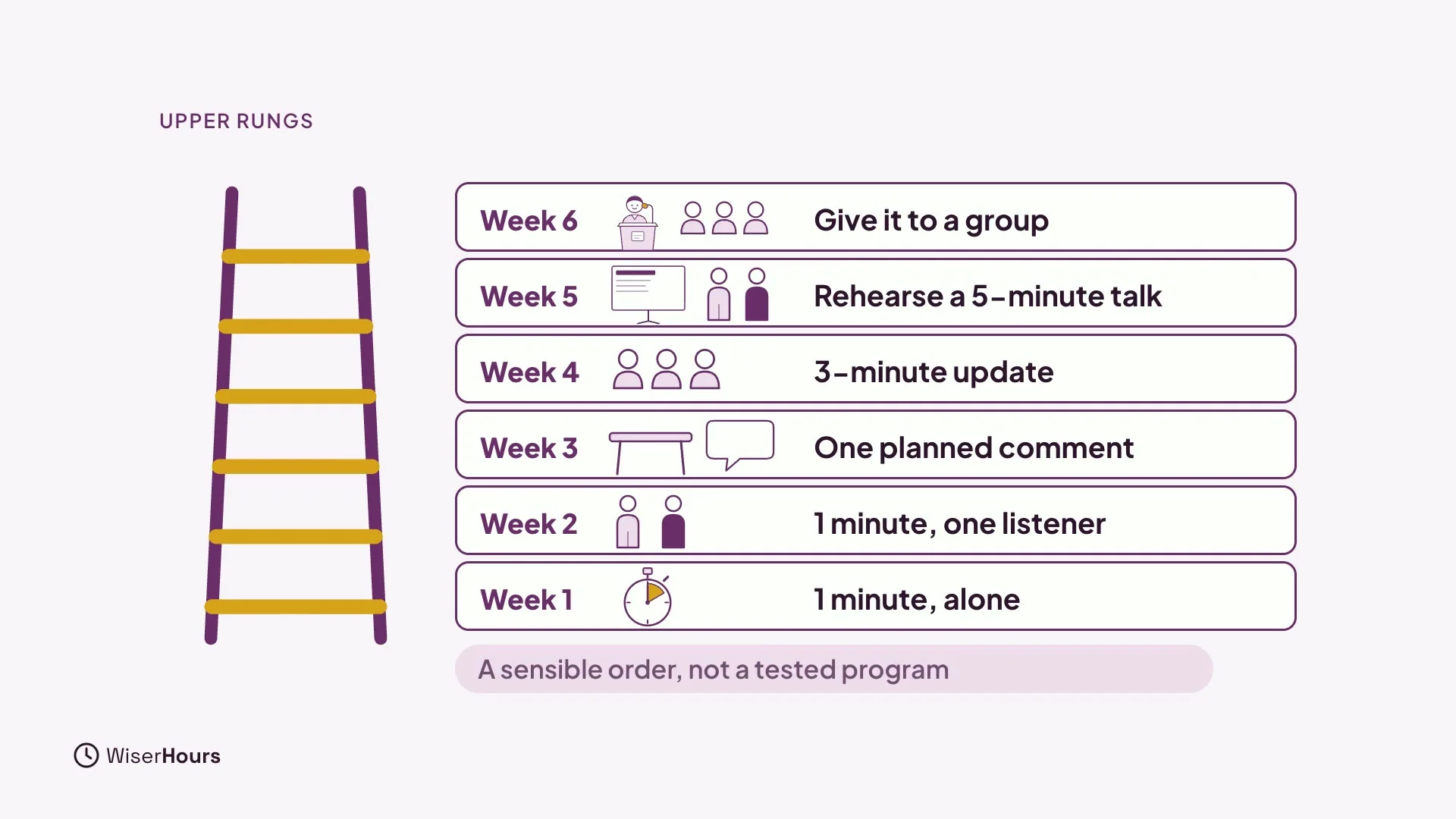
Here is one ladder, week by week. In week one, speak for one minute, out loud and alone, about something you know well. In week two, give that same minute to one friendly listener. In week three, make one planned comment in a meeting or a class. In week four, give a three-minute update to a small group. In week five, rehearse a five-minute talk twice, for one or two people. In week six, give that talk to a group.
 (opens the full-size picture)
This ladder is not a tested program. It is a sensible order to start from, so change it to fit your life. If your own first step is a comment in a class, put that near the bottom.
Move up when a step feels ordinary
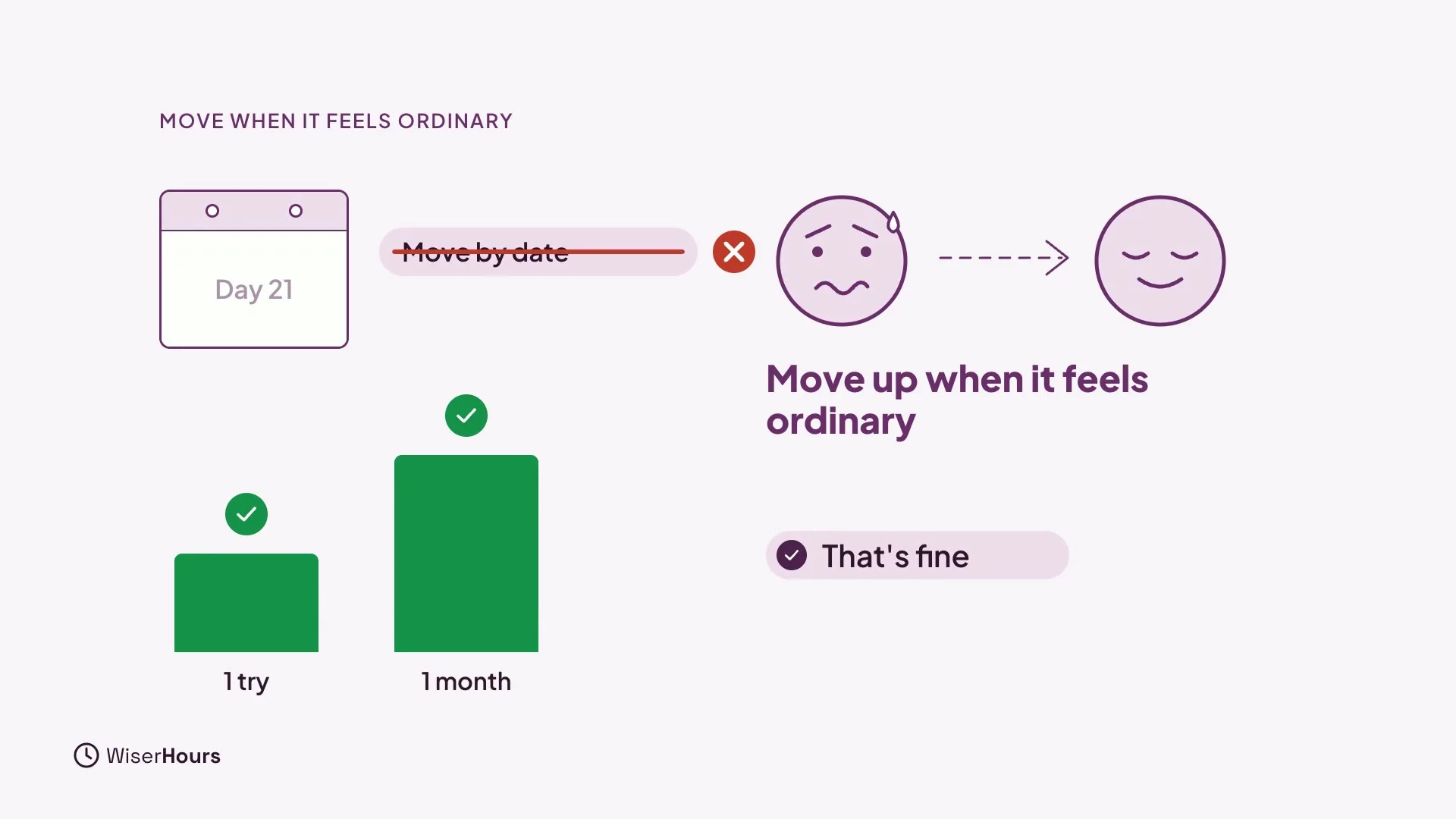
The weeks are only a guide. Move up when a step starts to feel ordinary, not when the calendar says so. Some steps will take one try. Others will take a month. That is fine, because the aim is to get used to each step, not to hurry through the list.
 (opens the full-size picture)
Split the step that feels too big
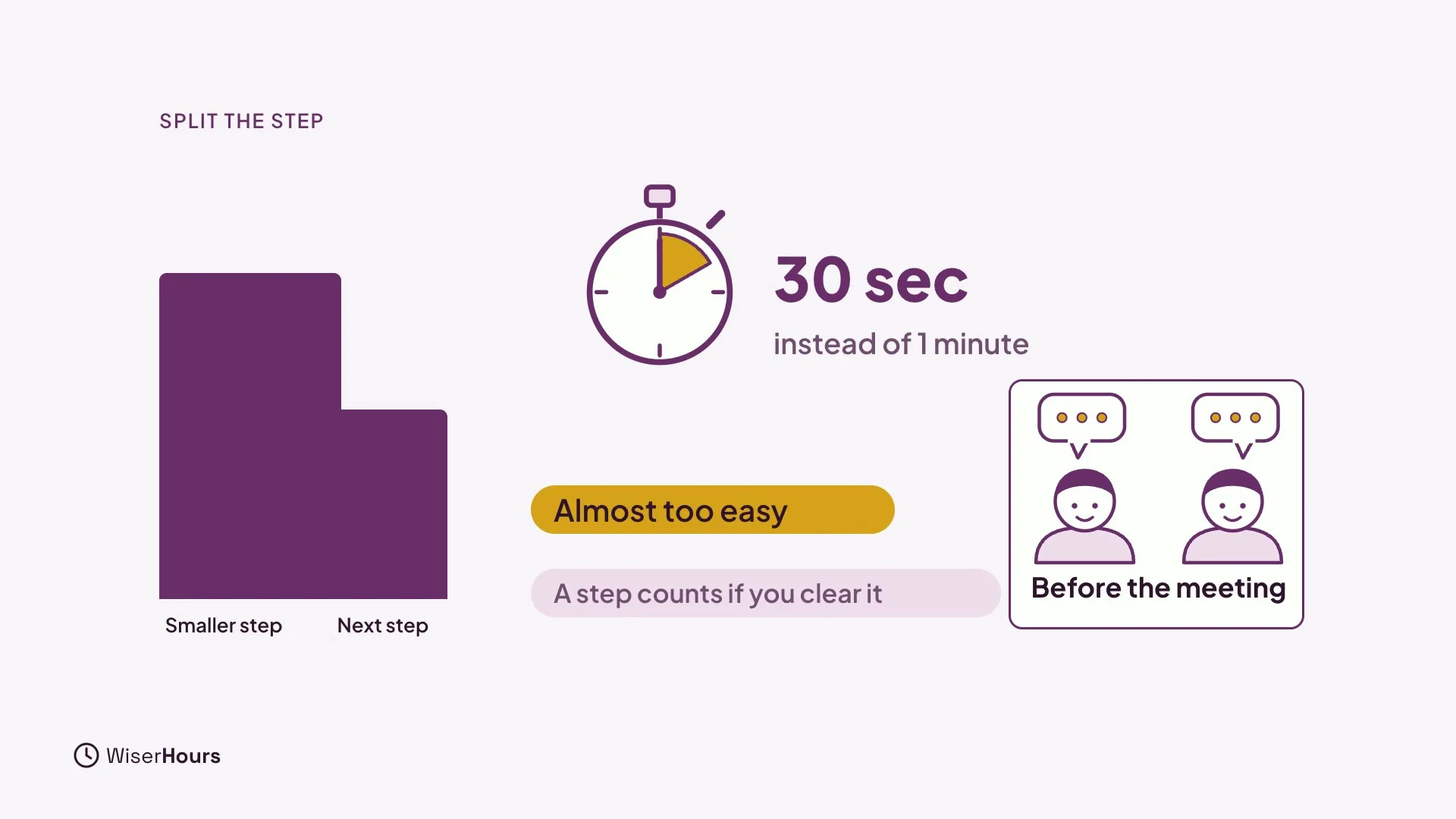
If a step feels impossible, split it. Speak for thirty seconds instead of a minute. Say your comment to one colleague before the meeting, then say it again in the meeting. Splitting does not mean you failed. It means you found a step you can clear, and that is the one that builds confidence.
 (opens the full-size picture)
Track your wins
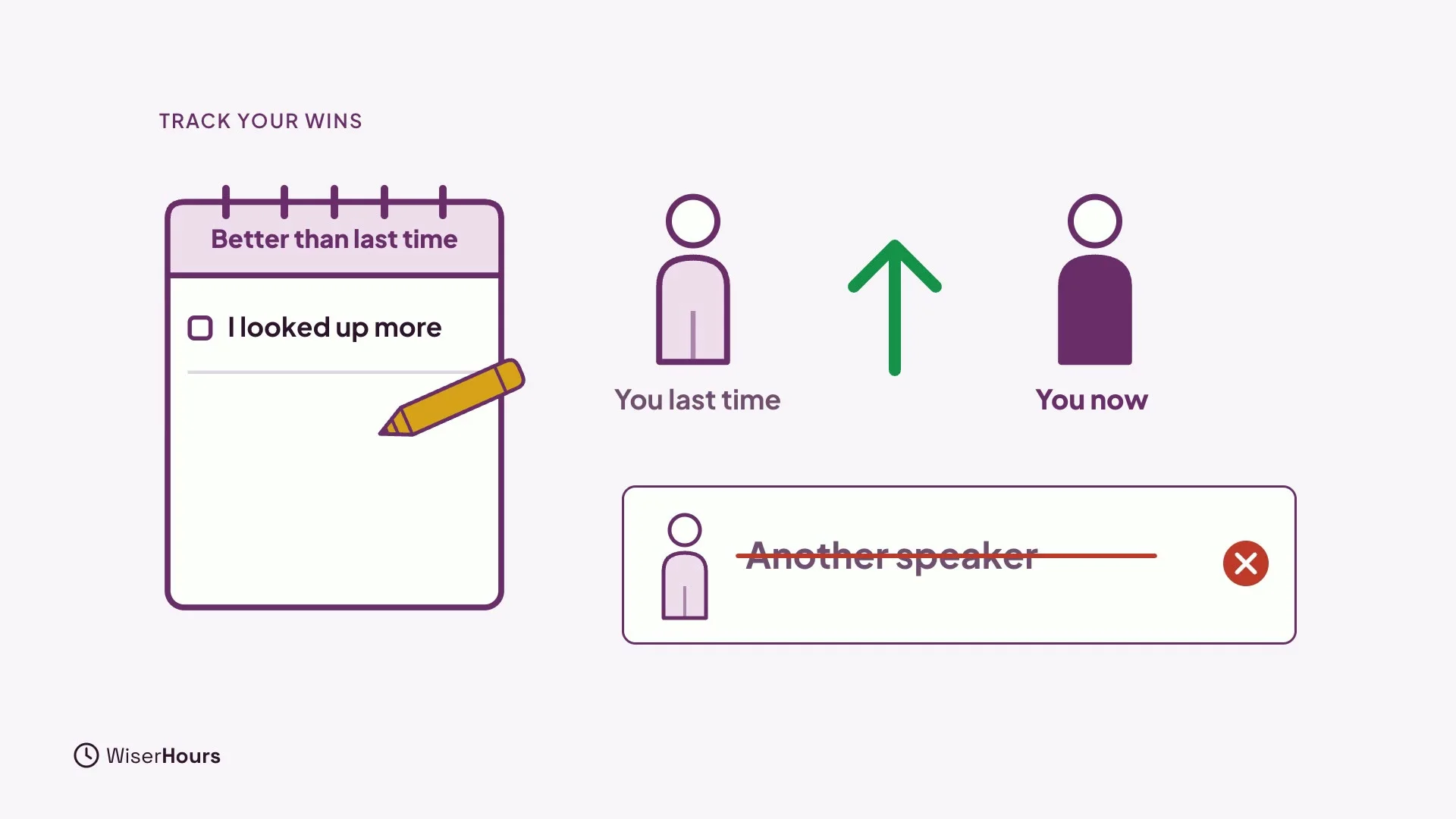
After each step, jot down one thing that went better than last time, for example “I looked up more.” Measure yourself against your own last try, not against other speakers. Someone else’s polished talk tells you nothing about your own progress.
 (opens the full-size picture)
YOUR TURN
Read more
- Public Speaking for Beginners: A Realistic Starting Plan: why small, repeated turns work.
- How to Build Self-Confidence: What Actually Works: small wins and the other sources of confidence.
Read the full lesson script
In this lesson, you'll build a speaking ladder: small steps that take you from talking alone to speaking to a group. You'll also learn when to move up a step, and what to do when a step feels too big.
Confidence grows from small wins. When you succeed at something, you believe a little more that you can do the next thing. So break speaking into steps you'll probably manage, and make each one a little harder than the last. Pushing yourself into a big talk too early can do the opposite.
Here's one ladder you could try. In week one, speak for one minute, out loud and alone, about something you know well. In week two, give that same minute to one friendly listener. In week three, make one planned comment in a meeting or a class.
In week four, give a three-minute update to a small group. In week five, rehearse a five-minute talk twice, for one or two people. And in week six, give that talk to a group. This ladder isn't a tested program. It's a sensible order to start from.
The weeks are only a guide. Move up when a step starts to feel ordinary, not when the calendar says so. Some steps will take one try. Others will take a month. That's fine.
If a step feels impossible, split it. Speak for thirty seconds instead of a minute. Say your comment to one colleague before the meeting. Make the first steps almost too easy, because a step only counts if you actually clear it.
After each step, jot down one thing that went better than last time. Measure yourself against your own last try, not against other speakers.
So remember: confidence grows from small wins. Move up when a step feels ordinary. And split any step that feels too big. Before the next lesson, speak for one minute, out loud and alone, about something you know well. Next, you'll learn to rehearse out loud, for a listener.
MAKE IT A SMALL WIN
Finished this lesson?
Mark it complete to save your progress on this device.