Build your talk · Lesson 5 of 11
Open a Talk Strong: The First Minute
Learn the three jobs of your first minute, a few good ways to start, and four openings to avoid, with a quick test to check yours.
 Video coming soon
The first minute decides whether people lean in or look at their phones. This lesson shows what that minute needs to do, how long it should be, a few good ways to begin, and four starts to avoid.
Three jobs for your first minute
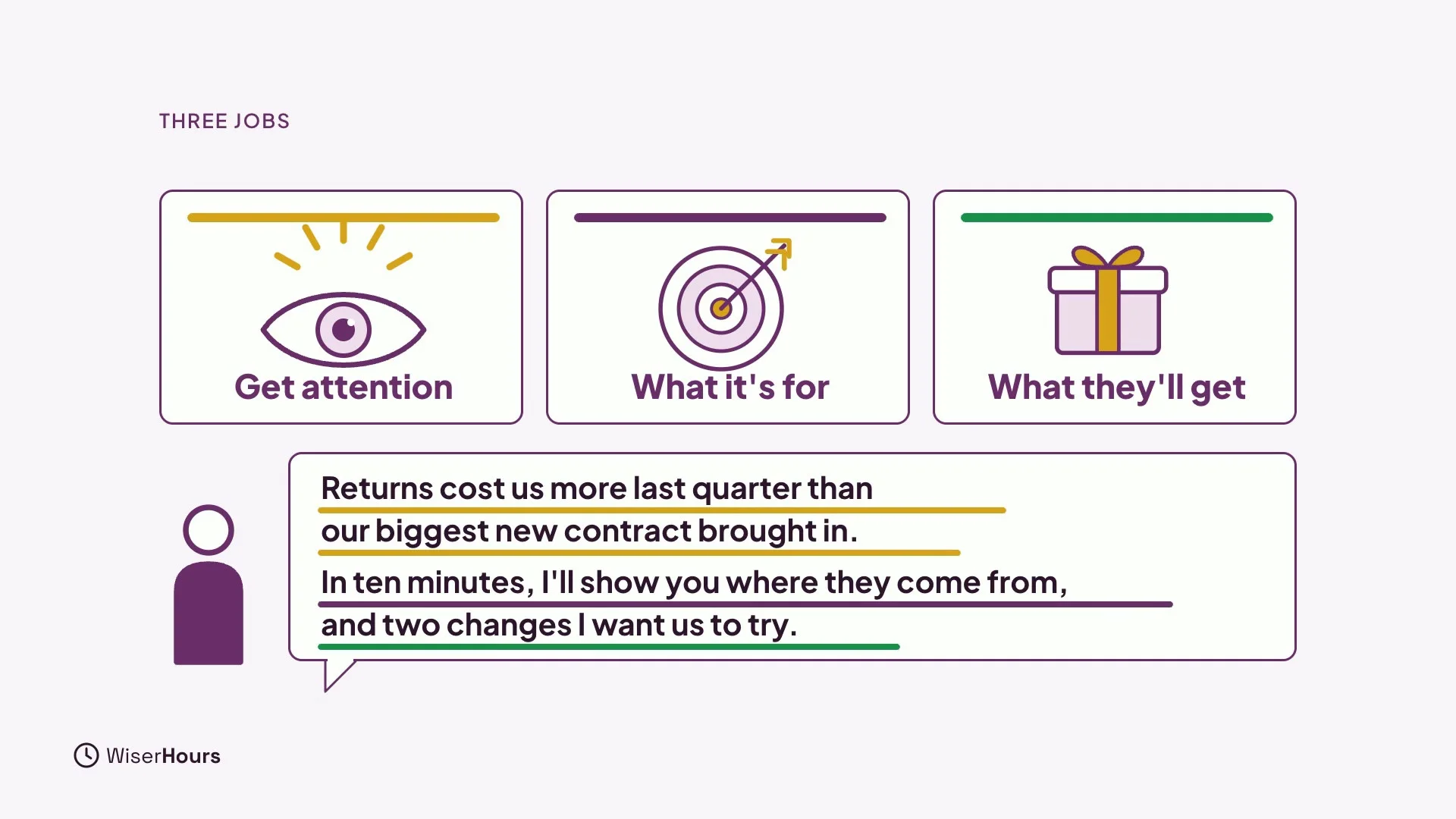
Your opening has three jobs. First, get attention. Second, say what the talk is for. Third, tell people what they will get from it. Here is one example that does all three: “Returns cost us more last quarter than our biggest new contract brought in. In ten minutes, I will show you where they come from, and two changes I want us to try.” The first sentence grabs attention. The second says what the talk is for and what listeners will get.
 (opens the full-size picture)
Keep it short
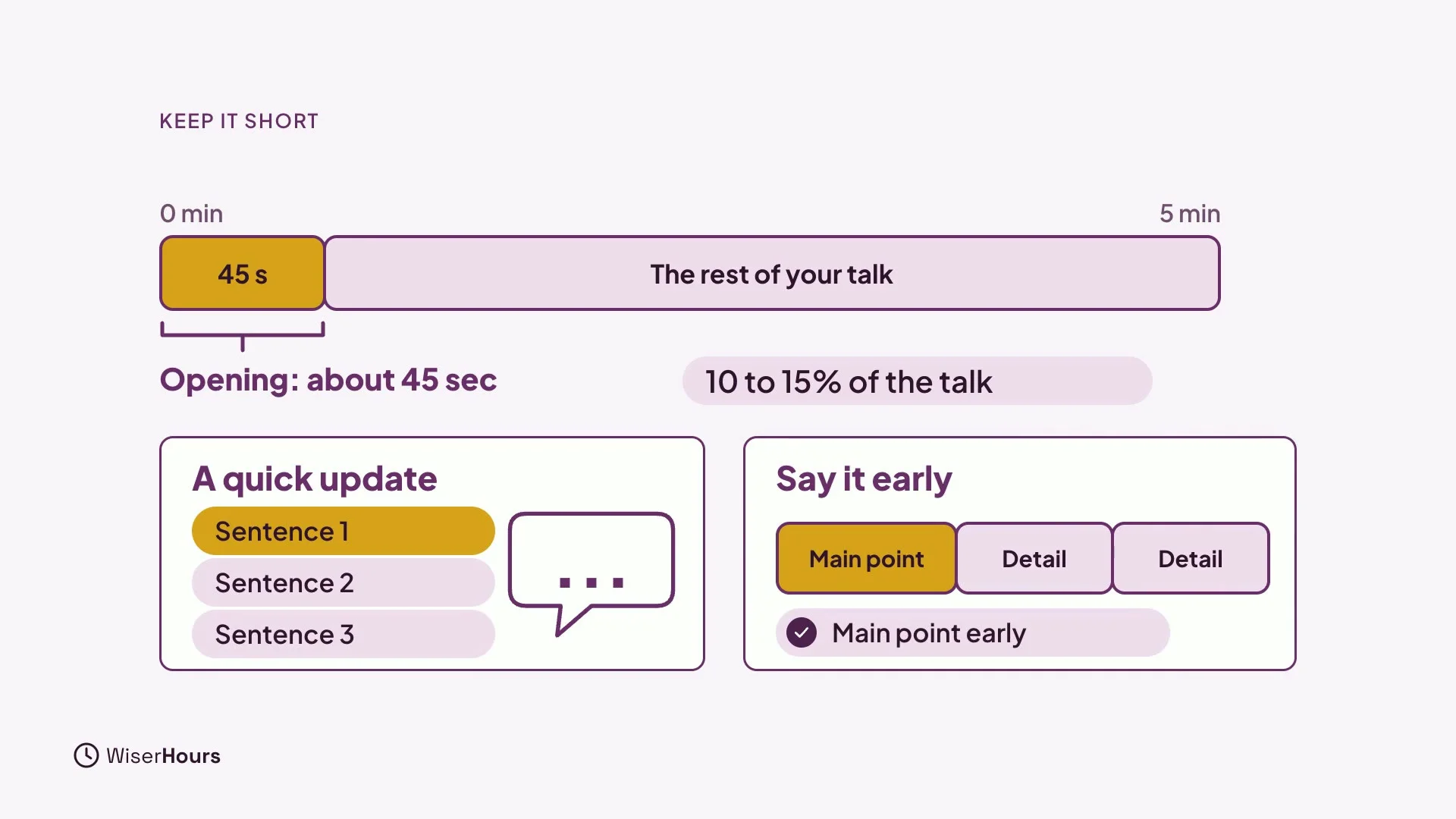
Keep the opening to about 10 to 15% of the talk. In a five-minute talk that is about 45 seconds. For a quick update it can be just two or three sentences. People tend to remember what comes first, so put your main point early instead of saving it for the end.
 (opens the full-size picture)
Good ways to start
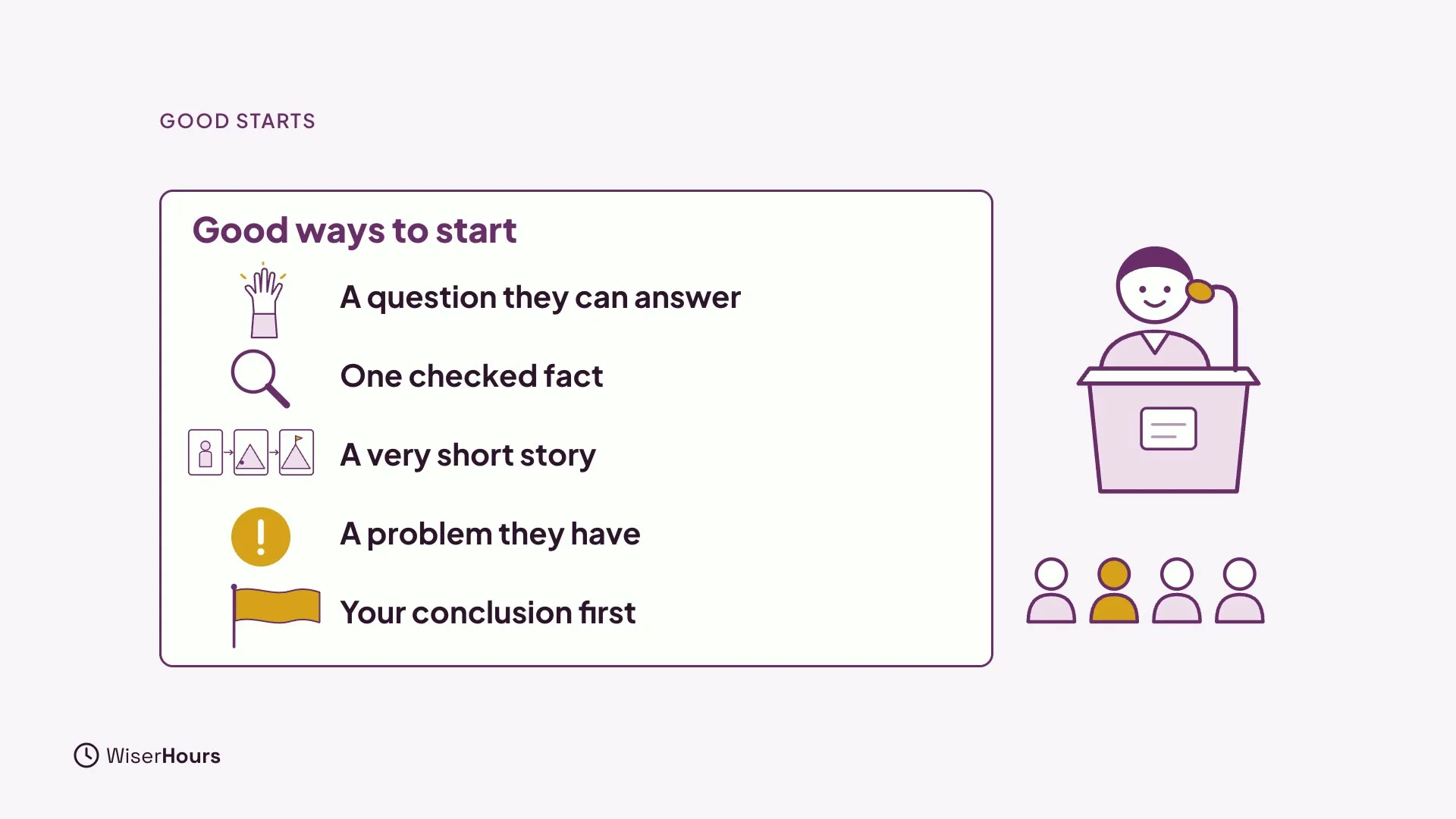
There is no single right way to begin. Pick the one that fits the room.
- Ask a question the room can answer, such as a show of hands.
- Share one striking fact that you have checked.
- Tell a very short story, four or five sentences long.
- Name a problem the room already has.
- In a decision meeting, lead with your conclusion.
 (opens the full-size picture)
Questions that work
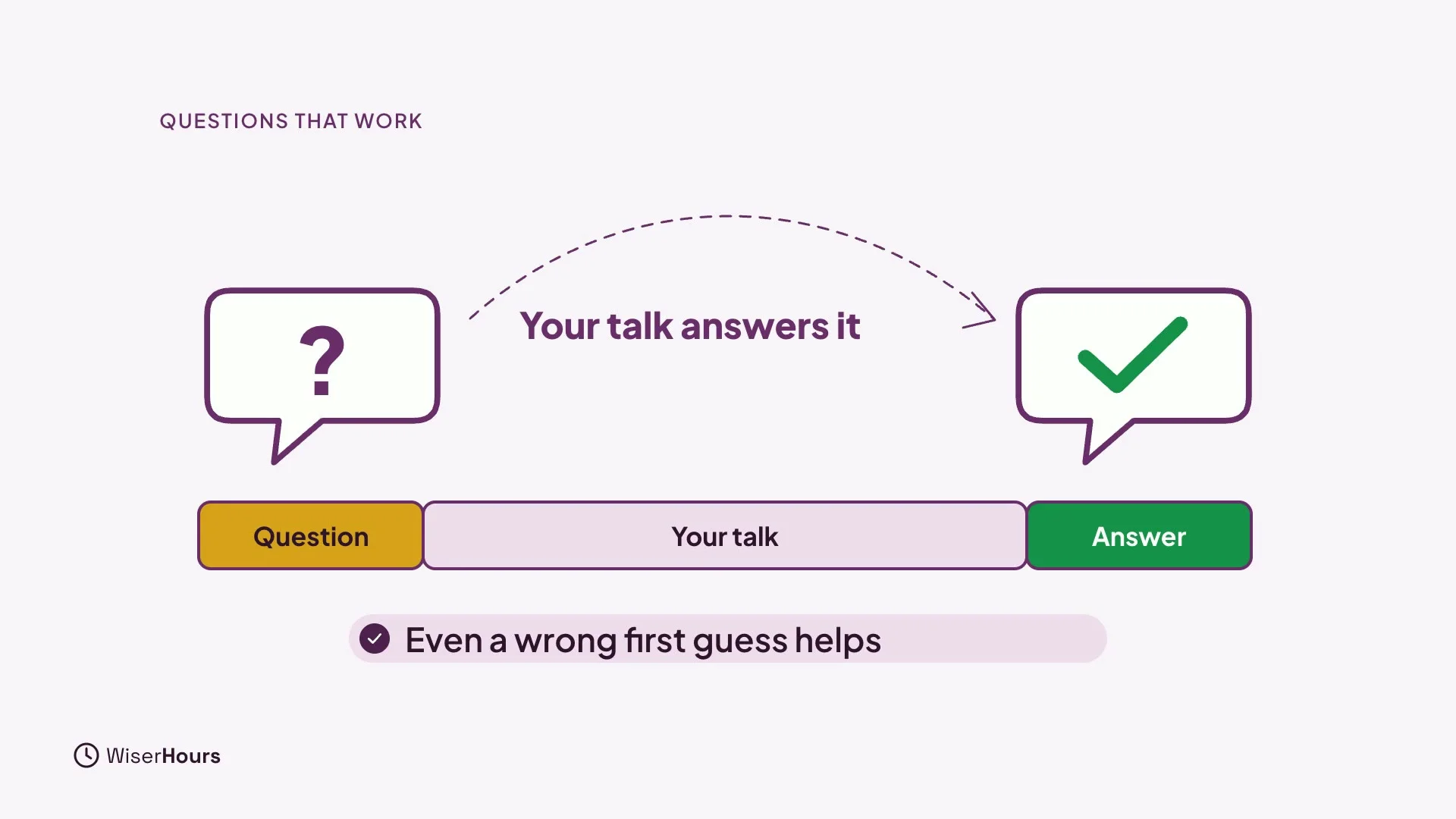
An opening question works best when your talk goes on to answer it. In studies with students, trying to answer a question first often helped people remember the answer later, even when their first guess was wrong. So a question is not just a hook. It also gets listeners ready to notice the answer when it arrives.
 (opens the full-size picture)
Four starts to avoid
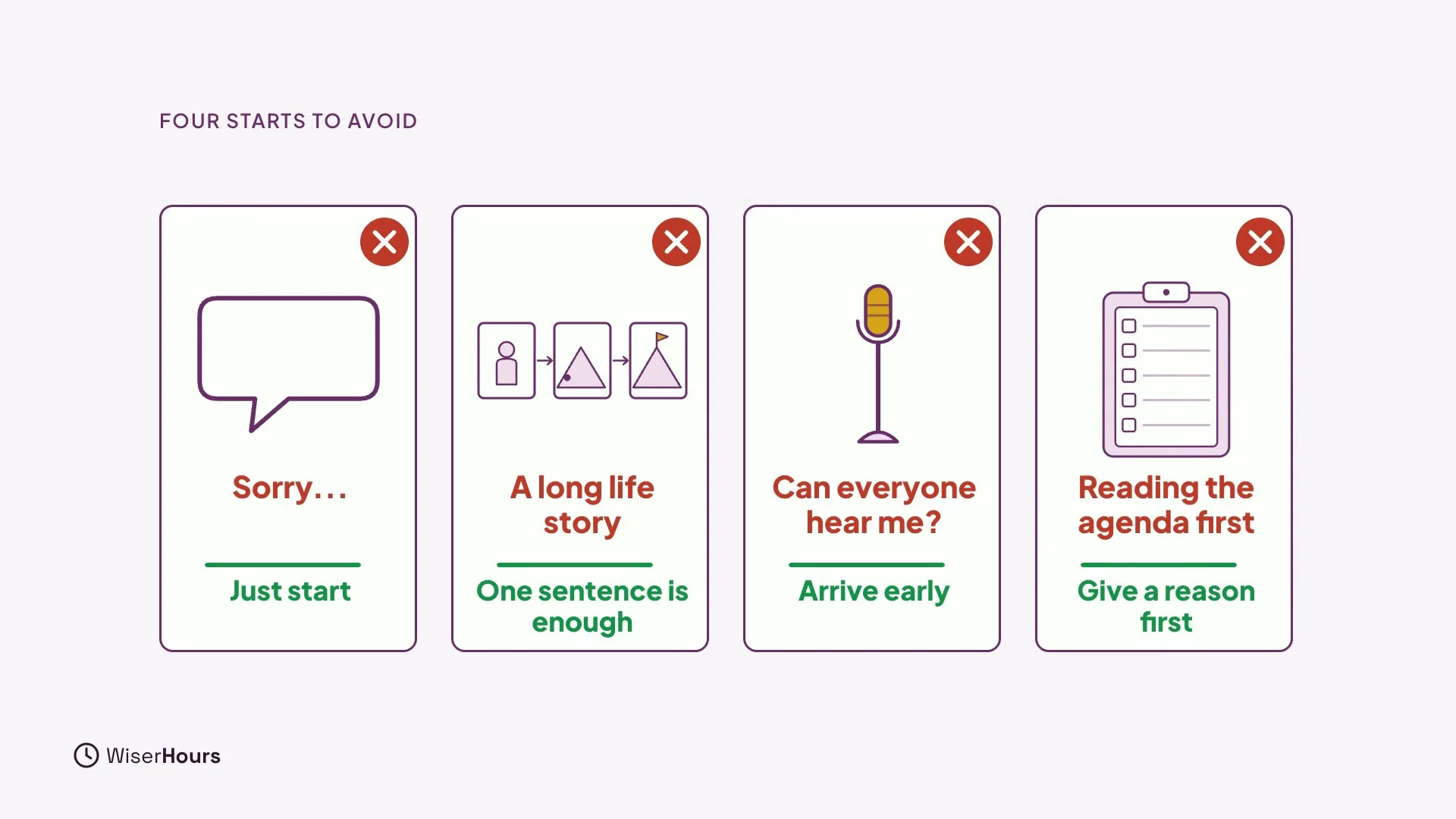
These starts waste your best minute:
- Do not apologise. Just start.
- Do not give a long introduction about yourself. One sentence on why you are speaking is enough.
- Do not test the equipment in front of everyone. Arrive early and do it before people come in.
- Do not read the agenda before you have given people a reason to listen.
 (opens the full-size picture)
The colleague test
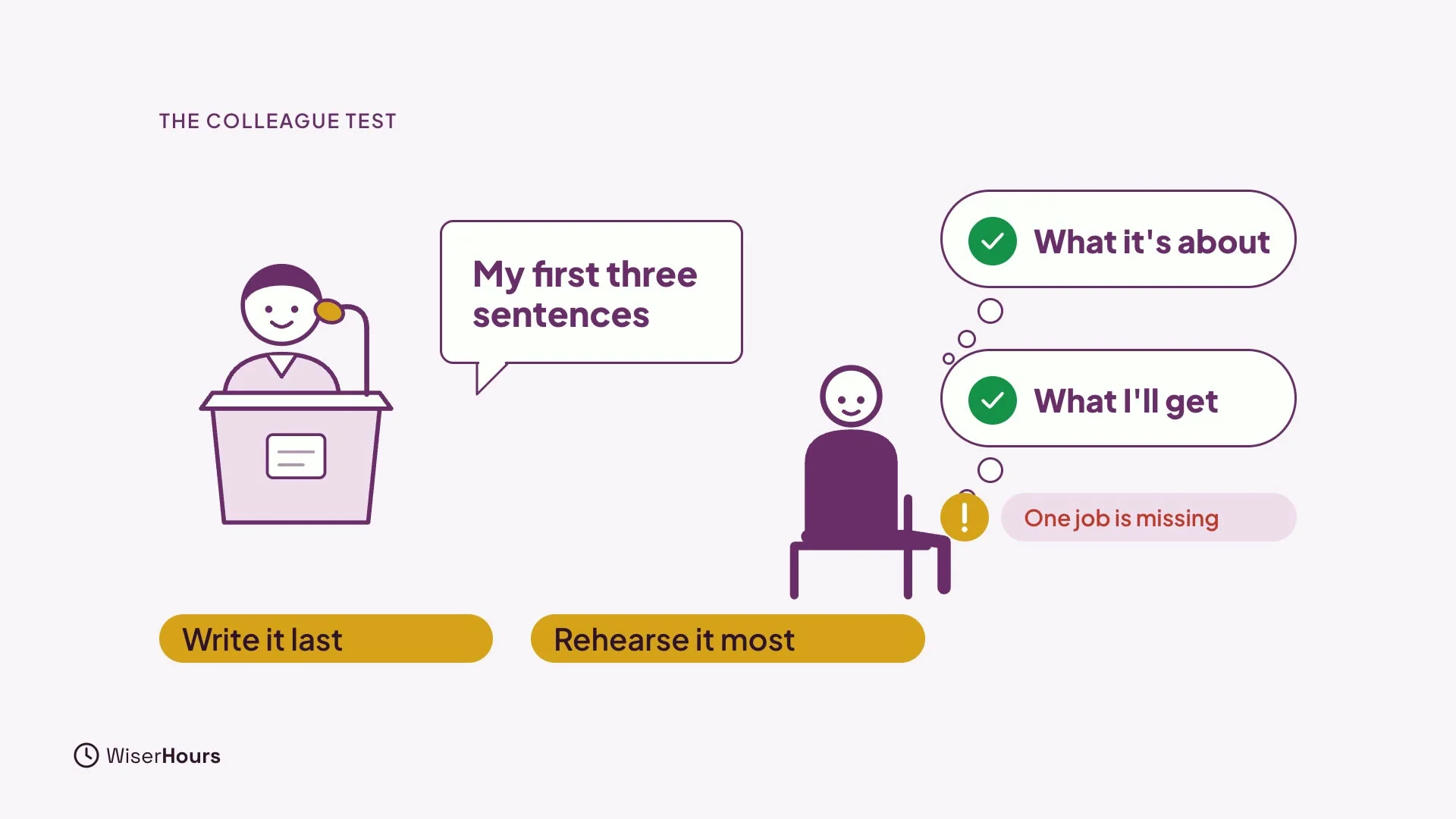
Say your first three sentences to a colleague. Then ask two questions: what is this talk about, and what will I get from it? If they cannot answer both, one of the three jobs is missing. One more habit helps: choose your opening last, once you know what the rest of the talk says, and rehearse it the most.
Why rehearse the opening most
The first minute is when nerves are strongest and people are forming their first impression. A well-practised opening gets you through it.
 (opens the full-size picture)
YOUR TURN
Read more
- How to Open a Presentation: 10 Ways to Start Strong: more ways to start, with examples.
Read the full lesson script
In this lesson, you'll learn the three jobs of your first minute, a few good ways to start, and four starts to avoid.
Your first minute has three jobs. Get attention. Say what the talk is for. And tell people what they'll get from it. Here's one that does all three. Returns cost us more last quarter than our biggest new contract brought in. In ten minutes, I'll show you where they come from, and two changes I want us to try.
Keep the opening short: about ten to fifteen percent of the talk. That's about forty-five seconds for a five-minute talk, or two or three sentences for a quick update. People tend to remember what comes first, so put your main point early.
There are many good ways to start. Ask a question the room can answer, like a show of hands. Share one striking fact you've checked. Tell a very short story, four or five sentences long. Name a problem the room already has. Or, in a decision meeting, lead with your conclusion.
Opening questions work best when your talk goes on to answer them. In studies with students, trying to answer a question first often helped people remember the answer later, even when their first guess was wrong.
And four starts to avoid. Don't apologise. Don't give a long introduction about yourself; one sentence on why you're speaking is enough. Don't test the equipment in front of everyone; arrive early instead. And don't read the agenda before you've given people a reason to listen.
Here's a quick test. Say your first three sentences to a colleague. Then ask: what is this talk about, and what will I get from it? If they can't answer both, one job is missing. Choose your opening last, and rehearse it most.
So remember: get attention, say what the talk is for, and say what people will get. Keep the opening short. And skip apologies and microphone checks. Before the next lesson, write an opening for your next talk or update that does all three jobs. Next, you'll learn to tell one short story that carries your point.
MAKE IT A SMALL WIN
Finished this lesson?
Mark it complete to save your progress on this device.