Polish the delivery · Lesson 9 of 11
What to Do With Your Hands When You Speak
Learn where to rest your hands, when to move them, and which habits to drop, so your gestures help your listeners instead of distracting them.
 Video coming soon
Many beginners are not sure what to do with their hands, so they hide them or fidget. This lesson gives you a simple rule, a place to rest your hands, and the habits to drop.
Gestures help
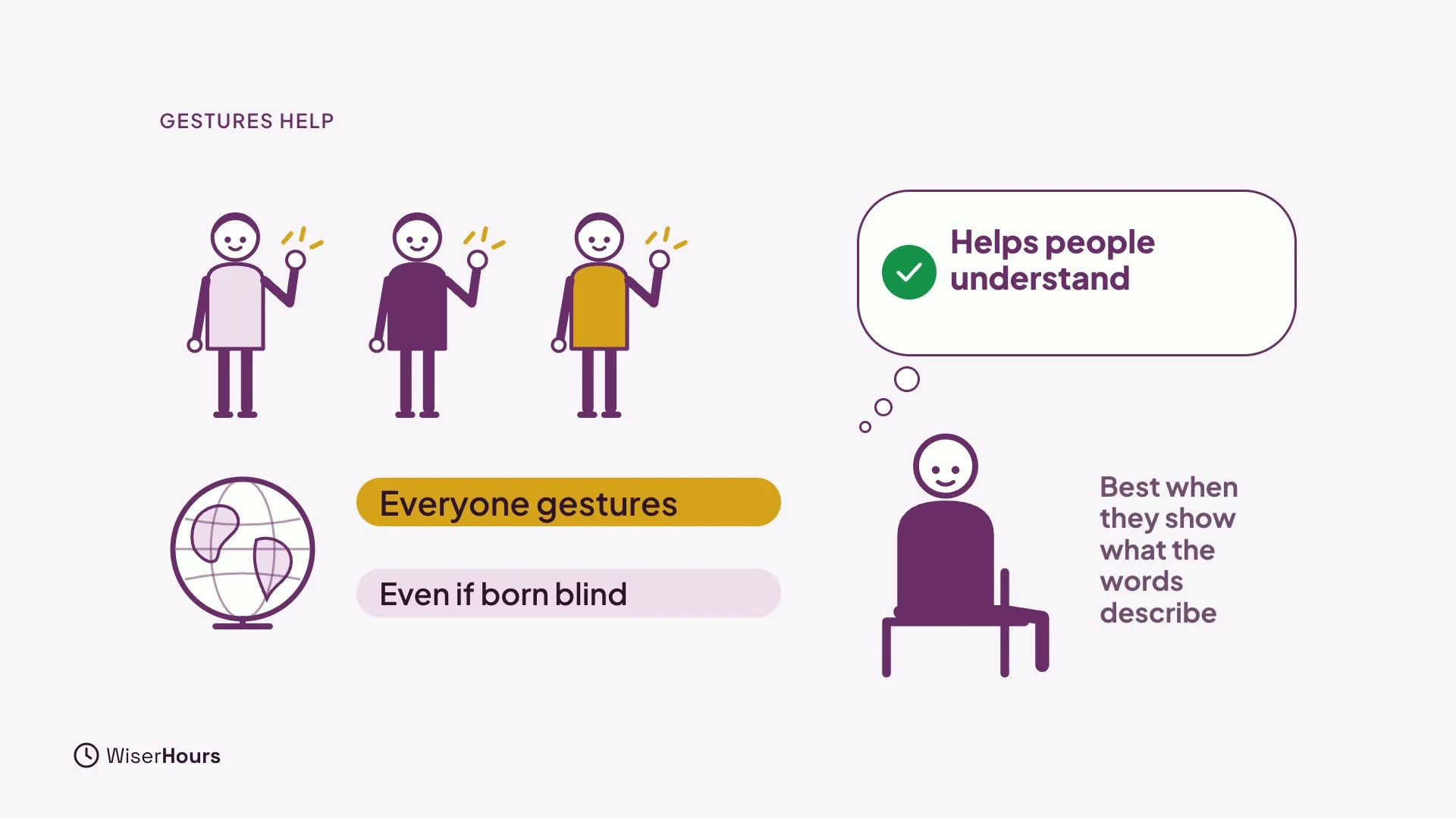
Gestures are not just decoration. People in every culture gesture when they talk, even people who were born blind. And studies show gestures can help listeners understand, especially when they show something the words describe. So you do not need to hold your hands still. You need to use them well.
 (opens the full-size picture)
The simple rule
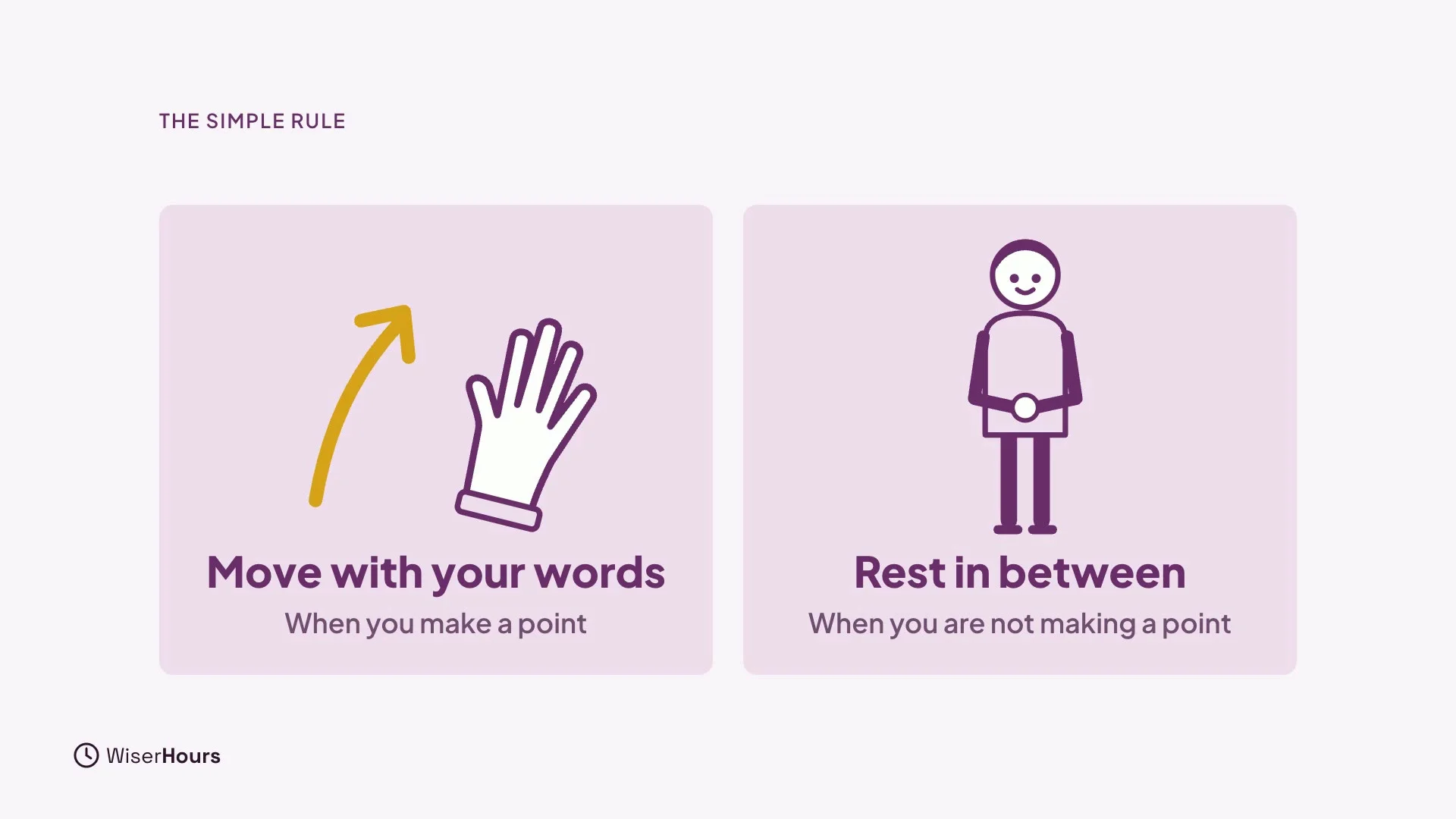
The rule is short. Let your hands move with what you say, and let them rest when you are not making a point. Movement then means something, because it comes and goes with your ideas. Hands that never stop moving, or never move at all, give your listeners nothing to follow.
 (opens the full-size picture)
A home position
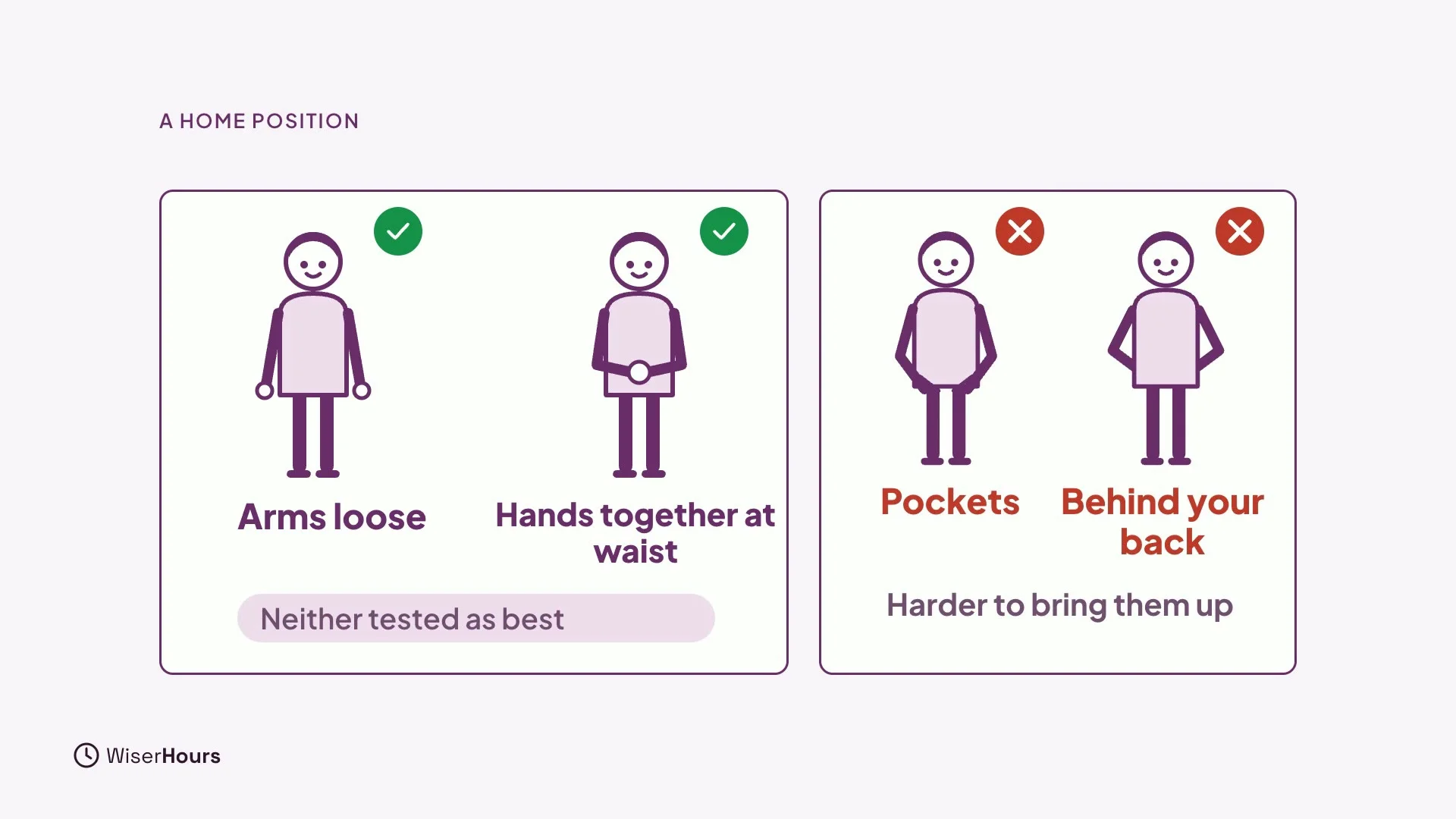
Pick a relaxed home position to come back to. Two good choices are arms loose at your sides, or hands lightly together at waist height. Neither has been tested as the best, so choose the one that feels natural to you. Just avoid pockets or hands behind your back, because then it is harder to bring your hands up when you want to use them.
 (opens the full-size picture)
Ideas with a shape
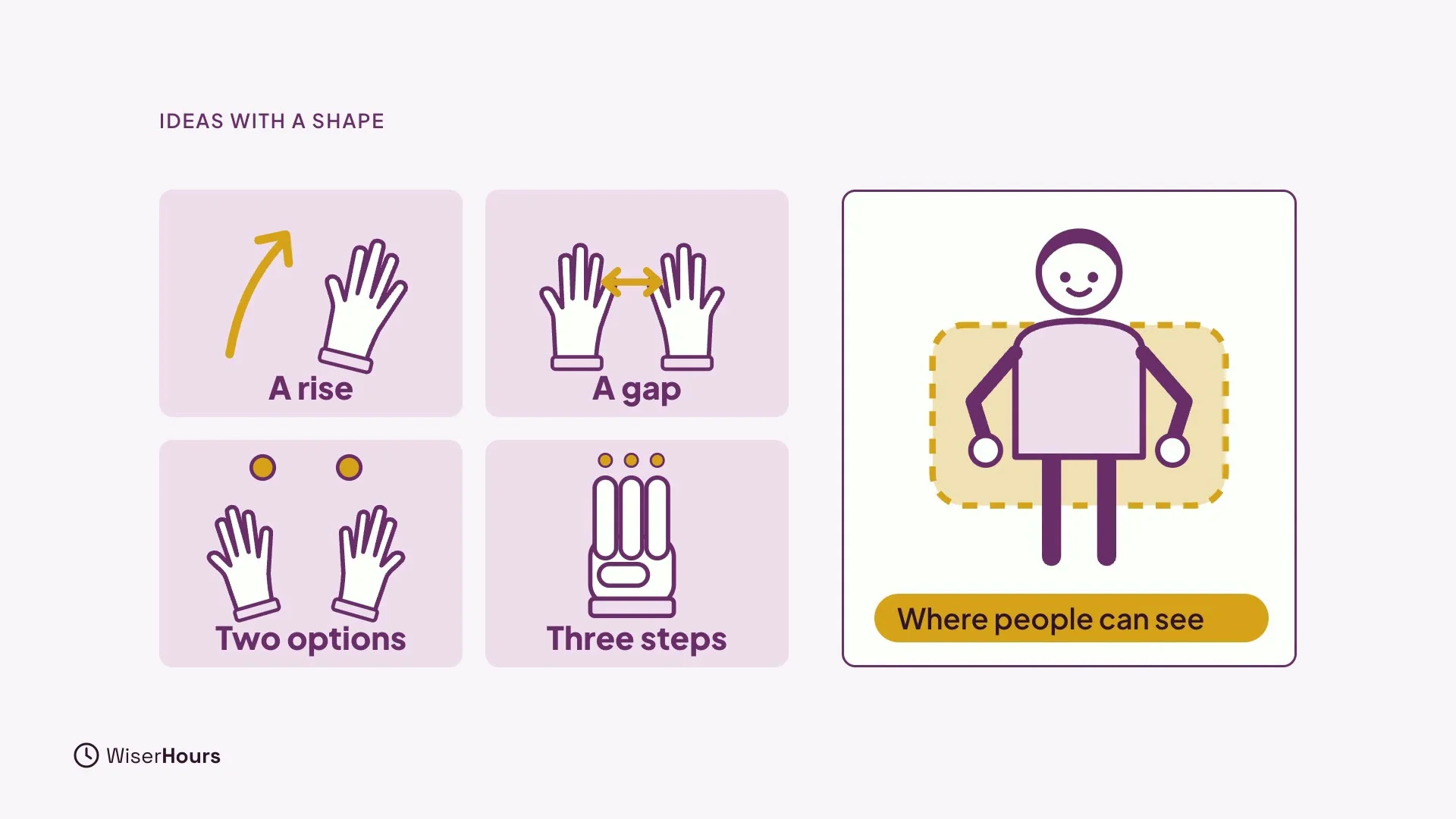
Use your hands for ideas that have a shape. Show a rise, a gap, two options, or three steps. Point at the thing you name. And keep your gestures in front of your body, where people can see them. A gesture low at your side or behind a lectern is wasted.
 (opens the full-size picture)
Make your hands match your words
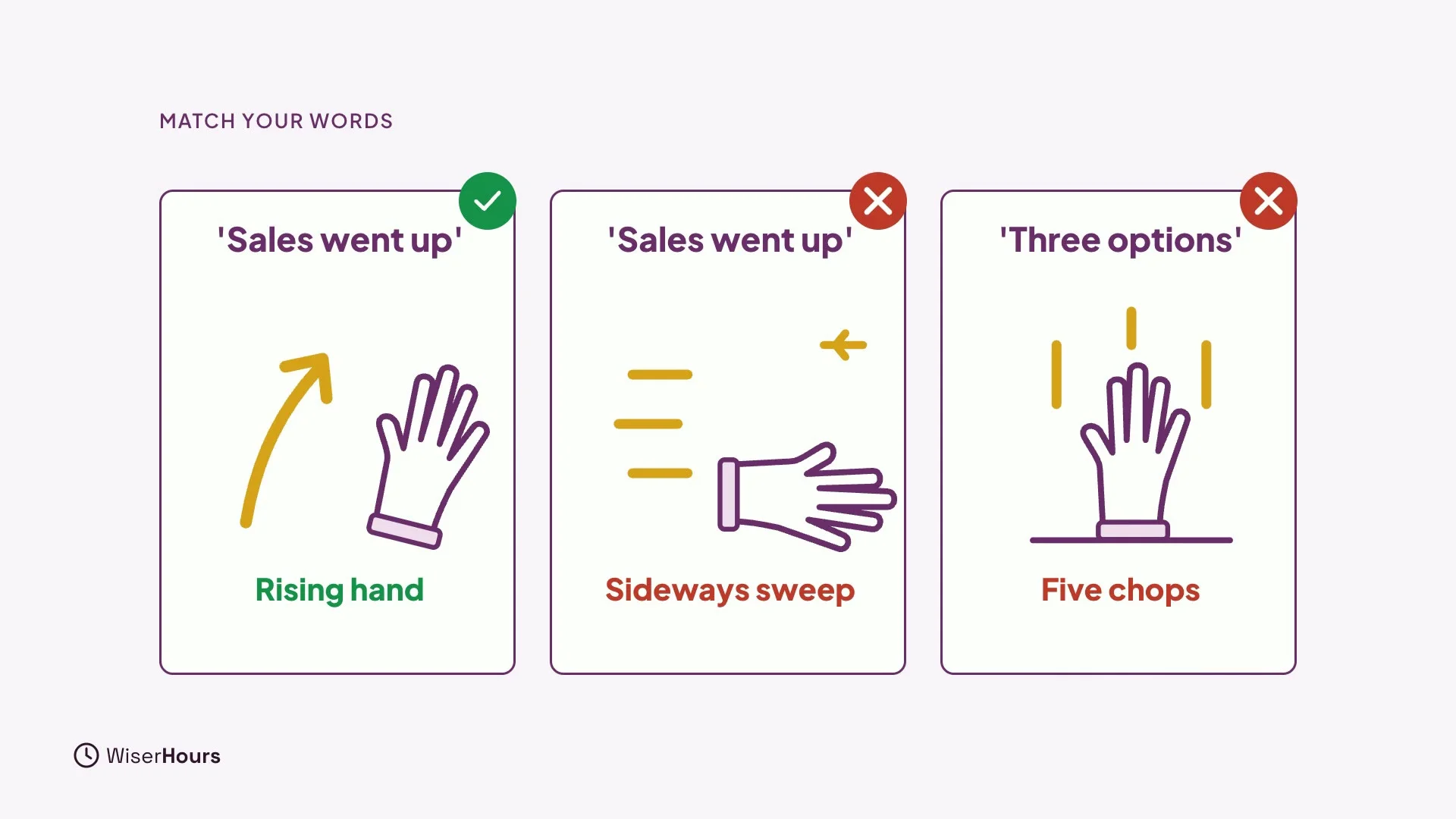
When gesture and speech clash, listeners get confused. In one study, mismatched gestures led to many more mistakes. So do not sweep your hand sideways while saying “sales went up”, and do not chop five times while saying “three options”. Let the rising hand go with “up” and three fingers go with “three”.
 (opens the full-size picture)
Drop the fidgets
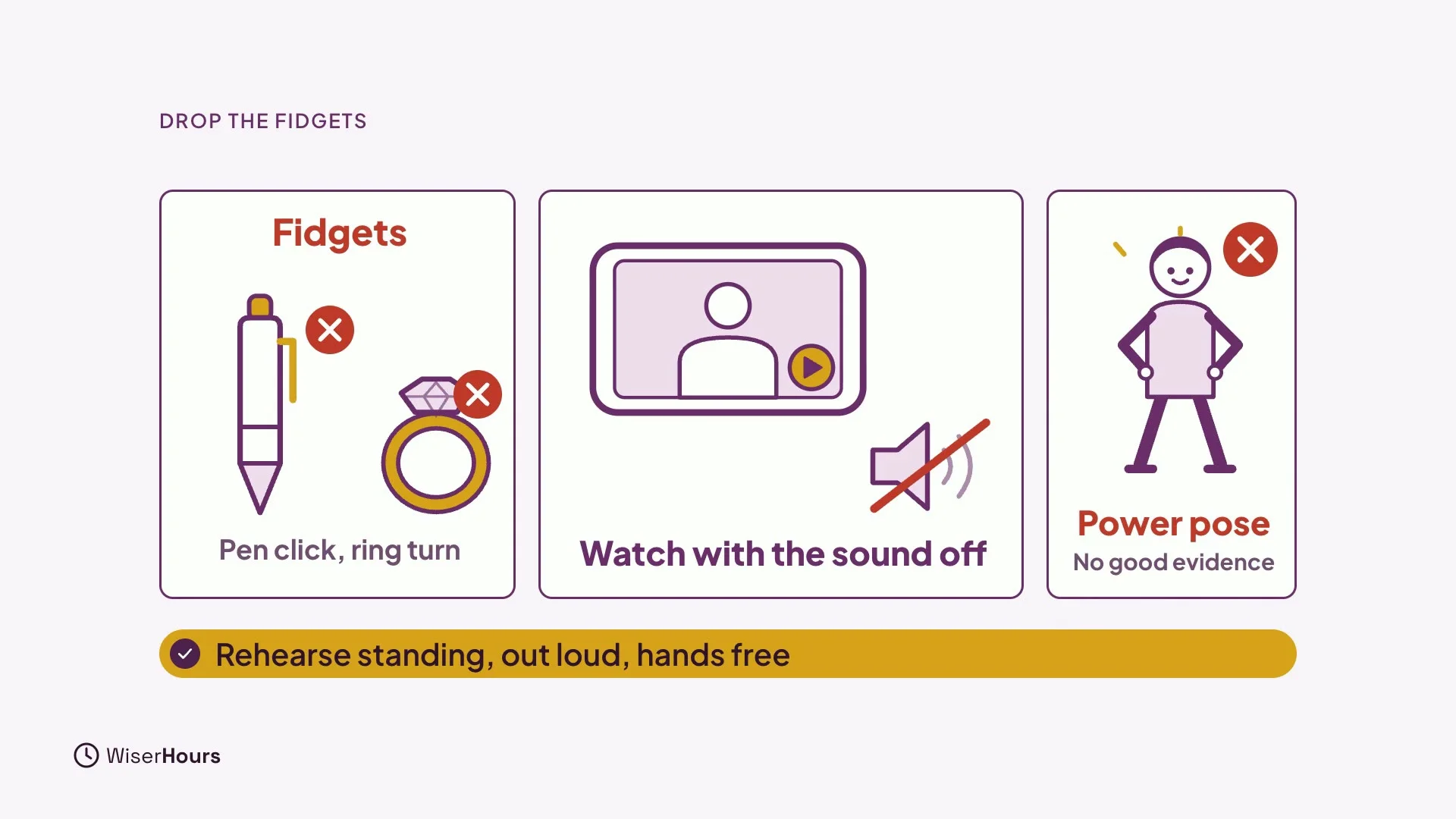
Drop movements that do not mean anything, like clicking a pen or turning a ring. To spot yours, record a practice and watch it with the sound off. Rehearse standing, out loud, with your hands free. And skip the power pose, where you stand with hands on hips: there is no good evidence it changes your body.
 (opens the full-size picture)
Do not aim for perfect
Do not worry about doing it perfectly. If your hands feel awkward, go back to your home position and try again at the next idea with a shape.
YOUR TURN
Read more
- Body Language for Presenters: What to Do With Your Hands: the evidence on gestures and more ways to practise.
- Rehearse a Talk Out Loud and Get Useful Feedback: how to practise standing, with your hands free.
Read the full lesson script
In this lesson, you'll learn what to do with your hands when you speak: where to rest them, when to move them, and which habits to drop.
Gestures aren't just decoration. People in every culture gesture when they talk, even people who were born blind. And studies show gestures can help listeners understand, especially when they show something the words describe.
The simple rule is this. Let your hands move with what you say, and let them rest when you're not making a point.
Pick a relaxed home position to come back to: arms loose at your sides, or hands lightly together at waist height. Neither has been tested as the best, so choose what feels natural. Just avoid pockets or hands behind your back, because then it's harder to bring them up.
Use your hands for ideas that have a shape. Show a rise, a gap, two options, or three steps. Point at the thing you name. And keep your gestures in front of your body, where people can see them.
Make sure your hands match your words. When gesture and speech clash, listeners get confused. In one study, mismatched gestures led to many more mistakes. So don't sweep your hand sideways while saying, sales went up, or chop five times while saying, three options.
Drop movements that don't mean anything, like clicking a pen or turning a ring. To spot them, record a practice and watch it with the sound off. Rehearse standing, out loud, with your hands free. And skip the power pose. There's no good evidence it changes your body.
So remember: move your hands with meaning, and rest them in between. Pick a relaxed home position. And make your hands match your words. Before the next lesson, mark two or three ideas in your talk that your hands can show. Next, you'll learn to make slides that help, not compete.
MAKE IT A SMALL WIN
Finished this lesson?
Mark it complete to save your progress on this device.