Build your talk · Lesson 4 of 11
What to Do in the Minute Before You Speak
See when speaking nerves peak, why the audience notices less than you feel, and use a simple last-minute routine.
 Video coming soon
For most people the hardest moment of a talk is the very first one. This lesson shows when nerves are strongest, why the audience notices less than you think, and what to do in the minute before you start.
Nerves peak just before you start
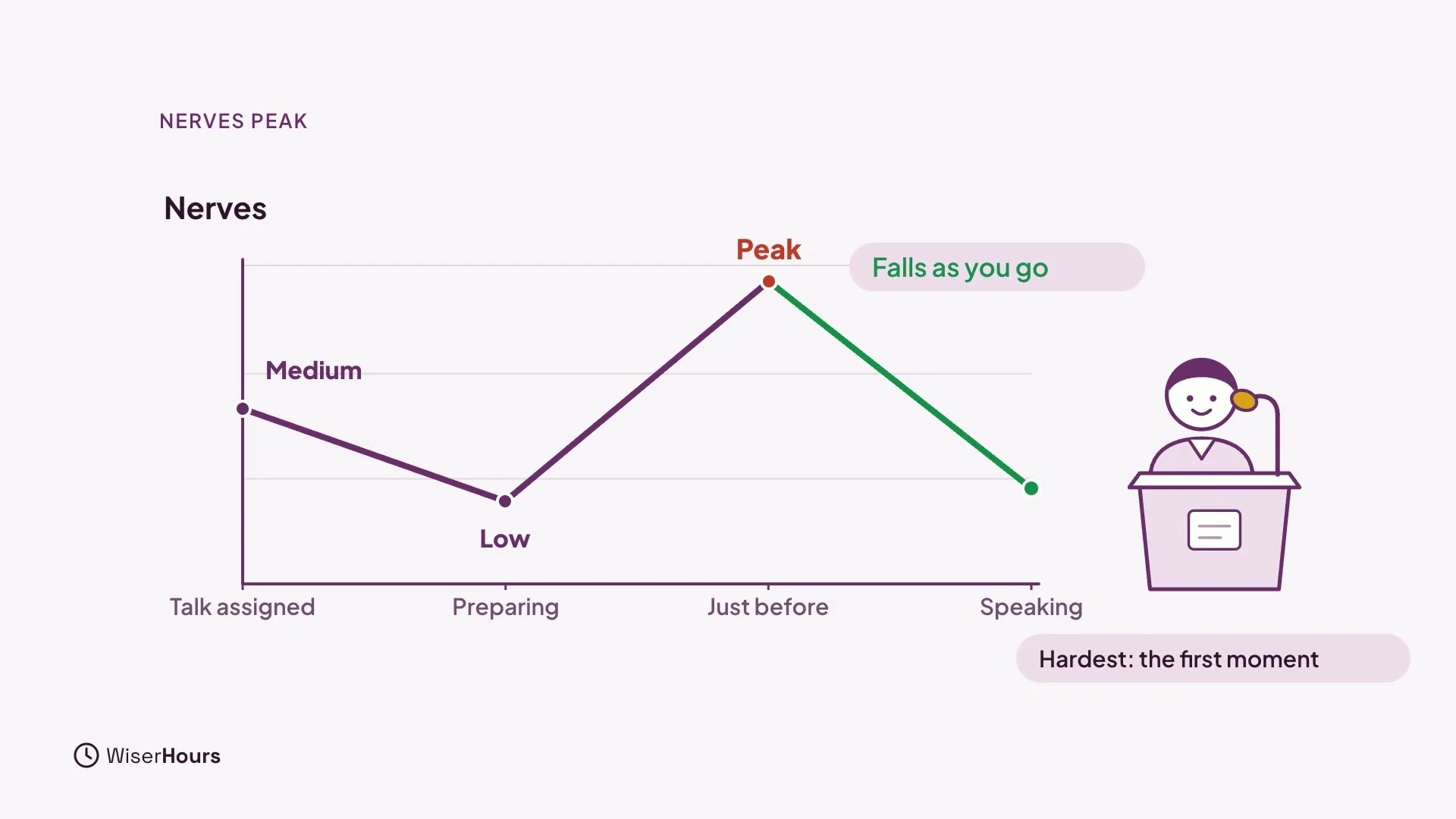
Nerves follow a pattern. In one study, anxiety was highest just before the speech began, second highest when the talk was first assigned, and lowest while people were preparing. For new speakers, it usually falls as the talk goes on. So the hardest moment is often the very first one, and it does not last.
 (opens the full-size picture)
Know your first two sentences
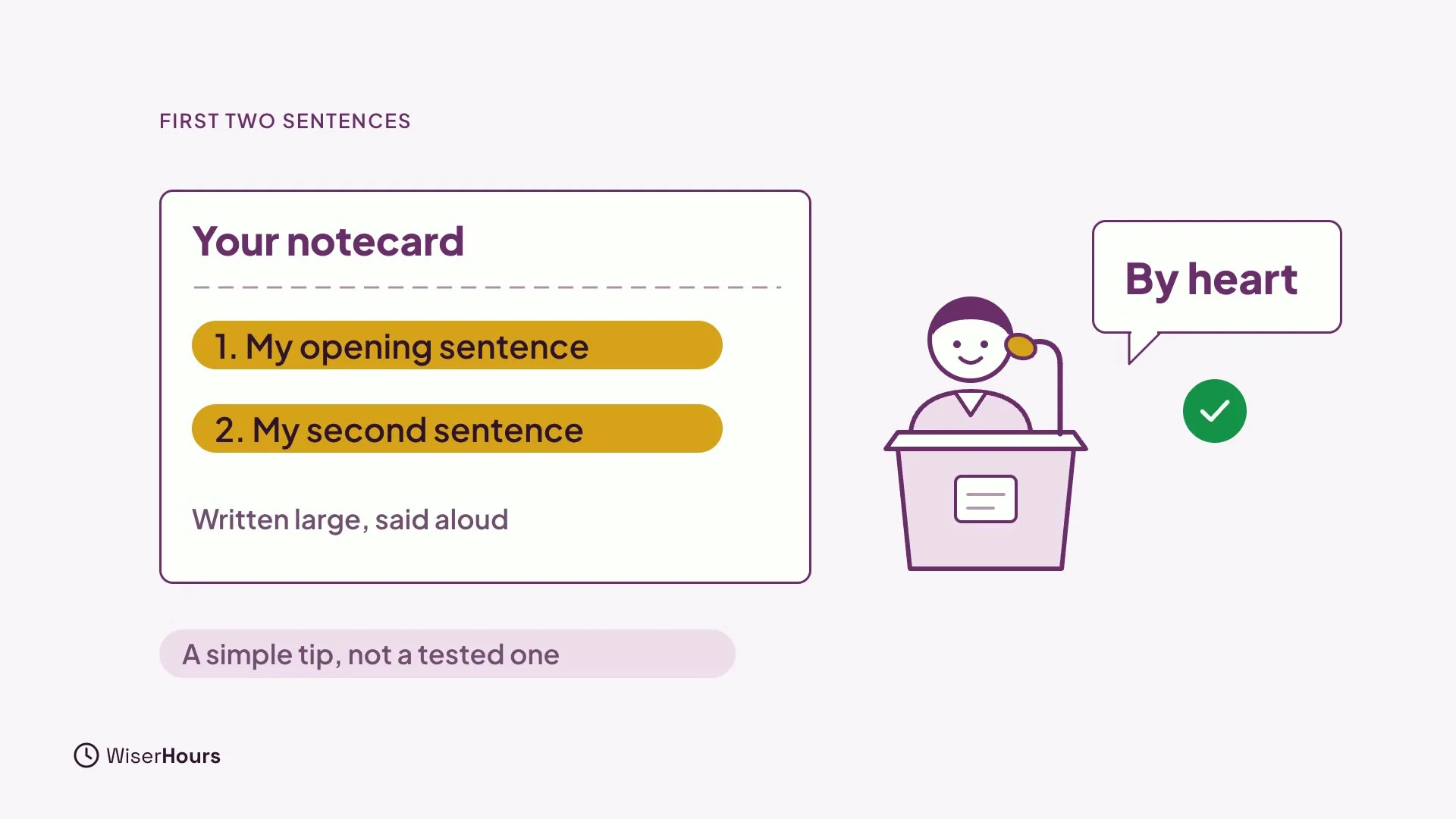
That is why your first two sentences matter so much. Know them by heart. When your mind feels busy at the start, you will not need to think. You will just begin, and it gets easier as you go. This is a simple tip, not a tested one, but it costs nothing. Write the two sentences large on a card and say them aloud until they feel automatic.
 (opens the full-size picture)
The audience sees less than you feel
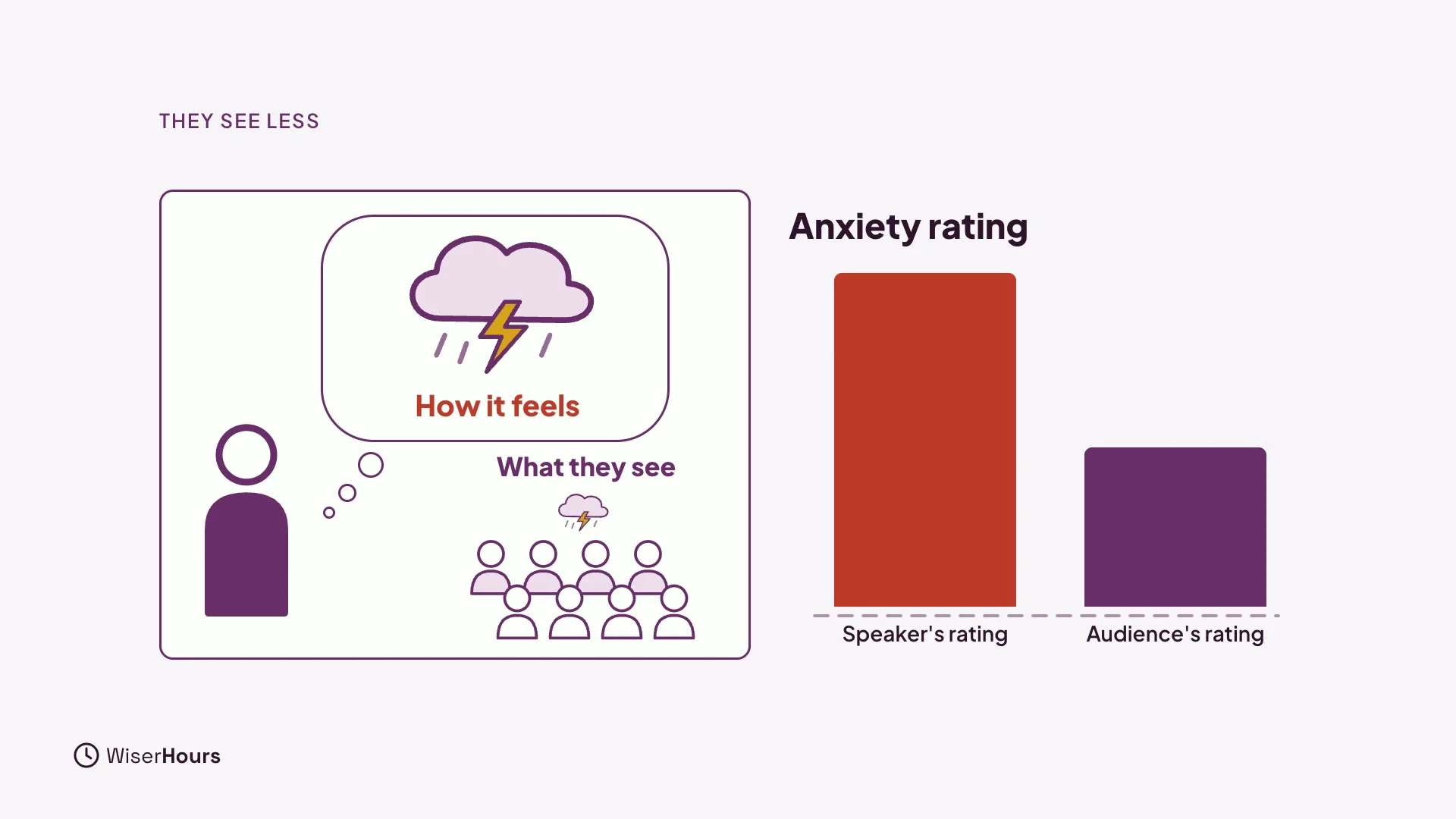
Speakers usually think their nerves show more than they do. In one study, speakers rated their own anxiety higher than the audience did. Your racing heart feels loud to you, but the room mostly cannot see it.
 (opens the full-size picture)
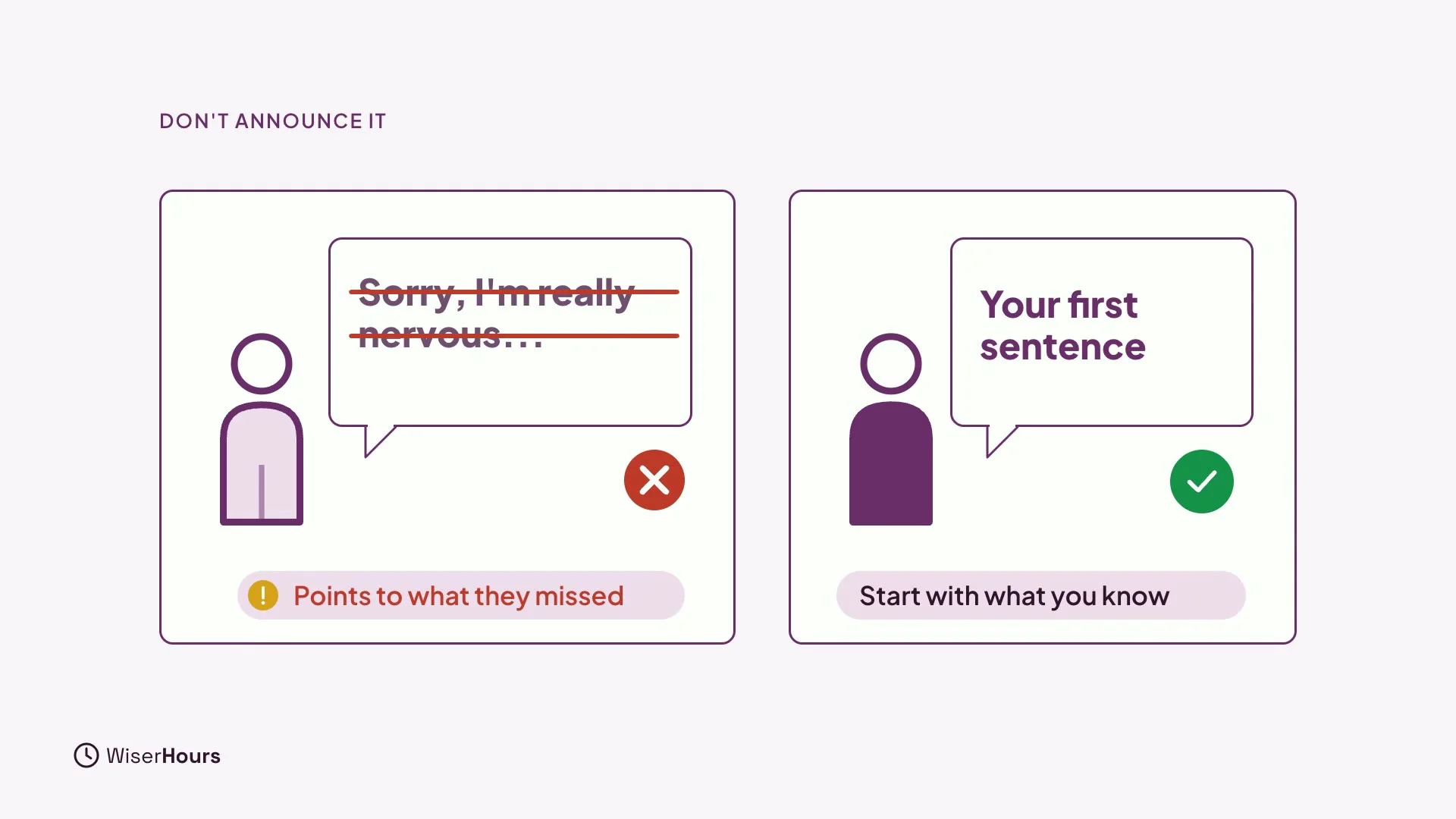
Don’t announce your nerves
So don’t open with “Sorry, I’m really nervous.” That points people to something they probably had not noticed. Just start with your first sentence, the one you know by heart.
 (opens the full-size picture)
Quick tricks, with care
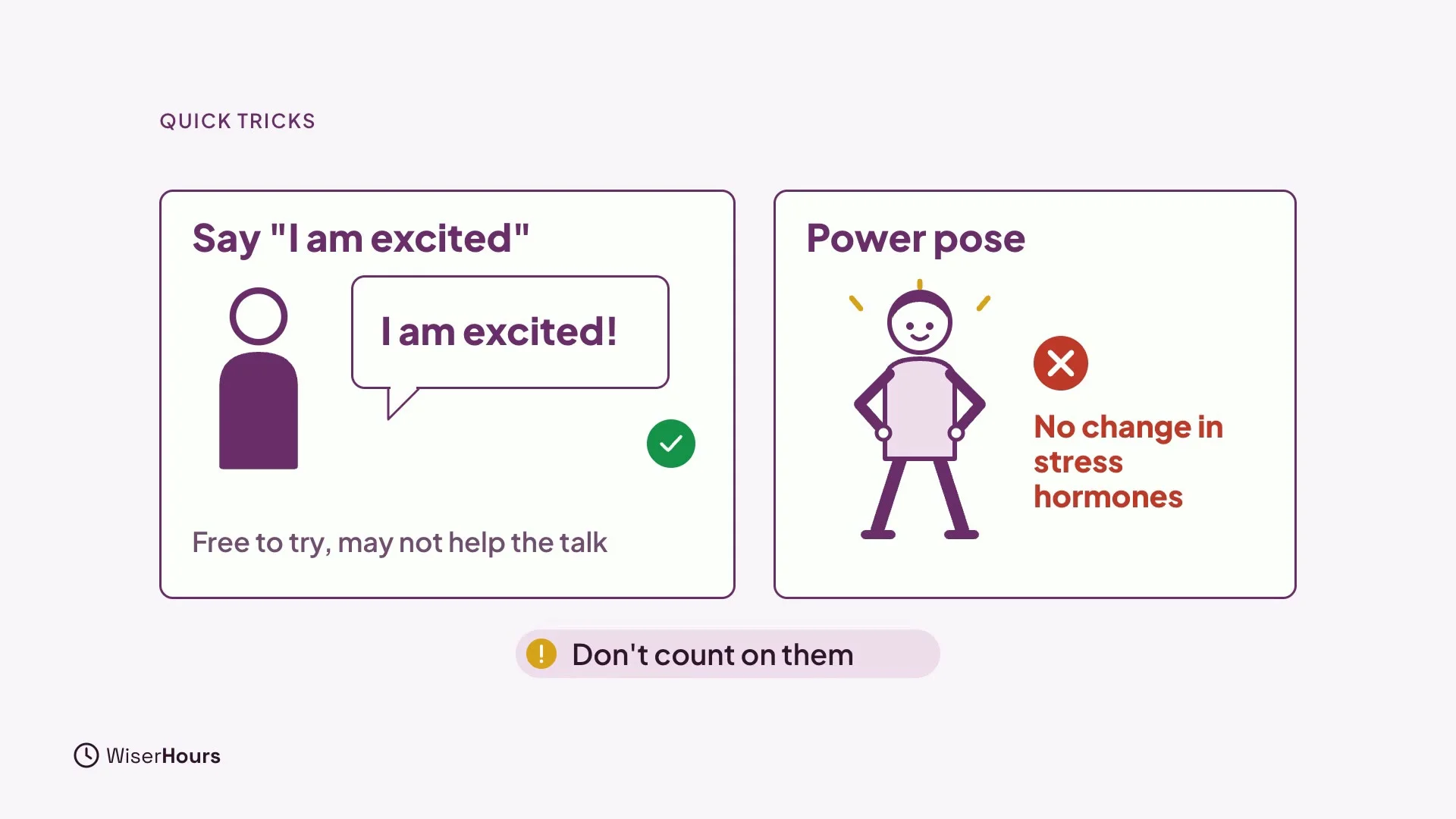
Saying “I am excited” out loud costs nothing to try. One study found it helped. A newer study found people felt more excited, but their talks were no better. Power poses, standing with your hands on your hips, did not change body stress hormones either. Try them if you like, but don’t count on them.
 (opens the full-size picture)
Your last minute
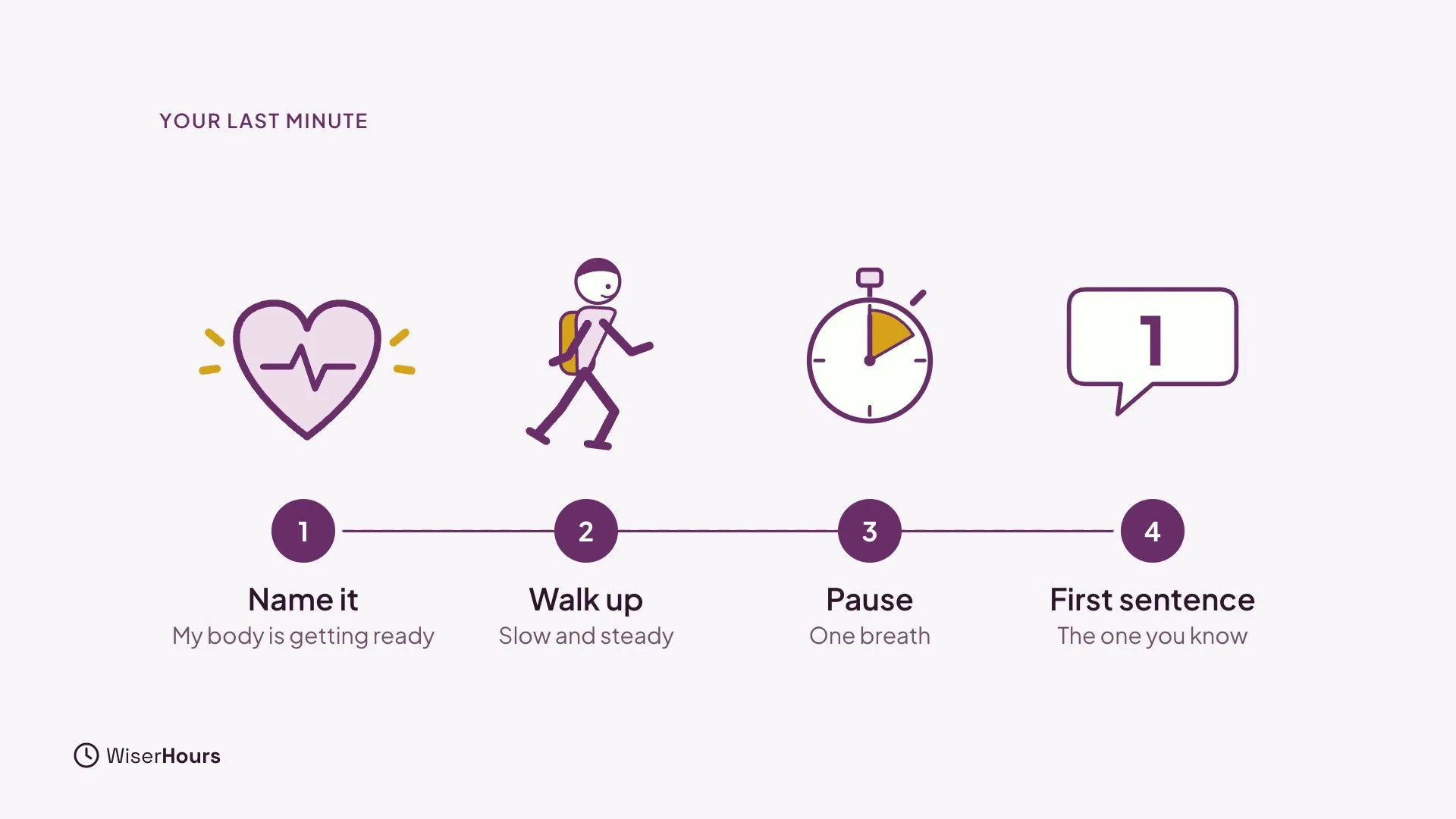
Here is a simple routine for the last minute. Notice your racing heart and name it: “my body is getting ready.” Walk up, slow and steady. Pause for one breath. Then say your first sentence.
 (opens the full-size picture)
YOUR TURN
Read more
- How to Open a Presentation: 10 Ways to Start Strong: ideas for what those first sentences can be.
- Body Language for Presenters: What to Do With Your Hands: what the research says about power poses.
- How to Build Self-Confidence: What Actually Works: why quick confidence tricks rest on thin evidence.
Read the full lesson script
In this lesson, you'll see when nerves are strongest, why the audience notices less than you think, and what to do in the minute before you start.
Nerves follow a pattern. In one study, anxiety was highest just before the speech began, second highest when the talk was first assigned, and lowest while people were preparing. For new speakers, it usually falls as the talk goes on. So the hardest moment is often the very first one.
That's why your first two sentences matter so much. Know them by heart. When your mind feels busy at the start, you won't need to think. You'll just begin, and it gets easier as you go. It's a simple tip, not a tested one, but it costs nothing.
Here's some good news. Speakers usually think their nerves show more than they do. In one study, speakers rated their own anxiety higher than the audience did. Your racing heart feels loud to you, but the room mostly can't see it.
So don't announce your nerves. Opening with, sorry, I'm really nervous, points people to something they probably hadn't noticed. Just start with your first sentence.
What about quick tricks? Saying, I am excited, out loud costs nothing to try. One study found it helped. A newer study found people felt more excited, but their talks were no better. Power poses don't change your body's stress hormones either. So try them if you like, but don't count on them.
Here's a simple routine for the last minute. Notice your racing heart, and name it: my body is getting ready. Walk up. Pause for a moment. Then say your first sentence, the one you know by heart.
So remember: nerves peak just before you start. The audience sees much less than you feel. And know your first two sentences by heart. Before the next lesson, write your first two sentences for a talk or a meeting, and say them aloud five times. Next, you'll learn how to open strong.
MAKE IT A SMALL WIN
Finished this lesson?
Mark it complete to save your progress on this device.