Build your talk · Lesson 7 of 11
Make a Case People Trust: Trust, Care, Agree
Learn the three reasons that move people, and how to give them honestly with one real detail, one clear step and your best points.
 Video coming soon
Persuading people at work does not need tricks. It needs a clear case that gives listeners good reasons. This lesson covers three old tools for that, and how to use each one honestly in a short talk or pitch.
Three reasons to listen
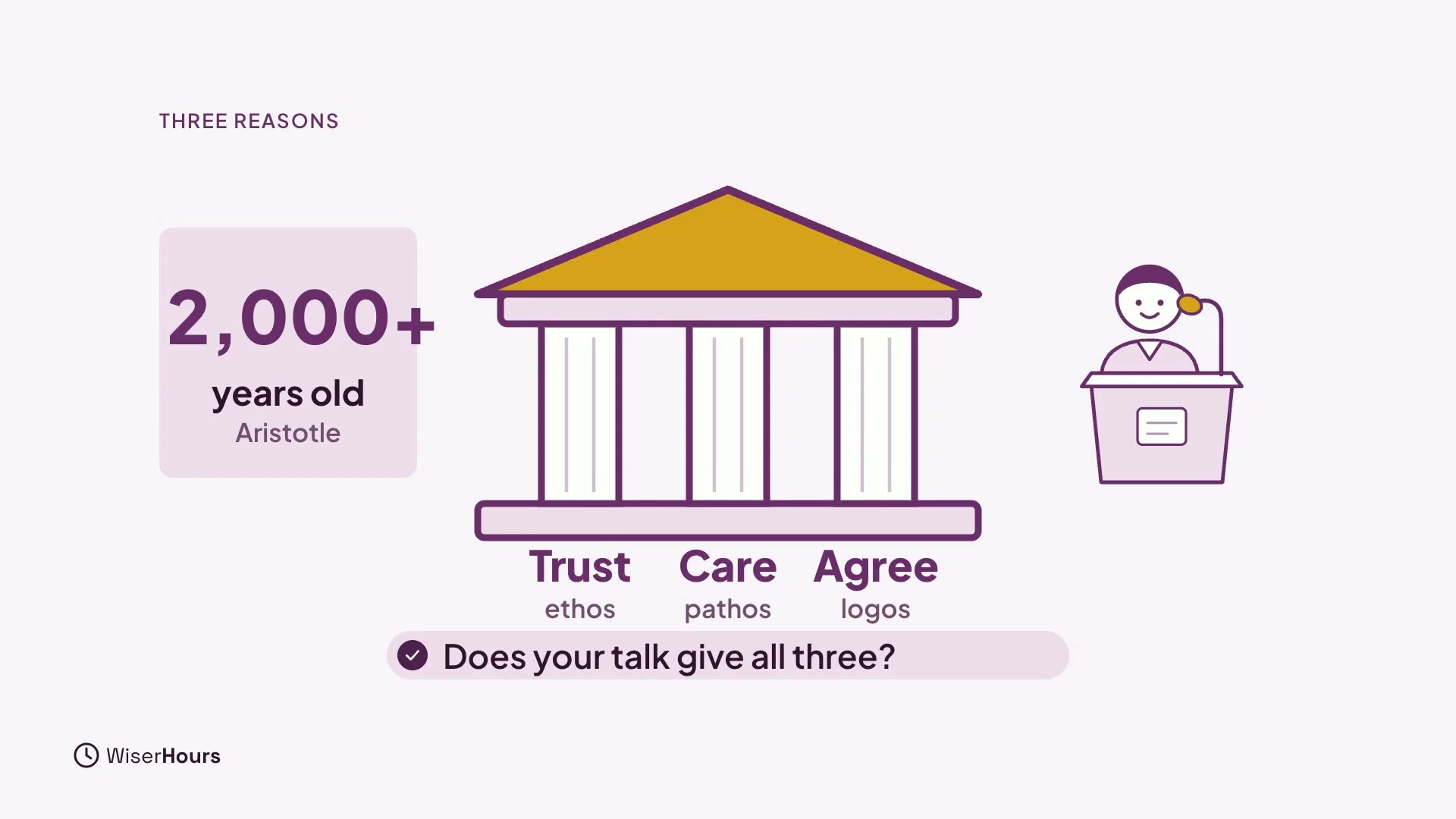
More than 2,000 years ago, Aristotle named three ways a speaker persuades. Ethos is a reason to trust you. Pathos is a reason to care. Logos is a reason to agree: your argument and your evidence. A quick test for any talk is to ask whether it gives people all three. If one is missing, the case has a gap.
 (opens the full-size picture)
Trust: earned in the talk itself
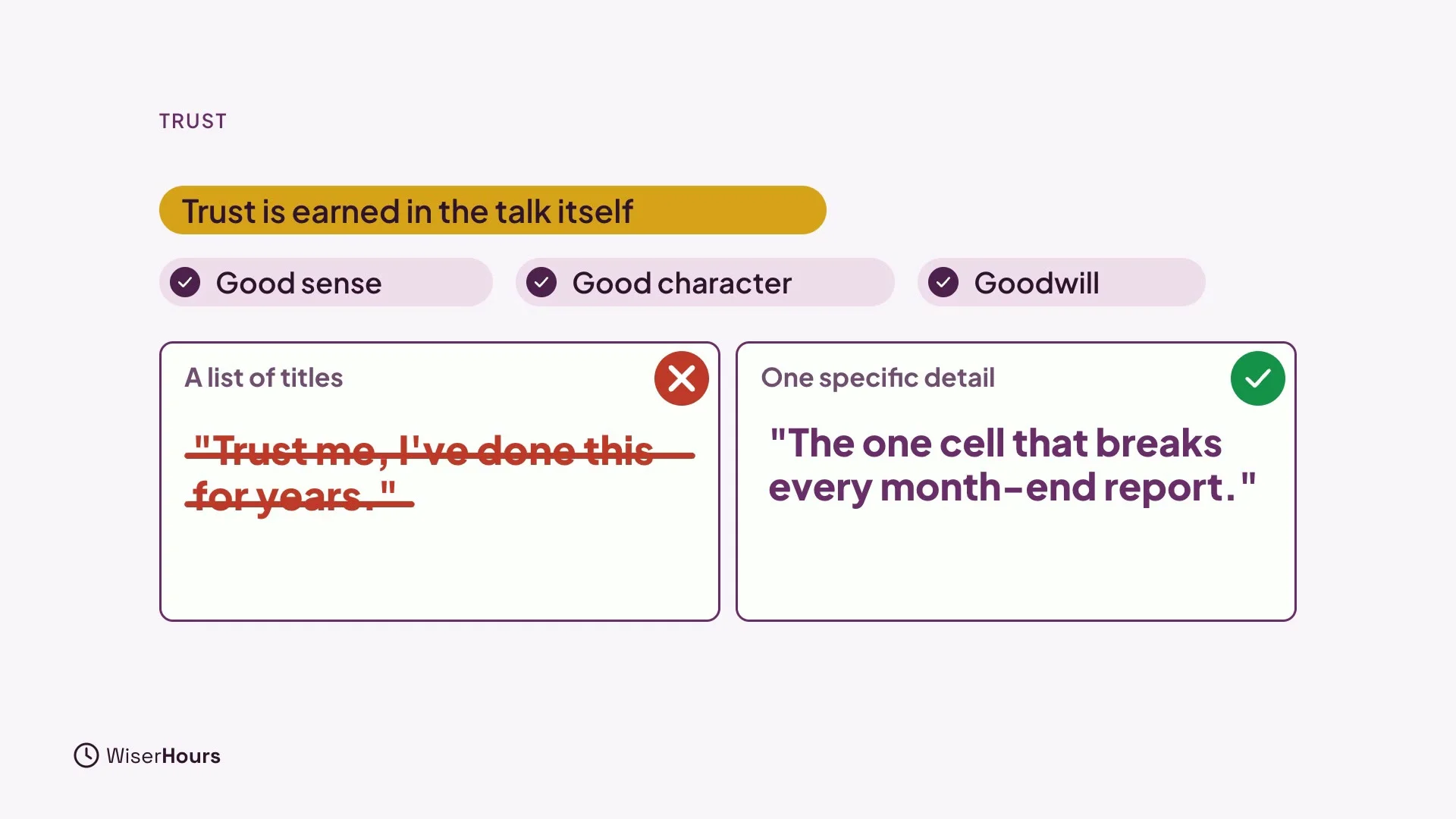
Trust comes from good sense, good character and goodwill toward your audience, and you earn it in the talk itself. A list of titles does not do it. Instead of saying “trust me, I have done this for years”, give one specific detail that only an experienced person would know, such as “the one cell that breaks every month-end report”. A detail like that shows what you know without asking anyone to take your word for it.
 (opens the full-size picture)
Care: a real cost and one step
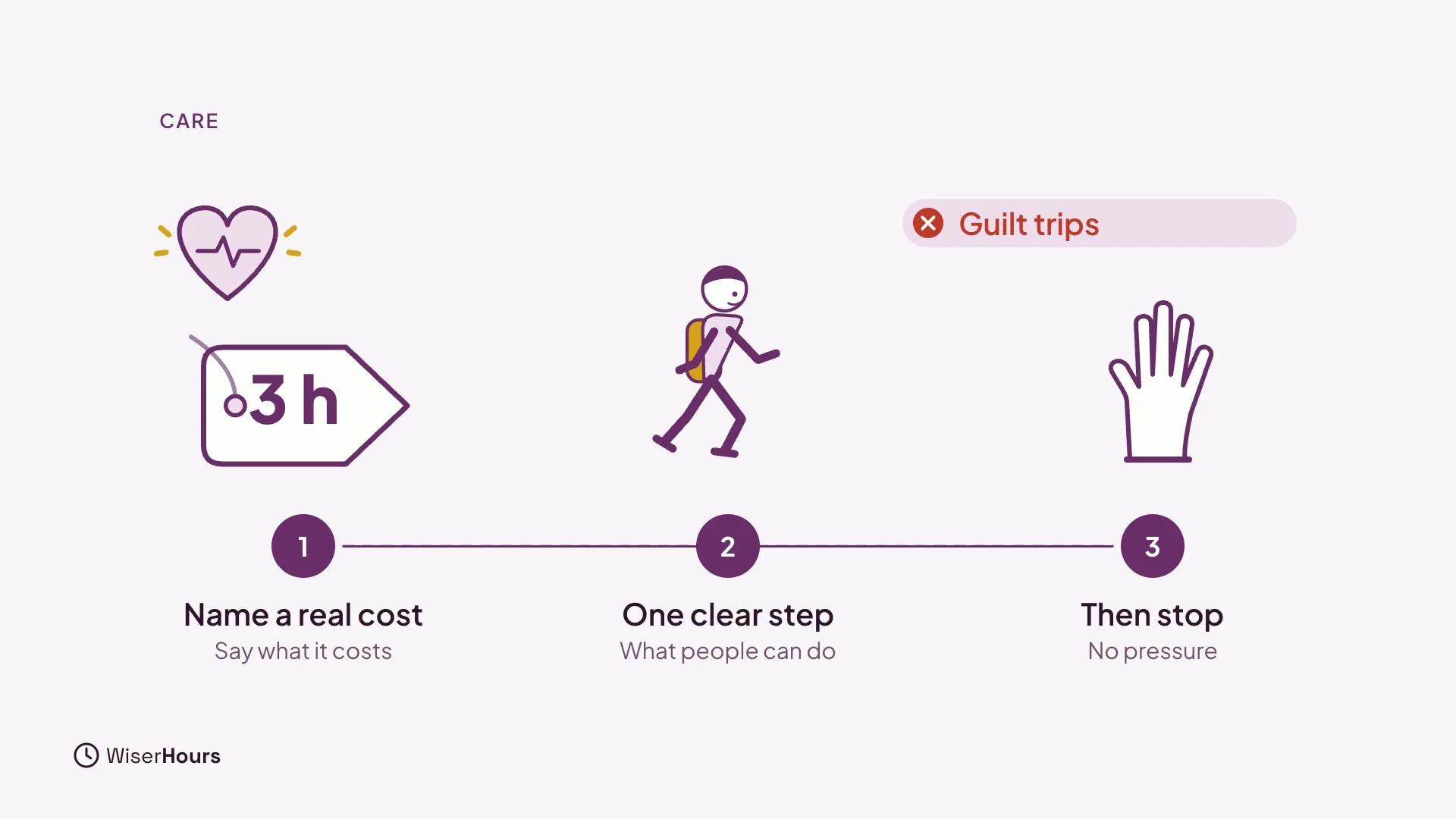
Feelings matter, because they change how people judge things. Use them honestly. Name a real cost, give one clear step people can take, and then stop. In the picture, the cost is three hours. Guilt trips tend to work poorly, and they can feel like pressure.
 (opens the full-size picture)
Agree: keep only your best points
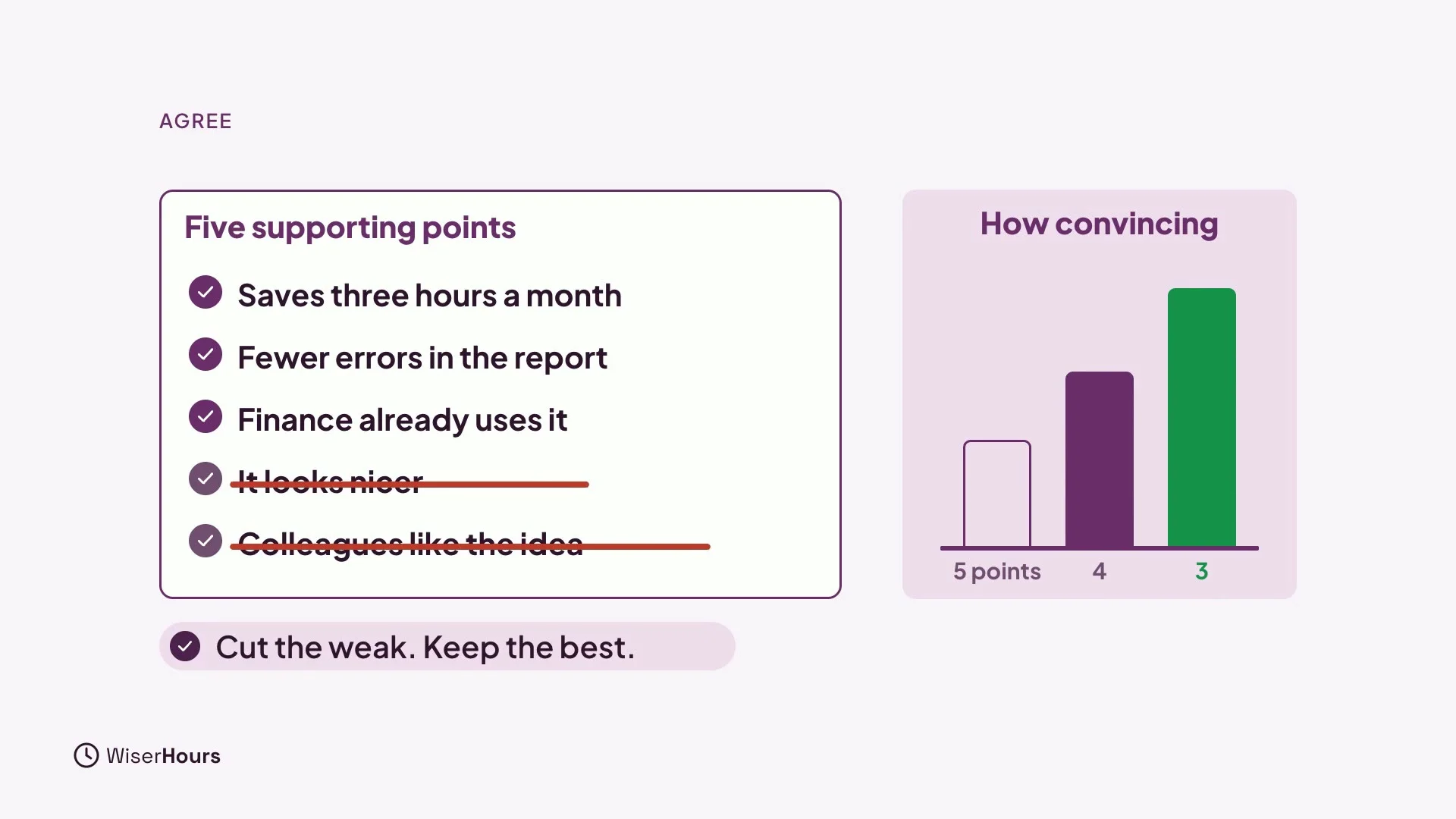
Now the argument. More points are not always better. In a series of studies, adding weaker points made a strong case look weaker. So cut your weakest supporting points and keep only the best.
 (opens the full-size picture)
Know who is listening
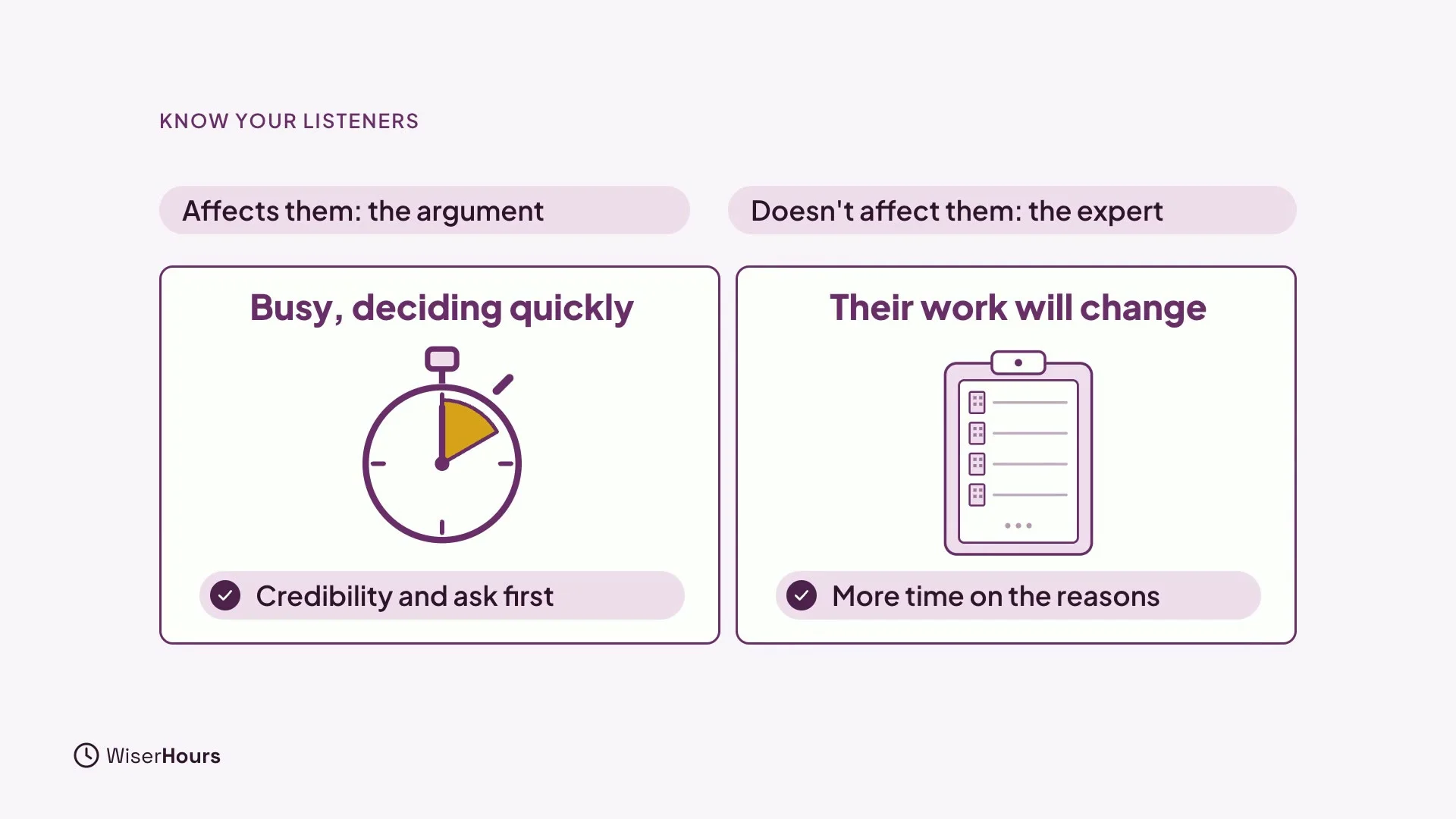
Think about your listeners too. In one study, students judged a proposal that affected them mostly on the quality of the argument. When it did not affect them, the speaker’s expertise mattered more. Most of this research involves students, so treat it as a guide. For busy people deciding quickly, put your credibility and your ask first. For people whose work will change, spend more time on the reasons.
 (opens the full-size picture)
All three in one pitch
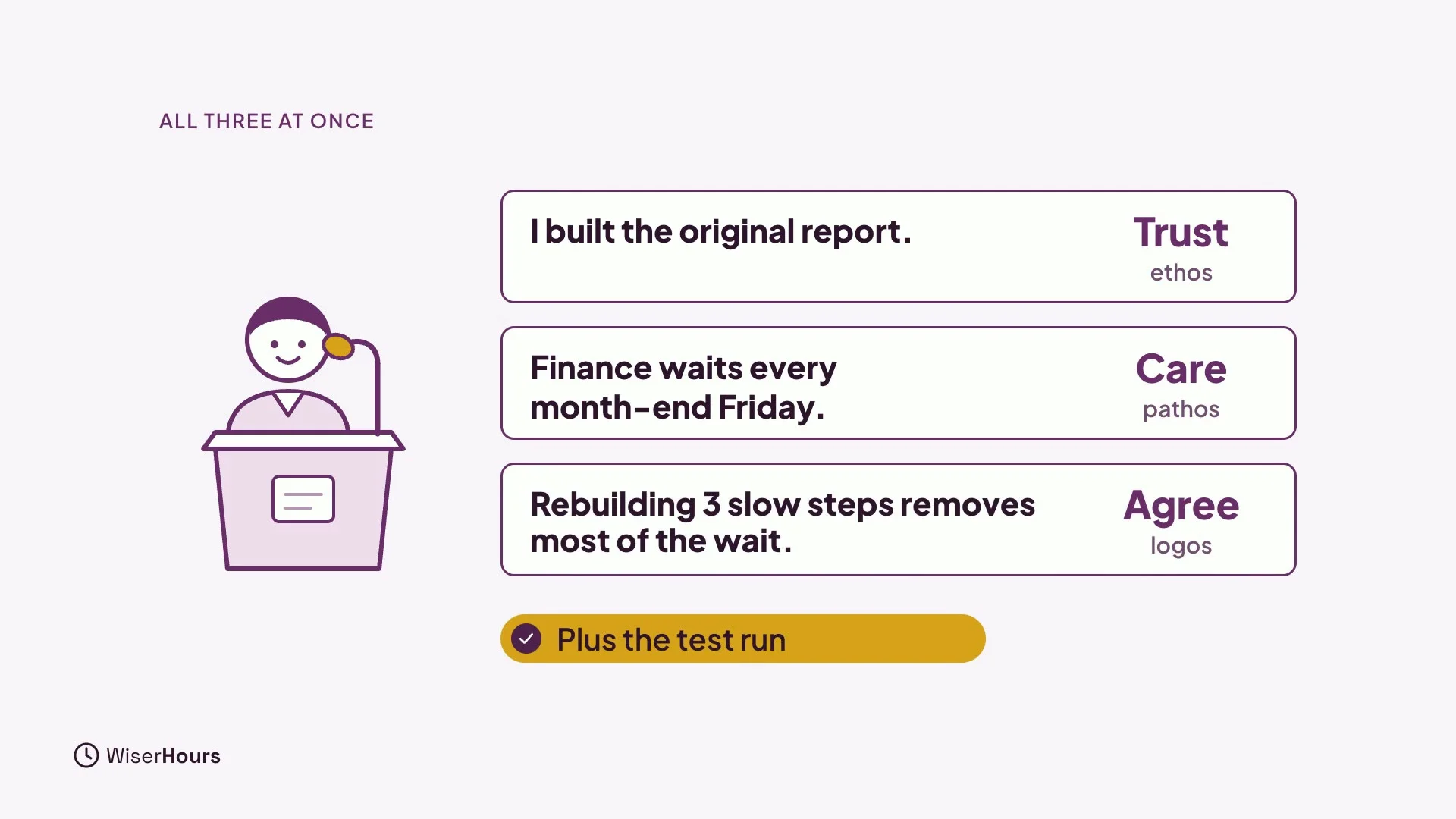
Here is a short pitch with all three. “I built the original report. The finance team waits for it every month-end Friday. Rebuilding the three slowest steps removes most of that wait, and here is the test run.” The first sentence builds trust, the second gives a reason to care, and the third gives a reason to agree, backed by the test run.
 (opens the full-size picture)
YOUR TURN
Read more
- Ethos, Pathos, Logos: Aristotle’s Persuasion Toolkit for Modern Work: the three tools in more depth.
- Storytelling in Presentations: A Step-by-Step Guide: how a story can carry the care part of your case.
Read the full lesson script
In this lesson, you'll learn three old tools for persuading people, and how to use them honestly when you speak at work.
More than two thousand years ago, Aristotle named three ways a speaker persuades. Ethos is a reason to trust you. Pathos is a reason to care. And logos is a reason to agree: your argument and your evidence. A quick test for any talk is: does it give people all three?
Trust has to be earned in the talk itself. It comes from good sense, good character, and goodwill toward your audience. A list of titles doesn't do it. Instead of saying, trust me, I've done this for years, give one specific detail that only an experienced person would know.
Feelings matter, because they change how people judge things. But use them honestly. Name a real cost, give one clear step people can take, and stop there. Guilt trips tend to work poorly, and they can feel like pressure.
Then the argument. More points aren't always better. In a series of studies, adding weaker points made a strong case look weaker. So cut your weakest supporting points, and keep only the best.
Think about who's listening, too. In one study, students judged a proposal that affected them mostly on the quality of the argument. When it didn't affect them, the speaker's expertise mattered more. So for busy people deciding quickly, put your credibility and your ask first. For people whose work will change, spend more time on the reasons.
Here's all three in a short pitch. I built the original report. The finance team waits for it every month-end Friday. Rebuilding the three slowest steps removes most of that wait, and here's the test run.
So remember: give people a reason to trust, to care, and to agree. One real detail beats a list of titles. And cut your weakest point. Before the next lesson, cut the weakest point from your next talk or proposal. Next, you'll learn how to say fewer ums.
MAKE IT A SMALL WIN
Finished this lesson?
Mark it complete to save your progress on this device.