Build your talk · Lesson 6 of 11
Tell One Short Story That Carries Your Point
Learn to build a story of under a minute with problem, turn and result, and to put your key number right after it.
 Video coming soon
A good story can make a point stick, but it cannot do the work of your evidence. This lesson shows how to build one short story that carries your point, in under a minute, without letting it replace the numbers.
What a story is, in a talk
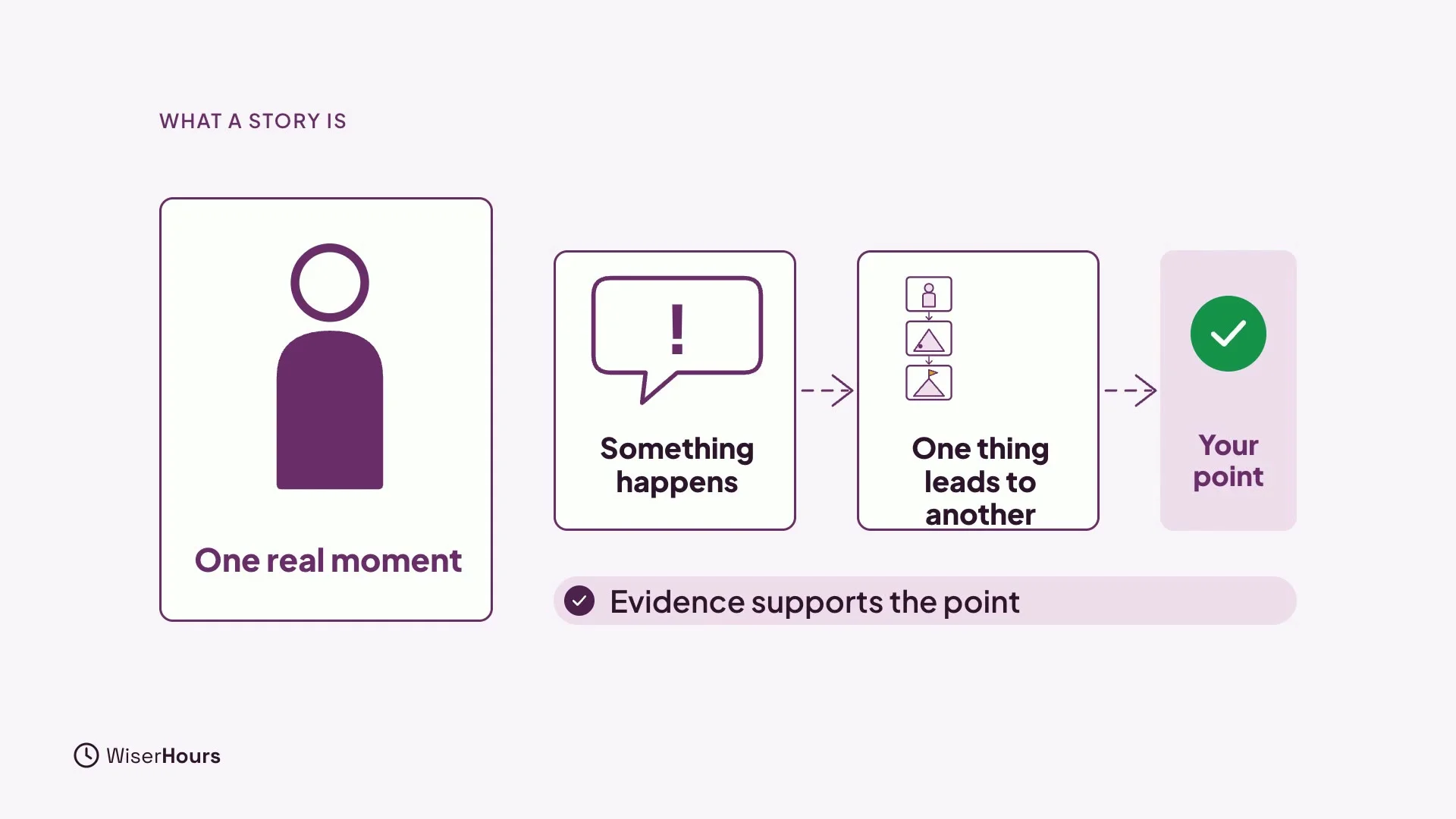
In a talk, a story is one real moment with one person in it. Something happens, one thing leads to another, and the result carries a point that your evidence supports. It is not a long tale and it does not need a dramatic ending. A short, true moment is enough.
 (opens the full-size picture)
Stories can hide flaws
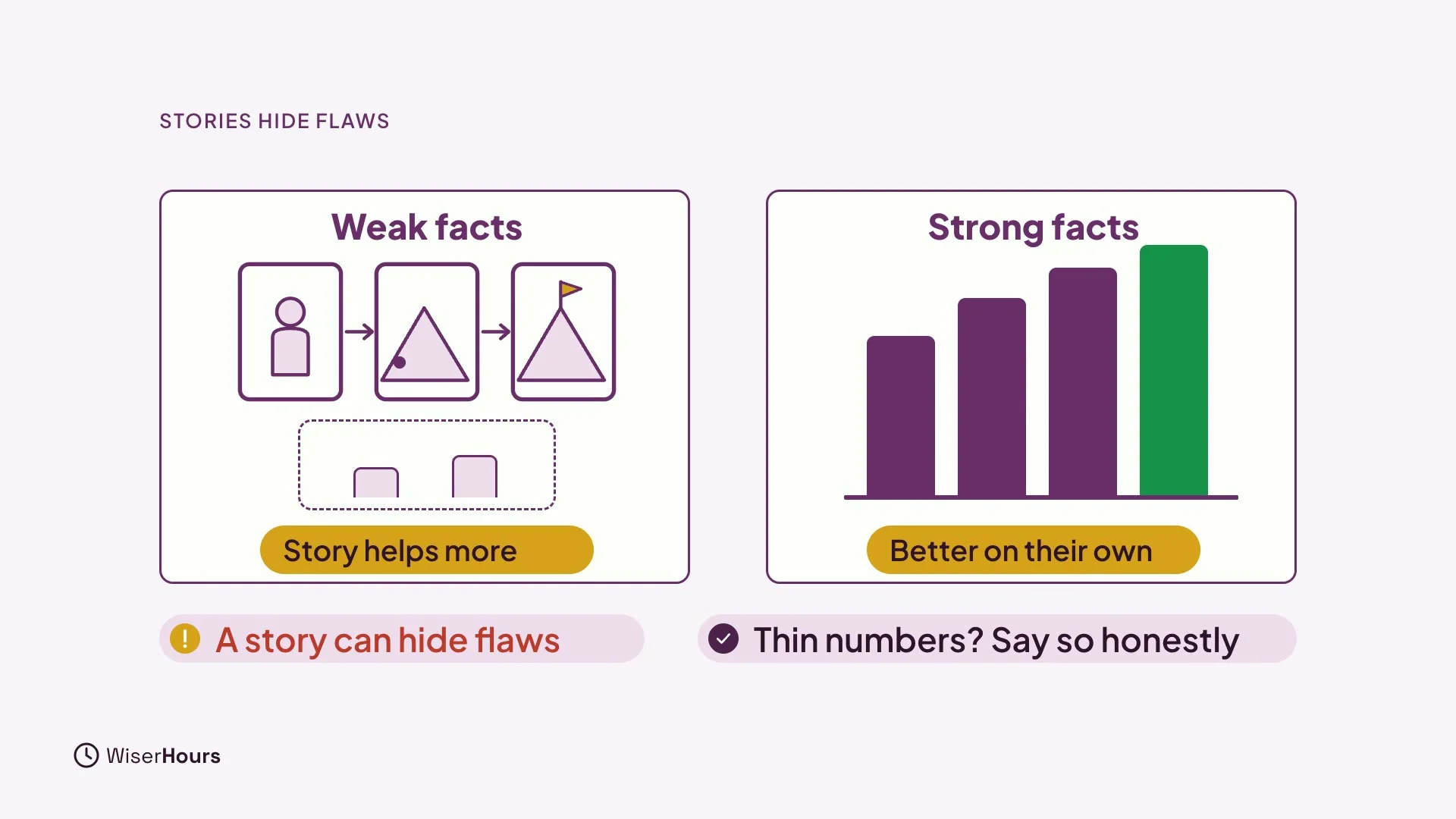
Stories are powerful, but not always in the way people think. In one set of experiments, facts told inside a story persuaded people more when the facts were weak, and less when the facts were strong. In other words, a story can hide flaws. If your numbers are thin, say so honestly. Do not let a warm story cover for evidence you would not show on its own.
 (opens the full-size picture)
Honesty check
If your evidence is thin, tell your listeners. A story should carry a point your evidence supports, never stand in for it.
How to build one
Work through six steps.
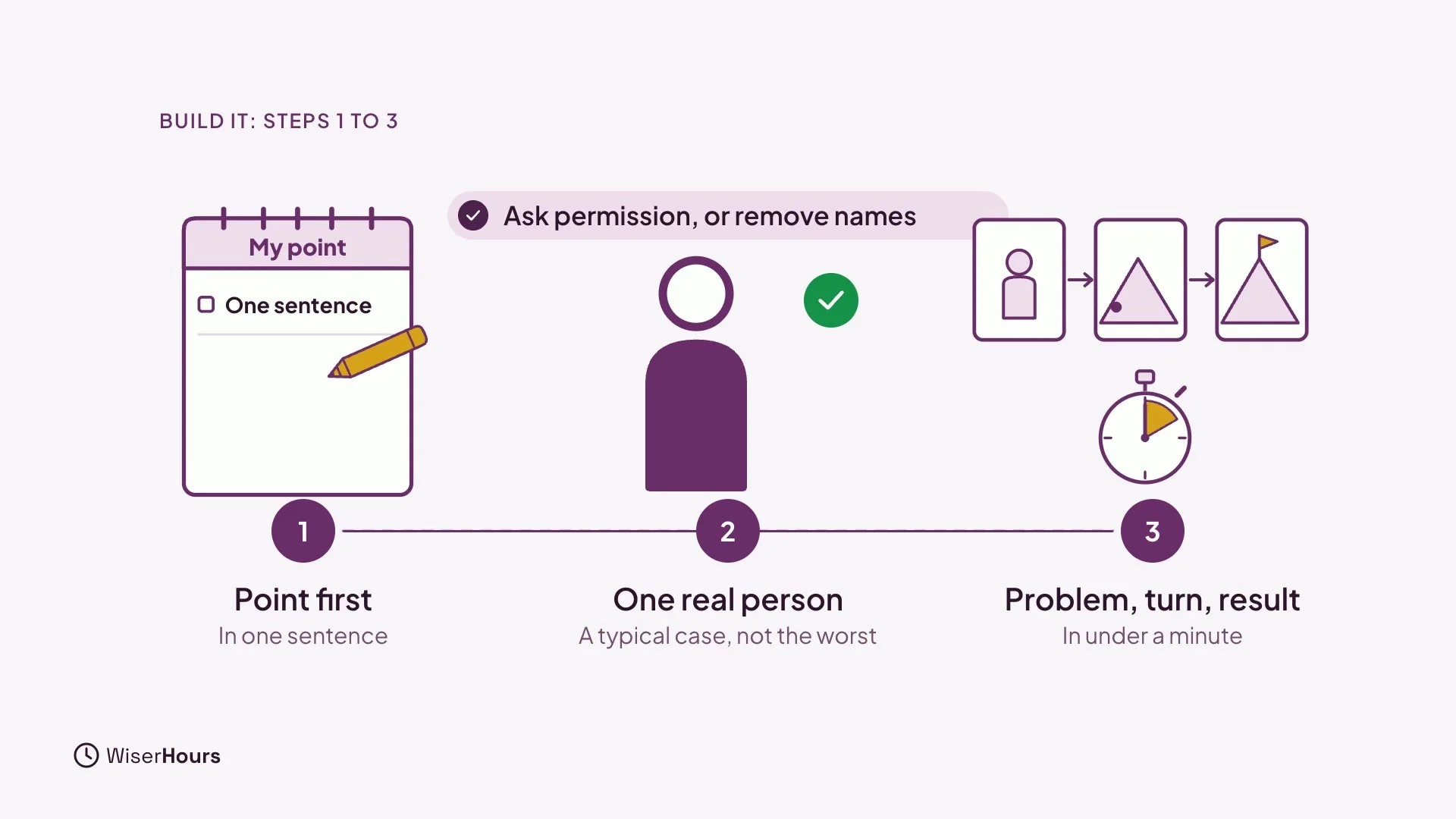
- Write your point in one sentence before you pick a story.
- Choose a real moment with one person. Pick a typical case, not the worst one. Ask their permission, or remove details that identify them.
- Tell it as problem, turn and result, in under a minute.
 (opens the full-size picture)
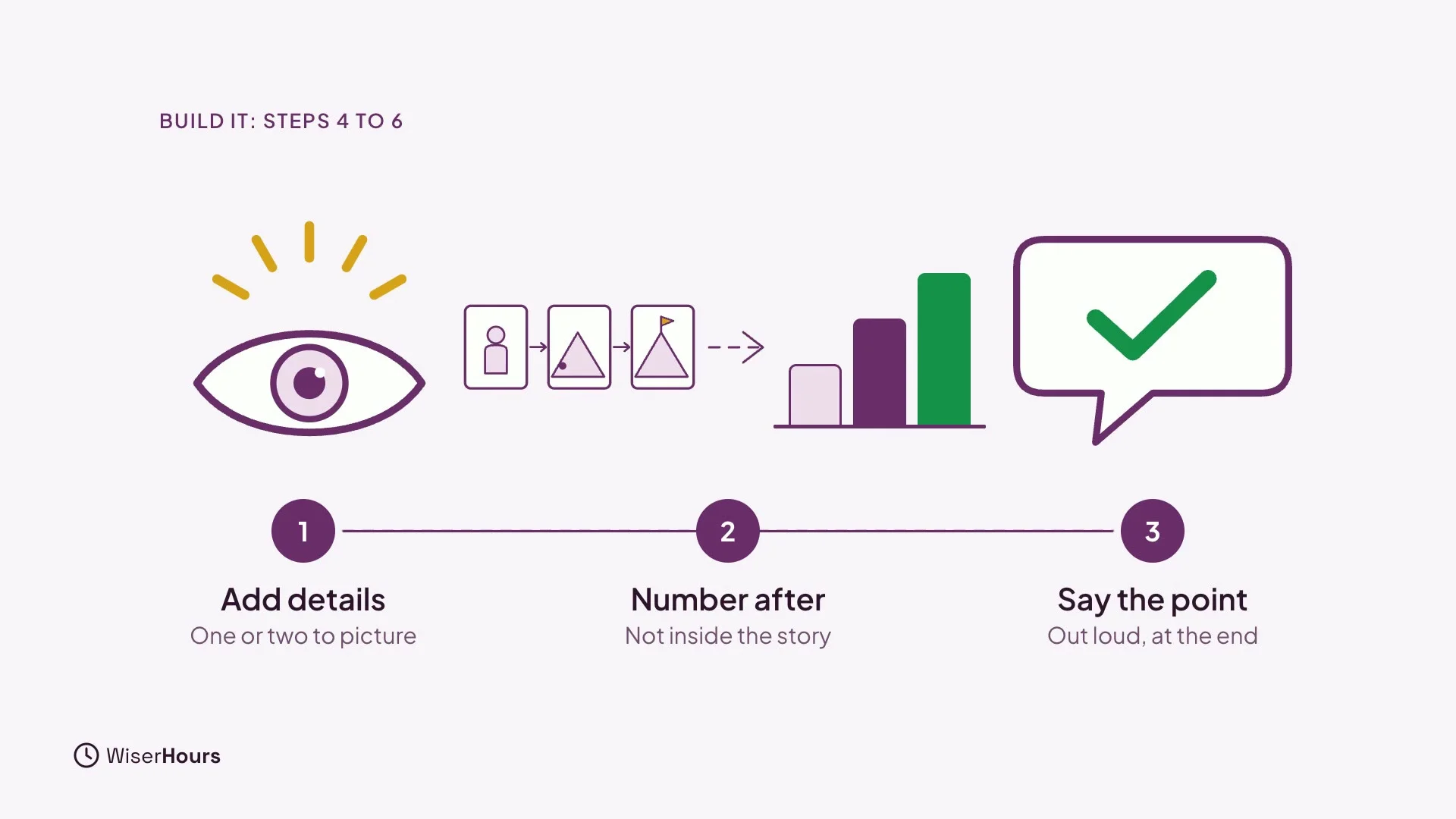
- Add one or two details people can picture.
- Put the key number right after the story, not inside it.
- Say the point out loud at the end.
 (opens the full-size picture)
How it sounds
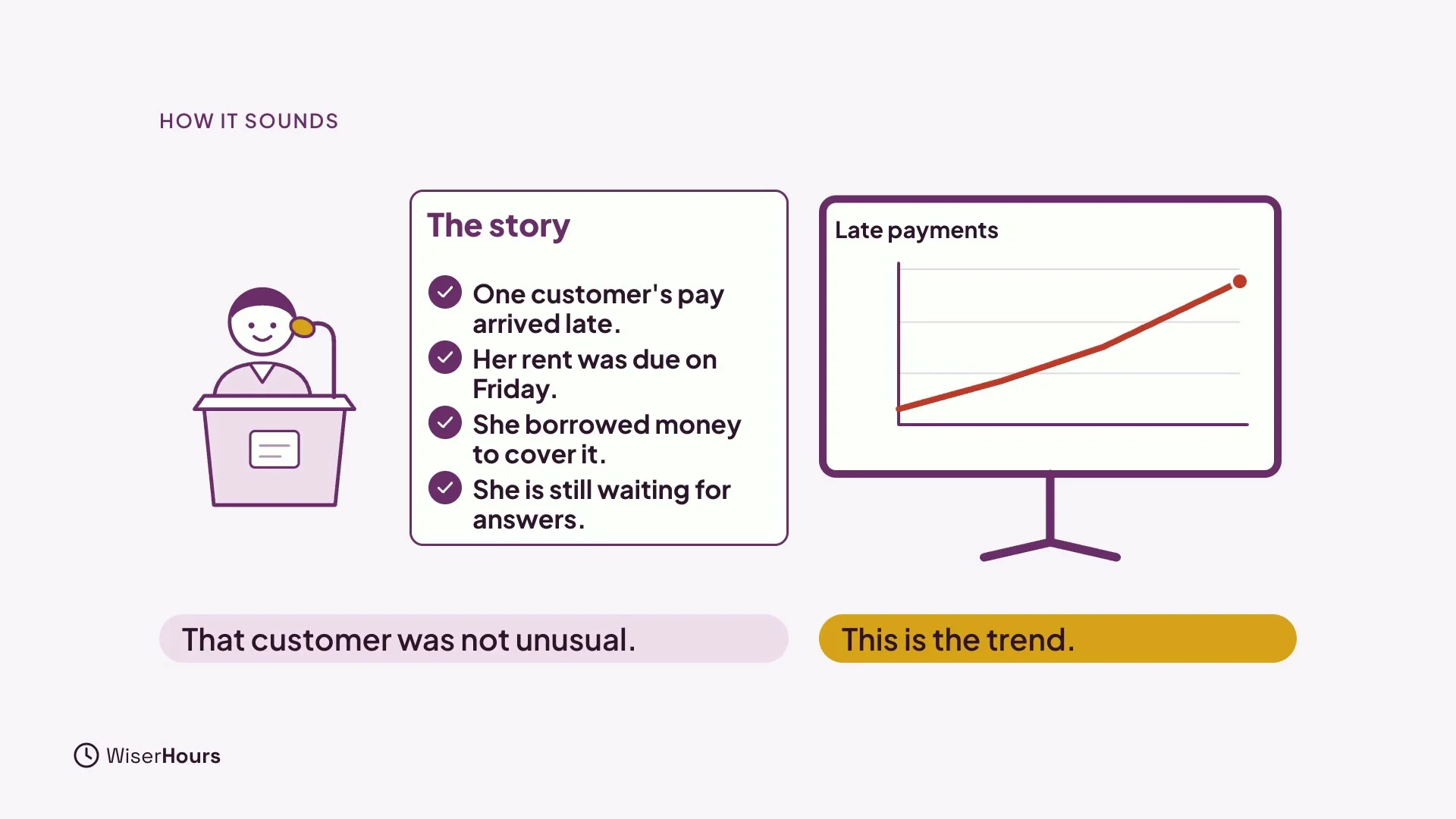
Here is an example. A team lead tells a four-sentence story about one customer whose pay arrived late. Her rent was due on Friday, she borrowed money to cover it, and she is still waiting for answers. Then the team lead puts one chart of late payments on screen and says: that customer was not unusual. This is the trend. The story makes people care, and the chart shows it is not a one-off.
 (opens the full-size picture)
Use both
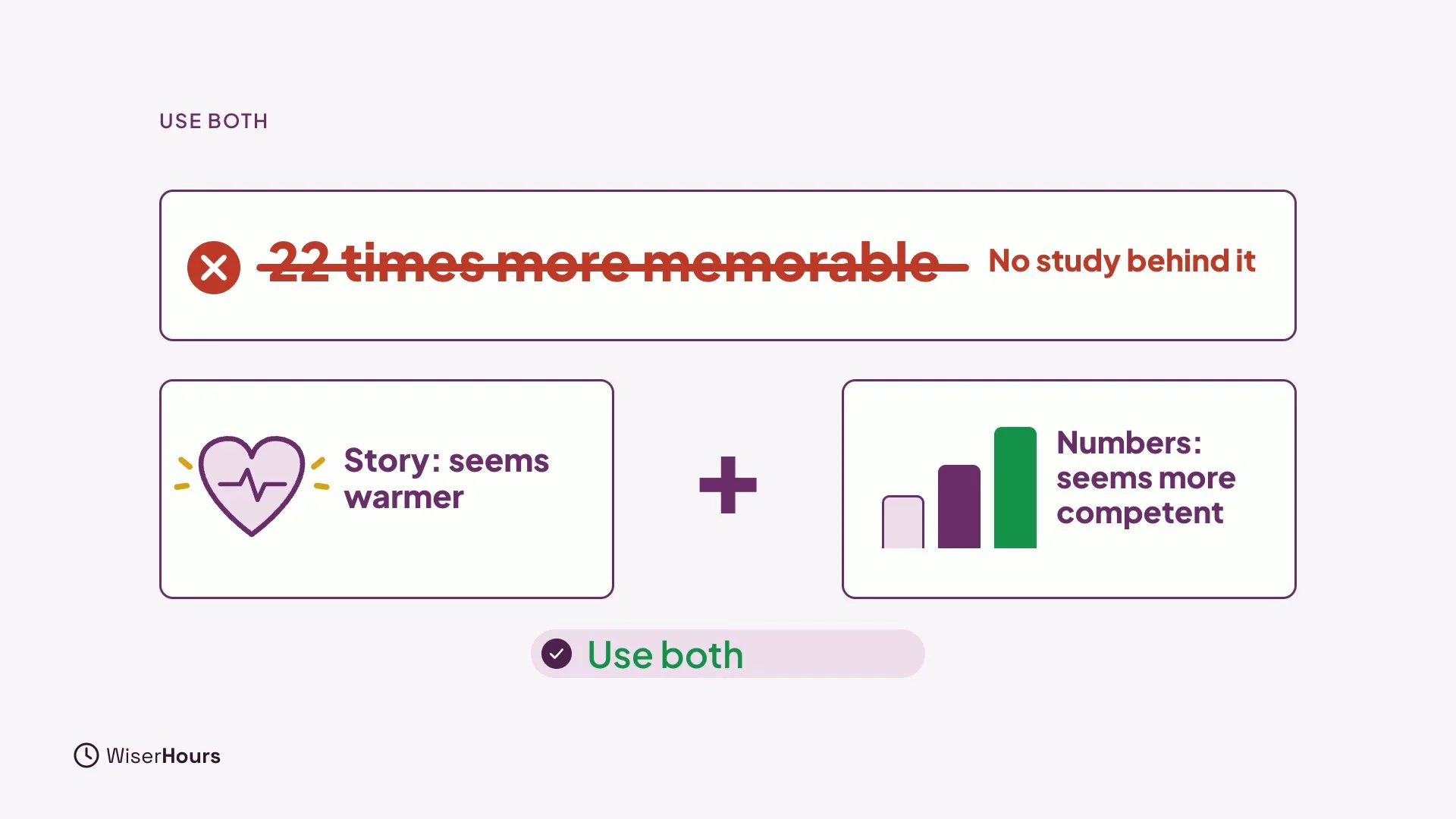
You may have heard that stories are 22 times more memorable than facts. There is no study behind that number. Stories do tend to be understood and remembered somewhat better. Stories can make you seem warmer, and numbers can make you seem more competent. So use both.
 (opens the full-size picture)
YOUR TURN
Read more
- Storytelling in Presentations: A Step-by-Step Guide: more on choosing and shaping a story.
Read the full lesson script
In this lesson, you'll learn how to tell one short story that carries your point, in under a minute, without letting it replace your evidence.
In a talk, a story is one real moment with one person in it. Something happens, one thing leads to another, and it carries a point your evidence supports.
Stories are powerful, but not always in the way people think. In one set of experiments, facts told inside a story persuaded people more when the facts were weak, and less when the facts were strong. A story can hide flaws. So if your numbers are thin, say so honestly.
Here's how to build one. First, write your point in one sentence before you pick a story. Second, choose a real moment with one person, a typical case, not the worst one. Ask their permission, or remove details that identify them. Third, tell it as problem, turn, and result, in under a minute.
Fourth, add one or two details people can picture. Fifth, put the key number right after the story, not inside it. And sixth, say the point out loud at the end.
Here's how that sounds. A team lead tells a four-sentence story about one customer whose pay arrived late. Then the team lead puts one chart on screen and says: that customer was not unusual. This is the trend.
You may have heard that stories are twenty-two times more memorable than facts. There's no study behind that number. Stories do tend to be understood and remembered somewhat better. Stories can make you seem warmer, and numbers can make you seem more competent. So use both.
So remember: decide your point first, then pick the story. Tell it as problem, turn and result. And put the key number right after it. Before the next lesson, write a four-sentence story for a point you need to make. Next, you'll learn to make a case people trust.
MAKE IT A SMALL WIN
Finished this lesson?
Mark it complete to save your progress on this device.